STM32 selection and pin-compatible alternatives
Two reads decide an STM32 design, one of the application and one of the supply. The application read asks how much compute the job needs, how much memory, which peripherals, and how little power the product can live on. The supply read asks a colder set of questions: whether the chosen part is still on a reel two years from now, what it costs at the volume the line will run, and what the board does on the morning the part lands on allocation. The catalogue behind both reads runs to hundreds of parts, held together by a shared foundation: the whole range stands on a few Arm Cortex-M cores, one set of tools, and one datasheet grammar. The chip itself is seldom where a project comes apart. The damage gets done upstream of the order itself, in a requirement read wrong or a supply chain taken on trust.
The part number at the end is only the place where those two reads meet on paper.
Which part, and how you reach it
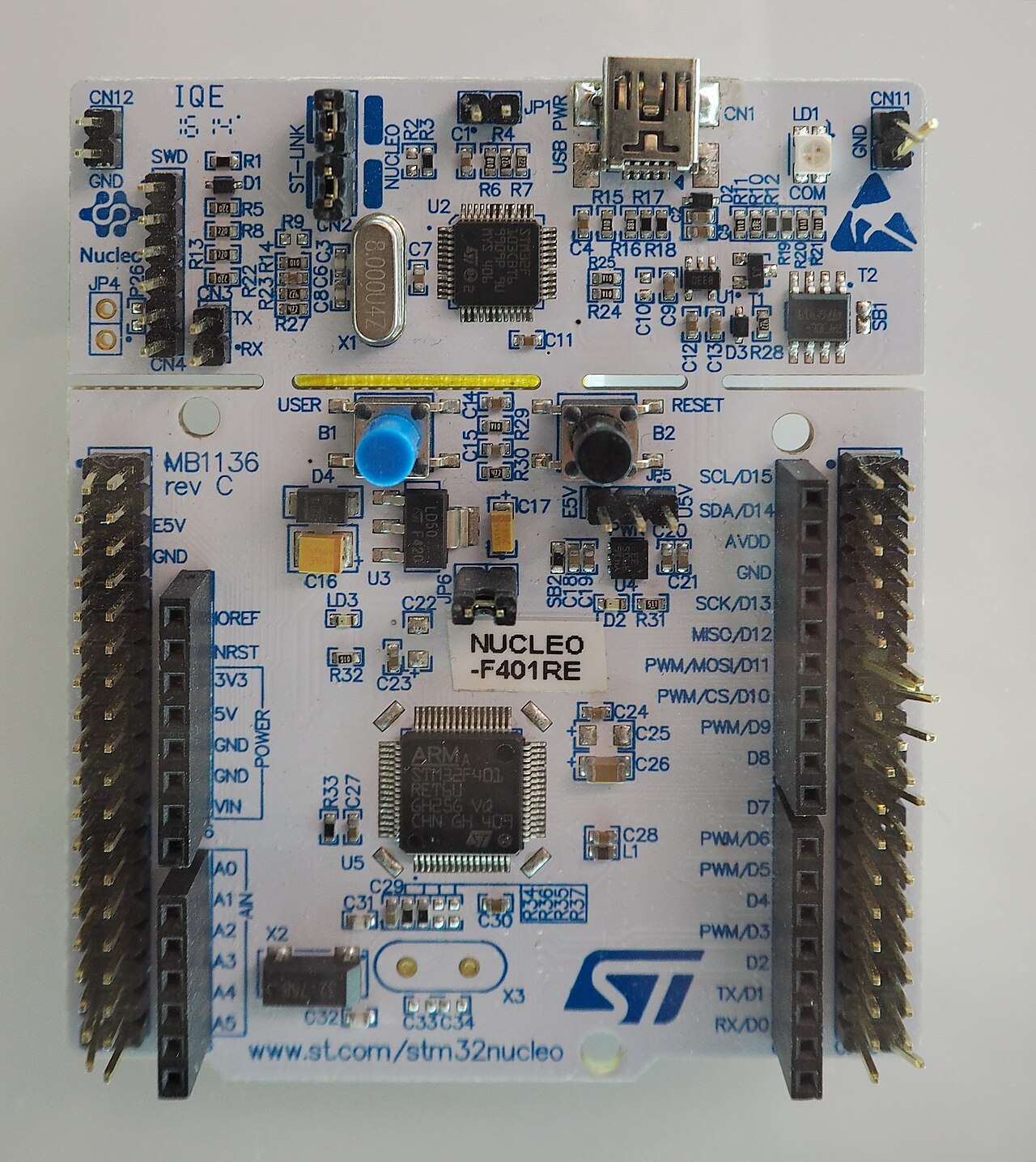
The application read narrows the field fast, and it opens on a single letter in the part number. At the value end, the C0 and G0 ride a Cortex-M0+ and cost a few cents, the parts that vanish into a toy, a charger, or a remote. The middle of the range carries a Cortex-M4 with floating point in the F4 and G4, stepping up to a Cortex-M7 with caches in the F7 and H7 where the work gets heavier. Out at the specialist edges sit the low-power L4 and U5, drawn to run for years on a coin cell, next to the radio-equipped WB and WL. One letter has already taken the catalogue from hundreds of parts to a handful, and it does the cutting along whichever axis the product leans on hardest, whether that is raw compute, battery life, or a wireless link. The order is what matters. The letter sits downstream of the need, seldom ahead of it, so a team that writes its requirements before it browses parts finds the series already waiting at the foot of the page.
| Series | Arm core | Clock ceiling | Where it fits |
|---|---|---|---|
| C0, G0 | Cortex-M0+ | up to ~48-64 MHz | value, simple control |
| F4, G4 | Cortex-M4 + FPU | up to ~170-180 MHz | control, audio, light graphics |
| F7 | Cortex-M7 | up to ~216 MHz | smoother UI, heavier DSP |
| H7 | Cortex-M7 (option +M4) | 480 MHz, to 550 | displays, cameras, compute |
| L4, U5 | Cortex-M4 / M33 | up to ~80-160 MHz | low-power, battery life |
| WB, WL | Cortex-M4 (+M0+ radio) | up to ~48-64 MHz | wireless (BLE, LoRa) |
From there, the digits and the suffix carry the rest of the story. They name the line within the family, the pin count, the flash size, and the temperature grade, so a finished part number reads almost like a sentence once the grammar is second nature. Picking the right STM32 series is its own walk down those axes in order, from the compute the job needs to the price it can bear. The reward goes to a team that works downward from the requirements, since a part chosen from old habit only ever fits the project that formed it. The next product is rarely the same shape as the last. The same logic discourages standardising on one part across a whole product range, since a sensor and a gateway pull on different axes. A part sized for one of them wastes money or runs short on the other.
One twist along the way tends to catch a newcomer. The cheapest part in a family is often the newest one, since a recent series rides a smaller process that costs less per wafer and packs more onto the die. A G0 on a current Cortex-M0+ lands under the older F0 on price, clocks higher, and carries a fresher peripheral set, all of it standing the usual save-money instinct on its head. That flip is the case for the cheaper, newer STM32G0 over the F0. The same logic favours each newer series in turn.
Run a few times, the chain turns automatic: need to axis, letter to line, line to part, datasheet to confirm.
How hard the silicon has to work
Picking the letter sets the family. Picking the tier sets the muscle. Across the mainstream, that muscle climbs in clear steps. The F4, on a Cortex-M4, is the workhorse for control loops, audio, and light graphics. For a great many products it is the entire answer, at a price the design barely notices. The F7 keeps that same job and hands it a Cortex-M7, real instruction and data caches, and a clock past two hundred megahertz, enough for a smoother user interface and a heavier signal-processing load. The H7 is the part where bandwidth takes over, clocked to the 480 MHz ST documents for the series, with a handful of lines reaching 550, wrapping a wide multi-layer bus around several blocks of RAM and offering a second core at the top of the line for jobs that want true isolation. Every step up the ladder pays for its speed in power, board complexity, and unit price. The craft is in reading where the worst-case work falls, since a job that streams pixels to a display loads the silicon in a different place than a job that crunches a control law every few microseconds. A team unsure how big each step is can hold the performance differences across the F4, F7, and H7 next to its own worst-case frame, tier by tier.
The discipline is to take the tier the peak load needs and then stop. A part run flat out has nothing in hand for next year’s feature. A part chosen two tiers too high pays in money and board area for headroom that never once runs. The honest target leaves room for one more firmware load and reaches no further, which keeps the bill of materials sized to the real work and nothing past it. That restraint pays twice, once in unit cost and once in the power budget, since a part left to idle in a low-power state draws less than the same job pushed onto a bigger core that has to stay awake.
One toolchain underneath it all
Whatever part wins both reads, the daily work lands in STM32Cube. CubeMX configures the chip through a graphical view and writes the start-up code. The HAL and LL libraries drive the peripherals at two levels, one for portability and one for raw speed. CubeProgrammer loads the finished image into flash. Because the whole range shares that software, a skill picked up on one part carries straight to the next. The migration tax between two STM32 parts then shrinks to the handful of things that genuinely changed, which is a large reason a team that starts inside the family tends to stay there for the next product and the one after that.
The one real fork in the tooling is the bench a team builds on. The free CubeIDE bundles editor, compiler, and debugger with nothing to license. Keil offers a commercial path, its own debugger, and a support line to phone when a project is on a deadline. Both reach the chip over the same SWD port, so the choice rides on a team’s habits and its appetite for paid support. All of that, the free bench and the paid one, is the ground Keil versus CubeMX for STM32 work covers in full. The tooling shapes the months after a purchase far more than it shapes the purchase itself.
The part the line can keep buying
The supply read is the half this hub’s title points at, and in practice it is the half that quietly ends more product lines than any benchmark figure ever will. A board that falls for one exact part, and lays out for that part and no other, sits one allocation notice away from a stopped line. The guard against that is cheap when it goes in early, while the footprint is still on the screen. Once the layout is frozen and the first boards are back, the same change means a respin. So the supply read belongs at the start of the schematic, next to the application read from the first line drawn.
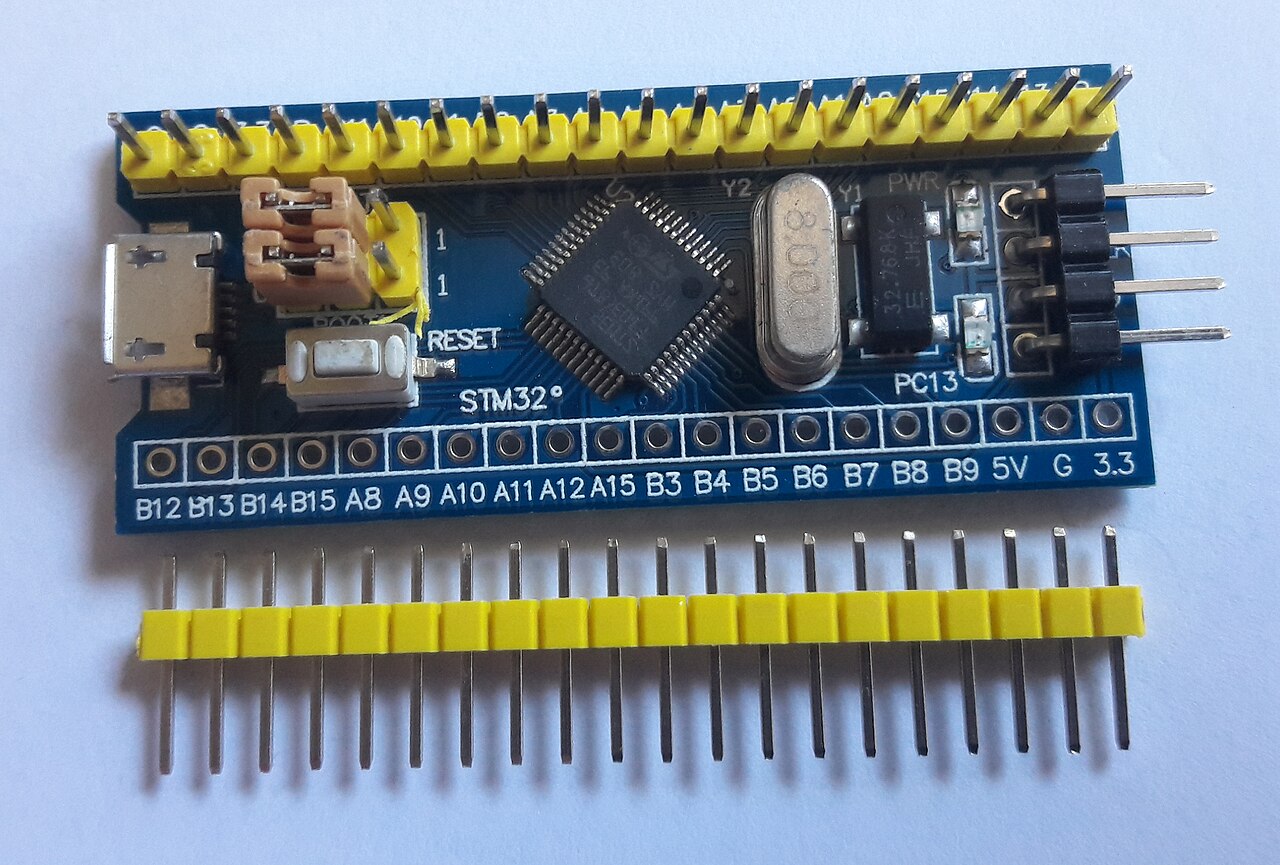
The strategy itself is two moves. The footprint carries both. The first move keeps the options open inside ST. Many STM32 parts have pin-compatible siblings that stay in stock, a larger-flash or a lower-cost one that drops onto the same pads with no board change. A design then rides out a shortage on whichever variant is available that week. A footprint drawn for the whole family is the better part of the insurance a board ever needs. The second move steps outside ST entirely, to a domestic Cortex-M part built to the STM32 footprint and a close copy of its register map, the kind a board can take after a firmware change alone once an STM32 goes scarce or its price climbs past what the product can bear. Both moves take real work. A pin-compatible swap still wants its own bring-up and its own qualification run before it ships. A part from another vendor wants a real check of every peripheral the firmware leans on, register by register where the maps drift apart, since a clock tree or a timer that differs by one bit is exactly what slips through bench testing and surfaces as a field failure later. The reward for all of it is plain. A design holds a second source before the day it needs one, which is the whole distance between a calm reorder and a line down for a quarter. That distance dwarfs the few hours the footprint work costs.
The footprint is the hardware side of the guard; the approved-vendor list is the paperwork side. Put the alternatives on that list from the first build, and prove each one on its own board the way a fresh lot of the main part gets proved. A list kept current as parts come and go keeps the next allocation notice down to a sourcing email. It also hands purchasing real leverage, since a second qualified source bears on the price a vendor quotes as much as it guards against an empty shelf. The list costs little to keep current. That small cost buys the gap between an email and a redesign the first time a part goes scarce.
The whole habit reframes what shipping even means. The part that ships is whatever a buyer can drop into a basket on the day the line is hungry, at a price the product still carries.
A reel you cannot buy has no performance at all. The cleverest part in the catalogue, sitting on twenty-week lead time, does less for a product than a dull part that arrives tomorrow.
Reading both at once
The two reads are not done in isolation, since each one pulls on the other. Climbing to an H7 on the strength of its compute pulls the supply read up with it: the part costs more, comes in finer-pitch packages, wants several rails, sits in a thinner second-source pool than an F4. The same trap waits on a niche low-power part, which narrows the field of drop-in alternatives to almost nothing. The strongest selections settle the two reads together, trading a little raw performance for a part two vendors can supply, or accepting a slightly larger package for a footprint the whole family shares. A choice that looks ideal on the application read alone, with the supply read left for later, tends to age badly once the product is in the market and the first shortage arrives. Settling both early also keeps the firmware honest, since a team that knows a domestic second source sits on the footprint writes its peripheral code against the common subset from day one.
Four products, four paths
It helps to walk a few products through the decision. A battery sensor that wakes once a minute spends its application read on power alone, so it lands on an L4 or a C0 and lives or dies on sleep current. Its supply read stays gentle, since low-pin value parts are rarely the first to go scarce. A brushless motor controller spends its read on a fast control loop and a floating-point unit, which points at an F4 or a G4. Its supply read leans hard on the pin-compatible trick, since a motor product often ships for many years and cannot rest on a single source. Neither product needs an H7. Reaching for one would pay for idle silicon at a unit price the market will not bear. Both reads stay quiet on these two, a sign that an F4-class part is the right home. The hard parts of the board lie elsewhere.
The other two products push the opposite way. A handheld with a colour screen and a camera spends its application read on bandwidth, which is the H7 story end to end. Its supply read turns harder, since high-pin, high-speed parts are the ones a shortage hits first. The board already carries several rails and a careful layout to suit them. An industrial gateway that talks on three buses at once wants the F7 in the middle, fast enough for the protocol stacks and calm enough to qualify. Its supply read goes straight to a second source, often a domestic part on the same pads, since an industrial line that stops is the costliest kind to restart. Each of the four products answers those two questions in its own place.
One pattern cuts across all four. The harder the application read pushes, the harder the supply read pushes back. A C0 sensor and an F4 motor controller sit in deep, crowded markets where a second source is a phone call away. An H7 handheld lives in a shallow pool of high-pin, high-speed parts that a shortage drains first. The faster the silicon a product reaches for, the earlier its second-sourcing has to be planned. A shared footprint pays for itself sooner on those boards. Performance and supply are two ends of one decision. The products that age well pay both at once.
The thread through all four is steady. The application read sets the floor a part has to clear. The supply read decides which of the parts that clear it a design can live with for years. A team that runs both reads, in that order, on every project stops being surprised by either one, and the part it picks is rarely the cleverest on paper, reliably the one still arriving on a reel when the tenth production run goes out the door. That is the test a selection exists for, the tenth build as much as the first, and the four paths above all bend toward the same quiet outcome, a part still on its reel.
The years after the first ship
A part choice is made in a day and lived with for years. The first units ship on the part that won the two reads, and so do the units three years later, through every cost-down and every firmware release in between. Changing the core part after launch is the expensive move: a respin, a fresh qualification, a re-test of the whole application, and a gap in supply while the new boards come up. The larger part of the value in a careful selection is that this expensive move never has to happen, since the part still fits the product as the product grows. The commitment reaches past the chip into the team’s muscle memory, the build scripts, the test fixtures, and the compliance documents an auditor will ask for, all of which quietly assume the part that shipped first.
Cost-down is the pressure that tests the original choice. As volume climbs, the bill of materials gets squeezed, and the question becomes whether a cheaper part can stand in without disturbing the design. A family chosen with room in it answers without drama: drop to a smaller-flash sibling on the same pads, or move to a newer, cheaper series that the early read already flagged. A family chosen without that room answers with a redesign. The selection made on day one decides which of those two conversations the team has in year two. A second cost-down usually follows the first, so the room a family leaves gets drawn on again and again across the product’s life, one squeeze after another.
None of this shows up in a benchmark or a unit price at the moment of choosing. It surfaces later, as the absence of a crisis, the kind of payoff a production line feels long after the slide deck has been forgotten.
What the decision settles
The choice outlives the chip by years. It binds a product to a core, an ecosystem, a supply posture, and a toolchain for the whole life of the design, across every update and every cost-down that follows. A part chosen against the real needs, the real supply chain, and the real toolchain carries a product from the first prototype to the last shipment with nothing dramatic to report along the way. That quiet is the entire return on the reading done up front. The strength of the STM32 is that one careful pass pays back across the whole range: name the needs, pick the series, set the tier, find the value part, line up a second source, settle the bench, and the rest is mostly typing.
The ordering code is the easy part. Everything above it is the selection.
How do I start choosing an STM32?
Start with two reads, well before any part number. The application read fixes how much compute, memory, and power the job needs and points at a series. The supply read asks whether that part will still be on a reel in two years and whether a second source shares its footprint. The exact part falls out once both reads agree.
What is a pin-compatible STM32 alternative?
It is a part that drops onto the same footprint with no board change. Inside ST, that means a larger-flash or a lower-cost sibling on the same pads. Outside ST, it means a domestic Cortex-M part built to the STM32 land pattern and a close copy of its register map, which a board can take after a firmware tweak with no respin.
Do I always need a second source?
For anything shipping in volume or for years, yes. A single-source board is one allocation notice from a stopped line. The cheap insurance is a footprint that more than one part can sit on, planned at layout long before any shortage shows up.
Is the newest STM32 series the dearest?
Often the opposite. A newer series rides a smaller process that costs less to make, so a G0 can land under the older F0 on price while running a higher clock. A value design reads the newest series first and treats the legacy part as the fallback.
Which STM32 series should a new design start with?
The F4 carries a great many designs at a comfortable price, so it is a sound default. Drop to the C0 or G0 when cost or power dominates. Step up to the F7 or H7 when a display, a camera, or heavy compute sets the pace.