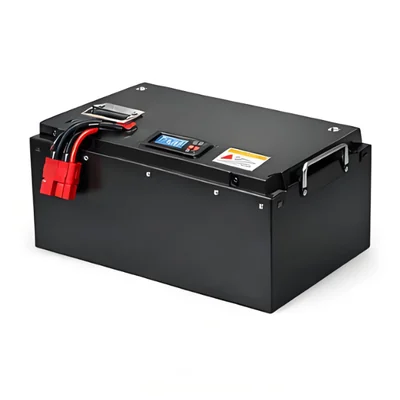
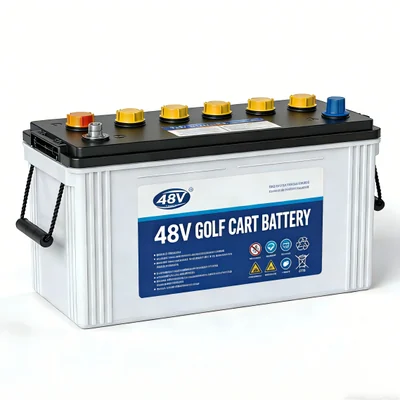
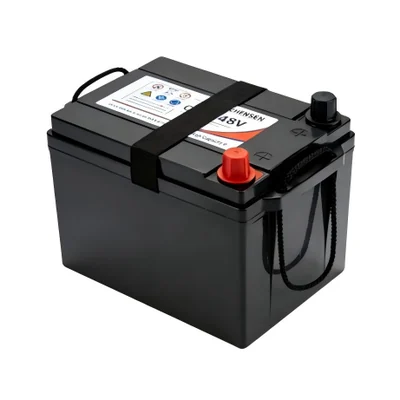
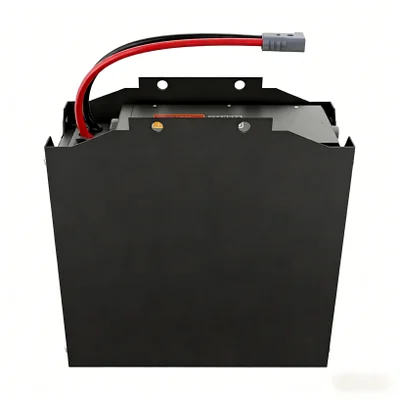
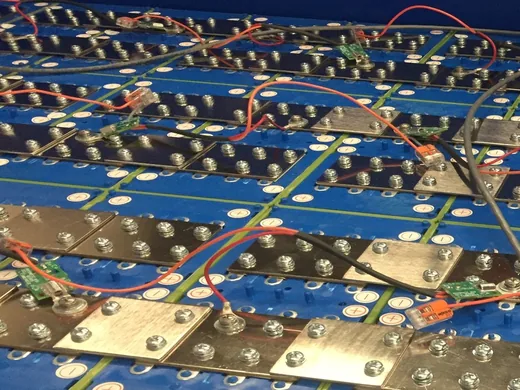
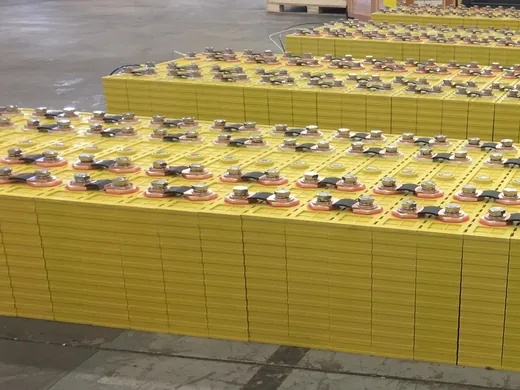
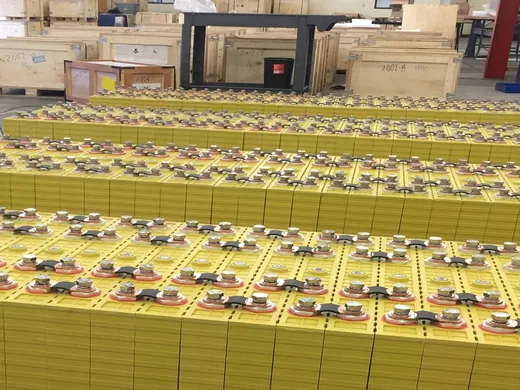
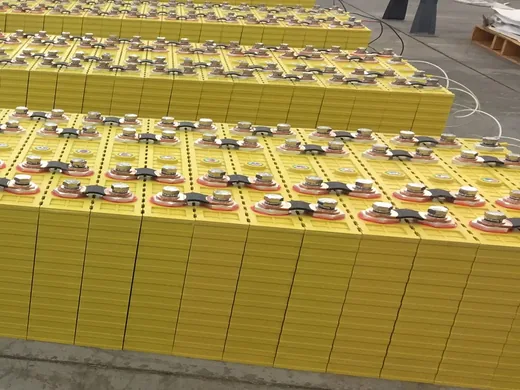
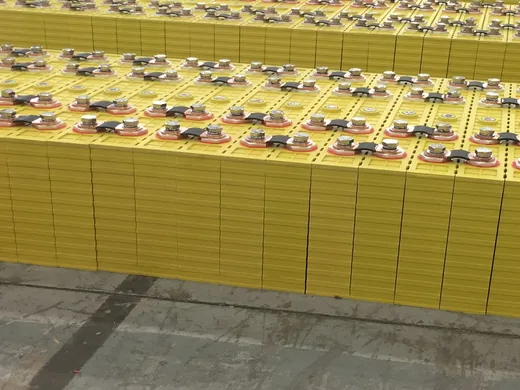
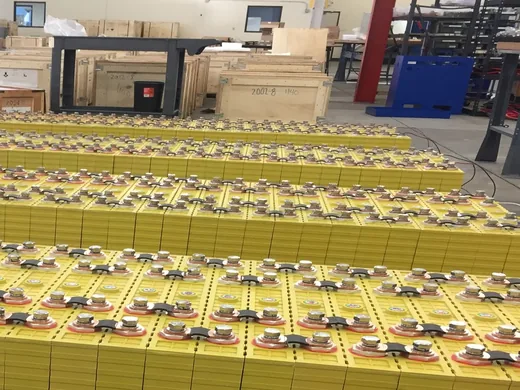
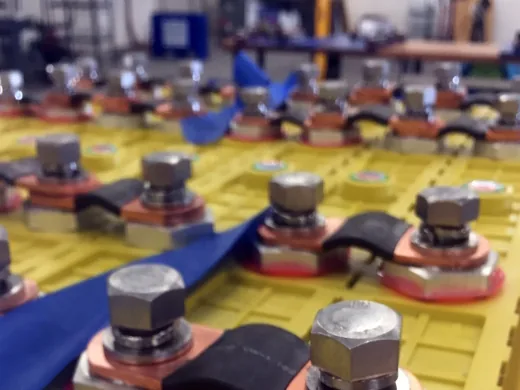
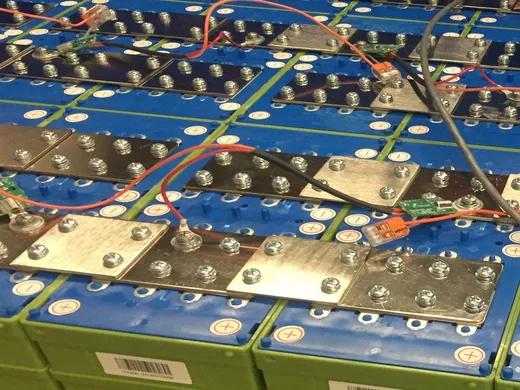
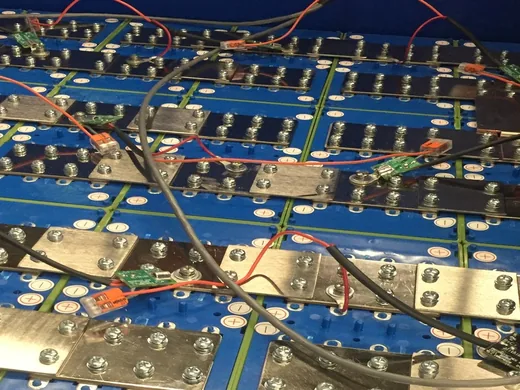
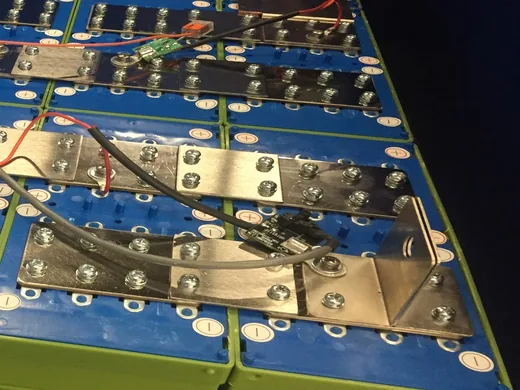
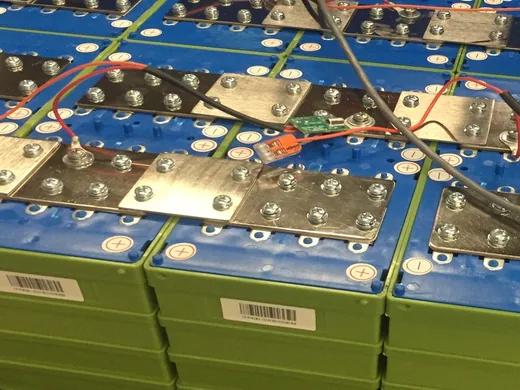
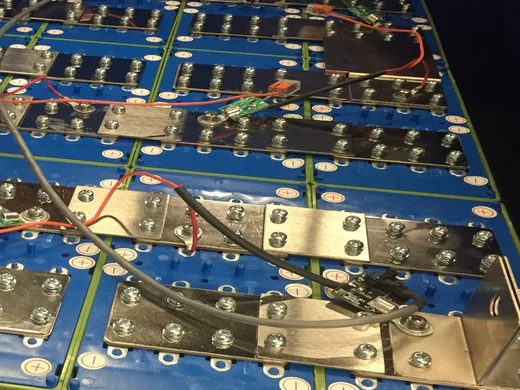
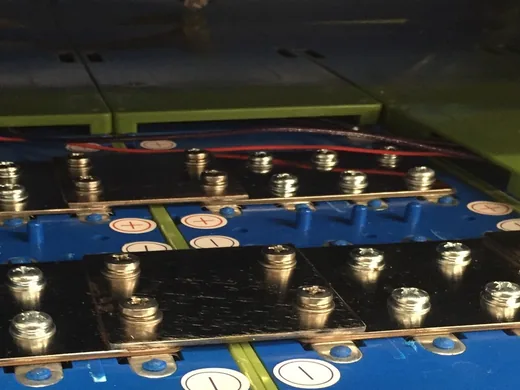
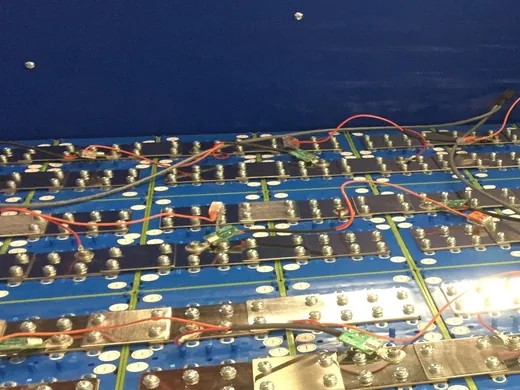
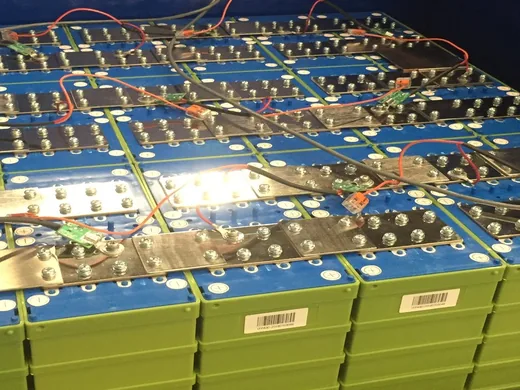
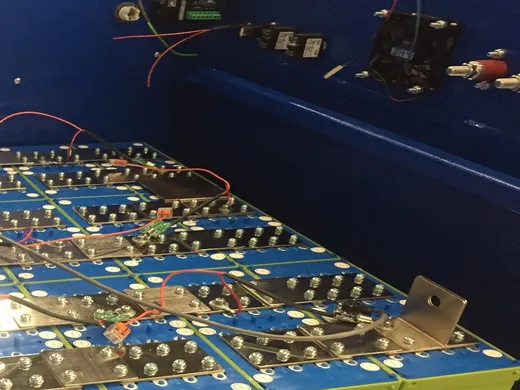
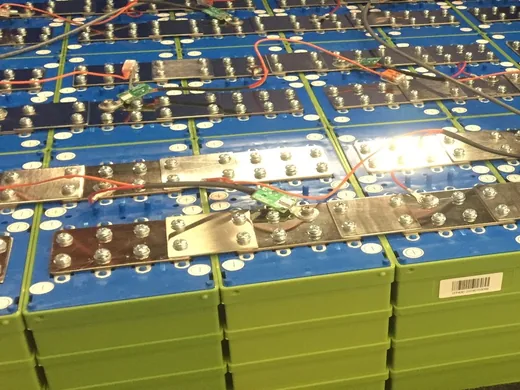
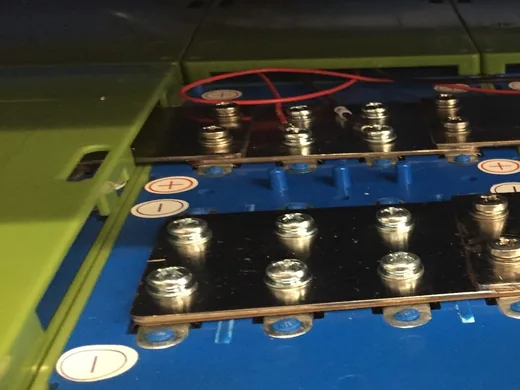
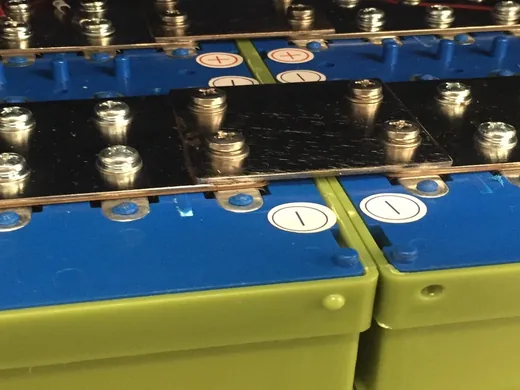
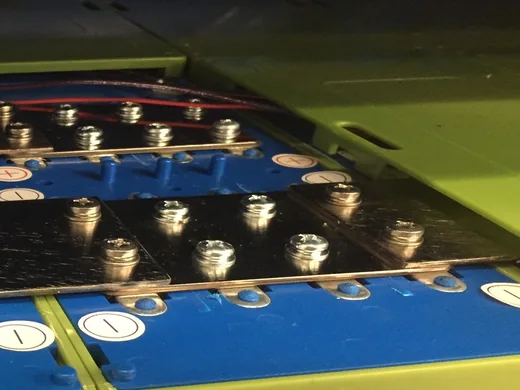
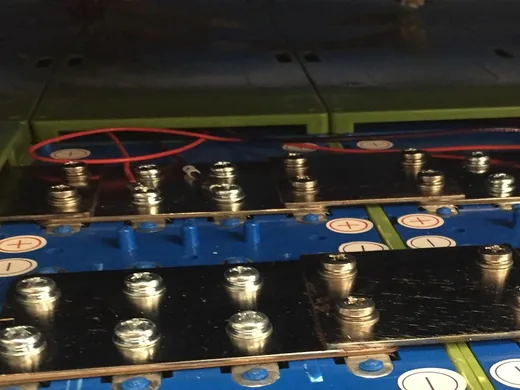
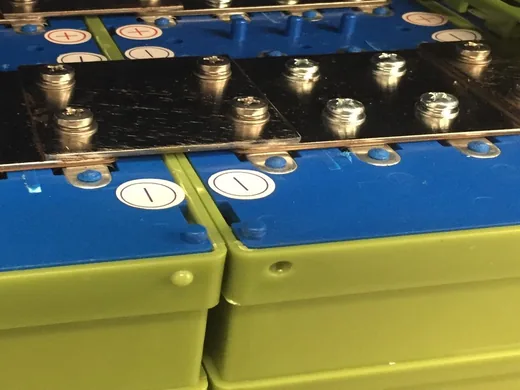
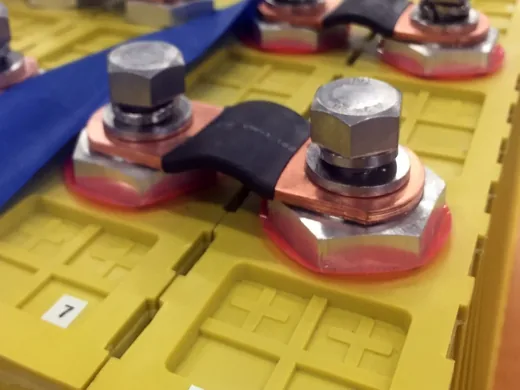
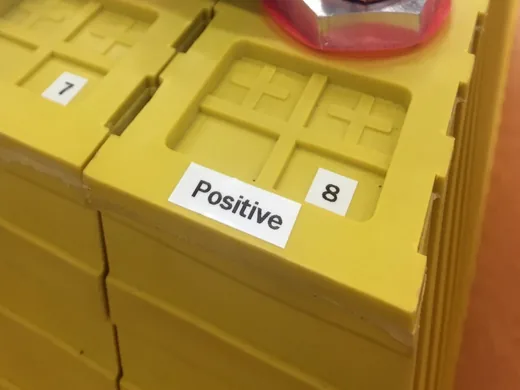
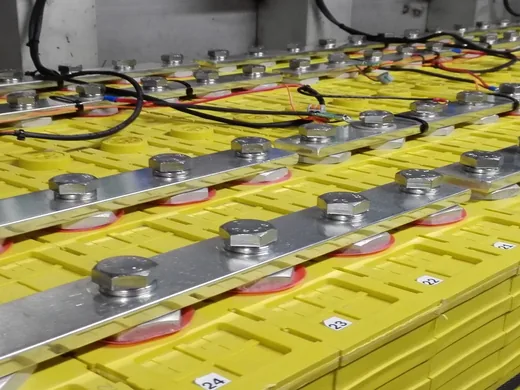
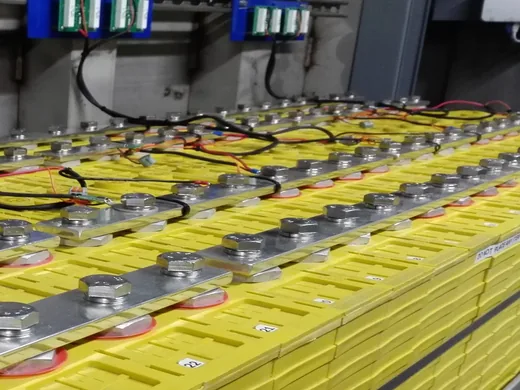
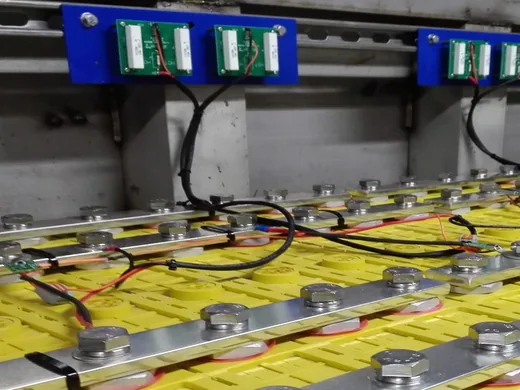
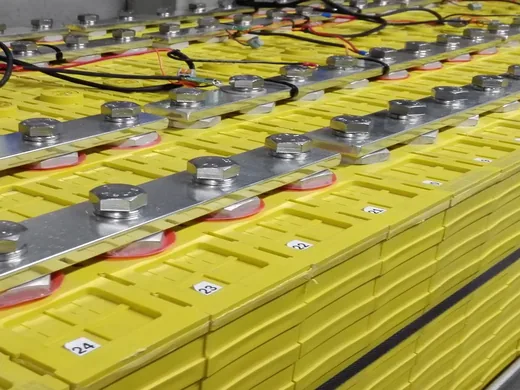
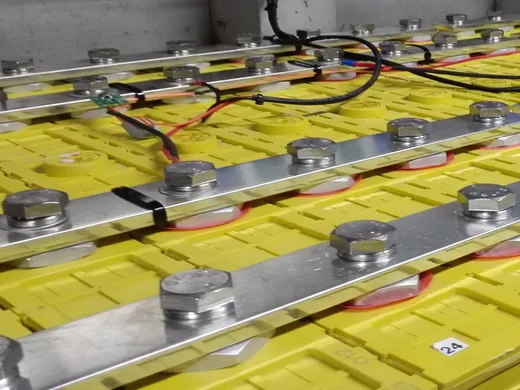
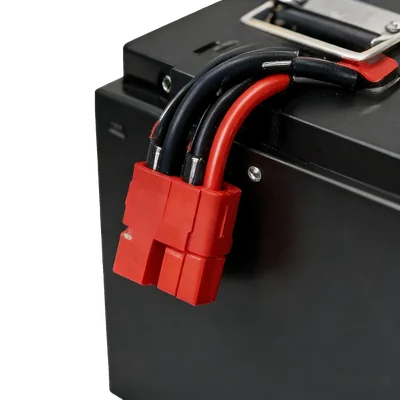

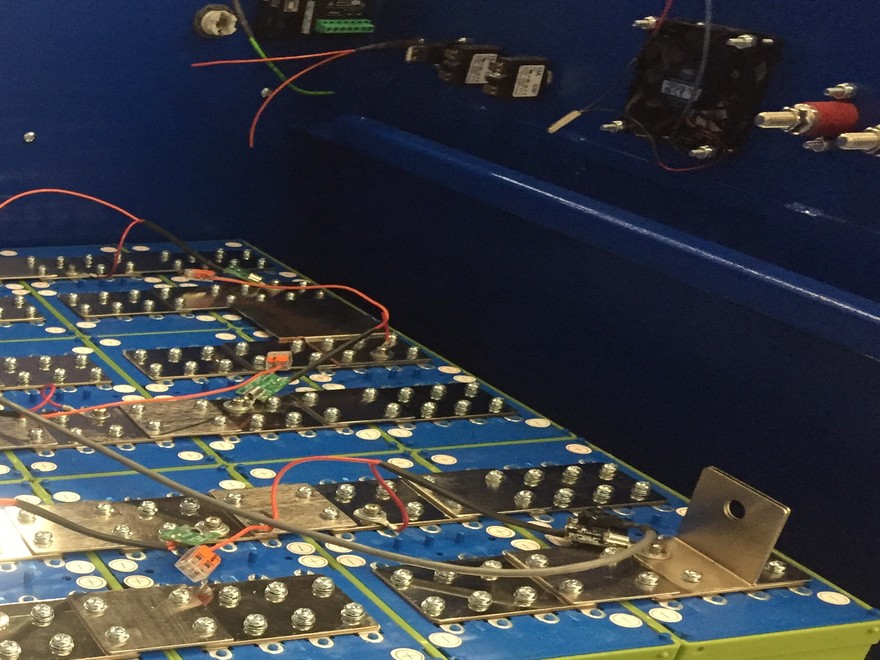
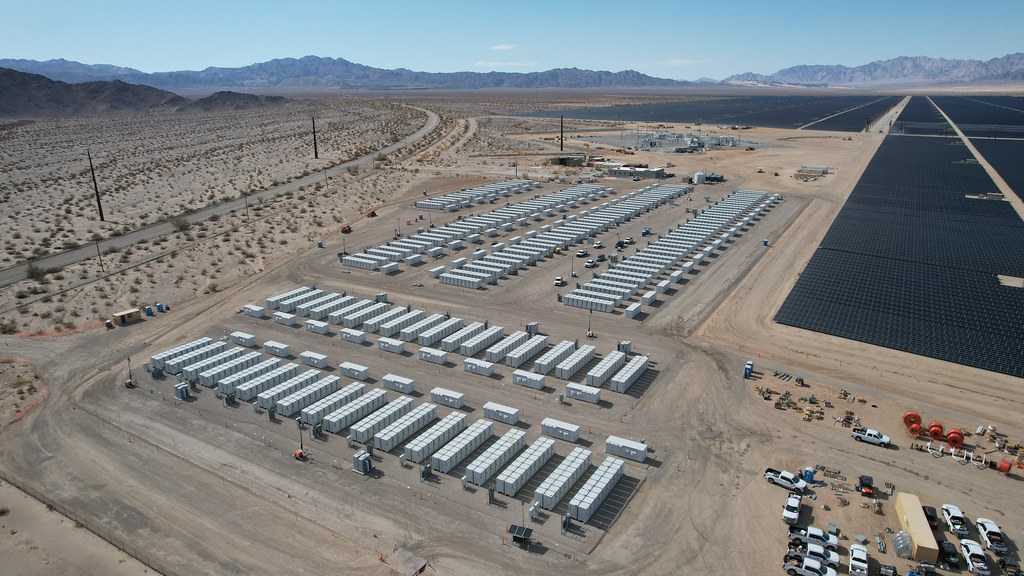
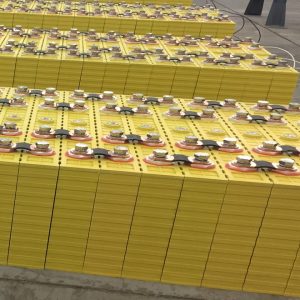
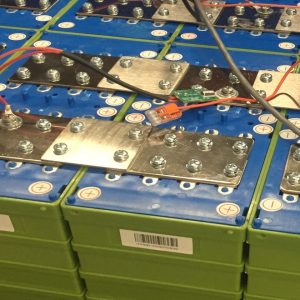
Energy storage is the same discipline at every scale. The photo below is a grid-scale battery plant in the California desert, thousands of containerized LFP modules beside a solar field; the CE-125 is the identical chemistry two steps down the ladder, 3.2V and 125Ah in one 400Wh prismatic can, sized for the walls, cabinets and industrial trucks that sit between a home rack and a utility yard.
Position
The step between two standards
Below this cell sits the 100Ah industry brick. Above it start the heavy traction sizes. The 125Ah point earns its place with a quarter more energy in nearly the same footprint class, and it changes what a fixed cell count delivers:
| 16S string | 51.2V · 6.4kWh, against 5.12kWh from the same count of 100Ah cells |
|---|---|
| 2P8S truck pack | 25.6V · 250Ah, clearing the published 200Ah double-shift specification in two parallel groups |
| 4S block | 12.8V · 1.6kWh, a hundred-amp-hour block with a second wind |
| 2P16S wall | 51.2V · 12.8kWh, whole-home scale from thirty-two cells |
Same shelf, same busbar pitch class, 25% more watt-hours. Projects that outgrow the 100Ah build move here before they move to a bigger enclosure.
Two Duties
Storage duty and truck duty
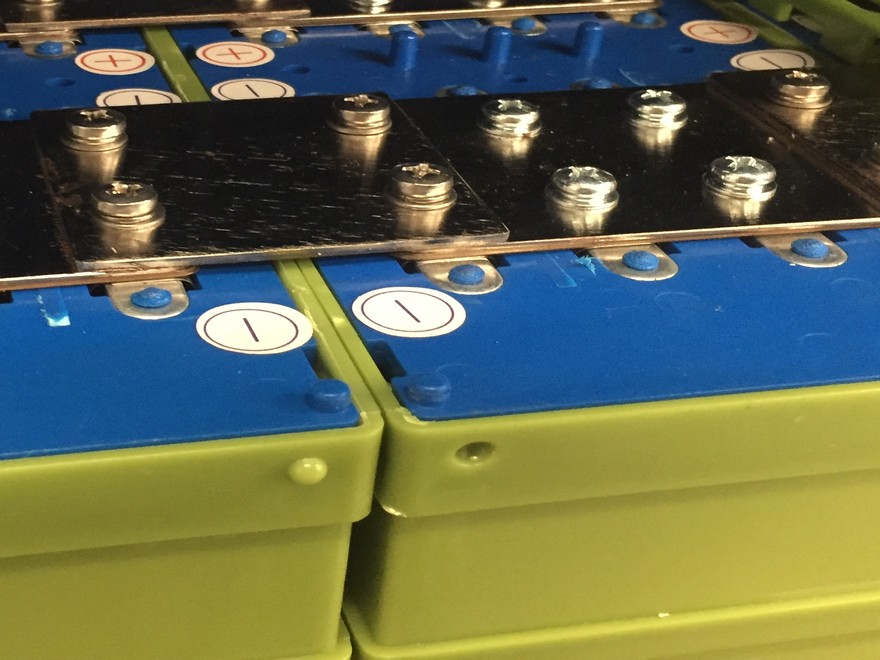
Storage duty is gentle and long. A solar wall cycles once a day at partial depth, which against a ≥4,000-cycle rating at 80% depth reads as a decade-plus of calendar service. The levers that finally retire a storage string are heat and resting charge state, not the counter. Small commercial cabinets, telecom sites that outgrew 48V 100Ah shelves, and three-phase home systems are the natural placements, at 6.4kWh per string.
Truck duty is the opposite: hard pulls, opportunity charging, two shifts. Here the arithmetic borrows from the pallet-jack world, where published guidance sets 200Ah and up as the double-shift specification; a 2P8S build answers with 250Ah and a 250A continuous rating, and the 2-hour fast-charge behavior of the class turns every meal break into range. Tugger trains, heavier walkie machines and cold-store fleets with heater film are the buyers.
Sheet
Datasheet
| Model | CE-125 |
|---|---|
| Nominal voltage | 3.2V |
| Rated capacity | 125Ah (0.5C, 25°C) |
| Energy | 400Wh |
| Charge voltage | 3.65V |
| Discharge cutoff | 2.5V |
| Continuous discharge | 125A (1C) |
| Peak discharge | 250A (2C pulse) |
| Cycle life | ≥4,000 cycles @ 80% DOD |
| Weight | ≈2.4 kg |
| Format | Aluminum prismatic (batch datasheet) |
| Terminals | M8 stud |
| Operating temperature | Discharge -20~60°C / Charge 0~45°C |
| Certification | UN38.3 / CE / RoHS |
The telecom cabinet case, in round numbers
Telecom backup runs on a published planning band: a 5G site typically reserves 10 to 20kWh of battery. Two 16S strings of CE-125 hold 12.8kWh and land inside that band with the standard architecture, one BMS per string, strings paralleled at the distribution bar, four hours and more of autonomy against a 3kW site load. The 48V shelf that held 100Ah now holds a quarter more without growing, which is the whole argument for this capacity at sites where the cabinet is bought and the load keeps creeping upward.
The same quarter matters at the other end of the wire. Off-grid telecom, hilltop repeaters and rural fiber huts size their battery on the worst gray stretch of the calendar, and 6.4kWh per string against 5.12 buys most of an extra sunless day per rack position for the same install labor.
The long-range cart pack
Golf and resort fleets meet this cell when the standard course pack stops being enough. The factory-lithium platforms ship at 51.2V 105Ah, 5.4kWh, rated in the 40 to 50 mile band; a 16S build of CE-125 lifts the same cart to 6.4kWh and stretches the band by roughly a fifth, which is the difference between charging every night and charging every other night on a resort shuttle loop. Fleet managers read that as one less charger bay per pair of vehicles. The finished 105Ah packs elsewhere in this store drop into the same carts unchanged; this cell is the route for fleets that keep asking one more loop of the property from every charge.
End of first life is not end of service. Storage strings retired at 80% health from a wall keep working in lighter duty, gate systems, backup shelves, workshop power, the same second-life path the telecom industry runs at national scale with retired tower batteries. The QR records make the handoff auditable: any future owner can pull the cell’s full history before deciding what to trust it with.
Practice
Build notes that differ at this size
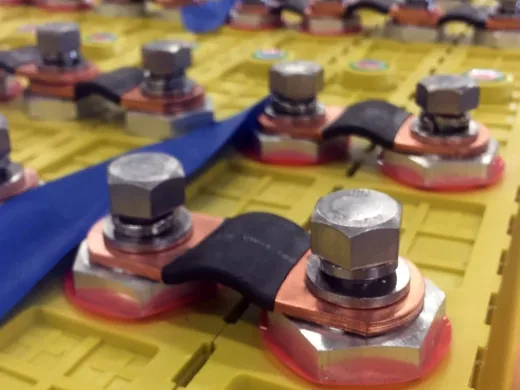
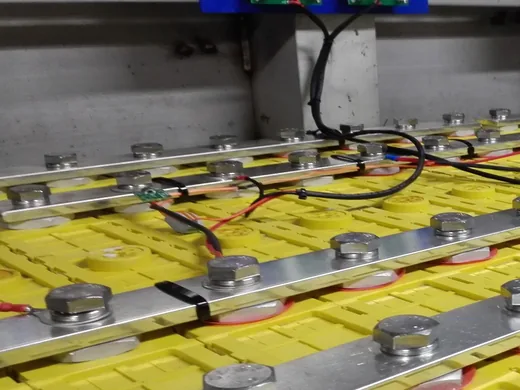
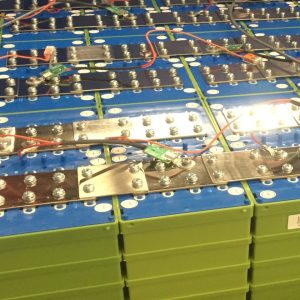
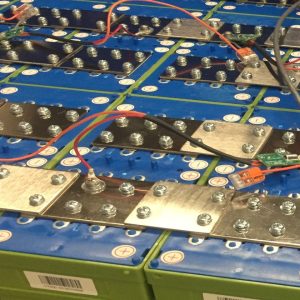
Mass changes handling before it changes wiring. A 16S string of these cells weighs about 38kg of bare cells. Racks therefore get assembled in place rather than carried charged, and the M8 terminal hardware takes 10 to 12 N·m with a torque wrench rather than a feel-calibrated wrist. The 125A continuous rating asks for 6 AWG class conductors in 12V blocks and proper busbar in strings. Everything else follows the family drill: parallel top-balance at 3.65V, per-cell BMS protection with the low-temperature charge cutoff, absorption at 3.45 to 3.5V per cell for calendar-first installations, a commissioning discharge at 0.5C against the clock, storage at 30 to 50% charge between projects.
QR traceability runs cell by cell into the factory batch records; project lots ship from a single batch matched on capacity and internal resistance, and the sheets follow the codes into the commissioning file.
Reviews
There are no reviews yet.