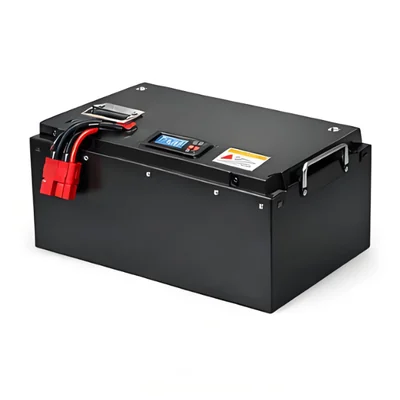
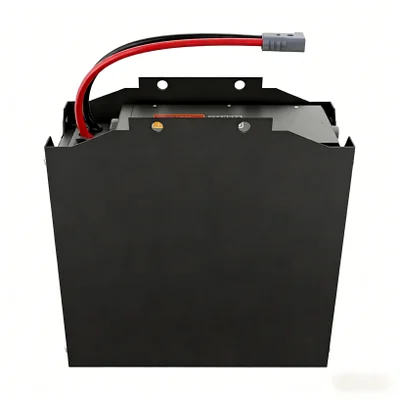
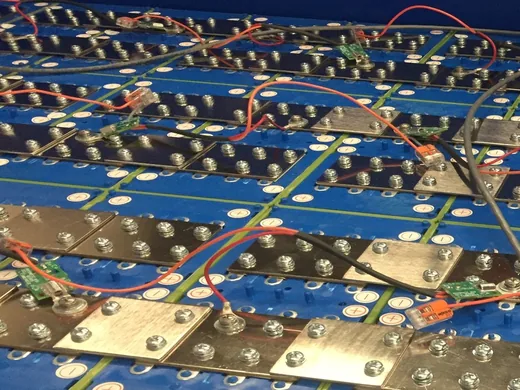

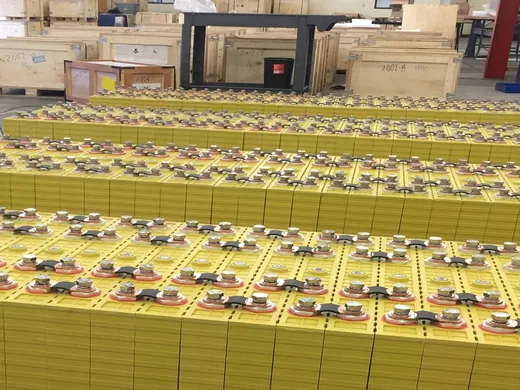


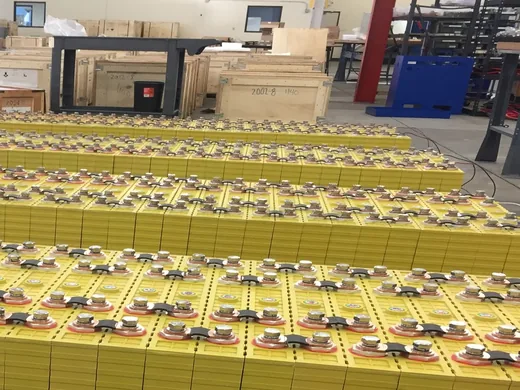
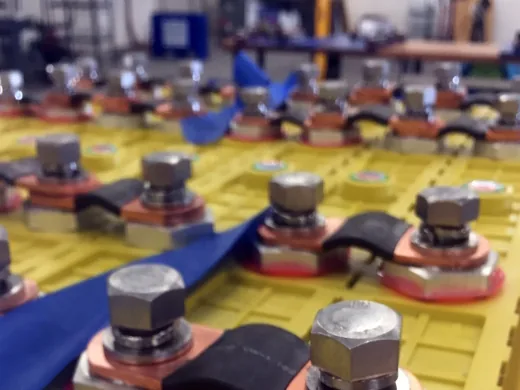
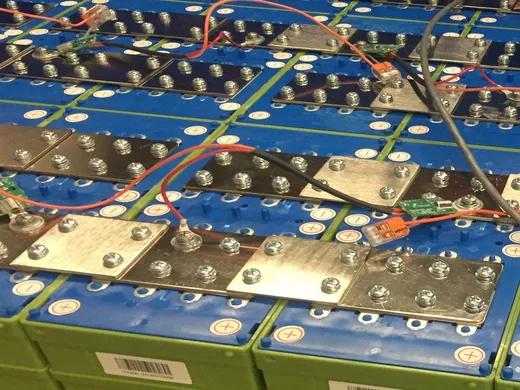
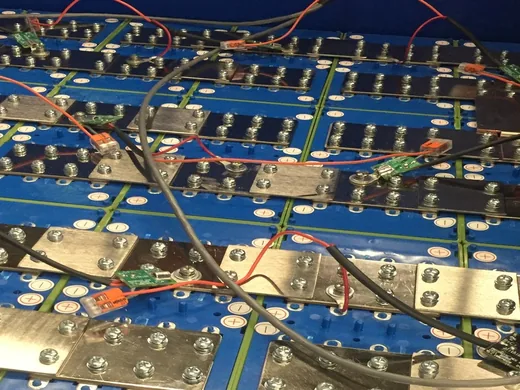
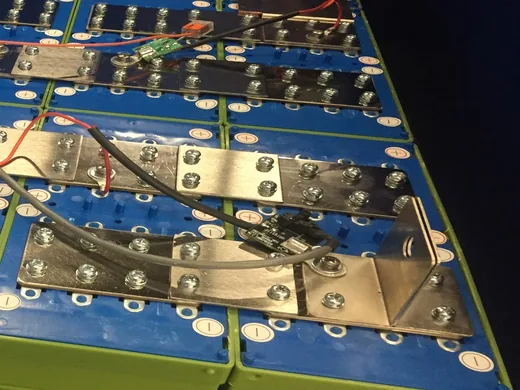
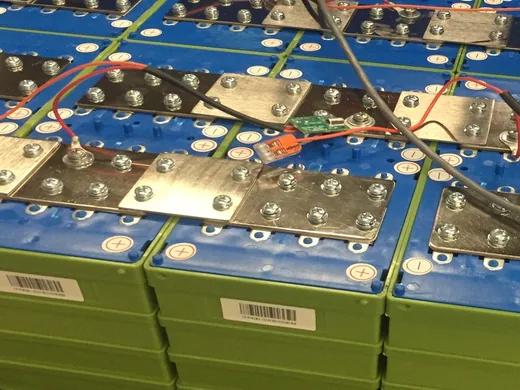
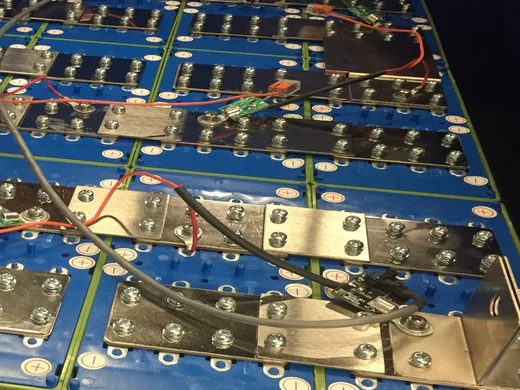
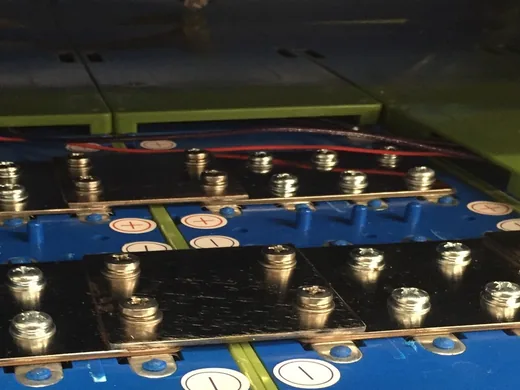
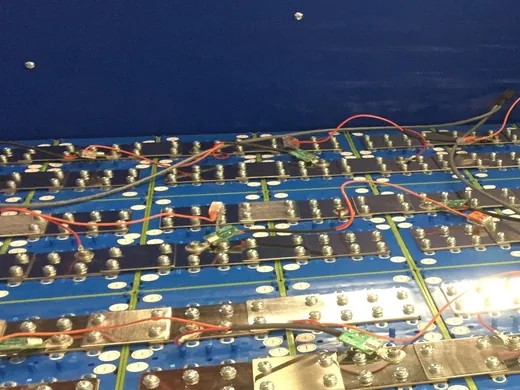
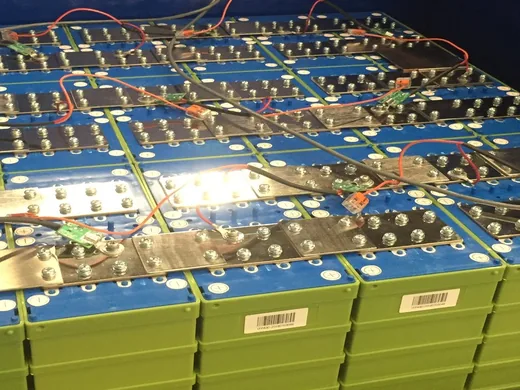
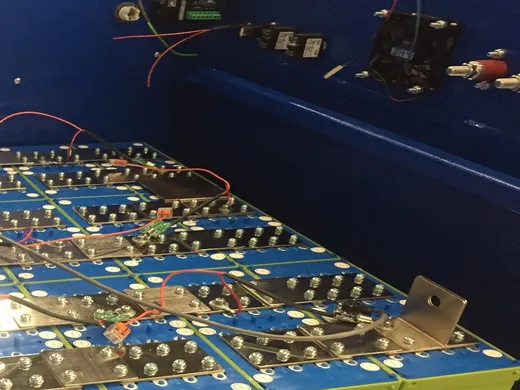
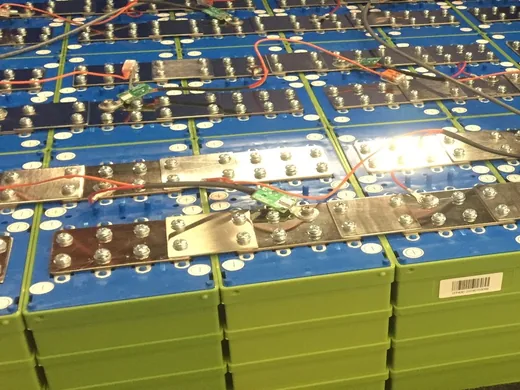
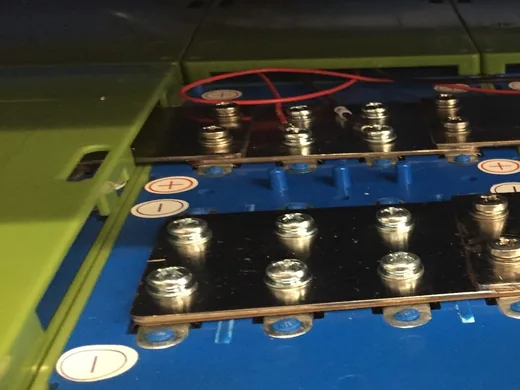
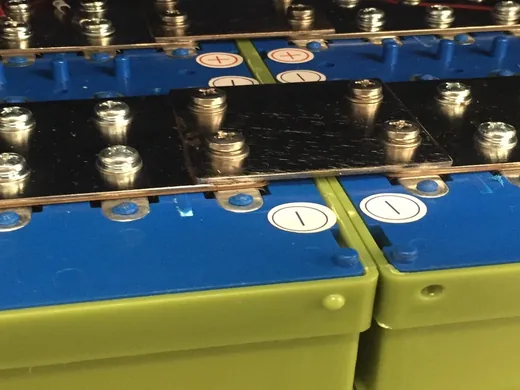
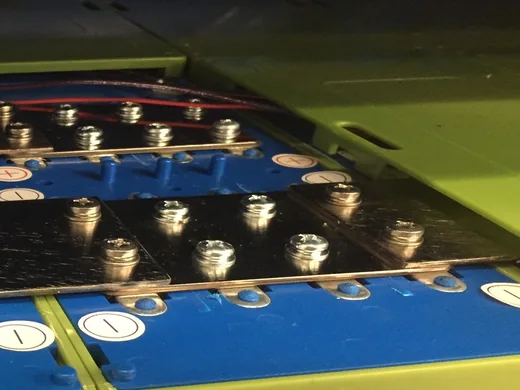
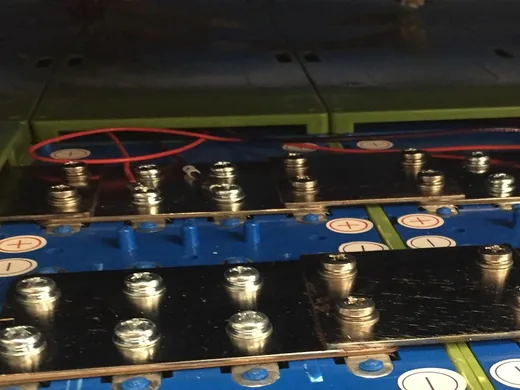
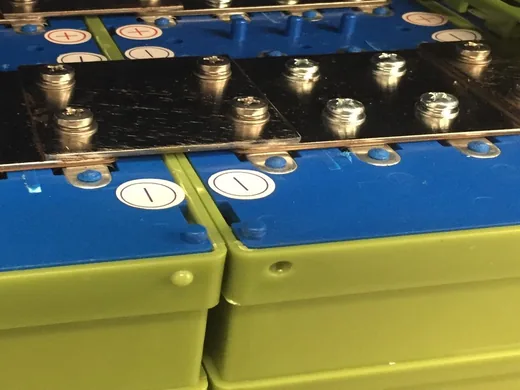
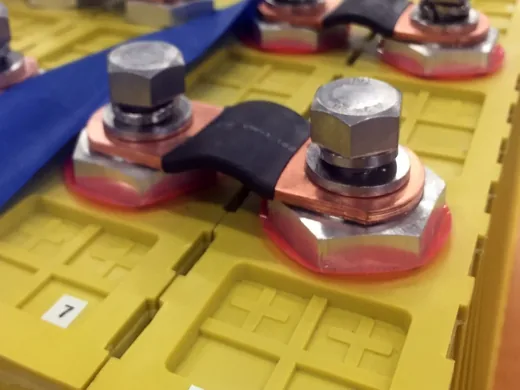

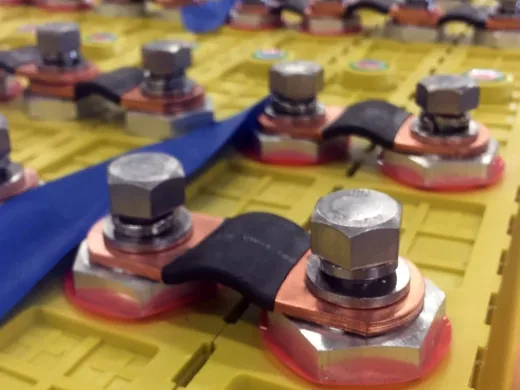

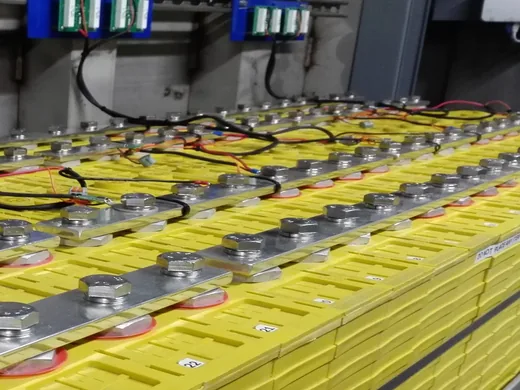
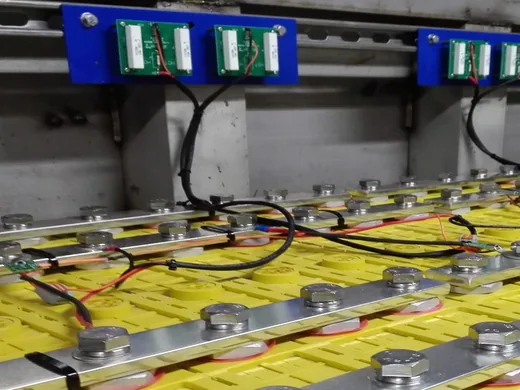
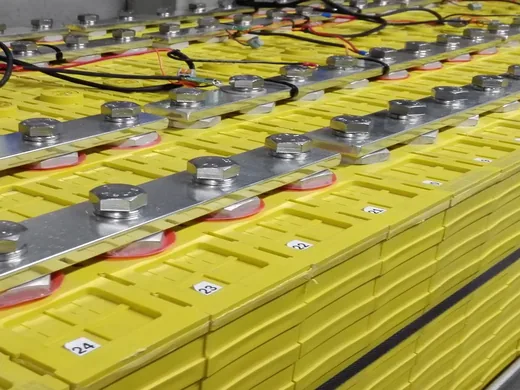
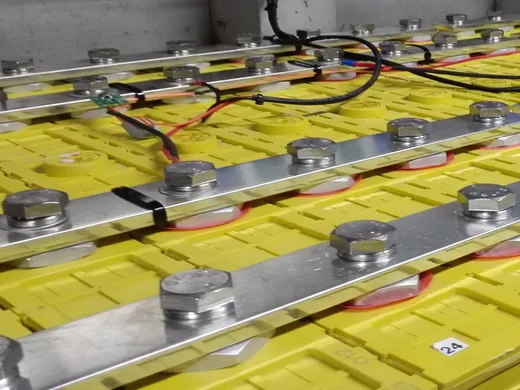


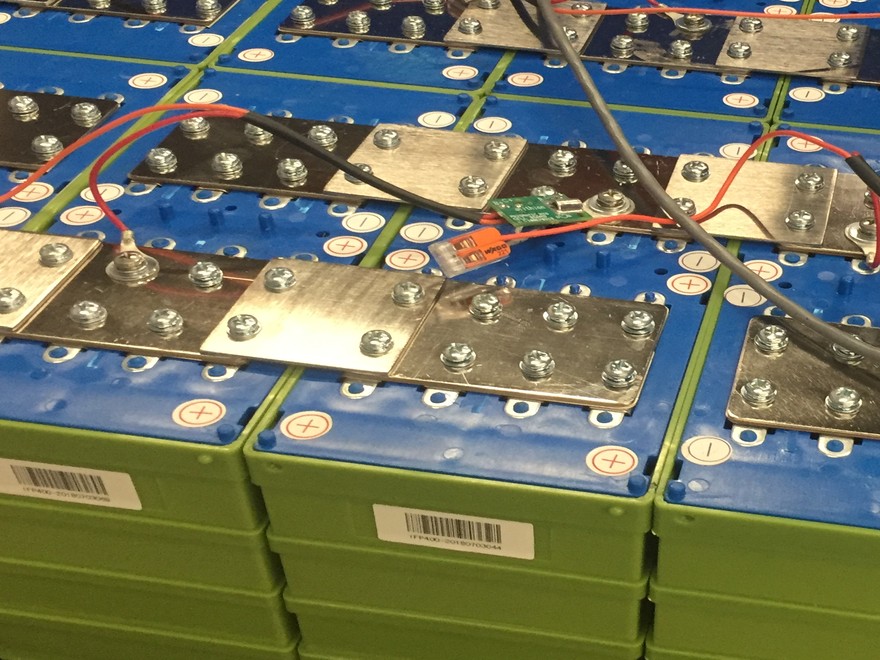
The CE-280 is a 3.2V 280Ah prismatic cell, 896Wh, 5.4kg, on M8 terminals. It is the cell size most commercial peak-shaving cabinets are built from. A factory pays a demand charge set by its highest power peak in the billing period, and a storage cabinet discharges during that peak to hold the metered demand down, then recharges off-peak.
The Cabinet It Built
Where 215 kilowatt-hours comes from
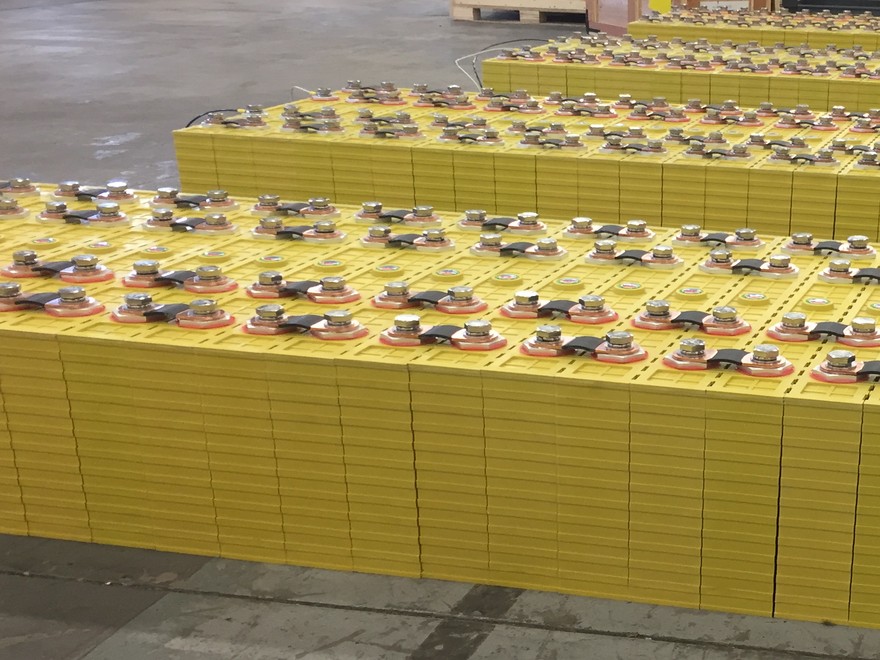
The all-in-one commercial cabinet has a signature size, and it is no accident. 100 kilowatts of power, 215 kilowatt-hours of energy, one outdoor enclosure with the batteries, the inverter, the cooling and the fire suppression built in. Count backwards and the energy comes from a stack of 280-amp-hour LFP cells, because 280 was the mainstream storage cell that made 215-kilowatt-hour density fit a walk-up cabinet. Factories, warehouses, EV charging plazas and microgrids run that exact box across Europe and North America, and the cell in the diagram is this one.
Building from bare cells keeps the cabinet’s economics and hands you its choices, the same way it does at rack scale, only the numbers are bigger. A 16S string of CE-280 is 51.2 volts and 14.3 kilowatt-hours; fifteen such strings paralleled reach the 215-kilowatt-hour class the finished cabinets ship at, assembled to your BMS and your enclosure rather than someone else’s.
The Bill, Worked
What peak shaving actually saves
A 215-kilowatt-hour cabinet discharges into that spike, holding the metered peak down while the batteries carry the surge, and refills overnight on cheap off-peak power. The saving is the demand charge that never lands plus the arbitrage between night and afternoon energy price, month after month, against a battery rated for thousands of cycles.
Data
Datasheet
| Model | CE-280 |
|---|---|
| Nominal voltage | 3.2V |
| Rated capacity | 280Ah (0.5C, 25°C) |
| Energy | 896Wh |
| Charge voltage | 3.65V |
| Discharge cutoff | 2.5V |
| Continuous discharge | 280A (1C) |
| Peak discharge | 560A (2C pulse) |
| Cycle life | ≥6,000 cycles @ 80% DOD |
| Weight | ≈5.4 kg |
| Format | Aluminum prismatic (batch datasheet) |
| Terminals | M8 stud |
| Operating temperature | Discharge -20~60°C / Charge 0~45°C |
| Certification | UN38.3 / CE / RoHS |
String configurations
| 16S | 51.2V · 14.3kWh: one commercial string |
|---|---|
| 15×16S | 51.2V · ~215kWh: the standard C&I cabinet |
| 8S | 25.6V · 7.2kWh: large off-grid and telecom |
| 48S | 153.6V · 43kWh: high-voltage three-phase strings |
Why 280 was the number for so long
Before the grid moved past 300 amp-hours, 280 was the cell the whole commercial-storage industry organised around, and it held that place for a reason worth understanding. At 896 watt-hours a cell it packed enough energy to make a 215-kilowatt-hour cabinet fit a footprint a forklift could place, while staying inside the mechanical and thermal envelope a walk-up outdoor enclosure could cool and contain. Modular portfolios still ladder up from it in familiar steps, 100, 215, 261, 418 and 522 kilowatt-hours, each a different string count of the same cell. Buying the cell rather than the finished cabinet lets a developer hit any rung on that ladder with one part number and one spare, which is the quiet economic argument for building from cells at commercial scale.
Method
Strings first, at cabinet scale
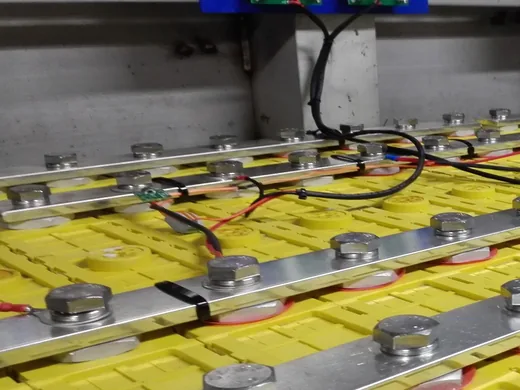
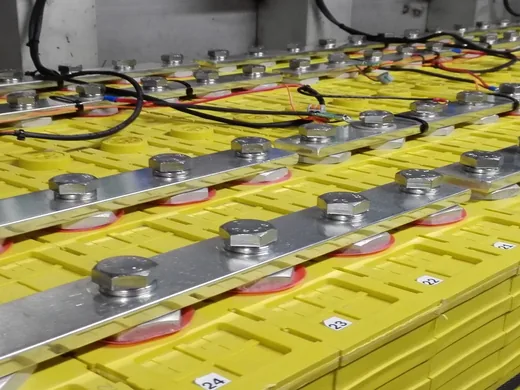
The architecture that ages well is the one from rack storage, grown up. Complete 16S strings, each with its own BMS and its own fuse, brought to a common high-voltage bus through cables of equal length so current shares and a fault isolates itself. Paralleling raw cells into fat blocks under one controller saves a BMS and blinds you to a weak cell, which at 215 kilowatt-hours is a fault worth seeing early. Mass is the other change of scale: a 16S string of these cells is about 86 kilograms, assembled in place, M8 studs to 10 to 12 newton-metres, never carried charged. Set the inverter to the LFP profile, commission each string with a 0.5C discharge against a stopwatch, and file the batch sheets, the UN38.3 summary and the cycle curve with the commissioning paperwork the way a commercial installer expects to.
QR codes carry every cell into its factory test record; project lots ship from single batches so the strings in a cabinet age together, matched on capacity and internal resistance.
Storage duty is also gentle on the calendar, which is the last piece of the commercial case. A peak-shaving cabinet cycles once a day at partial depth, and against a ≥6,000-cycle rating that reads as well over a decade of afternoons before the capacity floor. The demand-charge savings compound across every one of those years while the hardware sits in a car park doing nothing anyone has to tend, which is why a developer models the cabinet as an asset with a payback date rather than a running cost. The batch sheets and cycle curve shipped with the cells are what the finance model is built on.


Reviews
There are no reviews yet.