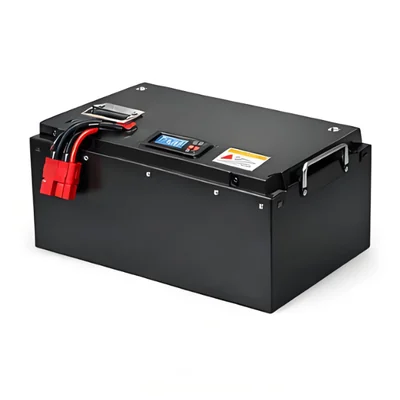
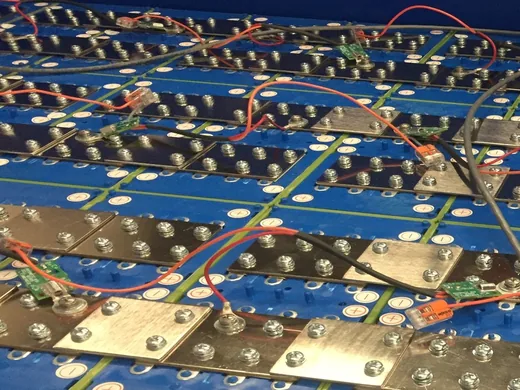
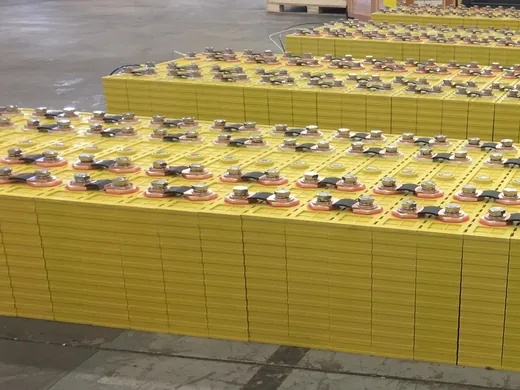
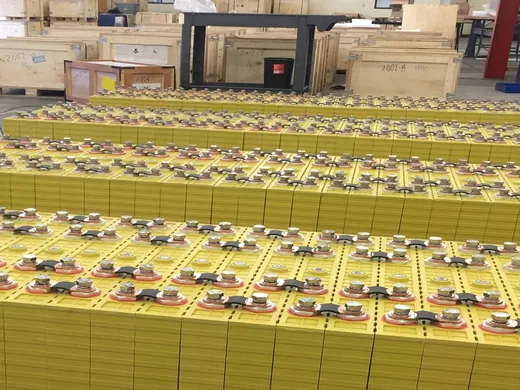
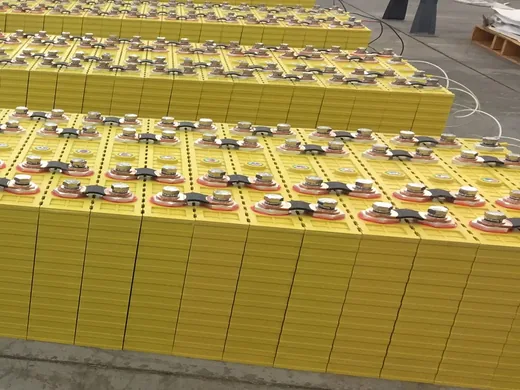
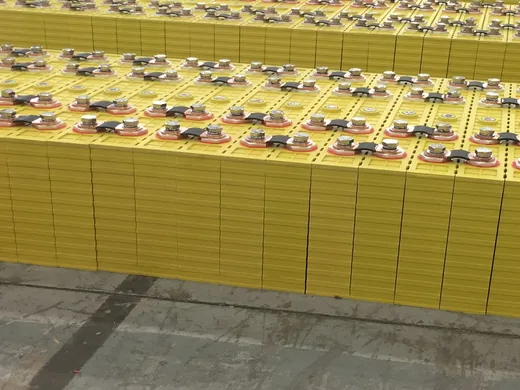
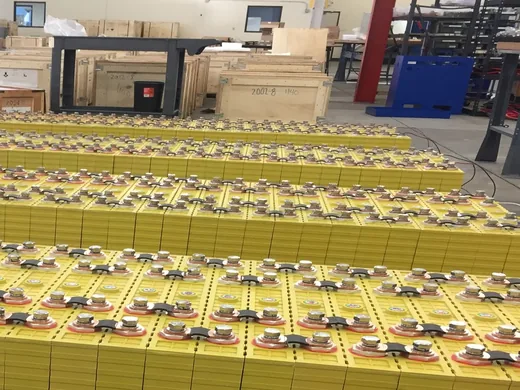
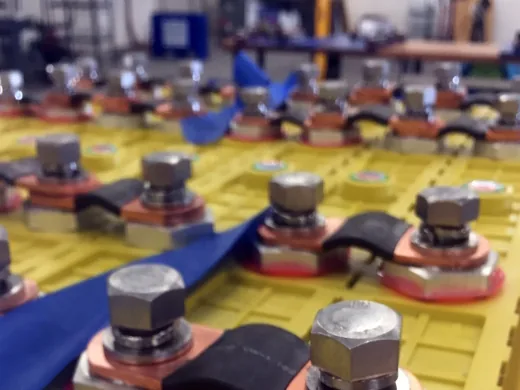
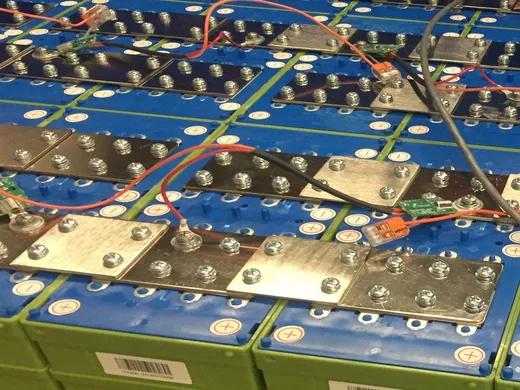
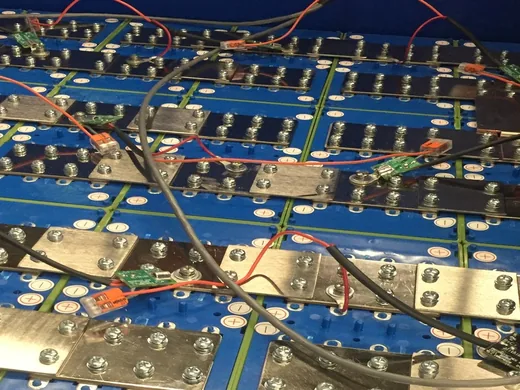
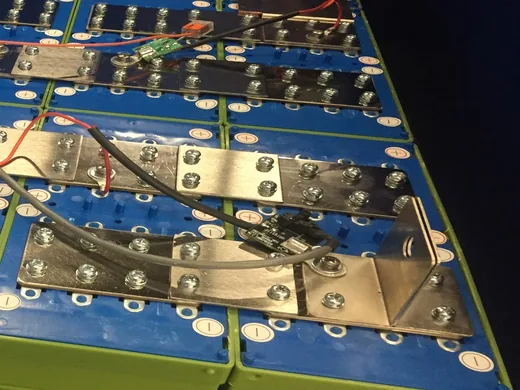
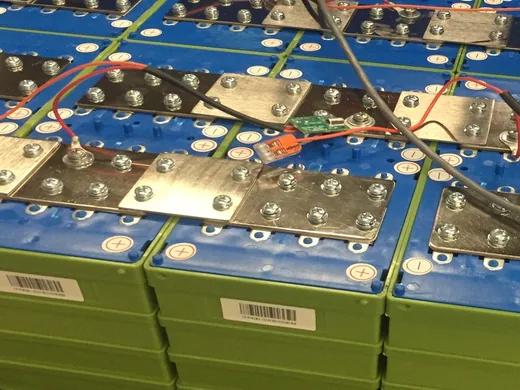
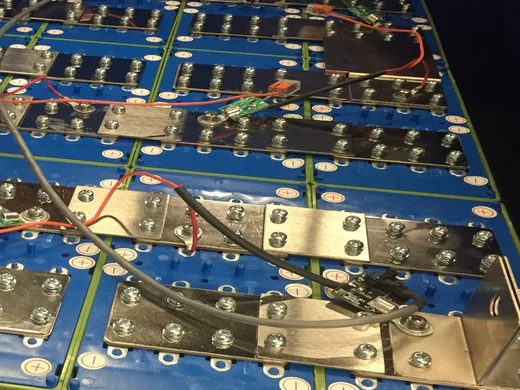
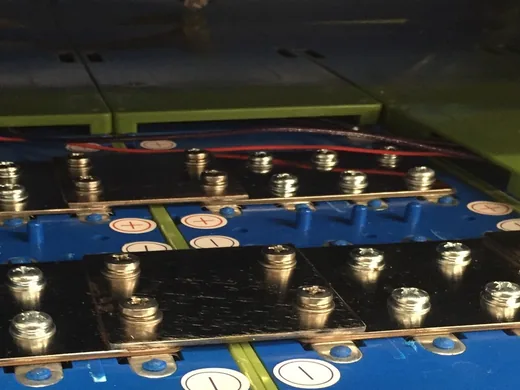
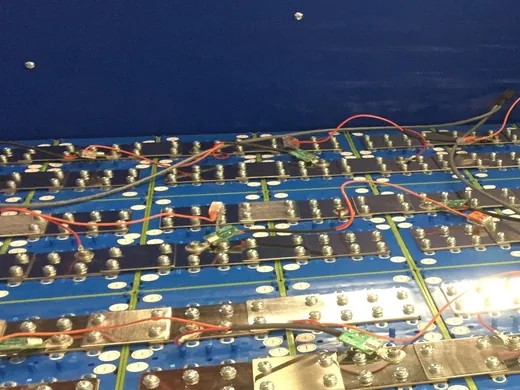
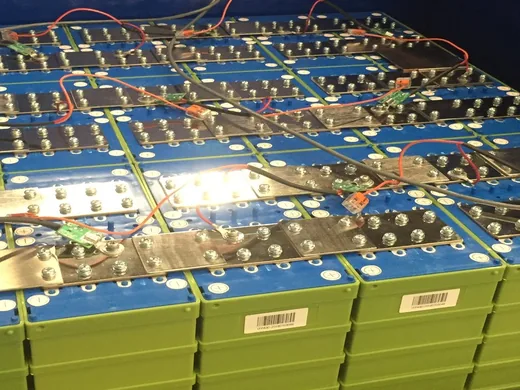
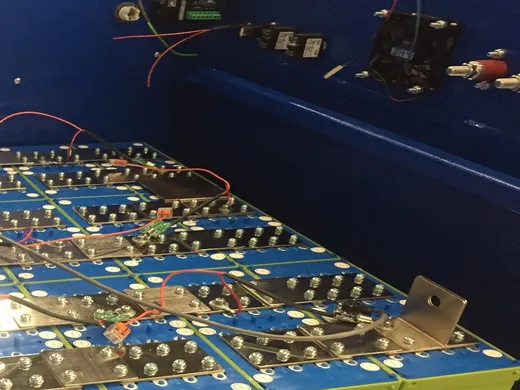
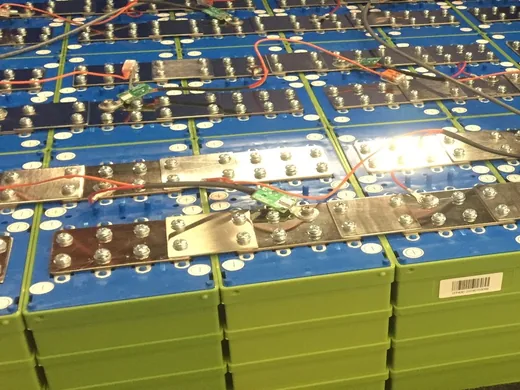
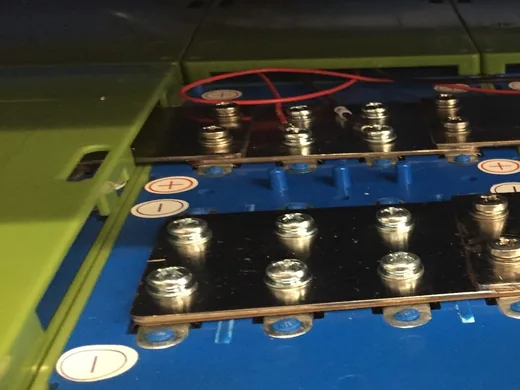
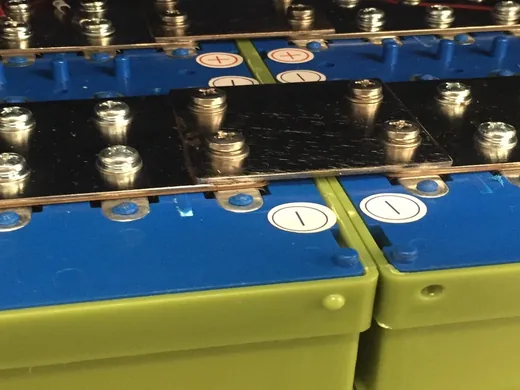
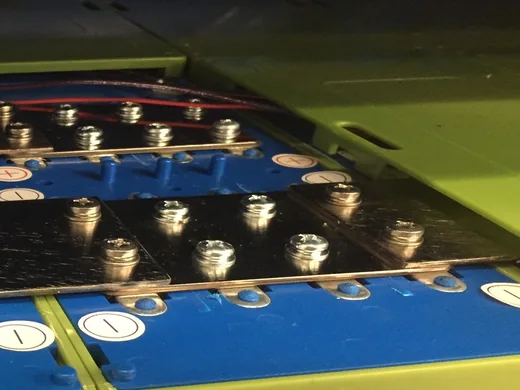
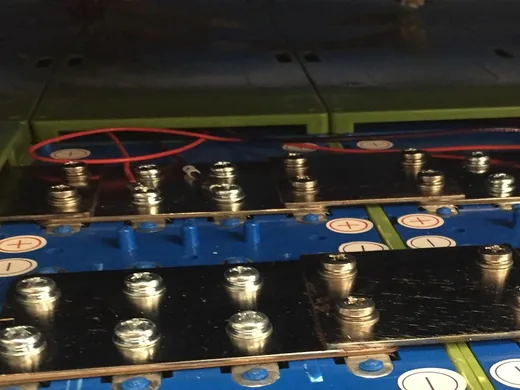
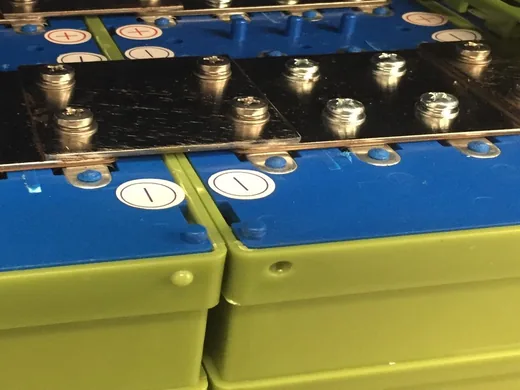
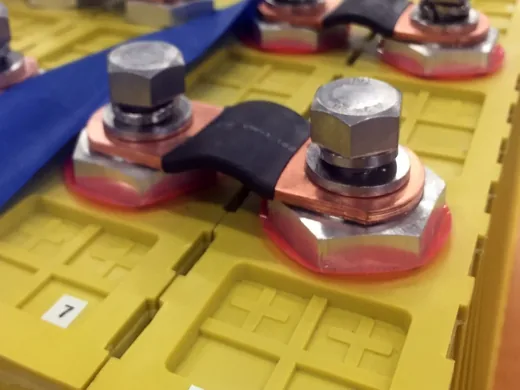
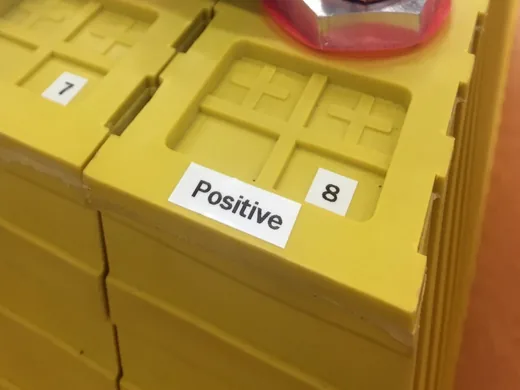
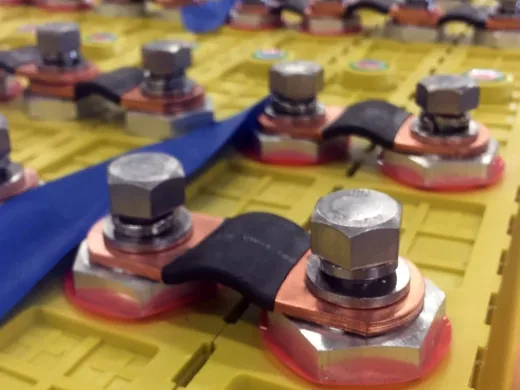
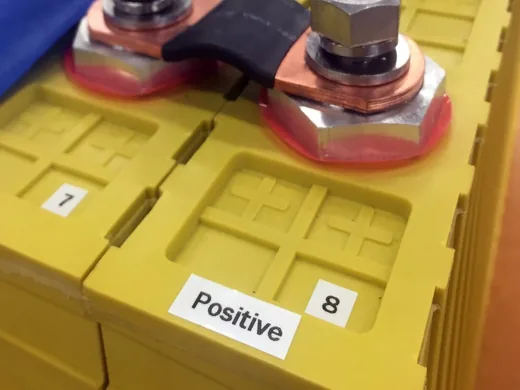
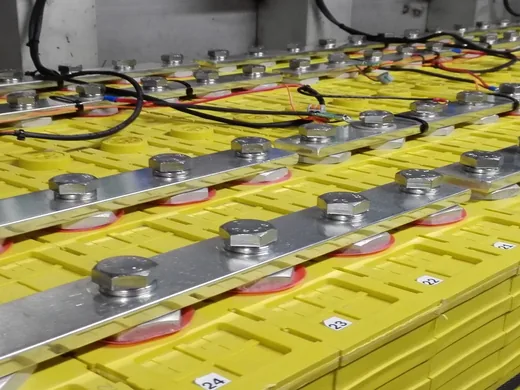
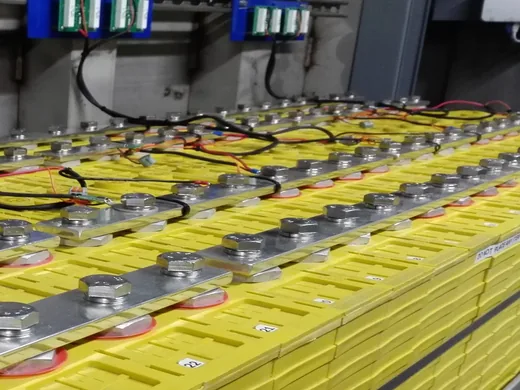
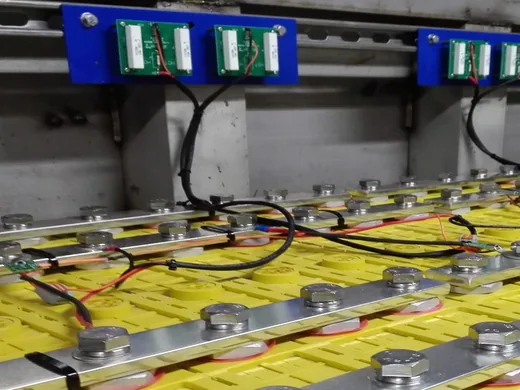
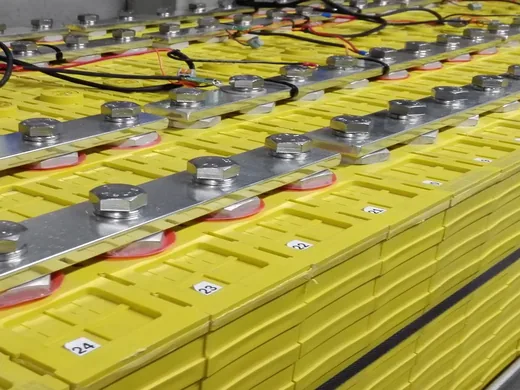
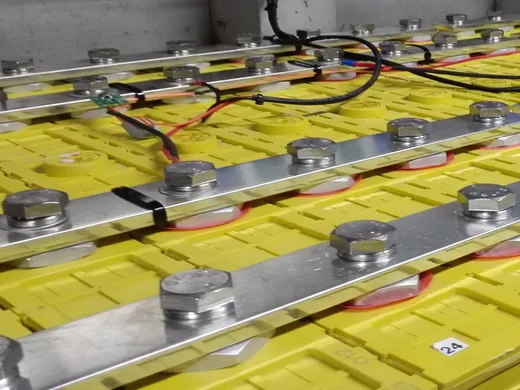
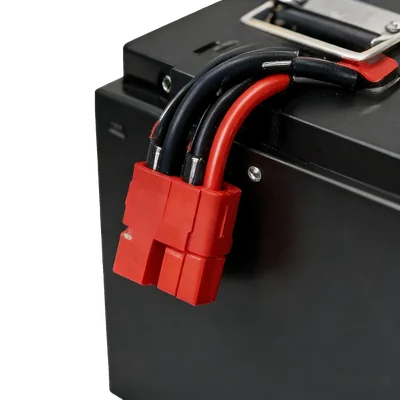

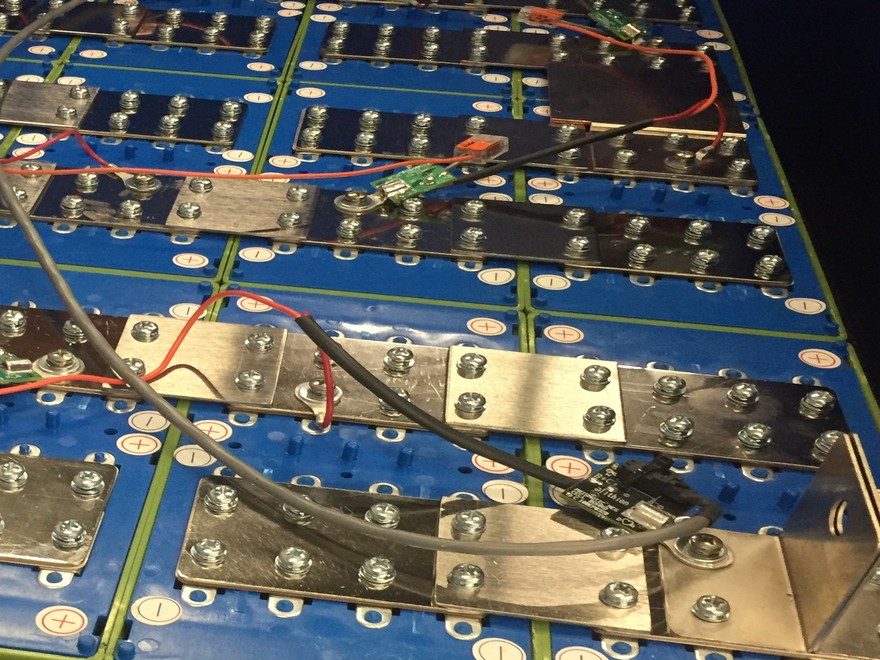
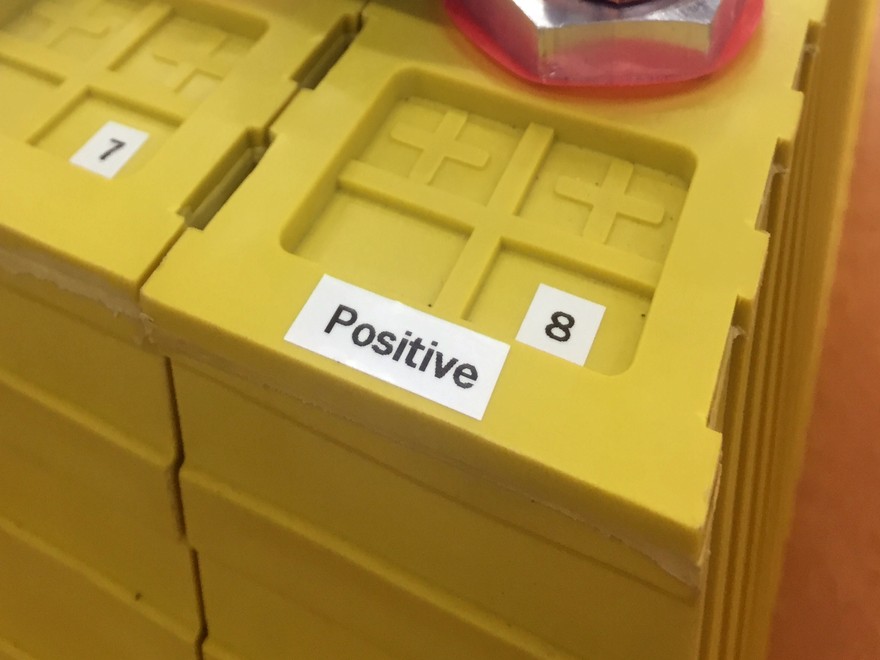
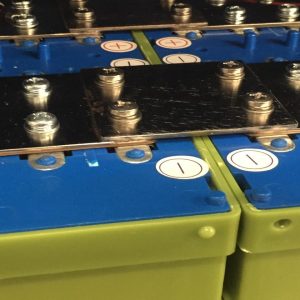
The CE-302 is a 3.2V 302Ah prismatic cell, 966.4Wh, on M8 terminals. It is the large-format class grid storage moved to when cells crossed 300 amp-hours, the size a 20-foot container is built from today.
The Generation Shift
The number that moved the whole grid
For years the 280-amp-hour cell was the mainstream of grid storage. Then, in 2023, the large-format cells crossed 300, and the 20-foot container that had topped out below 3.5 megawatt-hours suddenly held 5.0, a 45 percent jump in energy per container footprint with no change in the box. 20 percent less land per megawatt-hour, 15 percent less construction, fewer cells to wire and fewer connections for the BMS to watch. A cell in the 300-amp-hour class, like this one, is what a utility yard is built from now.
Volumetric density tells the same story in a different unit: 390 to 400 watt-hours per litre, against the previous generation’s numbers, which is why the container gained megawatt-hours without gaining a centimetre.
The Duty
What a grid cell is asked to do
Grid storage is a marathon run daily for a decade. A utility string charges when power is cheap or the sun is high and discharges into the evening peak, one deep cycle most days, which against a cycle life in the 8,000 to 10,000 range reads as fifteen to twenty-five years of service before the floor.
Data
Datasheet
| Model | CE-302 |
|---|---|
| Nominal voltage | 3.2V |
| Rated capacity | 302Ah (0.5C, 25°C) |
| Energy | 966.4Wh |
| Charge voltage | 3.65V |
| Discharge cutoff | 2.5V |
| Continuous discharge | 302A (1C) |
| Peak discharge | 604A (2C pulse) |
| Cycle life | ≥8,000 cycles @ 80% DOD |
| Weight | ≈5.7 kg |
| Format | Aluminum prismatic (batch datasheet) |
| Terminals | M8 stud |
| Operating temperature | Discharge -20~60°C / Charge 0~45°C |
| Certification | UN38.3 / CE / RoHS / IEC 62619 |
String configurations
| 16S | 51.2V · 15.5kWh: one utility string |
|---|---|
| 1P52S | 166.4V · ~50kWh: a container sub-rack |
| Container 20ft | ~5.0MWh: the grid-storage standard unit |
| 8S | 25.6V · 7.7kWh: large off-grid and microgrid |
Fewer cells, safer bank
The move to large-format cells is a safety argument as much as an energy one, and it is worth spelling out. Every series and parallel joint in a megawatt-hour bank is a connection the BMS must monitor and a place a fault can start; a cell that holds 302 amp-hours instead of 100 cuts the joint count for the same energy by two-thirds. Fewer connections mean cleaner BMS data, fewer points of failure, and a bank that a monitoring system can watch at true cell resolution rather than averaging across paralleled groups. That is why the utility yards standardising today reach for the 300-amp-hour class, and why the container that once needed thousands of small cells now runs on far fewer large ones for the same 5 megawatt-hours.
Method
Handling a utility-class cell
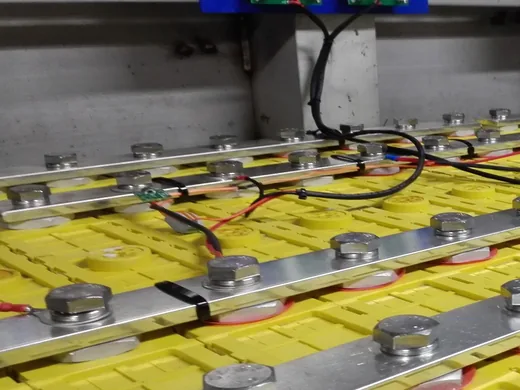
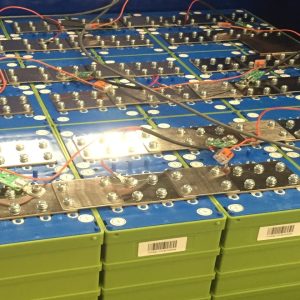
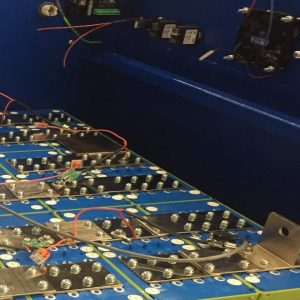
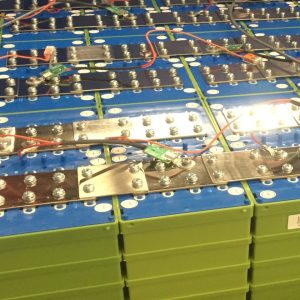
At nearly a kilowatt-hour a cell the rules of the bench change. A 16S string is roughly 92 kilograms, assembled in place on its rack, never lifted charged, M8 studs pulled to 12 newton-metres with a torque wrench and logged. Everything downstream is the discipline of scale: complete strings each on their own BMS and fuse, paralleled at a high-voltage bus through equal-length cable, a 0.5C commissioning discharge against a stopwatch to prove every string’s plate before it joins the bank. The low-temperature charge cutoff is not optional in an outdoor container that sees a winter night. Set the profile, log the batch data, file it with the site’s commissioning record.
Traceability is the same promise the small cells carry, at the scale that needs it most: a QR code on every cell into its factory test record, strings and containers shipped from matched batches so a megawatt-hour ages as one, capacity proven at or above the 302-amp-hour plate on a 0.5C test.
Second life waits at the end of the first. A grid string retired at 80 percent capacity has not stopped working; it steps down into lighter duty, commercial backup or a slower storage tier, the way retired tower and vehicle batteries already do at national scale. The QR record makes that handoff honest, since the next owner can pull each cell’s full history before trusting it with a new job. A cell engineered for 8,000 to 10,000 cycles.
The container is where all of this becomes one deliverable. A 20-foot box built on 300-amp-hour-class cells lands near 5 megawatt-hours with its liquid cooling, its high-voltage electrical, its fire suppression and its EMS integrated, and it drops onto a pad as a unit. The cell decides the container’s headline number, and the container decides the project’s land, its wiring labour and its commissioning time, which is why the whole grid-storage supply chain reorganised around the cell size the moment it crossed 300. Buying at cell level puts a developer upstream of that chain, specifying the brick every larger number is counted from.
Reviews
There are no reviews yet.