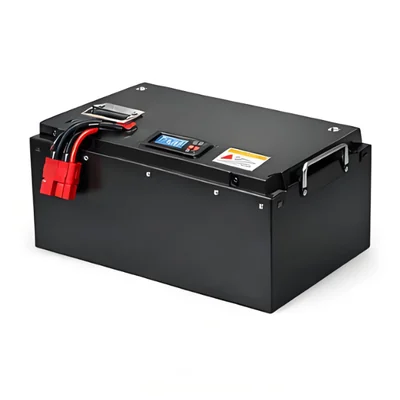
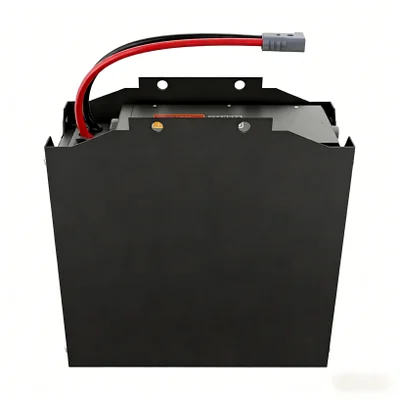
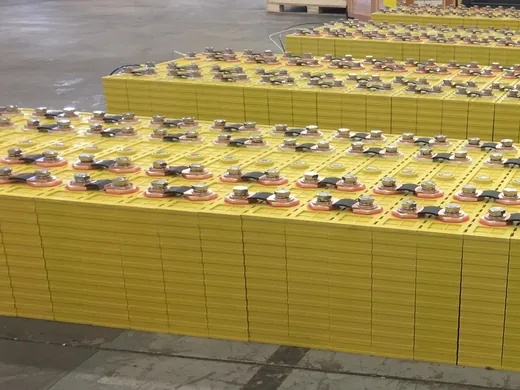
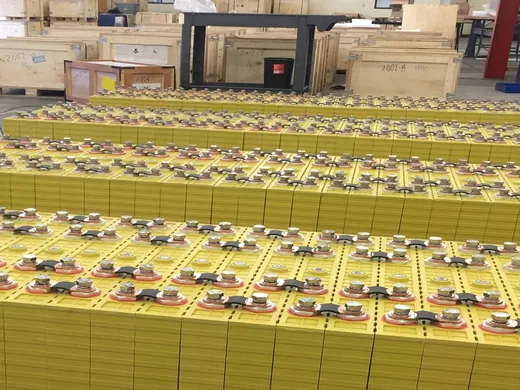
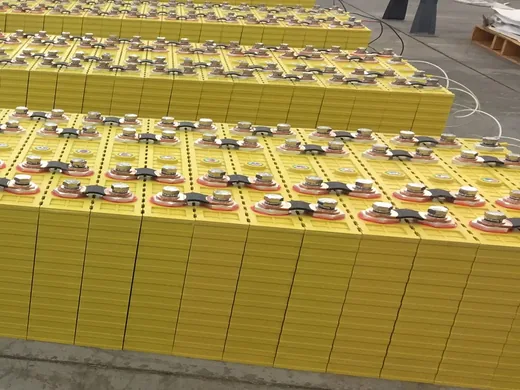
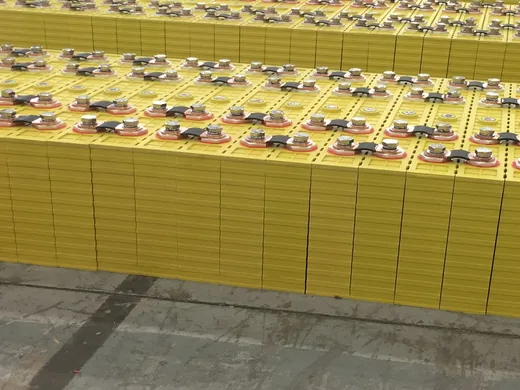
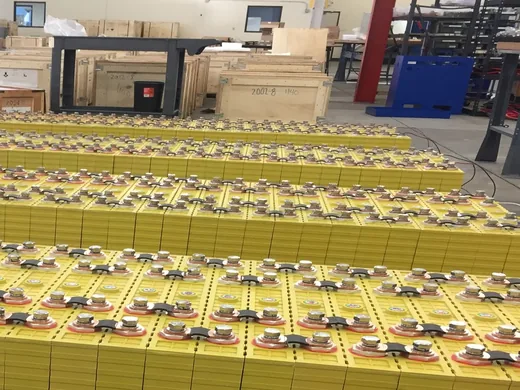
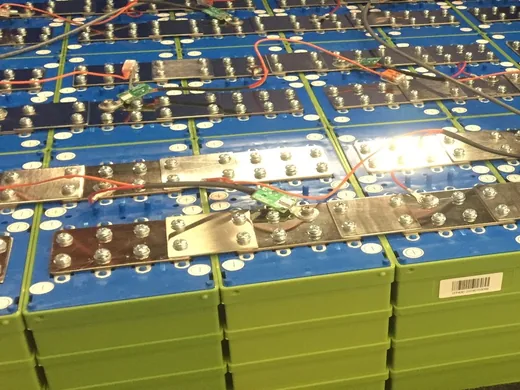
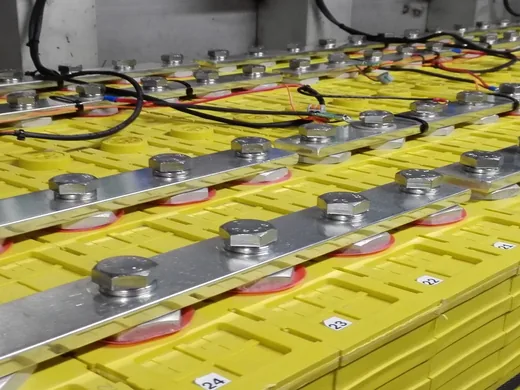
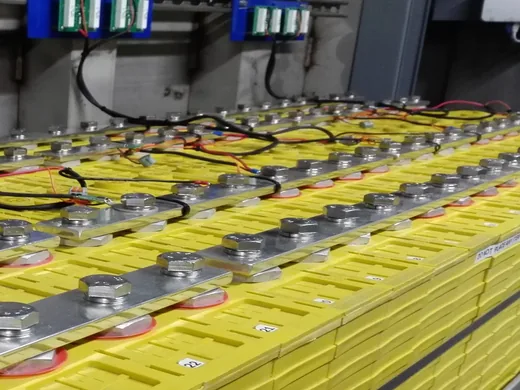
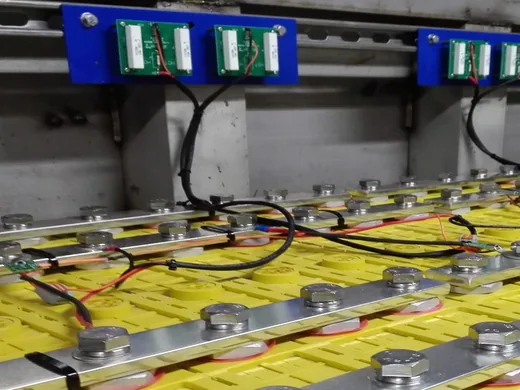
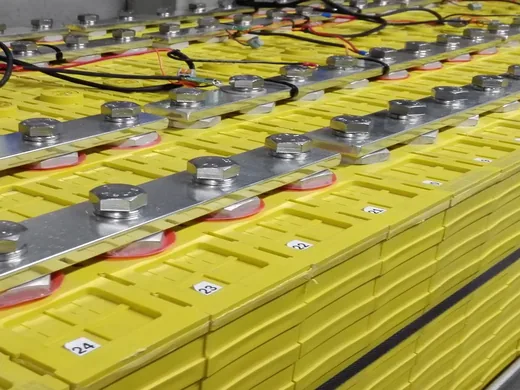

A 48-volt forklift pack lives or dies on one figure: how many shifts it clears before the driver has to think about charging. The CE-202 is the cell that pushes that figure to two. 3.2 volts, 202 amp-hours, 646.4 watt-hours per cell, and a sixteen-cell string that comes to 51.2 volts and 10.3 kilowatt-hours, the working end of a Class I counterbalance truck.
Two Shifts, One Charge
What a warehouse asks of the pack
Manufacturers publish the benchmark plainly. A 48-volt 400-amp-hour lithium pack, 19.2 kilowatt-hours, carries a three-tonne forklift through two eight-hour shifts. Build that pack from CE-202 and it is a 2P16S bank, 404 amp-hours, sitting a hair above the reference. One string of sixteen, 10.3 kilowatt-hours, covers a single hard shift with margin and suits the 1.5 to 2-tonne trucks that never see a second driver.
The chemistry is what makes opportunity charging honest. A lithium pack takes a fast partial charge at every coffee break and lunch without the memory penalty or the gassing that made lead-acid refuse the same treatment, and BSLBATT-class packs recharge fully in 2 to 3 hours where a lead bank wanted eight and a spare.
The Lead Comparison
What changes when the ballast leaves
Lead batteries doubled as counterweight, and a truck’s tipping calculation was drawn around a battery near a tonne. A 2P16S CE-202 pack weighs roughly 130 kilograms of cells, so the difference comes back as bolt-in counterweight plates sized to the truck, a figure the batch datasheet carries for each chassis.
Data
Datasheet
| Model | CE-202 |
|---|---|
| Nominal voltage | 3.2V |
| Rated capacity | 202Ah (0.5C, 25°C) |
| Energy | 646.4Wh |
| Charge voltage | 3.65V |
| Discharge cutoff | 2.5V |
| Continuous discharge | 202A (1C) |
| Peak discharge | 404A (2C pulse) |
| Cycle life | ≥4,000 cycles @ 80% DOD |
| Weight | ≈3.9 kg |
| Format | Aluminum prismatic (batch datasheet) |
| Terminals | M8 stud |
| Operating temperature | Discharge -20~60°C / Charge 0~45°C |
| Certification | UN38.3 / CE / RoHS |
Pack configurations
| 16S | 51.2V · 10.3kWh: single-shift 1.5-2t trucks, reach trucks |
|---|---|
| 2P16S | 51.2V · 20.7kWh: two-shift 3t counterbalance |
| 3P16S | 51.2V · 31kWh: heavy multi-shift and cold-store |
| 8S | 25.6V · 5.2kWh: tuggers and 24V machines |
Reach trucks, order pickers and the aisle question
Counterbalance is only half the Class I world. Reach trucks and order pickers work narrow aisles where every centimetre of battery box competes with turning room, and there the CE-202’s energy density earns a second argument beyond runtime. A single 16S string delivers a full shift in a compartment a lead bank of the same hours could never fit, which lets a fleet standardise one cell across sit-down counterbalance trucks and stand-up reach machines rather than stocking two chemistries and two charger types. High-throughput sites, third-party logistics floors, automotive lines and distribution centres run exactly that mixed fleet, and a common 51.2-volt string simplifies the charging room to one profile and one spare pool.
Build
Assembling a traction pack
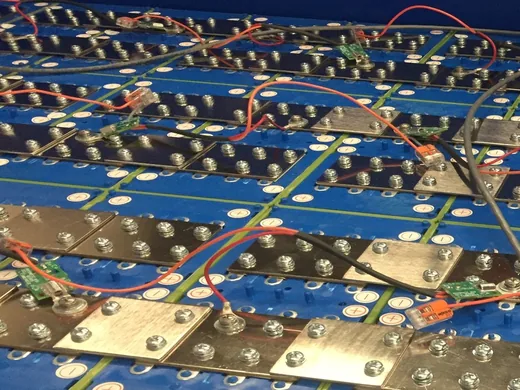
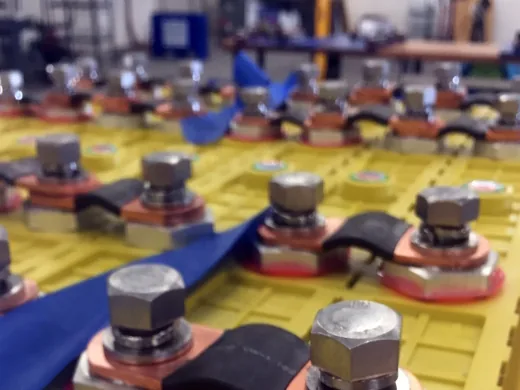
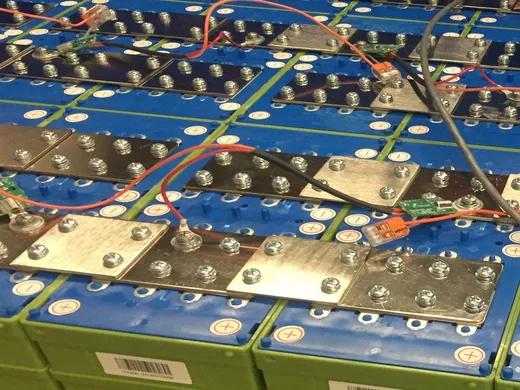
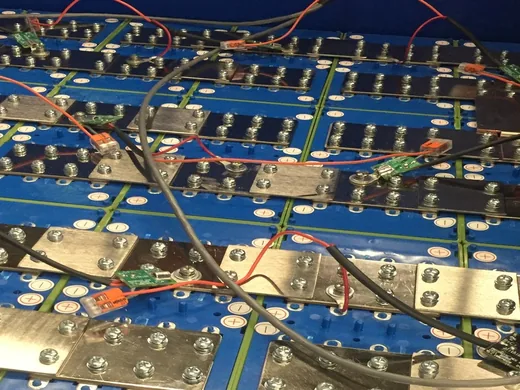
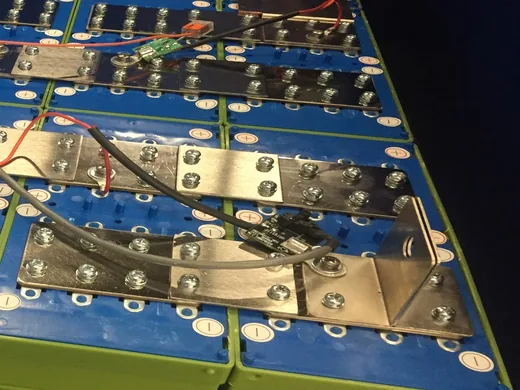
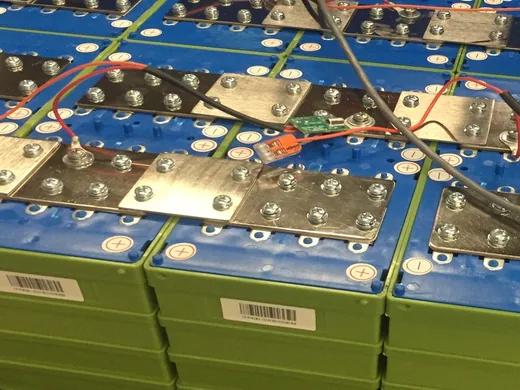
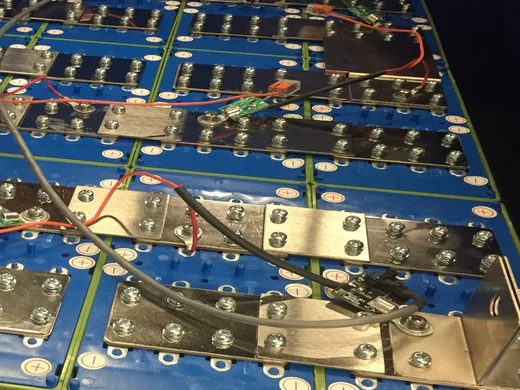
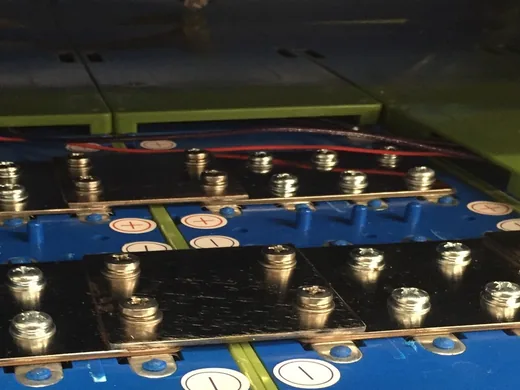
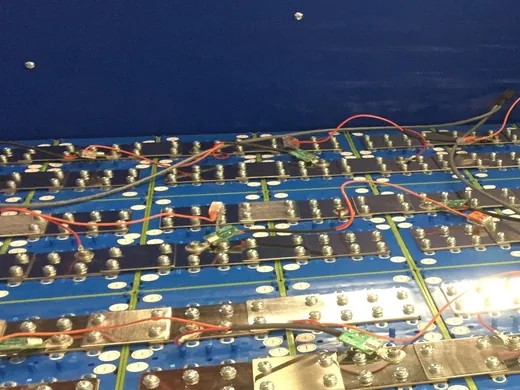
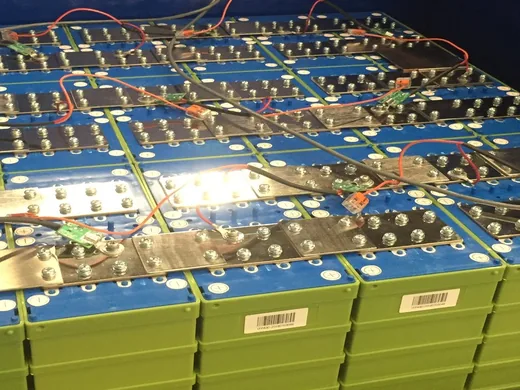
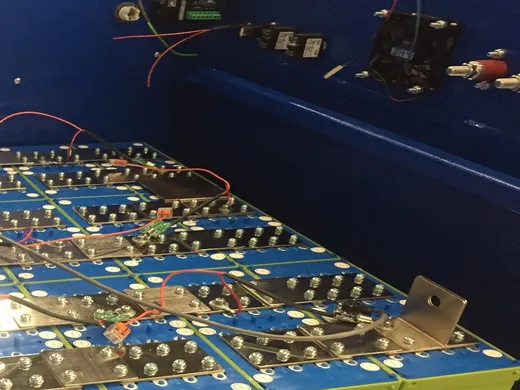
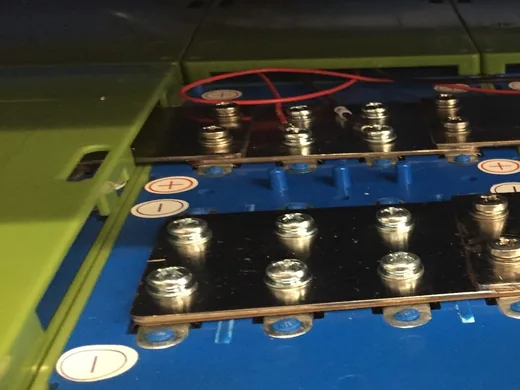
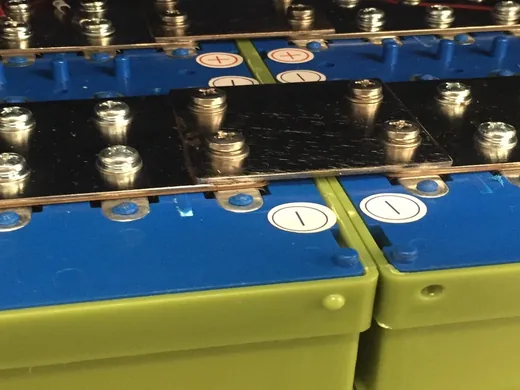
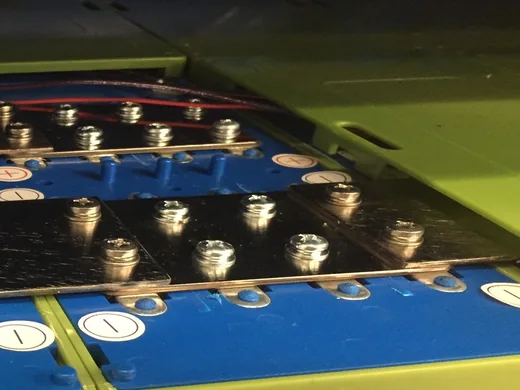
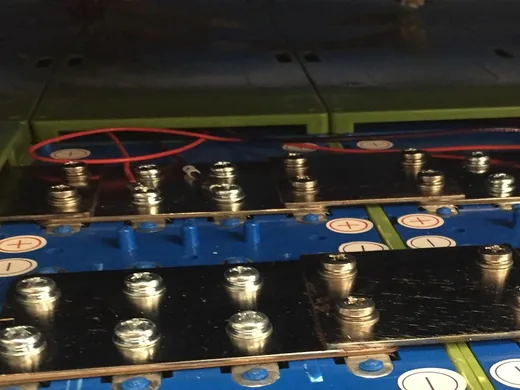
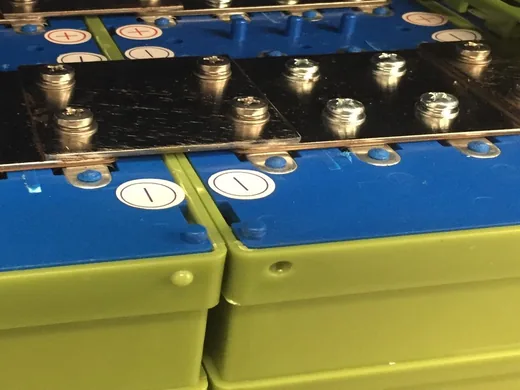
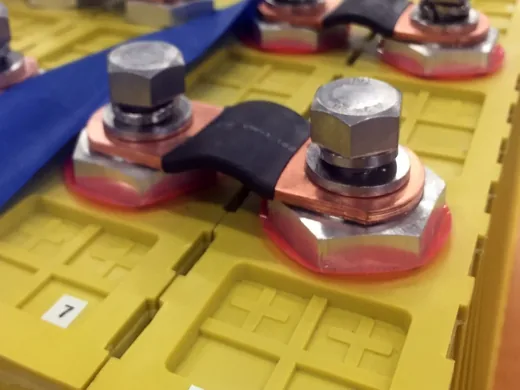
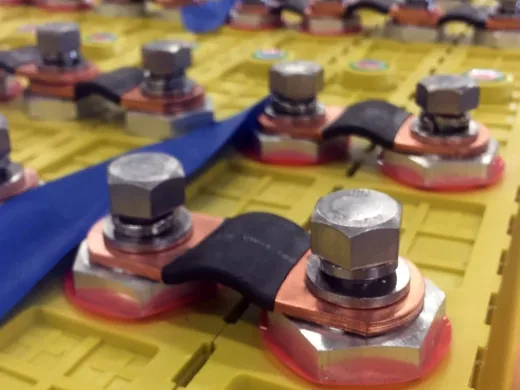
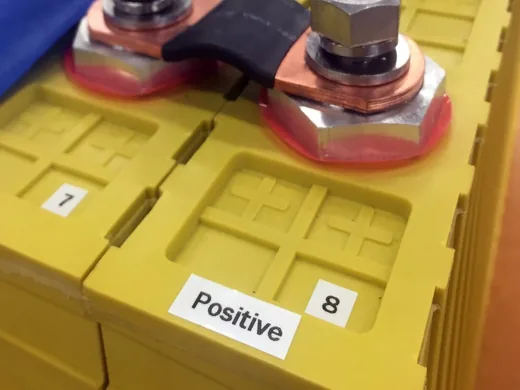
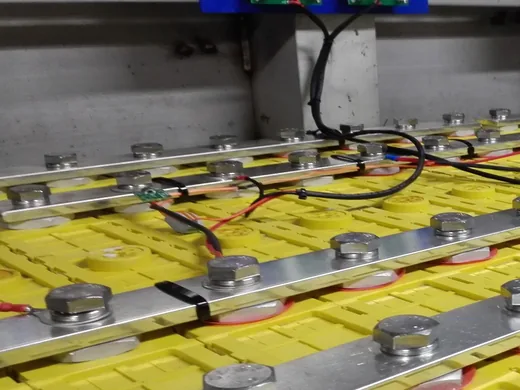
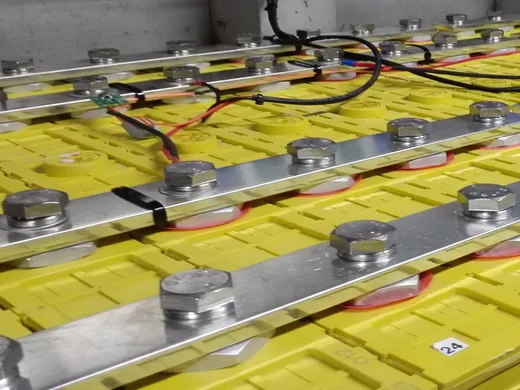
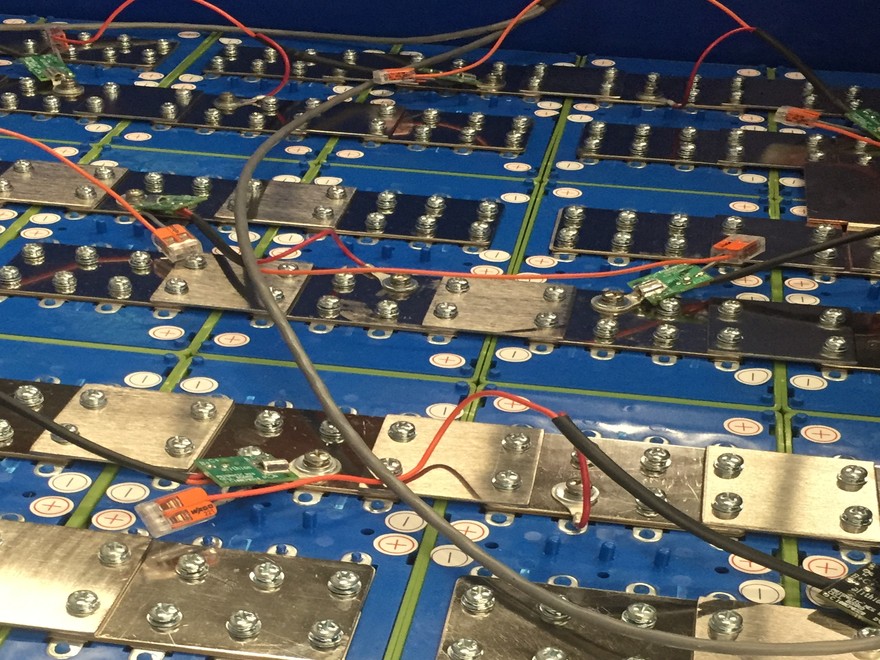
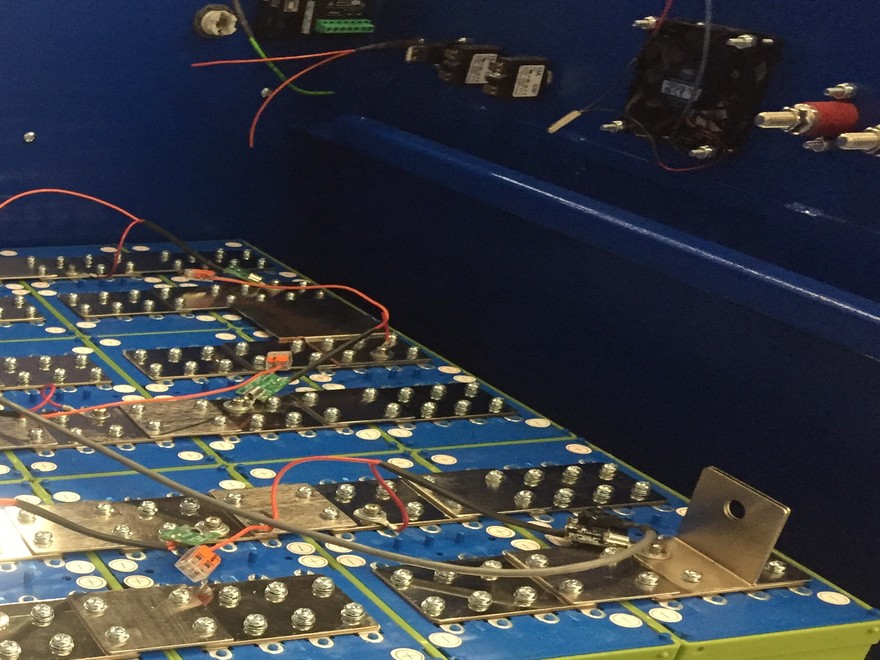
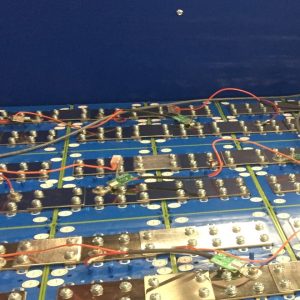
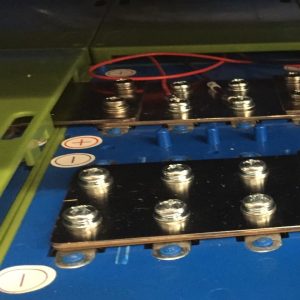
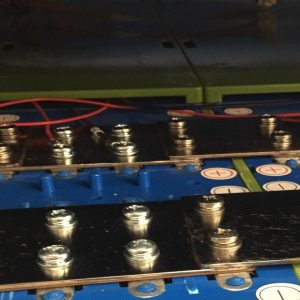
Traction duty is the roughest life a prismatic cell leads, and the mechanical build matters as much as the electrical one. Clamp the string between end plates so hard acceleration and hard stops never let the stack shuffle. Pull the M8 studs to 10 to 12 newton-metres and re-check them after the first full shift with a millivolt reading across every busbar, since a joint that reads double its neighbours is loose before it is hot. Electrically, size a 300 to 400-amp BMS with per-cell protection, overcurrent, and the low-temperature charge cutoff for cold-store trucks, and feed it from an LFP-profile charger set to 58.4 volts. A cold-store fleet adds heater film so the pack takes charge coming out of the freezer aisle.
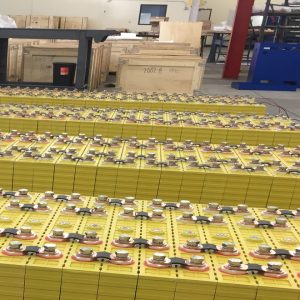
Every cell is QR-coded to its factory record, and a fleet buying by the truckload gets strings from single batches so the whole fleet ages in step rather than one truck at a time. Capacity ships at or above the 202-amp-hour plate on a 0.5C test; spares rest at 30 to 50 percent charge.
Charging infrastructure closes the fleet case. A lithium forklift fleet drops the ventilated, acid-rated charging room a lead fleet was required to build, because these cells vent nothing in normal service and take their opportunity charges at the parking bay. The floor that room occupied goes back to racking, the watering carts and eyewash stations retire, and the charger count often falls because one fast charger serves several trucks across a shift instead of one lead bank each. Facilities engineers count that reclaimed floor and that deleted labour as part of the battery’s real price.
Temperature draws the last line of the spec into daily practice. These cells discharge to minus twenty, so a truck works a freezer aisle on the reserve it already carries, but charging is the guarded step below freezing. Cold-store fleets answer it one of two ways: a BMS that simply refuses charge until the pack warms, or a heater film that brings the cells above zero before current flows, with the chargers standing outside the cold room where the packs warm as they fill. Either choice is specified at purchase and disappears into the routine, and the batch datasheet notes which trucks in a mixed fleet run which arrangement.
Reviews
There are no reviews yet.