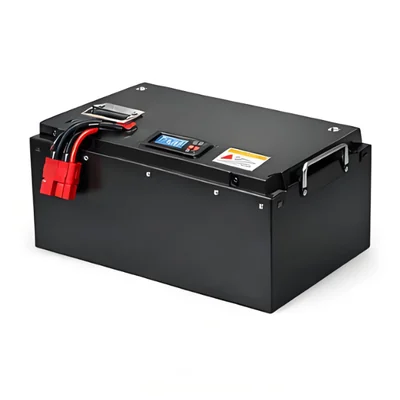
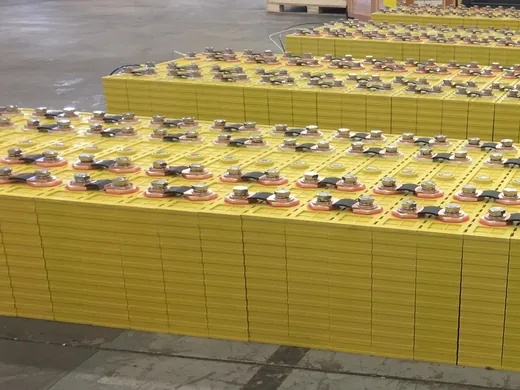
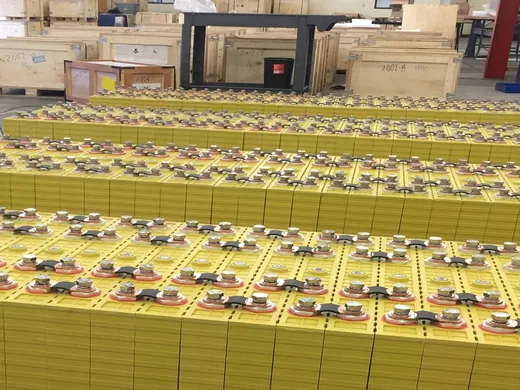
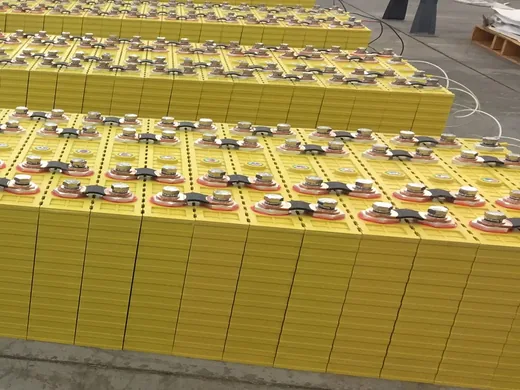
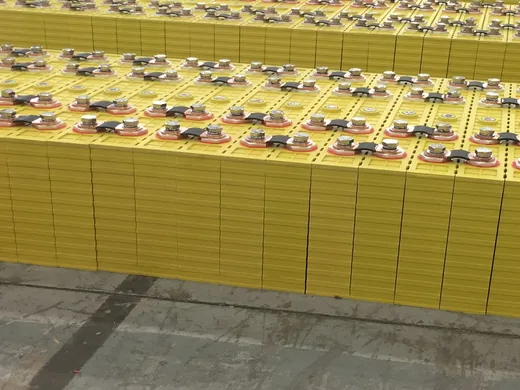
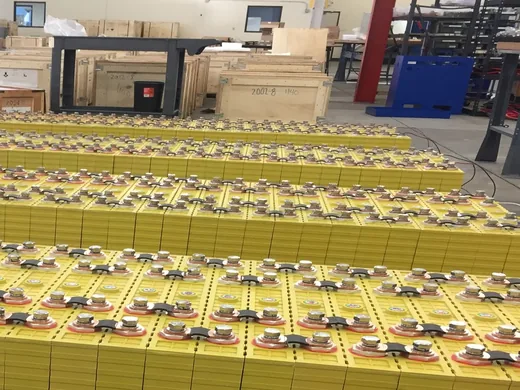
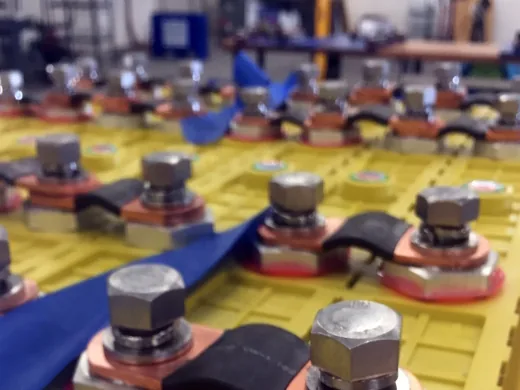
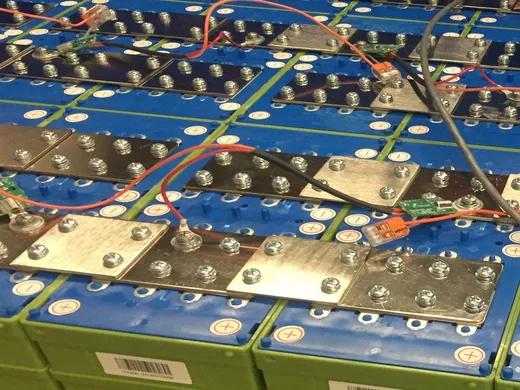
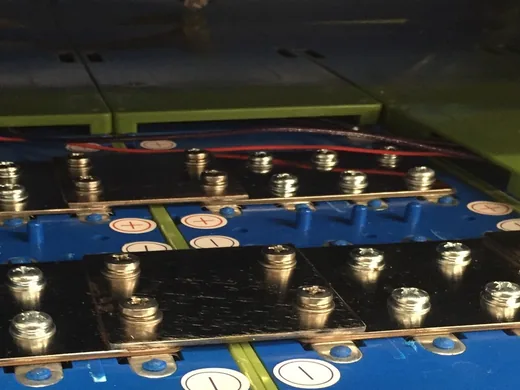
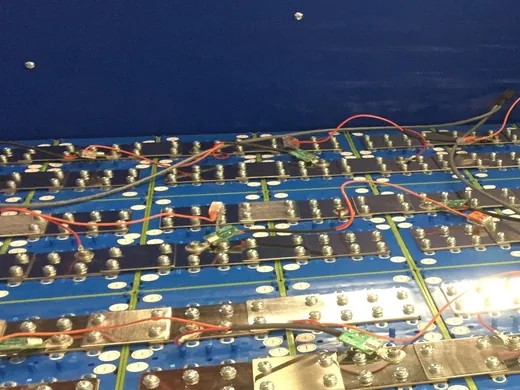
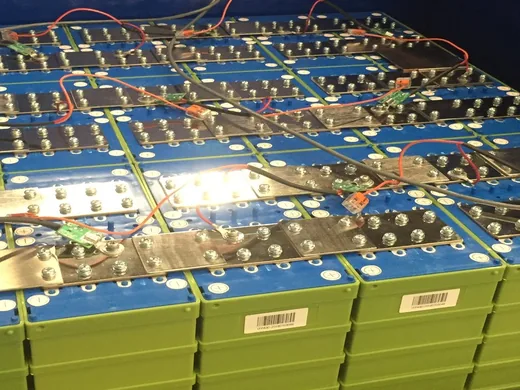
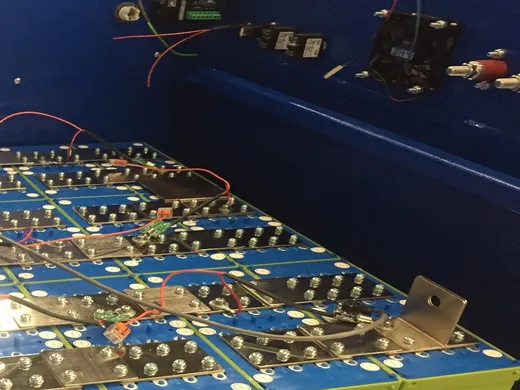
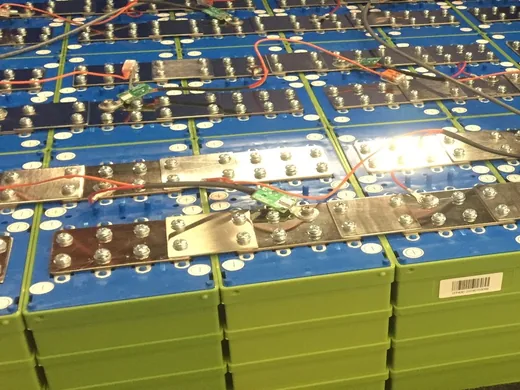
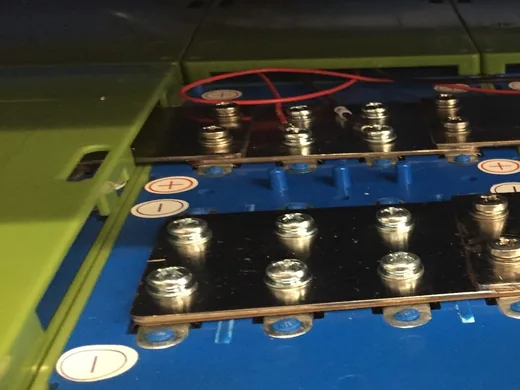
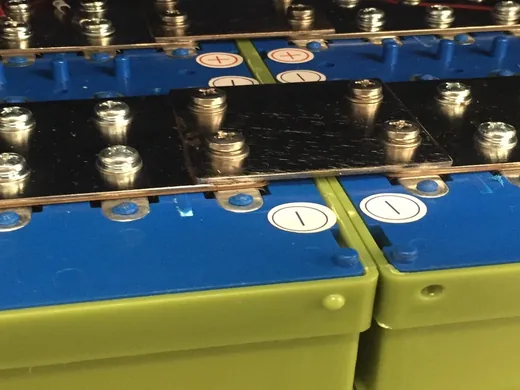
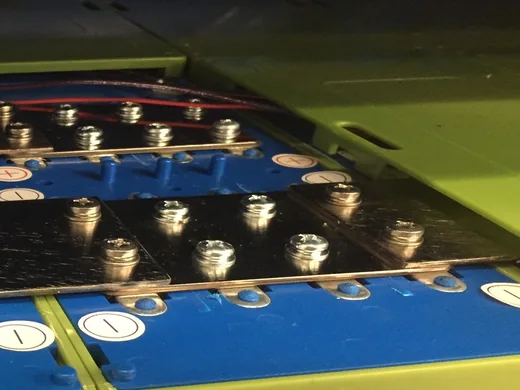
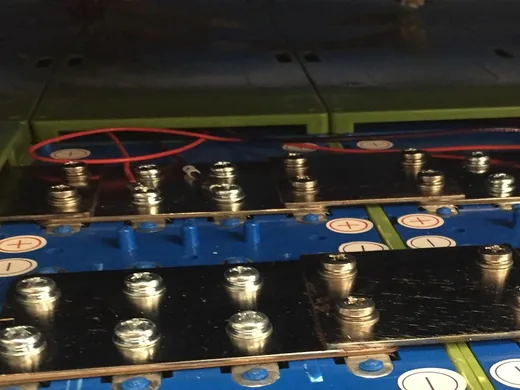
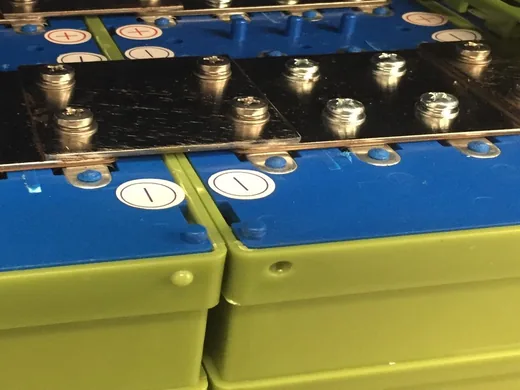
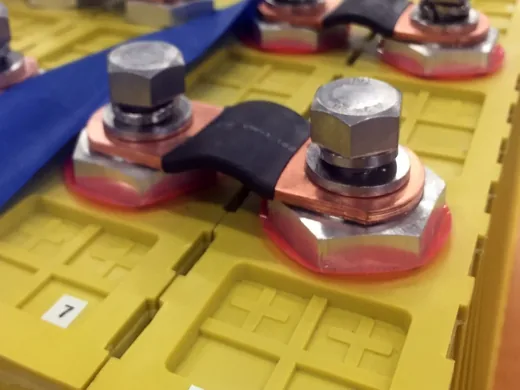
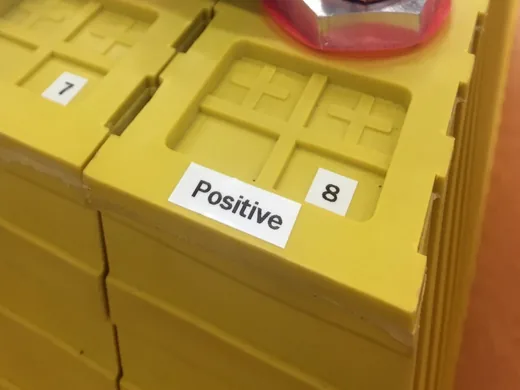
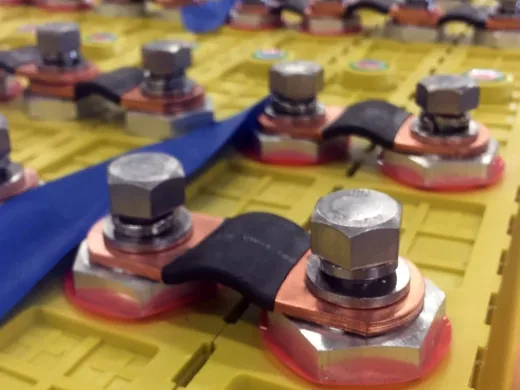
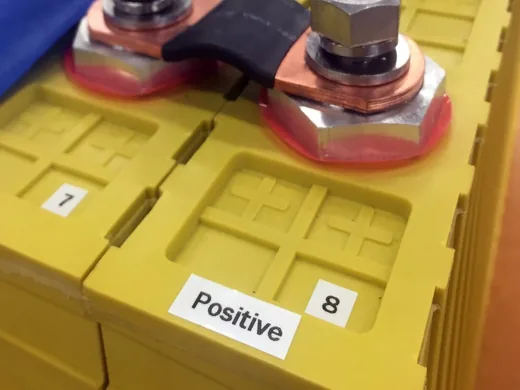
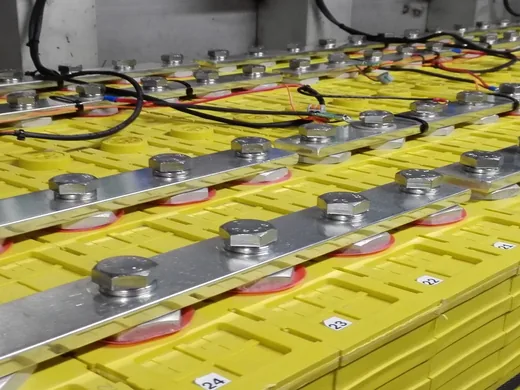
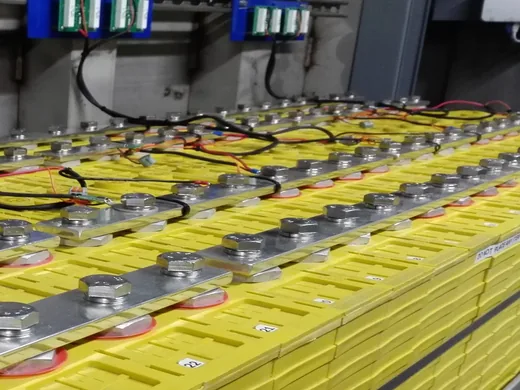
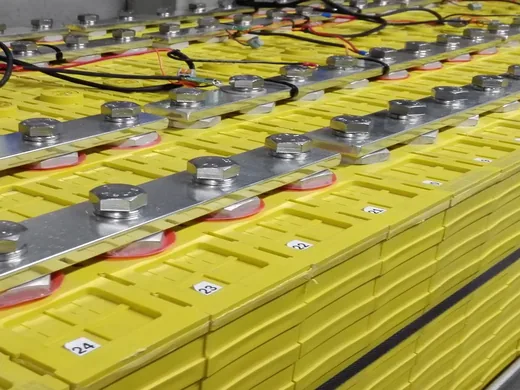
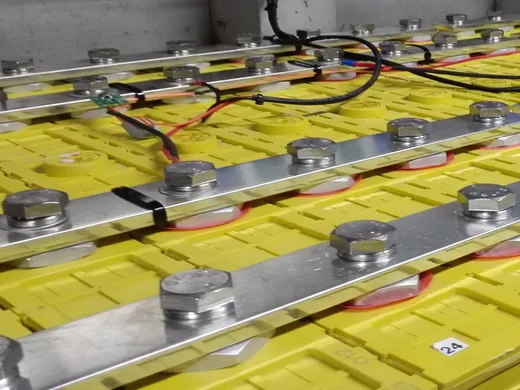
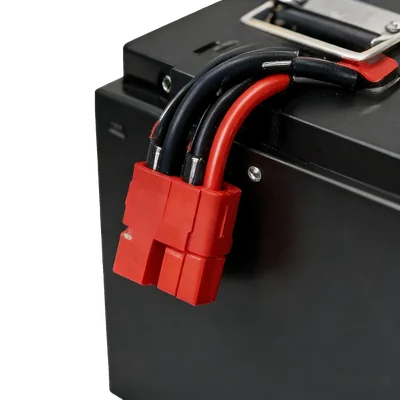

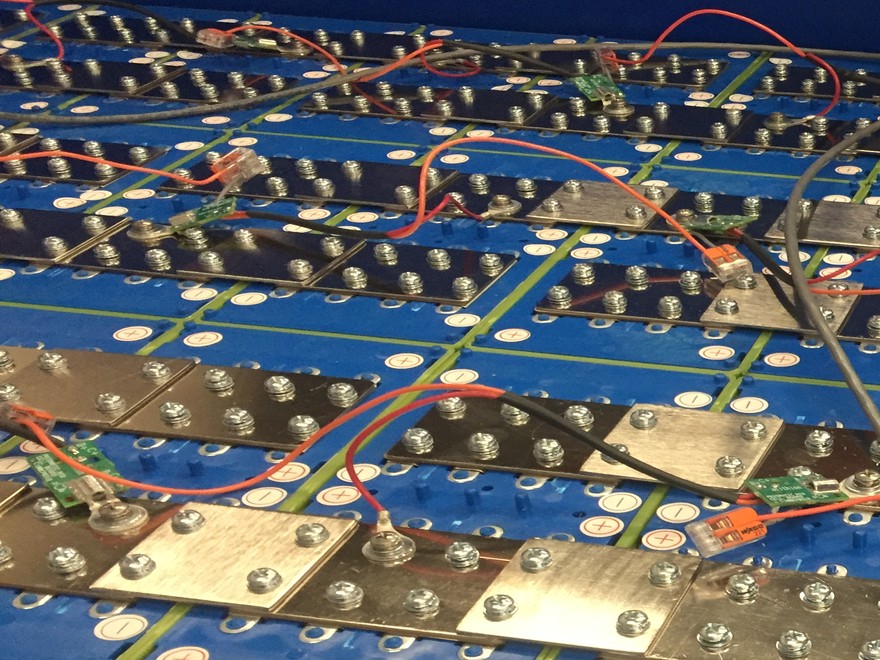
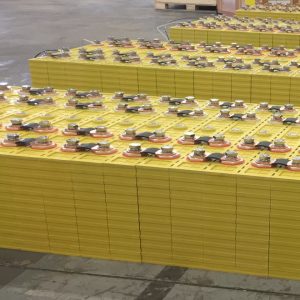
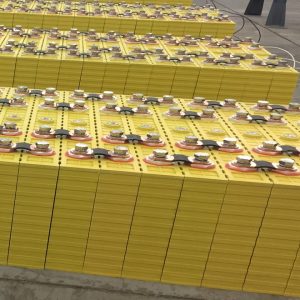
The CE-314 is a 3.2V 314Ah prismatic cell, 1004.8Wh, on M8 terminals. It is the cell most new grid-storage systems are built from today. In 2023 the large-format cell crossed from 280 to 314 amp-hours, and a standard 20-foot storage container went from under 3.5 megawatt-hours to 5.016. The container did not change size. The cell did.
The Standard Cell
Why 314 replaced 280
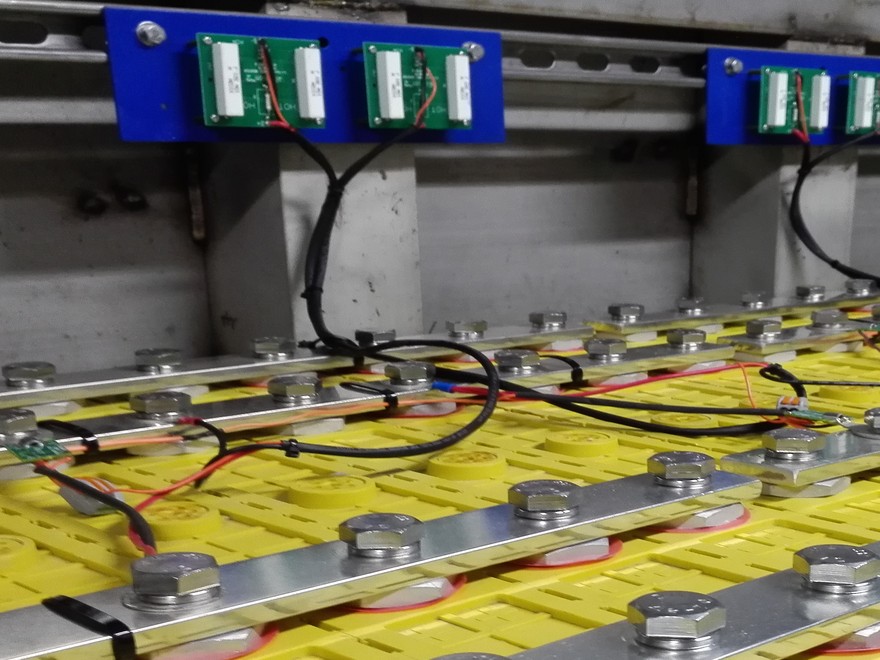
A 314Ah cell holds about a kilowatt-hour on its own, at a volumetric density near 390 to 400 watt-hours per litre. Against the previous generation that is roughly 45 percent more energy in the same 20-foot container footprint. It also means fewer cells for the same megawatt-hour, which cuts the number of series and parallel joints a BMS has to monitor, lowers component count, and reduces the connections where a fault can start. Land use per megawatt-hour drops about 20 percent, construction about 15 percent.
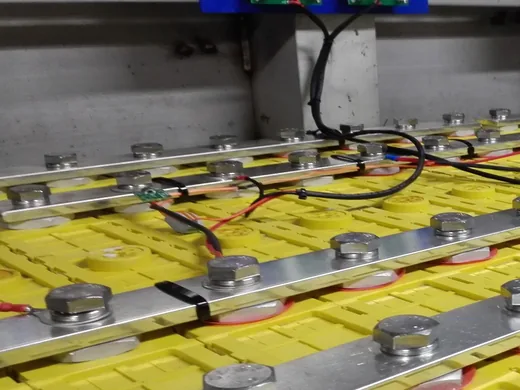
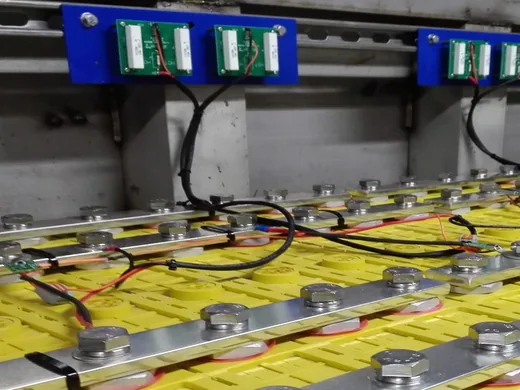
Sixteen of these cells make a 51.2V string of 16.1 kilowatt-hours. A full container stacks strings into racks to reach the 5-megawatt-hour class, with liquid cooling, the high-voltage electrical, fire suppression and an EMS integrated into one box on a pad.
The Duty
What a grid cell does each day
A utility string charges when power is cheap or solar output is high, then discharges into the evening demand peak. That is one deep cycle most days. Against a cycle life of 8,000 to 10,000, it works out to fifteen to twenty-five years before the cell reaches 80 percent of its rated capacity. The applications are set by the grid operator’s software. A string may shift solar into the evening, hold frequency, or stand in reserve, and it has to keep its capacity and its safety margin whichever job it draws.
Data
Datasheet
| Model | CE-314 |
|---|---|
| Nominal voltage | 3.2V |
| Rated capacity | 314Ah (0.5C, 25°C) |
| Energy | 1004.8Wh |
| Charge voltage | 3.65V |
| Discharge cutoff | 2.5V |
| Continuous discharge | 314A (1C) |
| Peak discharge | 628A (2C pulse) |
| Cycle life | ≥8,000 cycles @ 80% DOD |
| Weight | ≈5.9 kg |
| Format | Aluminum prismatic (batch datasheet) |
| Terminals | M8 stud |
| Operating temperature | Discharge -20~60°C / Charge 0~45°C |
| Certification | UN38.3 / CE / RoHS / IEC 62619 |
String configurations
| 16S | 51.2V · 16.1kWh: one utility string |
|---|---|
| 1P52S | 166.4V · ~52kWh: a container sub-rack |
| Container 20ft | ~5.0MWh: the grid-storage standard unit |
| 8S | 25.6V · 8.0kWh: large off-grid and microgrid |
Why fewer, bigger cells won
The move to 314Ah is a mechanical argument before it is an energy one. A megawatt-hour built from 100Ah cells needs three times the cell count of one built from 314Ah cells, and every extra cell brings two more joints for the BMS to watch and two more places a connection can loosen or heat. A 314Ah bank has far fewer of those points, which gives the monitoring system true cell-level data instead of readings averaged across paralleled groups. It also cuts assembly labour and the parts count on the bill of materials. Those are the reasons a utility developer specifies the larger cell even though the energy per string is what shows up first on the datasheet.
Method
Handling a utility-class cell
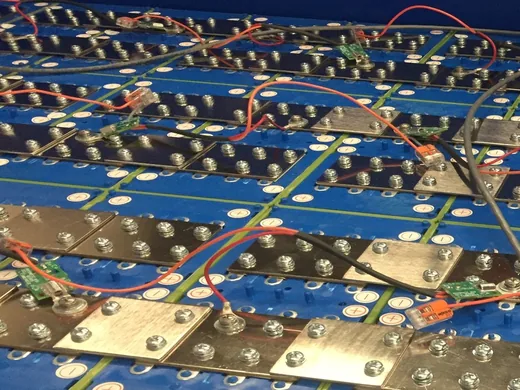
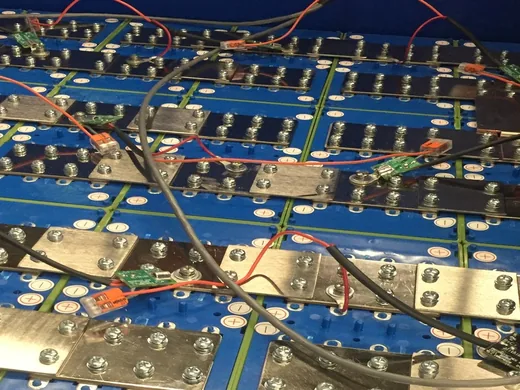
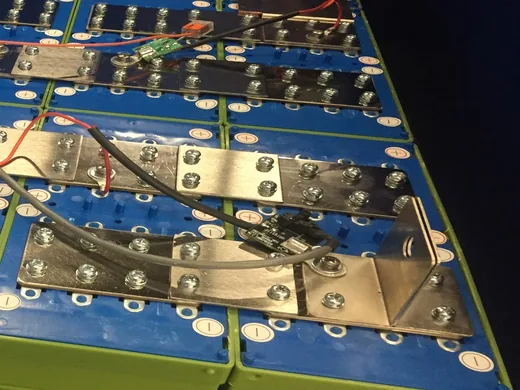
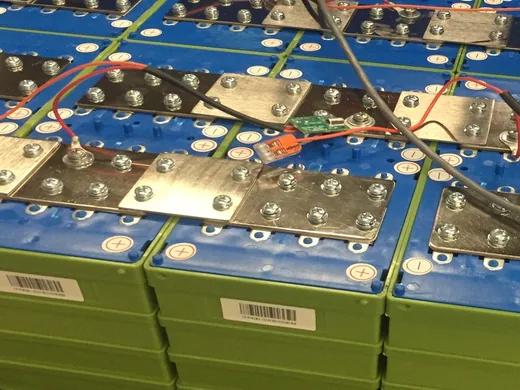
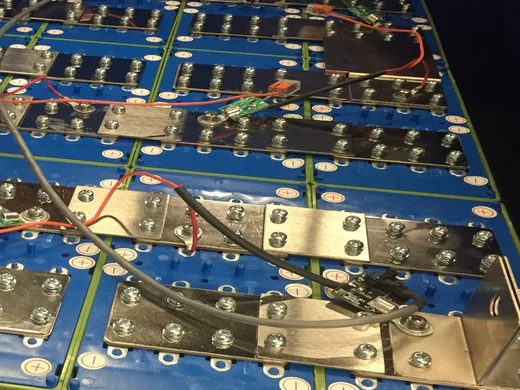
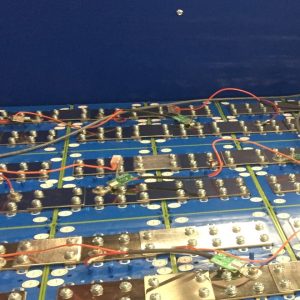
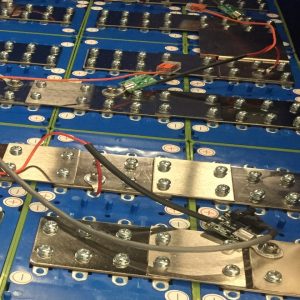
At about a kilowatt-hour each, these cells are assembled in place. A 16S string weighs roughly 95 kilograms, so it is built on its rack rather than lifted charged. Pull the M8 studs to 12 newton-metres with a torque wrench and log the reading. Build complete strings, each with its own BMS and fuse, and parallel them at a high-voltage bus through equal-length cable so current shares evenly and a fault isolates to one string. The low-temperature charge cutoff is required in any outdoor container that sees a winter night. Commission each string with a 0.5C discharge against a timer to confirm its plate capacity before it joins the bank.
Every cell carries a QR code linked to its factory test record. Containers ship from matched batches so a megawatt-hour ages as one unit, with capacity proven at or above the 314Ah plate on a 0.5C test. The batch sheets and cycle curve file with the site commissioning record.
Second Life
After the first decade
A grid string retired at 80 percent capacity still works. It steps down into lighter duty such as commercial backup or a slower storage tier, the same path retired vehicle and telecom batteries follow. The QR record carries each cell’s full history, so a second owner can read its age and test data before assigning it a new job.
Traceability runs cell by cell at the scale that needs it most. A QR code on every cell opens its factory test record, and containers ship from matched batches so that the strings inside one enclosure share a capacity and internal-resistance band. That matching is what lets a monitoring system read a fault against a known baseline rather than guessing, and what lets a warranty claim resolve to the exact cell that drifted. On a bank rated for fifteen to twenty-five years of service, the paper trail is part of the hardware.
Reviews
There are no reviews yet.