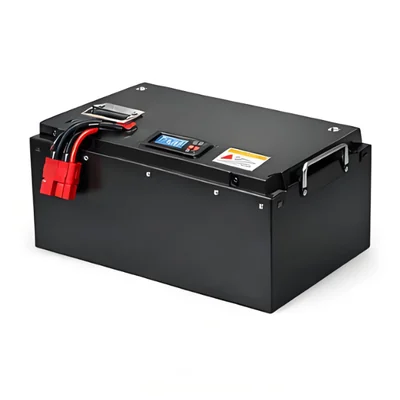
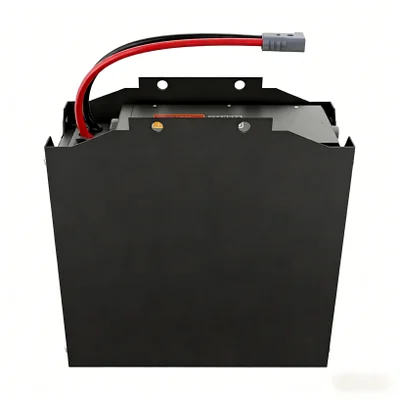
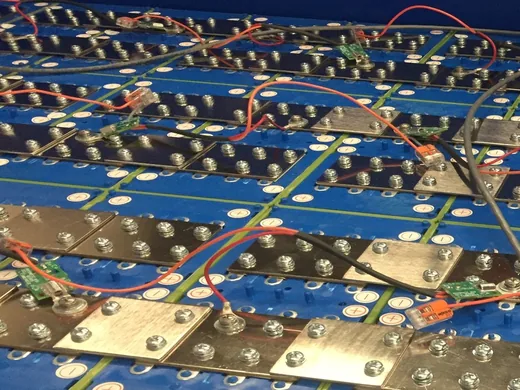
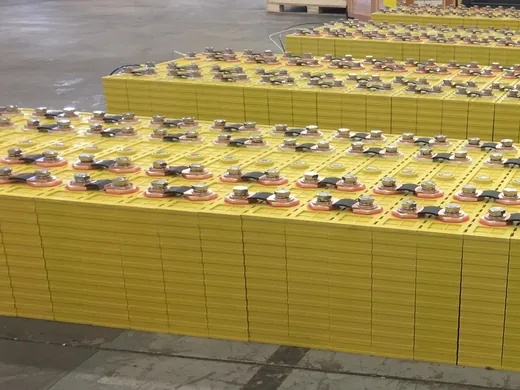
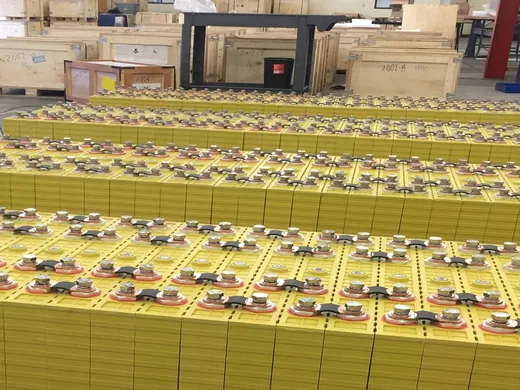
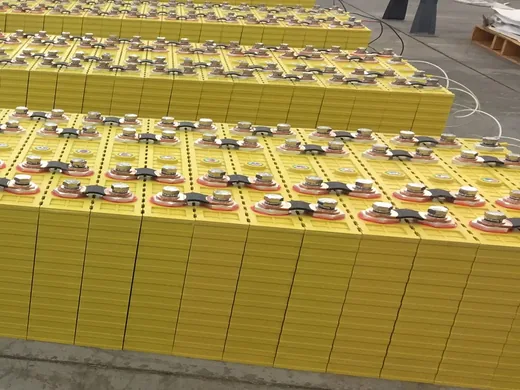
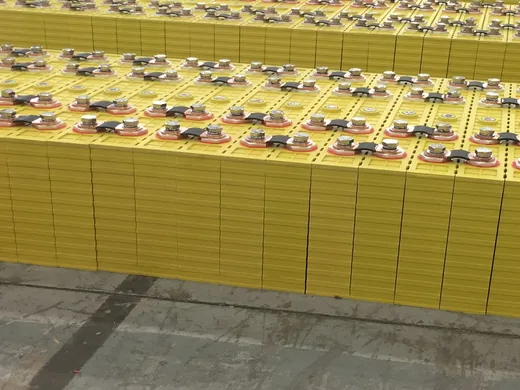
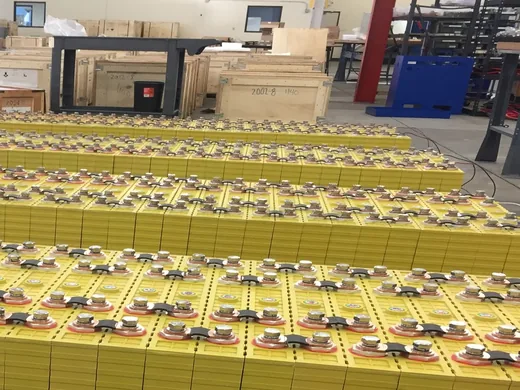
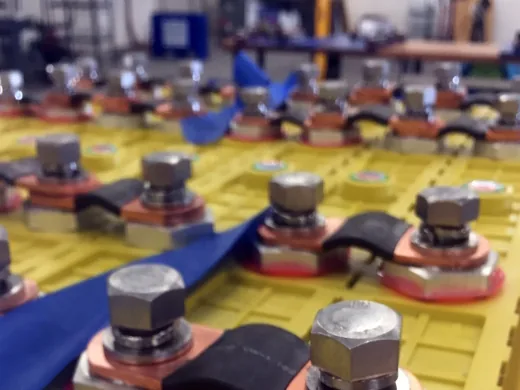
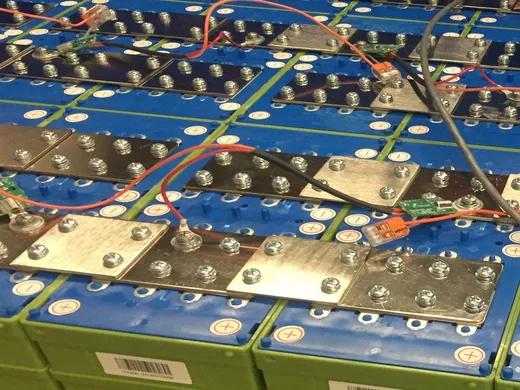
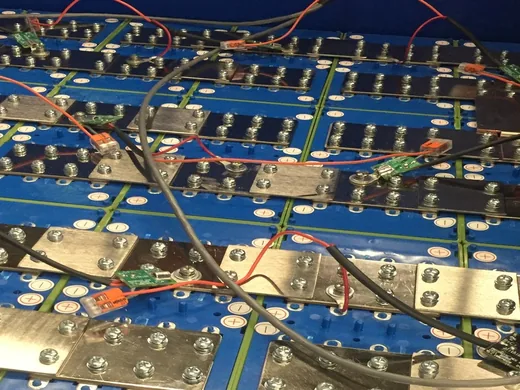
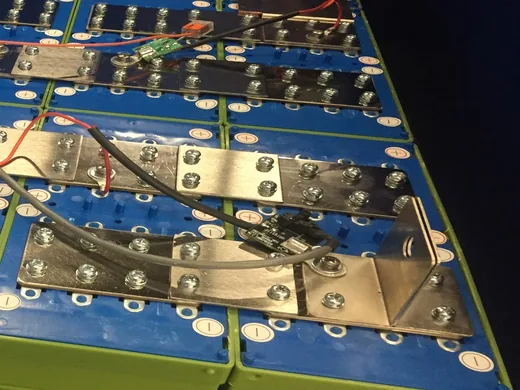
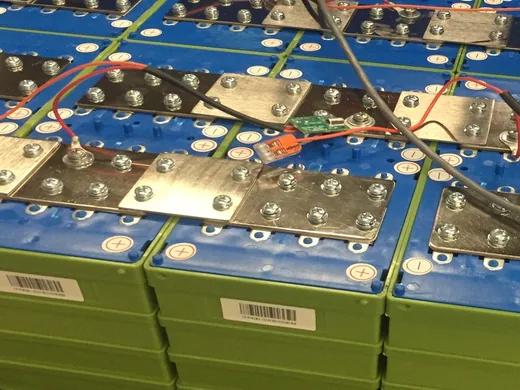
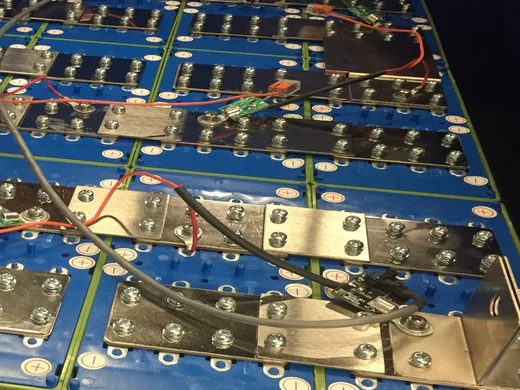
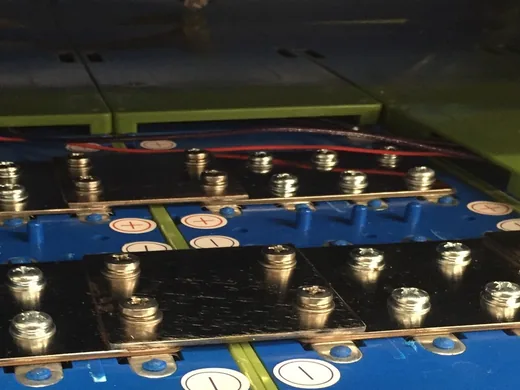
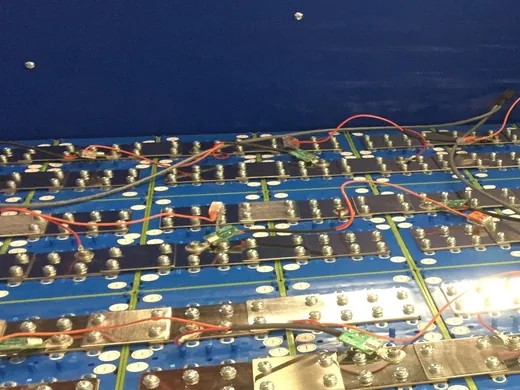
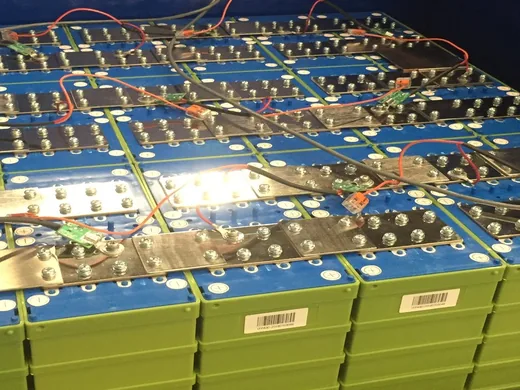
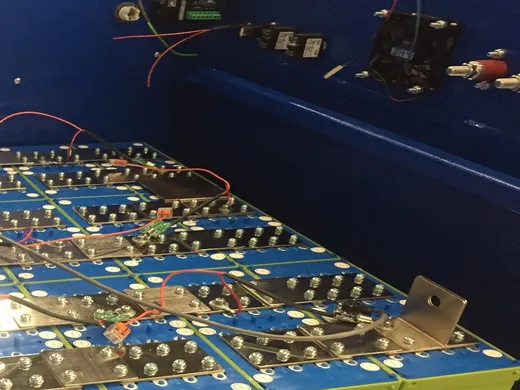
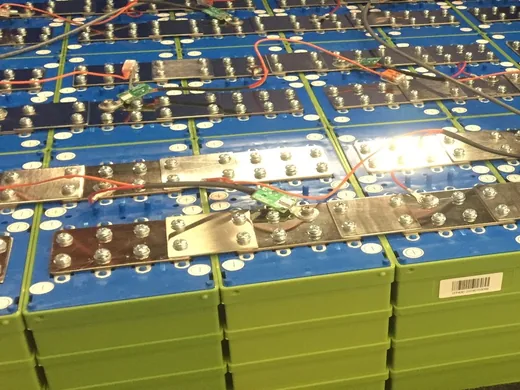
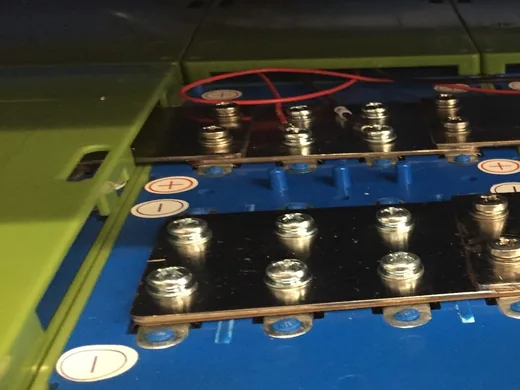
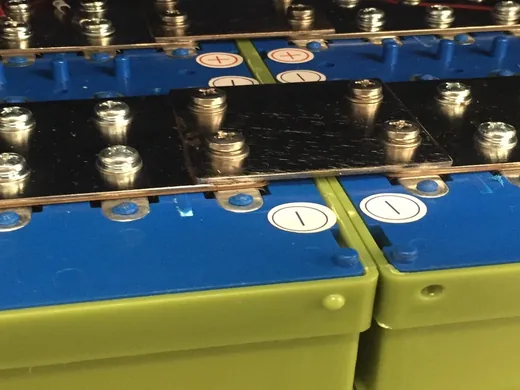
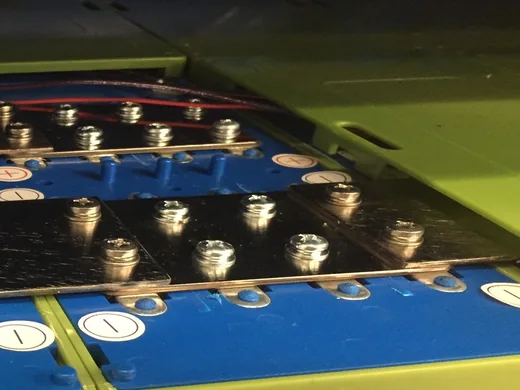
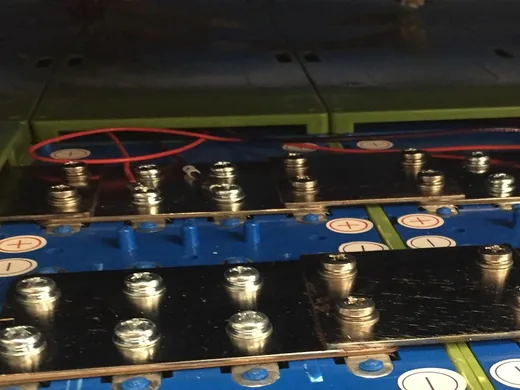
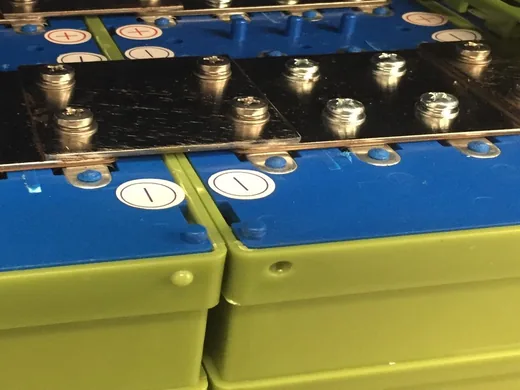
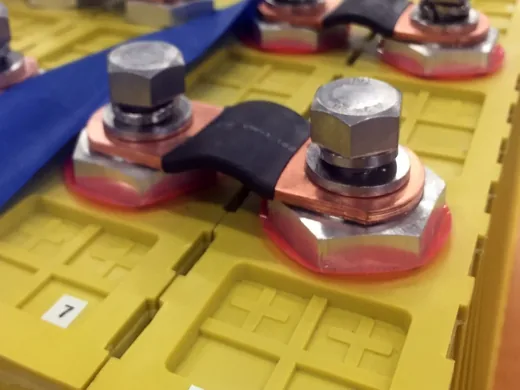
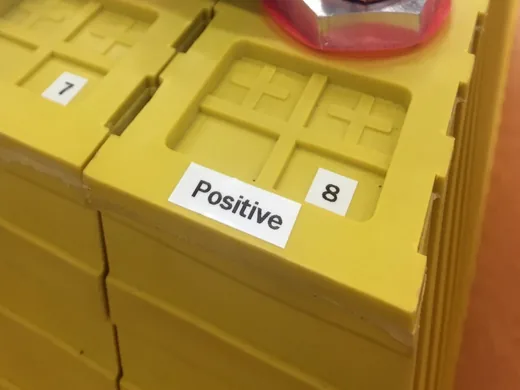
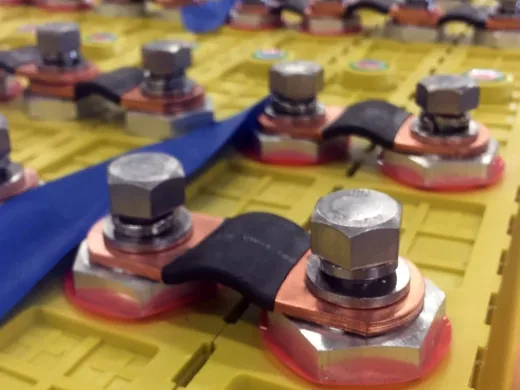
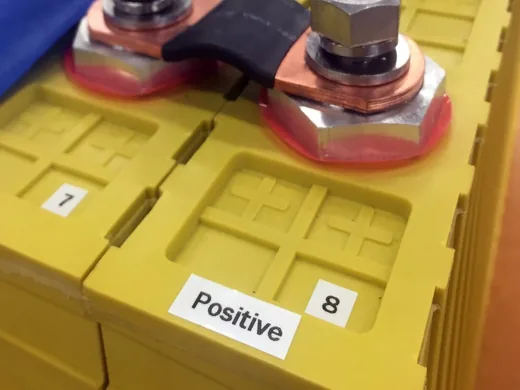
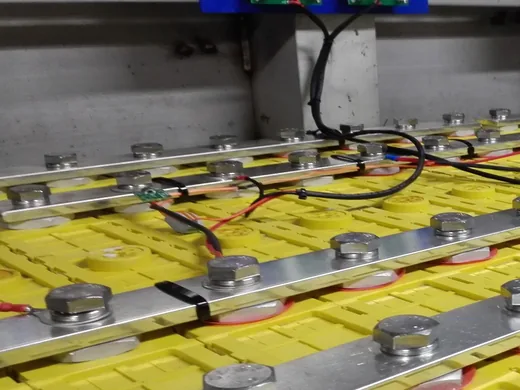
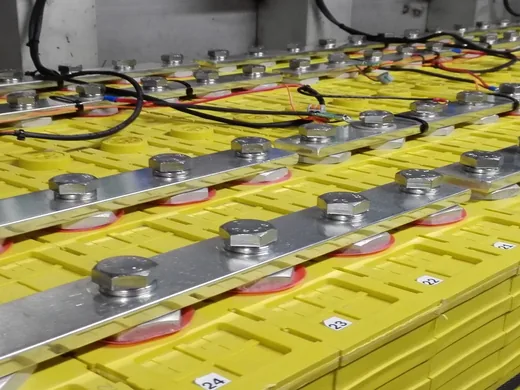
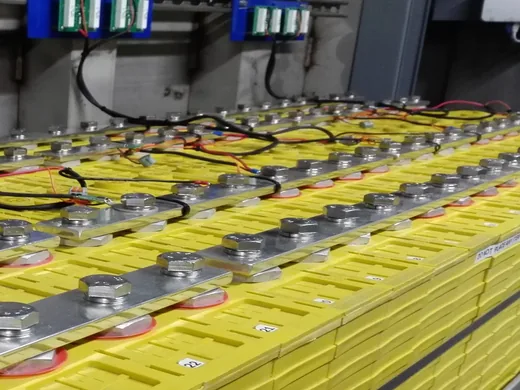
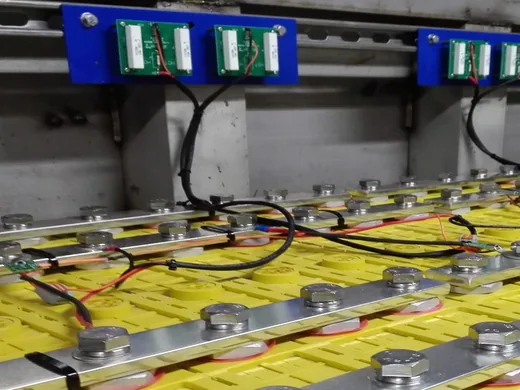
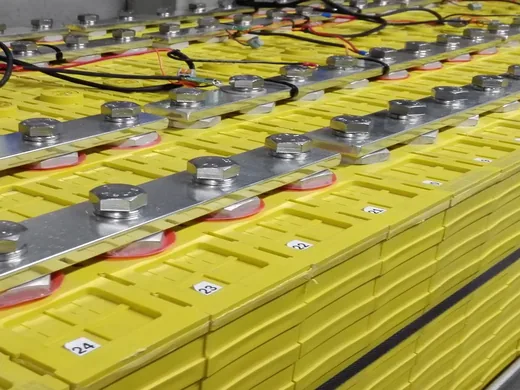
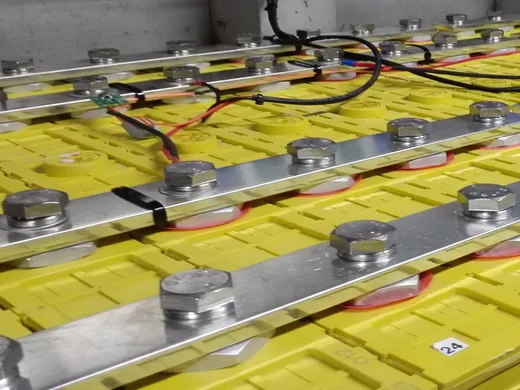
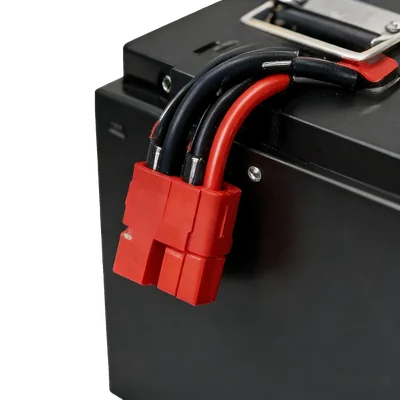

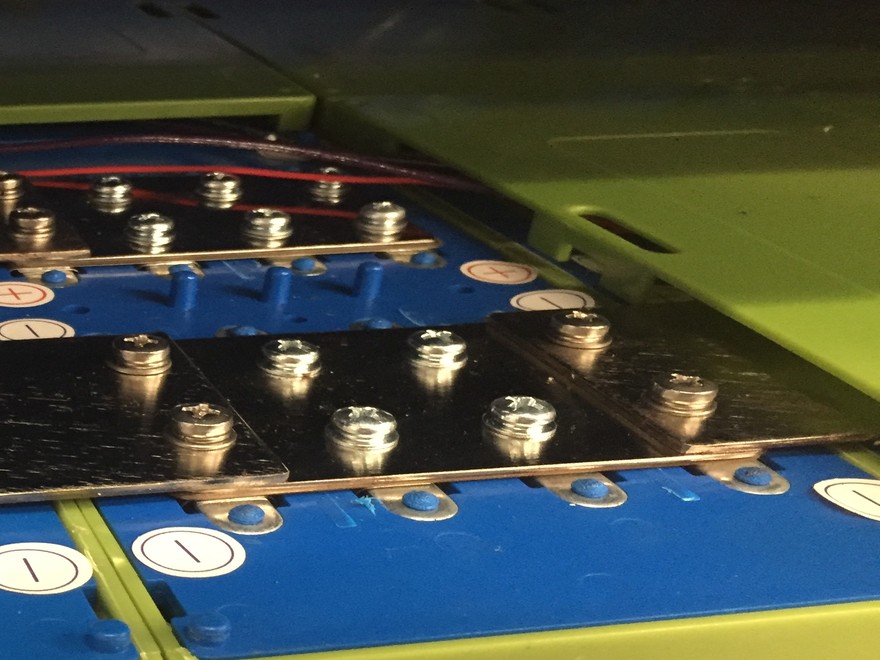
How many sunless days a site must survive is the number every unattended 12V install gets designed around, and setting that number is the CE-32’s job. One cell: 3.2V, 32Ah, 102.4Wh, about 0.75kg, M5 studs. Four in series: a 410Wh reserve standing behind a camera pole, a monitoring mast or a control cabinet.
Autonomy
How many gray days can a camera pole ride out?
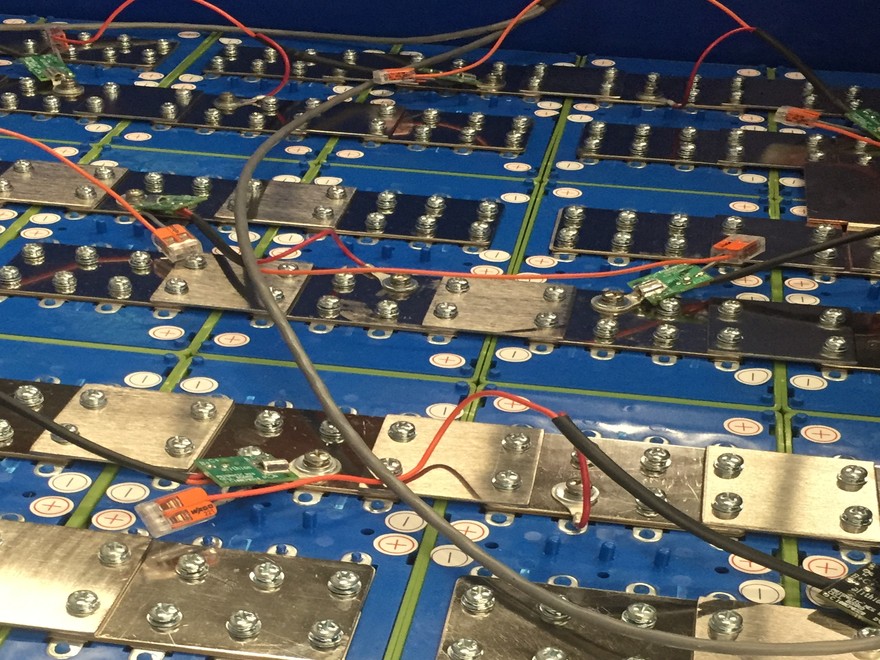
Two to six watts. That’s where the published field guides put an event-based LTE camera’s average draw, with nonstop 5W streaming costing about 120Wh a day and ultra-lean event-only sites logging single-digit watt-hours. Divide those into 410Wh and the pole’s worst case reads: zero-sun streaming, three days and change; motion-only duty, weeks. Pan-tilt motors and IR arrays spike for moments at a time, spikes the 64A pulse rating swallows before the camera can log a brownout. Farms, construction sites, boat ramps, remote gates. The pole in the photo is this exact build.
The panel side works off the same 120Wh: four peak sun hours set a 30W floor, the trade’s habitual 1.3 oversize lands installs at 40 to 50W, and recovery from a full gray week takes two or three clear days.
Which stations run on the same bank?
Pest-forecast lamps on dusk timers, tens of watts. Weather masts, soil loggers and water-level stations that wake, transmit for seconds, then sleep in milliamps. One architecture sits under all of them, panel, controller, battery, sized for the worst local weather stretch, and the cell’s part in it comes down to a discharge curve that refuses to leave the 3.2V shelf until the reserve is nearly gone, electronics held inside their voltage window to the end, charge accepted anywhere from 0 to 45°C across the working seasons, discharge good to the -20°C nights. Water authorities put the identical bank behind river-gauge telemetry, where a mast sees one service visit a year and the battery gets chosen for exactly that interval.
Heavier cabinets, heaters, bigger telemetry: 8S, 25.6V, 819Wh.
What does standby duty look like?
Hold 13.6 to 13.8V. Add a 14.6V balancing top-up monthly or quarterly. A disconnected spare loses 2 to 3% a month on the shelf, and when a barrier motor or siren fires, 32A of continuous output drives it straight off the bus with no supercapacitor hiding in the cabinet.
For the cabinet door label, the pack-level numbers read: charge 14.6V, float 13.6 to 13.8V, cutoff 10V, continuous 32A, fuse 40A. A boxed 4S build weighs about 3.5kg, a third of the 33Ah sealed lead brick it usually replaces, and that difference is what lets one technician swap a pole-top battery without a second ladder trip. Date the label as well; on shallow solar cycling, a ≥3,000-cycle rating pushes scheduled replacement out past the first camera’s own service life, and dated labels are how site surveys notice it.
How do you read a site’s real load?
Clamp a 12V power logger or a shunt meter onto the cabinet through one ordinary day and night, take the worst 24 hours, multiply by the autonomy the owner will tolerate, then add the winter tax, night vision and heaters peaking in the same weeks solar income thins. Only the meter can say where inside the 2-to-6W envelope a given pole lives. A dark steel box in full sun runs far above ambient while a pack mounted low and shaded holds its charge window unassisted, so placement belongs in the audit too. Recovery is the last reading worth logging: two clear days should bring a healthy build back to full after a gray week, and a bank that keeps sliding is asking for more panel, not more battery. On 24V heater cabinets, same procedure, amp readings halved. Two figures close the survey sheet, the logger’s worst-day amp-hours and the bank’s date code; the rest of a pole’s power health is derivable from those two.
Paper
The cell on paper
| Model | CE-32 |
|---|---|
| Nominal voltage | 3.2V |
| Rated capacity | 32Ah (0.5C, 25°C) |
| Energy | 102.4Wh |
| Charge voltage | 3.65V |
| Discharge cutoff | 2.5V |
| Continuous discharge | 32A (1C) |
| Peak discharge | 64A (2C pulse) |
| Cycle life | ≥3,000 cycles @ 80% DOD |
| Weight | ≈0.75 kg |
| Format | Compact aluminum prismatic (batch datasheet) |
| Terminals | M5 stud |
| Operating temperature | Discharge -20~60°C / Charge 0~45°C |
| Certification | UN38.3 / CE / RoHS |
Bank sizes
| 4 cells (4S) | 12.8V · 410Wh: camera poles, monitoring stations |
|---|---|
| 8 cells (8S) | 25.6V · 819Wh: 24V field cabinets, larger PTZ rigs |
| 2P4S | 12.8V · 819Wh: extended-autonomy 12V posts |
What does the build need?
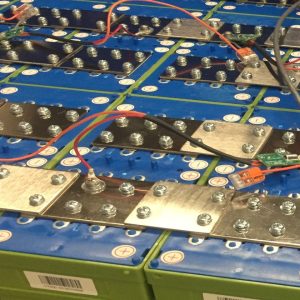
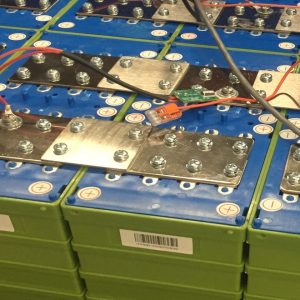
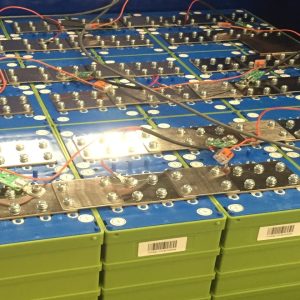
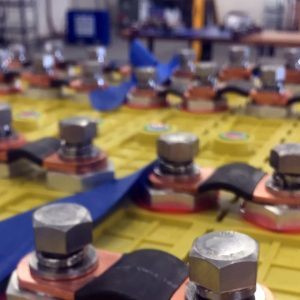
A parallel top-balance at 3.65V comes before the first series joint, and after it a 30 to 40A BMS carrying per-cell voltage, overcurrent and low-temperature charge protections, that last one guarding the 0°C line on winter poles unless a small heating pad on the charge circuit takes the duty instead. M5 studs torque in the 4 to 5 N·m class per the datasheet. Controllers running an LFP profile set absorption at 3.45 to 3.5V per cell, 14.2V at the pack. Storage between deployments: dry cabinet, 30 to 50% charge. Every cell’s laser QR ties to its factory test data, batches ship matched on capacity and internal resistance, and the 32Ah plate proves out with margin at 0.5C.
Reviews
There are no reviews yet.