Pin-compatible STM32 alternatives that stay in stock
A pin-compatible STM32 alternative is a second part that drops onto the same board footprint and runs the same firmware, ready to take over when the first part goes scarce. The idea carries two halves. Pin-compatible means the replacement fits the pads already laid down. In stock means a buyer can order it on the morning the line runs hungry. A design that holds both halves rides out a shortage with nothing worse than a firmware change. This page is about building that resilience in early, while the footprint is still on the screen and costs nothing to shape.
Designing for the part you can buy
A part wins a design on its datasheet. It can lose that design at the buying stage, when the chosen device cannot be had inside the schedule the line runs to. The shortage years taught that lesson at scale. Whole products that had passed every test sat unbuilt, short one microcontroller. The part that ships is the part a buyer can drop into a basket on the day the line is hungry, at a price the product still carries. Anything else on the bill of materials is a wish. The lesson reshapes the order of the design itself. The application read still asks what the part has to do. A supply read now sits beside it from the first day, asking whether the chosen device can be bought in the quantity the product needs, at the price it can carry, for as long as it will ship. A part chosen on the application read alone, with no supply read behind it, is a trap that springs much later, on the day a shortage lands and the design is already frozen in the field.
Resilience here has a precise shape. It is a board that accepts more than one part number with no respin. The main part runs in normal times. A qualified alternate waits on the same footprint for the day the main part goes scarce. The switch costs a firmware build and a purchase order. The schematic, the layout, and the test fixture all stay as they are. The line keeps moving, fed by a part the buyer could find that month. The board does not know which device it carries. It presents the same pads, the same power, and the same connections to whichever part sits on it. That sameness is the thing a designer builds on purpose.
None of that arrives by itself. The footprint is the cheapest thing on the board to change early. Once the first boards come back, that same change is a respin.
The footprint is the insurance
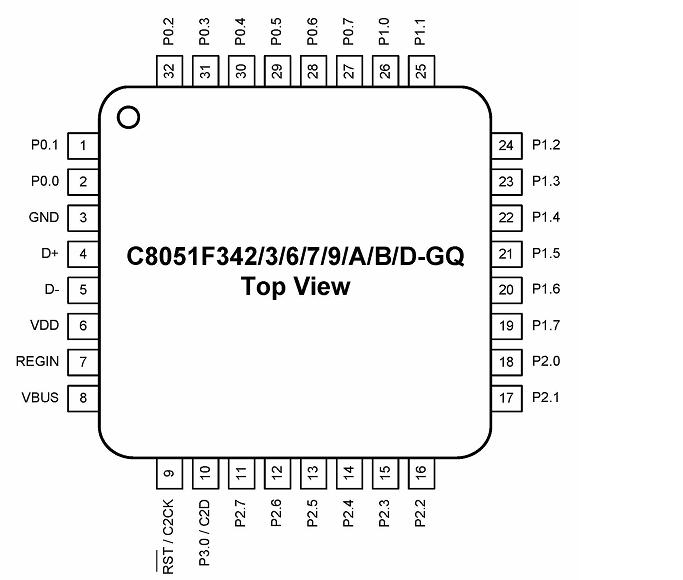
The footprint is where the insurance lives. The first move is to pick a common package, an LQFP or a QFN at a pin count that many devices fill, since a package only one device comes in leaves the board stranded the day that device goes. A dozen parts share an LQFP64. A board drawn on that outline can take any of them. Pin count drives the choice as much as the outline. Each package, from the LQFP48 up to the LQFP100, gathers its own long list of STM32 parts at that size. The part-number scheme makes the match readable: the letter in the middle of an STM32 order code names the pin count, so two devices that share that letter share the package and the bulk of the pinout. A quick scan of a few order codes at one pin count turns up the candidates a board could carry, all before the schematic is drawn.
A package alone is not enough. The pins on it have to line up too. ST keeps the power, ground, and core pins in fixed places across many devices in the same package, so those never move. The signal pins need more care. A design that routes a UART, an SPI bus, and an I2C bus to pins that several candidate parts all expose keeps every one of those parts a live option. Leaning on one device’s unusual pin mapping throws the alternates away. The discipline is to read the pinouts of two or three candidates together at layout time and route only to the pins they hold in common. That common subset is smaller than any single part’s full capability. It is also the part of the board that survives a swap untouched. A handful of pins deserve a name. The reset pin, the boot pins, and the debug pair sit in the same place across a family, so they route once and stay. The crystal pins, the analog supply, and the backup-battery pin move less often than the general-purpose pins, which makes them safe anchors. The pins to treat with care are the ones a single device exposes through a remap that its neighbours lack. Routing a critical signal onto one of those quietly ties the board to that one part. Reading three pinouts side by side at layout time takes an hour. It saves the week a respin would cost on the day the chosen part goes scarce.
The same thinking covers the supply and boot pins. Some devices want a capacitor on a regulator pin to start cleanly. Some devices need a boot pin tied low through a resistor to boot from flash. A footprint that lays those passive pads down from the start, populated or not, takes the parts that need them and the parts that skip them. The pads cost a few cents and nothing in board area. Leaving them off the first layout is the small decision that quietly locks the board to one part. Decoupling follows the same rule. A capacitor on every supply pair, placed close, suits every candidate in the package, since the power pins do not move. Test points on the debug lines and the key signals let one fixture check whichever device is fitted. The board becomes a fixed frame that a range of parts drop into. That frame is what a second source plugs into later with no fresh argument about the layout.
Done together, these moves turn the bill of materials into a set of interchangeable parts on one board. The payoff lands in three places at once: room for the buyer to shop across suppliers, a second way for the line to stay fed, and years of extra life for a product that a single source would never have granted. The cost of all of it is a few hours of attention at the moment the layout is born. That attention is the cheapest insurance on the whole project, bought once and carried for the life of the board.
Prove the second source like the first
A footprint that accepts a second part is only a promise. The promise holds after the alternate is proven on its own board, the same way a fresh lot of the main part gets proven. The approved-vendor list is where that proof lives: each qualified part earns its place by running the firmware through the full test on real hardware, at temperature and over the supply range. A part that sits on the list untested is a hope with a part number next to it. The qualification is a one-time cost, paid once per alternate. It buys the right to switch in an afternoon on the day the main part disappears from every distributor at once. The qualification run covers the corners, beyond the typical case. The firmware exercises every peripheral the product uses, at the temperature extremes and across the full supply range the part will see. A timing margin that held on the main part gets measured again on the alternate, since a faster core or a different flash latency can shift it. A part that clears that run earns a real place on the list. The record of the run is what lets a buyer pull the trigger later without reopening the engineering. A safety or emissions product adds its own line to that run, since a change of silicon can touch the certification. Folding the alternate into the original qualification keeps both parts under one approval. The cost of that run is paid in days, and paid once per alternate.
Where the alternatives come from
The first place to look is inside ST’s own range. A single package carries parts from across the STM32 line. One family in one package shares a single pinout from end to end. A board drawn on the STM32F103 in its LQFP64 outline accepts the whole memory ladder of that line, from the small parts to the large, with no change beyond the order code. The buyer moves up and down that ladder as stock and price shift, on one toolchain and one set of habits. The same pattern repeats in other packages. Each outline, from the LQFP48 up to the LQFP100, holds its own ladder of memory and features at a fixed pinout. A product line can sit one family across three pin counts and reuse the bulk of its design at every size. The order code reads the pin count straight off, so a candidate list comes together from the part number alone. That turns the second-source search into a desk job, done in an afternoon.
| Part | Flash | RAM |
|---|---|---|
| STM32F103R8 | 64 KB | 20 KB |
| STM32F103RB | 128 KB | 20 KB |
| STM32F103RC | 256 KB | 48 KB |
| STM32F103RD | 384 KB | 64 KB |
| STM32F103RE | 512 KB | 64 KB |
Beyond ST, a set of vendors builds Cortex-M parts to the STM32 footprint and a close copy of its register map. The GD32F103 is the best-known case. It drops onto an STM32F103 board in the common LQFP packages and runs much of the same code after a header swap and a short list of fixes. Those fixes are concrete. A GD32 wants its boot pin pulled firmly low through a resistor to start from flash. Some of these parts skip the capacitor an STM32 carries on its regulator pin. The clock setup and the flash timing each need a second look against the new datasheet. The wider field of these domestic Cortex-M parts is a subject of its own. The point here is narrower: a footprint built to the STM32 standard opens that whole door. The register-level closeness is what carries the firmware over. A peripheral driver written against the STM32 registers finds the same registers at the same addresses on the alternate, so the bulk of the code builds untouched. The vendor ships a library and a migration note that map the handful of real differences. A team treats that note as the qualification checklist for the second source. A few signal pins shift function between the original and the copy. The note lists each one. A designer who routes around those at layout time keeps the board open to both makers.
Making sure it stays in stock
A part on the footprint earns its place only while it ships. ST runs a product longevity program that commits each enrolled STM32 to a fixed availability window, ten years for the mainstream parts, with longer terms on some lines. For every part number in the program, ST publishes the date it stays orderable until. Reading that date at design time separates a part with a decade ahead of it from one already drifting toward end-of-life. The commitment is renewed each year and published per part number. A search on the part returns the program tier it falls under, seven, ten, fifteen, or twenty years, along with the calendar date through which ST will keep taking orders. That date belongs in the selection notes next to the clock speed and the memory size. A part outside the program carries no such promise. A long-lived product treats that absence as a risk to price into the choice.
The longevity date is a floor. It does not show this quarter’s stock. A part in the program can still sit on allocation when demand runs ahead of supply. So the supply read leans on two more signals. The lifecycle status on the product page reads active, not-recommended-for-new-designs, or obsolete. The distributor stock and the quoted lead time read the market as it stands today. A part that reads active, sits in the longevity program, and stocks across several distributors makes the safe anchor for a new design. A change notice is the early warning behind all three. ST posts a product change notification ahead of a process move and a termination notice ahead of an end-of-life, each with a window to place a last order. A team that watches those notices for its anchor part hears the bell before the part goes quiet.
The alternate earns the same supply read as the main part. A second source on a weaker lifecycle status than the device it backs up adds little real cover. The strongest pair is two active, well-stocked parts on one footprint, from two makers that a single shortage is unlikely to reach at the same moment. A domestic part on the STM32 footprint often fills that role, since it draws on a different fab and a different supply chain from ST. Two fabs on two continents rarely lose capacity in the same week. A natural event, a tool failure, or an allocation squeeze that idles one of them tends to leave the other running. A board qualified for both keeps shipping through the kind of shock that stops a single-source design cold.
The price of all this is paid up front, in engineering time. The work is three habits: reading the lifecycle and stock signals, an afternoon per candidate; qualifying each alternate on real boards; and keeping the approved-vendor list current. Set beside a line that sits idle for a quarter, the bill is small. The teams that pay it are the ones whose products keep shipping through a shortage that idles a competitor still tied to one part number. The saving shows up twice. A second qualified source gives purchasing leverage on the first vendor’s price in calm times and a place for the line to turn in a shortage. Both come from the same afternoon of work at the layout stage. The afternoon is spent once. The leverage and the cover last for the whole production run.
A part choice and a supply choice are one choice, made in a day and lived with for years. The application read picks the device that does the job. The supply read picks the footprint that keeps doing it through whatever the market does next. A design that runs both reads together, early, lands on a board that a shortage can bend without breaking. That board is the whole reward for choosing a pin-compatible alternative that stays in stock. The part that ships is the one a buyer can find on the day the line is hungry. A footprint drawn to accept more than one keeps that part within reach. The work to get there fits in the gap before the layout freezes. It never has to be done twice.
What makes an STM32 alternative “pin-compatible”?
A pin-compatible part drops onto the same board footprint and presents the same functions on the same pins, so it solders down and runs without a layout change. Within one STM32 family in one package, the pinout is identical across the memory range. Across families or vendors, “footprint-compatible” is often the honest term: the package and the power pins match. The signals line up bar a few that need a datasheet check.
How do you design a board so it can take a second source?
Pick a common package that many devices share, then route only to the pins two or three candidate parts hold in common. Lay down the optional passives, a regulator capacitor and a boot resistor, from the first layout so the board takes the parts that need them. Qualify each alternate on real hardware before it goes on the approved-vendor list. The result is one board that accepts several part numbers with no respin. Keep the optional passive pads on the board, populated only where a part needs them, so one bare board suits every candidate. Document each qualified part and its fixes in one place, so a buyer can act on the list without calling engineering.
Is the GD32 a drop-in replacement for the STM32?
For the STM32F103 in the common LQFP packages, the GD32F103 is close to a drop-in: same footprint, same Cortex-M3, a register map that runs much of the same code after a header swap. A few fixes are real, including a boot pin pulled low through a resistor, a recheck of the regulator capacitor, and a look at the clock and flash timing. Confirm each detail against the specific part’s datasheet before committing the layout. The payoff is a board that takes either part, so a shortage of one turns into a purchase order for the other.
How do you check an STM32 part will stay available?
Three signals together. The ST product longevity program lists a guaranteed “available until” date for each enrolled part, ten years or more for mainstream STM32 devices. The lifecycle status on the product page shows active, not-recommended-for-new-designs, or obsolete. The distributor stock and lead time show the live market. A part that is active, in the longevity program, and stocked widely is the safe choice. Recheck all three before each production run, since a status can change between one build and the next.
Is the extra engineering for a second source justified?
For products that ship in volume or run for years, it is. The cost is a one-time pass: read the supply signals, qualify the alternate, and keep the approved-vendor list current. Set against the cost of a production line that stops for a quarter when the single part goes scarce, the engineering time is small and pays back the first time a shortage arrives. A single-source design skips that work. It pays the bill later, in a line that stops.