The landscape of domestic Cortex-M parts replacing the STM32
A domestic Cortex-M part is a microcontroller from a Chinese vendor that drops into an STM32 socket. The parts copy the STM32 register map, run the same Arm Cortex-M cores, and fit the same packages, so much of an STM32 design moves onto them with little change. A wave of these parts arrived through the shortage years, led by GigaDevice and followed by a dozen names. This page maps that field: who makes the parts, how close the match runs, and what a team weighs before it switches.
Why the field exists
The field grew out of two pressures. Price came first. A Chinese Cortex-M part lists thirty to fifty percent under the STM32 it shadows. That gap drives high-volume consumer designs toward it. The shortage came second. When lead times stretched toward a year, the part a buyer could find on the same footprint kept the production line moving. The two pressures together turned a niche into an industry. The scale is hard to overstate. China is the largest single market for microcontrollers. A home-grown part skips the currency exposure, the import lead time, and the export friction of a foreign one. A generation of local engineers grew up on the STM32, so a drop-in domestic part meets a workforce that already knows it. Government policy added a push, with programs that favour local silicon in local products. The result is a deep bench of vendors competing on price and on closeness to the STM32.
The method behind the parts is consistent. A vendor licenses an Arm Cortex-M core, the same core ST licenses, then builds peripherals around it that match the STM32 register layout. The result reads to the firmware like an STM32. A driver written against ST’s registers finds the same registers at the same addresses, so the bulk of the code runs after a recompile. The approach scales across a whole catalogue. A vendor that matches the F103 once can match the F0, the F4, and the L0 the same way. The result is a family that shadows ST’s. A buyer who learns one domestic part carries that knowledge across the vendor’s range. The economics favour breadth: once a vendor has tooled up to shadow ST, adding each new family is cheap, so the catalogue grows wide for a buyer to lean on.
GigaDevice, the senior name
GigaDevice owns the senior place in the field. Its GD32 line is the closest thing to a like-for-like STM32 substitute on the market. It arrived early enough to set the pattern the others followed. GD32 started on the Cortex-M3, the same core as the STM32F1, and grew into a full range over the following decade. GigaDevice came to microcontrollers from flash memory, a business it already ran at scale. That flash expertise shows in the GD32, where the on-chip memory runs fast and comes in large sizes. The company sells through the same distributors a Western team already buys from. Its parts carry the standard date codes and lot traceability a contract manufacturer expects on a production line.
The flagship part shows the pattern plainly. GigaDevice rates the GD32F103 at 108 MHz on a Cortex-M3, half again the 72 MHz of the STM32F103 it shadows, with zero-wait-state flash access. The GD32 part drops onto the same LQFP footprint and takes much of the same firmware. A decapped unit showed two dies inside the package, one for the core and one for the flash, which lets GigaDevice vary the memory size across the range. That two-die trick is part of why a GD32 often carries more flash than the STM32 part number it answers to, at the same price.
The compatibility holds up under test. When an open-hardware group ran a GD32 on a board drawn for an STM32, the part passed every functional test with the same tools and the same code. The pin layout matches in the common packages. The peripherals answer at the STM32 addresses. One block sits apart: the USB controller times differently, so USB code often needs a second look. The early Blue Pill boards carried this story into every hobbyist’s hands. Many of the cheap STM32F103 boards sold online turned out to hold a GD32 or another clone. Nearly all ran the standard firmware just the same. The swap stayed invisible until someone read the markings under a glass.
The range has grown well past that first part. GD32 now spans the Cortex-M3, M4, M23, and M33. GigaDevice has added a parallel set of RISC-V parts under the same family name. A design that starts on a GD32 finds a ladder of memory sizes and pin counts much like the one ST offers. The senior name in the field carries the broadest catalogue in it. GigaDevice also ships its own development tools, a configuration utility and a software library that mirror ST’s in shape. A team can stay inside the GD32 toolset or keep its STM32 tools and point them at the GD32 part. Both routes reach a working build. The debugger story is the same, since a domestic part exposes the standard Arm debug port that an ST-LINK or a J-Link already drives.
The wider field
GigaDevice has company. A dozen Chinese vendors now ship Cortex-M parts aimed at the STM32 socket. A handful carry the volume and the ecosystem to be taken seriously in a real design. The serious names cluster into a short list. The list shifts year to year. The names that hold steady share three traits: real production volume, a maintained software library, and a distributor network a Western buyer can reach.
Each name holds a corner of the field. Geehy builds the APM32, with its newer parts on a register layout of their own. Artery’s AT32 is a faster line that reaches well past the STM32 clock and ships with a Keil pack and migration tools. WCH offers the CH32, a low-cost line with a parallel RISC-V family beside it. MindMotion, Nations, and Huada each hold a niche, in motor control, in security, and in automotive work. A buyer reaches these vendors through the same distributors that carry the majors. The larger names now hold stock in Western warehouses. The supply path is no longer a direct-from-Shenzhen gamble.
| Vendor | Series | Arm core | Note |
|---|---|---|---|
| GigaDevice | GD32 | Cortex-M3 / M4 / M23 / M33 | closest match; GD32F103 at 108 MHz |
| Geehy | APM32 | Cortex-M0+ / M3 / M4 | early F103 register match |
| Artery | AT32 | Cortex-M4 | high clock, up to about 240 MHz |
| WCH | CH32 | Cortex-M0 / M3 | low cost; RISC-V siblings |
| MindMotion | MM32 | Cortex-M0 / M3 | motor control |
| Nations | N32 | Cortex-M4 | security and crypto |
The names span a spectrum of closeness, from the early near-exact register copies of one STM32 to the newer parts built on register details of their own. A team reads where a given part falls on that spectrum before it counts on dropping the part in. Where a part sits on the spectrum sets the porting work, from a bare recompile at the close end to a full migration at the far one. A few vendors lean into the difference openly. Artery ships explicit migration tooling that maps its parts against the STM32. WCH builds a parallel RISC-V line that drops the Arm heritage for teams ready to move off the core entirely. The field is no longer a set of pure copies. A few names have begun adding parts with no STM32 equivalent at all, pushing into clocks, analog, or connectivity that ST does not offer at the price. The field has started to lead in places of its own.
How the match is built
The match comes from two licensed pieces and one copied one. The Cortex-M core is licensed from Arm, the same way ST licenses it, so the processor is genuine Arm silicon with a genuine instruction set. The package and the pinout follow an open industry outline that no vendor owns. The register map is the copied piece, the layout of control bits a peripheral answers to, modeled on ST’s. That third piece is the one that carries legal weight. It is also the one the newer domestic parts have begun to redraw. Arm’s core licence is clean, since every vendor pays Arm for it. The copied register layout is the part that can draw a complaint, since it mirrors ST’s own design choices. The newer parts redraw those registers far enough to argue independence, which is part of why a vendor like Geehy moved its later families off the early clone layout. No major public lawsuit has settled the register-map question. The industry has read that quiet as room to operate. The grey area stays grey, so a buyer treats the IP question as open and qualifies the vendor accordingly.
How close, in practice
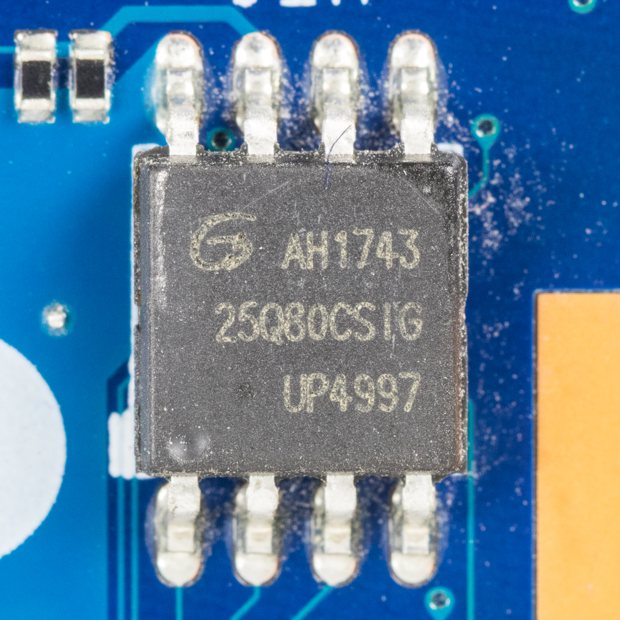
Closeness depends on the part and the family. The F103-class parts hit the high mark. A GD32F103 or an APM32F103 drops onto an STM32F103 board in the common LQFP packages and runs the same code after a header swap. The higher families loosen the match. As an STM32 grows more complex, the domestic match holds at the footprint and the broad function, the level a designer calls footprint-compatible. The closest case stays remarkably clean. On an F103-class board, a domestic part needs a recompile and a handful of fixes, nothing more. The hardest case looks like any cross-vendor migration, with a board respin and a firmware pass against the new datasheet.
The differences live in a short list of details. The clock tree often needs re-deriving, since a domestic part may run a different multiplier set or a higher ceiling. The faster clock calls for new flash wait-states. The boot pins want their own treatment: a domestic part often needs its boot pin pulled firmly low through a resistor to start from flash. The power pins differ in places, with a regulator capacitor present on one part and left off another. The USB block is the common trouble spot, since its timing rarely matches ST’s to the cycle. The analog blocks carry their own calibration. A team reads the vendor’s migration note, which lists each of these against the STM32 it shadows, and treats that note as the porting checklist. The vendor libraries help here. GigaDevice, Artery, and the others ship a software library that mirrors ST’s HAL in shape, so a call by a familiar name does the familiar thing. A team can keep ST’s HAL and patch the few differences, or move to the vendor’s library wholesale. Either path lands at a working driver. The CMSIS layer underneath stays identical, since Arm supplies it to every vendor, so the core, the systick, and the interrupt setup port with no change at all.
The performance often runs the domestic part’s way. Many of these parts clock higher than the STM32 they shadow, add zero-wait flash or a little more SRAM at a price point, and raise the ESD rating, the GD32F103’s jump to 108 MHz standing for the pattern. The headline number usually favours the newer silicon, since it was drawn later on a cheaper process. A team treats the higher clock as headroom to verify, since a faster part on paper still needs its timing proven on the bench.
The firmware port is the easy half. The Cortex-M core runs the same instruction set, so the same compiler builds the same source. The HAL or the register code written for an STM32 mostly compiles untouched. The work concentrates in the handful of peripherals that drift, the clock, the USB, and the analog front end. A plain UART, SPI, or I2C path carries over with little more than a part-number change. Real products have made the move at scale. Consumer goods, power tools, and small appliances ship in volume on domestic Cortex-M parts today, much of that on firmware first written for an STM32. The port is a known quantity now, mapped out in vendor notes and community write-ups.
Qualifying the part stays necessary all the same. A domestic equivalent earns its place on the board the same way any second source does, through a full test run on real hardware across temperature and voltage. A passed qualification is what turns a close match into a part a team can ship with confidence. The test catches the corners a datasheet glosses: the brown-out behaviour, the ADC accuracy at temperature, the oscillator startup. A part that clears those earns the same trust as a fresh lot of the original.
What a team weighs
A domestic part brings its own set of questions. Documentation often arrives thinner. The English version can lag the Chinese one. Long-term availability has a shorter track record than ST’s decades. The IP question hangs over the register-copy parts, since a close copy of ST’s layout invites a legal challenge that a buyer can inherit. Quality and consistency vary by vendor. A critical design sticks to the serious names, the ones that earn a reputation through volume and testing. Documentation is the daily friction. A reference manual translated late or in part slows a team that hits an edge case. A community grows around the bigger names, so a stuck engineer finds an answer there fast.
Set opposite those questions is a real prize. A qualified domestic part gives a design a second source on a different fab and supply chain, unlikely to fail in the same week as ST. It hands purchasing a lever on price. For a high-volume product, the per-unit saving alone can carry the decision. Both the questions and the payoff are real. The strongest designs treat a domestic part as a managed risk, qualified and watched. That stance keeps the saving and contains the downside.
Choosing a domestic part
The case for a domestic part is strongest where cost and volume rule. A consumer product shipping in the millions, on a mature F103-class design, feels the thirty-to-fifty-percent saving on every unit. The same product gains a second source against the next shortage. For that profile, a qualified GD32 or a peer earns its place on the board. The saving compounds at volume. A few cents per unit across a million units a year pays for the qualification many times over. The cost-driven product is where the domestic field has won its broadest ground. A charger, a power tool, or a small appliance rarely needs more than an F103-class part, so the saving lands on the products that ship in the largest numbers.
The case for staying with ST holds where other things rule. A safety-certified product carries a re-certification cost that can swamp the per-unit saving. A low-volume industrial design leans on ST’s documentation and its decade-long availability. A part that pushes the newest STM32 features finds the domestic match looser the further it gets from the F103-class core. Each of those points back toward the original. The newest STM32 lines, the H7 and the U5 among them, have no close domestic match yet, so a design that needs them stays with ST by default.
The decision rarely lands on the silicon alone. It lands on the volume, the budget, the certification, and the tolerance for a younger supply chain. A team that reads those four settles the question for its own product. The domestic field has matured far enough that the answer now rests on the same evidence as any other second-source decision. A common pattern hedges the bet. A design qualifies both an STM32 and a domestic equivalent on one footprint, then orders whichever the market favours that quarter. The board stays open to both for its whole life. That hedge has become a mainstream stance across a whole tier of cost-sensitive products, Chinese and global alike.
Are domestic Cortex-M parts true STM32 replacements?
For the F103-class parts, close to it. A GD32F103 or an APM32F103 drops onto the same footprint and runs much of the same code after a header swap. The higher STM32 families get a looser, footprint-level match. Each part needs checking against its vendor’s migration note before a team counts on it.
Which Chinese vendors make STM32-compatible MCUs?
GigaDevice leads with the GD32, the closest like-for-like line. The APM32 comes from Geehy, the AT32 from Artery, the CH32 from WCH. MindMotion, Nations, and Huada hold niches in motor control, security, and automotive work. Several of these vendors also ship RISC-V parts under the same family names. The list moves year to year. A buyer checks current volume and stock before committing to any one name.
Is the GD32 faster than the STM32?
Often, yes. GigaDevice rates the GD32F103 at 108 MHz on a Cortex-M3, a step up from the 72 MHz of the F103 it shadows, and the GD32 uses zero-wait-state flash. Many domestic parts clock higher than the ST part they shadow, since they were drawn later on a cheaper process. The headline number usually favours the newer silicon.
Is it legal to use an STM32 clone?
The Arm Cortex-M core inside these parts is licensed from Arm, the same core ST uses, so the processor itself is legitimate. The grey area is the register map. The newer domestic parts carry register details of their own, which keeps the risk lower than the early near-exact clones carried. A team buying for a commercial product weighs the IP question as part of vendor qualification. The closer the copy, the higher the risk.
When should a design pick a domestic part over the STM32?
When cost and volume rule and the design sits on a mature F103-class core. A product shipping in the millions feels the thirty-to-fifty-percent saving on every unit and gains a second source against a shortage. On the other hand, a safety-certified, low-volume, or feature-pushing design usually stays with ST, for the documentation, the availability, and the looser match on newer families. A useful rule weighs annual volume against the one-time qualification cost: the higher the volume and the longer the product life, the sooner the per-unit saving clears that cost.