A wireless transrectal ultrasound probe is the whole of a prostate-scanning machine in one handheld body, run from a phone or a tablet. Choosing one is choosing the imaging, the needle guidance, and the cleaning all at once, since the probe holds them all. The specifications on the box are the specifications of the system. Reading them well is how a good probe is picked for prostate work.
What you are choosing
A wireless probe carries the scanner, the probe head, and the screen’s link in one hand. Nothing else is bought alongside it. The specification on the box is the specification of the whole system. A buyer reads that specification as the measure of the machine. The trade for that simplicity is that one box has to do everything. A buyer judges the whole machine by reading one set of specs.
The specifications pull on one another. A high frequency that drains the battery, a fine app on a probe that will not seal, a sharp picture on a slow link: each is a mismatch a buyer reads for. The aim is a probe whose specifications fit one another and fit the prostate work. A set of strong numbers that pull apart in use serves no one. The art is in the balance across the specs. A probe whose specs hold together in real work beats one with a single standout number.
Key figures to compare on a wireless transrectal probe
Specification
Typical figure
Imaging frequency
about 5 to 10 MHz
Field of view (end-fire)
a sector of roughly 120 to 150 degrees
Sealing rating
IPX7 (immersible to 1 metre for cleaning)
Battery, live scanning
about 1 to 3 hours, to cover a clinic list
Biopsy needle
18-gauge, about 12 systematic cores
Disinfection level
high-level, required after every patient
Frequency, the first spec
Frequency decides how fine a picture the probe draws. A transrectal probe sits an inch from the prostate through the rectal wall. The short reach lets it run at a high frequency, the kind that draws fine detail. The frequency on the specification is the first thing a buyer reads. Distance is what forces a probe to a lower frequency. The transrectal probe has almost none to cross. Freed from the reach, it spends its frequency on detail.
A transrectal probe works in the higher range of ultrasound. The close gland needs little reach, so the frequency goes to detail. A probe spanning roughly the mid-to-high megahertz suits the prostate. The buyer looks for a band that reaches the fine detail the gland needs. The exact band varies between makers. A buyer reads the figure each probe lists. The upper end is what serves the finest prostate work.
A single probe works across a band of frequencies. The app sets the frequency for each task across that band. The higher end sharpens the near detail a prostate scan turns on. A buyer reads the span the probe offers, since room to move covers more of a clinic’s work. A probe fixed at one frequency covers less. A probe with a usable span handles the close detail and a little more reach when needed. The span is a figure a buyer weighs.
The frequency reads against the work the probe will do. A clinic doing fine prostate detail looks to the upper end of the band. The figure is one a buyer checks first on the specification. It sets the picture every later spec builds on. A poor frequency is hard to make up for downstream. No app polish rescues a coarse picture. The buyer settles the frequency before the rest.
The field of view
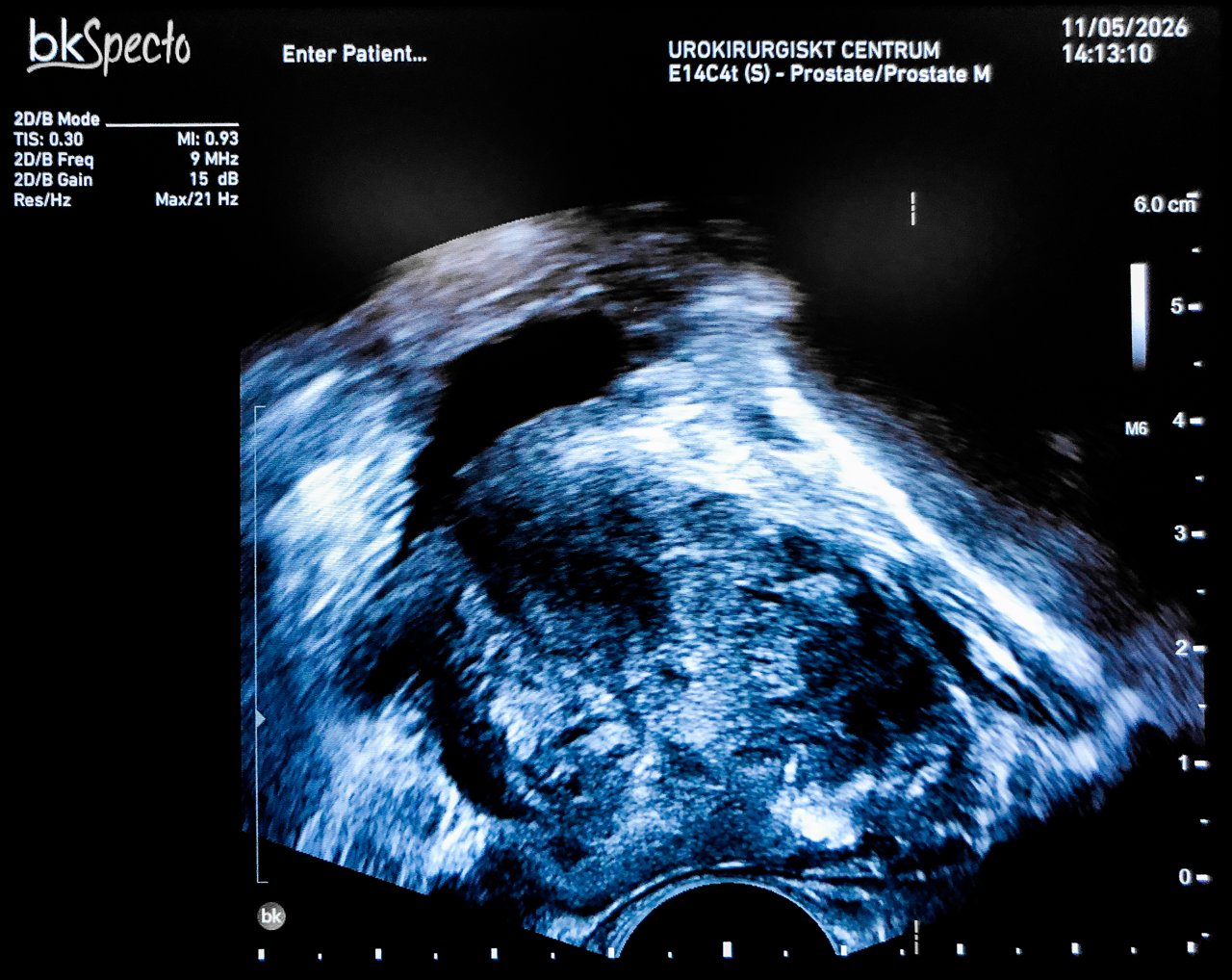
A prostate on transrectal ultrasound. The field of view is how much of the gland a probe shows in one picture like this.
The field of view is how much of the gland the probe shows at once. A transrectal probe reads a sector that fans out from its tip. A wide field holds the prostate and its surroundings in one view. A narrow one makes for a slower scan, read piece by piece. The field is set by the array in the tip and the way the probe steers it. A buyer reads the angle and depth the maker lists. A wider sector shows more of the pelvis at once.
A generous field eases the prostate scan. The whole gland sits on the screen in one sweep. A urologist reads the whole gland in a single sweep. The width of the field is a comfort a buyer reads for on the specification. A wide field also helps the biopsy. Seeing the gland and its target together steadies the aim. The view is part of how cleanly the cores are placed.
The field and the frequency are read together. The two decide the picture between them. A probe strong across both serves the widest run of prostate work. A buyer weighs the pair for the scans the clinic does. Neither spec stands alone in the picture. A buyer reads field and frequency as one figure of merit. The pair is what a prostate scan is judged on.
The needle guide
The needle guide is the spec that sets a transrectal probe apart for biopsy. A bracket clips onto the probe and holds the biopsy needle on a fixed line. The probe shows that line on the screen as the needle’s path. The guide is what turns a reading probe into a biopsy probe. The guide fixes the needle’s path and shows it on the screen. Every core is aimed before it is taken. A free needle behind the probe would travel blind.
A buyer for prostate work reads the needle guide as closely as the picture. The guide has to fit the needle the clinic uses. It has to hold the needle steady on its line. The line it sets has to show cleanly on the screen. A poor guide undoes a good picture. The guide is read alongside the probe, never as an afterthought. A buyer for biopsy work puts it near the top of the list. The aim of every core rides on it.
The guide and the probe are matched to each other. A probe is sold with a guide made for it, sized to its body and its needle. A buyer checks that the guide suits the biopsy the clinic does. A mismatched guide aims the needle poorly. A buyer checks the guide is sold and supported with the probe. A guide hard to get or replace strands a probe. The supply of guides is part of the choice.
Some probes guide both biopsy routes. The same probe in the rectum can aim a needle through the rectal wall or through the perineum. A buyer who plans transperineal biopsies checks the probe supports that route. The guide and the route go together in the choice. A clinic moving toward the perineal route reads this carefully. The probe and guide have to support the route the clinic plans. The choice of probe and the choice of route are made together.
The guide reads on the screen as a dotted track. The track shows where the needle will go before it fires. A urologist lines the track up with the target and takes the core. A buyer looks for a guide whose track shows clearly and aims true on the app. The track is only useful if it matches where the needle lands. A buyer checks the guide is calibrated to the line it shows. A track that lies is worse than none.
The head shape
The head shape decides how the probe sits in the rectum. A transrectal head is slim, with its array set to look forward and to the sides into the gland. A head shaped for the rectum reads the prostate with a gentle angle. A buyer who handles the probe judges the fit better than a dimension on a sheet. The array inside the head sets what the probe sees forward. An end-fire head looks straight ahead into the gland. A buyer matches the head to the prostate work.
The shape is read with the patient in mind. A slim head, shaped to the rectum, makes the scan quicker and the few minutes more comfortable. A bulky head fights the operator and the patient both. The shape that fits is the one a clinic reaches for without a second thought. Comfort is read with the patient as much as the operator. A gentle head shortens an intimate scan. The few minutes inside are easier with a probe shaped for the route.
The probe in the hand
A probe is judged in the hand as much as on the page. Its weight, the balance of its head, the way it angles all show only when it is held. A probe that feels right is worked with ease all day. A buyer who can handle the probe before buying learns what no specification shows. The feel of the instrument is part of the choice. A demonstration probe in the hand settles questions a brochure leaves open. A buyer who can try one before buying reads the fit directly. The hand knows what the page cannot say.
The seal and disinfection
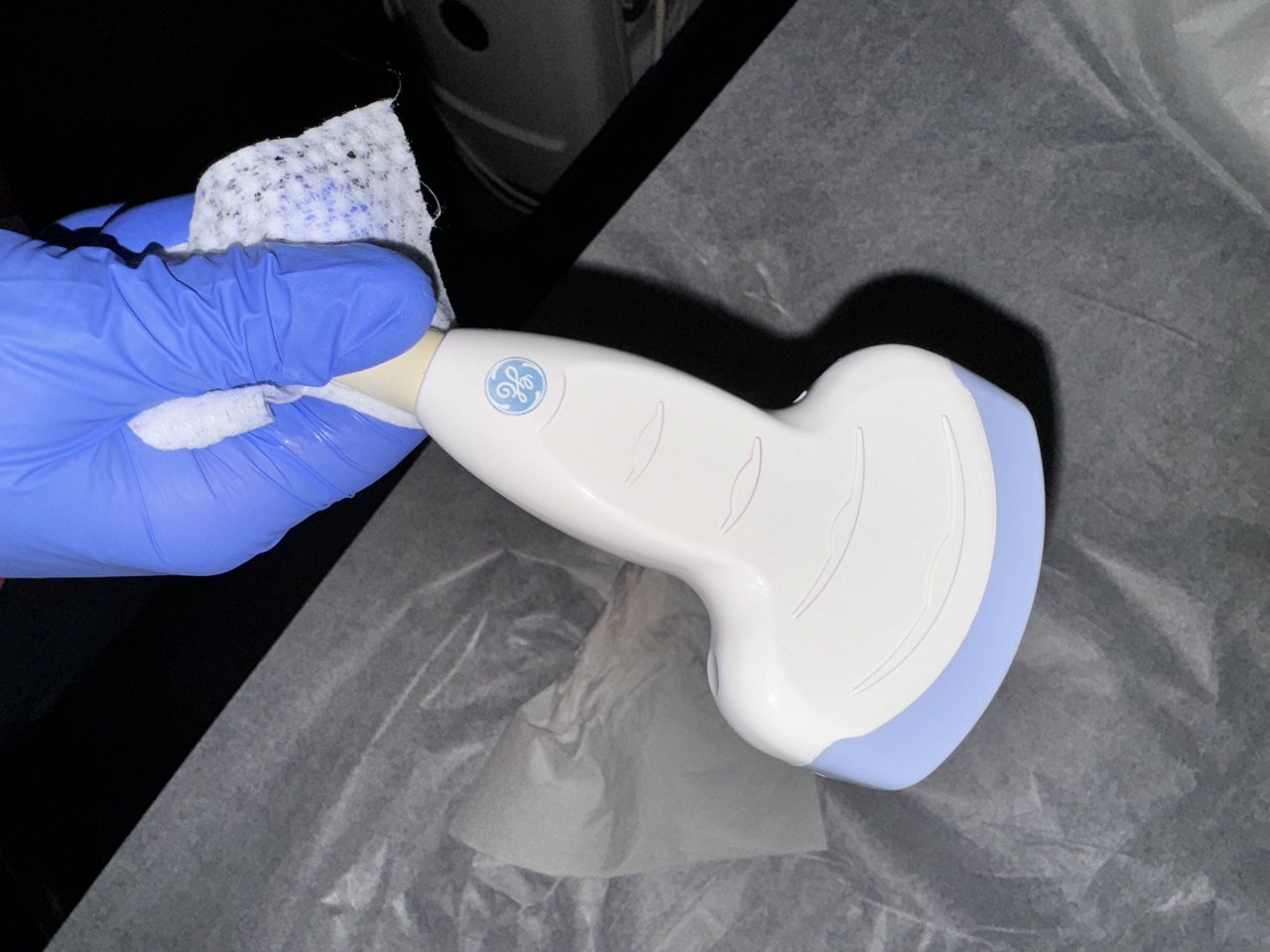
A handheld ultrasound probe. A transrectal probe is a slimmer endocavity shape that must seal for high-level disinfection between patients.
A transrectal probe has to be cleaned to a high standard between patients. The probe touches the mucous membrane of the rectum. According to guidance on disinfecting ultrasound transducers, a probe that contacts a mucous membrane is a semi-critical device that needs high-level disinfection after each use. A buyer reads the cleaning standard before the picture. The cleaning is not optional for a probe used in the rectum. A clinic disinfects it to a high level after every patient. The probe has to take that treatment many times a day.
High-level disinfection is hard on a probe. The probe soaks in a disinfectant or sits in a cabinet that mists it. A seal that let fluid in would ruin the electronics inside. A buyer reads the sealing rating to know the probe survives the cleaning. A poorly sealed probe fails early under disinfection. Fluid creeps into a weak seam over time. A buyer reads the seal as a measure of how long the probe lasts.
The seal is named by an ingress rating. A rating like IPX7 marks a probe that can be immersed for cleaning. A buyer checks the rating covers the disinfection the clinic uses. A probe that cannot be cleaned to standard cannot be used at all. The seal ties to the disinfection the clinic already runs. A buyer checks the probe suits that method, whether a soak or a cabinet. The cleaning the clinic uses shapes the probe it can buy.
The wireless link
The wireless link carries the picture from the probe to the screen. A biopsy follows a moving needle, so the link has to keep up. Latency is the delay between the probe moving and the screen catching up. A short delay is the thing to look for in the link. Latency is the spec a biopsy clinic reads hardest in the link. A needle moves under the probe, the screen tracking it in step. A laggy link makes a guided core a gamble.
A probe built for guided work keeps the delay small. The picture tracks the hand as it moves. A lag long enough to notice would throw off a biopsy that follows a needle. A buyer reads the link as a live-imaging spec the biopsy depends on. The link also has to hold the connection steady. A picture that drops mid-biopsy is worse than a slow one. A buyer reads the link for steadiness as much as speed.
Battery life
Battery life decides how long the probe works between charges. A wireless probe runs on its own charge. A clinic doing a list of biopsies needs a charge that lasts the list. The battery on the specification is read against the busiest day. A clinic plans the battery around a full list of work. A morning of biopsies asks more of a battery than one quick look. The buyer reads the figure against the heaviest day.
Battery life is read in scanning time. A figure measured in standby tells little. What counts is the hours of live scanning the probe gives. A buyer reads the scanning time, the work the battery does on a live picture. Standby hours flatter a specification. A probe idle in a drawer drains slowly. The number that counts is the live scanning a charge gives.
A spare battery or a quick charge keeps a probe on the list. A probe that runs flat mid-list holds a clinic up. A buyer checks how the probe is charged and how long it takes. The charging is part of the day the probe has to fit. A fast charge can rescue a long list. A probe topped up over a break carries on through the afternoon. The buyer reads the charge time alongside the run time.
Heat and age wear a battery down. A battery loses capacity over its life. A buyer asks how the battery holds up and whether it can be replaced. A probe with a replaceable battery outlasts one sealed shut. A battery is the part that ages first in a probe. A clinic that can swap it keeps the probe in service longer. The buyer asks about the battery’s life before buying.
The app and the measurements
The app is where the probe’s picture is read. A clinic checks the app measures what its scans measure, with the calipers and the volume the work needs. The app computes the prostate volume from the three diameters. A buyer reads the app as closely as the probe. The app is the half of the system the buyer holds. A clumsy app slows every scan on a good probe. The buyer tries the app as well as the picture.
The reports the app builds matter as much as the calipers. A scan ends in a record the clinic keeps and shares. An app that gathers the numbers into a clean report saves the time a hand-built one takes. A buyer reads how the app reports as well as how it measures. A report that files cleanly saves the clinic time after every scan. The numbers flow into the record on their own. The buyer reads the reporting as part of the daily work.
Image quality
Image quality is the sum of the specs in the picture. The frequency, the field, and the processing all show on the screen together. A buyer judges the picture on the gland itself. A clear prostate picture is what the whole probe is bought for. The numbers on the box hint at the picture. The picture on the gland is the proof. A buyer trusts the screen in the end.
A picture is best judged on a real gland. A buyer scans a prostate, or watches one scanned, before deciding. The specification points the way. The screen settles it. The picture in front of the eye is the final test. A maker confident in the probe lends one to try. A buyer who scans a real gland sees the picture plainly. The trial settles what no number can.
Putting the choice together
The specs of a transrectal probe are read as a set. The frequency and field set the picture, the needle guide sets the biopsy, the seal sets the cleaning, and the link, battery, and app run the day-to-day. No one spec carries the choice alone. Each is checked against the prostate work the clinic does. A probe is a set of compromises read as a whole. A buyer weighs the specs together, as a single fit. The best probe is the one whose specs fit the work.
The order of the checks follows the work. The picture and the seal come first, since a probe that cannot image or cannot be cleaned cannot be used. The needle guide comes next for a biopsy clinic. The link, the battery, and the app round out the read. The order keeps a buyer from chasing a single number. A great picture on a probe that cannot be cleaned is no buy. The checks run in the order the work demands.
A wireless transrectal probe, chosen well, brings the whole prostate workup into the clinic room. It images the gland, guides the biopsy, cleans to standard, and runs a list on a charge. The specifications are how that probe is told from a poor one. A buyer who reads them against the work picks a probe the clinic keeps reaching for. The right probe disappears into the work. It images, guides, cleans, and lasts without a second thought. The specifications, read against the work, are how that probe is found.
Common questions about choosing a transrectal probe
Which specifications matter in a wireless transrectal probe?
The picture and the cleaning come first, since a probe that cannot image well or cannot be disinfected is no use. For biopsy, the needle guide is the next thing to read, with the frequency and field behind the picture. The wireless link, the battery, and the app round out the choice. Each is weighed against the prostate work the clinic does.
Why does the seal and disinfection matter?
A transrectal probe touches a mucous membrane, which makes it a semi-critical device needing high-level disinfection between patients. That cleaning soaks or mists the probe, so it has to carry a watertight seal. An ingress rating like IPX7 marks a probe that survives immersion. A probe that cannot be cleaned to standard cannot be used at all.
What is the needle guide?
A bracket that clips onto the probe and holds the biopsy needle on a fixed line, shown on the screen as the needle’s path. It is the spec that makes a transrectal probe a biopsy probe. A buyer checks the guide fits the needle the clinic uses and shows a clear track on the app. Some guides support both the rectal and the perineal route.
What frequency should a transrectal probe have?
The higher range of ultrasound. The prostate sits an inch from the probe, so the short reach lets the frequency chase fine detail. A probe spanning roughly the mid-to-high megahertz suits the gland. A buyer looks for a band that reaches the upper end for fine prostate detail.
How important is battery life?
It decides how long the probe works between charges, which matters for a clinic running a list of biopsies. The figure to read is the hours of live scanning the probe gives. A spare battery or a quick charge keeps a probe on a busy list. A replaceable battery extends the life of the probe.
Can a handheld wireless probe do a prostate biopsy?
Yes. A slim transrectal probe run from a tablet images the gland and, with a needle guide, steers the cores into it. The app measures the gland and computes the volume. As long as the probe seals for high-level disinfection and holds a charge for the list, it does the whole job in a clinic room.
About the Author
Julien Mercier
Senior R&D Engineer · Medical Ultrasound Transducer Development
Senior R&D Engineer with an M.S. in Applied Physics and over 15 years of experience in medical ultrasound transducer development, specializing in the design verification and performance testing of high-frequency imaging transducers. Currently leading the development and verification of the company’s next-generation high-frequency linear-array transducer, responsible for imaging performance evaluation and reliability analysis in preclinical testing. Brings extensive hands-on experience in piezoelectric element tuning, beamforming parameter optimization, and system-level performance testing.