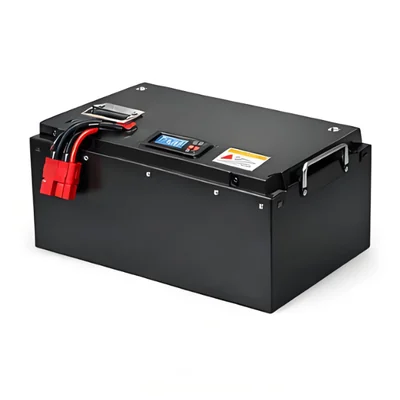
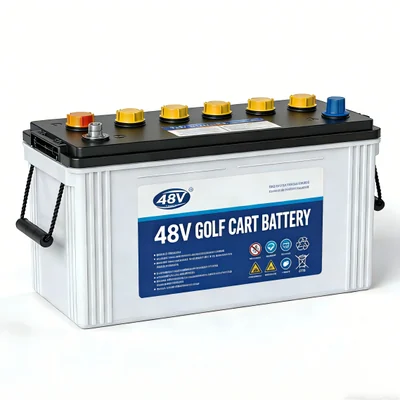
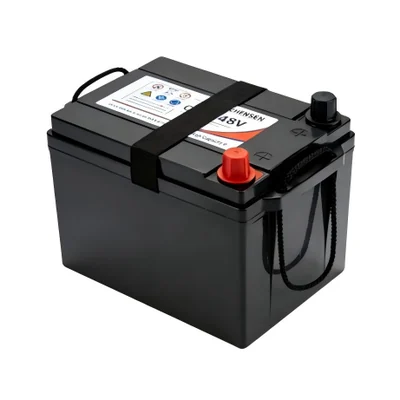
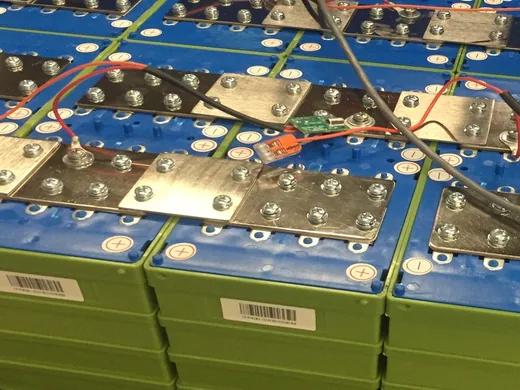
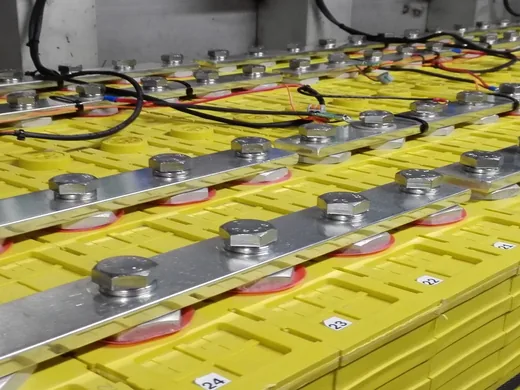
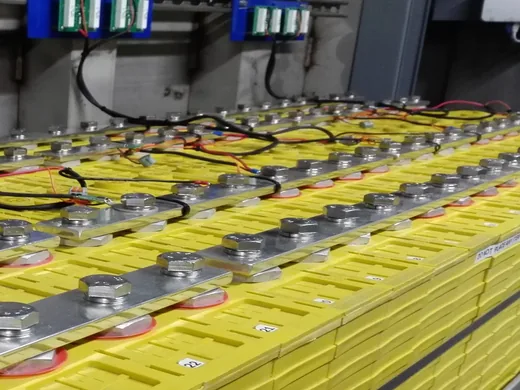
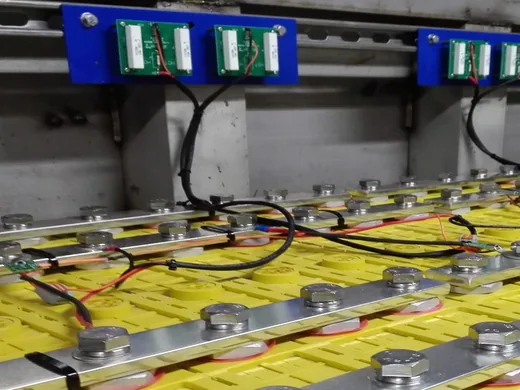
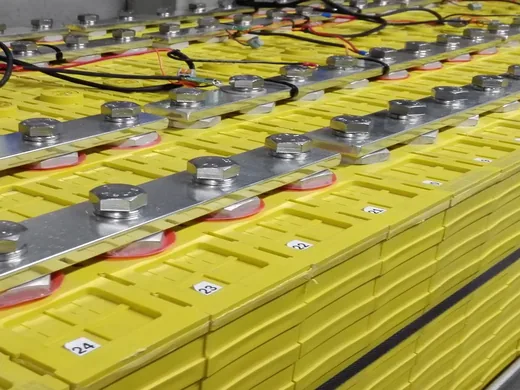
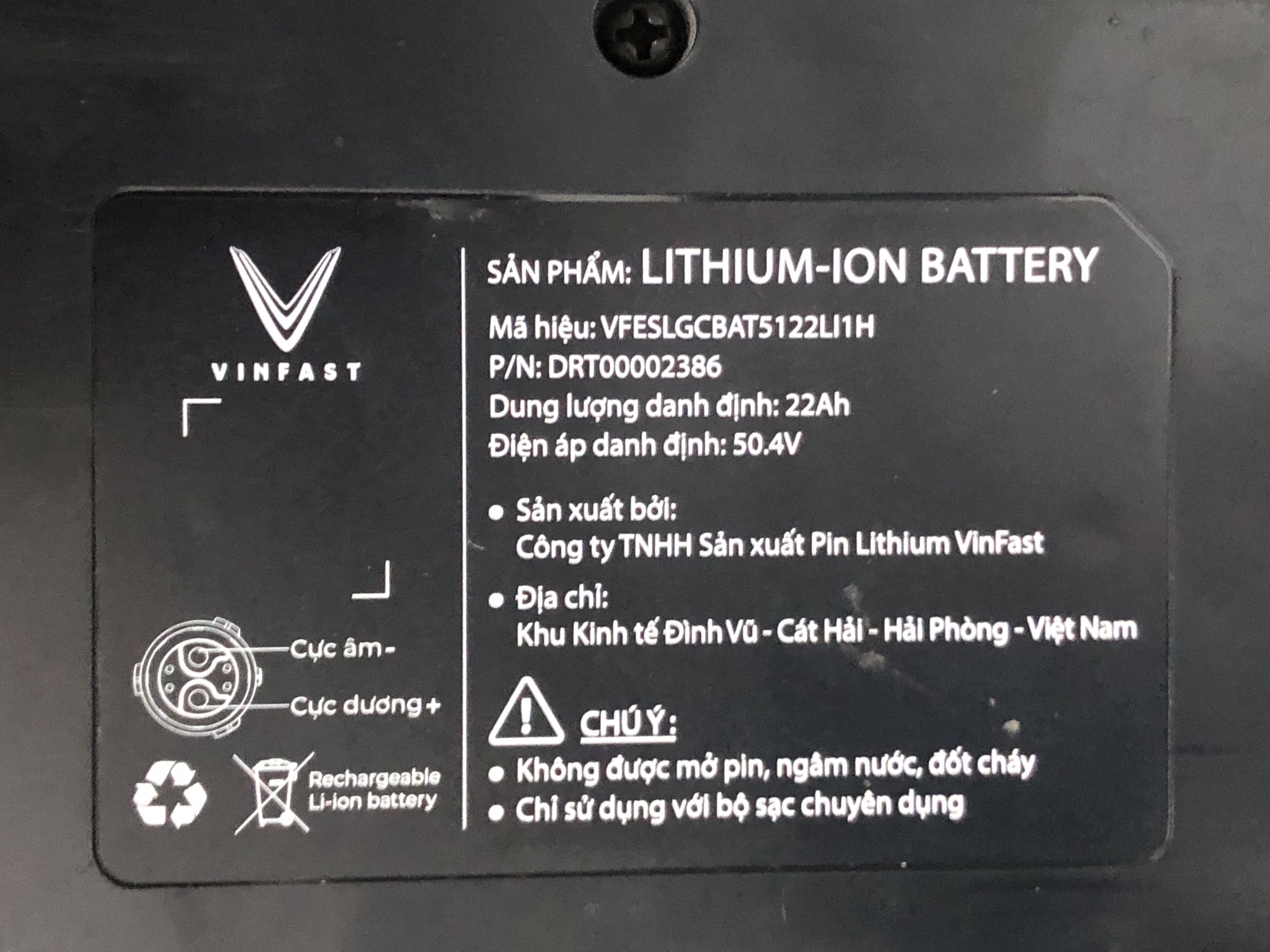
A real lithium-ion battery label. It gives the nominal capacity, 22 amp-hours, and the nominal voltage, 50.4 volts. Multiplying the two gives the energy, about 1,109 watt-hours. The label leaves that step to the reader. The label text is Vietnamese.
Battery capacity is printed in two units, the watt-hour and the amp-hour. The watt-hour, written Wh, is a unit of energy. It counts the total work a pack can do before it runs empty. The amp-hour, written Ah, is a unit of charge. It counts how much current a pack can push, and for how long. Battery University puts the amp-hour the same way, as a measure of how much charge a pack can hold. A power station is rated in watt-hours. A bare cell or a twelve-volt battery is usually labelled in amp-hours. The conversion between the two units is the first sum to learn. It turns every battery label into one comparable number. It guards a buyer against the oldest trick in the catalogue, the big amp-hour figure at a quiet low voltage. That trick has sold small batteries as big ones for decades. The conversion is the buyer’s defence against it.
The two units answer different questions. Watt-hours tell how long a load will run, so a 1,000-watt-hour box runs a 100-watt fridge for roughly ten hours. Amp-hours tell how much current the cells hold at their own voltage. The same 100 amp-hours can stand for a small store of energy or a large one, because the voltage decides which. A single amp-hour figure, read alone, says almost nothing about runtime. The choice of unit is a choice of question. A runtime question wants watt-hours every time. The amp-hour answer only matters when counting cells inside a pack.
The trap inside the arithmetic is the voltage. The voltage is easy to miss, because a label can lead with a big amp-hour number alone. That label can hide a small pack behind a large-looking figure. The same capacity written in watt-hours would tell the truth at a glance. A label is a sales document first and a spec second. A careful buyer looks past the front unit to the watt-hours underneath. A buyer who can move between the units is never fooled by the wording.
The one formula
One line of arithmetic ties the two units together. Watt-hours equal amp-hours times voltage. A 100-amp-hour cell at 3.2 volts holds 320 watt-hours, because 100 multiplied by 3.2 is 320. The same sum runs in reverse for the other direction, so amp-hours equal watt-hours divided by voltage. A 320-watt-hour cell at 3.2 volts holds 100 amp-hours. The two forms of the sum are the same fact, read from either end.
A short list of packs shows the formula at work. A 50-amp-hour 12.8-volt pack holds 640 watt-hours. A 100-amp-hour 12.8-volt pack holds 1,280 watt-hours. A 200-amp-hour 25.6-volt pack holds 5,120 watt-hours. A 280-amp-hour 3.2-volt cell holds 896 watt-hours. A 30-amp-hour 51.2-volt pack holds 1,536 watt-hours. Each line is the same multiplication with its own two numbers. The result is the energy that pack stores, in watt-hours.
The voltage in that formula is the nominal voltage. Nominal voltage is the average a cell or a pack holds across a discharge, because the real voltage drifts down a little toward the end of a discharge. A single LiFePO4 cell sits near 3.2 volts. A pack of four such cells in series sits near 12.8 volts. A pack of eight sits near 25.6 volts. A pack of sixteen sits near 51.2 volts. A full LiFePO4 cell reads near 3.65 volts. An empty one reads near 2.5 volts. The 3.2-volt figure is the average across that swing. The figure on a spec sheet is usually that nominal number, so a buyer plugs it straight into the formula and trusts the result.
The arithmetic never changes. Only the numbers that go into it change. A cell, a twelve-volt battery, and a forty-eight-volt pack all use the same line. Each carries a different voltage, so each lands on a different watt-hour figure from the same amp-hours. The result changes by a large factor when the voltage changes. This is the whole reason the conversion matters, because the voltage can multiply the answer several times over.
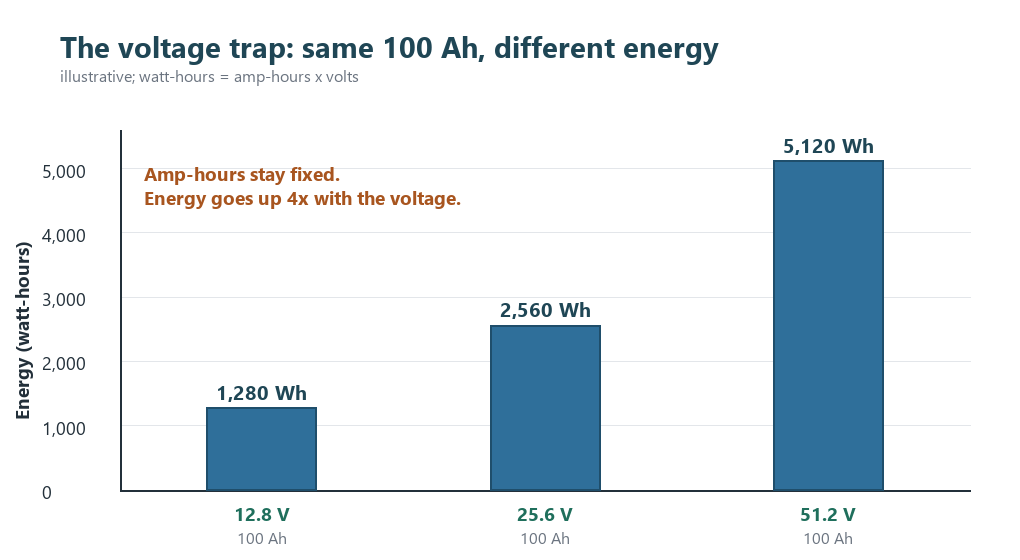
A worked pair makes the swing concrete. Take a 100-amp-hour battery at 12.8 volts and multiply 100 by 12.8, which gives 1,280 watt-hours. Now take the same 100 amp-hours at 51.2 volts and multiply 100 by 51.2, which gives 5,120 watt-hours. Both sums used the same 100 amp-hours. The energy went from 1,280 to 5,120 watt-hours on the voltage change alone. A careful shopper runs the multiplication on every battery before placing the two side by side. The habit costs one line of arithmetic and saves a buyer from paying four times over for a quarter of the energy. The same swing repeats at every common voltage. A 100-amp-hour pack holds 1,280 watt-hours at 12.8 volts, 2,560 watt-hours at 24 volts, and 5,120 watt-hours at 48 volts. A 50-amp-hour pack runs the same path. It holds 640 watt-hours at 12.8 volts and 2,560 watt-hours at 51.2 volts on the same 50 amp-hours. A 30-amp-hour pack holds 384 watt-hours at 12.8 volts and 1,536 watt-hours at 51.2 volts on the same 30 amp-hours. Each step up in voltage lifts the energy in step, on a fixed amp-hour count. The pattern repays one look. After that, a glance at the voltage tells a buyer how much the amp-hour number is good for. The reverse direction works the same way. Two thousand watt-hours takes 156 amp-hours at 12.8 volts. The same two thousand watt-hours takes only 39 amp-hours at 51.2 volts, a quarter as many. Both readings come from the one formula, run in the two directions. A buyer can run the sum on any pack the same way, from a small cell to a large cabinet. A 12-volt 7-amp-hour backup battery holds about 90 watt-hours by the same line of arithmetic. The method never changes from one battery to the next. A buyer who learns the formula once owns it for every battery to come.
The reverse sum carries its own use. A maker who knows the energy a box must hold works back to the cells. Two things are already fixed, the watt-hours by the job and the voltage by the design. The amp-hours of cells fall out of dividing one by the other. The buyer of a finished station never sees this step, because the maker has already done it. The label on the case then reads in watt-hours, the unit that needs no further conversion.
A worked example runs that reverse sum. A maker plans a 2,000-watt-hour station on a 25.6-volt pack. The amp-hours come from 2,000 divided by 25.6, near 78 amp-hours. The same 2,000 watt-hours on a 51.2-volt pack needs only 39 amp-hours of cells, half as many. The higher voltage halves the amp-hours for the same energy. This is why large packs climb to higher voltages, since fewer amp-hours mean thinner wiring and less heat. The buyer of the finished box still reads one watt-hour figure, the same on either design.
The same 100 amp-hours at four voltages, converted to watt-hours
Battery
Amp-hours
Nominal voltage
Watt-hours
Single LiFePO4 cell
100 Ah
3.2 V
320 Wh
12-volt battery
100 Ah
12.8 V
1,280 Wh
24-volt battery
100 Ah
25.6 V
2,560 Wh
48-volt battery
100 Ah
51.2 V
5,120 Wh
Why the voltage is the catch
The same 100 amp-hours converted at three voltages. It holds 1,280 watt-hours at 12.8 volts, 2,560 at 25.6 volts, and 5,120 at 51.2 volts. The amp-hours stay at 100. The figures illustrate the arithmetic.
The voltage is where many buyers go wrong. A high amp-hour number is energy only at a stated voltage. Strip the voltage away and the amp-hour figure floats free of any real size. A seller who leads with amp-hours alone is showing the flattering half of the picture, because the low voltage behind a big amp-hour count stays out of sight. The fix is to ask one question of any amp-hour figure. At what voltage. The answer fills in the rest of the figure. Without the voltage, the bold number is only a guess at the energy.
The trap shows up in a plain comparison. Picture two batteries on a shelf. Battery A shows 100 amp-hours at 12 volts, which works out to 1,200 watt-hours. Battery B shows 50 amp-hours at 48 volts, which works out to 2,400 watt-hours. A shopper who sorts the shelf by amp-hours reaches for Battery A. The watt-hour column is the one to sort by.
The trap grows with the voltage gap. A 200-amp-hour 12-volt pack holds 2,560 watt-hours. A 100-amp-hour 48-volt pack holds 5,120 watt-hours. The watt-hour column sorts a shelf right every time. The gap is widest between a low-voltage pack and a high-voltage one, since the voltage does all the lifting.
The same trap hides inside a single product. A power bank may boast 27,000 milliamp-hours. That figure sits at the cell voltage near 3.7 volts. A phone pulls the energy at the higher USB voltage near 5 volts. The conversion shrinks the headline on the way out. The honest figure is the watt-hour rating, near 100 watt-hours for that pack. A shopper who reads the watt-hours never pays for charge that fails to reach the phone. The cell voltage sits below the output voltage on every such pack. The milliamp-hour headline reads larger than the energy a device ever sees. The watt-hour figure is the one that holds up at the till.
Watt-hours sidestep the trap because they fold the voltage in. A watt-hour is already energy, so two packs quoted in watt-hours can be compared straight across, whatever their voltages. This is the reason power stations are sold in watt-hours, because the unit is harder to dress up. It carries the voltage inside it, so no big bare number can steer a buyer wrong. The lesson is short: treat any amp-hour figure as half a fact, find the voltage that goes with it, and run the multiplication. The watt-hour answer is the one to compare, to plan around, and to trust.
Sizing a pack from a load
The conversion does real work when a pack is sized to a job. The first step starts with the load in watts and multiplies by the hours it must run, so the result is the watt-hours the job needs. A 60-watt load for eight hours needs 480 watt-hours. A buyer then shops in watt-hours and matches the number, with a little extra for the losses ahead.
A real job makes the sum plain. A camp runs a 40-watt light for five hours and a 50-watt fan for ten hours. The light needs 200 watt-hours. The fan needs 500 watt-hours. The whole job comes to 700 watt-hours, plus a margin. A 1,000-watt-hour station covers it with room to spare. A bigger job scales the same way. A fridge at 80 watts for a full day needs near 1,900 watt-hours. A laptop at 60 watts for six hours adds 360 more. The day’s total drives the pack size. The buyer adds the watt-hours and shops for a box that clears the sum. The buyer never touched amp-hours, since the job lived in watt-hours from start to finish. Watts and hours and watt-hours form one family. They answer the runtime question without the voltage ever coming up.
Common loads carry typical watt figures. A buyer totals them the same way. A phone charger draws about 10 watts. A laptop draws 50 to 65 watts. A wifi router draws 10 to 15 watts. A ceiling fan draws 50 to 75 watts. A small fridge draws 60 to 90 watts during its compressor cycle. A 32-inch television draws about 50 watts. A microwave draws 1,000 watts in short bursts. Each load multiplied by its hours gives a watt-hour figure. The figures add into one daily total. That total is the watt-hour size the pack has to clear.
Runtime runs the same sum backwards. Take the pack’s watt-hours and divide by the load in watts, so the answer is the hours before losses. A 1,000-watt-hour pack feeds a 200-watt load for a little under five hours, because the inverter and the wiring take a slice on the way out. A 100-watt load for six hours wants 600 watt-hours. A 300-watt load for two hours wants the same 600. The product is what counts. The split between watts and hours washes out. A rough allowance of ten to fifteen percent brings the paper figure down to the field figure. A buyer who sizes a pack to the bare label runs short on a long evening. The watt-hours a load receives are a tenth or so fewer than the label, after the inverter takes its share. The small margin covers that gap.
Always convert to watt-hours first.
Amp-hours enter the picture only at the cell level. A pack designer picks a system voltage first, perhaps 48 volts, then divides the watt-hours by that voltage to find the amp-hours of cells to buy. A 5,000-watt-hour pack at 51.2 volts needs about 98 amp-hours of cells. The buyer of a finished box rarely touches this step. The maker has done it already. The buyer just reads the watt-hours on the case.
Reading a label honestly
A capacity label rewards a second look. The honest ones print watt-hours in plain view. Many print amp-hours in large type and the voltage in small, so a reader multiplies the two to recover the real energy. A label that gives amp-hours and no voltage is hiding the number that matters. A careful buyer treats that silence as a warning. A watt-hour line on the label is the mark of an honest maker. It hands the buyer the number that matters, with nothing left to convert.
Marketing leans on the larger-sounding unit. Amp-hours at a low voltage make a small pack read big. Milliamp-hours make it read bigger still. A 12-volt 100-amp-hour battery and a 1,280-watt-hour battery are the same battery in two outfits. The watt-hour wording compares cleanly against the next box on the shelf. A careful buyer converts everything to watt-hours before comparing, because the step takes one multiplication and strips away the unit a seller chose for effect. Two boxes then sit on the same scale, where the bigger watt-hour number is the bigger battery. A buyer converts every label on the shelf to watt-hours before judging. The unit a seller chose then falls away. The bigger watt-hour number names the bigger battery, plainly.
A spec sheet often buries the voltage on purpose. The amp-hour number rides in bold across the top. The nominal voltage hides in a corner, in small grey type. A reader who finds it rebuilds the watt-hours in one multiplication. A reader who skips it is left with half a number. The voltage stays small on the page, since a small voltage is what makes the amp-hour number look large.
Where the conversion shows up
The same arithmetic turns up all over a power system. A solar panel rated in watts charges a pack rated in watt-hours, so the fill time is the watt-hours divided by the panel watts. A charger rated in amps moves amp-hours into the pack, so a buyer converts to weigh it against the watt-hour size. A car socket charges at its own voltage near 12 volts. A wall brick charges through the inverter at the mains voltage. A solar array charges through a controller that meets the pack voltage. Each path moves energy in, measured the same two ways. The buyer who can swap between watts, watt-hours, amps, and amp-hours reads every part of the system in one language, because the four units are tied together by the one short formula. A solar buyer uses it to match a panel to a pack. A charger buyer uses it to read a charge time. A pack builder uses it to count cells. Each step speaks watts, watt-hours, amps, or amp-hours. The one formula translates among them all.
A quick way to size it in the head
The conversion can be done at a glance, with no calculator. The trick is to read the voltage, then scale the amp-hours by it. A 12-volt battery scales by about twelve. A 100-amp-hour 12-volt battery holds about 1,200 watt-hours. A 24-volt battery scales by about twenty-five. A 48-volt battery scales by about fifty. The rough factor is the nominal voltage, rounded to a clean number.
The same shortcut runs a quick check on a shelf. A buyer reads the amp-hours and glances at the voltage. The estimate lands within a few percent of the real watt-hours. A 100-amp-hour pack at 51.2 volts comes to near 5,000 watt-hours by this rough scaling. The exact figure is 5,120. The estimate is close enough to weigh two boxes on the spot. A buyer who can do this is never stalled by a label that hides behind amp-hours. The rough scaling is close enough to weigh two boxes on a shelf. The full multiplication gives the exact figure for a datasheet.
The mistakes that cost money
A few errors follow from skipping the conversion. The first is comparing amp-hours across different voltages. A 100-amp-hour 12-volt pack holds 1,200 watt-hours. A 60-amp-hour 48-volt pack holds 2,880 watt-hours. The amp-hour count points the wrong way. A shopper who trusts it buys the smaller battery.
The second is trusting a milliamp-hour headline on a power bank. The big number sits at the cell voltage. The energy a device draws leaves at a higher output voltage. The watt-hour rating is the figure that survives the conversion. A shopper who reads it knows what the pack will hold and stops overpaying for headline charge.
The third is sizing a pack in the wrong unit. A job is measured in watt-hours, the load times the hours, so a pack bought by its amp-hours at an unknown voltage may fall short or run long by a wide margin. The fix is the same one line of arithmetic, run on every figure on every label. The watt-hour habit ends all three mistakes at once. It puts every battery on one ruler. It sizes every job in the unit the box is sold in. It strips the voltage trick out of every label. It turns each number into watt-hours, the one unit that tells the truth about energy. It lets a buyer judge any battery against any other on one honest scale.
A fourth slip is mixing the units inside one sum. A buyer divides watt-hours by amps, or multiplies amp-hours by watts. The result is a number in no real unit at all. The cure is to keep each family together. Watts times hours give watt-hours. Amps times hours give amp-hours. Amp-hours times volts give watt-hours. Each step stays in its own family, since mixing families gives a figure that means nothing.
Common questions
How is Ah converted to Wh?
Multiply the amp-hours by the battery’s nominal voltage, since watt-hours equal amp-hours times volts. A 100-amp-hour battery at 12.8 volts holds 1,280 watt-hours. To go the other way, divide watt-hours by the voltage to get amp-hours. The voltage in the sum is the nominal voltage printed on the spec sheet.
Why are power stations rated in Wh?
A watt-hour is a unit of energy. It already folds the voltage in. Two packs quoted in watt-hours compare straight across, whatever their voltages. An amp-hour figure means nothing for energy until its voltage is known. Watt-hours give a buyer one honest number for runtime and for comparison.
Does a higher Ah always mean a bigger battery?
No. A higher amp-hour figure means a bigger battery only at the same voltage. A 100-amp-hour pack at 12 volts holds 1,200 watt-hours. A 50-amp-hour pack at 48 volts holds 2,400 watt-hours. The way to judge size is to convert to watt-hours first.
How is runtime worked out from Wh?
Divide the pack’s watt-hours by the load in watts. A 1,000-watt-hour pack feeds a 200-watt load for a little under five hours, since the inverter and wiring lose a slice of the energy. A rough rule is to take ten to fifteen percent off the paper figure.