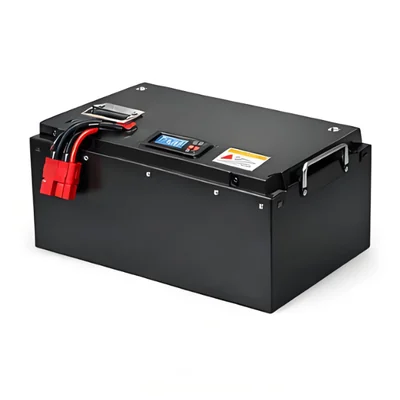
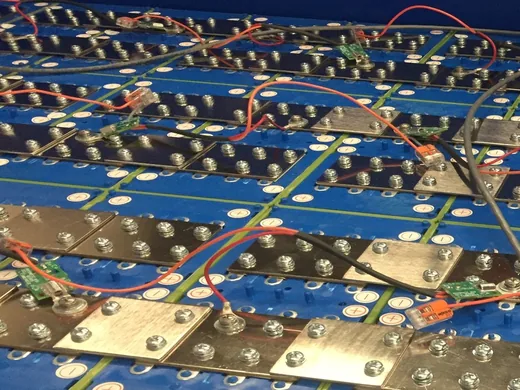
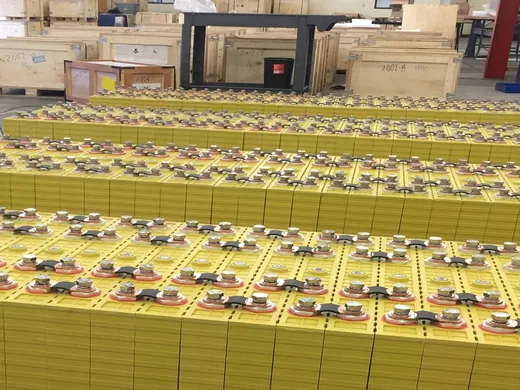
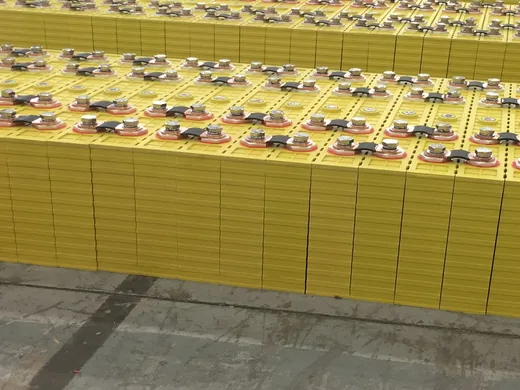
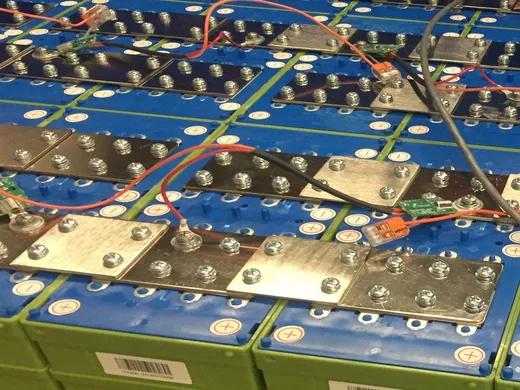
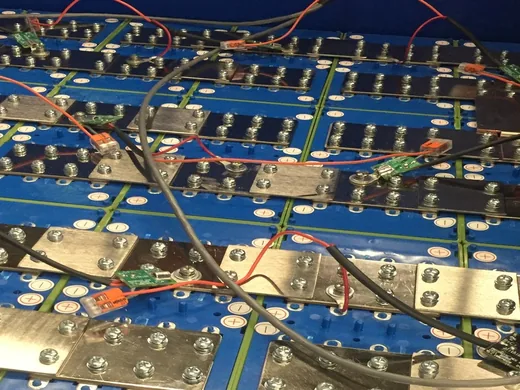
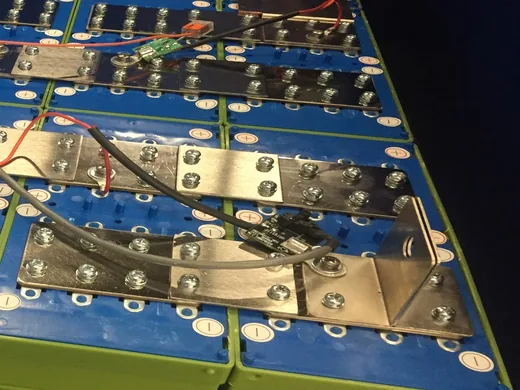
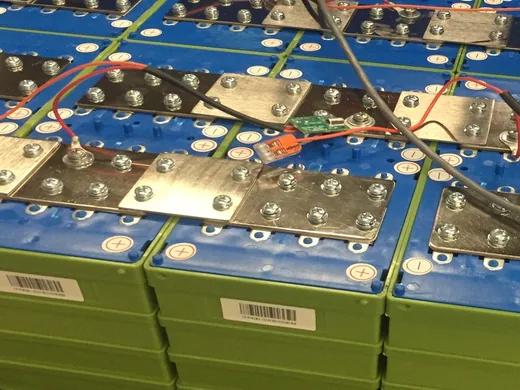
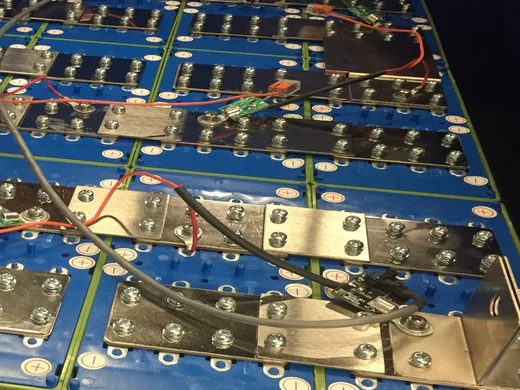
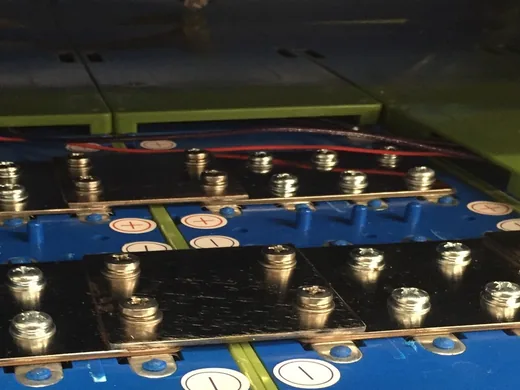
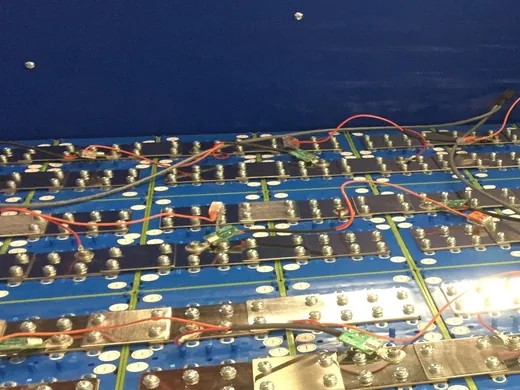
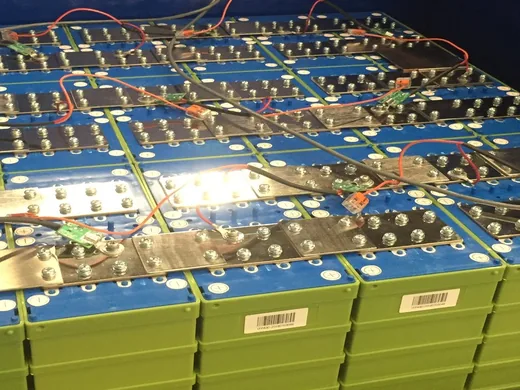
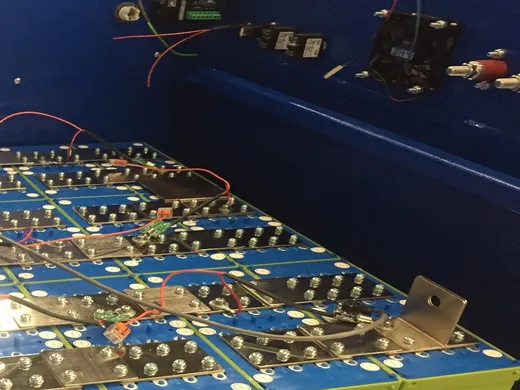
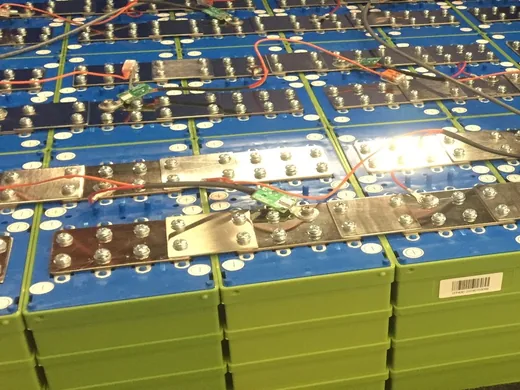
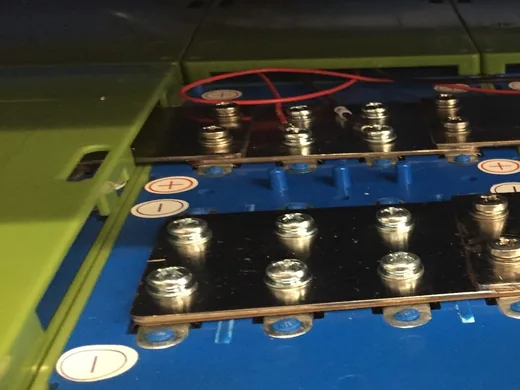
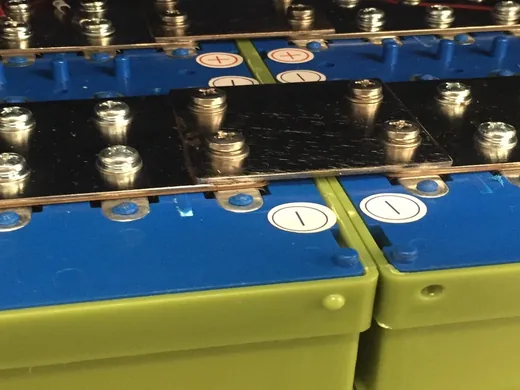
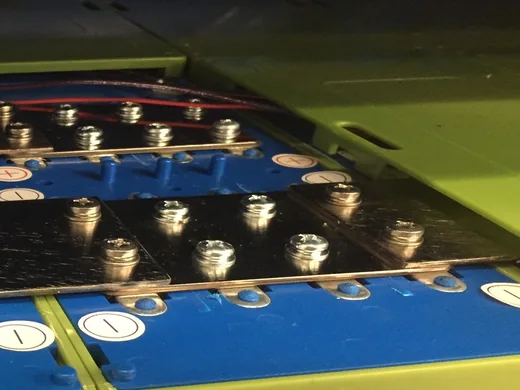
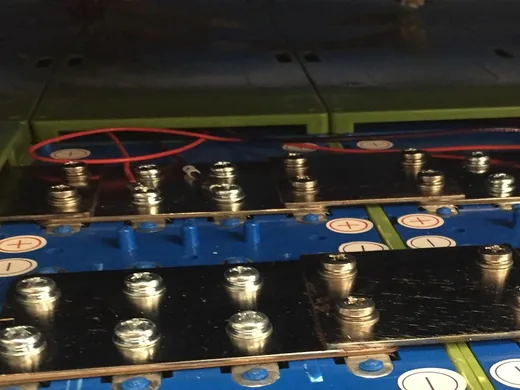
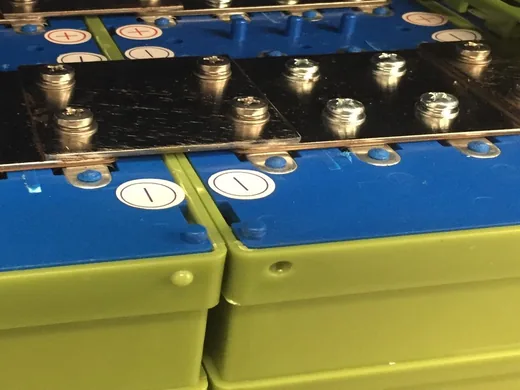
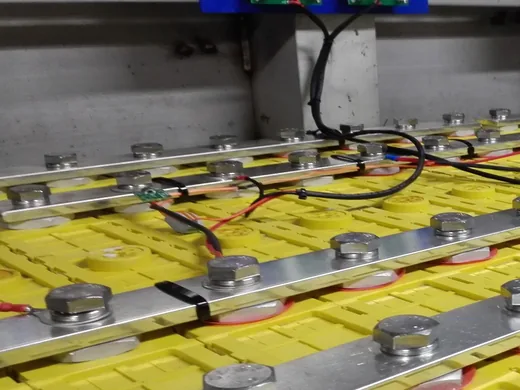
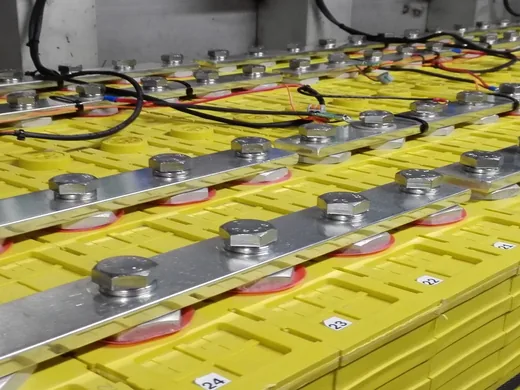
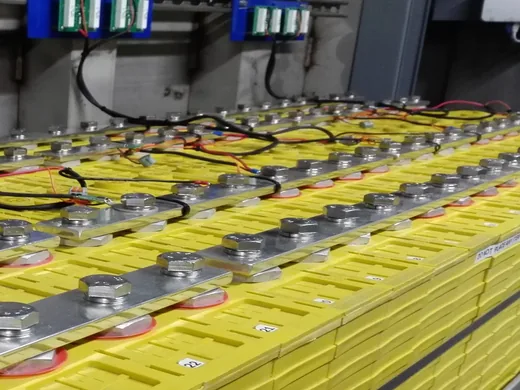
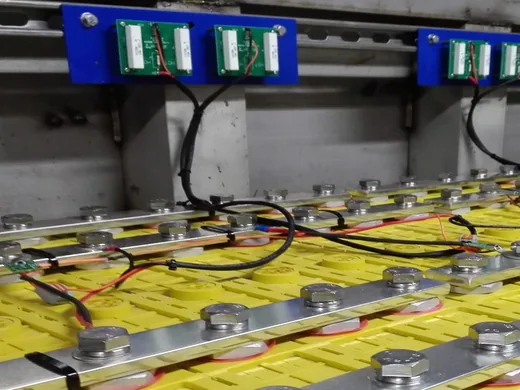
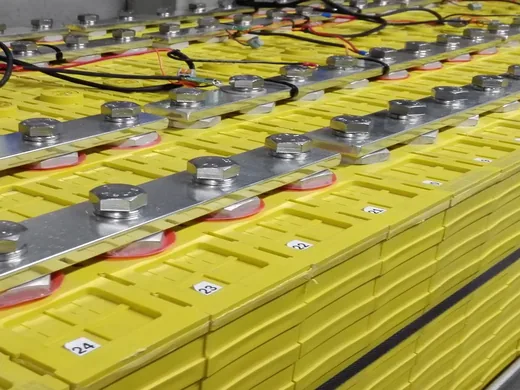
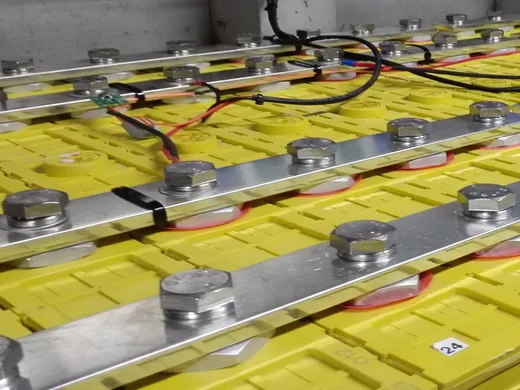
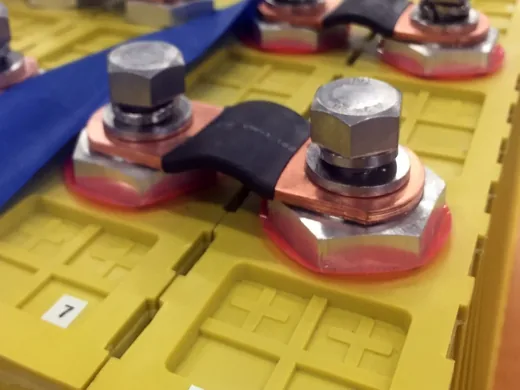
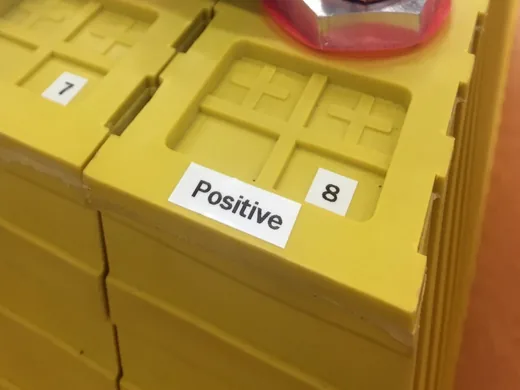
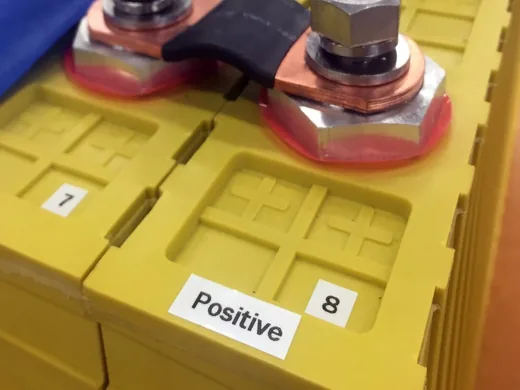
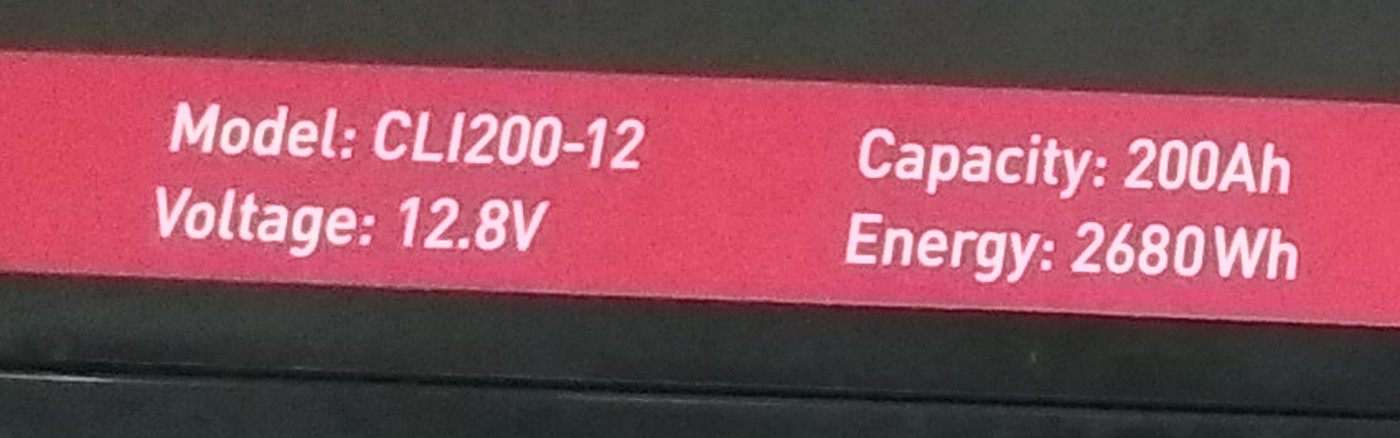
A nameplate worth arithmetic. Two hundred amp-hours at 12.8 volts is 2,560 watt-hours, and the label says 2,680, which means 13.4 volts went into the multiplication. Photo by HasanAbuarja, CC BY-SA 4.0.
Ask what a power station holds and three answers exist, all of them defensible. The cells carry a nameplate in amp-hours. The machine carries a nameplate in watt-hours, arrived at by multiplying those amp-hours by a nominal voltage. What comes out of the sockets is a third figure, always the smallest. That one decides whether a fridge runs through the night. Nobody’s being deceptive by quoting the first two. A 1024 watt-hour label on a machine built from sixteen 3.2 volt cells rated 20 amp-hours is straightforward arithmetic. The label describes energy stored in the chemistry, measured under laboratory conditions with a formal definition behind them. It says nothing about how much of that energy reaches a device.
Third party measurement exists to close the distance between those numbers. Somebody puts a known load on a full machine, times the discharge, and reports what came out. That result belongs to a specific test at a specific rate and temperature. Two honest testers can publish figures ten percent apart on one machine.
What the cell figure is defined as
Amp-hour ratings on cells are not loose claims. The method for portable lithium cells is laid down in IEC 61960: charge at 0.2C, rest, then discharge at 0.2C to the manufacturer’s cutoff voltage, with the whole thing held at 20 degrees plus or minus 5. Read the rate carefully. A 0.2C discharge empties a cell over five hours. A 100 amp-hour cell tested that way gives up 20 amps for five hours, which is a gentle stroll compared to almost any real use. The standard exists precisely to stop capacity being overrated. It fixes the rate, the temperature and the endpoint that two laboratories must both work to.
Generous conditions produce a generous number. That is the root of nearly every disappointment an owner meets later. Nobody is at fault for it. A figure obtained over five hours at room temperature describes an upper bound. Everything a person does with a portable machine sits below it. Pull harder and a cell hands over less. Nothing exotic drives it. Internal resistance turns some of the stored energy into heat. Voltage sags toward the cutoff sooner. The discharge ends before the chemistry does.
Published figures put numbers on the slope. A cell delivering 100 amp-hours at C/5 typically gives 85 to 90 at 2C, and around 70 at 5C. Between those extremes sits the rate most testers actually use. At 0.5C a healthy iron phosphate cell returns 95 to 98 percent of its rating. A purchase check runs well at that rate.
Thirty percent separates the gentlest test from the harshest. A cell that looks 30 percent short at 5C is not faulty and has not degraded. It was asked a different question and answered it honestly. Rate matters more on small machines than large ones. A 500 watt-hour unit running a 1000 watt kettle is discharging at 2C, deep into the region where the label stops applying. The identical kettle on a 3 kilowatt-hour machine is a 0.33C load, close to the laboratory condition.
Cold, and the units the label uses
Temperature belongs in that conversation too. The standard says so directly. Alongside the room-temperature test, IEC 61960-3 specifies discharges at 0 degrees and at minus 20, both at 0.2C, with expected results of at least 70 percent of nominal at freezing and somewhere between 50 and 60 percent at minus 20. Those aren’t failures. A cell at minus 20 holding half its rated capacity is behaving to specification. It returns the missing half once it warms. Lithium moves more slowly through cold electrolyte. Internal resistance rises with it, which brings the cutoff forward. Run a capacity test in an unheated garage in February and the number is one nobody should record. Measure indoors, or measure the temperature alongside the capacity and state both. Cells get rated in amp-hours because that is what the chemistry delivers: a count of charge moved, independent of the voltage it moved at. Machines get rated in watt-hours because that is what runs a device. Converting between them needs a voltage. The voltage chosen changes the answer.
Multiply amp-hours by a nominal voltage and the answer assumes the cell sat at that voltage throughout. It did not. An iron phosphate cell starts a discharge near 3.4 volts and finishes near 3.0, spending most of the middle around 3.2. Nominal voltage is chosen to make the arithmetic land close to the truth, and on a gentle discharge it does. Push harder and the assumption slips. Voltage under load sits lower for the whole discharge, which makes an identical count of amp-hours carry fewer watt-hours out of the machine. A pack that measures its full amp-hour rating at 2C can still deliver noticeably fewer watt-hours than the label promises. No charge went missing. The energy went into heating the cell’s own resistance. Anybody comparing a measured figure against a nameplate wants watt-hours on the meter. Watt-hour meters on the output settle the question directly and skip the conversion entirely.
What testers actually find
Cells from the top tier tend to beat their labels. Grade A cells from established manufacturers typically deliver 2 to 5 percent above the rated figure, which puts a nominal 280 amp-hour cell somewhere between 285 and 295 when tested properly. Manufacturers build in that margin deliberately, since a cell that measures short is a warranty claim waiting to happen and a cell that measures long costs almost nothing extra to produce. The second tier tells a different story, worth knowing about before buying. Cells sold as grade B carry a lower guaranteed minimum, often stated a few amp-hours under the headline number. One documented set of grade B cells carried a 277 amp-hour minimum specification. After a year of service and 67 cycles they measured between 267.8 and 270.9 amp-hours. Both figures sit under the guaranteed floor. Grade B stock is sold on exactly that basis, at a discount matching the shortfall.
Neither result is remarkable on its own. Both matter enormously to somebody assembling a pack, because a string of cells behaves like its weakest member and a 268 amp-hour cell in a bank of 285s drags every cycle down to its own level. That is why serious builders test every cell before assembly, on the principle that a carton label is a promise and a meter is evidence. The test is slow, needs a programmable load, and produces the one figure that determines what the finished pack will do. Skipping it saves a weekend and costs whatever the weakest cell decides to cost, every cycle, for years. Portable power stations hide all of this behind a sealed case. An owner cannot test individual cells without opening a machine that was never meant to open. The measurement left available is a pack measurement.
Cells in series all carry the identical current. Whichever one reaches its cutoff first ends the discharge for the whole string, however much the others still hold. That single fact explains why pack capacity almost never equals the average of its cells. A bank of sixteen cells averaging 285 amp-hours, with one at 268, behaves like a bank of 268 amp-hour cells. The other fifteen finish each discharge with energy left in them that nobody can reach. They do it on every cycle for the life of the pack. Balancing helps at one end only. A balancing circuit works near the top of the charge, bringing cells level before the next discharge, which stops the string drifting further apart over time. What it cannot do is add capacity to a cell that never had it. A weak cell stays weak. The pack stays sized by it. For measurement that has a blunt consequence. Testing a sealed machine reports the weakest cell in it, with no way to tell whether the shortfall came from one bad cell or from fifteen slightly tired ones. Telling the two apart needs the case open.
What the board keeps and the inverter takes
No battery management system lets a pack reach either electrical extreme. Charging stops before the cells are chemically full. Discharge stops with useful energy still in them, because operating at the edges shortens life fastest. Published estimates put that reserve at roughly 5 percent of the pack on a typical portable machine. None of it is visible from outside. A display showing zero percent sits above a pack that still holds charge. A display showing 100 sits below the chemistry’s actual ceiling. Reserve is a feature, never a deduction. What it means for measurement is simple. A test that runs a machine until it switches off has measured accessible energy. Stored energy is a larger figure. The difference between them is a number the manufacturer chose. Energy leaving through an AC socket passes through a conversion stage, and conversion is never free. Estimates for portable machines put the inverter’s share at 10 to 15 percent of what leaves the battery. Stack that against the board’s reserve and the arithmetic arrives at a familiar place. A machine labelled 1000 watt-hours commonly delivers around 850 at the socket, with roughly 50 held back by the board and the remainder lost in conversion. Load size moves the figure again. That 1000 watt-hour machine running a 100 watt load can return 850 watt-hours. Put a 1500 watt space heater on it and the figure may reach 780 before the board intervenes. Heavy loads mean higher currents, deeper voltage sag and an earlier cutoff, which is the cell-level rate effect showing up one level higher in the system. Anybody comparing a measured figure against a nameplate needs to know which of these paths the measurement took. Testing at the 12 volt port skips the inverter entirely and lands much closer to the label. Room temperature belongs in the note beside every one of those figures.
Running the measurement yourself
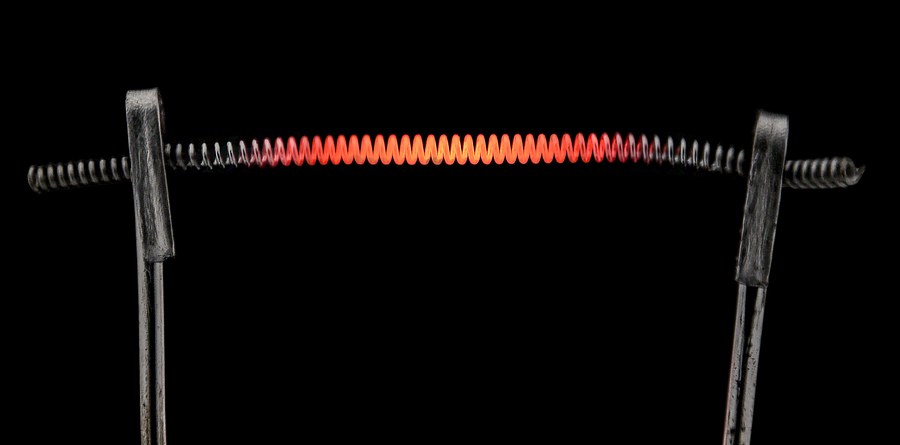
A tungsten coil at working temperature. Draw is almost purely resistive, which keeps the power factor near unity and stops an inverter reporting apparent power as real power. Photo by SyamAstro, public domain.
Equipment for it is short, and you probably own most of it. A resistive load of known draw, an energy meter that totalises watt-hours, and somewhere to leave the machine running for several hours will do it. Incandescent lamps make excellent test loads because their draw is steady and nearly resistive. Charge the machine to full and let it settle for an hour. You’ll want the hour. A pack straight off the charger carries what the trade calls surface charge, a thin excess sitting at the electrode faces that reads as voltage and vanishes within minutes of any real load. Start a timed discharge on top of it and the first few minutes deliver energy the pack never actually stored, which flatters the total by a percent or two. An hour of rest lets the cells equalise internally and gives a starting point that means something. The identical rest applies at the other end.
A machine that has just shut down on low voltage recovers a little as its cells relax, and switching it straight back on produces a few more minutes of runtime that the recovery earned, with the measurement already finished. Record the ending once and leave it there. Start the load and the meter together, record the room temperature, and leave it until the machine shuts down on its own. Whatever the meter totalled is the delivered energy. Write down the resting voltage afterwards as well, taken twenty minutes after the load comes off.
That figure separates two different endings. A pack that stops at a genuinely low resting voltage has been emptied. A pack that stops while its resting voltage is still comfortable has been stopped by something else, usually one cell hitting the cutoff ahead of its neighbours or a protection threshold set conservatively. Two machines can report the identical delivered energy with those two endings behind them, and only the voltage reading tells them apart. Divide by the nameplate and the result is the fraction that reached your load through whichever port you used.
What a capacity figure means, by where it was measured
Measured at
Typical result on a 1,000 Wh label
What the number includes
Cell, 0.2C, 20 degrees
100 to 105 percent
the IEC 61960-3 condition
Cell, 0.5C
95 to 98 percent
a fair compromise rate
Cell, 2C
85 to 90 percent
rate losses only
DC port, modest load
around 900 Wh
minus the board’s reserve
AC socket, 100 W load
around 850 Wh
reserve plus inverter
AC socket, 1,500 W load
around 780 Wh
reserve, inverter and sag
Repeat the identical test each year on the identical load. The absolute number matters less than the trend. A single measurement carries all the uncertainty of one room temperature and one meter. Three measurements across three years describe a machine. Test gear introduces errors of its own. Cheap gear introduces the largest ones. Incandescent lamps make good loads because they are almost purely resistive, which keeps the power factor near unity and stops an inverter reporting apparent power as real power. Filament draw drifts a little as the glass warms, settling within seconds and staying put afterwards. Electronic loads hold a set current or a set power exactly. They cost considerably more.
Plug-in energy meters vary widely. The good ones read within a percent or two on resistive loads at reasonable power. Those identical meters can be well out at very low draw, where their own consumption and their resolution start to matter. Testing a 1 kilowatt-hour machine with a 15 watt load stretches the discharge past sixty hours and puts the meter into exactly that region. A load around a tenth of the machine’s rated output dodges both traps. That range keeps the meter in its accurate band and the inverter above its worst efficiency. The test finishes inside a working day.
Testing a machine you cannot open
Sealed machines withhold the one measurement that would settle things. Cell voltages sit behind a case designed never to be opened. A shortfall arrives as one number, with no way to see whether fifteen tired cells produced it or a single bad one did. Three things remain observable from outside, and together they narrow the answer. Delivered energy under a known load gives the headline. Voltage sag under a known load, read a second after the load settles, tracks internal resistance and rises as a pack ages. Charge acceptance is the third. A healthy pack takes its rated input for most of the charge. A tired one tapers early. One cell reaches the charge cutoff ahead of the rest.
Read together those three separate the common cases. Falling delivered energy with steady sag and steady charge acceptance looks like ordinary even fade across the whole pack. Falling delivered energy with rising sag and an early charging taper points at one cell running ahead of its neighbours, which no amount of gentler use will fix. Neither pattern justifies opening a sealed machine. What they do justify is a warranty conversation. Claims exist for the second pattern.
Reading somebody else’s test
Four facts have to travel with a published capacity figure before it means anything. Load, in watts. Port, AC or DC. Room temperature. Whether the machine was allowed to shut itself down or was stopped at some chosen display reading. Reports that omit those four aren’t reporting a measurement. They’re reporting an impression. A reviewer quoting 780 watt-hours from a 1,000 watt-hour machine has either found a poor machine or used a 1,500 watt load, and only one of those conclusions should change a purchase. Comparisons need the conditions to match as well. Two machines tested by different people at different loads cannot be ranked against each other honestly, whatever the two numbers appear to say. Where a shortfall is genuine, the useful next step is a second test at a gentler rate. A machine that returns 78 percent under a heavy load and 88 percent under a light one is describing its inverter and its sag. Missing cells would show at both loads. Rate sensitivity of that size points at resistance inside the pack, and resistance climbs with age and with cold.
What a shortfall usually turns out to be
A machine that measures short has a short list of explanations. Working through them in order of likelihood saves a lot of worry. Load size comes first, because it explains most cases on its own. A test at half the machine’s rated output includes voltage sag and poor inverter efficiency that a test at a tenth avoids entirely. Ten points can separate the two figures on a machine with nothing wrong with it. Repeat the measurement gently before believing anything. Temperature is second and costs nothing to rule out. A pack at 5 degrees returns noticeably less than the identical pack at 20, and returns it again once warm. A recorded test carries a room temperature beside the figure.
Instrument error is third. Cheap plug-in meters read badly at low power. A test designed to be gentle can push one into exactly the region where it stops being trustworthy. Cross-check with a second meter, or pick a load that keeps the reading in a sensible part of the range. Only after those three does genuine capacity loss belong on the list. A pack measured properly, warm, on a decent meter, at a modest load, that still returns 80 percent of what it returned when new, has genuinely lost a fifth of its capacity. That is a real finding. Load, temperature and instrument have each been ruled out first.
Common questions
My machine only gave 82 percent of its rating. Is it faulty?
Probably not. Check the load first. A test at high power includes voltage sag and inverter losses that a gentle test avoids. Repeat at a tenth of the machine’s rated output and compare the two figures. Two or three percent between them is ordinary for a healthy pack at room temperature. A gap of fifteen is a rate effect, a cold room, or a meter reading badly at low power.
Why is the cell rating measured over five hours?
Because a slow discharge removes rate effects and leaves the chemistry’s own capacity. IEC 61960-3 fixes it at 0.2C and 20 degrees, which puts every manufacturer on one yardstick. The number is a ceiling.
Does testing the machine hurt it?
One full discharge a year is a rounding error against any published cycle rating. What does cost something is leaving the machine empty afterwards. Recharge it to a storage level once the test finishes.
Can I compare an amp-hour figure with a watt-hour figure?
Multiply amp-hours by the nominal voltage. A 20 amp-hour cell at 3.2 volts holds 64 watt-hours, and sixteen of them in series give 1,024. Watch which voltage got used. Packs quoted at charged voltage look larger than the identical pack quoted at nominal.
How long should the discharge take?
Somewhere between five and twelve hours suits most machines. Faster than that and rate effects start eating into the figure. Slower and a cheap meter drifts into the part of its range where it stops being accurate. Loads near a tenth of the rated output usually land inside that window without any arithmetic.
Why do two reviewers disagree about one machine?
Different loads, different ports, different room temperatures, different stopping points. Any one of the four moves the result by several percent, and reviewers rarely state all four.