















Swine Porcine Pregnancy Ultrasound Handheld Veterinary
A pig pregnancy ultrasound is run on the standing sow, the probe pressed into her flank low behind the last rib to read the fluid-filled uterus of a pregnancy from about a month after she was served. The point of it is the simple call, in pig or open, the pregnant sow shown by a uterus full of dark fluid the empty one never carries. The open sows found at four weeks are pulled and rebred before they eat through the long months of a gestation carrying nothing.
The scan on the standing sow
A sow is scanned where she stands. The probe goes against her flank low down, behind the last rib and a little above the line of her teats, pressed into the soft of the belly to read up under it. The sow takes the scan on her feet in her stall, no need to lay her down or turn her up. A pig is a heavy beast to handle and bad to throw, the standing scan the only practical way to read a unit of sows. The probe to the flank of a sow on her feet asks nothing of her but to stand still a moment.
The scan reads up into the belly from the flank. The probe laid on the bare skin low on the side sends the sound up and in toward the uterus, the womb of a pregnant sow lying along the floor of the belly. A patch of skin behind the last rib takes the probe with gel, the pregnancy read through the flank without a hand going in. The womb of a sow lies low and forward in the belly, within easy reach of a probe pressed up from the flank. The scan finds it there on every sow, the same patch of flank read on each one down a row.
The standing scan suits the way a pig is kept. A sow in a stall or a pen stands for the probe against her side, a quick read taken without moving her. The scan goes down a row of sows in their stalls, each read against her flank as she stands, the herd checked one after another. The sow leans into the rail of her stall and the scanner reads her side with nothing on her but the probe. A man with a machine can walk a long shed of sows and call every one of them in a morning.
Pregnant or open
The scan is run to call a sow pregnant or open. A pregnancy fills the uterus with fluid the scan reads as dark pools low in the belly, the sacs of the litter showing as black spaces under the probe. A sow in pig from about four weeks shows those pools plain, the uterus heavy with the fluid of a growing litter. An open sow shows none, her belly grey throughout with not a dark pool in it. The vet reads the flank for those pools and makes the call on whether the fluid is there, in pig or empty. The scan reads each sow in a moment, the dark fluid of a pregnancy the one thing it looks for. Made early on every sow, the call sorts the herd into the in-pig and the open before the long gestation has run a month. The whole of pig pregnancy scanning turns on that one call, read off the flank from a month after the mating.
The fluid is the sure sign of a pregnancy. The dark pools of the uterus read plain against the grey of the belly around them, a pregnancy a sow cannot hide from the scan once the fluid is in. The vet reads the flank low and works the probe until the pools come up, the call made the moment they show. The fluid of a pig’s pregnancy fills the long horns of her uterus low along the belly, a sow in pig carrying a wide sheet of dark pools the probe runs across. A vet finds the fluid low and to the side, the pregnancy lying where the probe is pressed.
An open sow gives the scan nothing to find. A belly with no pregnancy in it reads grey throughout, gut and fat and muscle with no dark pool anywhere. The vet sweeps the flank and finds no fluid, the call of an open sow made on the want of it, the sow that did not hold read by what she does not carry. A sow that returned to heat three weeks after her service has likely not held, her open belly read on the scan to be sure of it. The scan confirms the miss a return to heat only hinted at, the open call made plain on the empty flank.
The call comes quick once the eye knows it. A pregnant flank reads full of pools at a glance, the call quick once the eye knows the dark of a litter from the grey of an empty belly. A scanner who reads pigs through a unit calls in-pig or open the moment the screen lights, the flank read as fast as a sow can be reached.
The early call is the whole value of the scan. A sow read in pig at four weeks is one a unit can count on for a litter. A sow read open is one to deal with at once, before she wastes the gestation. The scan makes the call months before a sow’s belly would ever show, the herd sorted into the holding and the missed the week after the mating tells.
The cost of an open sow
An open sow is the costly mistake a unit must catch. A sow that did not catch eats her feed and fills her stall for the long months of a gestation, giving no litter at the end of it. The feed and the space spent on her are spent for nothing, the loss running the whole length of a pregnancy she never carried. A sow eats much the same in pig or open, the feed bill the same for a litter or for none. The open sow gives nothing back for it, every day of her gestation a cost with no litter to set against it.
A pig’s gestation runs near four months. A sow carries her litter close to a hundred and fifteen days, a long stretch to feed and house a sow for. An open sow not caught early sits through much of that stretch before she is found, the cost of her run up by the time her empty belly shows. A sow gives no sign on the outside that she is open until late, her belly slow to show the want of a litter. A unit left to spot the open sows by eye loses the months of feed they eat before they ever look empty.
The scan catches the open sow at four weeks. A sow read open a month after her mating is pulled before she has sat idle for long, rebred at once or culled out of the herd. The weeks of feed and space an open sow would waste are saved the day the scan finds her, the loss cut to the month before the call. An open sow caught at four weeks has cost a unit a month and no more, the loss small for the early call. The scan turns what would be a wasted gestation into a wasted month.
The scan pays for itself on the open sows alone. A unit that finds its open sows early rebreeds them or clears them, the stalls and the feed turned back to sows that will farrow. The cost of scanning a herd is a little against the cost of one open sow carried blind to her due date, the read paying back many times over. The feed alone an open sow eats over a gestation runs to more than the cost of scanning a whole batch. A unit that scans every batch pays for the read on the open sows it pulls and keeps the rest of the saving clear.
Not a count but a call
The pig scan asks the one plain question, in pig or open. A sow carries a crowded litter the scan does not stop to count, the number not the thing a pig unit reads her for. The counting of young to feed a mother by is the work of the sheep scan, set out on its own page. On a pig the read is the call: the litter confirmed or the sow found empty. The pig unit cares for the litter’s number at weaning, the scan asked for nothing but the fact of a litter at all. A sow in pig is a sow on track, her litter’s size a thing the farrowing pen will tell in good time.
The call is all a batch unit needs of the scan. A pig unit runs on knowing which sows are in pig and which are open, the litters confirmed and the misses pulled. The number in a litter the unit learns at farrowing, the scan asked only to say a litter is there at all. A litter of ten or twelve piglets packed into the horns of the uterus gives the scan no clean way to count them, the bodies overlapped and run together. The call of in pig is all the scan is asked for, the count of the litter left to the farrowing pen.
In pig or empty, known at four weeks
The dark fluid of a litter shows in the flank a month after the mating. No fluid, no pregnancy.
The batch and the rhythm
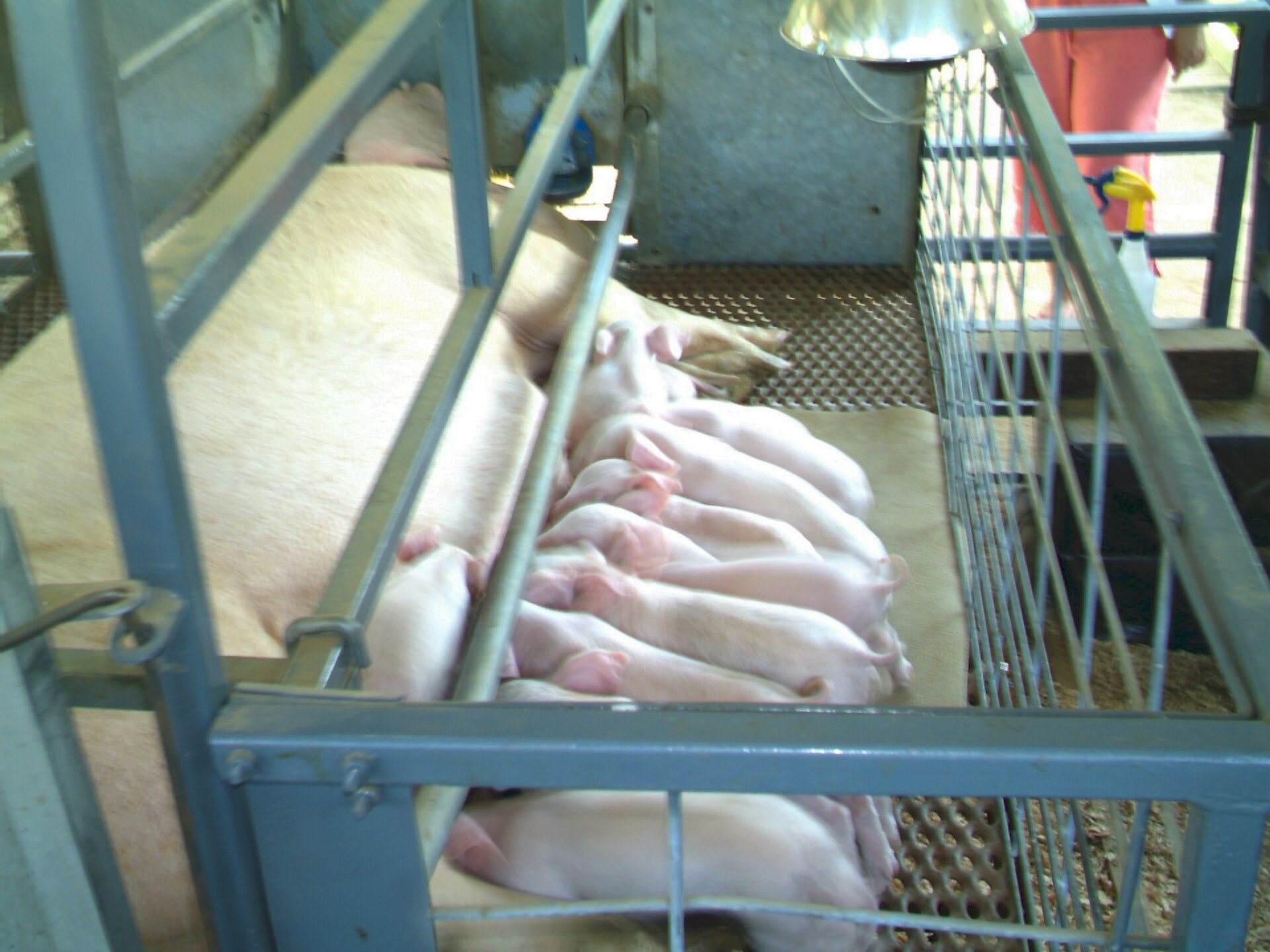
A pig unit runs on batches of sows. A group of sows is served together, carried together, and farrowed together, the unit moving its sows through in batches week by week. The batch keeps the work of a unit in a steady rhythm, a group at every stage at once. A unit runs all-in and all-out, a batch served, scanned, farrowed, and weaned as one group before the next comes up behind it. The rhythm of the batches is the clock the whole unit keeps, the scan one beat of it a month past every mating.
The scan keeps the batches full and true. Each batch is scanned a month after its mating to clear out the open sows, the group left holding only the ones in pig. A batch confirmed by the scan farrows the litters the unit planned for, the open sows replaced before the group moves on. A batch comes up for its scan as one, the whole group served in the same few days read at the same age a month on. The open sows of the batch are drawn out together, the rest left to carry on to the farrowing house as a group.
The rhythm breaks without the scan. A batch carried blind to its farrowing finds its open sows only when they fail to farrow, the holes in the batch showing only when it is past the point of filling them. The scan reads the batch at four weeks and fills its holes at once, the rhythm of the unit held steady week to week. A batch short of its litters throws the unit off its numbers, a farrowing house half full where a whole batch was planned. The scan keeps the count of litters true a month ahead, the open sows replaced in time to fill the batch.
The early scan and the recheck
The scan reads a pregnancy from about four weeks. A sow’s uterus fills with enough fluid to read from around twenty-five to thirty days after her mating, the dark pools plain by then. A scan run before that finds the fluid not yet there to call, the sow brought back a week on for a surer read.
The early scan catches the open sow soonest. A sow read open at four weeks is back in the breeding pen the same week, no time lost between the miss and the next mating. The earlier the call, the less an open sow wastes, the scan run as soon as the fluid will read. A sow back in the breeding pen the week she is read open loses no more than the one cycle, served again before the next batch is far ahead of her. The early call keeps the open sow in step with the unit, her miss made good in a week.
The recheck guards against the early loss. A sow can take to a mating and lose the litter again in the first weeks, the pregnancy gone before it ever farrows. A unit scans its sows again a few weeks on, the ones that lost a litter found and pulled before they also carry nothing to term. The early loss is a real part of pig breeding, a share of sows losing their litters in the first weeks after a good service. The recheck a few weeks on turns up the ones that slipped, the batch read true a second time before it is set.
The second scan reads the pregnancy holding. A sow read in pig at four weeks and again at seven is one a unit can trust to farrow, the litter confirmed twice on the way to the pen. The recheck turns up the few that slipped, the batch cleaned a second time before it is past the point of fixing.
The timing of the scans is set by the batch. A batch served in a week is scanned in a week a month on, the whole group read at the right age together. The unit runs its scanning on the same clock as its breeding, each batch read at four weeks and again at seven as it moves through. A batch scanned on the wrong week reads its sows too early or too late, the call missed on some and the wasted handling for nothing. The unit holds its scanning to the right week off the mating date, the whole batch read at the age the fluid calls clean.
What the fluid shows
The fluid is the first and surest sign. Early on a pregnancy reads as the dark fluid of the uterus alone, the sacs of the litter not yet big enough to make out apart. The vet reads the pools of fluid low in the belly, the pregnancy called on the fluid long before a piglet can be seen. The fluid is what the scan reads for in the early weeks, the only sign of a pregnancy a sow shows so soon. The piglets in it are specks at four weeks, the call made on the dark of the fluid, the litter itself not yet showing as more than specks.
The piglets show as the pregnancy runs on. Later in the gestation the scan reads the piglets themselves in the fluid, little bodies with the flicker of a heartbeat in each. A sow scanned late shows a belly full of piglets, the litter read as bodies in the fluid by then.
The late scan reads the litter for trouble as well. A pregnancy gone wrong late on reads dead piglets without their beats, or a litter mummified in a dry womb, the loss read where a sow shows nothing outside. The scan late in a pregnancy reads whether a litter still lives, the trouble caught before the sow comes to a bad farrowing. A whole litter lost late can rot in the womb and turn the sow sick, the scan catching a dead litter in time to clear it. A unit reads its late sows for the litters gone wrong, the trouble found before it costs the sow as well as her litter.
Down the rows of a unit
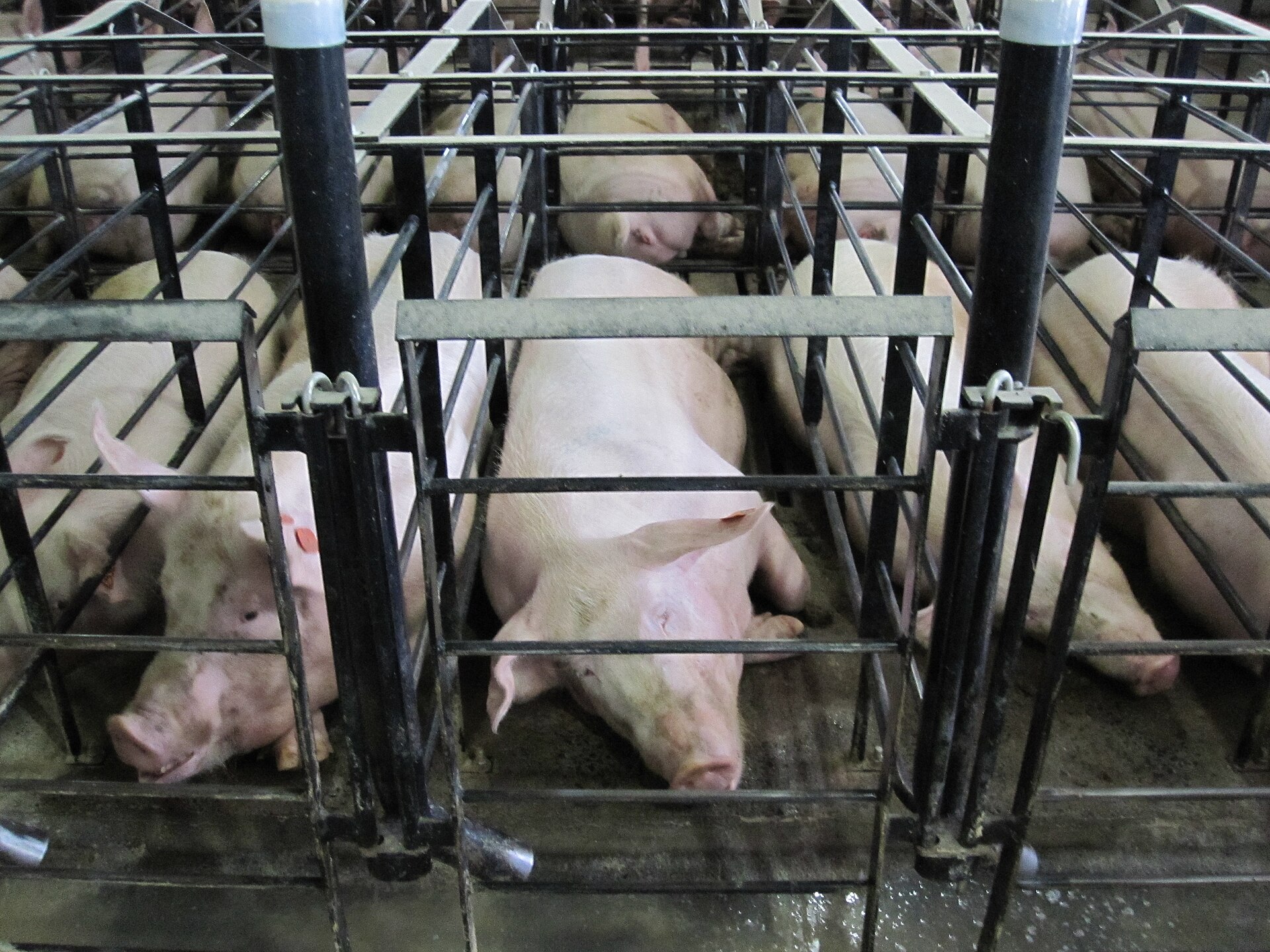
A big pig unit holds its sows in long rows of stalls. The scanner works down the row, a sow read against her flank at each stall, the herd checked one after another without a sow moved. A unit of hundreds of sows is read through in a few hours of work. The sows stand in their stalls in a long line, each held where she can be reached from behind or the side. A scanner moves down the line at a sow a minute or faster, the whole shed called off before the morning is out.
The standing scan makes the speed. A sow read where she stands gives up her call in seconds, no catching or laying down or turning needed. The scanner reads a flank and moves to the next stall, the row checked off as fast as he can walk it.
The routine carries the read. The same flank, the same pools looked for, the same call of in pig or open: the work is the same on every sow, run off down a row without a pause. A scanner who reads a unit’s sows week on week calls the pregnancies at a glance, the herd kept current on its breeding. The work asks no skill of the sow and little fuss of the man, a probe to a flank and a call made off the screen. A unit reads its sows as easily as it feeds them, the scan folded into the run of the week.
The whole herd is read on the one rhythm. Each batch comes up for its scan a month after its mating, the rows worked through batch by batch through the weeks. A unit reads all its sows on a schedule, the breeding of the whole herd kept under the scan from one mating to the next. The herd is never out of the scan’s sight for long, every sow read a month after each service she takes. A unit that scans every batch knows the state of its whole breeding herd at any week of the year.
The probe in the flank
The work runs on a probe pressed to the flank. A curved probe pushed into the soft of the belly low down reads up into the uterus, the frequency set to reach the womb deep in a big sow. The handheld carries it as a tough cordless wand for the muck of a pig unit, the screen read over a stall. A curved probe sits well to the flank, its wide face reaching the broad sheet of the uterus low in a big sow’s belly. The frequency is set to reach deep, the womb of a heavy sow lying well in under a thick wall of flank.
The handheld reads more than the old pregnancy testers ever did. The handheld reads the fluid of a pregnancy on a screen, the litter seen where an old Doppler tester only listened at the flank for the sound of the blood and guessed. The call is surer for the picture, the fluid shown plain on the screen. The handheld shows the fluid on a screen, a call a vet can see and trust, where the old testers gave only a beep or a light a fat or a moving sow could throw.
What the sow scan settles
The pig scan turns a herd’s breeding from a wait into a managed batch. The call of in pig or open, read off each sow’s flank a month after her mating, sorts the herd into the sows that will farrow and the ones to breed again. A unit run on the scan knows its litters the week after the mating, the batches kept full and the open sows cleared early. A unit that scans learns its misses at four weeks, every batch filled and every open sow turned back to the pen in time, the gaps found while a batch can still be made good.
The scan reads off a flank what a unit is run on. The pregnancy confirmed, the open sow found, the loss caught on a recheck, the batch kept whole: each comes from the one quick read against a standing sow’s side. The pig unit breeds by the scan, the call of in pig or open the thing its whole rhythm turns on. A pig unit lives or dies on the number of litters it weans a year, the scan the tool that keeps that number up by catching the misses early. The call read off a flank a month after mating is the start of every litter a unit raises.
Common questions about pig pregnancy scanning
How is a pig scanned for pregnancy?
On the flank, with the sow standing. The probe is pressed into the soft of the belly low down, behind the last rib and a little above the teats, the sound read up into the uterus. The sow takes the scan on her feet in her stall, no need to lay her down. The pregnancy reads through the flank from about four weeks.
How early can a sow be scanned in pig?
From around twenty-five to thirty days after her mating. The uterus has filled with enough fluid by then to read as the dark pools of a pregnancy. A scan run earlier finds the fluid not yet there to call, the sow brought back a week on. Many units scan at about four weeks to catch the open sows as soon as the fluid reads.
Does the scan count the piglets in a litter?
No. The litter is a crowded one, the count not the point on a pig. The scan calls a sow in pig or open, the litter confirmed there at all. The counting of young for feeding is the work of the sheep scan, where a ewe is counted to feed her for her lambs. A pig unit learns its litter sizes at farrowing.
Why find the open sows early?
Because an open sow wastes the long months of a gestation carrying nothing. A pig carries her litter near a hundred and fifteen days. A sow that did not catch eats her feed and fills her stall for that whole stretch if she is not found. The scan calls her open at four weeks, pulled and rebred before the cost runs up.
What does the scan show in a pregnant sow?
The fluid of the uterus, read as dark pools low in the belly. A pregnancy fills the womb with fluid the scan reads as black spaces against the grey of the belly around them, the sacs of the litter showing in it. Later in the gestation the piglets themselves show, little bodies with a heartbeat in the fluid. An open sow shows none of it, her belly grey throughout.

About the Author
Julien Mercier
Senior R&D Engineer · Medical Ultrasound Transducer Development
Senior R&D Engineer with an M.S. in Applied Physics and over 15 years of experience in medical ultrasound transducer development, specializing in the design verification and performance testing of high-frequency imaging transducers. Currently leading the development and verification of the company’s next-generation high-frequency linear-array transducer, responsible for imaging performance evaluation and reliability analysis in preclinical testing. Brings extensive hands-on experience in piezoelectric element tuning, beamforming parameter optimization, and system-level performance testing.