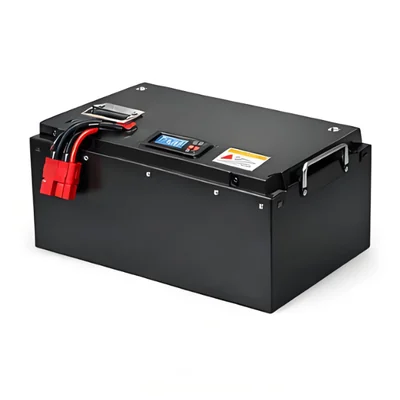
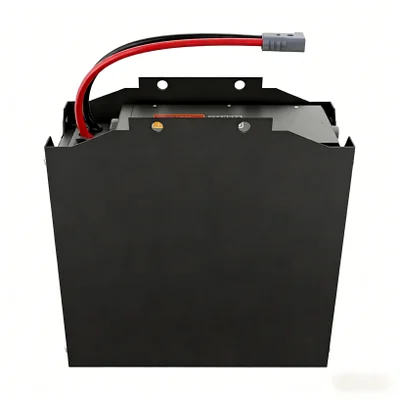
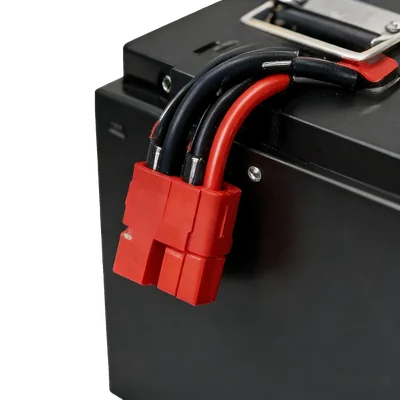
A screwdriver rolls loose in a toolbag and lands across the two exposed studs of an Anderson pigtail. Nothing dramatic happens for a millisecond. Then the battery behind the port, a lithium pack holding a couple of kilowatt-hours at low resistance, tries to empty itself through a steel shaft with almost no resistance at all. Current rockets toward several hundred amps. Somewhere in the chain a guard fires, the port goes dead, and the app logs a fault.
Two events send a port over its limit. The panel shows an identical blank socket for both. A surge is the harmless one, a brief legitimate spike from a motor starting or a capacitor charging, gone in milliseconds. A short circuit is the dangerous one, a fault path of near-zero resistance that would draw current until something melts. A good port tells them apart in real time, riding the surge and killing the short.
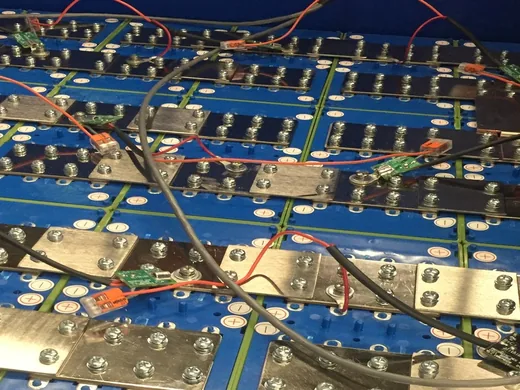
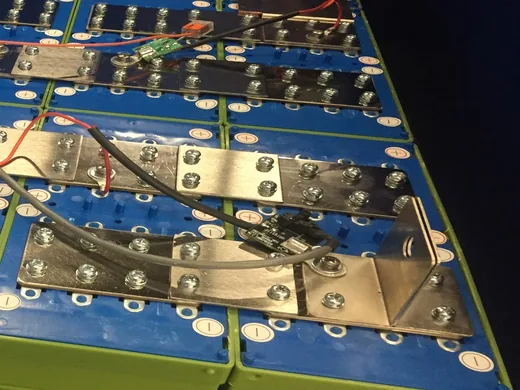
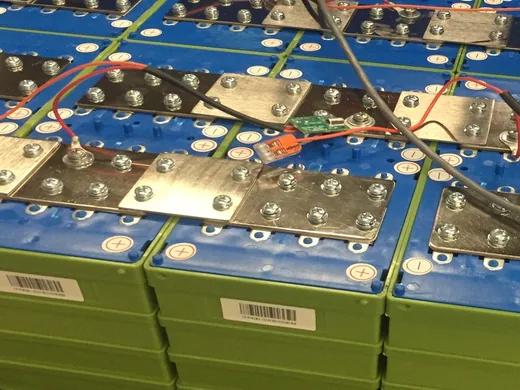
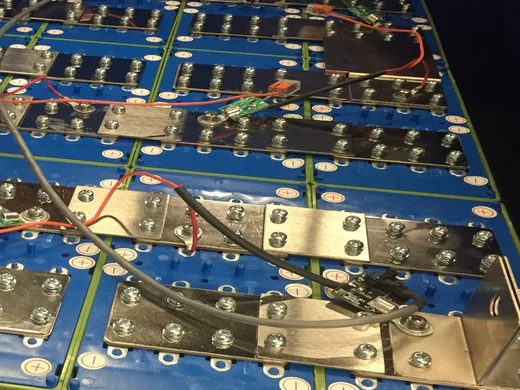
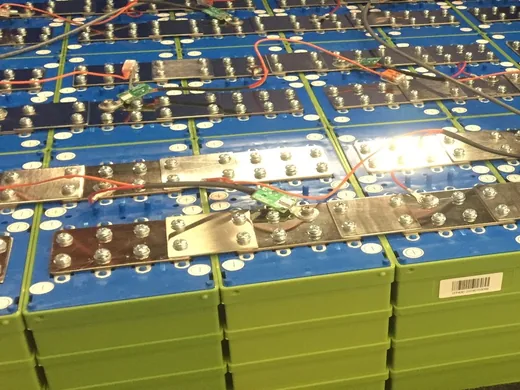
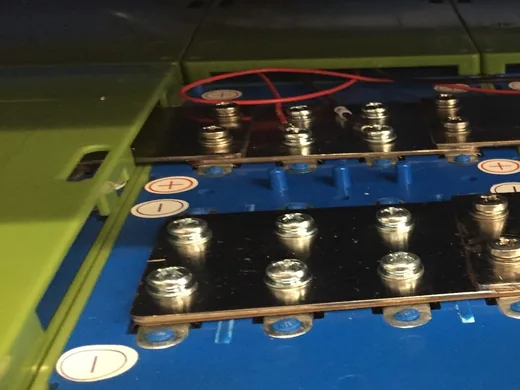
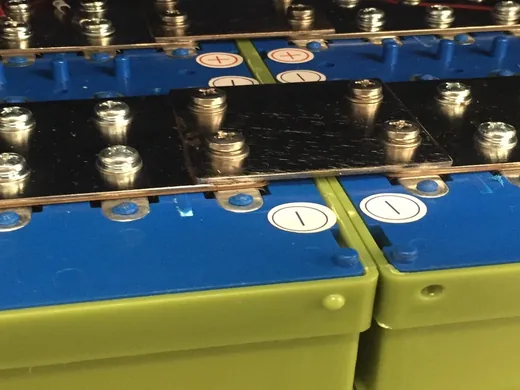
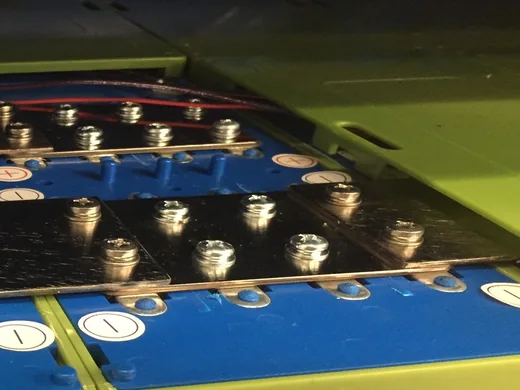
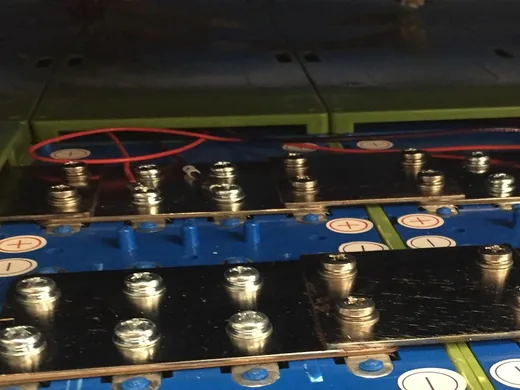
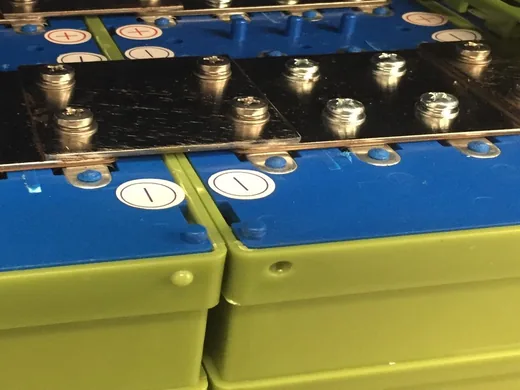
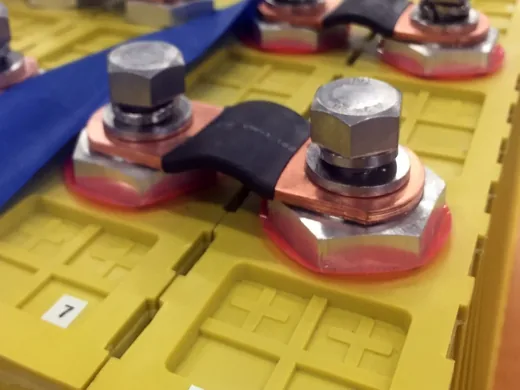
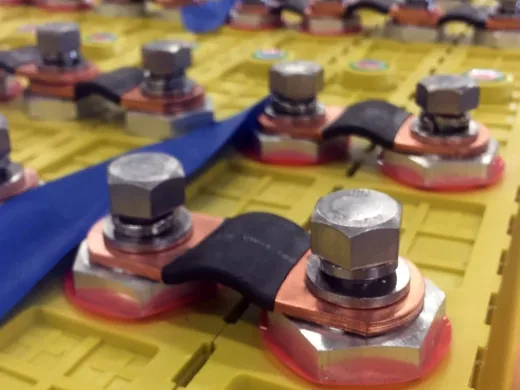
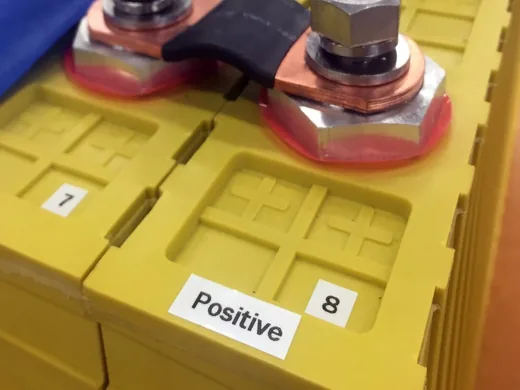
These faults live on the output side, downstream of the keying and reverse-insertion guards. The threat here flows outward, from the pack through the port into whatever a user connected or dropped. High-current DC ports carry the sharpest version, since the battery sits closest and the connectors run bare. An Anderson stud or a battery post exposes bare metal at pack current, the one place on the panel a careless second can turn into a spot-welder.
Why the battery is the thing to fear
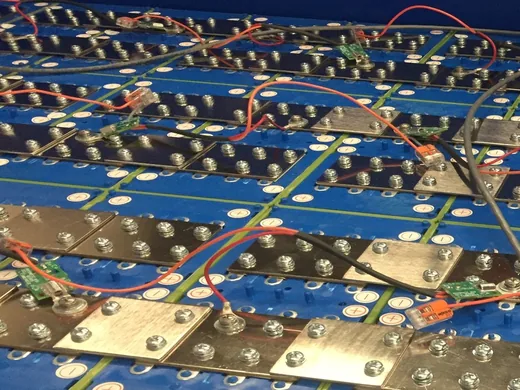
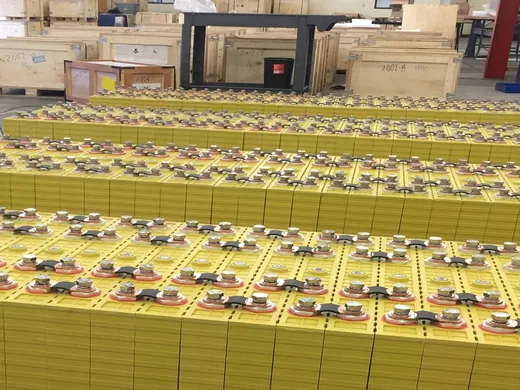
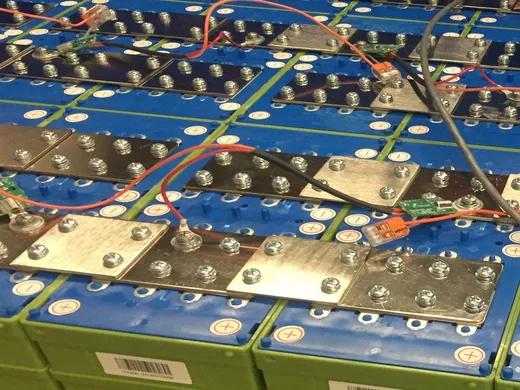
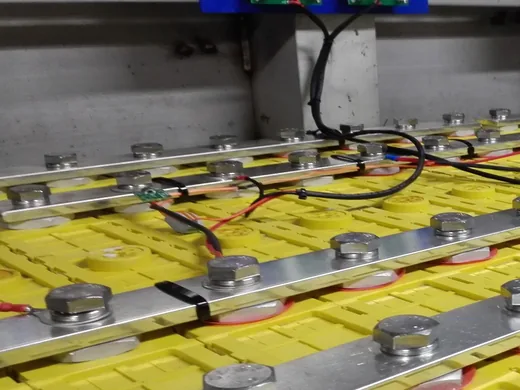
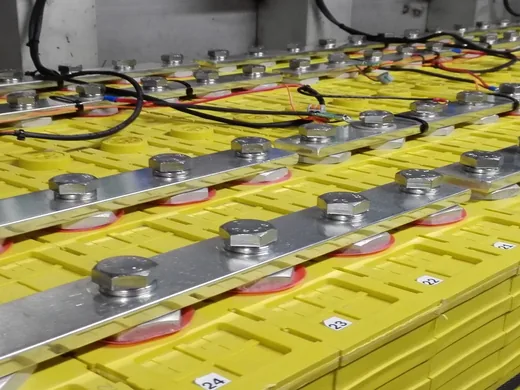
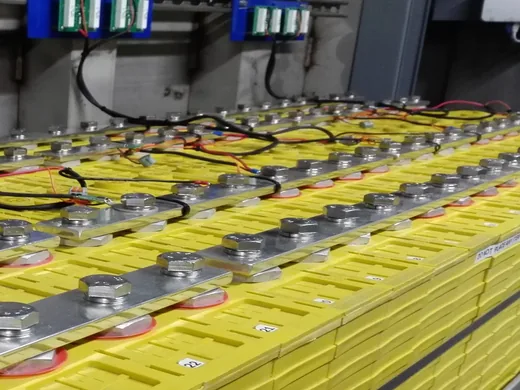
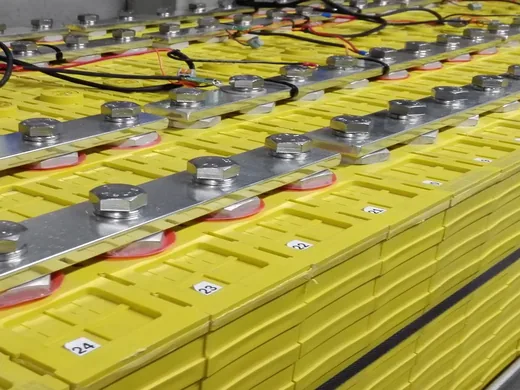
Danger scales with the source. A station carries one of the densest sources a consumer ever handles, a reservoir far larger than the sockets suggest. Behind a wall socket sit a breaker and a long thin supply run that limit fault current on their own. A lithium pack sits centimetres from the port behind a few milliohms of internal resistance, a reservoir engineered to deliver current without complaint. Engineers name the figure a source can deliver into a bolted fault the prospective short-circuit current. For a station it runs into the hundreds of amps. Every guard on the panel has to interrupt a fault without being overwhelmed by that number, a property called breaking capacity that separates a real protective device from a switch that only melts and arcs over.
The arithmetic behind it is unforgiving. Short-circuit current equals the pack voltage divided by the total resistance in the loop. Put 20 milliohms of cells and wiring behind a 12.8-volt pack and it drives roughly 640 amps into a dead short, reaching that height in the time a contact takes to touch. Fault current arrives at full height before any mechanical part can begin to move. The first line of defence has to be a fuse already carrying the load or an electronic switch watching the current every microsecond. Relays and contactors take milliseconds to open. The arc stands established across their parting contacts long before that.
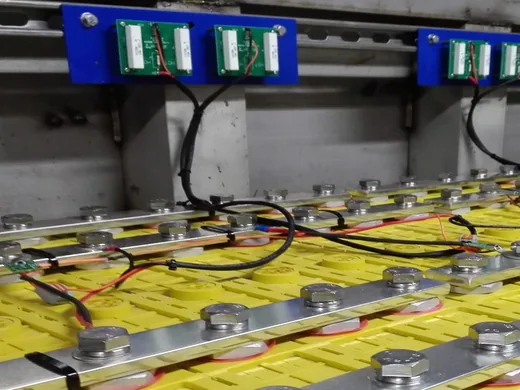
The pack keeps a hard limit of its own. The battery management system watches total current and opens the main contactor or its MOSFET stage when the draw crosses a ceiling, commonly a few hundred amps, as a last resort. That cutoff protects the cells from the fault and halts the runaway before the pack itself becomes the casualty. Reaching the BMS ceiling means every guard closer to the port already failed. The BMS threshold also carries a short deliberate delay of a few milliseconds, enough that a legitimate surge never trips the whole pack offline. That delay is why a nearer, faster guard has to catch the true short first, clearing it inside the window before the pack’s own protection has to act.
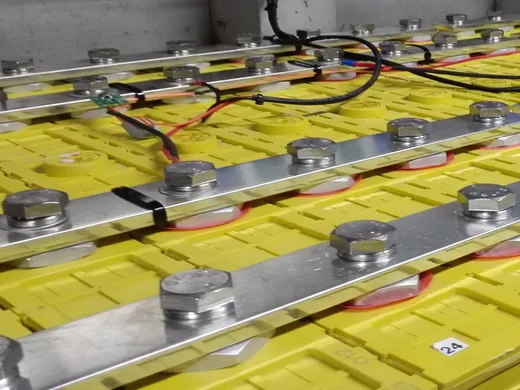
Heat and welding make the short worse than the number suggests. Hundreds of amps through a contact point the size of a pinhead deposits enough energy to melt metal in that instant. A direct-current arc carries no natural zero crossing to snuff itself out. At a bare DC terminal that short can weld the metal solid, fuse a switch shut, or spot-weld a dropped spanner to the studs it bridged.
Direct current makes the interrupting job harder at any given voltage. A battery holds its voltage flat and gives an arc no natural instant to die, the free instant that alternating mains hands over at each of its hundred zero-crossings a second. Guarding that steady arc builds a DC fuse or switch heavier for its rating and holds it to a lower voltage than an alternating-current part.
A cascade of guards
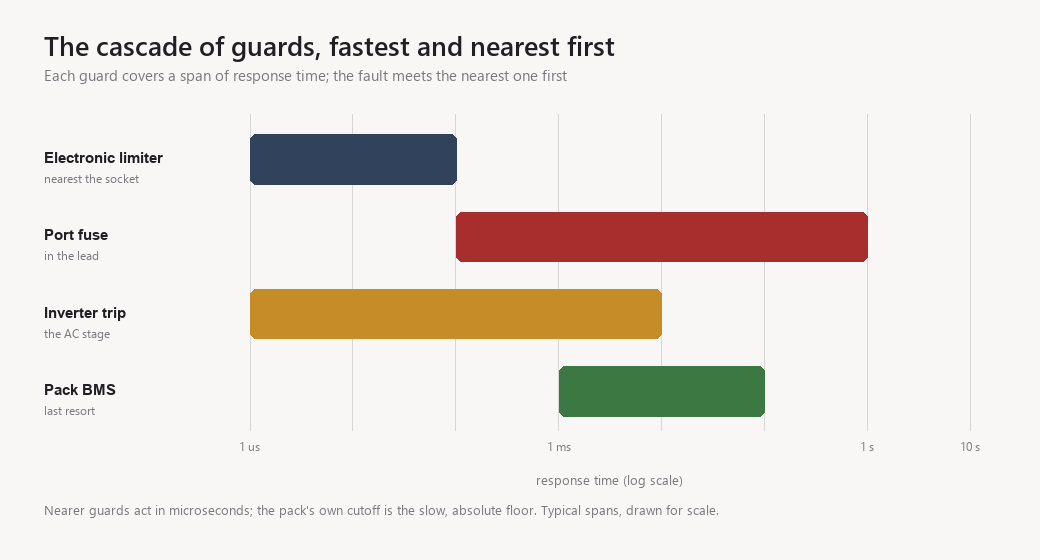
Four guards on one log time axis. The electronic limiter answers in microseconds, the port fuse over milliseconds to a second, and the pack BMS stands last. A fault meets the nearest, fastest guard first. Typical spans, drawn for scale.
Protection on a port comes in layers, each guard faster and closer to the fault than the one behind it. The fuse or electronic limiter nearest the socket sits sized just above the port’s rating. An electronic limiter catches a hard short in microseconds. A fuse takes seconds over a slower overload. Deeper in, the converter stage carries an overload trip of its own, and the inverter watches its AC transistors on a fast timescale suited to silicon. The pack’s BMS waits underneath as the slow, absolute floor, moving only when everything nearer has already failed. Any fault wakes the one guard tuned to its speed and nearest its position.
The order is a deliberate design choice. The cheapest and readiest part to replace sacrifices first. The pack protects itself only when all else fails. A blade fuse costs pennies and swaps in seconds. A welded BMS contactor costs a service visit and a stripped-down pack. The port fuse guards only the wire behind it, the load in front being no concern of the fuse. A fault in a thin accessory lead opens a fuse sized to that thin wire long before the cable can heat. A fuse chosen for the appliance, oversized for the thin cable it feeds, is the classic error that lets a lead cook inside its own insulation.
The surge a port must welcome
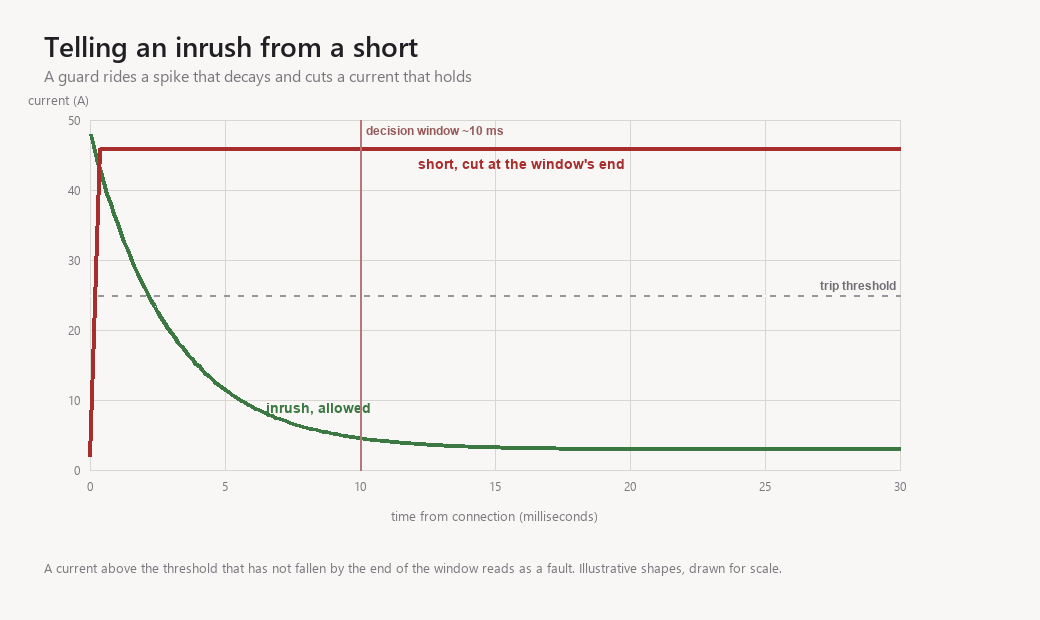
The core trick of a protected port. A green inrush spikes high and decays under the threshold within milliseconds and passes; a red short holds above it and is cut when the decision window ends. Illustrative shapes, drawn for scale.
Cutting current cleanly is only half the job, because a great deal of the current a port must pass looks momentarily like a fault. Every switching power supply charges an input capacitor at the instant of connection. That empty capacitor behaves like a short for a few milliseconds, pulling a spike many times the device’s running draw. A motor pulls three to six times its running current as it breaks away from standstill. The port has to swallow every bit of it and stay on, then cut the genuine fault that never ends. Charging through a resistance, a capacitor follows a curve, pulling its heaviest current at the first instant and tapering as it fills, the whole event measured in milliseconds and set by the size of the capacitor and the resistance in the path. Behind a big supply, a large filter capacitor can pull a spike ten or twenty times the running current at that first instant. For its opening moment the port sees a waveform indistinguishable from a fault, then settles into an ordinary load. A guard that cannot tell the shape of a fading spike from the flat line of a real short would cut power to fully half the devices ever plugged into it. Reading those first few milliseconds settles the question. A current already falling by the window’s end passes as inrush. A current still holding at full height reads as the fault.
Discrimination in time is the answer. Protection carries a time-current character, tolerating a big current briefly and cutting a moderate overload held long. A 10-amp port might pass a 40-amp inrush lasting 10 milliseconds. The same port opens on a mere 20-amp overload once that overload persists. Slow-blow fuses build that patience into a fat element that takes time to melt. Electronic limiters build it into a timer that allows a set overcurrent for a set window. What a fuse integrates is the current squared multiplied by time, the let-through energy an engineer writes as I-squared-t. Low let-through marks a fast fuse and protects delicate semiconductors. High let-through marks a slow one and survives inrush. One printed number marks a single point on that curve. That whole curve decides what the fuse passes and what it clears.
Capacitive inrush earns a second look on the high-power ports. A big inverter or a second battery connected to an Anderson stud presents a bank of capacitors that can pull a spike into the hundreds of amps for a millisecond, enough to spark visibly at the contact and pit the metal over time. Pre-charge circuits and soft-start resistors exist to tame that spark on the largest connections, easing the capacitor up to voltage before the full contact closes. Through a deliberately restrictive path, a pre-charge resistor carries the first inrush for a second, letting the capacitor fill gently. Once the voltage matches, a contactor bypasses the resistor. Large battery banks and high-power inverters connect this way as standard practice. Touching an Anderson connection half-home for a moment before seating it is the hand-tool version of that idea.
The first millisecond of a fault
Every real short runs a fixed sequence too fast to watch. Current climbs toward the pack’s ceiling within microseconds, the fuse element or the sense resistor heats or reports, the electronic switch turns off or the fuse metal vaporises. Any arc that tries to follow snuffs at the fuse’s sand filler or starves against the open switch. The port reads zero, the display flags the fault, the whole event finished before a human registers the click. A quick guard set with too low a rating fails in the worst way, melting its element and then arcing across the gap it opened, passing the fault it was meant to stop. Breaking capacity, printed on a quality fuse as an interrupting rating, is the promise that the device clears the pack’s full prospective current without that arc-over. Class-T battery-bank fuses answer this with an interrupting rating in the thousands of amps, printed on the body beside the current figure for anyone who reads past the headline number.
One-shot metal against a resettable switch
Automotive blade fuses, the physical guard behind many DC ports. The colour is the rating, standardised across the industry: tan for 5 amps, red for 10, blue for 15, yellow for 20, green for 30. A glance reads the value and a spare matches it. Photo: Illusive255, CC BY-SA 4.0.
A fuse protects by destroying itself. Calibrated to melt at a known current-time product, the metal element breaks the circuit for good, and holds that broken state permanently. Blade fuses colour-code the rating into the housing, tan for 5 amps, red for 10, blue for 15, yellow for 20. A glance reads the value off the colour, and a replacement matches it by the same code. Certainty of that kind costs a drawer of spares plus a dead port until someone swaps the part. Fuse speed comes in grades. A fast-acting element clears a fault in a millisecond and guards silicon that cannot survive longer. A time-delay element rides inrush for a full second before it commits, the grade a motor circuit wants.
The blade-fuse colour code (ATO/ATC standard) and where each rating sits on a station
Body colour
Rating
Typical port or circuit
Tan
5 A
USB feed, small electronics
Brown
7.5 A
lighting, small pumps
Red
10 A
cigarette socket
Blue
15 A
accessory circuits
Yellow
20 A
compressor fridge, heavier DC
Clear
25 A
Anderson branch
Green
30 A
high-current feed
Electronic protection keeps the port alive through a fault and out the far side. Sensing the current continuously, a MOSFET turns off within microseconds of a fault, then retries on its own after a cooldown, restoring the port the moment the short clears. USB and USB-C ports run this kind of guard as a matter of course, which is why a shorted phone cable kills the port for a second and the port returns the instant the cable comes out. Silicon costs more than a fuse. It adds a chip of its own that can fail. The payoff is a port that heals without a toolbox. The electronic limiter often runs in a hiccup mode under a lasting fault, trying for a moment, resting, and trying again, keeping its own temperature safe as it waits for the short to clear.
Polymer resettable fuses sit between the two. A polymeric PTC device conducts normally, then meets a lasting overload, heats, and lets its resistance climb steeply to choke the current down to a safe trickle, holding that trip until the power comes off and it cools. Its tripped resistance settles up to four times its initial value. A cooldown of a few seconds restores much of its conduction, with the device holding a slightly raised resistance for hours afterward. Small DC and USB ports lean on these, since they self-recover without a chip and without a spare.
AC shorts are a different animal
No fuse is fast enough for the inverter. Its output transistors would fail in microseconds under a short, far ahead of any mechanical element melting, which forces the inverter to watch its own output current electronically and fold back the instant a fault appears. That foldback drops the voltage to near zero, holds for a moment, then retries, a hiccup pattern that probes whether the short has cleared without pouring energy into it. On an AC socket a dead short produces a quiet clicking cycle of tries. Retry intervals space the attempts far enough apart to keep the transistors cool, a second or two between probes. A socket left shorted clicks on that rhythm until the load comes off or the machine latches the output down.
Two kinds of surge reach the AC side from opposite directions. Inrush pushes outward from the load, a motor or supply drawing its brief multiple at switch-on, and the inverter rides it on the same peak rating that starts a compressor. A transient overvoltage pushes inward from the world, a spike riding a long cable or thrown off by a nearby switching event, and a metal-oxide varistor across the output swallows it by turning the spike into heat. The varistor is the guard a mains power strip carries, sized for the lower energy a station output ever sees. A varistor carries a joule rating for the energy it can absorb before it wears out. Each large spike it clamps shortens its life a little, an ageing part that quietly does its work until a final surge ends it. Its clamp voltage opens a window a few tens of volts wide on a mains-voltage output, high enough to ignore the normal peak and low enough to catch a harmful spike.
What the panel shows and what to do
Tripped, a port announces itself plainly by going dark, a single dead socket among running neighbours. The AC side may click as it retries, the DC side may need a button or an app tap to restore. A resettable guard may heal by itself after a pause. A single trip after a plug went in wrong is the protection doing its job. Clearing the fault and restoring the port ends the matter. One first trip carries almost no information beyond the fact that a guard worked. Useful signal lives in what happens on the retry. Removing the suspect load and resetting calmly is the correct first response to any single event.
A repeated trip changes the reading. Trip again the moment it restores, and the port has found a fault still present, a shorted cable, a failed device, a stud still bridged. Hunting that cause beats resetting into a live short. A port that trips under a load it used to carry points at a device drawing more than it should, an early warning that earns a meter check.
Prevention costs almost nothing on the ports that matter. Bare high-current terminals, the Anderson and the battery studs, are the ones a dropped tool or a stray coin can bridge. Capping an unused socket and keeping a tidy bag around a live one remove the commonest short at the source before it can start. Fuses belong in every home-made lead at the source, sized to the wire behind them. A fault in a cable then opens a cheap fuse of its own, one that clears the trouble far short of the pack’s last-resort ceiling.
Common questions
What happens if I short a power station’s output?
A guard fires within microseconds to milliseconds and the port goes dead. On a DC port a fuse blows or an electronic limiter trips; on an AC socket the inverter folds its voltage back and retries in a hiccup pattern. Clearing the short and resetting or replacing the fuse restores the port. The pack’s own cutoff sits behind all of that as a final backstop.
Why does a port cut out when I connect a big power supply, with no short present?
The supply’s input capacitor charges at connection and pulls a brief inrush spike many times its running current. A guard set too tight reads that spike as a fault. Better designs tolerate a short high current. They cut only the sustained kind. The largest connections use pre-charge circuits to ease the capacitor up to voltage.
Are the ports protected by fuses or electronics?
Both, by port. High-current DC feeds often carry a physical fuse; USB and USB-C ports run electronic limiters that reset on their own; small DC lines may use a polymer resettable fuse. AC output is guarded electronically inside the inverter, which folds back on a short far faster than any fuse could melt.
Can a short circuit damage the battery or the machine?
A working protection chain stops the fault at the nearest cheap guard long before the pack is at risk. Damage happens when a lead carries no fuse and a fault runs back to the pack’s own cutoff repeatedly, or when a bare terminal welds to whatever bridged it. Fusing every home-made lead at the source removes that path.
Does a fuse reset itself?
A standard blade or glass fuse does not; it melts once and needs replacing. A polymer resettable fuse takes the other path, recovering after a few seconds of cooling and holding a slightly higher resistance for hours. Electronic limiters on USB and similar ports retry automatically once the fault clears.