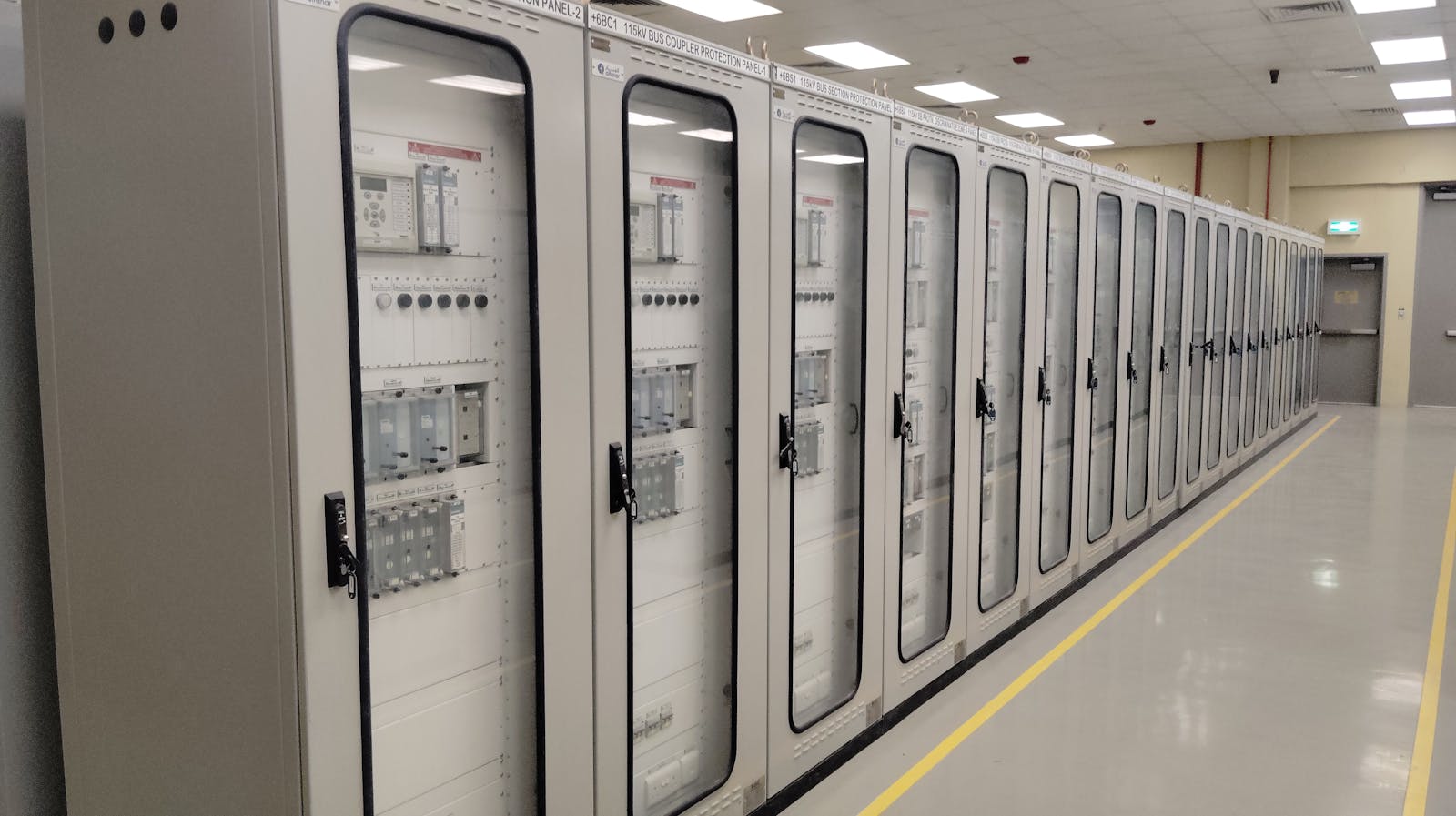
Air compressors rank among the most heavily used general-purpose machines in industrial production. Among all compressor types, centrifugal air compressors dominate high-volume air supply scenarios, owing to structural characteristics that volumetric compressors cannot replicate. Centrifugal works as a dynamic compressor.
Impeller Design
Impellers are machined from aluminum alloy or titanium alloy on five-axis CNC centers, or precision-cast and finish-machined. The blades are three-dimensional twisted surfaces shaped so gas receives energy uniformly across the blade span while flow separation stays minimal. Computational fluid dynamics has changed how these surfaces are designed. Atlas Copco’s aerodynamic group, working on the ZH and AQ series turbo compressors, published stage efficiency data at ASME Turbo Expo conferences showing polytropic efficiencies above 90% at design conditions on their current impellers, around five points above late-1990s designs at the same tip speed and pressure ratio. On a 2 MW machine running full-time, five polytropic efficiency points is a six-figure annual electricity cost difference at most industrial tariffs.
Semi-open impellers dominate plant air service. Shrouded impellers gain one to two efficiency points by suppressing tip leakage, at the cost of electron-beam welding or vacuum brazing the cover disc. For plant air it rarely makes sense. Open impellers are confined to low-pressure blower work.
Tip speed caps the achievable single-stage pressure ratio. Above 300 m/s or so, centrifugal stress at the blade roots approaches the yield strength of aluminum. The MAN HOFIM compressor uses titanium impellers on an integrated high-speed motor shaft, gaining 15 to 20 percent more allowable tip speed than aluminum permits. At 30,000 rpm, a one-gram imbalance at 100 mm radius generates close to 10 kN of centrifugal force, so balancing to ISO G1.0 or tighter is mandatory.
Gas leaving the impeller at velocities that can exceed Mach 0.8 enters the diffuser, which decelerates it and converts kinetic energy into static pressure. Most industrial OEMs use vaneless diffusers for air service; two or three points of design-point efficiency penalty is small next to the performance collapse a vaned diffuser suffers at off-design incidence.
Bearings and Rotor Support
Tilting-pad journal bearings handle radial loads. API 617 prescribes clearance ranges, oil flow minima, and vibration acceptance criteria. The oil system is a subsystem in its own right: shaft-driven main pump, electric auxiliary pump for start and stop, reservoir with immersion heaters for cold starts, oil cooler, duplex filters with transfer valves for online changeout. ISO VG 32 or VG 46 turbine oils. Viscosity at the bearing inlet must stay in a narrow window. Too thick, the pads overheat from shear. Too thin, the film collapses.
The auxiliary pump provides oil pressure during startup before the shaft-driven pump generates adequate flow, and during coastdown after shutdown. If it fails to start, the bearings see dry contact during the first seconds of rotation. A single dry start scores tilting-pad surfaces badly enough to require pad replacement, and scoring from a coastdown without oil is worse because the rotor is decelerating through the speed range where the hydrodynamic film is thinnest.
Oil analysis programs tracking viscosity, water content, particle count, and acid number are standard on API 617 equipment. The trending data catches contamination and degradation well before bearing distress shows up in vibration readings. Water ingress from cooler tube leaks is the most common oil contamination mode. Even 200 ppm of water in the oil accelerates bearing surface fatigue. A facility that skips sampling may not discover the problem until bearing temperatures begin trending upward, at which point the next planned outage becomes an unplanned bearing replacement and the cost goes up by a factor of ten or more.
Each impeller generates axial force toward its inlet. Three or four stages in series produce cumulative thrust in the tens of kilonewtons. A balance piston at the discharge end offsets most of that load. The residual, ten to twenty percent, falls on a Kingsbury-type or tapered-land thrust bearing. Balance piston sizing has no clean answer. Too small: the thrust bearing pads wear and eventually wipe. Too large: gas leaks back to suction through the balance piston labyrinth, wasting one to two percent of total machine flow. Field thrust bearing failures correlate more strongly with off-design operation than with any other single variable.
Magnetic Bearings
Active magnetic bearings have impacted the centrifugal air compressor market below about 1 MW. Atlas Copco’s ZH series uses them as standard across all frame sizes. Ingersoll Rand went the same direction with the Centac C series. The rotor floats in an electromagnetic field with zero contact. Position sensors and a controller running at 10 kHz or faster adjust currents continuously.
All AMB-equipped compressors include rolling-element backup bearings that catch the rotor during a delevitation event. These backup bearings are rated for a limited number of delevitation events, typically five to ten, before replacement is recommended. UPS systems on the AMB controller are common, providing enough stored energy to keep the bearings energized through brief power dips and to execute a controlled coastdown during longer outages.
Removing oil eliminates the reservoir, pump, cooler, filter, separator, disposal costs, and oil-related fire risk. It also eliminates the oil contamination path to the compressed air stream, making these machines the default choice for food, pharmaceutical, semiconductor, and textile applications where oil-free air is a regulatory or quality requirement.
Atlas Copco’s SMARTLINK platform ingests rotor position and vibration data from the ZH magnetic bearing controllers and runs diagnostic algorithms to flag degradation trends. Trending rotor orbit shape over months reveals impeller fouling, seal wear, and coupling misalignment before they reach alarm thresholds. The quality of these diagnostics hinges on the baseline captured during commissioning. A machine commissioned with a dirty inlet filter generates a flawed reference that the trending algorithms carry forward indefinitely.
Multi-Stage Compression and Intercooling
A single impeller delivers a pressure ratio in the range of 1.2 to 2.5 for air. Reaching 0.7 to 1.0 MPa gauge or higher requires two to four stages on a common shaft, with intercoolers between stages pulling gas temperature back toward inlet conditions. Casings split horizontally below 3 to 4 MPa and switch to barrel construction above that. Dry gas seals at shaft penetrations, running on a gas film a few micrometers thick between precision-lapped faces, are standard on modern machines and routinely last ten years or longer.
Intercooler approach temperature has a direct effect on total power consumption. Published OEM test data puts the sensitivity at 1.5 to 2.5 percent of total input power per 10 degrees Celsius of approach temperature difference. Open-loop cooling water deposits scale and biological film on the water side of heat transfer surfaces over months and years. The degradation runs a degree or two of approach temperature per year and rarely triggers a work order because the increase is gradual.
The cooling tower and the compressor are usually managed by different departments with different budgets, and the connection between cooling tower neglect and compressor power consumption is indirect enough that it goes unrecognized until an energy audit turns it up. A centrifugal compressor running 2% above its expected power consumption from fouled intercoolers does not trip, does not alarm, does not generate a maintenance ticket. The most reliable detection method is trending approach temperature against a clean-cooler baseline.
Drive and Speed Control
Electric motors drive most centrifugal air compressors through speed-increasing gearboxes. Integral gear configurations let each stage spin at its aerodynamically optimal speed. Steam turbine drives appear in petrochemical plants with available process steam. Inlet guide vanes modulate flow by altering pre-swirl into the impeller. Variable frequency drives change motor speed directly; power drops with the cube of speed. At 80% speed, power falls to about 51% of full-load. Combined IGV and VFD control is standard on new large machines. VFD retrofit has payback periods frequently under two years, though the electrical infrastructure for a medium-voltage VFD in the 1 to 5 MW range can stretch that to three or four years.
Flow Capacity and Efficiency at Scale
Positive-displacement compressor displacement is constrained by working chamber size and rotational speed. The largest twin-screw air compressors deliver around 50 to 60 cubic meters per minute. Centrifugal compressors start above that. A single machine handles hundreds of cubic meters per minute. Large process units handle thousands. For a geometrically similar design, throughput scales with the square of impeller diameter: doubling the diameter quadruples flow.
Efficiency improves with size. Larger blade passages relative to boundary layer thickness reduce the fractional impact of viscous losses. Tip clearances and surface roughness effects shrink in relative terms. Large centrifugal air compressors post isentropic efficiencies around 85% and above. The largest machines approach the high 80s to 90%.
Field-verified acceptance test data per ASME PTC 10 tends to land one to two points below catalog values because of inlet piping losses, non-uniform velocity profiles, and cooling water temperatures above design assumptions. Large rotary screw compressors in the same pressure range fall three to six points below equivalent centrifugal machines in field-measured specific power. Over twenty years at continuous operation, the efficiency gap compounds into an energy cost difference in the millions at industrial electricity rates.
Covering large demand with screw compressors also multiplies the machine count and with it the motors, oil systems, separators, control panels, piping headers, and maintenance schedules. A centrifugal machine or a small group of them, with overhaul intervals reaching 40,000 to 60,000 operating hours, replaces that fleet. The life-cycle comparison should be against the combined fleet of screw compressors needed for equivalent flow, and on that basis the initial purchase price difference between the two approaches fades within the first few operating years.
Surge and Operational Boundaries
Below 15 to 30 cubic meters per minute, centrifugal compressors lose efficiency to screw machines, and there is no reason to choose them for flows in that range. When flow drops below the surge line, the pressure gradient across the impeller overwhelms gas momentum, flow reverses, and pressure oscillations and rotor vibration can destroy bearings and seals in seconds. Stable operating range runs from about 70% to 100% of design flow.
Anti-surge systems use a fast-acting recycle valve and a dedicated controller. The surge control line sits 10% or so to the right of the measured surge line on the performance map. CCC (Compressor Controls Corporation) and Triconex-based controllers are widely deployed. Current algorithms use compressor-specific maps, real-time gas property calculations, and adaptive gain scheduling. A fixed-gain controller tuned for gradual load changes will not react fast enough to a rapid demand drop. The interval from initial stall to full surge in a high-speed machine is tens of milliseconds.
The recycle valve is easy to underspecify. It must open from closed to full flow in under 500 milliseconds on most installations. Globe valves with pneumatic actuators and volume boosters are standard. The actuator sizing has to account for the pressure differential across the valve when it first cracks open during a surge approach event. A few hundred milliseconds of stall at the wrong moment is enough for the compressor to enter surge.
Valve seats and packing degrade under thermal cycling from repeated exposure to hot compressed air during near-surge events, creating slow leaks that bleed compressed air back to suction and waste energy without any alarm. Detecting this requires periodic valve leak testing or monitoring suction temperature, which rises slightly when hot recycle gas mixes with ambient inlet air.
Tuning the surge margin is site-specific. Too wide, the machine spills compressed air during normal load swings. Too narrow, and it cannot catch a fast surge when a large downstream process trips. Plants with large receiver tanks downstream have slower pressure decay during demand spikes, giving the controller more time. Plants piped directly to point of use with minimal buffer see rapid transients that approach surge faster than a sluggish control system can handle.
Systems with variable demand pair a centrifugal base-load machine with smaller screw compressors on trim. Default vendor sequencing rarely works without weeks of on-site tuning. Pipe lengths, elevation differences, receiver volumes, the temporal shape of demand, and the centrifugal machine’s minimum stable flow all differ from plant to plant. A poorly sequenced system leaves the centrifugal machine cycling in and out of blow-off while the trim compressor idles. On a 2 MW compressor, each hour spent in full blow-off wastes approximately the same amount of energy as running the machine at full productive load.
Getting sequencing right usually requires an independent compressed air audit team or a controls integrator with specific experience in centrifugal-screw hybrid systems. The audit team needs to log plant demand at short intervals (one-second data or faster) over at least a full production week to capture the demand profile, including shift changes, batch process starts and stops, and weekend patterns.
The displacement advantage over positive-displacement compressors at large scale is not closing. Magnetic bearings and cloud-connected diagnostics are lowering the operational skill threshold, expanding the range of facilities that can run a centrifugal compressor without a dedicated rotating equipment engineer on staff. Any compressed air system above 30 cubic meters per minute of sustained demand that has not been evaluated for a centrifugal machine is leaving money on the table in energy and maintenance costs, and the gap widens every year the screw compressor fleet keeps running.