


Sourcing the Microchip PIC32CM and PIC32CX
The PIC32CM and PIC32CX are Microchip’s Arm Cortex-M parts under the PIC32 name. They sit next to Microchip’s analog, memory, and 8-bit lines in one catalogue. A shop already buying from Microchip can source a 32-bit Arm microcontroller from the same vendor, on the same purchase order. That single-vendor reach is the reason a team looks at the PIC32 Arm parts.
The PIC32 name on Arm parts
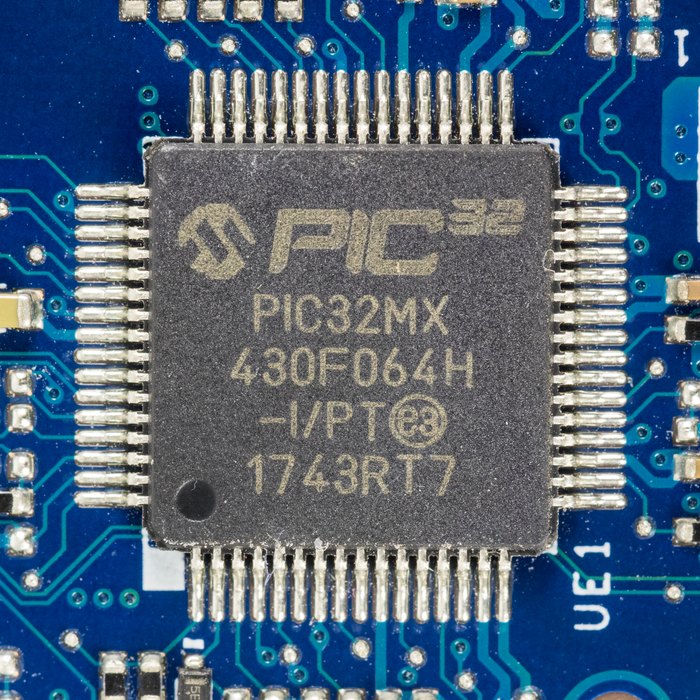
The PIC32 brand started on a different core. For years, a PIC32 meant a microcontroller built on a MIPS processor, the PIC32MX and PIC32MZ lines. Microchip then brought the name to Arm. The PIC32CM and PIC32CX run Arm Cortex-M cores under the same PIC32 label. The brand now covers two instruction sets within one family name. Microchip launched the first PIC32 parts in 2007, on the MIPS32 core. The MIPS PIC32MX and PIC32MZ lines still ship today for the designs built around them. The Arm move came later, as Microchip folded the Atmel Arm portfolio into its own naming. The PIC32 label now spans both heritages under one brand a buyer already knows.
The Arm PIC32 parts share their design roots with the SAM line. Microchip drew the PIC32CM from the same peripheral architecture as the SAM D and SAM L. The PIC32 name carries the SERCOM serial blocks, the Event System, and the peripheral touch controller. The tools are the same MPLAB environment Microchip uses across its catalogue. Knowledge of one Microchip Arm part transfers to the others. The shared architecture matters to sourcing. A team that has shipped a SAM design moves to a PIC32CM with the same drivers and the same configuration tools. The peripheral registers match. The example code ports across. The PIC32 name adds a Microchip catalogue position to a part a SAM developer already understands.
The naming splits the Arm parts into two tiers. The two tiers run from the entry PIC32CM, on Cortex-M0+ and Cortex-M23, up to the higher-performance PIC32CX, on the Cortex-M4F. Each tier carries several families aimed at a specific job. A sourcing decision starts by matching the job to the right family. Between them, the two tiers cover the cost-sensitive end, the secure end, the connected end, and the high-accuracy end. Reading the product against those ends, then against the families inside the chosen tier, narrows the field. The whole range runs on the MPLAB X tools and the Harmony software framework. One workflow covers the entry part and the wireless SoC alike.
The PIC32 Arm parts answer a specific buyer. A shop with a Microchip relationship, a stock of Microchip parts, and an MPLAB workflow gains a 32-bit Arm option inside that same vendor. The parts also reach a buyer who needs one of the specialised families, the wireless or the metering parts, that few other vendors package this way. The sourcing case rests on the vendor fit and on those niche families. Few vendors put a metering engine or a certified wireless stack on an Arm microcontroller and sell it next to their analog catalogue. Microchip does. Anyone who needs one of those niches finds a short list of suppliers. The PIC32CX sits on that list. The sourcing logic runs from the niche to the part, then to the vendor already in the building. A short supplier list is itself a sourcing win, since each new vendor adds qualification, paperwork, and risk.
| Family | Core | Target | Note |
|---|---|---|---|
| PIC32CM JH | Cortex-M0+ | general control | SAM-derived peripherals |
| PIC32CM MC | Cortex-M0+ | motor control | PWM timers, fast ADC |
| PIC32CM LS | Cortex-M23 | secure low-power | TrustZone, crypto |
| PIC32CX-BZ | Cortex-M4F | wireless | BLE and 802.15.4 (Zigbee, Thread) |
| PIC32CX-MT | Cortex-M4F | energy metering | measurement engine |
| PIC32CX-SG | dual Cortex-M4F | functional safety | lockstep cores |
PIC32CM, the entry Arm line
The PIC32CM is the entry point to the Arm PIC32 parts. The PIC32CM JH and MC families use the Cortex-M0+ at clocks around 48 MHz. The PIC32CM LS families use the Cortex-M23, with the same TrustZone security found on the SAM L11. The job sets the family: general control, motor drive, or secure low-power work. The PIC32CM JH is the general-purpose member. It carries the SERCOM serial blocks, a 12-bit ADC, timers, and USB, in packages from small pin counts upward. The JH suits a sensor hub, a controller, or a bridge between buses. It is the part a team picks when the job has no special demand beyond a capable, low-cost Arm microcontroller from Microchip. Some JH parts add a CAN-FD controller for an industrial bus. The package range covers small QFN and QFP options for a tight board. A design scales the flash and the pin count to the job inside one family.
The motor-control parts carry the hardware a motor loop needs. The PIC32CM MC adds timers for PWM generation, fast ADC channels, and the peripheral interconnect for a tight control loop. The commutation then runs in hardware at a fixed rate. Microchip’s motor-control libraries supply the field-oriented-control code and shorten the bring-up of a brushless drive. The part suits a brushless motor driver, a pump, or a small appliance. Motor control rewards hardware that runs the loop without the core. The PIC32CM MC links its timers, its ADC, and its comparators through the peripheral event system, so a current reading triggers the next PWM step on its own. The core sets the targets and reads the status. The result is the fast, regular timing a motor loop needs, on a low-cost part from a vendor that also sells the gate drivers and the analog around it.
The secure PIC32CM LS parts bring the TrustZone story to the PIC32 name. The LS60 carries a separate secure subsystem, with key storage and a crypto accelerator the application cannot reach directly. The device identity and the keys live on that part. The sourcing draw is a secure Arm microcontroller from a vendor a shop may already use for its analog and memory. The LS line comes in two grades. The LS00 carries the Cortex-M23 with TrustZone. The LS60 adds a separate secure subsystem, a hardware root of trust that runs apart from the main core. Microchip ships a provisioning service that loads keys at the factory. A team that lacks its own secure-manufacturing line gets that step from the vendor. The factory provisioning saves a small shop from building its own secure key-loading flow.
PIC32CX, the higher-end families
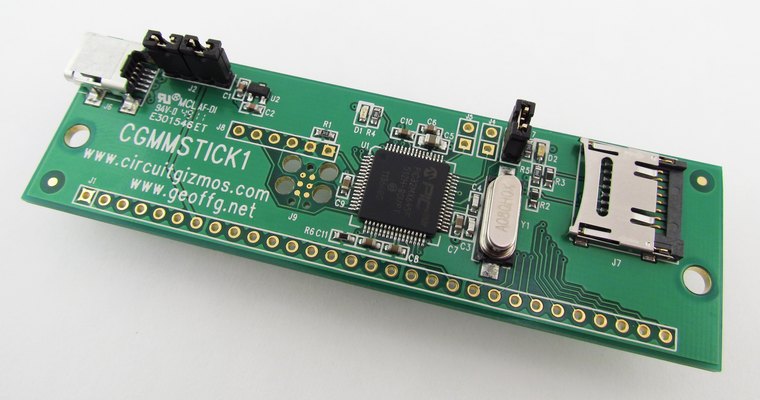
The PIC32CX holds the Cortex-M4F parts, with floating-point and DSP performance on board. Three families fill the tier: the BZ wireless parts, the MT metering parts, and the SG functional-safety parts. Each one targets a market with its own hard requirement. The PIC32CX is where Microchip puts its specialised Arm silicon. The Cortex-M4F gives all three families a common compute base. The floating-point unit handles signal math, the DSP instructions handle filters and transforms, and the clock runs well past the entry parts. That headroom is what lets one core run a radio stack, a metering computation, or a safety monitor. The families differ in their peripherals. The core underneath stays the same. Microchip prices the PIC32CX above the entry parts, in line with the extra silicon and the certifications.
The PIC32CX-BZ parts are wireless system-on-chips. They place a Cortex-M4F next to a 2.4 GHz radio for Bluetooth Low Energy and 802.15.4 Zigbee or Thread. Arm describes the Cortex-M4 as a processor with DSP instructions and an optional floating-point unit for signal work. That signal performance handles the radio protocol stack and the application on one core. A wireless product sources the radio, the core, and the stack as one part. Microchip sells the BZ parts as bare chips and as the certified WBZ modules. The module carries the radio, the crystal, and the antenna matching on a shielded board with a regulatory certification. A product that uses the module skips much of the RF design and the certification work. The BZ line also supports Matter, the smart-home standard built over Thread. A connected-home design sources a single Microchip part for the whole wireless side. BLE 5 brings the range and the throughput a modern wireless product expects. The BZ parts can run more than one protocol at once, so one chip holds a Bluetooth link and a Zigbee or Thread mesh together. Field firmware updates travel over the same radio.
The PIC32CX-MT parts are metering system-on-chips. They carry a measurement engine that reads voltage and current channels for an electricity meter. The hardware computes the energy figures a utility meter reports. Microchip rates the parts for the accuracy classes a meter has to meet. Metering puts the analog front end, the computation, and the Arm core on one part. Sigma-delta converters on each channel give the front end its accuracy. The part watches the live and the neutral conductor together, a comparison that flags meter tampering. Energy metering is a regulated, long-life market. A utility meter ships in the millions and stays in the field for a decade or more. The PIC32CX-MT measures voltage and current on several channels, computes active and reactive energy, and flags tamper events. Microchip targets the metering accuracy classes that regulators require. A meter maker sources one part for the measurement and the compute, with the long-term supply the market demands. Metering parts run for years in a sealed enclosure in the field. The PIC32CX-MT carries a real-time clock and tamper inputs for that service. A utility reads the part as a long-term commitment.
The PIC32CX-SG parts add functional safety. They carry two Cortex-M4F cores in a lockstep arrangement, with the safety documentation an industrial or automotive design needs. A safety design uses the dual core to catch a fault in the compute itself. The part reaches a market that asks for certified hardware. The SG parts run two cores that execute the same instructions in step. A checker compares the two outputs and raises a flag on any mismatch. That arrangement catches a random hardware fault the software alone would miss. Microchip supplies the safety manuals and the certification artefacts a functional-safety audit needs. An industrial or automotive design sources the safety evidence with the silicon. Error-correcting code guards the on-chip memory against a single-bit upset. A separate clock and power monitor watches the part itself.
The three PIC32CX families share little beyond the core and the tools. A wireless SoC, a metering SoC, and a safety controller serve different products. The thread that ties them is the sourcing: each comes from Microchip, on the MPLAB flow, under one vendor relationship. The sourcing stays with one supplier across all three. The shared core keeps the sourcing simple across the tier. A team that builds a wireless product on the BZ uses the same tools for a later metering product on the MT. The knowledge carries over. The vendor relationship carries over. A company with several products across these markets runs them all through one Microchip account.
Sourcing from one vendor
The sourcing case for the PIC32 Arm parts rests on the single-vendor relationship. A product carries more than its microcontroller: analog parts, memory, power devices, and interface chips. Microchip sells all of those. A shop that buys its analog and memory from Microchip adds the PIC32CM or PIC32CX to the same purchase order, the same distributor account, and the same support line. One vendor relationship covers a larger share of the bill of materials. The MPLAB tools, the code libraries, and the application engineers carry across the whole Microchip range. One ecosystem covers the analog, the 8-bit, and the 32-bit Arm parts alike. The consolidation pays off in the back office as much as in engineering. One supplier means one set of quality records, one set of terms, and one contact for a supply problem. Pricing improves as the order grows. A smaller vendor list shortens the audit and the qualification work. For a company that already runs on Microchip, the PIC32 Arm parts deepen a relationship the business case already supports. The cross-sell runs both ways. An engineer who learns the PIC32 Arm parts reaches for Microchip analog and memory on the next design. One vendor relationship compounds over a product line and over the years a team stays with it.
Supply and longevity
Microchip runs its own wafer fabs and assembly sites. That ownership gives the supply a stability a fabless vendor cannot always match. Through the shortage years, Microchip’s own capacity kept many parts moving. In-house manufacturing reads as a lower supply risk over a product’s life. The integrated-device model puts the fab, the design, and the test under one company. Microchip owns wafer fabs in the United States and assembly sites across several countries. That spread gives the supply more than one path. A sourcing team reads the in-house model as a hedge against a single point of failure in the chain. Each part traces to a known fab and a known process. That visibility helps a quality audit and a long-term supply plan. MPLAB Harmony version 3 generates the driver and configuration code across the PIC32 Arm parts. The software effort on a new family stays low.
Microchip also runs a published product-longevity program. The company commits to keeping listed parts in production for a long horizon, the kind an industrial or automotive design plans around. A sourcing team checks a part against that program before it commits. The PIC32CM and PIC32CX carry the same long-life commitment as the rest of the catalogue. For a design with a ten-year or fifteen-year life, that commitment is part of the sourcing decision. The Arm core also helps the second-source question. A PIC32CM runs the same instruction set as any other Cortex-M, so the application code is not locked to Microchip silicon. A team can carry the application layer to another vendor’s Cortex-M, then rewrite the peripheral layer for the new part. The core portability lowers the risk of a single-vendor design.
When to source the PIC32CM or PIC32CX
The clearest case for the PIC32 Arm parts is an existing Microchip shop. A team already on MPLAB, already buying Microchip analog and memory, adds a 32-bit Arm part with no new vendor to qualify. The learning curve is short. The purchasing stays simple. The PIC32CM or PIC32CX folds into a flow the team already runs. The win is a smaller decision. A team that already trusts Microchip’s tools, supply, and support does not re-run all of that for a new vendor. It checks the part against the job, confirms the package and the price, and designs it in. The 32-bit Arm step adds a capability to a relationship the team has already built. Qualification is the step that shrinks furthest. The part runs on a toolchain the shop has already validated, through a distributor account already open, under quality records already on file. The PIC32CM clears those checks faster than a part from an untried vendor.
The second case is one of the specialised families. The families each match a product: the PIC32CX-BZ for wireless, the PIC32CX-MT for metering, the PIC32CX-SG for safety, the PIC32CM LS for secure low-power work. Each family packages a hard requirement into one part. The sourcing question is which family fits.
The case against the PIC32 Arm parts is reach. The STM32 and the broader Cortex-M market carry more part numbers, more third-party tools, and more community code. Without a Microchip tie, that breadth carries weight. The PIC32 Arm parts win on vendor consolidation and on the niche families. Raw catalogue size is a different contest. A team starting fresh, with no vendor tie, has more to weigh. The broad Cortex-M market offers more parts to compare and a deeper pool of community support. That team checks whether a PIC32 niche family, or the Microchip supply story, outweighs the breadth it gives up. For many general designs, it does not. A mainstream Cortex-M is the simpler call. On price, the PIC32 Arm parts sit inside the mainstream Cortex-M band, so the choice rarely turns on unit cost alone.
Sourcing a microcontroller is a supply decision as much as a technical one. The PIC32CM and PIC32CX give a Microchip-centric shop a 32-bit Arm path that stays inside one vendor, one toolchain, and one supply commitment. The specialised families add a reason that has nothing to do with vendor habit: a wireless, metering, safety, or secure part that earns its place on the merits. A team that reads both the technical need and the supply picture knows when the PIC32 Arm parts are the right buy. That read pairs the engineering need with the purchasing reality. The PIC32CM and PIC32CX rarely win on raw numbers against the whole Cortex-M field. They win when the vendor already fits, or when a niche family matches the product. A sourcing team that holds both lenses up at once makes the call quickly. Microchip Direct and the broadline distributors both stock the parts, so a buyer checks lead time and price before the design locks in.
What are the PIC32CM and PIC32CX?
They are Microchip’s Arm Cortex-M microcontrollers, sold under the PIC32 brand. The PIC32 name once meant only MIPS-core parts. The line now runs from the entry PIC32CM, on Cortex-M0+ and Cortex-M23, up to the PIC32CX, on the Cortex-M4F. The PIC32CX adds wireless, metering, and functional-safety families.
What makes a team source a PIC32 Arm part?
The main reason is vendor consolidation. A shop already buying Microchip analog, memory, and 8-bit parts adds a 32-bit Arm part on the same purchase order and the same tools. A second reason is a specialised family: the wireless, metering, safety, or secure parts that few vendors package this way. The sourcing case rests on those two points.
What is the difference between the PIC32CM and the PIC32CX?
The two tiers split by core and by job. The PIC32CM, on Cortex-M0+ and Cortex-M23, covers entry control, motor drive, and secure low-power work. The PIC32CX, on the Cortex-M4F, covers wireless, metering, and functional-safety designs. Both share the MPLAB tools and the Microchip supply chain.
Are the PIC32 Arm parts the same as the SAM parts?
They share a design heritage. Microchip drew the PIC32CM from the same peripheral architecture as the SAM D and SAM L, so the SERCOM, the Event System, and the touch controller carry over. The PIC32 name groups them with Microchip’s wider catalogue. A team treats the choice between a SAM part and a PIC32CM as a branding and packaging question, with the architecture shared either way.
Does Microchip guarantee long-term supply of these parts?
Microchip runs a published product-longevity program and its own wafer fabs. The longevity program commits to keeping listed parts in production for a long horizon. The in-house fabs gave the supply a stability through the shortage years. A sourcing team checks a specific part against the longevity list before it designs the part in.