Sonogram at Home Handheld Ultrasound for Personal Pregnancy Monitoring
A sonogram at home is an ultrasound done outside a clinic, on a pocket probe a visiting clinician carries or a parent buys for themselves. The appeal is a look at the baby and the sound of its heart without a trip to a hospital. A handheld in a trained hand can bring a real scan to a mother’s bedside, and the same impulse puts a heartbeat monitor in a parent’s hands to listen at home. The value of either rests entirely on who holds it and what they ask of it.
The pull of a scan at home
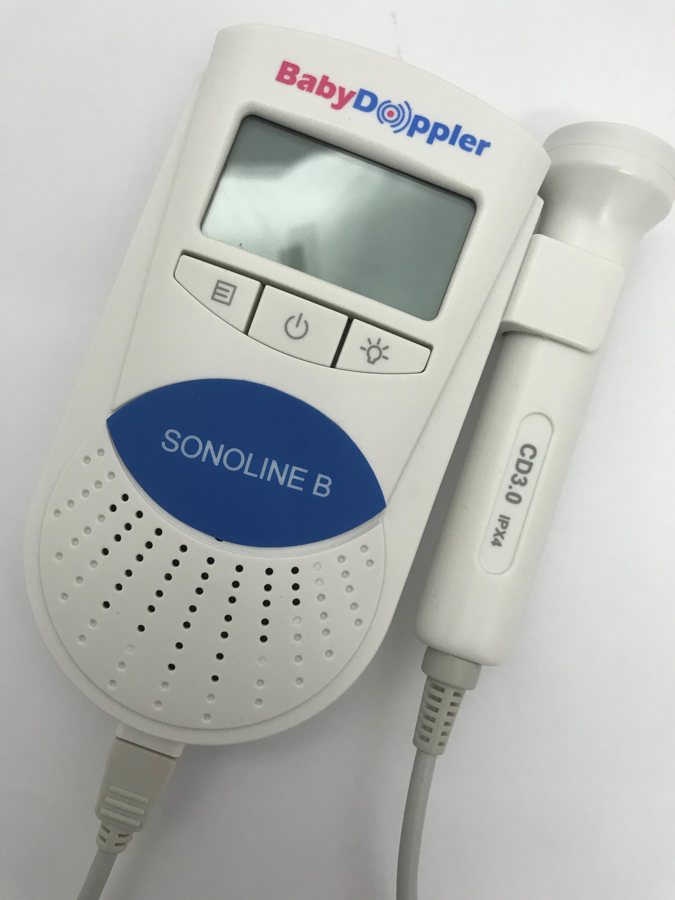
A consumer home fetal Doppler, the over-the-counter kind sold to parents to listen for the heartbeat at home. A small unit and a probe pick up the heart as a sound, the brand and model marked on the case. The FDA sets devices like this as prescription tools for trained operators.
The wish to see the baby at home is an old one met by new tools. A parent wants to know the baby is there and well, the wait between clinic visits long and full of worry. A pocket probe seems to answer that, the heartbeat a few seconds away on the bedroom table. The wish is human, the only question whether the tool can carry it. A mother is taught to watch the baby’s movements, the surest home sign she has of its wellbeing, and a monitor seems a firmer thing than a feeling, a sound she can point to. The pull toward the device is the pull away from the harder skill of feeling the baby move. Home monitoring is older than the handheld, a wooden trumpet pressed to the belly once the only ear a midwife had. The worry that drives a parent to a monitor is real, the long gaps between visits hard on an anxious mind, the answer to it a midwife to call and a person to ask. The wish behind the monitor is a good one, the trouble only in the tool it reaches for. Antenatal visits are the backbone of a safe pregnancy, a home device that tempts a parent to skip one doing harm of a quiet kind. The safest home tool a parent has is attention, the daily sense of a baby’s pattern of movement telling more than any beat a Doppler finds. The home fetal Doppler has been sold to parents for decades, a cheap version of a clinic tool stripped to a single trick, the price low enough that a parent owns one for the cost of a few coffees. The right answer to a parent’s worry is a person, a midwife on the phone, a clinic that will see them, and a device that stands in for that person stands in for the wrong thing. What a home probe can do comes down to the hand that holds it and the question it is asked.
A midwife or a doctor can bring a handheld scanner on a home visit, a full ultrasound in a trained hand. Parents can buy a fetal Doppler for themselves, a simple monitor that finds the heart as a sound. The two share a probe and a screen and little beyond that. A parent shopping for reassurance finds a shelf of devices that promise it, none of them able to deliver the thing hoped for. The cost of a home Doppler buys the device and none of the skill that makes it safe, the skill never the part for sale. The market knows the worry and sells to it, a heartbeat monitor a cheap thing beside the price of peace of mind. A scan at home gives a parent a real good, the bond of seeing the baby move. A clinician’s scan gives that bond with a finding alongside, a keepsake from a medical look doing no harm. The good and the harm in a home scan run close, the difference always in the hand that holds the probe and never in the probe itself. The market for home monitoring grows each year, the devices cheaper to buy and the buying barely checked, the ease of getting one outrunning any check on using it well. A handheld in the right hands has a real place in antenatal care, the scan brought to the mother where she already is.
What a handheld brings home
A handheld in a clinician’s hands does at home what it does in a clinic. A midwife on a home visit can check the baby’s lie, find the heartbeat, and measure the growth, the scan as good as the hand and the probe allow. The home is no barrier to a real scan, only the setting changed. The home visit is old midwifery, the scan a new tool added to it, a midwife who scans on her rounds reading the baby without moving the mother. A handheld weighs less than a phone book and runs off a tablet, the scan reaching a mother a cart could never go to, a refugee camp, a flooded district, a clinic with no power for a big machine, the probe running off a battery where nothing else will. The handheld a midwife carries is the same class of machine a hospital uses, the picture as real, only smaller and lighter, the scan losing nothing for being done at a kitchen table. The midwife’s handheld reads the same heartbeat a parent’s Doppler does, the difference all in what she does with it, the rate heard, the movements weighed, the growth read, the beat one finding among several. A community health worker trained on a handheld can run the scans a remote clinic needs, the skill taught in weeks and carried for a career. The handheld a clinic uses is a point-of-care scanner, a real diagnostic tool built small, sharing its class with the carts and the picture good enough for the views a guideline asks. A handheld scan and a clinic scan read the same anatomy where the operator is trained alike, the machine no longer the limit and the skill in the hand the thing that travels.
The heartbeat is the easiest thing to bring home. A handheld finds it in seconds, a sound or a flicker on the screen, the reassurance a worried mother came for. A clinician reads more than the beat alone, the rate and the rhythm part of the same look. A handheld at home can send its images to a clinician miles off, a trained eye reading what an untrained hand has captured, the skill coming down the wire where it cannot come in person. A scan folded into a home antenatal visit costs a mother nothing extra, the probe out for a minute alongside the blood pressure and the urine. A clinician who finds the heartbeat for an anxious mother gives real comfort, the same sound read by a hand that knows what else to look at. A handheld at home gives a first look that sends the mothers who need a hospital on their way in good time. A scan at home can be filmed and kept, the clip saved to a phone for a clinician to read or a family to share. A scan run at home and read by a specialist far away is the shape of much future care, the picture taken in one place and read in another. A handheld scan at a booking visit confirms the pregnancy, dates it, and counts the babies, all at the first meeting and all where the mother sits. A scan brought home saves a clinic an appointment slot and a mother a half-day lost to travel, the visit doing double duty with the check and the scan in one.
The dating scan and the growth scan travel well to the home. A crown-rump length or a set of growth measurements asks only a steady hand and a clear view, both within a handheld’s reach. A mother far from a clinic can have these read where she lives, the journey saved. A dating scan at home settles the one measurement that shapes the whole pregnancy, the crown-rump length read in minutes on a mother’s own sofa. A handheld in a community clinic puts the dating and growth scans within reach of mothers who would travel hours for them. A small baby can be followed at home week to week on a handheld, the growth read without a clinic trip each time, the mother who would have travelled weekly staying put. A mother on bed rest, a mother far from care, a mother who has missed her appointments, all are reached by a probe that comes to them, the scan they could not get to getting to them.
A trained eye at home can catch the thing that needs a hospital. A baby lying wrong, a low placenta, a pool of fluid gone thin, all show on a handheld a midwife knows how to read. The home scan becomes the one that sends a mother in at the right time. A baby’s lie is easy to read at home late in pregnancy, a head down or a breech plain on a handheld, a midwife who finds a breech near term sending a mother for the talk about how the baby will come. A handheld on a home visit reads the placenta low or clear, the fluid full or thin, the baby head-down or breech, each a finding that shapes the plan and carried to the door.
What a sonogram at home can and cannot do, by who holds the probe
Task
Clinician handheld
Parent monitor
Find the heartbeat
Yes, in seconds
Often, from ~10–12 weeks, with practice
Date the pregnancy
Yes, by crown-rump length
No
Growth, lie, placenta, fluid
Yes
No
Decide the baby is well
Not from a heartbeat alone
No
Find an anomaly
No; the clinic anatomy scan does
No
Keepsake video for itself
Discouraged
Discouraged
What home use cannot give
The limits fall hardest on the parent holding a monitor alone. A device in untrained hands gives a sound and no more. The gap between hearing a heart and knowing a baby is well is the whole of the problem. The parent alone with a monitor has no one to turn the sound into sense, the device handing them a fact they cannot read. A clinician can read the silence of a missing structure or the wrongness of a measure, a parent only what they hoped to see.
The gravest risk of a home monitor is false comfort. A parent who finds the heartbeat hears that the baby lives at that moment, no more. A baby in trouble can keep a normal heartbeat until late, the heart the last thing to fail. A mother who feels less movement and then finds a heartbeat at home may stay home when she should go in, the monitor having told her a half-truth. The reassurance is the danger, a heard heartbeat taken as all-is-well, its true message only that the heart still beats. The feeling of less movement is itself the warning, a sign the monitor cannot read and the parent must act on. A worry about the baby’s movements is a reason to be seen, the monitor no answer to it. A failing placenta can starve a baby slowly, the heart among the last things to weaken, a monitor on that pregnancy reporting the heart and missing the slow harm beneath it. A mother who notices her baby moving less is told to go in that day, a scan and a trace done to read the baby properly, the home heartbeat she might have found instead the step that path leaves out for a reason. A clinician hearing that same heartbeat reads it in the light of everything else, the movements, the growth, the mother’s report, the beat one thread in a fuller picture. Stillbirth charities warn against home Dopplers by name, the false comfort they give blamed for deaths a timely visit might have prevented, a mother reassured by a beat she found herself too often a mother who waited. The danger of a home scan is the false confidence it lends, a little knowledge of a scan the riskiest amount of all. Every guideline on a baby’s movements says the same, a change is a reason to call the unit and be seen, and none of them names a home Doppler as a step, the device absent from the safe path by design.
The other trap is needless fear. A parent who cannot find the heartbeat, a knack that takes real practice, can panic and rush to the hospital for a baby that is perfectly well. A heart is often hard to find at home, the beam easy to miss in untrained hands, a miss no sign of trouble. A Doppler that cannot find a heartbeat has found nothing at all, the baby no worse for it. A parent can mistake their own pulse for the baby’s on a home Doppler, the maternal beat easy to take for the fetal one, a reassuring sound at times the mother’s own. A home Doppler gives a single note, the heartbeat one sound among the many a full check listens for. A clinician reads against the hope a parent brings, trained to look for the trouble a parent would rather not find, a discipline a home scan has no way to bring. Maternity units see the parents a home Doppler frightens, hours spent ruling out a problem the device invented, the monitor making work for the system it was meant to spare.
A home device reads nothing a parent can act on safely. The anatomy, the placenta, the growth, the flow, all ask a trained eye and a real machine. A picture on a parent’s phone is a shape without a meaning a layperson can draw from it. A scan is a skill more than a picture, its meaning drawn out by a trained eye over years and lost on an untrained one. Some home devices promise to read the scan for the parent, an app naming what the probe sees, the promise outrunning the tool and the label on a shape of little use without a clinician behind it. The twenty-week survey is the scan a home device cannot touch, the heart’s chambers and the brain’s planes beyond a parent to find or to judge. A sonographer trains for years to read a scan, the eye for a normal kidney or a clean spine built over thousands of images, the same screen a different thing to a parent who has none of that grounding. A home scan can scare a parent with a normal variant a clinician would pass over, a shadow read as a problem that is not there, the worry it stirs outlasting the scan that started it. A normal-looking home scan can also hide a problem a trained eye would have caught, the parent sent away falsely calm, the miss the more dangerous for feeling like a finding. A parent reading a home scan is alone with a shape whose meaning takes training to draw out, no trained reader beside them to ask. The reassurance a parent buys is the thing likeliest to harm them, a false calm worse than an honest worry. The heartbeat a parent finds is real, the comfort they take from it more than it can bear. The cheapest home devices give only a sound and no picture at all, a rate counted off a pulse the parent strains to hear. A finding that changes care needs a measurement, a centile, a comparison to a chart, none of which a parent can make, a home scan stopping at the picture with the work that turns it into a decision left undone.
The keepsake scan is home use of another kind, a studio selling a video of the baby’s face. It carries no medical reason, the baby exposed to the beam for a souvenir. The bodies that watch over ultrasound discourage it, the exposure asked of a baby for no gain the heart of their objection. A keepsake studio runs without a clinic’s discipline, the operator often untrained and the dose nobody’s concern, the baby given a long exposure for a video no doctor asked for.
What the regulators say, and why
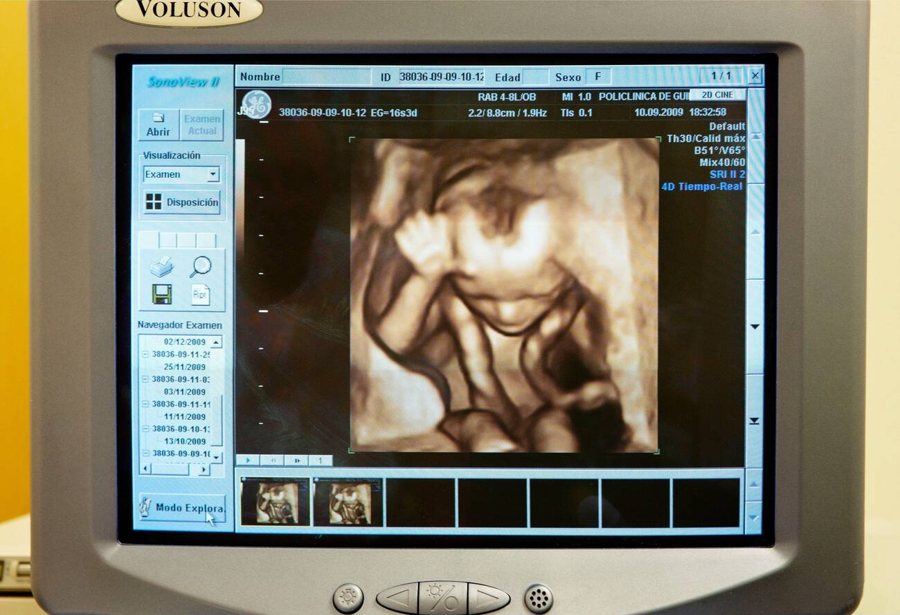
A three-dimensional rendered image of a fetus on a scanner screen, the sepia keepsake style a studio sells. The readout marks it a real-time 4D scan at sixteen weeks. The caution falls on a session run for the souvenir alone, a keepsake from a medical scan carrying no such objection.
Ultrasound machines, handheld or not, are prescription devices. The US Food and Drug Administration discourages ultrasound for non-medical use and sets these devices as tools for trained operators with a medical reason. The over-the-counter heartbeat monitor sold to parents falls outside what the regulators intend. A clinic scanner is a regulated medical device, cleared for diagnostic use and held to a standard a home gadget escapes. A prescription device is one a clinician orders for a reason, the order itself the check on its use, a monitor bought online skipping that check with the reason for the scan no one’s to ask.
The caution rests on what is not known. No study has tied ultrasound at clinic doses to injury. The beam can warm tissue and stir tiny bubbles, the long view of heavy exposure unstudied. The rule that follows is to scan for a reason and no longer than the reason needs. The principle is called as-low-as-reasonably-achievable, the dose held to the least a useful scan needs, a discipline a home user has no reason to know. The thermal and the mechanical effects are watched on a clinic machine, an index on the screen the operator keeps low, a home monitor showing no such index and the parent left no way to know the dose. The dose from a single short scan is small, the concern only in the heavy, repeated, or careless use a home setting invites. The regulators draw their line at use without a medical reason, judging the purpose a scan is put to and never the probe itself, a clinician’s every scan kept on a record a home device has no equal of. Used as the regulators ask, ultrasound has a long record of safety in pregnancy, the caution there to keep that record clean.
A keepsake session can run an hour of beam over a baby for a video, the kind of exposure the caution is built to avoid. A clinician scanning for a reason keeps the beam on the baby for seconds at a time and stops when the reading is had. The longer a probe sits on one spot, the more it can warm the tissue beneath, the reason a clinician keeps it moving and brief. The prudence is the one the regulators ask for, the beam a tool to use lightly. A keepsake image is no sin when it comes from a scan done for a reason, the photo a gift on top of a medical look, the objection only to a beam run for the photo alone. The three- and four-dimensional images a keepsake studio sells run the machine longer than a medical scan, the pretty face on the screen costing the baby more beam than a clinician would spend. A clinician scans, reads, and stops, the beam off the moment the answer is had, the novelty of the picture tempting a home user to linger past any need.
The rule to keep
A heartbeat heard at home is never a reason to stay home from a worry that sent you looking for it.
Common questions about home ultrasound in pregnancy
Is it safe to use an ultrasound at home during pregnancy?
Ultrasound at clinic doses has shown no proven harm. The FDA discourages non-medical use all the same, setting these devices as prescription tools for trained operators. The beam can warm tissue, so the rule is to scan for a medical reason and no longer than that reason needs. A keepsake session that runs an hour of beam over a baby is the use the caution is built to avoid.
Can a home fetal Doppler tell me my baby is healthy?
No. A Doppler finds the heartbeat as a sound, which tells you the heart beats at that moment and nothing more. A baby in trouble can keep a normal heartbeat until late. A worry about the baby’s movements is a reason to be seen, and a heartbeat heard at home is no answer to it.
What can a handheld ultrasound do at a home visit?
In a trained hand, a handheld checks the baby’s lie, finds the heartbeat, dates the pregnancy by crown-rump length, and measures growth. A midwife can read a low placenta or a thin pool of fluid and send a mother in at the right time. The home is no barrier to a real scan when a clinician holds the probe.
Why can a parent not read a home scan themselves?
A picture on a phone is a shape whose meaning takes a trained eye to draw out. The anatomy, the placenta, the growth and the flow all ask measurement and judgment a layperson does not have. The danger is false comfort, a heartbeat read as all-is-well, its real message only that the heart still beats.
From what week can a home Doppler find the heartbeat?
A handheld Doppler can usually pick up the fetal heart from about ten to twelve weeks, finding it a knack that takes practice, a miss common early. A miss is no sign of trouble, only a heart hard to catch. A handheld imaging probe in a clinician’s hands sees the heartbeat earlier, from around six to seven weeks.
About the Author
Julien Mercier
Senior R&D Engineer · Medical Ultrasound Transducer Development
Senior R&D Engineer with an M.S. in Applied Physics and over 15 years of experience in medical ultrasound transducer development, specializing in the design verification and performance testing of high-frequency imaging transducers. Currently leading the development and verification of the company’s next-generation high-frequency linear-array transducer, responsible for imaging performance evaluation and reliability analysis in preclinical testing. Brings extensive hands-on experience in piezoelectric element tuning, beamforming parameter optimization, and system-level performance testing.