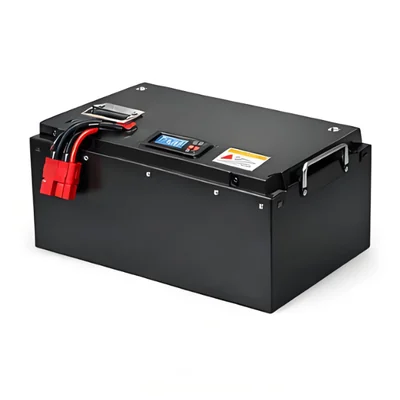
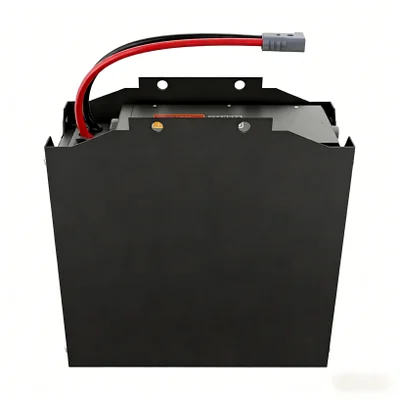
Four destinations wait for a pack that has finished its working life inside a power station. Three of them are legitimate. It can move into a second application sized around the capacity it still holds. It can stay in the machine at reduced capacity for several more years, which is the destination nobody counts and the one that costs least. It can enter the recycling chain and come back as material. Or it can go into a household bin, which is the option that sets fire to bin lorries. Choosing between the first three takes a measurement and a phone call. The fourth needs no decision at all.
From where the owner stands, the choice rarely looks that tidy. Weight comes first. Behind a sealed panel sits a glued-in pack. That collection box at the supermarket door is sized for AA cells. Twelve kilograms of dead power station will not go through any of those slots. A household waste site with a battery bay takes an item that size.
The destination that starts fires
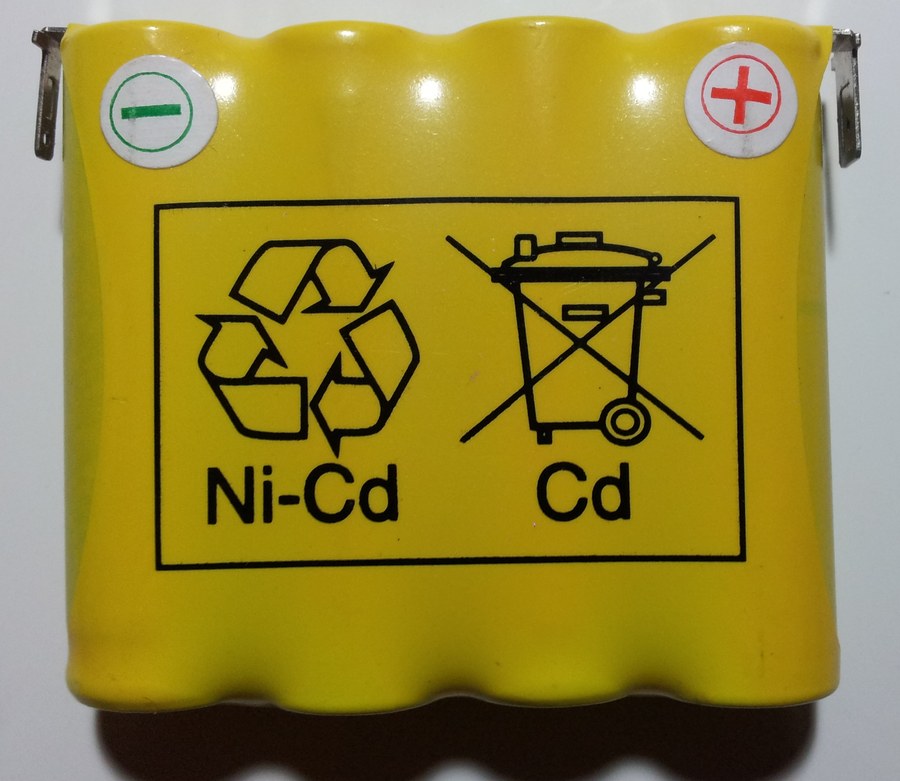
The two marks a battery has to carry: the recycling loop and the crossed-out wheeled bin. The second one is the instruction that separates a battery from household waste. Photo by LordOider, CC0.
Batteries in general waste do damage out of all proportion to their number. British waste operators recorded more than 1,200 battery fires in bin lorries and at waste sites across a recent year, up 71 percent on the 700 counted in 2022. Around 94 percent of local authorities now report battery fires as a growing problem, with the trade body for the sector putting the cost to the country above 100 million pounds a year. Across the United States and Canada, one fire-safety firm counted 448 fires at waste and recycling facilities during 2025. Damage passed 2.5 billion dollars. That was the worst annual total since the firm began tracking in 2016.
The mechanism is simple enough to picture. Collection vehicles compact their load, and shredders at sorting facilities tear it apart. Either action crushes a cell, which shorts it internally, which heats it until the electrolyte vents. That happens inside a load of paper, card and plastic film, in a steel body nobody can open quickly. A single cell from a vape or a toy is enough to start it. A power station pack holds hundreds of times more energy than a vape. Recycling facilities carry that risk from the other side. Sorting lines built for cardboard and cans have batteries arriving in them daily. Fire-suppression equipment then gets retrofitted at an expense paid for by everybody who uses the service. The cost lands on councils and operators, then on households through waste charges.
Small devices drive most of that count. Disposable vapes are the item waste operators name most often, each holding a single small cell. Reported incidents across North America rose by about a fifth when the years from 2022 onward are set against the five before them. A portable power station carries the energy of hundreds of those cells in one welded assembly. A compactor folds that case flat without opening it.
What recycled means in the rules
Two families of number get quoted under one word, and separating them clears up a good deal of confusion. Recycling efficiency measures how much of what goes into the process comes back out as usable material, counted by mass across the whole battery. European rules require recyclers to reach 65 percent for lithium-based batteries by the end of 2025, rising afterwards. Material recovery measures how much of one named element gets pulled out of the waste stream. For lithium the requirement is 50 percent by the end of 2027 and 80 percent by the end of 2031. Copper, cobalt, lead and nickel sit at 90 percent.
A third family sits alongside those, pointing the other way. Recycled content rules govern what new batteries must contain, at 6 percent lithium, 6 percent nickel and 16 percent cobalt from 2031, moving to 12 percent lithium and 15 percent nickel by August 2036. Read the two sets together and the gap is obvious. Recovering four fifths of the lithium from old packs while requiring one sixteenth of the lithium in new packs to be recycled describes a supply that exceeds the mandated demand, which is a deliberate choice about how fast to force a market into existence. None of those percentages describes what happens to any individual pack. They are obligations on recyclers and on producers, measured across national tonnages, audited annually. A machine handed in at a collection point enters a system with those targets over it. Whether that particular pack gets processed carefully or stockpiled awaiting a viable buyer depends on economics the targets are trying to overcome. Auditing works on tonnages, with recyclers reporting input and output masses while producers report what they placed on the market against what came back. A collection rate expressed as a percentage of what was sold years earlier carries an obvious weakness, since the batteries arriving now were sold into a much smaller market than the one operating today. Everybody involved understands that. The targets force treatment capacity into existence ahead of the volume. A plant takes years to build. A battery takes a decade to retire.
What European law asks of batteries, by number and date
Requirement
Target
Deadline
Recycling efficiency, lithium-based batteries
65 percent by mass
end of 2025
Lithium recovered from waste batteries
50 percent
end of 2027
Lithium recovered from waste batteries
80 percent
end of 2031
Copper, cobalt, lead and nickel recovered
90 percent
end of 2031
Recycled lithium content in new batteries
6 percent
2031
Recycled lithium content in new batteries
12 percent
2036
Collection rate, waste portable batteries
63 percent
end of 2027
Collection rate, waste portable batteries
73 percent
2030
Where the pack physically goes
The journey starts with sorting, because chemistry decides the route and packs arrive unlabelled more often than anybody would like. Sorted material moves to stabilisation, where packs get discharged to a safe state before anything mechanical happens to them. Discharging a large pack takes time and produces energy somebody has to absorb, which is one of the quiet costs inside the whole business. Cells that cannot be discharged safely, because of damage or a locked protection circuit, go down a separate and more expensive path. Discharging is less trivial than it sounds at scale. A facility taking in tonnes of packs a week has to absorb the energy still inside them, through resistive loads that turn it into heat or through equipment that returns it to the grid. Packs whose protection circuits have latched refuse to discharge through their terminals at all, leaving mechanical handling under inert conditions as the only route left. Every one of those steps costs money before a single gram of material has been recovered.
Dismantling follows for anything worth taking apart. Casings, wiring, boards and cooling components come off for conventional metals and electronics recycling. What remains gets shredded, usually under inert gas or a liquid, producing the powder the industry calls black mass. That powder is the actual product of the front half of the chain: a mixture of electrode materials, carbon and residual metals that recyclers buy and sell as a commodity. Black mass acquired a legal status of its own in March 2025, when the European list of waste added battery-related codes and classified it as hazardous. The practical effect runs through the Basel Convention and the waste shipments rules: exports for recovery to non-OECD countries are barred, and movements inside the EU or to other OECD states need prior notification and consent. Lithium-based, nickel-based and zinc-based waste batteries carry hazardous codes under that update. For a European recycler the change keeps feedstock inside the region. Collection points ask for documentation on something that looks like a box of scrap.
Black mass then goes to one of three families of process. Pyrometallurgy smelts it, reducing transition metals into an alloy of cobalt, copper and nickel while burning off the organics. Lithium ends up in the slag, where it usually stays, and graphite and aluminium are lost as well. The process is energy hungry and mechanically simple. It dominated the industry for years.
Hydrometallurgy leaches the black mass with acids or bases, then separates individual elements by precipitation or solvent extraction. Recovery rates reach as high as 98 percent for elements including nickel and lithium, which is what makes the European targets achievable at all. Direct recycling forms the third family, aiming to keep the cathode material’s structure intact for reuse in a new cell without breaking it down to elements first. The technique demands feedstock of known chemistry in known condition.
The iron phosphate problem
Everything that makes lithium iron phosphate a good choice for a power station makes it a poor prospect for a recycler. That contradiction sits at the centre of this subject. The chemistry contains no nickel and no cobalt. Those absences are what make it cheaper, safer and longer-lived than the alternatives. Those two absent metals are also where the money in battery recycling has historically been. A recycler processing nickel manganese cobalt material recovers metals with a substantial market price attached to them, enough to pay for the process and leave a margin. A recycler processing iron phosphate material recovers lithium, iron, phosphate and graphite, of which only the lithium carries real value, and iron phosphate cells carry proportionally less lithium than the alternatives do. The result is documented plainly in the trade literature: end-of-life iron phosphate batteries change hands at negligible value or get handled as hazardous waste, and recyclers with limited capacity favour the nickel-bearing feedstock every time. Regulation is pushing hard against that arithmetic through recovery targets, which is precisely what a target is for, since a market that would have done it unaided needs no obligation. The gap gets closed in a few ways at once. Lithium prices move. Every rise makes iron phosphate feedstock more attractive. Processes designed specifically for this chemistry keep improving, with low-cost mechanical pre-treatment attracting research attention because it avoids the expensive steps entirely. Closed-loop arrangements, where a battery maker supplies its own scrap and takes back its own material, remove the price negotiation from the middle of the chain and look increasingly like the model the industry settles on. Volumes matter as much as prices. A recycler sizing a plant for iron phosphate feedstock needs a predictable stream of it. What arrives today came from machines sold years ago into a far smaller market than the one selling them now, which leaves plants built for tomorrow running below capacity through the years in between. An owner reading all of that should draw one conclusion from it. The pack in the garage is worth close to nothing as scrap today. Handling it responsibly costs money. Producer funding under law covers that cost.
Take-back is an obligation, not a favour
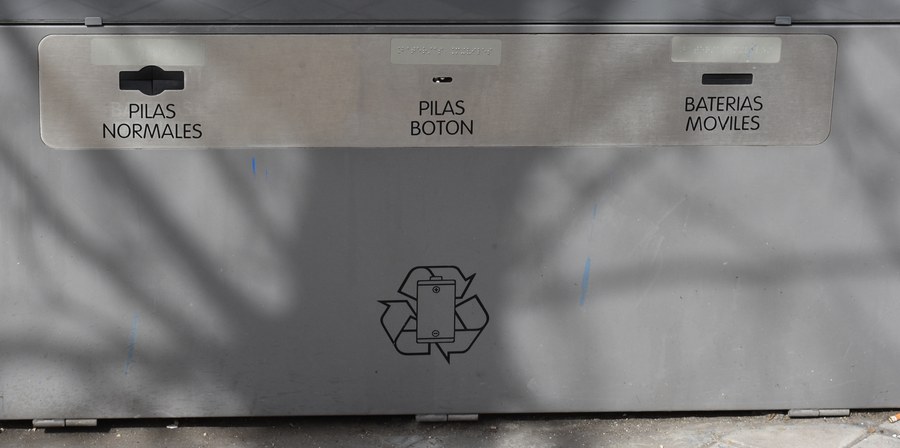
A street collection point with three slots. None of them takes a 12 kilogram pack, which is the practical gap between a rule that exists and a rule that helps.
European rules place the duty on the seller. Retailers and municipal collection points must take back waste portable batteries free of charge, with no requirement on the person handing them over to buy anything. Producers fund the collection system covering the territory where they sell. Transport onward forms part of that duty.
Volume targets sit over the whole arrangement. Article 59 sets collection rates for waste portable batteries at 45 percent by the end of 2023, 63 percent by the end of 2027 and 73 percent by 2030, measured against what producers placed on the market. Missing a target lands on the member state and on the producer schemes operating there, never on the person handing in a battery. Two consequences follow for an owner. Collection points multiply as the deadlines approach. Schemes grow more willing to take awkward items, a retired power station among them, because every kilogram counts toward a number somebody has to report. Knowing the obligation exists changes the conversation at the counter. A shop assistant who has never been asked will often say no by reflex. The store’s waste contractor works to that arrangement. A manager or the retailer’s own website settles it in a minute.
Funding for all of it comes from the producers, collected through the scheme each country runs. A fee attaches to batteries at the point they are placed on the market. That money pays for collection points, for transport and for treatment. Owners handing in a retired pack are drawing on something already paid for on their behalf, which is worth knowing when a counter assistant suggests otherwise. Schemes publish their collection networks. That network map is usually the fastest way to find somewhere willing to accept an item too large for a shop box. Local authority household waste sites remain the more reliable route for anything large. Most operate a battery bay, and staff there handle lithium packs regularly enough to know where each type goes. Some sites take large lithium items only at set times, and only from hand to hand.
Preparing a pack for handover
Terminals get taped, which is the one preparation step everybody skips. Clear packing tape across the contacts removes the possibility of a short against another battery or a piece of metal in transit. Cells that read as dead still hold enough energy to generate heat through a chance contact. A box of loose batteries jostling in a car boot is exactly the scenario the tape exists for. Containers matter almost as much. A plastic box, a cardboard carton or a bag keeps items separated, where a metal tin invites the contact everybody is trying to avoid. Packs that will not come out of a machine without force should stay where they are, with the whole machine handed over intact, since the damage done levering a glued pack out with a screwdriver is precisely the damage that starts fires. Storage between retirement and handover deserves a thought too. Somewhere cool, out of direct sun, clear of anything combustible, with the pack resting on a hard surface that will not burn: a garage shelf beats a hall cupboard on every count. Weeks in that condition change nothing. Two years takes a pack down to its protection threshold.
A swollen pack is a different problem
Visible swelling, a hissing sound, heat with nothing connected or any smell of solvent moves a pack out of the routine category entirely. Gas generation inside a cell means the internal chemistry has already gone wrong. The pouch or can holding it has been doing the last of the work. Such a pack should go outside, away from anything combustible, resting on something that will not burn, with nothing stacked on it. Transport rules recognise the distinction, and damaged or defective cells are excluded from the ordinary shipping arrangements that cover healthy ones. Posting one is not an option. A phone call to the local waste authority describing the item comes next. Most run a separate route for damaged lithium. Describe the swelling on the phone. The site will tell you which entrance to use and what to carry it in.
Second life before recycling
A pack retired from portable duty at 70 or 80 percent of its original capacity has lost none of its usefulness for a gentler job. Off-grid lighting, a garden shed, a workshop battery for tools that draw modestly: none of those cares whether the pack holds what it held when new. Extending a working life postpones both the recycling cost and the manufacturing of a replacement, which is the environmental argument in its entirety. Doing it properly needs more than optimism. Cells want testing individually before anything gets reassembled, because a pack retired for one bad cell behaves differently from a pack retired for even fade across the whole string. A management board suited to the new duty has to go on, correctly configured for the cell count and chemistry. The pack needs a home that suits its age, meaning somewhere non-combustible, ventilated and away from anything irreplaceable.
Testing means numbers written down, never impressions. A capacity check on each cell or module at a modest current shows what is really there. A resistance reading taken with a known load shows how hard the pack can still work. A rest voltage recorded a day later shows whether anything is quietly self-discharging, which is the single most useful test for catching a cell with an internal defect. Three measurements, written down with dates beside them, separate a pack worth rebuilding from one worth handing in. Commercial second life operates on precisely those principles at a scale where testing pays for itself. For an individual with one retired power station, honesty is worth more than enthusiasm. A pack with a known history, retired for capacity fade, is a reasonable candidate for a quiet job. A pack that failed suddenly, swelled, got wet or spent years flat goes into the recycling chain.
What an owner can reasonably do
Measure before deciding anything. A machine reporting a short runtime may hold 75 percent of its original capacity, which describes a working machine with a reduced specification, no retired one. Several years of ordinary service usually remain in that condition.
Ask the manufacturer next. Some run take-back schemes for their own machines, occasionally with a discount on a replacement attached. A brand that arranges collection has solved the logistics. The pack then enters a stream where its chemistry is known.
Timing matters more than most owners expect. A pack that has been retired and forgotten keeps discharging through its own management board. A machine put aside at 20 percent charge can reach the protection threshold within a year or two of sitting untouched. Below that threshold it becomes a more difficult object for everybody who has to handle it afterwards. A pack handled while it still holds a moderate charge never reaches the protection threshold.
Failing that, the local waste site with a phone call ahead covers it. Tape the terminals, keep it in something that does not conduct, take the whole machine if the pack resists coming out, and mention that it is lithium when you arrive. That sequence takes an afternoon. Most household waste sites are open at weekends for exactly this kind of errand.
Common questions
Can I put a small lithium battery in the household recycling?
No collection anywhere accepts loose lithium cells in kerbside recycling. They belong at a battery collection point or a household waste site. Fire statistics drive that rule. Kerbside sorting lines run shredders that cannot tell a cell from a drinks can, at speeds that leave no chance of spotting one. Every one of the 1,200 fires above started in a stream that was never meant to carry batteries.
Do I get paid for a retired pack?
Almost never for iron phosphate, since it contains none of the metals that carry scrap value. Nickel-bearing packs occasionally attract a small payment at scale. An individual handing in one machine pays nothing and receives nothing. Producer fees collected at sale have already covered the treatment cost.
Is the lithium actually recovered?
It depends entirely on the process the material meets. Smelting routes leave lithium in the slag and normally lose it. Leaching routes recover it at high rates, up to 98 percent for some elements. European targets are pushing volume toward the second kind, with 50 percent lithium recovery required by the end of 2027. A third route, still at pilot scale, keeps the cathode material intact for reuse. It never breaks the material down into elements.
What about the machine itself, minus the battery?
Everything else is ordinary electrical waste. The case, the inverter board, the transformer, the fans and the cabling all go through electronics recycling, where copper and steel carry real value. Handing the machine over whole gets all of that handled at once. Waste sites separate the electronics from the pack themselves. Two funding streams already exist behind that separation.
How long can I keep a retired pack before dealing with it?
Storing one indefinitely is the worst option available. A pack left at whatever charge it happened to hold will drift downward for years, eventually crossing into the over-discharged state where copper dissolution makes it genuinely hazardous. Anything retired goes to a collection point within weeks, kept at a moderate charge and somewhere cool. A retirement date written on the case keeps it off the shelf for five years.