Pediatric IV Access Vein Finder Infrared Imaging Tool
An infrared vein finder helps a clinician place a drip or draw blood in a child, showing the small veins through the skin as dark lines before the needle goes in. A child’s veins are small, soft and quick to roll, which makes a first-attempt stick hard. The device reads those veins by near-infrared light. A clinician chooses a usable one before the first try. In paediatric care, a clean first stick spares a child real distress and protects the few veins a small patient has. An early view of the vein is what turns a hard first stick into a successful one.
Why a child’s veins are hard to find
The trouble starts with size. A young child’s veins are a fraction of the width of an adult’s, fine threads often only a millimetre or two across. A small vein gives a small target for a needle, with little room for error. A needle can pass clean through a child’s vein, in one wall and out the other, in a single push. The smaller the child, the smaller the vein, down to the threadlike vessels of a newborn. Size alone makes a child’s vein harder to hit than an adult’s.
Depth adds to it. A chubby infant carries a layer of baby fat over the veins, which sinks them out of sight and out of easy reach of a finger. A vein that cannot be seen, and can barely be felt, has to be found by guesswork. A well-fed baby is often the hardest of all to stick, for that very reason.
Movement finishes the picture. A child pulls the arm away, cries and squirms, so the small target will not hold still. A vein that rolls aside when the needle comes near slips off the tip. Between the size, the depth and the movement, a clean first stick in a child asks more of a clinician than the same task in a calm adult. The first attempt fails more often in children than in any other group.
What a missed stick costs a child
A failed stick is never just a failed stick in a child. Each attempt is a fresh fright, a fresh jab, and a fresh reason for the child to fear the next one. A toddler who has been held down and stuck twice will fight the third attempt with everything they have. The distress feeds on itself, and the harder the child fights, the harder the next try becomes.
The parents feel every attempt too. A mother watching her child held down and jabbed, again and again, carries that distress home. Trust in the ward suffers with each missed vein. A first-attempt success builds that trust back. It tells the parents the child is in skilled hands. Much of paediatric care rests on that trust.
There is a clinical cost as well. A child has few good veins to begin with. Each blown vein takes one out of use, sometimes for days. A sick child who needs access for fluids or antibiotics cannot spare them. Burning through a small child’s veins on failed attempts can leave a team with nowhere left to go. The next step from there is a longer line placed under sedation. A found vein could have spared the child that bigger procedure.
Failed attempts cost time as well. A struggling toddler ties up two or three staff to hold and comfort while one tries for the vein. Every extra attempt stretches that out, in a busy ward where the same hands are needed elsewhere. A finder that helps a stick land sooner gives a child less to endure and a team its time back.
Seeing the vein before the needle
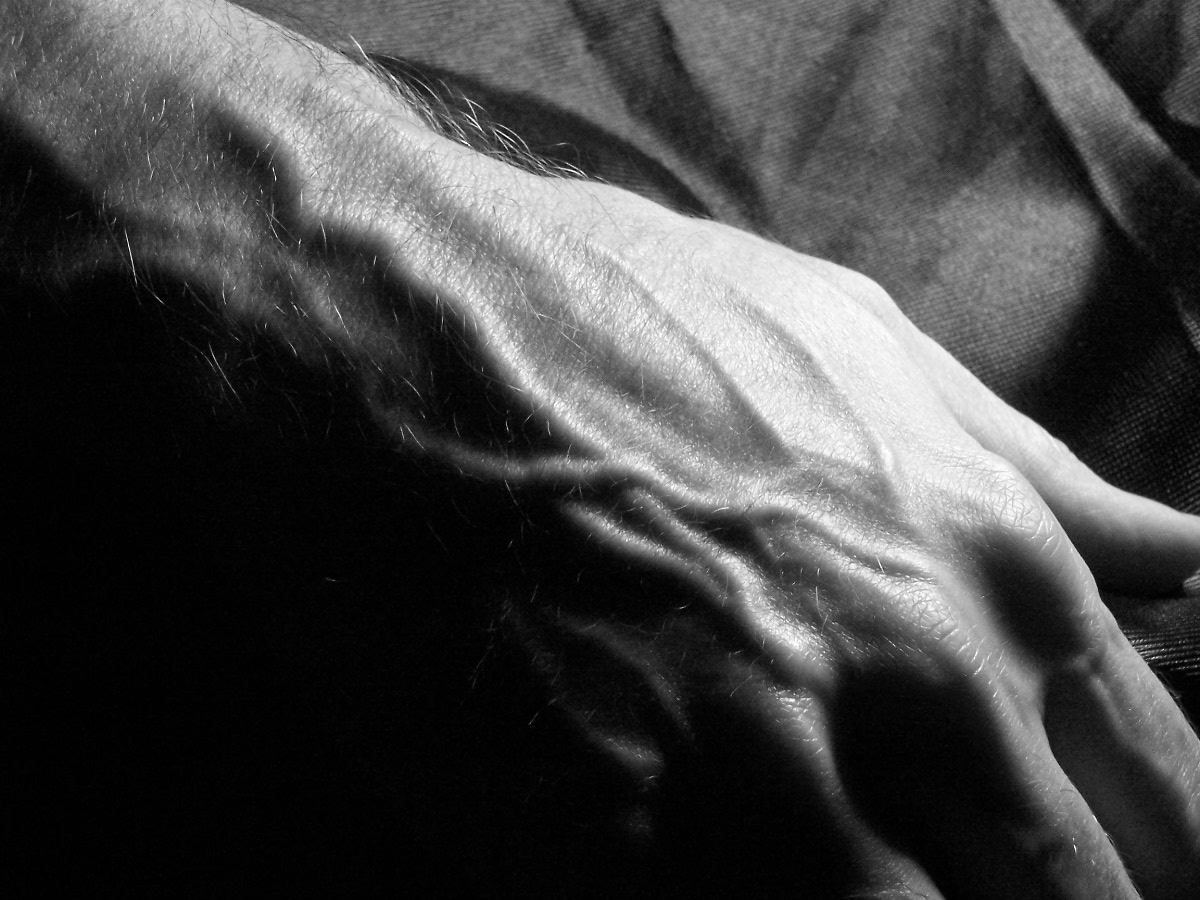
The veins on the back of the hand. The dorsal hand veins are a first choice for a child’s drip, the kind a vein finder draws out before a needle goes in.
A vein finder answers the problem of a child’s hidden veins by showing them before anyone reaches for a needle. It floods the skin with near-infrared light, which the blood in the veins soaks up, so the veins read as dark lines under the device. The clinician sees the map of veins on the child’s hand or arm, picks the fullest and straightest one, and judges its path before the first attempt. The hunt that used to happen with the needle now happens with the eye.
For a child, that early sight changes the odds of the stick. A vein chosen by sight, on a map of the actual veins, is a vein far likelier to be hit on the first pass. The device reaches the surface veins a child’s drip uses, the ones on the back of the hand and the forearm, within a few millimetres of the skin. It shows the clinician exactly the veins a small needle can reach.
Where a child’s usable veins run
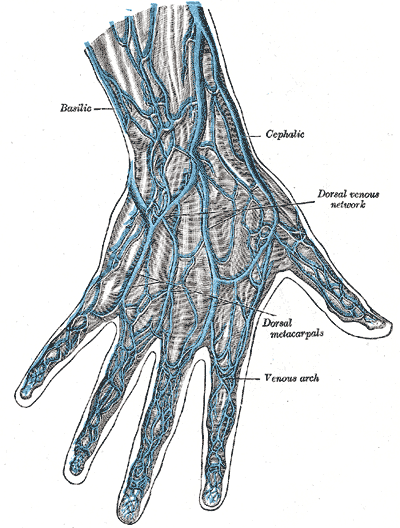
The venous network on the back of the hand, labelled. These dorsal veins, the dorsal arch and the metacarpal veins among them, are a common site for a child’s drip. A vein finder maps them clearly.
A child’s drip goes into a few well-known sites. A vein finder reads them all. The back of the hand is the first choice in many children, an easy place to see and to steady. The dorsal veins there sit just under the skin, within the device’s reach. They take a small cannula well.
The forearm carries usable veins along its inner surface, the cephalic and the median antebrachial among them. In a plump child they hide under more tissue. The antecubital fossa, the crook of the elbow, holds larger veins for a bigger child or for a blood draw, the median cubital chief among them. Each of these sites sits at a depth the near-infrared light reads, a few millimetres down, which is why a finder maps them clearly.
The foot opens more options in a baby. The dorsum of the foot and the area near the ankle carry small veins that hold still in a young infant. A vein finder reads the foot the same way it reads the hand, drawing the small veins there as dark lines. In a baby whose hands are out of veins, the foot is often where a stick succeeds.
In the smallest babies, the scalp carries veins a team can use. A newborn’s scalp veins lie close to the surface, easy to see once the area is clear. They take the finest cannula. A vein finder can map a scalp vein as readily as one on a limb. These sites give a neonatal team a route when the limbs have none left.
Knowing where the sites are is part of the skill. A vein finder adds the sight of which one holds a good vein today, on this child, before a needle is committed. It shows which known site is worth the stick right now. That picture turns a list of likely places into a single chosen spot.
Nothing has to touch the child
One feature of a vein finder serves a child above all: nothing has to touch the patient. The device works from above the skin, by light alone, so there is no probe to press on a sore little arm, no gel to smear on, no cold metal to set off a child already on edge. A clinician holds it over the hand of a baby, a toddler mid-tantrum, or a child too ill to cooperate, and reads the veins from there. Nothing is laid on the skin. The reading is instant. It can be repeated as often as the search needs, since a harmless light costs the child nothing in comfort or in dignity.
The frightened, moving child
Fear is the constant in a paediatric stick. A vein finder helps the clinician work around it. A child who sees the needle coming tenses and pulls away. The device lets the clinician find the vein early and quietly, before the needle is even in sight, so the stick itself is quick once it begins. A quicker procedure gives the child less time to wind up.
Movement is the other constant. It asks for speed. A vein found and marked in a calm moment can be stuck before a wriggling child shifts it out of place. Some finders project the vein map straight onto the skin, so the clinician keeps both eyes on the child and both hands ready. Working from the picture, a skilled hand can place the needle in the short window a child holds still.
Comfort plays a part the device cannot fill on its own. A warm room, a parent’s lap, a distraction, a numbing cream all calm a child for the stick. A vein finder fits alongside them all. The picture it draws lets the team plan the stick while the child is still settled. The tool and the comfort measures pull the same way, toward a single successful attempt.
What the evidence shows in children
The honest picture of the evidence is mixed. It is worth stating plainly. Across the general run of children, the studies do not show that a vein finder reliably raises the first-attempt success rate over ordinary care. Several trials found little change in the number of attempts or the time a stick takes. A device is not a guarantee of a first-time hit in an average child.
The clearer signal lies in the children who need it most. When researchers looked at children with known difficult access, the benefit showed: a vein finder raised the odds of a first-attempt success in that group. The harder the access, the more the picture helps. A child whose veins defeat the naked eye is exactly the child a vein finder serves.
The pattern fits what common sense expects. A device adds little to a skilled hand on an easy vein found in a moment by eye. Its value is greatest on the hard veins, the ones hidden from the eye, where it can turn a fourth-attempt stick into a first. A study in a children’s blood-drawing centre measured that gain in first-attempt success and in the time each draw took. The evidence rewards aiming the tool where the need is real.
The lesson is to use the tool well, on the children whose veins are genuinely hard, where the evidence is strongest. A ward that keeps a finder ready for its difficult sticks uses the device the way the evidence supports. Honest expectations make the tool more useful. A finder earns its place in paediatrics on the hardest arms, the very ones that need it most.
The smallest patients
Newborns push every difficulty to its limit. A premature baby’s veins are finer than a thread, set in skin so thin it tears. A neonatal team works with the smallest cannula made. The margin for a missed stick is almost none, since a sick newborn may have only a handful of usable veins in the whole body. Every attempt has to count.
A vein finder gives a neonatal team another way to see those tiny veins. Held over a baby’s hand, foot or scalp, it draws the fine vessels there as faint dark lines, mapping a route a tired eye might miss at three in the morning. It touches nothing, adds no warmth and no pressure to fragile skin, and can be used as often as a search takes. In a unit where every vein is precious, a clear sight of one before the stick can be the difference between a line placed and a long search. A neonatal team reads the map quietly while the baby is settled.
Getting a good picture on a child
A few habits sharpen what a vein finder shows on a small patient. Warmth comes first. A warm hand or foot has fuller veins that read boldly, which is why a warm pack on the limb is a standard trick before a paediatric stick. A gentle squeeze above the site, or a soft tourniquet, fills the vein and makes it read bolder still. The device reads a warmed vein more clearly than a cold one.
The working distance is harder to hold on a small limb. A finder reads at a set range above the skin. A tiny hand leaves little room for error. The operator learns the distance that brings a child’s veins into sharpest focus and holds it there. A steady hand on the device gives a steady picture to work from.
Skin tone and a dim room both shape the picture, the same as in an adult. Heavier pigment gives a fainter image, which the device answers with its processing and a choice of setting. A bright nursery light washes a projected map out, so the team dims it or shades the limb. These small adjustments earn a clearer picture on the child in front of the device.
The stick still depends on the clinician’s skill. A vein finder shows the vein. The clinician reads the map, sets the angle for a small vein, feels the flashback, and threads a fine cannula home. The device makes a good paediatric stick more likely, in skilled hands that know how to use what it shows. It is a guide for the eye, working with the skill of the person holding the needle.
Paediatric IV access, by the numbers
Measure
Figure
First-attempt success in children
about 39 to 73 percent
Children with difficult access
around 1 in 10
Common cannula size
22 to 24 gauge; 24 to 26 in neonates
First-choice sites
back of the hand, foot, forearm; scalp in babies
Vein depth a finder reads
a few mm, up to about 10 mm
Where the benefit is clearest
children with difficult access
Where the finder fits in paediatric care
A vein finder has a modest place in the care of children. It does not replace the skill, the patience or the gentleness a child’s stick demands. It gives the clinician one real thing: a sight of the hidden veins before the needle goes in, on the patients where that sight is hardest to win. Used for the difficult child, it pays back its cost in the drawer many times over.
For the child, the gain is fewer needles and less fear. A vein found on the first attempt spares a small patient the held-down struggle of a second and a third. The veins are saved for the next time access is needed. A child who dreads the needle meets a calmer procedure. These are what a child and the parents notice at the bedside.
A child’s veins will always be small, soft and quick to move. Finding them will always test a clinician’s hand. A vein finder does not change that. It turns the small veins of a child into a map the eye can read, on the hardest sticks, before a single needle moves. On the children whose veins hide deepest, that early sight is the quiet help an infrared finder brings to paediatric care.
Common questions
Why is it so hard to find a vein in a child?
A child’s veins are small, soft and deep-set, finer than an adult’s. A frightened child moves the target by pulling away. A small vein gives a small mark for a needle, with little room for error. First-attempt success in children runs lower than in adults, often well under three-quarters. The youngest children fare worse still. Size, depth and movement together make the paediatric stick the hard one.
How does a vein finder help with a child’s IV?
It shows the veins through the skin before the needle goes in. The device reads the small surface veins with near-infrared light and draws them as dark lines on the child’s hand, foot or arm. The clinician picks a good vein by sight and aims for it on the first attempt. Because the device works from above, nothing touches the child. The reading can be repeated as often as the search needs.
Where are the best veins for a drip in a child?
The back of the hand is the first choice in many children, with veins that sit just under the skin. The forearm and the crook of the elbow carry usable veins too. The elbow holds larger ones, useful for a blood draw. In babies, the foot and, in the smallest, the scalp give a team more options. A vein finder reads all of these sites the same way, drawing the veins there as dark lines.
Does a vein finder really improve IV success in children?
The evidence is mixed. The strongest signal is in one group: children with known difficult access, whose veins defeat the naked eye. For them, a finder raises the odds of a first-attempt success. Across children in general, the gain over ordinary care is small. The sensible use is to reach for the device on the hard sticks, where the evidence is strongest.
Can it be used on a baby or a newborn?
Yes. A vein finder is used on babies and newborns, where veins are at their smallest and a missed stick costs the most. Held over a hand, a foot or a scalp, it maps the fine vessels there. The fragile skin is never touched. It adds no warmth and no pressure. It can be repeated as often as a search needs. In a neonatal unit, a clear sight of a tiny vein before the stick can save a baby a long search.
Does the infrared light hurt or harm a child?
No. The near-infrared light a vein finder uses runs at low power and does not ionise tissue, nothing like an x-ray. It adds no radiation dose and needs no shielding. Nothing touches the child during the reading, so there is no pressure on a sore arm and no cold metal to startle a small patient. A reading can be taken as often as needed. It costs the child nothing.
About the Author
Julien Mercier
Senior R&D Engineer · Medical Ultrasound Transducer Development
Senior R&D Engineer with an M.S. in Applied Physics and over 15 years of experience in medical ultrasound transducer development, specializing in the design verification and performance testing of high-frequency imaging transducers. Currently leading the development and verification of the company’s next-generation high-frequency linear-array transducer, responsible for imaging performance evaluation and reliability analysis in preclinical testing. Brings extensive hands-on experience in piezoelectric element tuning, beamforming parameter optimization, and system-level performance testing.