













Ovine Sheep Pregnancy Ultrasound Fetus Count Handheld
A sheep pregnancy ultrasound counts the lambs a ewe carries, the probe laid on the bare skin of her belly in front of the udder, a scan run from the outside. The count is the point of it: a single, a pair, a set of triplets, read off the whole flock so each ewe can be fed for the lambs she bears. A contractor scans a thousand ewes in a day, the flock split into feeding groups weeks before lambing.
A scan over the belly
A ewe is scanned from the outside, over her belly. The probe lays on a patch of bare skin in the wool-free hollow in front of the udder, the lambs read up through the belly wall. The ewe is small enough to read her whole womb from the outside, the probe over the belly reaching every lamb without an arm ever going in. A ewe is small enough to give up her lambs to a probe on the skin, the womb close under the wall on so small an animal. The belly scan is the way of it on sheep, no reach into the rectum needed at all.
The ewe is held for the scan in a cradle or sat up on her rump. A contractor sits her back on her tail or lays her in a tipping cradle, the belly turned up and the probe run across the bare skin. The ewe held still and her belly bared, the lambs come up clear on the screen. A ewe sat up on her rump sits quiet, her legs off the ground and her belly turned to the scanner. The position holds her still for the few seconds the count takes, the ewe let up the moment her lambs are read.
The scan reads up through the wool and the skin. A strip of belly clipped or parted bare takes the probe with gel, the sound carrying up into the womb to find the lambs. The whole of a ewe’s pregnancy reads from that one window low on the belly, no need to reach inside her at all. The window of bare skin sits in the groin in front of the udder, a patch a ewe carries clear of wool by nature. A scanner finds it by feel and lays the probe on, the lambs up through the wall in a moment.
Counting the lambs
The count of the lambs is the whole reason the flock is scanned. A ewe carries one lamb, or two, or three, or now and then more, and the number she bears decides how she must be fed and watched through to lambing. The scan reads each lamb as its own dark sac of fluid in the womb, a heartbeat flickering in each, the vet counting the sacs and the beats to call the number. A single reads as one fluid sac with one lamb, a twin as two, a triplet as three crowded in together. The vet sweeps the probe across the whole belly to find every lamb, the count made sure before the ewe is marked. A lamb missed counts a twin as a single and feeds the ewe short, the vet covering the whole womb to leave none uncounted. The number called on each ewe is marked on her, a dab of colour or a tag that sorts her into her feeding group. The count is the scan’s one great job, the figure the whole of sheep scanning turns on.
The triplet and the higher number ask for the closest count. A ewe carrying three or four lambs is the one a wrong count hurts the worst, a triplet fed as a twin going short at the end when her lambs grow fast. The vet counts the crowded wombs with the greatest care, the high numbers the ones the feeding turns on. A ewe with quads or more is the rare one a flock breeds for or breeds out, the count flagging her for the special care a big litter needs. The scanner calls the high numbers out loud, the ewes carrying the heaviest litters marked for the closest watch.
The crowded womb is the hardest to count right. Three or four lambs packed in together overlap on the screen, a leg of one read as a lamb of its own or two sacs run into one. The vet works the probe around the whole belly, reading each lamb apart from its mates, the count of a big litter the test of the scanning eye. A scanner counts the heartbeats as much as the sacs in a crowded womb, four little flickers telling four lambs where the sacs run together. The beats are the surest count when the lambs lie packed, each heart its own lamb.
The count holds best in the right weeks. A ewe scanned in the window the lambs are big enough to find and small enough to tell apart gives a clean count, the number sure. A scan run too late finds the lambs grown into one another, a harder count to make sure of. A ewe scanned a week or two inside the window gives the surest count, the lambs there to find and still apart on the screen. The scanner times the visit to catch the flock in that span, the count cleanest in the middle weeks.
The count is marked and the ewe is sorted. A contractor calls the number to a hand who marks the ewe, a stripe of raddle or a coloured tag for each count. The ewe leaves the cradle marked for her group, the count carried on her back to the feeding that follows. A blue mark for a single, a red for a twin, a different mark for a triplet: the flock leaves the cradle in colours that sort it. A shepherd reads the marks down the flock and draws the ewes into their groups, the count on every back.
Feeding by the count
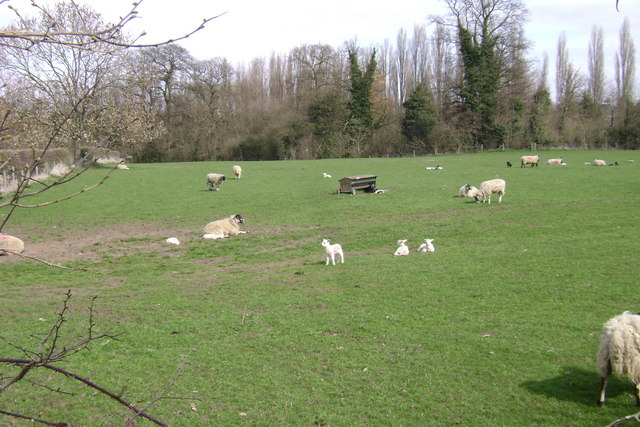
The count is run for the feeding it sets. A ewe is fed through the back of her pregnancy for the lambs she carries, a single needing far less than a set of triplets growing fast inside her. The flock split by its counts is fed each group for its load, the feed put where the lambs are. A ewe carrying twins or triplets grows the bulk of her lambs’ weight in the last six weeks, the feed in those weeks the feed that makes the lambs. The count read months ahead sets that late feeding right, each ewe on her ration through the weeks the lambs grow fast.
A ewe fed wrong for her count pays for it at lambing. A triplet-bearing ewe fed as a single runs short at the end, her lambs born small, the ewe herself worn thin or down with the twin-lamb disease. The scan that counts her right feeds her right, the lambs born strong off a ration matched to their number. The twin-lamb disease comes on a ewe carrying more than she is fed for, her body breaking down to feed the lambs until she goes off her legs. A flock fed by the count rarely meets it, the triplet-bearers fed enough to carry their load.
The single-bearing ewe is held back from too much. A ewe carrying one lamb fed as if she carried three grows a single lamb so big the lambing turns hard. The scan marks her a single, her ration trimmed to grow one lamb the right size. A single fed like a triplet grows a lamb heavy enough to stick at a hard birth, the ewe down with a hard lambing for the want of trimming her feed. The scan that calls her a single saves her that, the one lamb fed to a size she can pass.
The feeding groups run the back half of the pregnancy. From the scan to the lambing, the singles, the twins, and the triplets are fed apart, each group on the feed its lambs need. The flock comes to lambing with its ewes in the shape their counts called for, the scan paying for itself in live lambs and sound ewes. A shepherd who feeds his flock by the count knows weeks ahead how much feed the season will take, the ration bought and the groups set from the figures the scan gave. The lambing comes on a flock made ready, each ewe fed for what she carries.
The barren ewe
The scan finds the ewes carrying nothing at all. A barren ewe reads with an empty womb, no sac and no lamb on the scan, the ewe that took the ram and did not catch. The vet calls her empty, the ewe pulled from the feeding the in-lamb flock gets. A barren ewe reads the same belly as an in-lamb one to the hand, no way to tell her from the outside. The scan reads her empty womb in a moment, the ewe that caught nothing sorted from the rest before a winter’s feed is spent on her.
The empty ewe saved her keep is money to a flock. A barren ewe fed all winter as if in lamb eats her feed for no lamb in the spring, a cost the scan cuts the day it finds her. The farm sells her or holds her off the good feed, the barren ones found before they eat through a winter for nothing. A barren ewe costs as much to winter as one in lamb, the feed and the keep the same for no lamb at the end. The scan turns her up in the autumn, the flock sold down or fed down to the ewes that earn their winter.
A single or a triplet, fed apart
A single and a triplet need feeding worlds apart. The scan tells which a ewe carries, the flock fed by the count.
The window to count in
The count holds in a window of the pregnancy, the weeks the lambs are big enough to find and small enough to tell apart. Outside it the count comes harder, a conception not yet shown early on, the lambs grown together late. The flock is run through in those middle weeks. A flock scanned in its window gives a count a shepherd can trust, every ewe read clean. A scanner turns away a flock brought too early or too late, the count not to be trusted outside the weeks it holds in.
The window falls in the middle months of the pregnancy. A ewe is best scanned from around six weeks after the ram went in to about twelve or thirteen, the lambs grown enough to count and not yet too big. The flock is run through in a tight span of weeks, the whole lot scanned in the window the count holds in. Scanned in those weeks, a ewe gives up a clean count of separate lambs the scanner can be sure of. The flock run through together in the window comes away counted right, every ewe read at the age her lambs count clean.
The timing is set by the ram’s date. A flock that ran with the ram in a tight few weeks lambs in a tight few weeks, the scanning day set off the date the ram went in. The contractor and the farm pick the day the flock sits in the window, the whole flock counted clean on the one visit. A flock run with the ram for a short spell lambs across a short spell, the scanning day picked to fall in the window for the whole of it. A spread-out lambing makes the count harder to time for every ewe at once.
Scanning the flock at speed
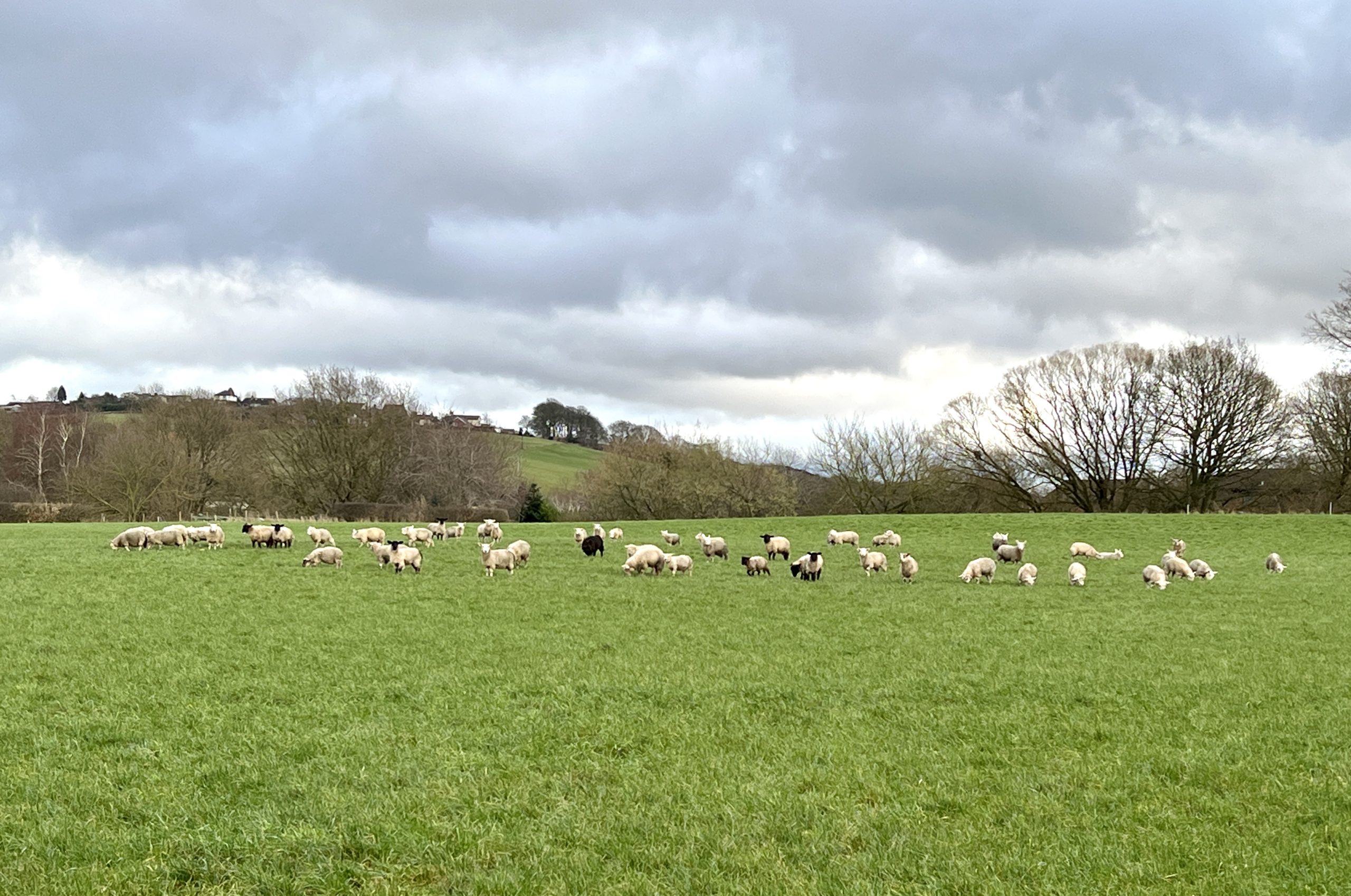
Sheep are scanned by the thousand. The work runs quick, the cost per ewe down to a few pence. A flock of hundreds or thousands comes past the probe one ewe at a time, each read in well under a minute. The scan earns its place on a flock by the speed it brings to the many. A flock of a thousand or more is read through in a day by a contractor at the rate of one ewe in ten seconds. The speed is what makes scanning a whole flock a thing a farm can afford at all.
A contractor brings the scanning to the farm. A man with a cradle and a machine sets up in a shed or a yard, the flock run to him through a race, sat up, scanned, and counted one after another. A thousand ewes go through in a day, the count called and marked on each as she passes. The contractor and his crew make a line of it, one running the ewes up, one scanning, one marking, the flock moving past in a steady stream. A practised crew counts a ewe and moves her on in the time it takes to sit the next one up.
The speed comes from the routine of it. The same window of belly, the same sweep of the probe, the same count called and marked: the work is the same on every ewe, run off without a pause down a flock. A scanner who counts sheep through a season reads a womb at a glance, the count made in the seconds a ewe is in the cradle. The eye learns the look of a single, a twin, a triplet until it reads them at a glance, no measuring or counting out needed on the common numbers. The scanner saves his care for the crowded wombs, the quick counts called off the moment the womb comes up.
The cost per ewe is small for what the count gives back. A whole flock scanned and counted costs a little a head, the feed it saves and the lambs it brings through many times the cost of the scanning. A farm scans its flock every year for the count that runs its feeding. A few pence a ewe buys a count that saves pounds a ewe in feed not wasted and lambs not lost. The scan is the cheapest tool on a sheep farm for the work it does, the count it gives back many times its cost.
The lamb that does not live
The scan reads a pregnancy gone wrong as well as a count. A lamb dead in the womb reads still, no heartbeat in its sac, a loss the scan finds where the ewe shows nothing. A ewe carrying a dead lamb is read and dealt with, the trouble caught before she carries it to a bad end. A dead lamb left in a ewe can poison her or rot down and lose her, the trouble best caught early. The scan reads a still lamb among live ones in a mixed litter, a ewe sent for help before a dead lamb takes her down.
A lamb that died early may leave little to find. A loss in the first weeks is taken back into the ewe, a womb that reads empty where a lamb once was. The scan counts what lives, the dead and the gone read in what the count comes short by. A ewe that took the ram and lost her lamb early reads barren by the scan, the loss showing only as an empty womb where a lamb should be. The scan cannot always say a ewe lost a lamb, only that she carries none now.
Reading more than the count
The scan reads the lambs for more than their number. The age of the lambs reads in their size, a ewe’s lambing date set from how far along the scan finds her. A flock scanned for its count comes away dated as well, the lambing sorted into early and late. A ewe’s lambs read big on the scan call her an early lamber, the same flock holding ewes from across the weeks it ran with the ram. The count and the age together sort the flock by group and by date, the shepherd told both who carries what and who lambs when.
The scan reads the ewe’s own state with the lambs. A ewe thin or sick reads her trouble on the scan beside her lambs, the animal looked over in the same pass as the count. The vet marks a ewe that needs more than feeding, the scan a look at the whole animal as much as a count of her lambs.
The lamb’s lie reads near the end of the pregnancy. A lamb read lying wrong for a birth, late on, warns of a hard lambing to come, the ewe marked for a closer watch. The scan late in the pregnancy reads the lambs settling for the birth, a trouble seen before the lambing brings it. A ewe carrying a lamb lying for a hard birth is drawn in for the lambing where she can be watched, the scan giving the warning weeks before the lamb is due. A shepherd who knows his hard cases ahead loses fewer ewes and lambs to a lambing gone wrong.
The probe and the cradle
The work runs on a probe made for the belly. A curved or a small flat probe reads up through the belly wall, the frequency set to reach the womb deep in a big ewe. The handheld carries it as a tough cordless wand for a day in a muddy yard, the screen read in the open shed where the scanning runs. A belly scan asks for no water and no bath, the probe straight on the bare skin with a smear of gel. A clipped or parted patch low on the belly takes the probe, the wool worked aside to lay it on the skin.
The cradle and the race make the speed. A tipping cradle holds a ewe on her back with her belly up, a race feeds the flock to it one at a time, a hand marks each ewe as her count is called. The scanning runs as a line down the flock, the kit set up to move a thousand ewes through in a day.
What the count gives back
The sheep scan turns a flock’s feeding from a guess into a plan. The count of every ewe, read off her belly weeks before lambing, sorts the flock into the singles, the twins, and the triplets, each fed for the lambs it bears. A flock fed by the count comes to lambing in the shape its lambs need.
The count saves the feed a flock would waste. A flock fed all alike overfeeds its singles and starves its triplets, the feed in the wrong bellies. A flock fed by the count puts the feed where the lambs are, each group on the ration its number calls for, none of it wasted on a barren ewe. The feed a flock buys for its winter is its biggest cost, the count the thing that puts every pound of it where a lamb will use it. A flock fed by the count spends no more than it must and grows every lamb it carries.
The count brings the lambs through alive. A ewe fed right for her number carries her lambs to a good birth weight, the triplets given the feed to grow and the ewe spared the twin-lamb disease. The lambs born off a counted flock come strong, the loss at lambing cut down.
The barren ewes are found and the dead lambs read. The scan that counts the living counts the empty too, the barren ewes pulled off the feed and the failed pregnancies found before they cost a winter for nothing. The count cleans the flock down to the ewes that will lamb. A flock cleaned of its barren ewes carries only the ones that will pay their keep through the spring, the empty mouths off the feed. The scan sorts the flock to the lambers, the rest pulled before they cost the winter for nothing.
The sheep scan reads off a belly what runs a flock’s whole year. The count of the lambs, read in a few seconds on each ewe, sets the feeding, finds the barren, dates the lambing, and brings the lambs through alive. A flock scanned and counted is a flock managed, the figure on each ewe’s back the thing the season is run on.
Common questions about sheep pregnancy scanning
How is a sheep scanned for pregnancy?
Over the belly, from the outside. The probe is laid on a patch of bare skin in front of the udder, the lambs read up through the belly wall. The ewe is sat up on her rump or held in a tipping cradle, her belly bared for the probe. No arm goes in, the whole pregnancy read from the one window low on the belly.
Why are sheep scanned to count the lambs?
To feed each ewe for the lambs she carries. A ewe with triplets needs far more feed at the end of her pregnancy than a ewe with a single. A wrong count feeds her wrong. The scan counts the lambs weeks before lambing, the flock split into feeding groups so each ewe is fed for her load.
When is the best time to scan a ewe?
In the middle of the pregnancy, around six to thirteen weeks after the ram went in. The lambs are big enough by then to find and count, and not yet so big they have grown into one another. The window holds in those middle weeks, a flock run through in that span for a clean count.
Can the scan find an empty ewe?
Yes. A barren ewe reads with an empty womb, no sac and no lamb on the scan, the ewe that took the ram and did not catch. The flock’s empty ewes are found and pulled off the good feed, the cost of feeding a barren ewe all winter cut the day she is scanned.
How fast can a flock be scanned?
A contractor scans a thousand ewes or more in a day. The ewes run through a race to a cradle, each sat up, scanned, and counted in well under a minute, the count marked on her before she goes. The cost a head is small for the feed the count saves and the lambs it brings through.

About the Author
Julien Mercier
Senior R&D Engineer · Medical Ultrasound Transducer Development
Senior R&D Engineer with an M.S. in Applied Physics and over 15 years of experience in medical ultrasound transducer development, specializing in the design verification and performance testing of high-frequency imaging transducers. Currently leading the development and verification of the company’s next-generation high-frequency linear-array transducer, responsible for imaging performance evaluation and reliability analysis in preclinical testing. Brings extensive hands-on experience in piezoelectric element tuning, beamforming parameter optimization, and system-level performance testing.