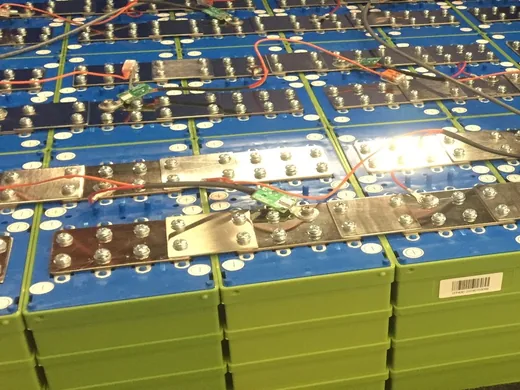
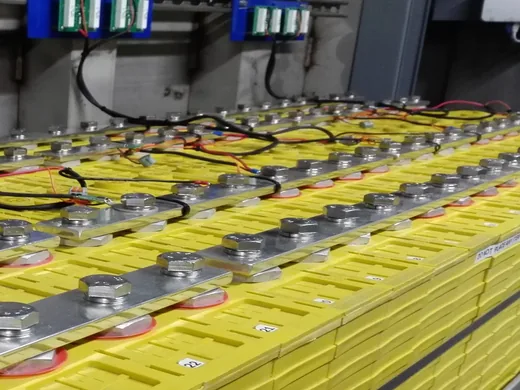
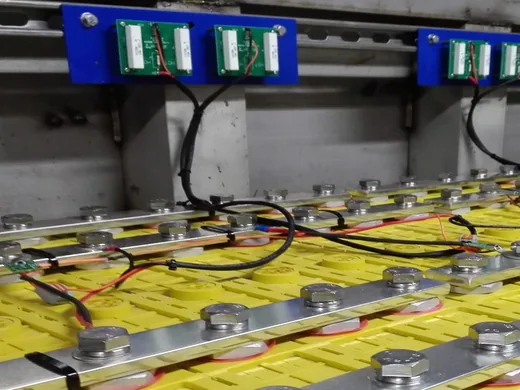
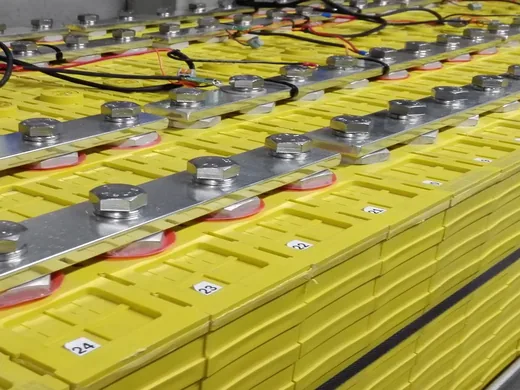
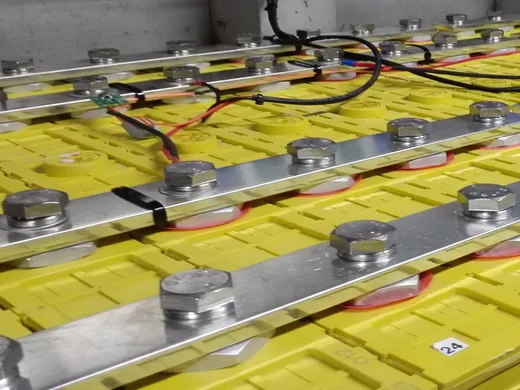
There’s one number worth remembering from February 6, 2026: one hundred dollars. That’s the price Stellantis put on its 49% stake in the NextStar Energy battery plant in Windsor, Canada. Cumulative investment in the plant had reached $980 million. The Canadian federal and Ontario provincial governments had pledged billions in subsidies. The site currently employs over 1,300 people. And Stellantis wrapped all of it up and sold it to joint venture partner LG Energy Solution. For a hundred bucks.
Ontario Premier Doug Ford was asked about this and said: “I think it’s a good business decision.” I wonder what his face looked like when he said it.
Selling a billion-dollar asset for a hundred dollars doesn’t happen under any normal business logic. But it happened, because it was pocket change next to the bigger number that day. €22.2 billion, roughly $26 billion, in special charges taken by Stellantis in a single stroke. It exceeded Stellantis’s own market cap that day. A company’s writedown being worth more than the company itself. There is no precedent for this in the history of the global auto industry.
After the Milan Stock Exchange opened on February 6, 2026, the stock straight-up collapsed, 25% to 27%. About €6 billion in market value, gone. (Source: CNBC, 2026.02.06)
What’s Inside the €22.2 Billion
Stellantis’s disclosures were actually pretty granular. The number Citi analysts cared about most was the €6.5 billion in battery supplier breach-of-contract penalties, because this isn’t some accounting adjustment. This is real cash going out the door, spread over four years. Canceling pure EV programs ate up roughly €8.5 billion; the Ram 1500 REV electric pickup and the Chrysler Airflow both died inside that line item. Then there’s €4.1 billion in warranty reserve increases, which CEO Filosa blamed squarely on product quality problems under the previous regime. European layoffs, another €1.3 billion. The one that really spooked analysts was still that €6.5 billion cash payout, because most of the rest are paper charges. This one isn’t.
€8.5B
EV program cancellations — Ram 1500 REV and Chrysler Airflow killed.
€6.5B
Battery supplier breach penalties — real cash, paid out over four years.
€4.1B
Warranty reserve increases tied to legacy product quality issues.
New CEO Antonio Filosa used a very carefully chosen line in his statement to explain all of this: “The charges disclosed today largely reflect the cost of overestimating the speed of the energy transition. This took us away from the real-world needs, capabilities, and desires of many car buyers.”
“The cost of overestimating the speed of the energy transition.” Nine words. That’s Filosa’s summary judgment on his predecessor’s entire tenure.
Carlos Tavares and the Cost-Killer Era
Tavares was your classic “cost killer” CEO. He built that reputation at PSA, where he pulled Peugeot Citroën back from the edge of bankruptcy. After PSA and Fiat Chrysler merged into Stellantis in 2021, he was named CEO and rolled out the “Dare Forward 2030” strategy: 100% BEV sales in Europe, 50% BEV sales in the US. To back it up, he signed a pile of long-term battery supply contracts, threw money at battery plants, and greenlit premium BEV development programs.
At the same time, he did something else: he jacked up prices like there was no tomorrow. By Q4 2023, Stellantis’s average transaction price in the US hit $58,000. Jeep and Chrysler dealer lots started drowning in unsold inventory. Dealers were screaming bloody murder. He didn’t care. In 2023, Stellantis posted record profits. Tavares took home €36.5 million (about $38.4 million) in annual comp, making him the highest-paid auto CEO on the planet.
National Dealer Council chairman Kevin Farrish wrote an open letter in August 2024 and sent it straight to the press. One line from it got quoted over and over: “You delivered record profits for Stellantis in 2023, earning the title of ‘highest-paid automotive CEO.’ But the reckless short-term decisions made to achieve record profits have had devastating, yet entirely foreseeable, consequences for the U.S. market.” (Source: CNN Business, 2024.12.01)
That letter was saying, in front of the entire industry: you, Tavares, walked away with $38.4 million and left behind a dumpster fire.
The Bloody Exit
In October 2024, the board convened an emergency meeting in the US. It lasted two days. According to internal sources cited by Bloomberg and Reuters, the disagreements ran on two levels. First, Tavares had 15 months left on his term and wanted to sprint toward short-term performance targets before his exit, while the board wanted him focused on the company’s longer-term health. Second, and this was the fatal one, his relationships with dealers, suppliers, unions, and governments across countries had completely imploded, and the board decided this “make enemies on all fronts” approach was unsustainable.
What came out of those two days was a full-blown leadership purge: CFO replaced, North America CEO replaced, China CEO replaced, heads of Maserati and Alfa Romeo also replaced. Two months later, December 1, Tavares himself was forced out. Stellantis senior independent director Henri de Castries said: “For the good of the company, we reached a point where we had to part ways.” The board’s decision was “unanimous.”
The force that truly shoved Tavares off the cliff may not have been the board. It may have been the UAW. UAW President Shawn Fain launched a nationwide campaign called “Keep the Promise” — and built a website called ShitcanCarlos.com. The site had a video of Fain himself calling on every Stellantis worker to sign a strike authorization pledge card.
What Fain said in the video hits even without translation: “This is about your job, your life. The question is, are you gonna let Carlos Tavares tell you to ‘sit down and shut up,’ or are you gonna stand up and fight for what’s right?”
Thousands of workers signed. Three local chapters passed strike authorization votes. Stellantis tried to block the union by filing over a dozen federal lawsuits. Fain called it “an act of desperation.” In October 2024, Italian unions staged a national strike to protest Stellantis’s production cuts in Europe. UAW reps from Belvidere flew to Rome and gave a speech to a crowd of hundreds of thousands. American autoworkers and Italian autoworkers, joint transatlantic action for the first time ever, all pointed at the same man.
Six weeks after Tavares left, the newly appointed North American operations chief Filosa recommitted to the Belvidere reopening and to keeping Durango in Detroit. The UAW called it “a great victory.” But as of now, over 2,000 Stellantis workers are still on indefinite layoff.
The Founding Families’ Power Struggle
The 2021 PSA-FCA merger was sold as a “merger of equals.” Five years on, that narrative is completely dead. According to a lengthy Detroit News report from December 2025 (Source: Detroit News, 2025.12.11), in the early days post-merger, French executives from the Peugeot Citroën side still held key management spots around Tavares. Within a year, most of the leadership had been swapped out for Fiat Chrysler people. After Tavares got kicked out, the Agnelli family’s John Elkann talked the board into picking Filosa, an Italian-born Fiat Chrysler lifer. Filosa then ran another round of executive musical chairs, and the result is that Italian executives now sit in virtually every key position.
The French Peugeot family’s response: they turned on each other. Two eighth-generation heirs, 75-year-old Robert Peugeot and 61-year-old Xavier Peugeot, are now openly competing for the same board seat. Jefferies analyst Philippe Houchois said: “The Peugeot family has been fractured for decades.”
In 2023, Tavares unilaterally pulled Stellantis out of ACEA, the European auto industry lobbying group, choosing to lobby on its own. According to internal sources, this decision never went through the board. Less than a week after Tavares was fired, Stellantis announced it was rejoining ACEA.
The Industry-Wide Reckoning
Stellantis isn’t the only one that got wrecked by EVs. In December 2025, Ford announced $19.5 billion in EV-related writedowns. The F-150 Lightning, the truck CEO Jim Farley once compared to “a new Model T,” got killed less than four years after production started. A massive Tennessee plant originally planned for 500,000 electric pickups a year is now being retooled for gas trucks. Ford’s Model E electric vehicle division burned through $13 billion in under three years. Add the $19.5 billion writedown, and Ford’s total EV losses top $32.5 billion.
~$26B
Stellantis writedown — exceeded the company’s own market cap that day.
~$26B
Ford EV-related writedowns plus Model E division losses combined.
$7.6B
GM cumulative writedowns, with hints of more coming.
~$6B
Porsche/Volkswagen tied to four 2025 profit warnings.
Ford’s $26 billion plus GM’s $7.6 billion plus Stellantis’s $26 billion plus Porsche-VW’s roughly $6 billion. Writedowns alone are closing in on $60 billion. Two years ago these companies were competing over who had the most aggressive electrification timeline. Now they’re competing over who has the bigger writedown number.
But the battery plants dumped by EV programs haven’t just been left to rust. Ford spent $2 billion converting its Kentucky and Michigan battery plants into energy storage facilities serving AI data centers and the power grid. LG Energy Solution, after taking over NextStar, explicitly said it would focus on energy storage. EV demand cratered on one side, and the explosion of AI data centers happened to fill the hole.
Maserati and the 14-Brand Question
Reuters, citing two anonymous sources, reported that Stellantis secretly hired McKinsey in April 2025, nominally to assess the impact of US tariffs on Maserati and Alfa Romeo. But one of the sources said McKinsey was told to “consider all possibilities for the brand,” sale included. The Stellantis spokesperson’s line: “Respectfully, Maserati is not for sale.” They’ve said this at least three times now. Italian financial weekly Moneta reported in October 2025 that potential buyers from the UAE were in contact with Stellantis, interested in both Maserati and Alfa Romeo.
The board is bitterly split on this. One faction says Maserati is the group’s only true luxury brand, and once you sell it, you never get it back. The other says the company flat-out doesn’t have the resources to keep feeding it. In 2024, Maserati sold only 11,300 cars globally, a year-over-year plunge of over 50%, with an adjusted operating loss of $298 million. Maserati is just the most visible problem child out of 14 brands. Reuters, citing sources, reported that Filosa is running a “long-term viability assessment” across all 14, and shutting down underperformers has been put on the table.
Wall Street Splits
The bulls see this as a textbook “kitchen sink”: new CEO dumps all the bad news at once, then marches forward with a clean slate. UBS analysts hold this view, arguing the new management’s “decisive cleanup” makes the stock an attractive rebound play. The bears point to some unsettling facts. Just two months ago, Filosa was still assuring the market that 2025 performance targets were on track. Now he’s saying the second-half net loss will be €19 to €21 billion. Evercore ISI analyst McNally said flatly that this was “far worse than expected.” The 2026 guidance is so vague it’s practically content-free: “mid-single-digit revenue growth” and “low-single-digit margins.” That €6.5 billion in cash penalties is money that actually has to go out the door.
RBC Capital Markets analyst Tom Narayan wrote what may be the single most accurate summary: “Bulls on Stellantis will call this a ‘kitchen sink’ moment. We are still waiting for further evidence of an actual improvement in business fundamentals.”
Who Decides the Pace of Transition
From 2020 to 2023, the answer seemed obvious: governments, CEOs, capital markets. Governments dangled subsidies and ICE bans. CEOs fell over each other announcing all-electric timelines. Capital markets slapped sky-high valuations on pure EV plays. In that atmosphere, anyone who questioned the all-electric path got stamped “conservative.” But consumers voted with their wallets. They did not buy BEVs on schedule. Especially not in the pickup and SUV segments, which happen to be Stellantis’s and Ford’s core profit pools. BEV performance in towing, payload, and extreme weather still wasn’t there, and the price tags were too steep.
Toyota got laughed at for years through all of this. “Too conservative.” “Refuses to embrace electrification.” Looking back now, Toyota’s stubborn commitment to hybrids led to record hybrid sales in 2025. Sometimes the least trendy choice turns out to be the right one.
Filosa named Stellantis’s new strategy “Freedom of Choice.” Let consumers pick their own powertrain: BEV, hybrid, extended-range, or gas. The Hemi V8 came back to the Ram pickup, and consumers loved it. Jeep finally broke a six-year streak of declining sales in Q4 2025. But this good news is nowhere near enough to offset a $26 billion hit. Stellantis suspended its 2026 dividend and issued €5 billion in hybrid bonds to shore up the balance sheet. Since the 2021 merger, global sales have slid from 6.5 million to 5.7 million units, and US market share has dropped from 11.6% to 8%.
Whether this company can come back from this, it’s too early to say. But the playbook of “scream your EV commitments to the heavens first, figure out the details later,” after February 6, 2026, I doubt any investor is buying that anymore.