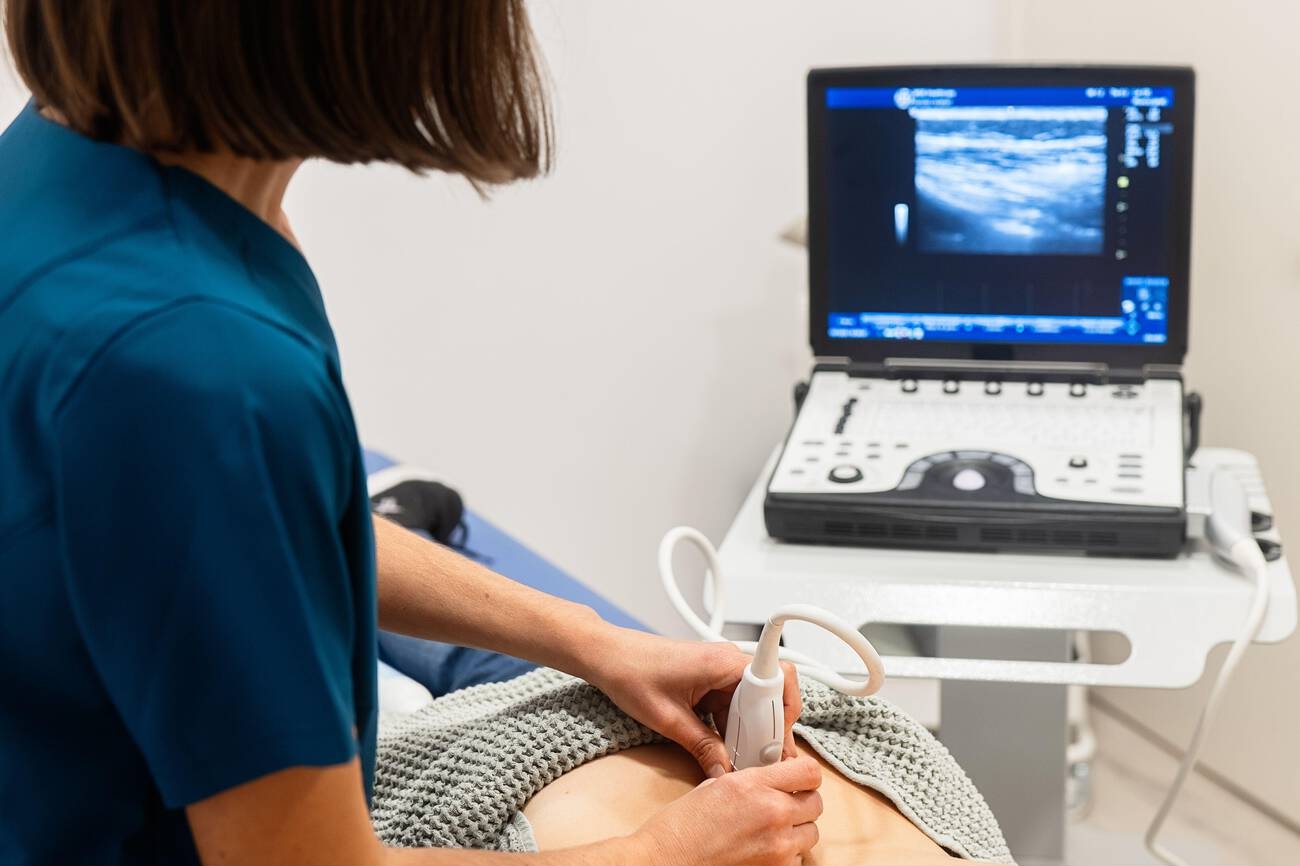
An ultrasound scan in progress; a probe that touches patient after patient has to be cleaned to a standard its seal must survive.
When a probe’s brochure says it is waterproof, the word means almost nothing until it is pinned to a rating, and the ratings that matter here are IP68 and IPX5, two codes from the same scheme that promise very different things. The letters stand for ingress protection, and the two digits that follow describe, in order, how well the device keeps out solids like dust and how well it keeps out water. IP68 claims the device is dust-tight and can survive being fully immersed; IPX5 claims only that it can shrug off a jet of water from a nozzle, with the dust digit replaced by an X that means dust was never tested at all. For an ultrasound probe these are not abstract durability boasts but the difference between a device that can be soaked in disinfectant between patients and one that can only be wiped, which is a question of infection control as much as of toughness.
Waterproof is a word; IP68 and IPX5 are the promises, and they promise very different things.
Reading the code
The IP code is precise where the word waterproof is vague, and once a buyer can read the two digits the marketing language stops doing the work and the rating starts.
The first digit rates protection against solids, running from zero for none up to six for completely dust-tight, so a six means no dust can enter at all, a real claim for a sealed device. The second digit rates protection against water, climbing from resistance to dripping, to spray, to jets, and at the top to immersion, where a seven means temporary immersion to about a metre and an eight means continuous immersion to a depth the maker specifies. An X in either position is not a zero but a statement that the device was not tested for that hazard, so IPX5 means the water resistance was rated at level five, jets from a nozzle, while the dust protection was simply never assessed. Reading the two codes side by side, IP68 says dust-tight and immersion-proof, while IPX5 says jet-resistant and dust-untested, and the gap between them is wide. A buyer who learns to read the digits is no longer at the mercy of the word waterproof, which a maker can attach to either rating and to several weaker ones, and can ask instead the precise question the code answers: kept out of what, and how thoroughly.
Two digits and a possible X tell the whole story, and the word above them tells none of it.
Why immersion is the line that matters
For an ultrasound probe the decisive difference between the two ratings is immersion, because immersion is what high-level disinfection often requires, and a probe that cannot be immersed is a probe that cannot be cleaned the deepest way.
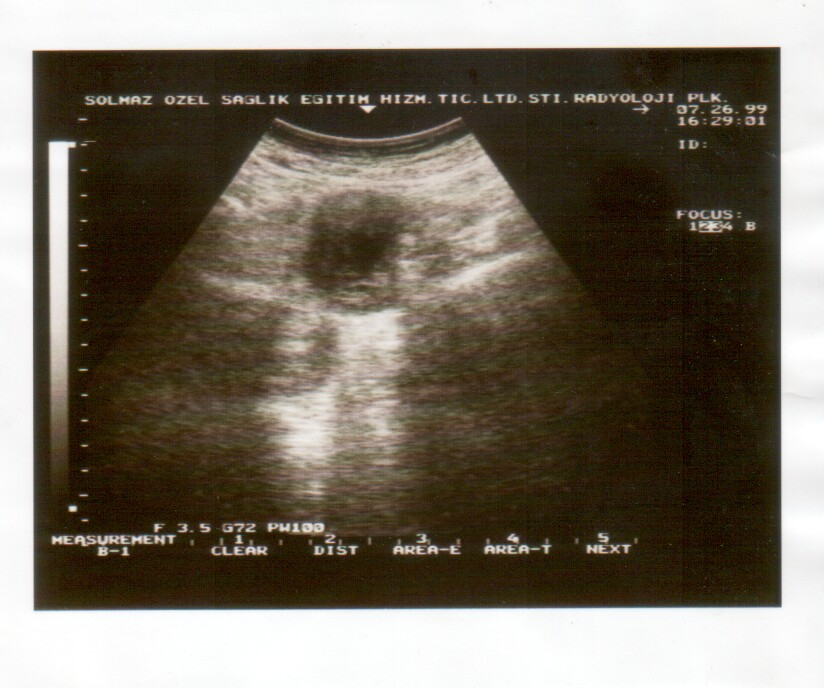
A grayscale scan; an IP68 probe can be immersed in disinfectant between patients where an IPX5 one cannot.
A probe touches one patient after another, and between them it has to be cleaned to a standard set by what it touched, which for intact skin is usually a thorough wipe but for some uses rises to immersion in a disinfectant solution. An IP68 probe, being immersion-proof and dust-tight, can be lowered into that solution and soaked without the maker voiding the warranty or the fluid reaching the electronics, so it supports the highest cleaning the protocol may demand. An IPX5 probe can take a spray and a wipe but not a soak, since its seal was only proven against jets, and immersing it risks driving fluid past a seal that was never tested for it, so its cleaning is capped at what a cloth can do. For a clinic whose protocol allows wipe-down that limit may never bite, but for one whose patients or procedures call for immersion disinfection, an IPX5 probe simply cannot meet the standard, and the rating decides which clinics the device can serve. The immersion line is not a matter of how rugged the probe feels but of which cleaning protocols it can lawfully and safely survive, and that is a clinical constraint rather than a marketing flourish.
The question is not whether the probe survives a splash but whether it survives the cleaning the next patient deserves.
The forgotten first digit
The X in IPX5 is easy to skip past, and it hides a real omission, since dust and fine particles are not nothing for a device carried through wards, clinics, and bags rather than parked on a cart.
A handheld lives in pockets, bags, and the open air of busy rooms, where dust, lint, and fine grit find every unsealed seam, and a device whose dust protection was never rated has no stated defence against particles working into its connectors, its buttons, or its lens housing over months of use. The six in IP68 is a positive claim that nothing gets in, which matters for a device that travels and is handled constantly, while the X in IPX5 is the absence of any such claim, an untested gap rather than a guarantee. This does not mean an IPX5 device is full of dust, only that the maker has not proven otherwise, and a buyer comparing the two should read the X as a question the maker chose not to answer rather than a reassurance. For a probe that will live a rough, portable life, the dust digit is not a footnote but part of whether the device will still seal cleanly after a year in the field, and the difference between a rated six and an untested X is the difference between a promise and a silence. The first digit is the one buyers forget and the field remembers.
How the rating is earned and how it ages
A rating is a test result, not a permanent property, and understanding how the number is earned explains why a sealed device can still fail and why the warranty wording matters as much as the digits.
The IP figures come from a defined laboratory test on a sample device, dust blown at it for the first digit and water applied at the rated intensity for the second, and a pass means that particular sample kept the ingress out under those conditions. The seal that earns the rating is usually a gasket, an adhesive bond, or a moulded joint, and like any seal it ages, since repeated heating and cooling, flexing, dropping, and the chemical attack of disinfectants all work slowly at the bond that keeps the fluid out. A probe that left the factory at IP68 can drift below it as the gasket hardens or a glued seam lifts, and a maker that takes sealing seriously designs the joint to survive years of cleaning rather than to pass a single test, and why a buyer should ask not only the rating but how it holds across the warranted life. The disinfectants themselves are part of the ageing, since the harsh chemicals that clean a probe between patients also attack the very seals that let it be cleaned, and a material chosen for the lens or the housing has to resist both the patient’s skin and the wipe that follows. A rating earned once and then eroded by a year of hard cleaning is a number that was true at purchase and false in service, and the maker that stands behind the seal across the warranty is making a stronger claim than the one that simply prints the code. The honest question is not only what the rating is but how long the device will keep it.
The digits describe the day of the test; the engineering decides whether they still hold a year later.
What the rating means for a handheld
A wireless handheld is exactly the kind of device that lives or dies by its ingress rating, because it goes everywhere a cart never did and meets every hazard a sealed console avoided.
The whole point of the handheld form is portability into bedsides, ambulances, fields, and clinics without sinks or careful storage, and that mobility exposes the device to splashes, spills, dust, and the constant handling that finds any weakness in a seal. A probe rated IP68 can be cleaned aggressively, dropped into disinfectant, caught in the rain, and carried in a dusty bag with the maker’s blessing, while an IPX5 probe asks the user to be careful in exactly the situations the handheld was bought to handle carelessly. The difference shows up not on the first day but on the hundredth, when the well-sealed probe still reads cleanly and the lightly sealed one has begun to collect the grit and moisture its rating never promised to keep out. The rating also shapes the device’s working life, since a fully sealed probe resists the slow ingress that ages a partially sealed one, and a probe that can be immersion-cleaned can be kept genuinely clean across thousands of patients rather than wiped and hoped over. A maker confident in its sealing states the full IP code, both digits, and stands behind immersion where it claims it, while one that quotes a vague waterproof or an IPX rating with an untested first digit is describing a device built to a lower bar and hoping the buyer does not read the code. The handheld that earns its portability is the one sealed well enough to be treated like the tool it is.
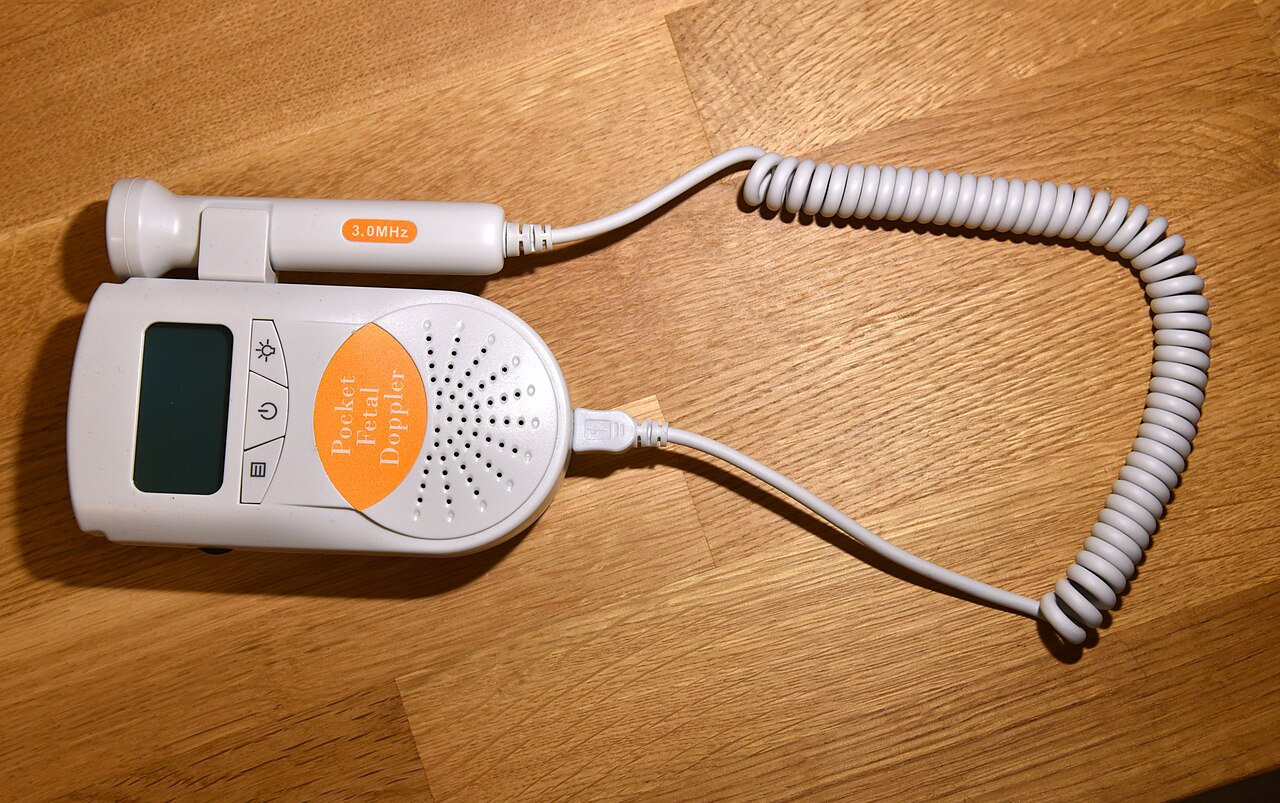
A handheld Doppler device; portability exposes a probe to splashes, dust, and constant handling that test its seal.
The ratings that hide between the two
IP68 and IPX5 are the two a buyer is likeliest to meet, and it helps to know that several weaker ratings sit between and below them, each of which a loose brochure may also call waterproof.
A device might be rated IPX4 for splashes from any direction, IPX6 for powerful jets, or IPX7 for brief immersion to a metre, and each is a real and different promise that the single word waterproof flattens into nothing. An IPX7 probe survives a short dunk but not the continuous immersion that disinfection sometimes needs, while an IPX6 one takes a strong hose but was never tested under water at all, so two probes both called waterproof can differ by exactly the margin a cleaning protocol turns on. The pattern across all of them is the same as before: the second digit names the water hazard the device was proven against, the first digit or its absence names the dust story, and the marketing word names neither. A buyer who has learned to read the code can place any probe on the ladder rather than taking the brochure’s word for where it sits, and can see that the distance from IPX5 to IP68 is not one step but several, each of which changes what the device can endure. The lesson is not that only IP68 will do, since a clinic that never immerses its probes may be well served by a lower rating, but that the buyer should know which rung the device stands on rather than trusting a word that fits the whole ladder.
Several promises hide under one word, and the code is the only way to tell which one a probe truly makes.
What the buyer should check
The rating is one of the few specifications a buyer can read precisely, so the move is to insist on the full code and match it to the cleaning the work will demand.
The first step is to refuse the bare word waterproof and ask for the IP code in full, both digits, since a maker proud of its sealing will state IP68 plainly while one hiding a weaker rating will reach for the vaguer word. The second is to read the second digit against the clinic’s cleaning protocol, because a probe used where immersion disinfection is required must be immersion-rated, and an IPX5 device cannot meet that bar however rugged it otherwise feels. The third is to notice the first digit, since an X there means the dust protection was never tested, a gap that matters for a device carried and handled rather than parked. The fourth is to confirm the maker stands behind the rating in warranty, since a claimed IP68 that voids the warranty the moment the probe is immersed is a number on paper rather than a promise in practice. A buyer who reads the whole code and matches it to the real cleaning and carrying the probe will face has turned a marketing word into a checkable fact, and a maker that welcomes that reading is usually the one whose seal will still hold after a hard year.
Read both digits, match them to the cleaning and the carrying, and the word waterproof becomes a fact you can trust or reject.
About the Author
Julien Mercier
Senior R&D Engineer · Medical Ultrasound Transducer Development
Senior R&D Engineer with an M.S. in Applied Physics and over 15 years of experience in medical ultrasound transducer development, specializing in the design verification and performance testing of high-frequency imaging transducers. Currently leading the development and verification of the company’s next-generation high-frequency linear-array transducer, responsible for imaging performance evaluation and reliability analysis in preclinical testing. Brings extensive hands-on experience in piezoelectric element tuning, beamforming parameter optimization, and system-level performance testing.