Infrared Vein Finder Versus AccuVein AV500 Comparison Portable
The AccuVein AV500 is the best-known vein finder in use, a handheld device that projects a live map of the veins onto the skin in bright green light. It sets the bar that other vein finders are measured against. A portable infrared finder reads the veins the same way, by near-infrared light, and aims to do the everyday job for far less money. The two are worth weighing on what they cost, what they show, and which clinic each one suits.
What the AccuVein AV500 is
The AccuVein AV500 is a handheld vein finder that reads the veins with near-infrared light and projects them straight back onto the skin. It works with two low-power lasers of the kind a barcode scanner uses, classed as eye-safe, so no goggles are needed for patient or operator. Held six to ten inches above the arm, it paints the vein map onto the skin in real time, in a bright green that stands out on most skin. The clinician looks down at the patient’s own arm, sees the veins drawn on it in light, and places the needle along the line. Nothing touches the skin during the reading.
Its signature is the way it lines the projection up with the vein. AccuVein calls this factory-set alignment, tuned at the works so the projected line falls on the centre of the vein. The user runs no setup at all. The centre line is held accurate to less than the width of a human hair. A clinician switches the device on and trusts the line. No calibration is run at the bedside, and none is needed over the life of the device. That reliability is a large part of what the price buys.
The picture comes with a few controls. Three brightness settings let the operator match the projection to a dim ward or a bright treatment room. An inverse mode flips the image to light lines on a dark field, a setting that suits some skin better. The projection is green because the eye sees green most sharply, which keeps the line crisp on the skin. The AV500 reaches the veins that sit within about ten millimetres of the surface. That depth covers the veins a needle uses on the back of the hand, the wrist and the forearm, which sit only a few millimetres down. For the everyday stick, its reach is more than enough.
The whole device weighs about 275 grams, light enough to hold over an arm in one hand. A rechargeable lithium battery runs it for around 120 minutes of continuous light on a full charge. It sits in a cradle to charge between uses. No battery is removed. For hands-free work it drops into a stand or a wheeled pole, projecting onto the arm while both of the clinician’s hands stay free. The build suits daily hospital use. It needs no calibration and little upkeep through years of service.
All of this sits at a premium price. An AV500 runs from about 3,200 to 5,000 US dollars, depending on the package and the seller. That figure buys the projection, the factory alignment and a brand with a long record in hospitals. For a large unit that places many lines a day, the price reads as the cost of a tool that needs no thought to use and rarely lets a user down. The price is also the main reason a buyer stops to look at the alternatives.
What a portable infrared finder is
A portable infrared finder does the same core job with a simpler build and a lower price. It reads the surface veins with near-infrared light from light-emitting diodes, the same band of light the AV500 detects in. The blood in the veins soaks up that light, the veins read darker than the skin, and the device draws them as a map. The device is small enough for a pocket or a lanyard. Many models run for a working shift on a charge, ready in the drawer for the next hard stick.
This class of device aims squarely at the everyday difficult stick, at a price a small clinic can meet. The picture is processed the same way the AV500 processes its own, with the contrast lifted and the vein lines sharpened many times a second. The map a portable finder draws of the surface veins is, in practice, much like the one a premium device draws. The saving comes from a simpler build. The picture of the veins holds up. One thing to check before buying is the depth a given model claims, since the cheapest reflection finders read only a couple of millimetres down.
Many portable finders run from a phone or a tablet, using the screen already in the clinician’s hand and the processing power that comes with it. Some are self-contained, with a small built-in display or a projector of their own. The choice of form, the size, the battery and the way the map is shown, is what a buyer weighs against the ward the device will serve. A portable finder is a class of products, and the models inside it vary widely in price and in polish.
The KT-10 sits in this class, a handheld infrared finder built for the bedside at a working clinic’s budget. A device of this kind is bought to put vein finding within reach of a ward that would never fund a premium unit. The test of one is plain: does it draw a clear map of the surface veins, hold a charge through the shift, and survive daily handling. A good portable finder answers yes to all three at a small fraction of the premium price.
AccuVein AV500 and a portable infrared finder, side by side
Feature
AccuVein AV500
Portable infrared finder
Light source
Class 1 near-infrared laser
near-infrared LED
Display
green image projected on the skin
projected on the skin, or a screen
Depth read
up to about 10 mm
a few mm, up to about 10 mm
Weight
about 275 g
varies, often lighter
Battery, continuous
about 120 minutes
about 1 to 3 hours
Alignment
factory-set, no calibration
set by the device
Price (US)
about $3,200 to $5,000
a few hundred to low thousands
Projection or a screen
The clearest fork between vein finders is whether the map lands on the skin or on a screen. A projecting device, the AV500 among them, draws the veins on the arm in light, so the clinician keeps both hands free and both eyes on the patient. The vein is shown in place, on the limb, where the needle goes. There is no glance away and back. For fast work and for the bedside, that hands-free map is the strength of the projecting design. Projection reads best in a room that is not too bright, since strong light washes the green lines out.
A screen device shows the map on a display, read first and then matched to the arm by eye. It runs smaller and cheaper, since it needs no projector and no fine aiming. It can also save the picture for a record or for teaching. The choice turns on whether a clinic values hands-free projection at the couch or a lower price with a stored image. Most of the gap in cost between a portable finder and the AV500 traces to this one feature.
The picture each one draws
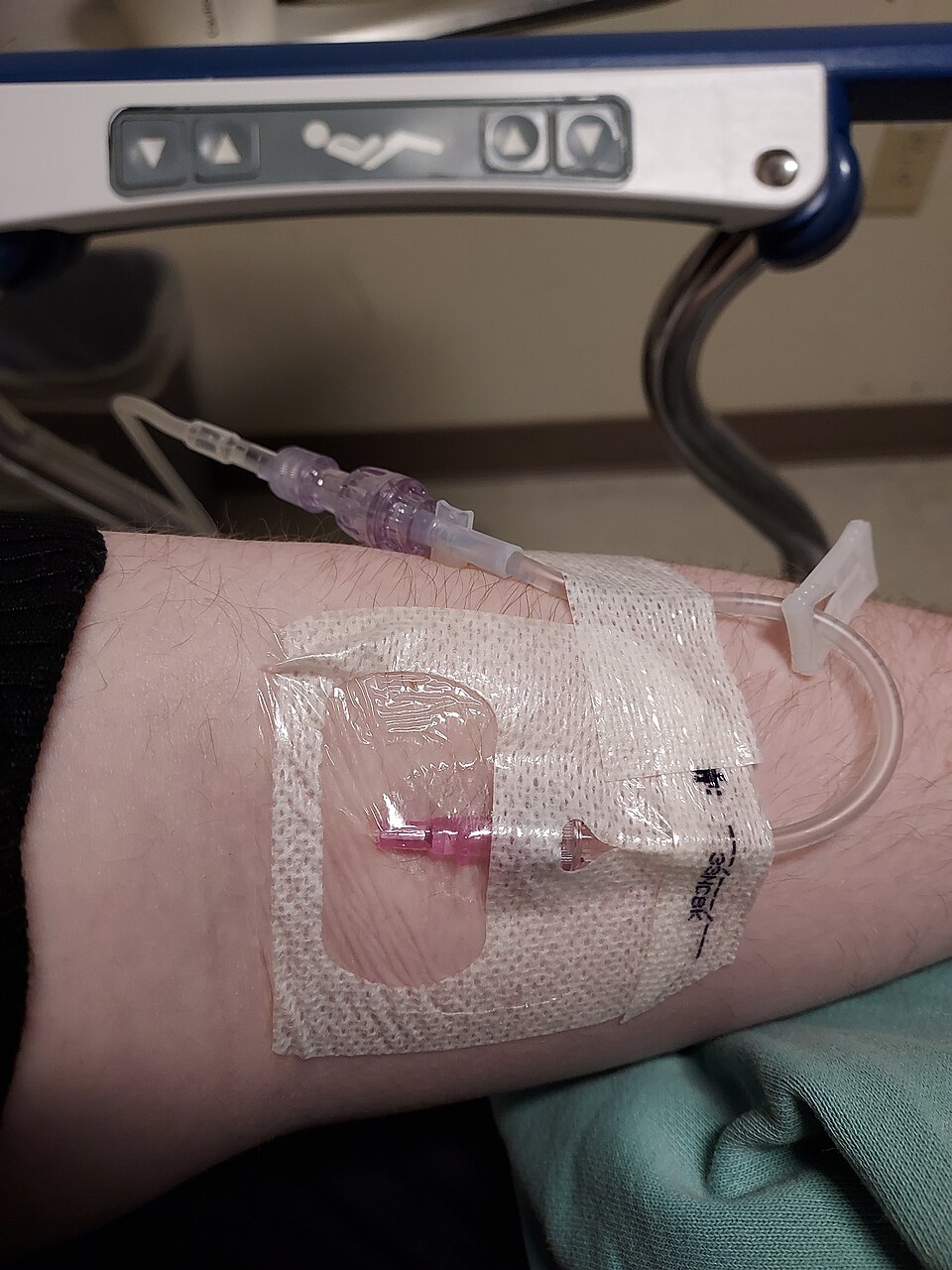
A peripheral IV line taped into the forearm. Placing a cannula like this, on a vein found on the first try, is the everyday job a vein finder is bought to make easier and quicker.
On image quality the two are closer than the price gap suggests. Both read the surface veins by the same near-infrared principle, and both reach the veins within about ten millimetres of the skin. For the everyday veins on the hand and forearm, a few millimetres down, each draws a clear map. What a buyer notices most is the way the map is shown, on the skin or on a screen. The veins themselves look much the same on either device.
Skin tone shapes the picture on any vein finder. Heavier pigment soaks up some of the light, so a very dark skin gives a fainter image on either device. Both answer this with brightness controls, image processing and a choice of setting. Both draw a usable map on most skin. The picture softens on either device only on the very darkest skin, where the operator leans more on the controls to read the lines.
The deeper limit is the same for both. Near-infrared light fades a few millimetres into the arm, so neither device reaches a vein that runs deep under heavy tissue. A vein lost to depth is lost to the AV500 and to a portable finder alike. The reach a needle actually uses, the surface veins, sits well inside what both devices read. On the picture of the veins itself, the practical gap between them is small.
Weight and battery through a shift
For a device carried from bed to bed, weight and battery decide how it feels in daily use. The AV500 weighs about 275 grams and runs for around 120 minutes of continuous light on a charge, enough for a round of difficult sticks before it returns to its cradle. A portable finder is often lighter. Many models hold a charge across a longer shift, since a screen device draws less power than a projector. Neither weight is a burden in the hand. The battery is the figure to check against how a ward actually works, since a device that dies mid-list helps no one. A spare battery or a quick cradle keeps either type ready for the next call.
What it costs
Price is where the two part ways most sharply. The AV500 sits at roughly 3,200 to 5,000 US dollars, the cost of its projection, its factory alignment and its hospital track record. A portable infrared finder runs from a few hundred dollars to the low thousands, even for a well-built projecting model. The gap between those numbers is wide enough to change what a clinic can buy, and how many wards it can equip.
For a small clinic or a single nurse, the price decides it. A few hundred dollars puts a vein finder in a drawer on every ward, the kind of spend a manager approves without a committee. The same money spread across several portable units can equip a whole department for the cost of one AV500. Where budgets are tight, the portable price is what makes a vein finder available on the ward at all.
The premium price buys real things. A large hospital may judge them worth it. Factory alignment means no setup and no drift. It stays steady in many different hands across a big unit. A long brand record means service, training and parts are easy to find for years. A device used hundreds of times a week, where a saved minute and a confident stick repay the outlay, can earn a premium price. A refurbished AV500 sells for less than a new one, which narrows the gap for a unit set on the brand. The question for any buyer is whether a given clinic does that volume.
Value, in the end, depends on the work. A busy hospital that places lines all day measures a vein finder against the time and the failed sticks it saves. The AV500 can pay for itself there. A clinic that meets a hard vein now and then needs the tool present and reliable, at a price it can justify on the rare day it is needed. What a clinic should buy follows from its volume and its budget.
Which one fits a clinic
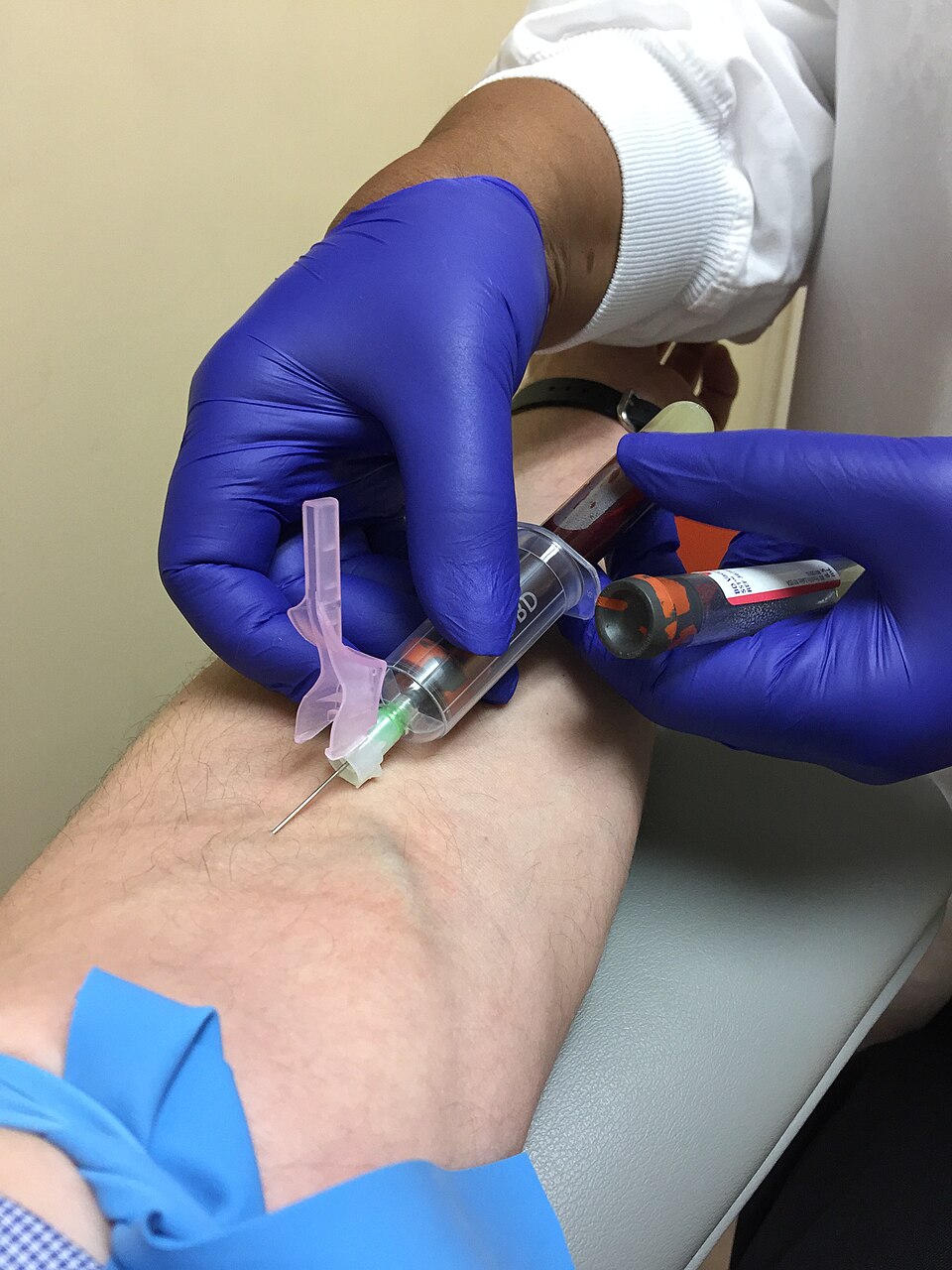
Drawing blood into collection tubes from a forearm vein. Both an AccuVein and a portable finder are bought to make a stick like this land on the first try, on arms where the vein is hard to see.
The choice rests on a few honest questions about the clinic. The first is volume. If a unit places many lines a day, in many hands, the AV500 suits it, since the factory alignment holds steady across heavy use and many users. If the clinic meets only the odd hard stick, a portable finder kept in a drawer covers the need at a far smaller cost. The number of sticks a week is the first figure to weigh.
The second question is the display. If the work needs the veins drawn on the skin, hands free, a projecting device fits, the AV500 or a projecting portable. If a glance at a screen is fine between finding the vein and placing the needle, the lighter screen type does the job at a lower price. The work, fast or unhurried, bedside or bench, decides which display is worth paying for.
The third question is budget. It often settles things on its own. A department that can fund an AV500, and will use it enough, gets a proven tool with almost nothing to learn. A clinic working to a tight budget can put a capable portable finder on every ward for the price of one premium unit. A device the clinic owns and keeps charged is the one that helps when a hard vein turns up.
Training pulls the same way as budget. The AV500 needs almost none, by its factory-set design. Any vein finder is quick to learn in any case, a few minutes for the display and the working distance. A team that turns over staff often gains most from that ease, where a new nurse picks the tool up between patients. The simpler a device is to learn, the more a busy ward gets out of it.
No single answer fits every clinic. A large, high-volume hospital with the budget has a clear case for the AV500. For most other clinics, a good portable finder meets the daily need. The AV500 stays the choice where money is no object and projection is wanted in every hand. The honest decision rests on volume, display and budget, read against the clinic that has to live with the tool.
The honest bottom line
The hardest truth in this comparison is that the evidence for any vein finder is mixed. A government health-technology review of these devices found the picture in adults uneven. Near-infrared finders cut the number of attempts and the time a stick takes. The gain in first-attempt success over standard care stays small. The benefit is clearest where veins are genuinely hard to find. The same kind of review reports a clearer gain in children, and in patients whose veins are scarred or buried, the very cases where finding the vein saves the most tries. On an easy arm, the device adds little, whichever one it is.
That truth cuts the same way for both devices. The AV500 is a proven tool that trained hands find simple. Its evidence is no stronger than the principle it shares with every near-infrared finder. A portable device built on the same physics reaches the same veins. Paying more buys projection, factory alignment and a brand, real conveniences for a busy unit. The result on the arm is the same either way, since both read the same veins by the same light.
For a buyer, the comparison settles simply. A high-volume hospital that wants hands-free projection and a known name gets its money’s worth from the AccuVein AV500. For most other clinics, a portable infrared finder reaches the same surface veins at a small fraction of the cost. It puts a vein finder within reach of clinics that could never fund the premium one. The right pick matches the clinic’s volume, its budget and the way it works. The best vein finder is the one a clinic will own and use on the arms that need it.
Common questions
Is a portable infrared finder as good as the AccuVein AV500?
For finding the surface veins a needle uses, yes. Both read the same near-infrared band and reach veins within about ten millimetres of the skin, so a good portable finder draws a map as usable as the AV500’s on most arms. The AV500’s edge is in the projection, the factory alignment and the brand, the polish of a premium tool. The picture of the veins itself is much the same on either device.
What does the AccuVein AV500 do that a cheaper finder may not?
Three things, mainly. It projects the vein map onto the skin, so the hands stay free at the bedside. Its alignment is factory-set, so no calibration is run before use. It carries a long hospital track record, with easy service and training behind it. These are real conveniences for a high-volume unit. None of them changes which veins are found on a given arm.
How much does each one cost?
The AccuVein AV500 runs from about 3,200 to 5,000 US dollars, depending on the package and the seller. A portable infrared finder runs from a few hundred dollars to the low thousands, even for a well-built projecting model. For the price of one AV500, a department can fit out several wards with portable units. The cost difference is the main reason the two are compared at all.
Do vein finders actually improve IV success?
The evidence is mixed. In adults, the gain in first-attempt success over ordinary care is small, by a government review of the devices. The repeated finding is fewer attempts and less time per stick. The benefit is clearest in difficult access, such as small children, scarred veins or heavier arms. On an easy vein, any vein finder adds little.
Which should a small clinic buy?
A portable infrared finder, in most cases. It reaches the same surface veins as the AV500 for a small fraction of the price, so a small clinic can own one, or several, for the cost the premium device would take. A projecting portable model gives the hands-free map for those who want it. The AV500 makes sense for a large, high-volume hospital with the budget and the need. For a small unit, the portable finder is the practical choice.
About the Author
Julien Mercier
Senior R&D Engineer · Medical Ultrasound Transducer Development
Senior R&D Engineer with an M.S. in Applied Physics and over 15 years of experience in medical ultrasound transducer development, specializing in the design verification and performance testing of high-frequency imaging transducers. Currently leading the development and verification of the company’s next-generation high-frequency linear-array transducer, responsible for imaging performance evaluation and reliability analysis in preclinical testing. Brings extensive hands-on experience in piezoelectric element tuning, beamforming parameter optimization, and system-level performance testing.