Emergency IV Access Vein Finder Infrared Rapid Cannulation
An infrared vein finder helps a clinician find a vein fast in an emergency, when a line has to go in and the seconds count. It shines near-infrared light through the skin and draws the veins as dark lines. A usable one can be picked and cannulated at once. In a resuscitation, where shock has often flattened the veins and the usual landmarks are gone, that quick sight of a vein can be the difference between a line in seconds and one that takes many painful tries. The device is a fast first move on an arm that has to be cannulated now.
Why an emergency turns on a vein
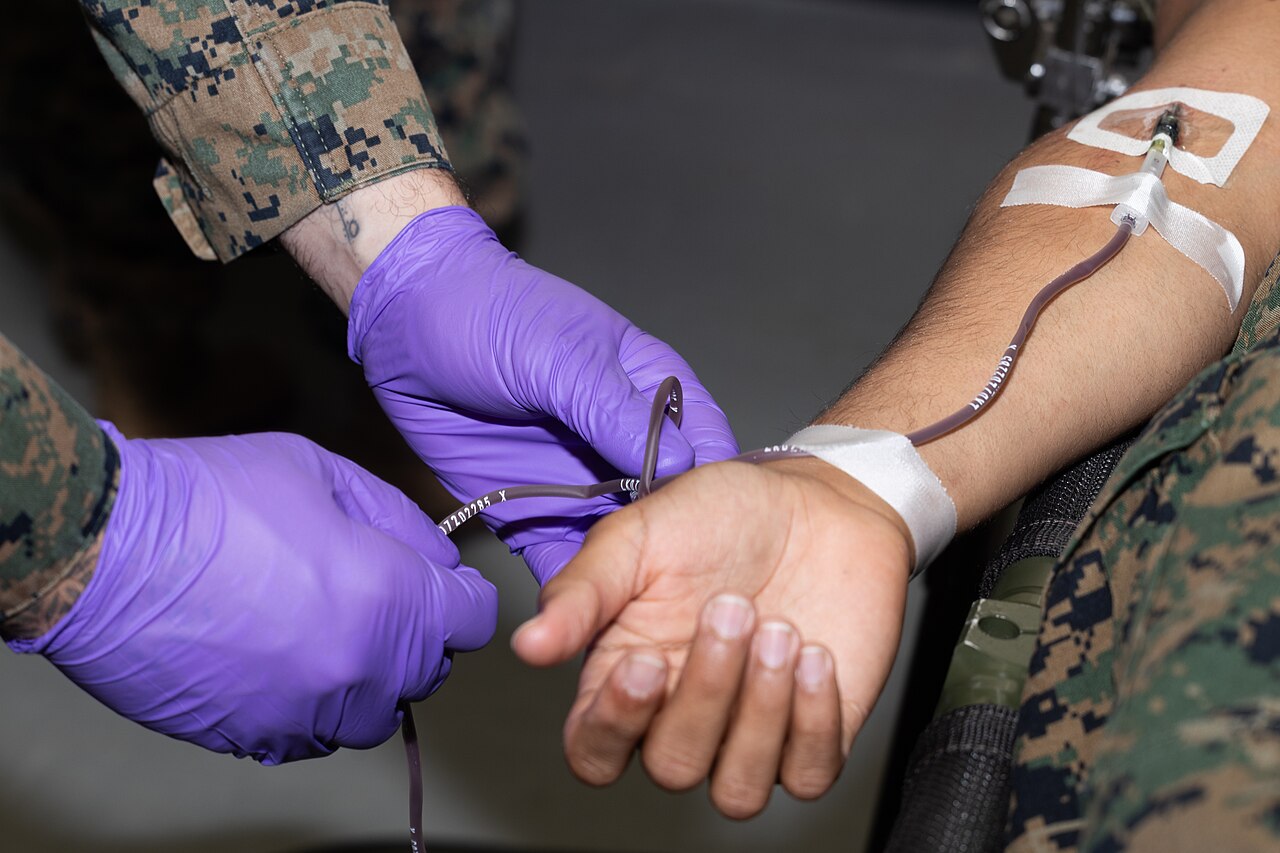
An intravenous line secured in a forearm in a field setting. Getting a line into a vein fast is the first task of any resuscitation. A missed vein costs time a sick patient cannot spare.
An emergency often comes down to a vein. Fluids for the patient losing blood, drugs for the heart that has stopped, blood for the one bleeding out: all of it runs through a line in a vein. Until that line is in, the treatment waits. The first job of a resuscitation, again and again, is to get access into a vein and open the route for everything that follows. A blocked or missing line stalls everything else. The monitors, the oxygen and the team’s hands stand ready. The one thing holding the resuscitation back is a vein that will not give up a line.
Failed sticks are common when they hurt most. The emergency patient is the hardest to cannulate at the very moment a line is most needed. Shock empties the veins. Cold shuts them down. A thrashing or unconscious patient cannot help. The clinician is reaching for a vein under the worst conditions, against the clock.
This is the gap an infrared vein finder fills. It puts a picture of the veins on the arm in the moment a clinician needs one. The team sees where a usable vein runs and aims straight for it. The guesswork drops away. On an arm that gives the eye and finger nothing, the device hands back a target.
Speed is the whole point
A patient in shock or in arrest has minutes, sometimes less, before the lack of fluid or drug does lasting harm. Every second spent hunting for a vein is a second the treatment is not running. A line placed fast can turn a crisis around. Every minute lost to failed sticks is ground the patient may not win back. Cardiac drugs in an arrest work only once they reach the blood. A clot-buster in a stroke, an antidote in a poisoning, all of it sits useless in the syringe until a line carries it in.
A clinician who can see the vein wastes no time on the blind search. The line goes in sooner. None of this replaces the urgency or the skill of emergency care. It adds one fast tool to it. In a setting where sooner can decide the outcome, a few seconds saved on access is worth the reach for the device. The fastest tool in the kit is the one already in the operator’s hand and ready to read.
The veins of a patient in shock
Shock changes the veins a clinician is hunting. When the body loses blood or fluid, it pulls what is left toward the core, to protect the heart and brain. The surface veins empty and go flat. A vein in a patient in shock lies collapsed under the skin, holding little blood. The same response that protects the heart and brain is what hides the veins. A body defending its core shuts that vein down to save the centre.
The veins a drip uses are the ones that empty first. The back of the hand, the wrist and the forearm sit far from the core. The body gives them up early to defend the centre. By the time a patient reaches a resuscitation, those veins can be flat and all but gone from sight.
This is why the emergency patient is so often the difficult stick. The veins are not gone, only emptied. A little blood still runs through them. The trouble is finding a flat, hidden vessel on an arm that gives the eye and hand almost nothing to work with.
When cold makes it worse
Cold adds to what shock has started. A patient who is cold, or in shock, clamps the surface vessels shut to hold heat and pressure. The veins of the hand and forearm are the first to close down. A cold arm can be near impossible to read by sight or touch.
The signs a clinician hunts by are the ones the cold takes away. A warm vein bulges and bounces. A cold, shut-down vein lies flat and silent under the skin. On a chilled patient brought in from outside, the usual landmarks are simply not there to feel. Trauma patients pulled from a cold scene, and the frail elderly, arrive chilled most often. A cold arm and a low pressure stack up. Together they leave the veins flatter than either would alone.
When sight and touch fail
The old way of finding a vein leans on sight and touch. A clinician looks for the blue line of a vein and feels for its springy give. Shock takes both of those signs away. A flat vein shows no colour at the surface. A collapsed vein has no bounce under a finger.
What follows is the blind probe, the worst option at the worst time. The needle goes in on a guess and hunts below the skin for a vessel that cannot be seen. Each pass hurts. Each miss costs a site and more seconds. On a crashing patient, a string of misses is exactly what there is no time for. On a moving or unconscious patient the blind probe is harder still. There is no cooperation, no held-still arm, only a clinician feeling for a vessel that shock has emptied.
An infrared finder works on what shock leaves behind. A flat vein still holds some blood. That blood still soaks up near-infrared light. Even a collapsed vein often reads as a faint dark line on the device, enough to aim at.
So the device gives a target where the old senses found none. It draws what little is there, on an arm the eye and hand have given up on. The clinician sees a faint vein, aims for it, and places the line. The blind probe gives way to a guided one.
Nothing to set up
Part of the device’s value in a crisis is how little it asks. It needs no gel, no warming pack, no preparation of the skin. It touches nothing and waits for nothing. A clinician pulls it from the bag, holds it over the arm, and reads the veins in the same motion. There is nothing to clean before the next use and nothing to slow the first. A tool that works the instant it is switched on is a tool that fits a resuscitation. It is ready when the patient is.
What the finder shows, fast
Speed is what the device brings to an emergency. It reads the whole forearm and hand at a glance and draws the veins in real time. There is no setup, no warming, no long search. A clinician sweeps it over the arm, sees the veins appear, and picks one in a second or two. A sweep of a few seconds replaces a search of many minutes. The veins appear at once. No warming, no waiting for a vessel to fill.
The map turns a frantic search into a quick aimed stick. The clinician sees which vein is fullest, follows its line, and places the needle along it on the first pass. On an arm where a blind stick might miss four times over, the device gives one good target to hit. A target beats a guess every time the clock is running.
The seconds that saves are the seconds that count. A line found in two seconds, in a setting measured in seconds, frees the team to start the fluids and the drugs that much sooner. The picture comes as fast as the situation demands, which is the only speed that helps here.
Hands free in a resuscitation
The projecting kind suits the crisis best. A device that throws the vein map onto the skin lets the clinician keep both hands on the patient and both eyes on the arm. The vein is drawn in place, where the needle goes. The eyes never leave the arm.
In a resuscitation, hands are full and attention is split a dozen ways. A map painted on the arm itself is the one that gets used in that chaos. There is no screen to find, no glance away, no second person needed to hold a viewer. The picture stays on the patient, where the work is.
The first stick that lands
The payoff is a line in sooner and a patient treated faster. A first-attempt success means the fluids and drugs start running minutes earlier than a string of failed sticks would allow. It means fewer holes in a sick patient. It means less blood lost from the attempts themselves. The patient feels one stick where there might have been five. Each avoided attempt is a needle spared and a vein saved.
Those minutes are real on the sickest patients. In hemorrhagic shock, fluids and blood given sooner can change the outcome. A line that lands first try gives the whole resuscitation a lead it cannot otherwise buy.
The device also steadies a stressed operator. Hunting blindly for a vein on a crashing patient, with a team watching, rattles even a skilled clinician. A clear target on the arm replaces that pressure with a plain task: aim at the line and go. A calmer stick is a surer stick. A target on the skin steadies the hand and the nerves alike. The clinician stops fishing and starts aiming.
There is a knock-on gain for the team. A first-attempt line frees the second clinician who would have been called to try. It frees the minutes a difficult access would have eaten. In a busy resuscitation, every hand and every minute returned to the rest of the care is worth having.
The point of all of it is time. The device does one thing in an emergency: it gets the team to a usable vein faster. On a patient whose life turns on minutes, a faster line is the whole of what the tool is for.
When the veins have collapsed
There is a limit. An emergency is where it shows. In deep shock, the veins can collapse so far that even an infrared finder reads nothing usable. A vein with almost no blood in it absorbs almost no light. A vein flattened to a thread gives a needle no target. When the device comes up empty on a crashing patient, it is telling the truth: no peripheral vein is left to use.
That empty picture is information in itself. It tells the team to stop hunting for a vein that is not there. A clinician who trusts it moves on at once. No more minutes burn on an arm that has nothing to give. Knowing when to stop looking is part of using the device well.
The route to the bone
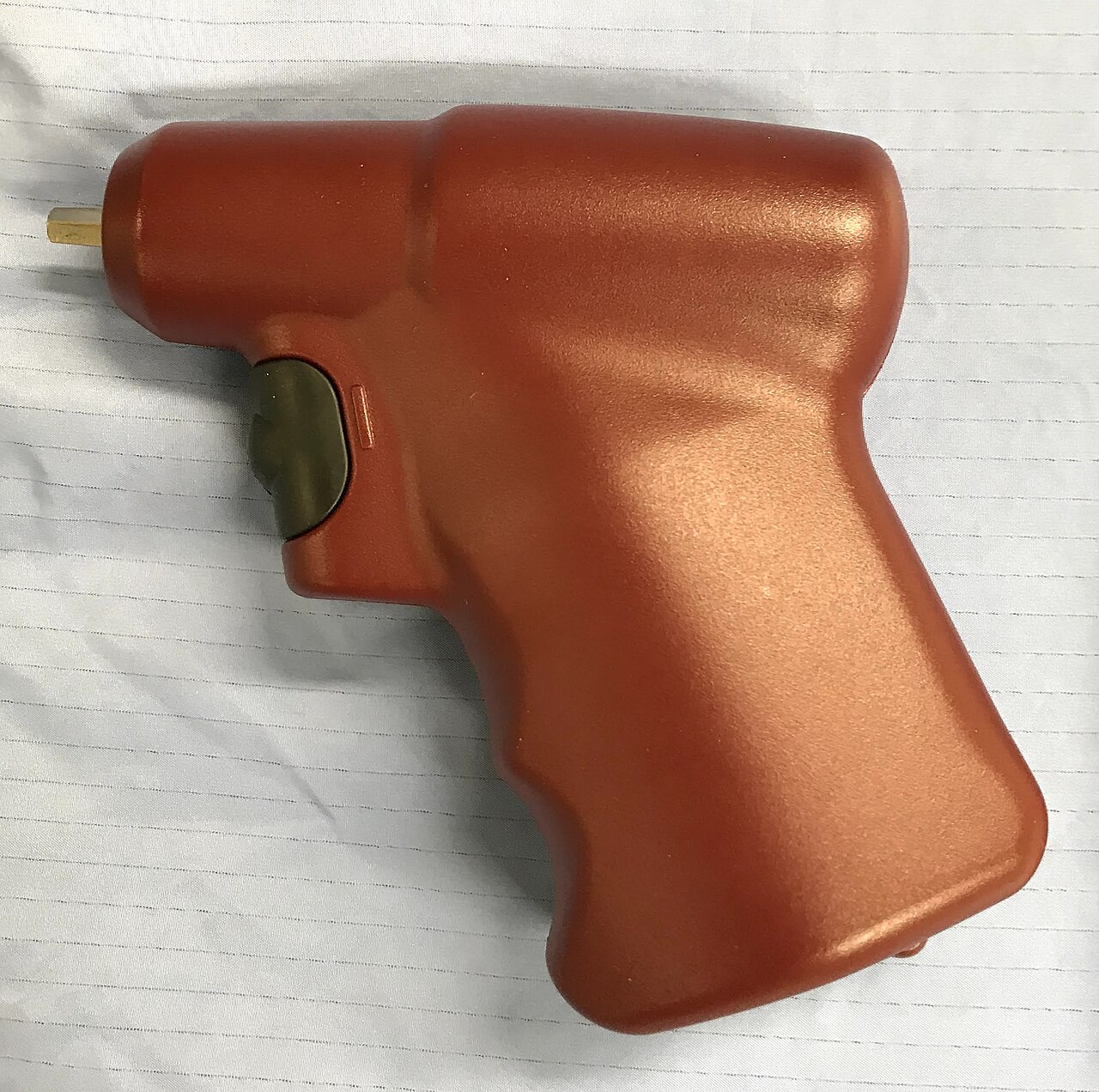
An intraosseous driver, which places a needle into the marrow of a bone. When the veins have collapsed and no peripheral line will go, this is the fast route a team turns to.
When no peripheral vein will take a line, an emergency team turns to the bone. Intraosseous access drives a needle into the marrow, which carries fluids and drugs much as a vein would. It goes in fast and works when the veins have failed. For a patient in deep shock, it is often the surest route of all. The marrow drains into the central circulation within seconds, so a drug given by the bone reaches the heart almost as fast as one given by a vein.
The numbers make that order plain. In hypovolaemic shock, a first peripheral stick succeeds less than half the time, by the figures in a study of access in shock. The bone offers a far surer first attempt. A team that wastes no minutes on hopeless veins reaches the working route sooner.
The vein finder helps the team find that order fast. It finds a peripheral vein when one is there to find, on most patients. It shows an empty arm plainly when the veins are gone, which is the signal to reach for the bone. The device speeds the whole decision, whichever way it falls. A clear answer in seconds, vein or no vein, is worth more in a crisis than a hunt with no end in sight.
Emergency venous access, by the numbers
Measure
Figure
First-attempt peripheral IV in hypovolaemic shock
about 46 percent
Intraosseous first attempt
close to 100 percent
What shock does to surface veins
empties and flattens them
Depth an infrared finder reads
surface veins, up to about 10 mm
When no peripheral vein will go
intraosseous access is the route
Using it under pressure
Technique under pressure stays simple. There is no time to warm an arm in an arrest, so the finder is used as it is, on the vein that reads best. A tourniquet, if there is a second to apply one, lifts what veins remain. The clinician marks the spot by eye and goes. There is rarely time for the niceties. The arm is bared, the device swept over it, and the first vein that reads gets the needle.
The device gives the picture for the hand to work from, fast. A clinician reads the depth and line of the vein, sets the angle, and threads the cannula in one quick move. The picture guides the stick. The trained hand, working at speed, places the line.
Where the finder fits
An emergency comes down to getting a line in fast. An infrared vein finder helps do exactly that. It shows a usable vein in seconds on an arm where shock has hidden the veins. It lets the clinician aim true on the first pass. It saves the minutes a blind hunt would burn. It proves its worth on the arm a team used to dread. A patient who would once have taken five sticks and ten minutes can be cannulated on the first pass.
Used in order, it slots cleanly into the resuscitation. The team looks and feels for a vein first. When that fails, the finder is the quick next reach, ahead of any blind stick. When the finder finds nothing, the team moves to the bone. Each step is fast, and none wastes time on the one before.
On the patient who needs a line now, that quick sight of the veins is what an infrared finder brings to emergency care. It does not work miracles on a collapsed vein. It finds the vein that is there to be found, faster than the hand alone, on the arm where speed decides the most.
Common questions
Why is IV access so hard in an emergency?
The patient is sicker and the veins are worse at the same time. Shock and blood loss pull fluid to the core, so the surface veins empty and go flat. Cold shuts them down further. A flat vein shows no line to the eye and no bounce to the finger, the very signs a clinician hunts by. First-attempt success drops sharply in shock, at the moment a line is most needed.
How does a vein finder help in a resuscitation?
It shows the veins on the arm fast, before a needle goes in. The device reads the arm with near-infrared light and draws the veins as dark lines in real time. There is no setup. A clinician sees a usable vein and aims for it on the first pass. A projecting model paints the map on the skin, so the hands stay on the patient and the eyes on the arm.
Can it find a vein in a patient in shock?
Often, yes. A vein flattened by shock still holds some blood. That blood still absorbs near-infrared light. Even a collapsed vein can read as a faint dark line, enough to aim at. The device draws what little is there, on an arm where the eye and finger find nothing. In deep shock, when the veins have collapsed almost completely, even the finder may read nothing usable. That empty picture is itself useful: it tells the team to move to another route.
What happens when no vein can be found?
The team moves to the bone. When no peripheral vein will take a line, the standard next step is intraosseous access, a needle placed into the marrow of a bone, which carries fluids and drugs much as a vein would. A vein finder helps reach that decision quickly. An empty picture tells the team to stop hunting for a vein that is not there. The minutes saved can decide the outcome on a crashing patient.
Why does speed matter so much for access?
The treatment cannot start until the line is in. Fluids, drugs and blood all run through a vein. Until access is open, the patient waits. In shock or arrest, minutes of delay can do harm that cannot be undone. Every failed stick adds time the patient does not have. A tool that gets the line in on the first pass gives those minutes back to the treatment.
About the Author
Julien Mercier
Senior R&D Engineer · Medical Ultrasound Transducer Development
Senior R&D Engineer with an M.S. in Applied Physics and over 15 years of experience in medical ultrasound transducer development, specializing in the design verification and performance testing of high-frequency imaging transducers. Currently leading the development and verification of the company’s next-generation high-frequency linear-array transducer, responsible for imaging performance evaluation and reliability analysis in preclinical testing. Brings extensive hands-on experience in piezoelectric element tuning, beamforming parameter optimization, and system-level performance testing.