EAU European Association Urology On Transrectal Biopsy With Ultrasound
The European Association of Urology, the EAU, sets the prostate biopsy guidance European urologists widely follow. Its position on the biopsy has a clear signature, an MRI early and a strong preference for reaching the gland through the perineum. The EAU writes its guidance with a panel of European specialist societies and updates it each year. For a man biopsied across much of Europe, the EAU guideline is the framework behind the procedure.
The EAU and its guideline
The EAU is the professional body for urologists across Europe. It gathers the evidence on prostate cancer, weighs it with a panel of experts, and publishes a guideline its members follow. The relevant document is the EAU Guidelines on Prostate Cancer. It covers screening, diagnosis, and treatment in one place, with the biopsy sitting inside its diagnosis chapter. The guidance carries real weight across European practice. A urologist who departs from it is expected to justify the choice. The guideline reads as the settled European position on the biopsy.
The EAU writes the prostate guideline with several specialist societies together. Radiologists, nuclear-medicine doctors, radiation oncologists, and pathologists all join the urologists on the panel. The wider input shapes a guideline that reads the whole pathway. The EAU updates it every year, keeping pace with the evidence. A urologist reads the current version as the agreed European standard. The yearly revision keeps the guideline current with new trials. A reader checks the date to be sure of the version in hand.
The EAU position, and the numbers behind it
Topic
What the EAU advises
MRI first
a multiparametric scan before any biopsy
When to biopsy
a positive MRI, PI-RADS 3 or higher
Route
the transperineal approach, now preferred
Sepsis risk
transperineal keeps it well under 1 percent
Cores
targeted from the lesion, plus a systematic set
Antibiotics
stewardship first, prophylaxis kept to a minimum
A risk-adapted approach
The EAU builds its biopsy advice around a man’s risk. The guideline groups men by their likelihood of significant cancer, read from the PSA, the examination, and other factors. A man’s risk group steers how soon a biopsy follows. The risk drives the decision more than any single number does. The approach reads the man, the PSA being one factor among several. A young man with a fast-rising PSA sits in a different risk band from an older man with a stable one. The band, more than the raw figure, sets the next step.
Risk tools sit at the front of the EAU pathway. The guideline supports a risk calculator to refine a man’s chance of significant cancer. A calculator reads several inputs into one estimate a man can grasp. The EAU uses it to sort who needs an MRI or a biopsy next. The aim is to act on a man’s measured risk, with the lone PSA as one input among several. The calculators draw on age, examination, gland size, and family history. The single number gives way to a fuller estimate. The EAU reads risk as a picture built from many inputs.
The risk-adapted approach spares low-risk men procedures. A man whose risk reads low can be followed safely with repeat tests. The EAU holds back the biopsy where the odds of significant cancer are slim. The point is to catch the dangerous cancers, sparing low-risk men a needless procedure. Risk, read carefully, is the gate to the biopsy. The approach matches the intensity of testing to the danger. A high-risk man moves quickly toward a biopsy. The careful reading of risk is what keeps the pathway proportionate.
MRI on suspicion of cancer
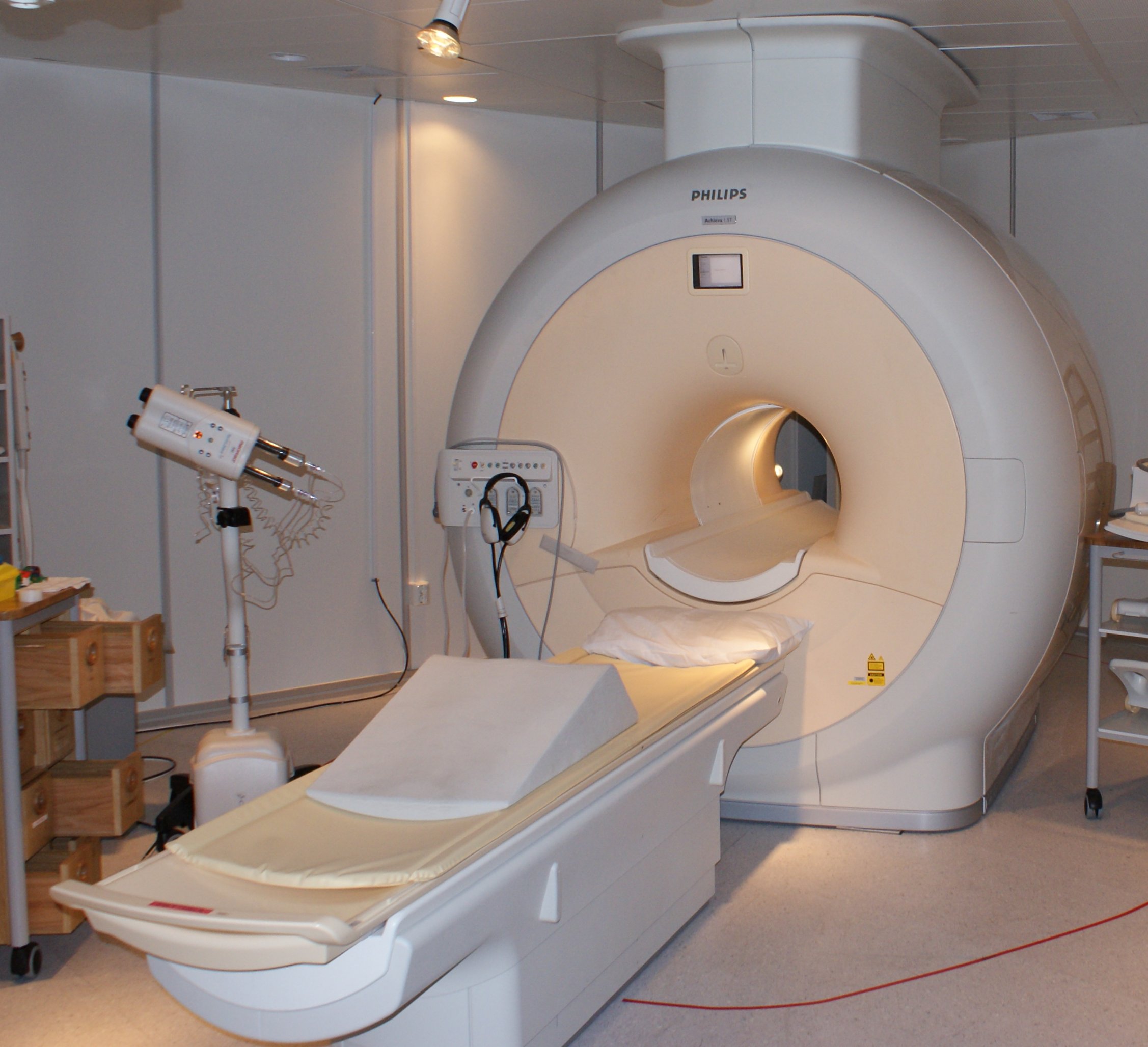
An MRI scanner. The EAU puts a multiparametric scan like this before the biopsy, to find and mark any suspicious area of the prostate.
The EAU puts an MRI early in the pathway. The guideline calls for a multiparametric MRI once prostate cancer is suspected from the PSA or the examination. The MRI comes before the biopsy in the EAU pathway. The scan finds and scores any suspicious area on the PI-RADS scale. The EAU reads the MRI as the step that shapes the biopsy. The MRI is read and scored by a radiologist trained in prostate imaging. A clear report names any lesion and its location. The EAU leans on that report to plan the cores.
The EAU’s MRI stance is firmer than a mere option. The guideline expects an MRI before a first biopsy wherever it can be had. A suspicious area on the MRI becomes the target the biopsy aims at. The scan’s reading, set against the man’s risk, guides whether and where to biopsy. The MRI is built into the EAU pathway as a routine step. The firmer stance came from trials showing the MRI finds the cancers that matter. The EAU read that evidence and made the scan a routine step. The pathway now starts with imaging for the men who reach a biopsy decision.
The MRI changes who gets a biopsy at all. A man with a reassuring MRI and a low risk may avoid the biopsy. The scan steers the needle away from men unlikely to gain from it. The EAU uses the MRI to cut unnecessary biopsies. Fewer men face a procedure they did not need. The saved biopsies are a real gain of the MRI-first pathway. A man spared a needle is spared its small risks. The EAU counts that sparing as part of the MRI’s value.
Where no MRI is available, the EAU has a fallback. The guideline turns to a risk calculator and a systematic biopsy where it is indicated. The scan stays the preferred route into the biopsy decision. A clinic without MRI still has a risk-based path to follow. The EAU writes for the well-equipped center and the modest clinic alike. The fallback keeps the pathway usable everywhere. A clinic short of MRI still reads risk and samples the gland. The EAU writes guidance that bends to what a clinic has.
The transperineal turn
A prostate removed at surgery, its cut surface showing cancer through the gland. The biopsy the EAU guides is the step that finds and grades disease like this before any treatment.
The clearest EAU position is on the route the needle takes. The EAU Guidelines on Prostate Cancer recommend the transperineal approach for the biopsy, for its lower risk of infection. The needle passes through cleaned skin between the legs, staying clear of the bowel. The EAU reads this route as the safer default. The recommendation marks the EAU apart on the question of the route. The position is a clear, named one. The EAU does not leave the route open as a matter of taste. It points to the transperineal approach as the one to prefer.
Infection is the reason behind the turn. A transrectal needle carries gut bacteria toward the gland and into the blood. A small share of those infections turn serious. The transperineal route avoids the bowel and lowers that risk. The EAU weighs the lower infection rate heavily in its recommendation. The serious infections are the ones the EAU works hardest to prevent. A bloodstream infection after a biopsy can land a man in hospital. The route that avoids the bowel takes that danger down at its source.
The transperineal route also reads the gland well. According to the EAU’s review of the evidence, transperineal targeted biopsy detects clinically significant cancer at a higher rate than the transrectal approach, around eighty-six percent against seventy-three. The route reaches the front of the gland a rectal needle struggles with. The EAU sees a route safer on infection and at least as good on detection. The case for it runs on more than infection alone. The reach to the front of the gland is a quiet bonus. A rectal needle struggles to reach an anterior tumor. The perineal route comes at the front from an easier angle.
Antibiotic stewardship strengthens the EAU’s case. A transperineal biopsy needs little or no prophylactic antibiotic. Cutting that antibiotic use slows the spread of resistant bacteria. The EAU reads the route as part of using antibiotics wisely. Stewardship and infection both point the EAU the same way. The two gains arrive together from one decision. A clinic changing route lowers infection and cuts antibiotics at once. The EAU reads that as a strong, simple case.
The transperineal route has grown easier to offer. Newer devices let it be done under local anesthesia in a clinic room. The setup a transperineal biopsy once needed has shrunk. The EAU’s recommendation has ridden that change in the equipment. A route once reserved for theatre now fits an outpatient list. The barrier to the route was always its setup. Local-anesthesia devices have lowered that barrier. A urologist can now offer the perineal route on an ordinary list.
Targeted and systematic cores
The EAU pairs targeted cores with a systematic set. The biopsy puts targeted cores into the MRI lesion and a systematic set across the ground around it. The combination reads the gland more fully than either set alone does. The EAU keeps both in the recommended biopsy. The pair is the modern biopsy for a man with an MRI. Neither set alone reads the gland fully. Together the targeted and systematic cores leave little unsampled. The EAU keeps both for that reason.
The EAU leans toward targeting where the MRI allows. A clear lesion on the MRI draws the cores to it. The guideline values the precision a target brings to the biopsy. The systematic cores stay as the safety net beneath the targeting. The EAU reads the two as one combined biopsy. The combined plan raises the yield from the suspicious spot and holds a net under the rest of the gland. It is the EAU’s standard for an MRI-positive man.
The systematic scheme
The EAU keeps a place for the standard systematic scheme. The guideline backs an extended set of cores spread across the gland, the same broad sampling other bodies recommend. The cores reach the base, the middle, and the apex on each side. The systematic set guards the gland where no MRI target sits. The EAU treats it as the floor a targeted biopsy builds on. A man with no MRI is biopsied by this systematic scheme alone. The scheme is the same broad map a systematic biopsy has long used. The EAU adopts it as the dependable baseline. A targeted biopsy builds on this map.
Antibiotics and stewardship
Antibiotic stewardship runs through the EAU’s biopsy advice. The guideline reads heavy antibiotic use as a problem in its own right. Resistant bacteria grow where antibiotics are overused. The EAU favors a biopsy route that needs fewer of them. Cutting prophylaxis is a goal the guideline names plainly. Resistance is a problem larger than any one biopsy. The EAU reads its biopsy advice as part of that bigger fight. Every dose not given is a small gain for stewardship.
The transperineal route is the EAU’s main answer on antibiotics. A needle through clean skin meets few of the bacteria a rectal needle does. The route lets a clinic give little or no prophylaxis safely. The EAU ties the route and the antibiotic policy together. Lower infection and lower antibiotic use come from the one change. The single change does double duty. A clinic moving to the perineal route protects the man and the wider population at once. The EAU values that double gain.
Where the transrectal route is still used, the EAU asks for care. The guideline calls for targeted prophylaxis, sometimes guided by a rectal swab. Matching the antibiotic to the bacteria lowers the chance of a serious infection. The EAU reads the rectal route as workable under good cover. The push runs toward the route that needs less. A clinic cannot always switch overnight. The EAU accepts the rectal route under careful cover in the meantime. The direction of the guidance is steady, with room for that transition.
Repeat biopsy and surveillance
The EAU guides what happens after a first biopsy. A clear first biopsy with a held suspicion can call for a repeat. The guideline weighs the risk of a missed cancer against another procedure. An MRI often guides whether and where to biopsy again. The EAU reads the repeat as a risk-based decision. A first clear biopsy lowers the odds of cancer, leaving a small chance behind. A rising PSA can outweigh that reassurance. The EAU reads the two together before a repeat.
Active surveillance sits firmly in the EAU framework. A low-risk cancer found on biopsy can be watched on a schedule. The man has repeat PSA tests, MRI scans, and sometimes a repeat biopsy. The EAU supports surveillance to spare men treatment they may never need. The biopsy and its grade place a man on that path. Surveillance suits the slow cancers the modern pathway turns up. A man on it lives normally between checks. The EAU reads it as a way to avoid over-treatment.
The EAU reads the biopsy inside the whole disease course. The first biopsy gives a diagnosis and a grade. The grade feeds the choice between surveillance and treatment. The guideline ties screening, biopsy, and treatment into one pathway. The EAU’s view runs the length of the disease. The grade from the biopsy steers everything after it. It leans the choice toward watching or toward treatment. The EAU writes the biopsy to feed that whole chain of decisions.
The EAU updates this guidance as the field moves. New trials on MRI, on the route, and on surveillance feed each yearly revision. A urologist reads the current version for the latest position. The guideline is a living document. The EAU keeps it close to the evidence. A guideline that stood still would fall behind the field. The yearly update keeps the EAU’s advice current. A urologist trusts the latest version for that reason.
The EAU’s reach across Europe
The EAU guideline reaches across many countries. Urologists from Portugal to Poland read the same recommendations. National bodies often build their own guidance on the EAU’s. The shared framework gives European practice a common spine. A man biopsied in one country meets much the same standard in another. The common framework helps a man moving between countries. His care reads from the same guideline wherever he goes. The EAU gives European urology a shared language.
The EAU offers its guidance in several forms. A full text sets out the evidence and the recommendations. A shorter pocket version serves the clinic at the point of care. Patient summaries put the guidance in plainer words. The EAU writes for the specialist and the man deciding about a biopsy alike. The patient version matters as much as the clinical one. A man who reads it understands the plan his urologist follows. The EAU sees an informed patient as part of good care.
The EAU plan on a handheld probe
The EAU plan fits a handheld biopsy well. A slim probe run from a tablet guides a transperineal biopsy as readily as a transrectal one. The handheld device suits the local-anesthesia, clinic-room setting the EAU route favors. A urologist runs the recommended biopsy without a fixed suite around him. The plan travels with the probe. Nothing in the EAU plan asks for a fixed installation. The recommendations speak to the route, the imaging, and the cores. A handheld probe carries all three into a clinic room.
The portability suits the EAU’s direction of travel. A clinic moving to the transperineal route can do it on a handheld machine. The MRI loads onto the tablet for the targeting. The systematic cores follow the same plan. The EAU standard reaches an ordinary clinic room on a handheld probe. The portability matches where the EAU is heading. A small clinic can adopt the perineal route on a tablet and a probe. The European standard need not wait for a console.
The EAU on the prostate biopsy is, in the end, a push toward something safer. It keeps the ultrasound that guides the needle and the systematic cores that map the gland. It moves the route toward the perineum and the MRI to the front of the pathway. On a handheld probe, that whole European plan fits a clinic couch. The guidance travels wherever the probe and a trained hand can go. The EAU plan, carried this way, reaches men far from a large center. A urologist with a handheld probe offers the same safer biopsy. The guidance and the device move together toward the bedside.
Common questions about the EAU guidance
What does the EAU recommend for a prostate biopsy?
An MRI early, once cancer is suspected from the PSA or examination, with the biopsy steered by what it shows. The EAU recommends the transperineal route for the needle, for its lower infection risk. The biopsy takes targeted cores from any MRI lesion with a systematic set across the gland. The whole plan is built around a man’s risk.
Why does the EAU prefer the transperineal route?
It carries a lower risk of serious infection, since the needle stays clear of the bowel. The route also needs little or no prophylactic antibiotic, which helps slow resistant bacteria. The EAU’s review found transperineal targeted biopsy detects clinically significant cancer at a higher rate than the transrectal approach. The route reads as safer and at least as accurate.
Does the EAU recommend an MRI before biopsy?
Yes, and more firmly than as a mere option. The guideline expects a multiparametric MRI once prostate cancer is suspected, before the first biopsy wherever it can be had. A suspicious area becomes the target the biopsy aims at. A reassuring scan, read with the man’s risk, can keep him off the biopsy table.
What does the EAU advise where no MRI is available?
It turns to a risk calculator and a systematic biopsy where it is indicated. The calculator reads several inputs into one estimate of risk. A man whose risk warrants it has a standard systematic biopsy across the gland. The EAU writes a path a clinic without MRI can still follow.
How does the EAU differ on antibiotics?
It puts antibiotic stewardship at the center, treating heavy antibiotic use as a problem of its own. The transperineal route is its main answer, since a needle through clean skin needs little or no prophylaxis. Where the rectal route is used, the EAU calls for targeted prophylaxis, sometimes guided by a rectal swab. The push runs toward the route that needs less.
Is the systematic biopsy still part of the EAU plan?
Yes. The EAU pairs targeted cores from any MRI lesion with a systematic set across the rest of the gland. The systematic cores guard the gland where the MRI found nothing. A man with no MRI is biopsied by the systematic scheme alone. The two sets read the gland more fully together.
About the Author
Julien Mercier
Senior R&D Engineer · Medical Ultrasound Transducer Development
Senior R&D Engineer with an M.S. in Applied Physics and over 15 years of experience in medical ultrasound transducer development, specializing in the design verification and performance testing of high-frequency imaging transducers. Currently leading the development and verification of the company’s next-generation high-frequency linear-array transducer, responsible for imaging performance evaluation and reliability analysis in preclinical testing. Brings extensive hands-on experience in piezoelectric element tuning, beamforming parameter optimization, and system-level performance testing.