











Probe design
Dual Head Probe versus Single Head Multi Frequency Handheld Ultrasound
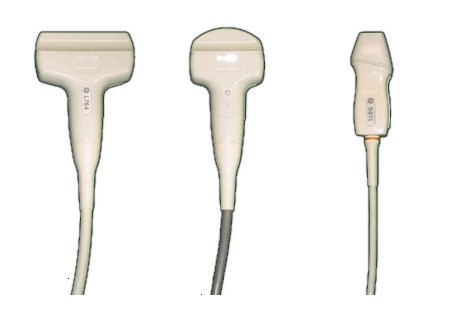
A handheld probe reaches both a deep view and a shallow one in two ways. One design puts two transducers in a single body and flips between them. The other puts one transducer behind a single face and shifts its frequency. Both let one probe do the work of two, by different means. The design is fixed at manufacture. A single-face probe never grows a second transducer. A dual-head body always carries two. A buyer settles the design early, against the real shape of the work the probe will do.
How the dual head splits the work
A dual-head probe is one housing with two complete transducers inside it. A common pairing sets a linear array on one end, running 5 to 12 megahertz for shallow work. The other end carries a convex or phased array at 2 to 5 megahertz for the deep view, reaching twenty to thirty centimetres where the linear end fades within four or five. The clinician turns the probe over to change which one faces the patient. Nothing detaches. No head is carried loose or fitted in a hurry. The flip is a wrist motion, done in the time it takes to reposition the probe on the skin.
Each face is a real, dedicated transducer. The linear end is a true linear array, built and tuned for shallow resolution. The convex end is a true convex array, built for depth. The two share only the housing and the electronics behind them. A clinician who flips from the abdomen to a neck vessel gets the picture each end would give as a standalone probe. The body holds two transducer stacks, which gives it the size of two probes joined in one.
The pairing on a dual head is chosen for the work. A linear-and-convex body covers shallow vessels at one end and the deep abdomen at the other, the common pairing for point-of-care. A linear-and-phased body sets surface work beside the heart, the pairing an emergency or critical-care kit reaches for. The two ends are fixed at manufacture for the two depths a buyer scans most.
A dual head suits the case where one patient spans two depths.
One critical-care round shows the dual head at work. A deteriorating patient needs the heart, then the lungs, then a central line. The phased end reads the heart for filling and squeeze. A flip to the linear end reads the lungs for sliding, then guides the line into the neck vein. Three reads come off one probe with no swap.
How the single head covers the range
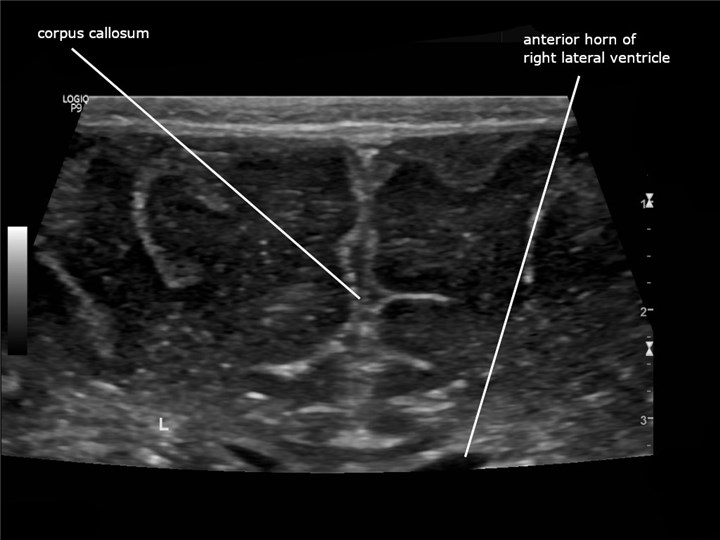
A single-head multi-frequency probe takes the other path. It carries one transducer face and changes the frequency it runs at, sliding from a high band near 10 to 15 megahertz for shallow work down to a low band near 2 megahertz for depth. Two technologies make that range possible, and they reach it from different hardware. A broadband transducer is built from materials that resonate across a wide span, so one element answers across a whole range of frequencies. A preset sets it to a centre frequency for each job, a vascular preset holding the band high, an abdominal one dropping it low, and the face retunes in a blink with no part moving. A silicon chip goes further. It packs thousands of micro-machined drums, a design known as CMUT or PMUT, for the capacitive or piezoelectric micromachined ultrasound transducer, behind one face that the software reshapes into a linear, a convex, or a phased pattern on demand. The clinician never turns the probe over. A button or a preset shifts the band, and the same face that read the shallow vessel reaches for the deep organ a moment later. One light face covers the range, with no flip and no second transducer stack to carry, so a vascular reader holds the band high all morning and drops it low for one deep look at a kidney, the band following the question without a probe change. The reach has a limit set by what the element can span. A broadband crystal covers about an octave, 2 to 5 megahertz or 5 to 12 megahertz, and the full 2 to 15 a wide kit might want sits beyond a single crystal. A chip face spreads its range wider, since the software, not the crystal, sets the pattern in silicon. The face holds its finest detail through the middle of the range, where the bulk of focused work lives. A clinician whose work sits in that band carries one light probe through the whole day, and a buyer checks the stated range against the shallowest and the deepest scans the work will meet.
What the dual head offers
The dual-head body carries two transducer stacks, so it runs large and heavy and costs more to build.
Both transducers sit in one sealed body with no connector to wear, the flip a turn of the wrist, each end reading at its full dedicated quality, and a worn end serviced on its own.
What the single face offers
The multi-frequency probe runs light, with one transducer face and one stack of electronics. It cleans as one smooth surface, with no second end to wipe around. A small body drops into a pocket and stays simple to store.
The chip versions set their range in silicon at manufacture, so the face is built for the bands the work needs. A buyer reads a multi-frequency claim by asking where in the range the work will live, then checks the picture at that point.
The frequency shift needs only a button, leaving the probe on the skin. A clinician scanning a moving child, or working one-handed in a tight bay, changes mode without breaking contact with the patient.
Wear runs differently on the two designs. The dual head has no electrical connector to corrode, since both transducers sit in one sealed body, the flip a mechanical turn with no contact to fret. The single face carries no moving part at all, the band shifting in electronics alone. Both seal against a disinfectant wipe between patients.
Which design fits which work
The fit turns on how far apart the two views a clinician needs sit from each other. A clinician who works two distinct depths, both demanding, at full quality in one session leans to the dual head. A deep abdominal look paired with a fine vascular one asks for two real transducers, and the flip delivers both in one wrist turn.
A clinician who carries the probe for hours leans to the single face. A long screening list, a community clinic with no pause, a field morning with the device in hand all reward the gram saved. The light face stays easy across a long day. A clinician whose work sits within one band, straying a little beyond it, also leans to the single face. The even picture through the middle of the range covers the daily caseload. The honest question is which probe images well enough across the exact span the work demands, at a weight and price carried day after day.
A buyer settles it by counting two things across a real week. Count how often two distant depths fell on one patient at once. Count how many hours the probe stayed in the hand. A high first count points to the dual head, a long second count to the single face. The market splits along the same line. A dual-head handheld pairs a 5-to-12-megahertz linear face with a 2-to-5 convex one in a single sealed wand. A multi-frequency handheld carries a chip face rated across roughly 2 to 12 megahertz, the band set by a preset. A buyer reads the data sheet for the exact bands and the depth each one reaches.
Common questions about the two probe designs
What is a dual-head ultrasound probe?
One housing holds two complete transducers: a linear array at one end for shallow work, a convex or phased array at the other for depth. The clinician turns the probe over to change which end faces the patient.
What is a single-head multi-frequency probe?
One transducer face that changes the frequency it runs at, sliding from a high band near 10 to 15 megahertz for shallow work down to a low band near 2 megahertz for depth.
How does the flip work?
The two faces sit back to back in one housing. The device senses which end is live and loads its preset. Nothing unplugs, so no contact wears with use.
How does a single face cover a range of depths?
A broadband element answers across a wide span, set by a preset to a centre frequency for each job. A chip face goes further, reshaping the beam into a linear or a convex pattern in software, a CMUT or PMUT design.
How do the two designs differ in size and weight?
The dual head holds two transducer stacks in one body, so it runs larger and heavier. The single face holds one stack and stays pocket-sized.
Which design suits which clinic?
A clinic that works two distant depths at full quality in one session suits the dual head. A clinic that carries the probe for hours across one band suits the single face.

About the Author
Julien Mercier
Senior R&D Engineer · Medical Ultrasound Transducer Development
Senior R&D Engineer with an M.S. in Applied Physics and over 15 years of experience in medical ultrasound transducer development, specializing in the design verification and performance testing of high-frequency imaging transducers. Currently leading the development and verification of the company’s next-generation high-frequency linear-array transducer, responsible for imaging performance evaluation and reliability analysis in preclinical testing. Brings extensive hands-on experience in piezoelectric element tuning, beamforming parameter optimization, and system-level performance testing.