









Bovine Pregnancy Transrectal Ultrasound Handheld Veterinary
A bovine pregnancy ultrasound reaches a cow’s uterus through the rectum and reads a calf from around a month after breeding, far earlier than a hand alone could call it. The scan confirms the cow is in calf, dates the pregnancy, finds the heartbeat of a live calf, and tells a bull from a heifer in the months that follow. The everyday job is the preg check, the sorting of the in-calf cows from the open ones a herd must breed again.
The everyday preg check
The preg check is the bread and butter of cow work. A dairy or a beef herd runs its cows past the probe a few weeks after breeding, the vet calling each one in calf or open. The open cows are the ones the herd must find, the animals to breed again before another cycle slips by. A dairy lives on getting its cows back in calf on a tight schedule, the milk and the calves both turning on it. The preg check is the eye the herd keeps on its breeding, run every few weeks on the cows lately bred.
An open cow costs a farm by the day. A cow that fails to catch eats her feed and gives no calf and no fresh milk, the loss counted for every day she stands empty. The scan finds her early, in time to rebreed her before the cost runs up. The detail of what that costs a herd belongs to the farm’s own reckoning, set out elsewhere. The open cow is the costly one on any herd, a place to fill with no return until she catches. The scan turns up the open cows in time to do something about them, the cost cut short the day they are found.
The early call is the value of the scan. The probe reads a calf at around a month, weeks earlier than a hand could feel one with any surety. The early weeks a hand calls a guess turn into a clean answer the day the cow is scanned, the herd’s breeding run on certainty from the first month. A herd left to find its open cows by the calendar loses weeks on every miss, a cow not seen empty until she fails to calve. The scan reads her open the month she is checked, the wasted weeks cut away.
Reaching the uterus
The cow is scanned from the inside, the same as the breeding scan of a mare. The vet’s arm goes into the rectum with a long probe and reads the uterus through the gut wall, the way large-animal repro work is done across the species. The cow-specific part is the size of her, the uterus reached far in on a deep-bodied beef cow. The reach to the uterus runs longer on a big beef cow than on a small dairy one, the vet working in to the full length of the arm on the largest animals. The technique itself is the shared one of large-animal repro, set out where that work is covered.
The pregnant uterus drops as the calf grows. The small conceptus of the first weeks sits up within easy reach of the arm. By the later months the uterus has pulled down and forward over the brim of the pelvis, the calf reached deeper and read in pieces too large for one view. The vet follows it down through the pregnancy, the reach changing through the months. A vet learns to find the uterus at every stage, the probe taken to it wherever the growing calf has pulled it down. The reach is part of the read, the uterus chased through the body across the months.
The first sign of a calf
The first sign of a calf is a pocket of black fluid in the uterus. A conception fills a horn of the uterus with fluid the scan reads as a dark space, the embryo growing somewhere within it. From around twenty-eight days the vet finds that fluid and the small embryo inside, a speck against the dark with the flicker of a heartbeat at its edge. The heartbeat is the thing the vet reads for, the proof of a live calf, the sign that sorts a true pregnancy from a dead one or an empty swelling. A scan run at the right day reads the fluid, the embryo, and the beat together, the three that confirm a cow in calf. Too early a scan finds a horn not yet filled, the conception so small the vet cannot yet call it, the cow brought back a week on. The vet times the preg check for the days a calf reads clear, far enough along for the embryo to show and its heart to beat. A check run a week shy of the window shows too little for a call and sends the cow back for a second visit, a wasted handling. The vet holds the herd’s scanning to the day a calf reads clean, the whole round called on the first pass. A cow called in calf on a clear heartbeat is a cow a farm can count on for a calf in the season ahead.
The fluid alone is not a pregnancy. A horn can fill with fluid where an infection sits, a dark swelling with no calf in it. The vet reads for the embryo and its heartbeat inside the fluid, the calf the thing that makes the dark space a pregnancy. A vet new to the work learns to wait for the heartbeat before calling a cow in calf, the fluid alone a poor thing to call a pregnancy on. The beat is the proof, the dark fluid only the place to look for it.
The heartbeat reads the calf alive. A live embryo shows a fast flicker at the edge of its body, the beat a vet learns to catch on the screen. A pregnancy that has died leaves the fluid and the embryo with no beat, the calf still on the screen, its grey shape giving no flicker. The heartbeat is the line between a calf and a loss. The beat reads fast on a live embryo, a quick flutter the screen catches plainly once the vet finds the embryo against the dark. A vet reads the flutter for a moment to be sure of it, the call of a live calf made on the beat seen with the eye.
The early dead calf is read and dealt with. A conception that fails in the first weeks may be reabsorbed or carried as a dead mass, the cow standing empty without a sign on the outside. The scan finds the loss, the open cow sent back to breeding the vet would otherwise have called in calf. The early loss is a real part of cow breeding, a share of conceptions failing in the first weeks before they ever show. A herd rescanned a few weeks on catches the ones that have slipped, the cow that lost her calf found and bred again.
The day of the scan is chosen with care. A preg check run at twenty-eight to thirty-five days catches the calf clear, the heartbeat strong and the conception plain in the horn. The vet sets the herd’s scanning day a month past the breeding, the timing that reads a calf at its clearest early on.
Dating the calf
The scan ages a calf as well as finds it. The size of the embryo, then of the calf, reads its age in the early months, a vet measuring it against a chart of how a calf grows. A herd scanned once can be sorted by how far along each cow has come, the calving dates set from the scan. A herd bred over a few weeks calves over a few weeks, the scan sorting the cows by how far along they sit and grouping the calvings into a tight span. A farmer who knows when each cow is due can stand the calvings up and watch them through.
The growing calf shows its parts in order. The early embryo is a speck, then a body with limb buds, then a calf with a head and legs and the beat of a heart. The vet reads which parts have come to age the pregnancy, the calf’s growth a calendar the scan reads. A vet matches the calf on the screen to the weeks since breeding, the two checked against each other to fix the age. A calf ahead of its dates or behind them tells the vet the breeding record may be wrong, the scan trusted over the paper.
Late in the pregnancy the calf grows past the probe. A calf grown past a single view is aged by its parts, the size of its head, its eye, its hoof read against the months. The whole calf no longer fits the screen, the vet reading the age from the pieces that do. The eye of the calf, the bones of its leg, the size of its head each read against the months a calf grows them, a chart in the vet’s head the age is read from. A late calf is aged in pieces, no single view holding the whole of it.
The placentomes carry the dating into the later months. The buttons where the calf’s membranes join the womb grow through the pregnancy, their size a measure of how far along a cow has come. A vet reads the placentomes to age a calf the embryo has long outgrown the screen.
Sooner than a hand can call it
A hand cannot call a cow in calf with surety until well along. The probe reads the calf clearly at a month.
The buttons of the cow’s placenta
A cow grows her placenta as a scatter of buttons. The calf’s membranes join the womb at round attachments, the placentomes, each a button where the calf draws its blood from the cow. The scan reads these buttons through the pregnancy, a feature of the cow the mare and the other species do not share. The buttons start as firm little knots on the wall of the womb and grow into mushroom-shaped attachments through the months the calf draws on them. A vet learns their look early, the placentomes a normal part of a cow’s pregnancy that an eye new to cattle might read as a trouble.
The buttons grow with the calf. The buttons start small and grow through the pregnancy, their size reading the stage of a calf the probe can no longer measure whole. A vet reads the buttons to age a pregnancy in its later months, the placentomes the calendar when the calf has outgrown the screen. A vet reads the growing size of a placentome as a clock, the buttons a steady measure through the back half of the pregnancy. The calf the screen cannot hold whole is dated by the buttons it hangs from.
The buttons read the health of the pregnancy too. A placentome swollen, dark, or oddly shaped speaks of a trouble in the placenta, an infection or a failing attachment that puts the calf at risk. The vet reads the buttons for their look as well as their size, the placenta a part of the pregnancy the scan can watch. A separation of the placenta from the womb reads on the scan as fluid lifting a button off the wall, a sign of an abortion coming. The vet reads the buttons on a cow at risk of losing her calf, the placenta watched where a hand could feel nothing.
Telling a bull calf from a heifer
The scan tells the sex of the calf from around two months. A trained eye finds the genital tubercle, a small bright spot that marks the calf’s sex by where it sits. The vet reads it in a narrow window of the pregnancy, the sex told months before the calf is born. The window for sexing runs through a stretch of the second month, the tubercle clear and the calf small enough to position in that span. The vet books a herd’s sexing scans for that window, the sex read on the calves the right age on the day.
The place of the tubercle marks which sex the calf is. The vet finds the bright spot and reads where it lies along the body, the position the sign of a bull or a heifer. The window for the read is narrow, the tubercle clearest in a stretch of the second month, before the calf grows past an easy view. The read is surest in the heart of that window, the tubercle settled in its place and the calf still small enough to turn for the view. A read taken at the right day calls the sex surely, the doubtful ones held for a surer one.
The sex of the calf earns its place on a dairy. A dairy plans its year around which calves are heifers, the early sexing marking the future milkers from before they drop. A breeder reads the sex to plan the herd from the womb. A dairy that knows its heifer calves months early lines up its replacements and its space, the beef crosses and the cull cows sorted before a calf hits the ground. The sex read in the womb turns the calving season from a surprise into a plan.
The read asks for a trained eye and the right day. The tubercle is a small mark, the window a short one, the sexing scan a skill a vet builds over many calves. A vet new to it reads the sex on the clear cases and leaves the doubtful ones for a surer day.
The twin and the freemartin
The scan finds the twins a cow carries. Two calves in a cow read as two conceptions, two embryos with two heartbeats, a finding a vet watches for on the early scan. A twin pregnancy in a cow is harder on her than a single, the calves smaller and the calving more likely to go wrong. A cow built to carry one calf carries two with less room and less to feed them, the twins born small and the cow worn by the load. A farm warned of twins early can feed and watch the cow through to a safer calving.
A heifer twinned with a bull is born a freemartin. A heifer calf sharing the womb with a bull calf takes his hormones in the blood they share, born nearly always unable to breed. The scan that finds a mixed twin warns the farm a heifer calf may be a freemartin, the animal checked before she is kept for breeding. The freemartin grows up looking like any heifer, her trouble hidden inside until she fails to breed. The scan that flagged her twin sends her for a check, a useless breeding animal sorted out before she eats a year of feed for nothing.
A live calf or a lost one
The heartbeat is the first thing the scan reads for. A live calf flickers with its beat, the proof a vet looks for before calling a cow safely in calf. A scan that finds the calf without a beat reads a loss, a pregnancy that has died in the womb. The beat is the one sign that tells a live calf from a dead one with no doubt, a flicker there or a flicker gone. A vet waits to see it before the cow is called safely in calf, the heartbeat the proof the rest of the scan leans on.
A calf that dies may be carried or lost. The scan reads a dead calf in the womb as a still mass, no flicker where a live one should move, an early loss gone without a trace before the scan can find it. The vet reads what is there to know whether to expect a calf or to send the cow back to breeding.
The mummified calf is a trouble the scan names. A calf that dies and stays in the womb can dry to a hard mummy, the fluids gone and the calf shrunk to a hard dark mass. The cow carries it past her time with no calf to come, the scan reading the mummy a vet must clear to bring her back to breeding. The mummy gives no sign on the outside, the cow carried on past her date with a hard dead calf inside. The scan names the trouble a hand might miss for months, the cow cleared and brought back to the breeding string.
The viability read guards the herd’s count. The scan catches a dead pregnancy and sends the cow back to breeding before she wastes a season standing empty on a calf that will never come. A heartbeat read strong puts a calf on the books with confidence.
The scan reads the pregnancy from the embryo to the calf. It finds the fluid, catches the heartbeat, ages the calf, sexes it, counts the twins, and watches for a loss, the whole of a pregnancy read at the cowside. The cow gives up her calf to the probe months before it stands in the shed. A cow scanned through her pregnancy gives a vet a calf to read at every stage, the fluid and the embryo, the heartbeat, the parts, the sex, the buttons, each in its season. The pregnancy the cow hides inside is read on the screen from the first month to the last.
The probe and the herd
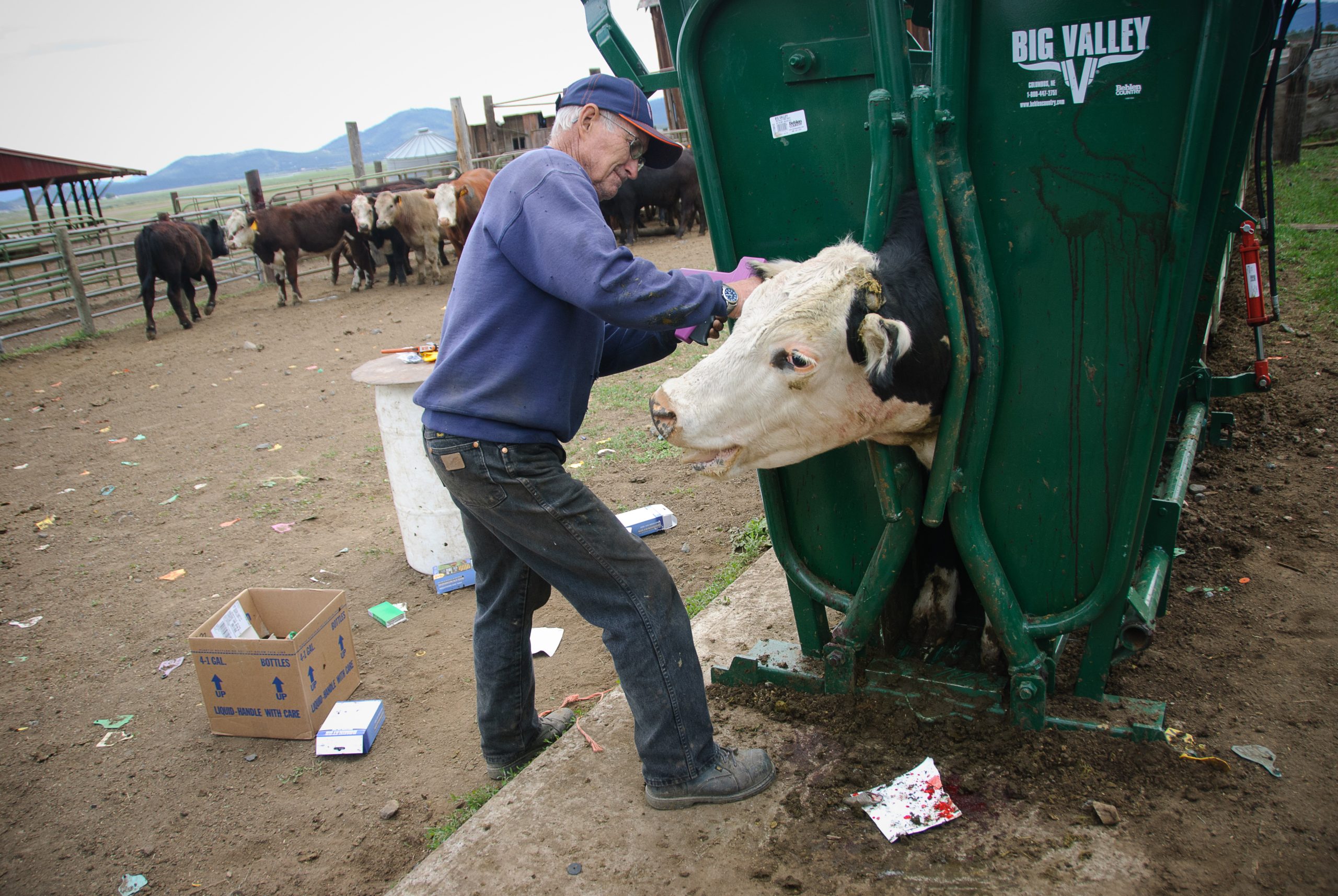
The work runs on a rugged rectal probe. A long linear probe rides the arm into the rectum and lays its window against the uterus, the same probe the mare and the larger animals take. The handheld carries it as a sealed cordless wand for the muck of a crush, the picture thrown to a screen on the arm.
A vet runs a whole herd in a morning. The cows come through a crush one after another, a scan and a call for each in under a minute, a hundred head read before noon. The speed of the preg check is what lets a farm scan its whole herd at every round of breeding. The cows file through the crush, the vet’s arm in and out and a verdict called for each, a tally marking the in-calf and the open down the line. A whole season’s breeding is read in a few mornings of work.
The same probe reads the ovaries that drive the breeding. The follicles and the corpus luteum a vet reads to time a cow’s breeding sit on the same scan, a part of the work with its own page. The preg check and the ovary read run on the one machine in the one pass down the herd, the pregnancy and the breeding watched together. A cow read open on the preg check is looked at on the same pass for why she failed, the ovaries read for the cycle she sits in. That ovary read fills a page of its own.
What the preg check settles
The bovine pregnancy scan turns a guess into a managed herd. The open cows are found and bred again, the in-calf cows dated and grouped by their calving, the twins and the losses caught early. A herd scanned through its breeding runs on a calendar the vet draws cow by cow. The herd that once waited on the calvings to learn its breeding reads it all months early now, the open cows bred again, the in-calf cows grouped, the twins watched. A farm runs its year on the calendar the preg check draws.
The probe reads a calf months before a hand could be sure of it, and reads more of it than a hand ever could. The pregnancy confirmed, the calf dated and sexed, the heartbeat found, the twin caught: each comes from the scan at the cowside, the answer in hand before the cow leaves the crush. The preg check is the tool a breeding herd is run by. A farm with the scan reads its breeding as it goes and fixes the misses in time, the preg check turning a herd hoped over into a herd managed.
Common questions about bovine pregnancy scanning
How early can ultrasound detect pregnancy in a cow?
From around twenty-eight to thirty days after breeding. The scan reads the fluid in the uterus, the small embryo within it, and the flicker of its heartbeat, the three together confirming a live calf. A hand in the rectum cannot call a pregnancy with surety until well later, the scan weeks ahead of it.
How is a cow scanned for pregnancy?
Through the rectum. The vet passes an arm into the rectum with a long probe and reads the uterus through the gut wall, the same way the breeding tract of any large animal is reached. The pregnant uterus is found in the horn early on, and lower over the pelvis in the later months.
Can ultrasound tell the sex of a calf?
Yes, from around two months. A trained eye finds the genital tubercle, a small bright spot whose place along the calf’s body marks a bull or a heifer. The window is narrow, the tubercle read clearest in a stretch of the second month. A dairy uses the early sexing to plan its replacement heifers from the womb.
Why does the scan look for twins in cattle?
Because twins bring trouble to a cow. A twin pregnancy is harder on a cow and her calves than a single. A heifer calf twinned with a bull is born nearly always a freemartin, unable to breed. The scan finds the twins early, the farm warned to watch the cow and to check a heifer twin before keeping her.
What does the heartbeat tell on a pregnancy scan?
That the calf is alive. The vet reads the flicker of the heartbeat as the proof of a live calf, the sign that separates a true pregnancy from a dead one. A calf found without a beat is a loss, the cow sent straight back to breeding with no calf to wait for.

About the Author
Julien Mercier
Senior R&D Engineer · Medical Ultrasound Transducer Development
Senior R&D Engineer with an M.S. in Applied Physics and over 15 years of experience in medical ultrasound transducer development, specializing in the design verification and performance testing of high-frequency imaging transducers. Currently leading the development and verification of the company’s next-generation high-frequency linear-array transducer, responsible for imaging performance evaluation and reliability analysis in preclinical testing. Brings extensive hands-on experience in piezoelectric element tuning, beamforming parameter optimization, and system-level performance testing.