Bovine Follicular Development Monitoring Handheld Ultrasound
A bovine follicular scan reads a cow’s ovaries through the rectum to see where she stands in her cycle and to drive the timed breeding a modern dairy runs on. It reads the follicles that rise and fall in waves through the cycle, the dominant one that will ovulate, and the corpus luteum that marks a cow already past it. The scan times a cow’s breeding from her ovaries, the day to inseminate read off the structures the cycle turns on.
What the ovaries tell
The ovaries hold the story of a cow’s breeding. A pair of them sits at the ends of the uterine horns, each carrying the follicles and the corpus luteum that mark the cow’s place in her cycle. The scan reaches them through the rectum, the same arm and probe that read the pregnancy, and reads each ovary for what it carries. The ovary is a small thing, the size of a walnut or a little larger, the follicles and the corpus luteum standing out on it once a vet learns their look. The scan lifts each ovary into its window and reads it from end to end.
The structures on the ovary place the cow in her cycle. A big follicle near to ovulation reads a cow coming into heat, a fresh corpus luteum a cow just past it, a quiet ovary a cow between her waves. The vet reads the two ovaries together to call where in the cycle a cow sits, the call that sets the day to breed her. A vet who reads a cow’s ovaries knows her cycle without watching her for days, the picture telling at a glance what a heat watch waits a week to show. The two ovaries read together leave little a cow’s cycle can hide.
The follicles and the waves
A follicle is a pocket of fluid on the ovary that carries an egg. It reads on the scan as a round black space, small at the start and growing larger toward ovulation, the largest of them the size of a grape before it bursts. The follicles do not grow one at a time through the cycle. They rise in waves, a batch of small follicles starting together, one of them pulling ahead as the dominant follicle, the others left to fall back and fade. A cow runs two or three of these waves in a single cycle, the dominant follicle of the last wave the one that ovulates when the time comes. The scan reads the wave a cow sits in, the size of the dominant follicle telling how near she is to ovulating. A vet measures that follicle across to judge the day, a follicle near its full size a cow about to come into heat. The waves drive the cow’s cycle. Reading them is the heart of timing her breeding.
The dominant follicle is the one the scan watches. Once a follicle pulls ahead of its wave, it goes on growing, the one that counts, the rest of the batch fading from the ovary. The vet finds the dominant follicle on a cow’s ovary and measures it, the size of it the read on how the wave is running. The dominant follicle of a cow grows to the size of a large grape before it ovulates, a structure a vet can measure to the millimetre. The scan watches it climb to its full size, the day of ovulation read off the last of its growth.
The follicle’s size reads the day. The size of the dominant follicle marks how far the wave has run, a follicle near its full size a cow close to ovulation. The vet reads the size against the days a follicle takes to ripen, the measure that puts the ovulation within a day or two. A vet who scans a cow on two days running watches the follicle grow between them, the climb of it pinning the ovulation closer than a single look could. The growing follicle is a clock the scan reads by its size.
The follicle reads for trouble as well. A follicle that grows past its size and fails to burst is a cyst, a structure that throws a cow off her cycle. The vet reads the size and the wall of a follicle to tell a ripe one from a cyst, the difference that sorts a breedable cow from one in trouble. A cyst is known by what it fails to do, sitting on past the day a ripe follicle would have burst, giving no corpus luteum where one should form. The vet calls it on its stay and its size, the two told apart over the days.
The waves run whether a cow shows heat or not. A cow grows and ovulates her follicles on the schedule of her cycle, the signs of heat she shows on the outside only a part of it. The scan reads the wave on the ovary itself, the cycle read at its source, the cow’s behaviour no longer the only sign of it.
The corpus luteum
The corpus luteum forms where a follicle ovulates. Once the dominant follicle bursts and releases its egg, the spot it leaves fills with tissue and becomes the corpus luteum, the structure that makes the hormone of the held cycle. It reads on the scan as a firm grey body on the ovary, denser than the black fluid of a follicle. The corpus luteum grows in the days after ovulation to fill much of the ovary, a body the size of the follicle it replaced or larger. The vet reads its grey against the black of any follicle nearby, the two structures plain apart on the screen.
The corpus luteum tells the vet a cow has ovulated. A fresh corpus luteum on an ovary is the proof a cow has passed her heat and ovulated her egg, the structure that holds a cow in the back half of her cycle. The scan finds it where a hand would feel only a firm spot, the make-up of it read on the screen. A corpus luteum found on a cow that was meant to be open tells the vet she has cycled and ovulated since, the cow further along than the record showed. The structure reads the cow’s recent history off her ovary.
The corpus luteum can carry a cavity. A fresh one often holds a pocket of fluid in its middle, a dark space inside the grey body. The vet learns to read that cavity as a normal part of a corpus luteum, the fluid-filled centre easy to take for a follicle by an eye new to the work. A corpus luteum with a cavity is read by its thick grey rim around the fluid, the wall of it far heavier than the thin edge of a true follicle. The vet reads the rim to tell the two apart, the cavity no trap to a trained eye.
The corpus luteum drives the timing of the breeding programs. A cow with a corpus luteum can be brought into heat with a hormone that breaks the structure down, the cycle re-set to a day the farm chooses. The scan reads whether a cow carries a corpus luteum the program needs, the structure that says the treatment will work. The hormone that breaks a corpus luteum down brings a cow into heat in a few days, the cycle pulled forward to a day the farm picks. A cow with no corpus luteum has nothing for the hormone to act on, the scan reading her out of that step until she has ovulated and grown one.
The cow that is not cycling
Some cows do not cycle at all. After calving a cow takes weeks to start her cycles again, the ovaries quiet until they wake, no follicle and no corpus luteum on them. A cow stuck in that quiet stage past her time is a problem for a farm waiting to breed her. A cow run down after calving, milking hard on poor feed, holds her cycles off until she gains her strength back. The scan reads the quiet ovary that marks her not yet ready, the trouble named before the farm wastes weeks waiting on a heat.
The scan reads the quiet ovary for what it lacks. A cow not cycling carries no big follicle and no corpus luteum, the ovaries small, nothing on them to read. The vet calls her not cycling on the empty ovaries, a cow the farm must rouse before she can be bred. The small ovary of a cow not cycling gives the scan almost nothing, a smooth body with no follicle to measure and no corpus luteum to find. The emptiness itself is the finding, a cow read not cycling on what her ovary lacks.
The not-cycling cow is found early by the scan. A cow watched only for heat shows nothing when she is not cycling, the farm left waiting for a heat that does not come. The scan reads the quiet ovary the day the cow is checked, the trouble named and the cow put on a program to start her cycling. A hormone program kick-starts the quiet ovary, the cow brought into a cycle a vet can then breed her on. The scan reads the ovary before and after, the cow’s return to cycling watched on the structures that grow back onto it.
No corpus luteum, no progesterone
A corpus luteum on the ovary means a cow has ovulated and carries the hormone of her cycle. No corpus luteum, no such proof.
The cystic ovary
A follicle that fails to burst becomes a cyst. A cyst reads as a large fluid structure on the ovary, bigger than a normal follicle and lasting past the day it should have ovulated. The cow carries it and does not cycle right, the cyst holding her off her normal pattern. A cyst can sit on a cow’s ovary for weeks, holding her out of heat or throwing her into long irregular ones. A cow that will not settle to breeding often carries a cyst the scan turns up, the trouble named where a hand would feel only a large soft swelling.
The scan tells a cyst from a ripe follicle by its size and its stay. A cyst outgrows a normal follicle and stays past the day it should have burst, the vet reading its size and its wall and watching whether it goes. The structure named by what it does over the days, a cyst read on its stay as much as its look.
The cystic cow is treated off the scan. A cyst read on the ovary tells the vet why a cow will not cycle and points to the hormone that clears it. The scan checks the ovary again after the treatment, the cyst gone or holding read on the next pass. A cystic ovary caught on the scan is a breeding cow saved from a season lost to a trouble a hand could not name. A cystic cow left unread stands open month after month, bred and missing and bred again with no one knowing why. The scan reads the cyst the first time and points the way to clear it, the cow back in calf in weeks, a year of misses cut short.
Breeding by the clock
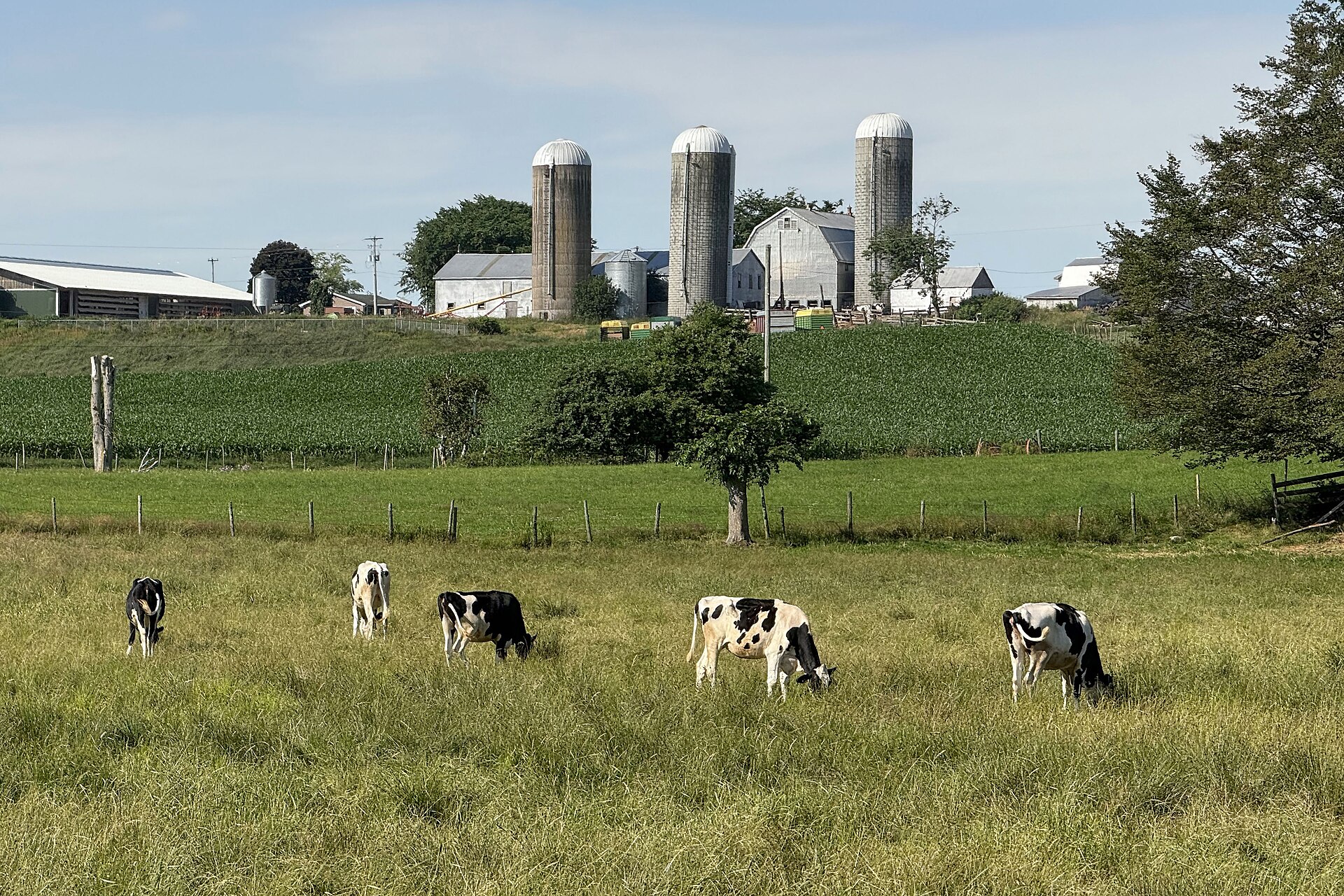
The scan drives the breeding by the clock. A modern dairy breeds its cows on a set day without watching for heat, a program of hormones bringing every cow to ovulate together. The ovary read on the scan is what tells the vet whether each cow can run the program and whether it has worked.
The program needs the right structures on the ovary. The hormones of the program work only on the right structures, a corpus luteum for the one and a running wave for the other. The scan reads the ovary before the program starts, the cows fit for it sorted from the ones that need rousing first. A pre-breeding scan reads every cow’s ovary weeks ahead, each cow sorted to the treatment her ovary calls for, the herd brought to the breeding day in a state the program can work on.
The scan times the breeding to the hour. A program brings the cows to ovulate in a known window, the herd inseminated on a single day without a heat ever watched for. The scan checks the dominant follicle is ripe to ovulate when the program calls for it, the timing read off the ovary itself, the cow’s heat no longer the thing waited on.
The program saves the watching for heat. A program timed on the scan breeds every cow on the day, the heats once missed in a busy herd no longer a hole in its breeding, the quiet cows and the night ovulators caught with the rest. A dairy bred this way puts a calf in nearly every cow at the one round. A heat runs short on many a modern cow, faint and easy for a busy farm to miss. The program reads past the heat to the ovary, every cow bred on her ovulation whether she showed a heat or not.
The whole program runs on the ovary read. The cow checked for a corpus luteum, the follicle watched for its ripening, the response read after each hormone: each step turns on what the scan finds on the ovary. The timed breeding of a modern dairy is built on the picture the probe draws of the cow’s cycle. A program run on the scan breeds each cow when her ovary says ovulation is due, the timing taken from the structures the scan checks at every step. The rate of calves got is the proof of the read.
Reading the response
The scan reads whether a treatment has worked. A hormone given to break a corpus luteum should leave the ovary clear of it on the next scan, the structure gone and a new wave free to run. The vet scans a cow after the treatment to read the change, the program followed on the ovary step by step. A scan a week into a program reads whether the corpus luteum has gone and a fresh follicle has grown, the two changes that say the treatment is on track. The vet reads the ovary at each step against what the program meant to do to it.
A cow that has not responded is found and dealt with. A corpus luteum still sitting on the ovary after the hormone tells the vet the treatment failed, the cow held back or treated again before she is bred. The scan catches the misses the program would otherwise carry blind, the cow bred only once her ovary reads ready.
The open cow’s ovary
The cow that fails to catch comes back to the ovary scan. A cow read open on the pregnancy check is scanned the same pass for her ovary, the cycle she sits in read to plan her next breeding. The pregnancy itself is the other half of the cow scan, set out on its own page.
The two reads run on the one pass down the herd. The vet reads each cow for a pregnancy and reads the ovary of every open one, the breeding and the not-yet-bred both moved along in the one handling. A herd run past the probe comes away with its pregnancies confirmed and its open cows back on a plan. A vet works down the line of a herd calling each cow, in calf and moving on, or open and her ovary read for the next try. The one pass settles the pregnant cows and starts the open ones over, no cow left in the dark about where she stands.
The ovary read keeps the open cow from wasting a cycle. A cow found open and read for her cycle in the one visit is bred again the soonest she can be, no week lost between the miss and the next try. The scan turns an open cow from a setback into the next breeding, read and planned the day she is checked. The week a farm would lose chasing a missed cow’s next heat is cut to nothing, her ovary read and her next breeding set in the one handling. The open cow leaves the crush already back in the breeding plan.
The probe down the herd
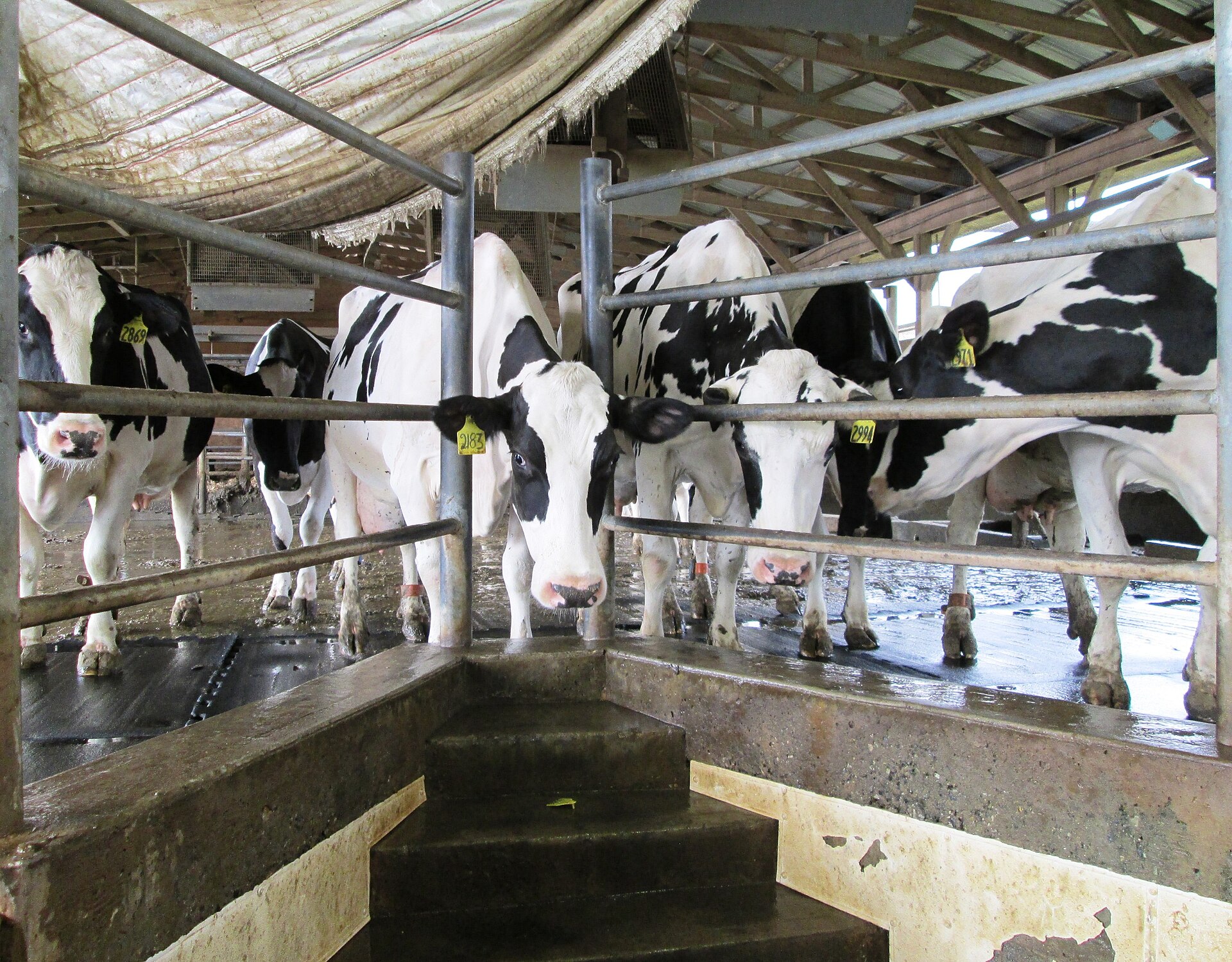
The work runs on the same rugged rectal probe as the pregnancy scan. A long linear probe rides the arm into the rectum and lays its window on the ovary, the fine detail of a follicle wall or a corpus luteum drawn close under the probe. The handheld carries it as a sealed cordless wand for the crush, the cycle read on the same machine as the pregnancy.
A vet reads a herd’s ovaries in a morning’s work. The cows come through the crush, the ovary of each read in under a minute, a whole breeding group placed in its cycle before noon. The speed is what lets a dairy run its synchronized breeding across a herd at once. A breeding group of fifty cows is read and sorted in an hour, the program set on the whole lot off the one round of scanning. The speed of the read is what makes a herd-wide timed breeding a thing a farm can do at all.
What the cycle scan settles
The follicular scan reads the cow’s cycle where it runs, on the ovary. It finds the wave she sits in, the dominant follicle that will ovulate, the corpus luteum that marks her past it, the cyst or the quiet ovary that throws her off. The cow’s cycle, hidden inside her, is read on the screen the day she is scanned.
The scan times the breeding from the ovary itself. The day to inseminate, the cow fit for a program, the response to a hormone: each is read off the structures the scan finds, the breeding timed on the cow’s own ovaries. A dairy breeds by the clock on what the probe draws.
The scan finds the cows a heat watch would lose. The cow not cycling, the cow with a cyst, the cow whose program failed: each shows on the ovary where her behaviour shows nothing. The scan reads the trouble on the ovary the day it is there, the cow put right before a season is lost to it. A heat watch can only catch a cow that shows a heat, the quiet and the troubled ones slipping past it for cycle after cycle. The scan reads the ovary of every cow whether she shows anything or not, the silent troubles caught on the structures they leave.
The ovary read is the engine of a managed breeding herd. The cycle followed, the follicle watched, the corpus luteum tracked, the program timed: the whole of a dairy’s breeding turns on the picture the probe draws of the cow’s ovaries. The cow gives up her cycle to the scan, the breeding run on a certainty a heat watch never gave. A dairy that reads its cows’ ovaries breeds more of them in calf and breeds them sooner, the days open across the herd falling year on year. The scan is the tool that turned cow breeding from a watch-and-wait into a managed program.
Common questions about bovine follicular scanning
What does a follicular scan show on a cow’s ovary?
Where the cow stands in her cycle. The scan reads the follicles growing in waves on the ovary, the dominant one that will ovulate, and the corpus luteum that marks a cow already past ovulation. It finds the cysts and the quiet ovaries that throw a cow off her cycle. The vet reads the ovary to time the cow’s breeding.
What is a follicular wave in cattle?
A cohort of follicles rising together in one batch. A cow runs two or three waves in a cycle, each a cohort of follicles with one pulling ahead as the dominant follicle and the rest falling back. The dominant follicle of the last wave is the one that ovulates. The scan reads the wave a cow sits in to judge her place in the cycle.
How does the scan help with timed breeding?
It reads whether each cow can run the program and whether it has worked. The hormones of a synchronization program need the right structures on the ovary, a corpus luteum to break down or a follicle to ripen. The scan reads the ovary before the program and after each step, the herd bred on a set day without a heat watched for.
Can ultrasound find a cow that is not cycling?
Yes. A cow not cycling carries no big follicle and no corpus luteum, the ovaries small with nothing on them to read. The scan calls her not cycling on the empty ovaries the day she is checked, the trouble found weeks before a heat watch would give up on her. The cow is put on a program to start her cycling.
What is the corpus luteum and why does the scan read it?
The structure that forms where a follicle ovulates. It reads as a firm grey body on the ovary and makes the hormone that holds a cow in the back half of her cycle. The scan reads it to know a cow has ovulated and to check she carries the structure a breeding program needs. A cow with no corpus luteum is one a program to break it down cannot work on.

About the Author
Julien Mercier
Senior R&D Engineer · Medical Ultrasound Transducer Development
Senior R&D Engineer with an M.S. in Applied Physics and over 15 years of experience in medical ultrasound transducer development, specializing in the design verification and performance testing of high-frequency imaging transducers. Currently leading the development and verification of the company’s next-generation high-frequency linear-array transducer, responsible for imaging performance evaluation and reliability analysis in preclinical testing. Brings extensive hands-on experience in piezoelectric element tuning, beamforming parameter optimization, and system-level performance testing.