The ATtiny and ATmega are the two main families of AVR 8-bit microcontroller, now made by Microchip after its purchase of Atmel in 2016. A design running on an AVR, or one weighing a fresh AVR design-in, reads the stock status of these parts before it commits. The classic ATtiny and ATmega run alongside a line of newer AVR parts, the range spread across the stages of a part’s life, from full production to the edge of it. Where a given part falls on that range sets whether a buyer designs it in, holds it for a running product, or looks to a newer one.
The AVR families today
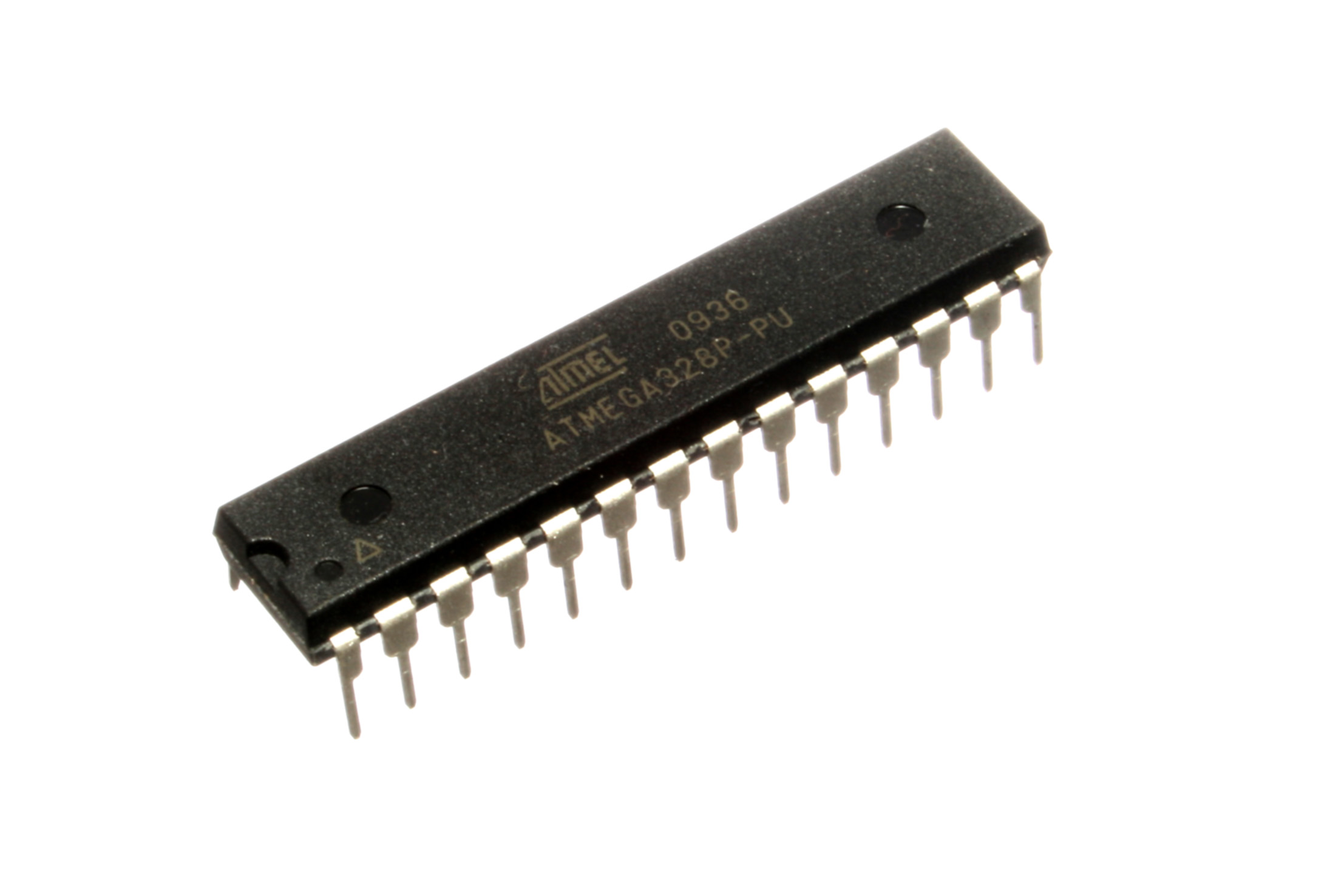
An ATMEGA328P in a 28-pin plastic DIP, marked with the Atmel brand of its day. The ATmega328P is a classic AVR, the part the Arduino made famous, in full production under Microchip today. Image: oomlout, CC BY-SA 2.0.
The AVR is an 8-bit core Atmel drew in the 1990s, a RISC design a generation of engineers learned on through the Arduino. Microchip took the line over in 2016 and carries it today. The classic families are the ones a long memory knows, the ATmega in its larger parts like the ATmega328P and the ATmega2560, the ATtiny in its small ones like the ATtiny85 and the ATtiny13. These parts program over the older ISP interface and debug over debugWIRE, the flow a classic AVR design grew up with. Microchip lists the whole 8-bit line, the classic AVR and the newer parts together, on its 8-bit MCU pages. The classic core is an 8-bit RISC, a single cycle for the run of its instructions, thirty-two registers a program works through. A free toolchain grew up around it, the avr-gcc compiler and the avr-libc library, the same tools the Arduino put in the hands of a generation. That toolchain reaches the modern AVR as well, a team’s build flow carried across the line. The classic ATmega runs from a few kilobytes of flash up to two hundred fifty-six on the ATmega2560, the ATtiny from half a kilobyte up. On-chip flash, SRAM, and EEPROM sit in the part, the EEPROM a store for the settings a product keeps through a power loss. The peripherals are the plain set an 8-bit control job leans on, the timers, the serial ports, the ADC.
Microchip drew a new line of AVR after the takeover, the modern AVR. The modern line maps onto the old, the tinyAVR 0, 1, and 2-series in place of the small classic ATtiny, the megaAVR 0-series in place of the larger ATmega, the AVR Dx parts above them both with more memory and richer analog. These modern parts carry a newer core, an event system that links peripherals with no core in the loop, and a one-wire UPDI interface for programming and debug. The UPDI runs program and debug down a single pin, a step away from the ISP and debugWIRE of the classic parts that asks for a UPDI-capable programmer. The configurable custom logic block builds small logic functions in hardware, a glue chip saved. The AVR Dx parts add a twelve-bit converter and, on the DB line, on-chip op-amps, an analog front end an 8-bit design once put outside the part. A team coming from the classic AVR meets a new programming flow on these parts.
The two generations sit side by side in the catalogue today. The classic parts stay in production for the millions of designs built on them. New design-ins go increasingly to the modern parts, the work Microchip points them toward. A buyer reads a given ATtiny or ATmega against this split, the question being which generation a part belongs to and where in its life it sits. Microchip holds the classic parts because the installed base is vast, a chip in a product line a customer keeps building. The modern parts carry the features and the lifecycle a fresh design wants. Both lines draw on the same AVR knowledge, a team’s code and habits at home on either. The split runs through the stock status of every AVR a buyer looks up.
What is in production and what is fading
The bulk of the AVR line is in full production. The popular classics, the small ATtiny and the workhorse ATmega among them, ship in volume and sit deep on distributors’ shelves. The whole modern line is in production, the parts Microchip is putting its weight behind. The greater part of an AVR catalogue, classic and modern, a buyer can order today. The popular parts ship from stock on a normal day, an order filled the week it lands. The classic ATmega and ATtiny that fill so many designs hold the deepest stock, the parts a distributor keeps on the shelf in quantity. A buyer ordering a common AVR rarely waits, the supply sized to the steady demand these parts carry.
Some older classic parts have moved to a status Microchip calls not recommended for new designs. A part marked that way still ships, the supply held for the products already built on it, the label a steer away from designing it into something new. A handful of the oldest AVR parts have gone further, to end-of-life and then obsolete, a last-time-buy called and the part then off the catalogue. The count of parts at each stage shifts over time, the live status read fresh off the part each time, last year’s standing no guide. The move to NRND tends to fall on the oldest and the least used parts, the ones a newer AVR has already covered in the catalogue. A part with a deep installed base, a famous ATmega among them, holds its in-production status long past the parts around it. Reading the status one part at a time keeps a design clear of a surprise.
The table below sets the AVR families against their place in the line today. The table reads each family on the same scale, from the mature classics in production for the installed base to the modern parts a fresh design starts on. The split marks a tendency, the line between mature and fresh a soft one. A popular classic like the ATmega328P holds full production for years to come. An obscure old part may already carry an end-of-life note. A buyer treats the table as a starting map, the live status of the exact part number confirmed before a design commits. Even a family in production holds its parts at different depths of stock, a check of the part number the only sure reading.
The AVR 8-bit families and where each sits today. Status is a general guide; the live status of any one part is read from its Microchip product page. Programming interface noted, as a modern AVR needs a UPDI programmer.
Family
Era
Examples
Programming
Standing
Classic ATmega
1990s-2000s
ATmega328P, ATmega2560
ISP, debugWIRE
In production, mature
Classic ATtiny
1990s-2000s
ATtiny85, ATtiny13A
ISP, debugWIRE
In production, mature; some older parts NRND
tinyAVR 0/1/2-series
2016 on
ATtiny1614, ATtiny3226
UPDI
In production, for new designs
megaAVR 0-series
2018
ATmega4808, ATmega4809
UPDI
In production, for new designs
AVR Dx (DA, DB, DD, EA)
2020 on
AVR128DA48, AVR64DD32
UPDI
In production, for new designs
The recent shortage left its mark on the AVR line. Lead times that sat at a few weeks ran out to a year or more at the peak of the crunch, the AVR among the parts a maker waited longest for. The supply has come back since, the common parts in stock again and the lead times down near their old level. A buyer who lived through that stretch reads the lead time on a part as part of its stock status, the catalogue status only half the picture. The crunch fell hardest on the parts made on older lines, the AVR among them, a maker rationing what it could build. The lesson a buyer took from it was to hold a buffer of a hard-to-source part and to watch the lead time as closely as the price. The supply today sits near its old normal, the buffer a habit the lean years left behind. A part with a single maker felt the crunch with no second source to fall back on, a lesson that sharpened how a buyer reads the supply of an AVR design and how deep a buffer it holds.
The status of a part and its stock at a distributor are two readings, a buyer checking each. A part in full production can still run short at a distributor through a run of demand. A part marked NRND can sit deep in stock for years while its supply lasts. A buyer reads both, the production status from Microchip and the on-hand quantity and lead time from the distributor, the two together the real picture.
Reading a part’s status
Microchip carries a status on every AVR part. The product page for a part names it in production, not recommended for new designs, or obsolete, the one word a buyer reads first. A change to that status comes through a product change notification, the formal note Microchip sends ahead of a move toward end-of-life. A design that watches those notices catches an end-of-life call early, the time it buys the difference between a planned move and a scramble. The notice names the part, the new status, and the dates, the last-time-buy and the last-ship among them. A buyer signs up for the notices on the parts a design uses, the alert landing in time to act on it. A design with no one watching learns of an end-of-life from an empty shelf, the worst time to learn it. The notices come on a free feed a buyer subscribes to by part number, the watch a small standing task in place of a periodic scramble through the catalogue.
Microchip backs the line with a stated product longevity commitment, the promise that a part designed in today stays available through the life of the design. That commitment is the reason a buyer can build a ten-year product on an AVR part still in full production. The same commitment carries a process for the parts that do age out, the last-time-buy window and the notice that opens it. A buyer reads the status, the longevity note, and the change notices as one picture of where a part stands. The longevity commitment is why an industrial or an automotive design, a product with a long life ahead, can trust an AVR part still in full production. The maker that holds a part for years gives a clear notice when it finally moves, the two halves of a promise a long-life design leans on.
Sourcing ATtiny and ATmega
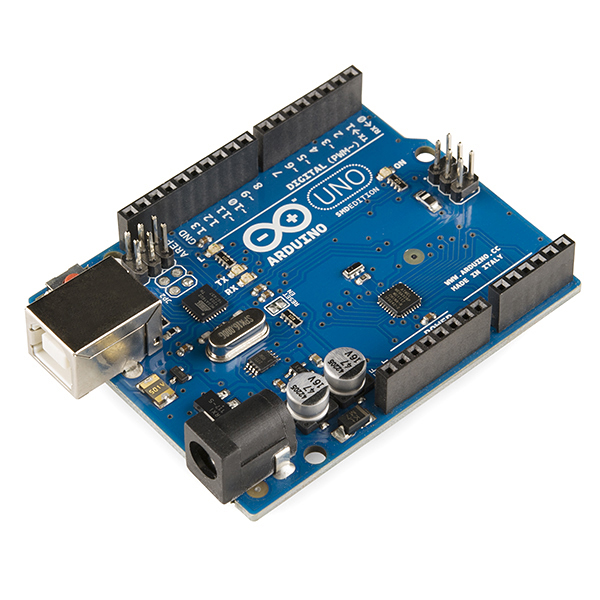
An Arduino Uno, built around an ATmega328P. The Arduino drove a demand for that one AVR part that holds it in deep production to this day. Image: SparkFun Electronics, CC BY 2.0.
The AVR comes from one maker. Microchip owns the core. No second vendor makes a drop-in AVR the way a crowd makes the 8051. A design on an AVR carries that single source as a fact of its supply, the part orderable from many distributors, the maker behind it one company. A buyer plans around it, holding stock against a shortage and watching the lifecycle of the exact part the design uses. The single source is a risk to manage, a standing part of the supply plan an AVR design carries. A buffer of stock against a crunch, a design kept inside a family with many package and memory options, a watch on the part’s status, each softens the risk a one-maker part carries. A design that cannot carry that risk at all looks to an architecture with a second source, an AVR ecosystem traded away for a broader supply. The vast AVR code base, the Arduino libraries and the avr-gcc world among it, is the thing a buyer weighs against that single source, a reason many designs carry the risk and stay.
The distributors carry the common AVR parts deep. The small ATtiny and the popular ATmega ship in the volume that keeps them on the shelf, an order filled from stock on a normal day. The depth thins on the less common parts, an odd package or a large memory size run on a longer lead time. A buyer checks the on-hand quantity and the lead time of the exact part number, the package and the temperature grade pinned down, before the design leans on it. A distributor’s page shows the on-hand quantity, the factory lead time, and the date code, the three read together. A reel of an in-production part on a normal lead time is one a design leans its volume on. A long factory lead time on a part already low at every distributor is the warning a buyer reads before designing it in.
The Arduino built a demand for one AVR part that outlived its own design cycle. The ATmega328P still ships in the millions for boards and for the products that grew out of them, a part held in full production by that demand alone. A design near that part rides the deep, steady supply it carries. The pull of a single famous part can leave its plainer siblings on a thinner shelf, a thing a buyer checks per part. The plainer ATmega and ATtiny ride a steadier demand, their stock easier to read across a year.
Buying through authorized distribution keeps an AVR design clear of the relabelled and the out-of-spec parts an open market can carry. A genuine part from a named distributor comes with a real date code and a known source, the assurance a production run leans on. A part chased on the open market through a shortage carries the risk a buyer pays a premium to avoid, the authorized channel the safer home for a design at volume. A part bought to clear a line stoppage from an unknown source brings a real chance of a counterfeit or a die pulled from scrap, a cost a failed board on the line dwarfs. The authorized distributor, or Microchip direct, is the source a production buyer trusts, the few cents a grey part saves never the saving it looks like.
A new design or a running one
A fresh design reaches for the modern AVR. The tinyAVR 0/1/2-series, the megaAVR 0-series, and the AVR Dx parts carry the longer life Microchip is building the line’s future on, the new peripherals and the active status behind them. A design that starts on a modern part today stands the best chance of a long, untroubled supply, the part still early in its life. The modern parts carry more flash and SRAM than the small classics, the richer peripherals a fresh design reaches for, the analog blocks the AVR Dx puts on chip. A design that starts modern grows within the family, a step to a larger part in the same line a small move.
A running design holds its classic part while the part holds production. A product shipping on an ATmega328P or an ATtiny85 keeps it as long as the status stays in production and the stock stays deep. A classic part that slips to NRND, or that carries an end-of-life note, sets a clock a buyer reads, the time to plan a move to a modern AVR while the old part is still in hand. The move off a classic AVR to a modern one is a real port, a new core revision and the UPDI flow to learn, a cost a team weighs against the years a fresh part buys. The same avr-gcc toolchain builds for the classic and the modern AVR, the language and much of the code carried across, the peripheral setup the part that changes. A team that knows the classic AVR meets the modern one on familiar ground, the move lighter than a jump to another vendor’s architecture. A team that has to move anyway off a classic part at its end-of-life finds the modern AVR the natural home, the same maker, the same language, the same broad toolchain.
Common questions about ATtiny and ATmega availability
Are the ATtiny and ATmega still in production?
Yes. The bulk of the AVR line is in full production under Microchip, the popular classic ATtiny and ATmega parts stocked deep at distributors. Some older classic parts have moved to not recommended for new designs, and a few of the oldest have reached end-of-life. The live status of any one part is read from its Microchip product page.
What is the difference between classic and modern AVR?
The classic ATtiny and ATmega use the older AVR core, ISP programming, and debugWIRE. The modern AVR, the tinyAVR 0/1/2-series, megaAVR 0-series, and AVR Dx, carry a newer core, an event system, and the one-wire UPDI interface. Microchip points new designs toward the modern parts, which sit early in their lifecycle.
Does NRND mean a part is going away soon?
Not at once. Not recommended for new designs means a part still ships for the products already built on it, the label a steer away from designing it into something new. A move toward end-of-life comes later through a product change notification and a last-time-buy window, which gives a design time to plan.
Can I second-source an AVR part?
No. Microchip owns the AVR core. No other maker builds a drop-in AVR. A part is orderable from many distributors, the maker behind it one company, so a buyer plans around the single source by holding stock and watching the part’s lifecycle, or by designing in a part with a second source where the supply risk is too high to carry.
Should a new design use a classic or a modern AVR?
A new design is better served by a modern AVR. The tinyAVR 0/1/2-series, megaAVR 0-series, and AVR Dx parts sit early in their life, carry richer peripherals, and stand behind Microchip’s longevity commitment. A classic part fits a design that has to match an existing product or a code base already written for it.
Do the classic and modern AVR share a toolchain?
Largely. The avr-gcc compiler and avr-libc build for both, and Microchip’s MPLAB X with the XC8 compiler covers the whole AVR line. The modern AVR needs a UPDI-capable programmer in place of the classic ISP, the peripheral code the main thing that changes between the two. A team’s knowledge of the AVR carries from one generation to the next.