Ask whether the battery in a power station can be replaced and you will get three answers, because there are three questions hiding inside the one word. The first is whether an owner can swap a module in the field, the way a cordless drill takes a fresh battery. The second is whether a service centre can open the case and fit a factory pack. The third is whether anybody at all can rebuild the pack out of individual cells and put the machine back into service. Most portable machines answer no, yes with conditions, and technically yes with several serious caveats. The distinction matters because the three routes carry completely different costs, different safety exposure and different consequences for the certification the machine was sold under. A marketing claim of a replaceable battery names none of the three.
Manufacturers rarely spell out which of the three applies. Specification sheets list cycle life and capacity while saying nothing about whether the pack has a part number. Support pages describe warranty claims for machines under three years old, then go quiet about year six. Two questions settle it: does a service pack exist as an orderable item, and who is allowed to fit it.
What is actually inside the case
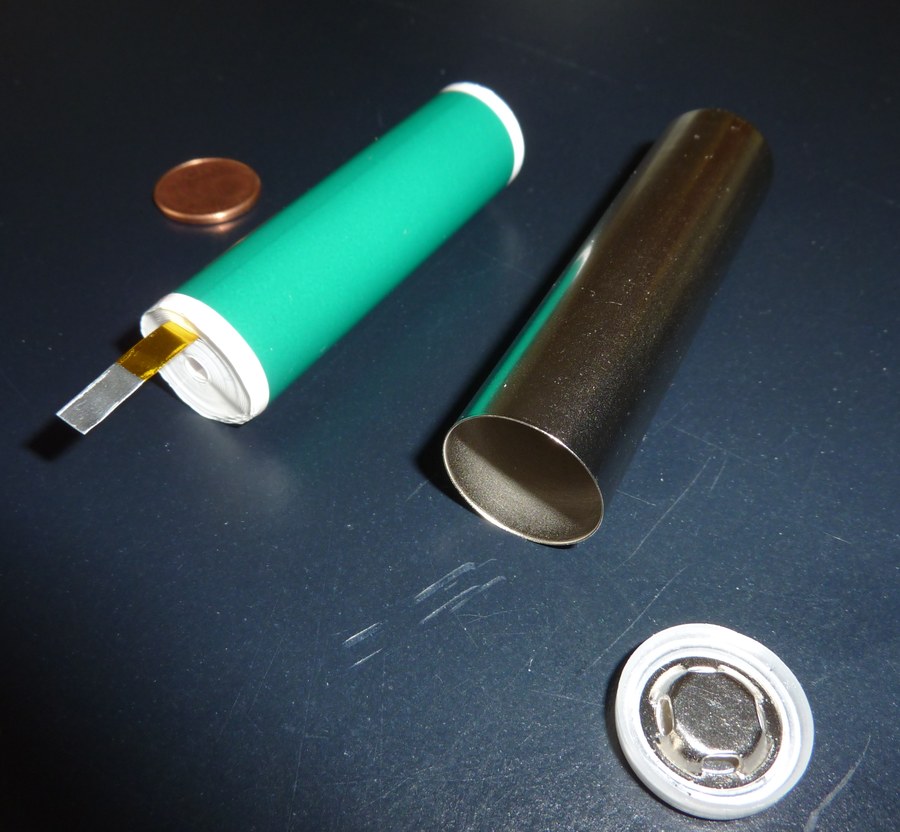
One cell taken apart: the wound electrode assembly, the steel can it lives in, the cap carrying the vent. The metal tab on the left is welded to the winding at the factory. Photo by RudolfSimon, CC BY-SA 3.0.
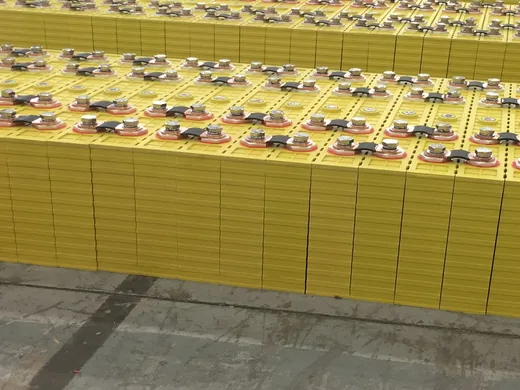
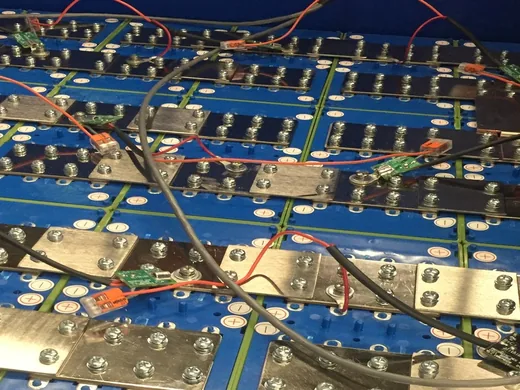
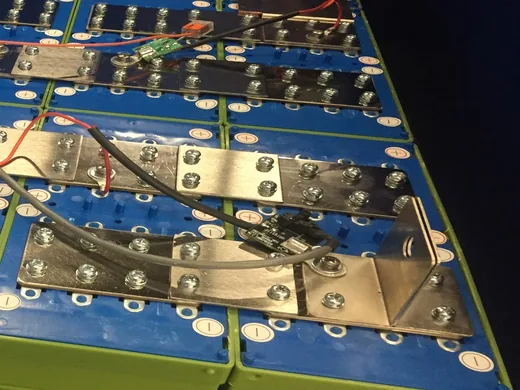
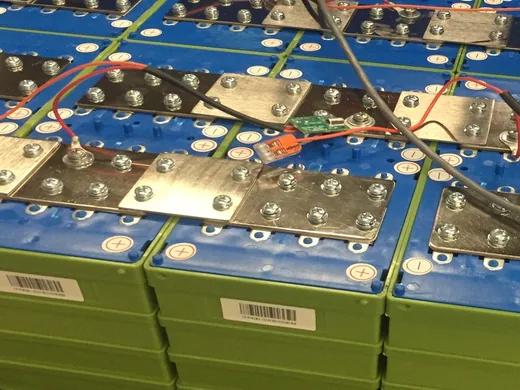
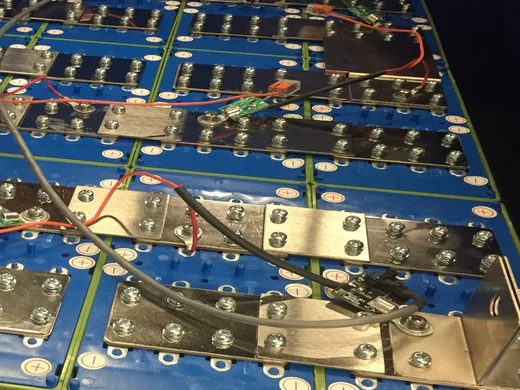
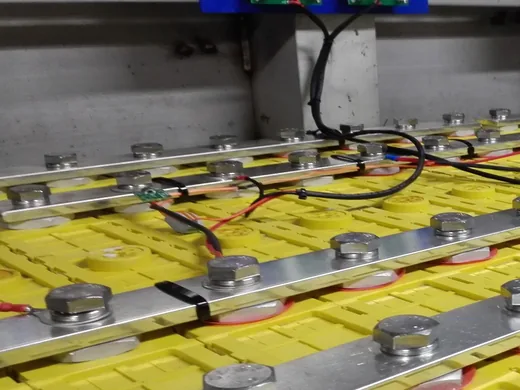
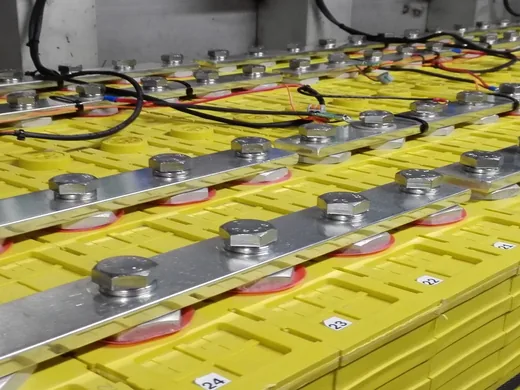
Cells are sealed objects with nothing serviceable inside them. Electrodes and separator are wound together into a jelly roll, dropped into a steel can, filled with electrolyte, then closed with a cap that carries the safety vent. Welding attaches the tab that connects the winding to the outside world. Opening one destroys it and exposes materials that react with air and moisture. Cells become a pack through more welding. Nickel strip runs between terminals in a pattern that sets the series and parallel arrangement, held by resistance spot welds. Above or beside the group sits a management board, its sense wires tapped to every series junction. Foam, adhesive and heat-shrink hold the assembly rigid. Cells that move rub their welds until the welds crack.
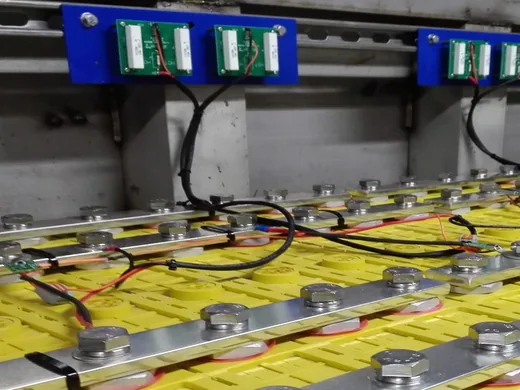
All of that is the opposite of a design intended to come apart. Assembly is fast, cheap, mechanically stable and electrically excellent, which suits a factory building thousands of units. It suits an owner with a screwdriver considerably less. Build methods get chosen for the machine’s working life, with disassembly treated as a scrap operation. Sense wires make the assembly harder still. Every series junction carries a thin wire back to the board so each cell can be watched individually, which on a sixteen cell pack means seventeen conductors threaded through the stack in a fixed order. A rebuild has to reproduce that order exactly. One wire on the wrong junction leaves the board balancing a cell it is not measuring. No error message follows.
The joints are the reason it is welded
Solder looks like the obvious home alternative to a spot welder. Electrical arithmetic explains why the industry declines it. A resistance spot weld between nickel and a cell terminal measures something like 0.3 to 0.5 milliohms. A hand-soldered joint in the identical position measures 2 to 5 milliohms. One joint at a time the difference sounds trivial. A sixteen cell pack has thirty-two of them.
Sixteen cells in series need two joints each, giving 32 joints in the current path. Welded, those joints contribute roughly 10 to 16 milliohms in total. Soldered, they contribute 64 to 160. A healthy 12 volt pack measures around 3 milliohms all in. The soldered version has added twenty to fifty times the pack’s own resistance to the path. Every watt of that turns into heat next to a lithium cell at exactly the moment the machine is working hardest. Heat during assembly is the second objection. Cell makers specify surface temperature limits in the region of 60 to 80 degrees. A soldering iron held against a terminal long enough to wet nickel goes well past that. The can then conducts it straight to the electrodes and electrolyte. Sustained heat degrades the interphase film on the anode and shrinks the separator locally, which raises the risk of an internal short in a place nobody can inspect afterwards. Every commercial cylindrical pack assembly line uses resistance spot welding for the cell connection.
Nickel strip thickness enters the calculation as well. Strip too thin for the current heats under load and wastes voltage. Too thick a strip leaves a hobby welder unable to deliver the energy needed to fuse it properly, which produces joints that look sound to the eye while measuring badly. Commercial lines use welders that can be characterised and joints that get pull-tested. A weld holding mechanically can still carry a poor electrical connection.
What the joining method costs, across a sixteen cell series pack
Measure
Resistance spot weld
Hand soldered
Resistance per joint
0.3 to 0.5 mΩ
2 to 5 mΩ
Across 32 joints
10 to 16 mΩ
64 to 160 mΩ
Against a healthy pack at 3 mΩ
3 to 5 times the pack
20 to 50 times the pack
Heat reaching the cell
a pulse of milliseconds
sustained, past the 60 to 80 °C cell limit
Cell grading needed either way
within about 1 percent on capacity and 1 mΩ on resistance
The cell you cannot simply swap in
Series strings deliver whatever their weakest member can deliver. Charge stops when the first cell reaches its upper limit, discharge stops when the first cell reaches its lower one, and everything in between is arithmetic decided by whichever cell is furthest from the rest. Dropping one healthy cell into a string of tired ones does nothing for the pack. The new cell holds capacity that no charger fills and no load reaches.
Manufacturers avoid the problem by grading cells before assembly. Industry practice groups them within about 1 percent on capacity, meaning 30 milliamp-hours on a 3,000 milliamp-hour cell, and within about 1 milliohm on internal resistance. Those tolerances exist because a pack behaves as a population of parts, never as a set of independent ones. Populations are only as good as their spread. Resistance mismatch does damage of its own beyond the wasted capacity. Cells sharing a parallel group divide current in inverse proportion to their resistance. Healthy cells take the largest share. Tired ones take least. In a series string the effect reverses into something worse: the high resistance cell sees the deepest voltage excursions, gets driven closest to its cutoffs, and heats up more than its neighbours. Capacity fade depends strongly on temperature and rate. The mismatched cell ages faster than the pack around it.
Rebuilding a pack properly means replacing all of it with matched cells from one batch. Patching the worst position leaves the string at its next-weakest cell. That single fact removes most of the appeal of a home repair, since the cells for a full rebuild cost a large fraction of what the whole machine cost when new. Service widens the spread that grading narrowed. Cells leaving the factory within 1 percent of each other drift apart across years, because position inside the pack decides how warm each one runs, and warmth decides how fast each one ages. A cell against the inverter heatsink lives a different life from one in the cold corner of the case. By year six a pack that started matched can hold a spread of several percent, which is why a competent rebuilder grades the old cells before deciding anything. That measurement separates one early failure from a population that has moved together.
The certificate covers the machine, not the cells
Portable power stations are certified as complete products under UL 2743, the standard for portable power packs, which covers units built around one or more lead acid or lithium ion batteries with one or more inputs and one or more outputs. It sorts them by where they are meant to live, separating outdoor use from temporary outdoor use from indoor only. It caps aggregate lithium ion capacity at 20 kWh, above which a product moves to UL 9540 as an energy storage system. Every clause in that scope describes an assembly. The tested article is that enclosure with those cells inside it, that management board watching them, that wiring loom, that charging circuit and those output sockets, evaluated together under fault conditions. A certificate is a statement about a configuration, never about a component in isolation. Change the pack for a different one and the assembly in the room stops being the assembly that was tested, whatever the mark on the case still says. None of this makes a repair illegal for a private owner in most places. The distinction is worth understanding before somebody leans on the mark as reassurance. A rebuilt machine carries whatever safety its rebuilder gave it. Insurers, landlords, employers and event organisers occasionally ask to see certification for equipment brought onto their premises. A machine with a workshop-built pack inside a certified shell is difficult to describe honestly on that form. Capacity matters at the boundary as well: a 20 kWh ceiling sounds enormous beside a 2 kWh portable machine. That ceiling is the line the standard draws between a portable power pack and a stationary storage system. Manufacturer service exchange avoids the whole question, because a factory pack fitted by an authorised centre restores the configuration the certificate describes. That is the practical argument for paying more for the official route. The cells inside a factory pack are the cells the machine shipped with.
What the law will require from 2027
European rules are moving toward forcing the question. Article 11 of the batteries regulation requires portable batteries incorporated into products to be readily removable and replaceable by the end user, with the removability and replaceability requirements applying from 18 February 2027. Replacement batteries have to work in the device without posing a safety risk, without altering its technical parameters and without reducing its performance. Narrow derogations exist. One covers devices built to work around splash water or underwater, where replacement may be reserved for independent professionals.
Guidance published in January 2025 filled in what the derogations cover. Devices built for regular use in splash, jets or submersion keep their sealed construction, on condition that an independent professional can still carry the replacement out. The exemption covers the route, never the outcome: a battery in one of those products remains removable and replaceable, with the work moved from the owner to somebody equipped for it. Portable power stations rated for temporary outdoor use, stored indoors between jobs, sit outside that description. Scope decides who this touches, and scope turns on a definition. A portable battery under the regulation is one that is sealed, weighs 5 kg or less, is not designed specifically for industrial use, and is neither an electric vehicle battery, nor a light means of transport battery, nor a starting and ignition battery. Five kilograms is where the definition stops. A finished iron phosphate pack runs about 100 to 120 watt-hours per kilogram once cells, board, wiring and structure are counted.
Run the arithmetic against real machines. A finished iron phosphate pack lands somewhere around 100 to 120 watt-hours per kilogram once cells, board, wiring and structure are counted, which puts 5 kg at roughly 500 to 600 watt-hours of pack. Small stations sit inside that boundary. A 2 kWh machine carries something closer to 20 kg of pack and sits well outside it. Where any particular product falls is for its maker to determine and declare, and buyers in Europe can reasonably expect the small end of the market to become genuinely user-serviceable before the large end does. Guidance attached to the requirement is unusually specific about what removable has to mean. Batteries count as readily removable where the end user can take them out using commercially available tools, defined as tools anybody can buy without proving proprietary rights and use without restriction. Specialised tools disqualify a design unless the maker supplies them free with the product. Proprietary tools, thermal energy and solvents are ruled out altogether, which quietly outlaws the adhesive-and-heat-gun construction common in sealed consumer electronics. Tool classification in EN 45554 is cited as the reference for drawing those lines.
Parts pairing and the software side
Mechanical access solves only half the problem. Some manufacturers give components unique serial numbers and pair them to an individual unit in software. A replacement part then gets refused or partially disabled until the maker authorises the pairing remotely. Applied to a battery, that turns a physically simple swap into something only an authorised centre can finish. The European repair directive addresses the practice directly. It prohibits manufacturers from using contractual clauses, hardware techniques or software techniques that impede repair, which is aimed squarely at parts pairing and at the refusal of compatible and second-hand spare parts. The obligations become enforceable from 31 July 2026, ahead of the battery removability deadline the following February.
Identification arrives on that date too. From 18 February 2027 every electric vehicle battery and every industrial battery above 2 kWh sold into the European market carries a digital battery passport, reached through a QR code on the product. The record holds identification, type, model, chemistry and key technical characteristics, with state of health and remaining lifetime among the data the regulation names. Portable machines below that threshold sit outside the requirement for now. A pack with a documented identity is one a service centre can match a replacement to.
Spare part availability sits in that body of rules. For the product categories the directive lists, manufacturers must keep spare parts in stock for at least ten years and supply them within fourteen days at a price that keeps repair economically sensible against buying new. Ecodesign rules already impose their own version, requiring parts to remain available for seven years after a model is discontinued. Those dates describe a direction of travel. No guarantee attaches to a machine on the shelf today.
Getting a pack to where the machine is
Even a willing manufacturer runs into transport rules. A battery travelling on its own is dangerous goods under UN 3480, and since 1 April 2016 standalone lithium ion cells and batteries carried by air have had to be at a state of charge no greater than 30 percent of rated design capacity. Deviating from that limit needs written approval from the state of origin and the state of the operator under a special provision. Air freight of a replacement pack becomes a documented dangerous goods shipment, no ordinary parcel. The consequences reach the customer as price and delay. Surface transport avoids some of the difficulty at the cost of weeks. Many manufacturers resolve it by holding regional stock, by shipping a whole exchange machine, or by declining to sell loose packs at all. A brand with no service presence in the country may have no pack to send, whatever the design allows.
Classification explains part of why manufacturers behave the way they do. A battery travelling on its own falls under UN 3480. A battery installed in the equipment it powers, or packed alongside it, falls under the separate entry UN 3481. Those entries carry different paperwork, different packing instructions and different handling, which is one reason a brand may offer to swap a complete machine while declining to post a bare pack. A bare pack is the harder of the two to ship.
What a competent replacement involves
Discharge comes first. A pack at 30 percent charge holds far less energy to release into a slipped screwdriver than one at full, which is the identical reasoning behind the air transport limit. Work happens with insulated tools, one connection at a time, with nothing conductive resting on the bench. Cells come next, all of them, from one batch, graded to the tolerances described above. A rebuild that reuses half the old cells inherits the spread of the old pack and reproduces the fault it was meant to cure. Connections get spot welded to nickel. Soldering stays on the strip, away from the cell terminal. Strip thickness follows the current the pack has to carry.
Balancing takes far longer than first-time rebuilders expect. Passive balancing bleeds current through a resistor across whichever cell sits highest, at something in the region of 50 to 200 milliamps. It engages only near the top of charge, where cell voltages separate far enough to be told apart. Run the arithmetic at 100 milliamps against a 100 amp-hour cell: shifting 1 percent of that cell’s capacity takes ten hours of bleeding. A pack built from cells at genuinely different states of charge can need a week of long charges before the string comes into line, with every session having to run all the way to the top, since switching off part way through hands the board nothing to work with. Cells matched and brought to a common voltage before assembly save every hour of that.
Management boards need attention people forget to give them. Sense wires belong on the correct series junctions in the correct order, because a wire on the wrong tap makes the board balance the wrong cell. Some boards need a reset or a fresh capacity learning cycle after a pack change before their reported percentage means anything. First charging belongs under supervision, somewhere non-combustible, with somebody in the building. Cell voltages want checking at the top of that charge to confirm the string balances, with no pair of cells drifting apart. A resistance measurement taken at the end gives a baseline for the years ahead. Every step on that list belongs to a workshop procedure. Manufacturer service exchange covers that work at a fixed price.
Buying with replacement in mind
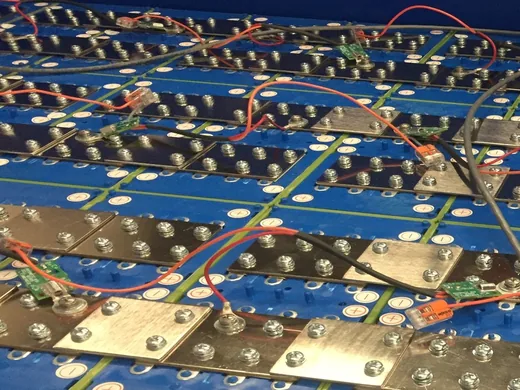
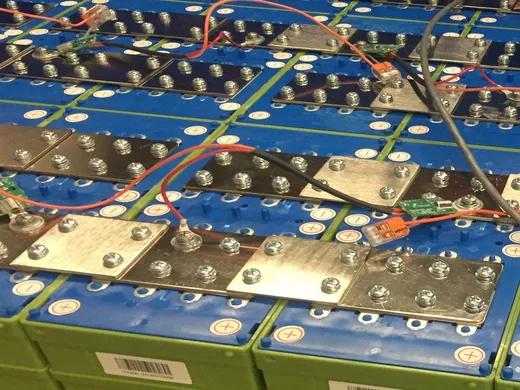
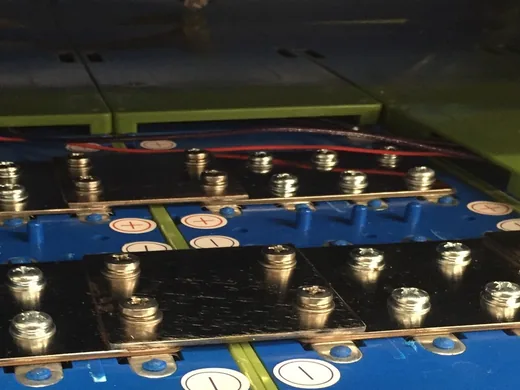
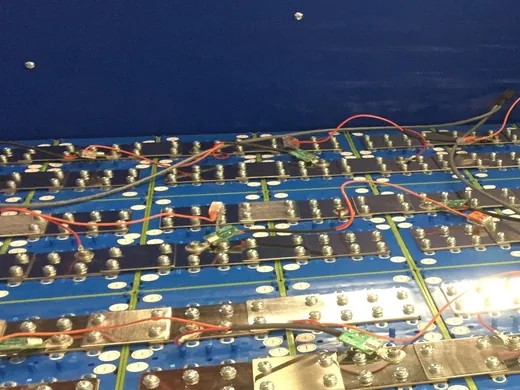
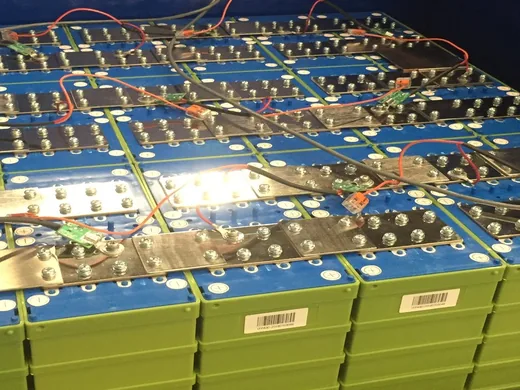
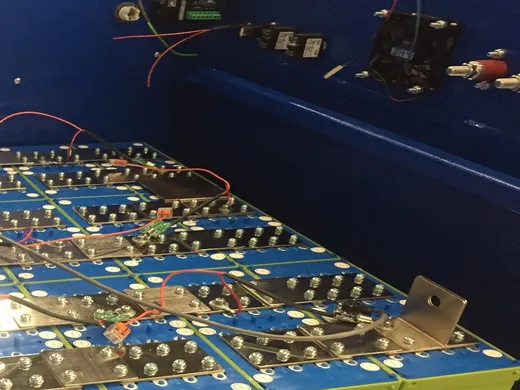
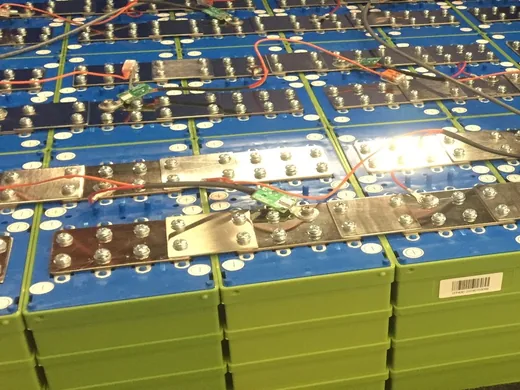
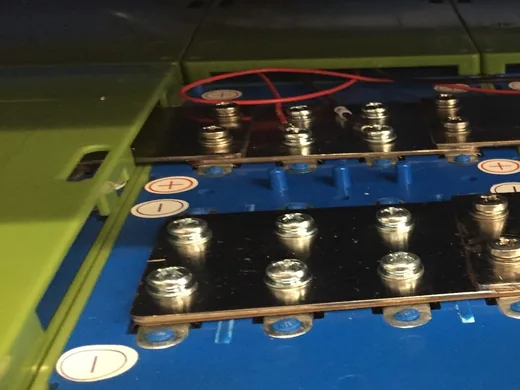
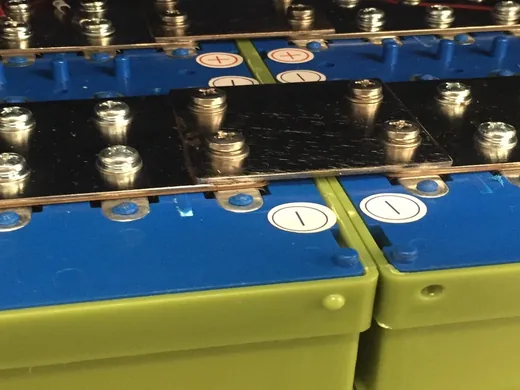
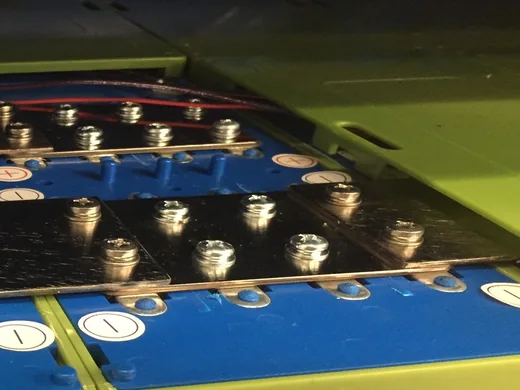
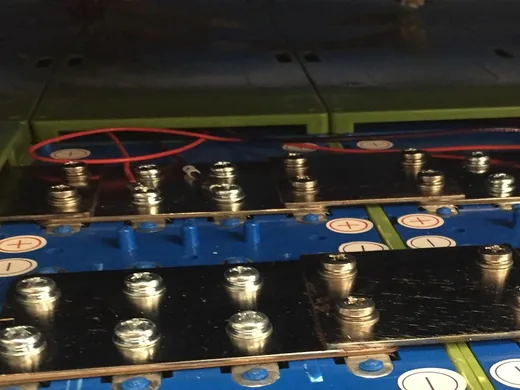
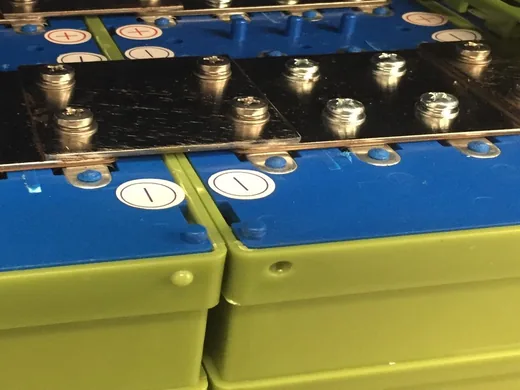
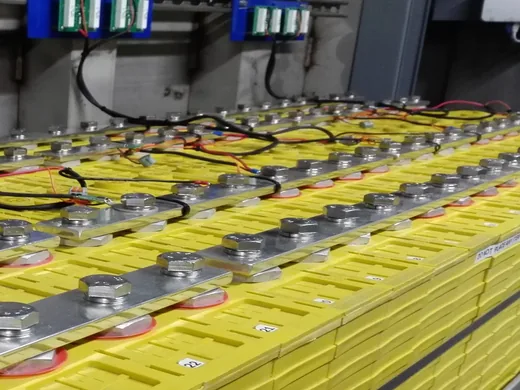
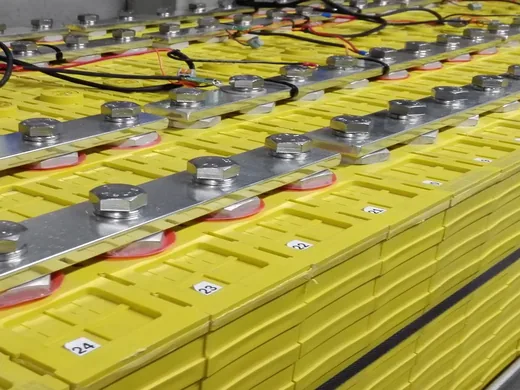
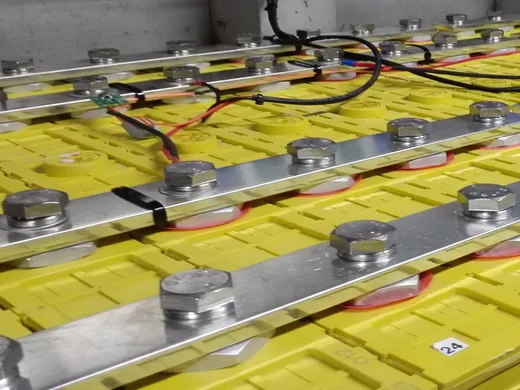
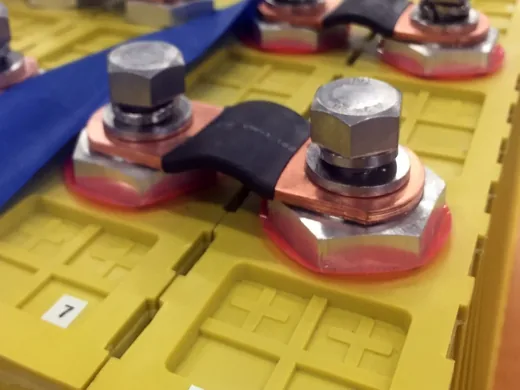
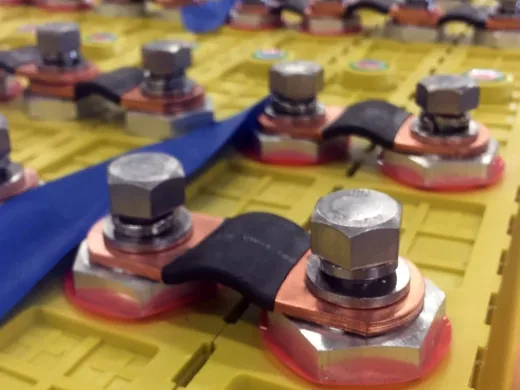
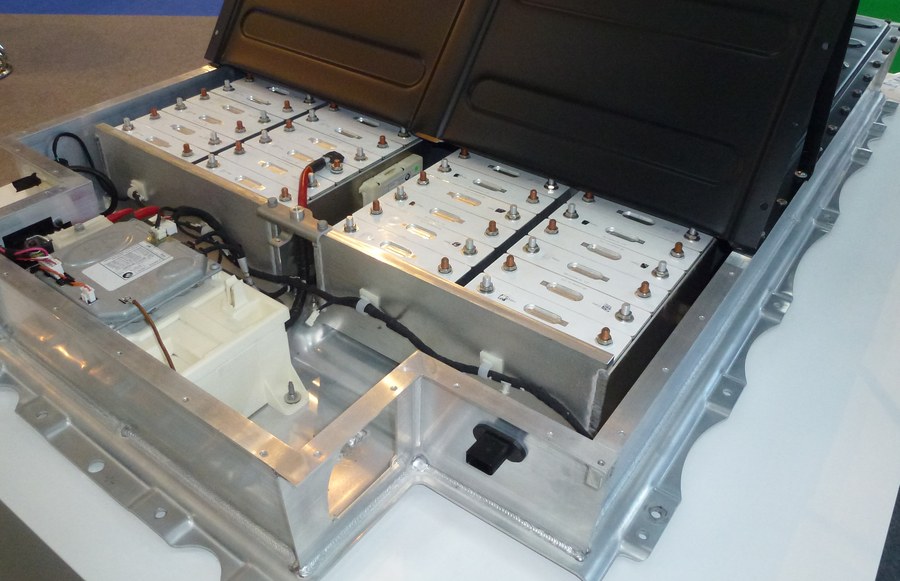
Cells bolted into modules, a sense harness threaded between them, the whole assembly inside a sealed tray. This one came out of a car; a portable machine packs the identical elements into a tenth of the volume. Photo by RudolfSimon, CC BY-SA 3.0.
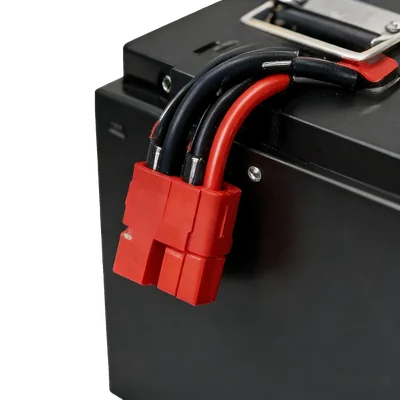
Construction gives the first clue. Screws suggest a machine somebody expected to open. Ultrasonic welds and glue suggest a machine designed to be replaced whole. Look for a pack that arrives as a module with a plug on it. A connector cuts the job from an afternoon to fifteen minutes.
Support answers the rest. A manufacturer that lists a service pack as a part number, publishes a price for it, and has an address in your country is offering something meaningfully different from a brand that sells only complete machines. Asking before purchase costs nothing. The part number either exists or it does not.
A machine that accepts external battery modules gives its owner a second route entirely. Capacity that lives outside the main case gets added, removed or replaced with the case still shut. Capacity added that way never requires opening the main case.
Four questions cover most of it. Is there a part number for the battery pack. What does it cost. Who is allowed to fit it. How long will it stay available. A brand that stocks service packs answers all four from a parts list.
Common questions
Can I replace just the one cell that failed?
Physically yes, usefully no. The rebuilt string will run at the level of its remaining weak cells. That new one will age faster than it should while carrying uneven current. A matched string is what restores the original capacity.
Does opening the case void the warranty?
Almost always for the machine, and reasonably so, since the manufacturer can no longer vouch for what is inside. Warranty terms in some jurisdictions survive repairs unrelated to the fault claimed. A pack rebuild is rarely unrelated to anything. Check the terms before opening anything under cover.
Is a third-party pack safe?
It depends entirely on who built it and whether the cells are graded, welded and monitored properly. A pack from a reputable rebuilder using matched cells and a correctly wired board can be excellent. A pack from an auction site arrives with no cell provenance at all.
How much should a replacement pack cost?
Cells account for a large share of what a power station costs to build. A genuine factory pack lands at a substantial fraction of the machine price. A price at a small fraction of that implies cells of unstated grade.
Will my machine be covered by the 2027 European rules?
Only if its battery meets the definition of a portable battery, where the 5 kg limit does most of the deciding. Small machines look likely to fall inside. Larger ones will not. Their makers decide serviceability on commercial grounds. Ask at the point of purchase, while the answer still affects which machine you take home.