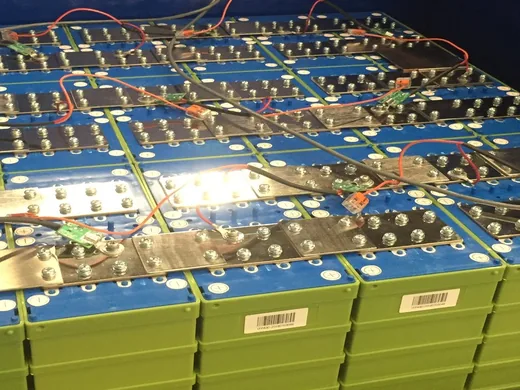
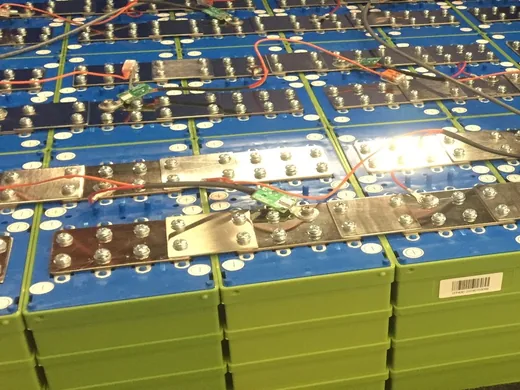
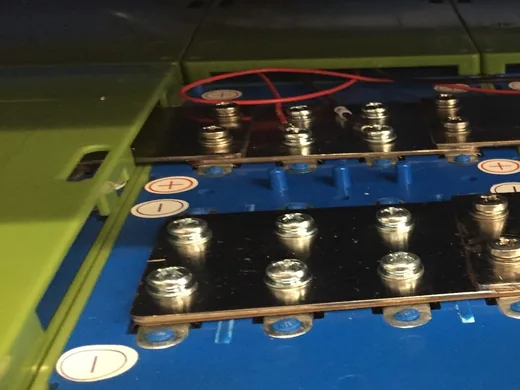
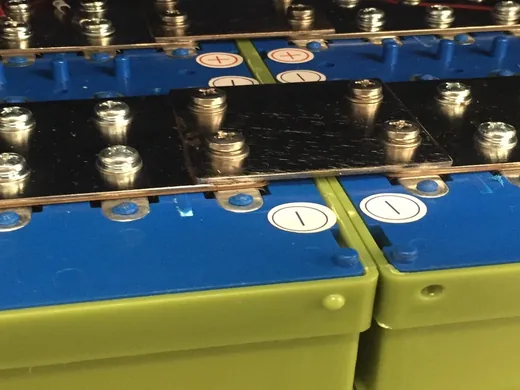
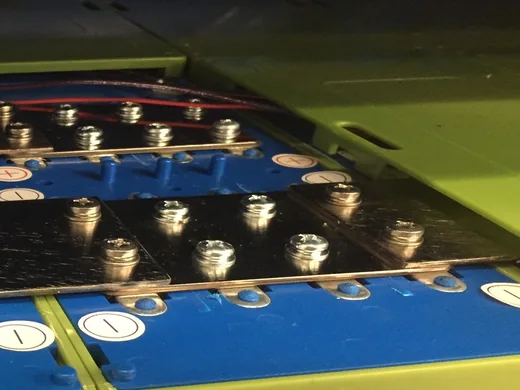
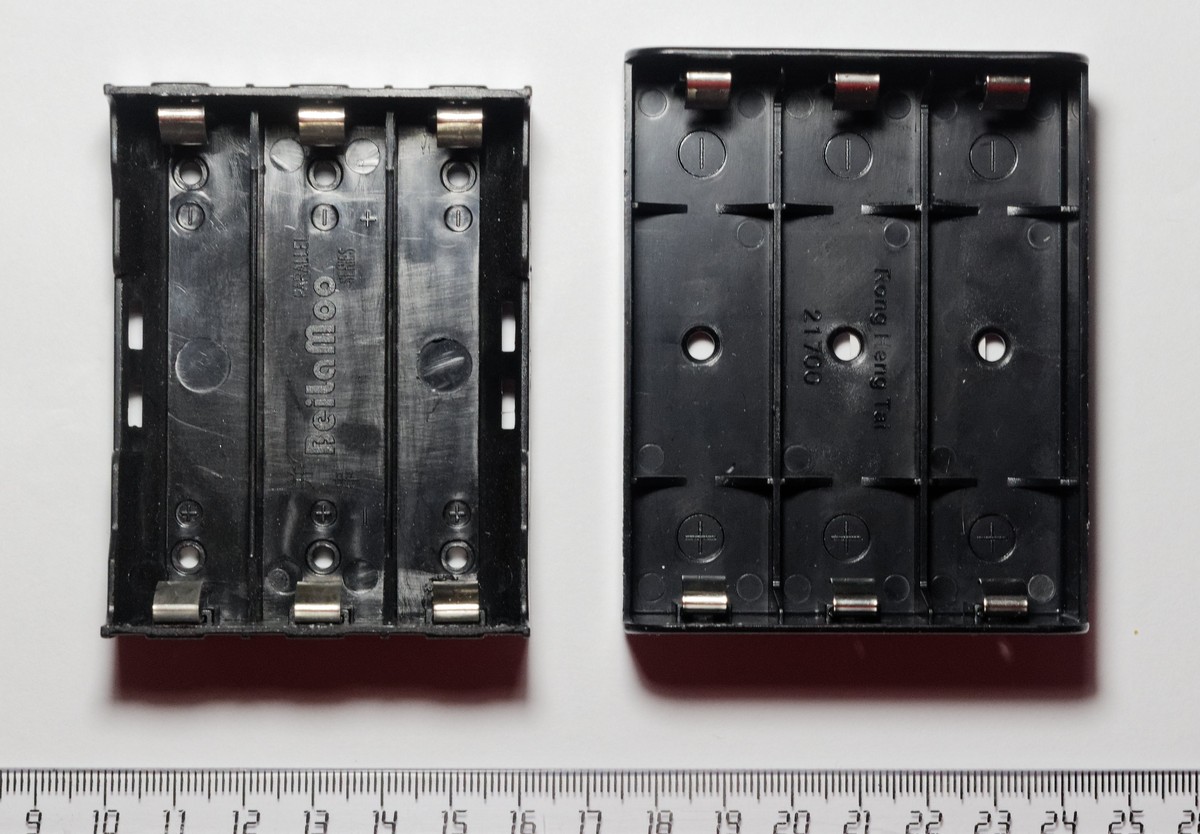
Holders for two standard cylindrical sizes with a centimetre rule underneath. Fixed dimensions are what let an ecosystem of holders, welders and chargers exist around a format. Photo in the public domain.
Under the wrapper of any lithium cell sit one set of layers. Anode foil, separator, cathode foil, wound or stacked, then sealed into a container with two terminals. The container is where the two families part company. It’s the container that decides almost everything downstream. A cylindrical cell rolls those layers into a spiral and drops the roll into a drawn steel can. A prismatic cell winds a flattened roll or stacks flat sheets, then seals the assembly into a rectangular aluminium shell.
They hold identical chemistry. Iron phosphate behaves one way in either shape. The differences that follow come from the container.
What a steel can gives a cell
A drawn steel can is a pressure vessel. Roll a cylinder from thin steel and it resists internal pressure without help from anything else, because a curved wall carries hoop stress in place of bending. That’s why a cylindrical cell needs no external structure to stay the shape it left the factory in.
Standard sizes follow from that self-sufficiency. An 18650 measures 18 millimetres across and 65 long. It holds somewhere between 1.0 and 3.5 amp-hours, according to chemistry. A 21700 runs 21 by 70 millimetres and reaches 4 to 5 amp-hours in iron phosphate. A 32700 measures roughly 32 by 70 and carries 5 to 8. Those numbers have been fixed for years, which means holders, spot-welding fixtures, chargers and test gear all exist off the shelf.
Heat leaves a small cylinder easily, which isn’t an accident of design. A narrow can puts every part of the roll within a few millimetres of a metal wall. The outside of that can is all surface. Cooling a cylindrical bank is a matter of moving air between the cells.
A cell that vents does it through a designed relief in one end, along a path the pack designer knows about beforehand.
The price of many small cells
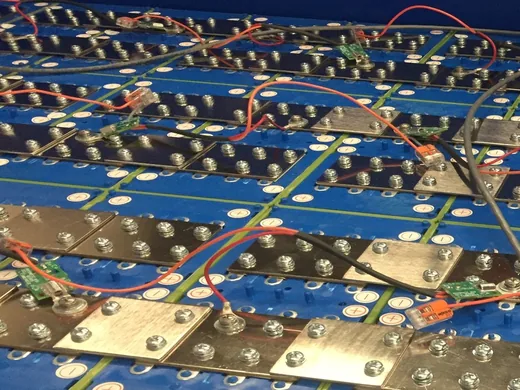
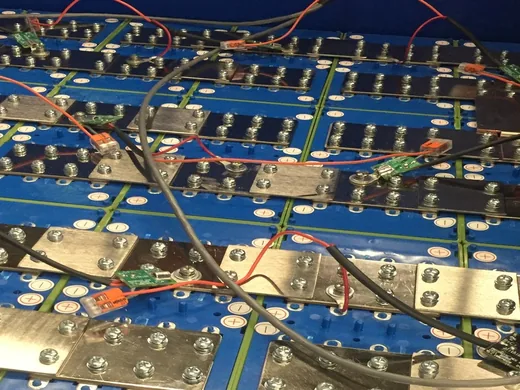
Small cells arrive in quantity. A 5 kilowatt-hour bank built from 21700 iron phosphate cells at roughly 16 watt-hours each needs somewhere over 300 of them. Every one of those cells carries two connections. That puts more than 600 welded joints in the pack before anything else goes in.
Each joint is a place that can fail. Ultrasonic and laser welds are reliable one at a time. Reliability multiplied six hundred times over turns into a manufacturing question. Resistance at a poor joint shows up as local heat under load.
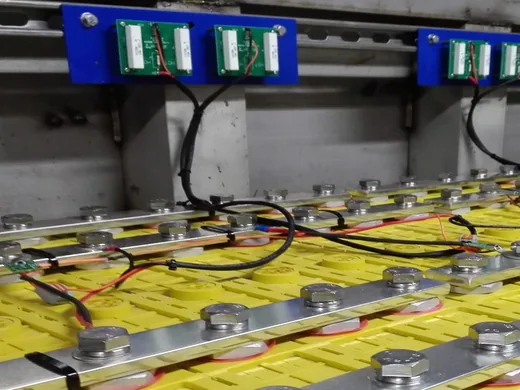
Monitoring gets harder in proportion. Cells go in parallel groups to keep the channel count manageable. A group of a dozen cells reports one voltage to the management board. A single weak cell inside that group stays invisible until the group as a whole starts to drift.
Where a prismatic case wins volume
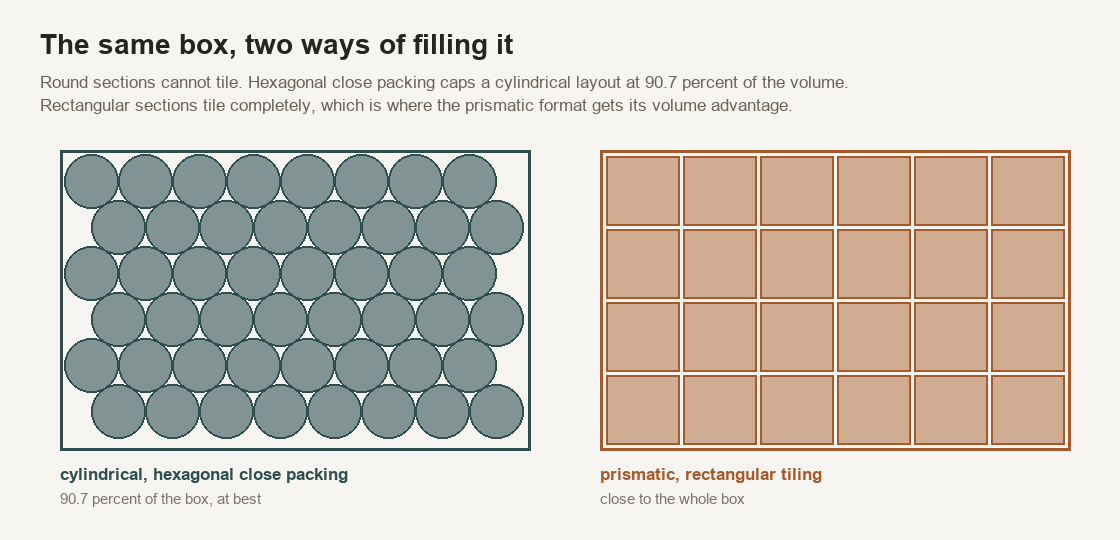
Round sections cannot tile. The hexagonal limit is arithmetic, not workmanship.
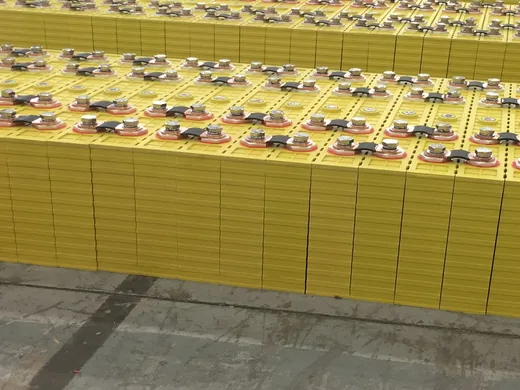
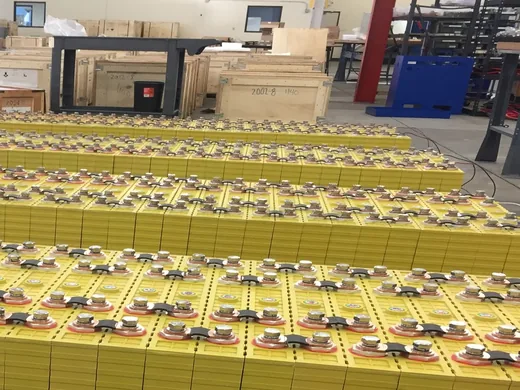
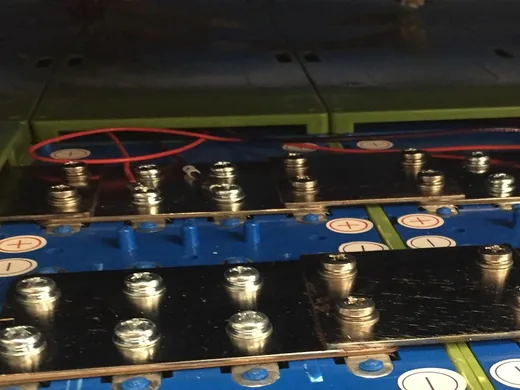
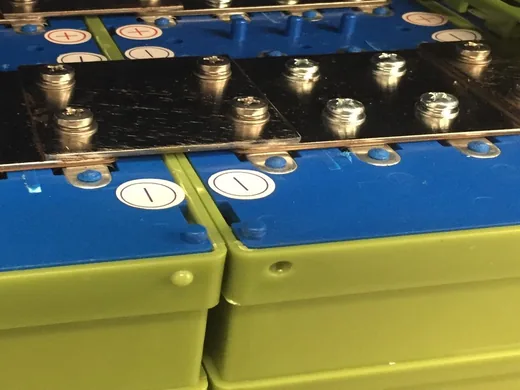
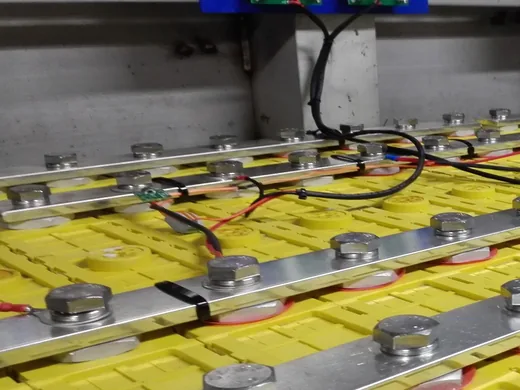
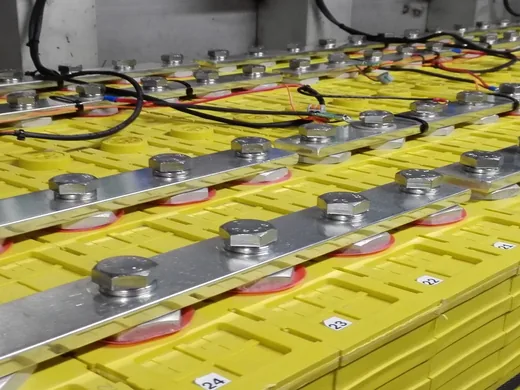
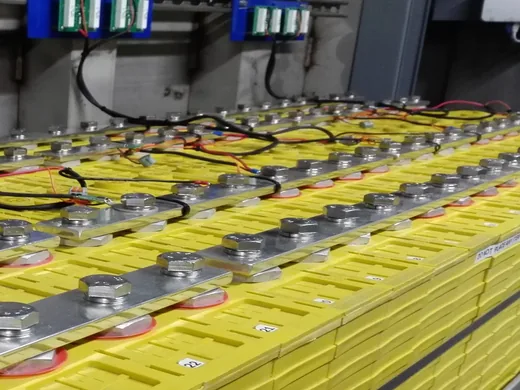
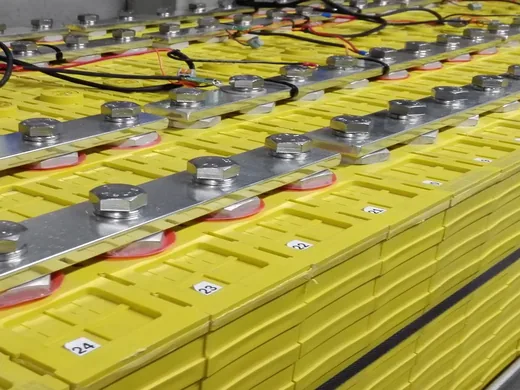
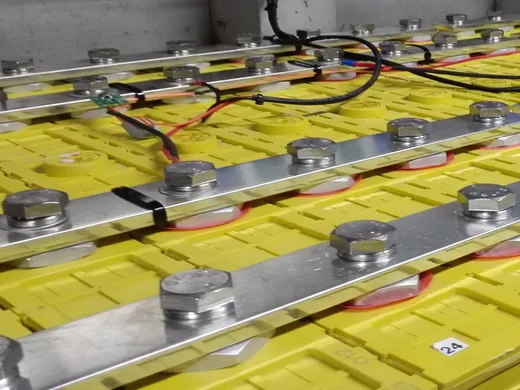
Volume is where the rectangular shell pays for itself, on grounds of geometry. Round sections cannot tile a plane. Pack cylinders as tightly as arithmetic allows, in the hexagonal arrangement, and they still occupy only 90.7 percent of the space they sit in. The remaining 9.3 percent is air between the cans. That air is unavoidable, since it follows from the shape itself. A rectangular cell has no such penalty. Stand prismatic cells side by side in a rectangular enclosure and the walls touch. The box then holds cells and little else. On a portable machine that difference lands directly on the specification sheet, because a case of fixed external size holds a fixed volume. Every cubic centimetre lost to the gaps between cans is a cubic centimetre unavailable for storing energy. Prismatic cells also come in capacities that suit a whole product. Commercial iron phosphate cells run from 50 amp-hours up past 300. A 280 amp-hour cell at 3.2 volts holds close to 900 watt-hours on its own. Six of those cells in series produce a 5 kilowatt-hour bank at 19.2 volts. Sixteen produce that energy at 51.2 volts. The count stays in single or low double figures throughout. Everything downstream simplifies with it. Twelve to thirty-two bolted terminals replace hundreds of welds. The same arithmetic runs at every size. A 2 kilowatt-hour bank needs roughly 125 cells of the 21700 size, or three prismatic cells of 280 amp-hours. Mass follows the same count. A 280 amp-hour prismatic cell weighs about 5.4 kilograms on its own. Sixteen of them come to 86 kilograms of cells before anything else goes into the case. The management board watches each cell individually, since sixteen channels is a normal specification. Individual cell voltages mean a weak cell announces itself long before it takes a group down with it. That visibility counts for as much as the volume does. It’s the part buyers rarely think about when they read a capacity figure.
Aluminium shells help the weight figure too. A drawn aluminium case carries equal internal pressure at lower mass than steel of matching strength.
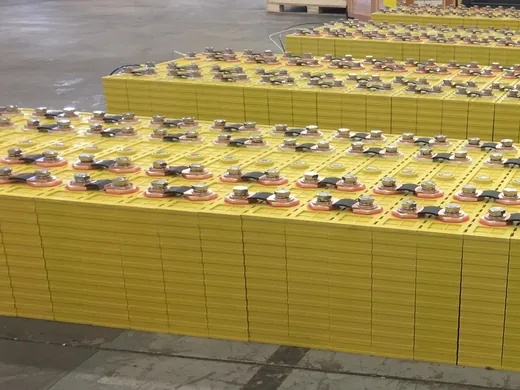
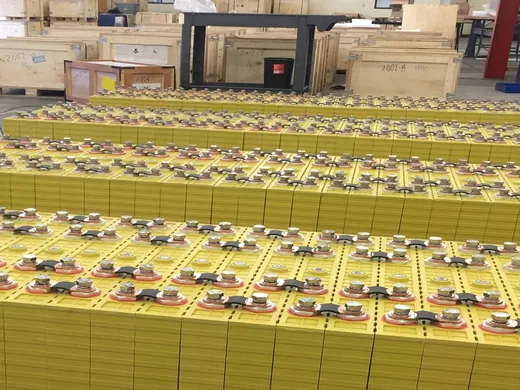
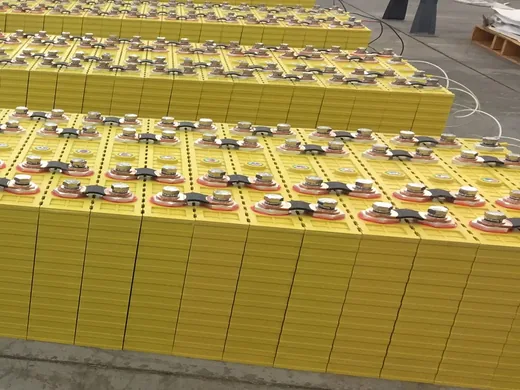
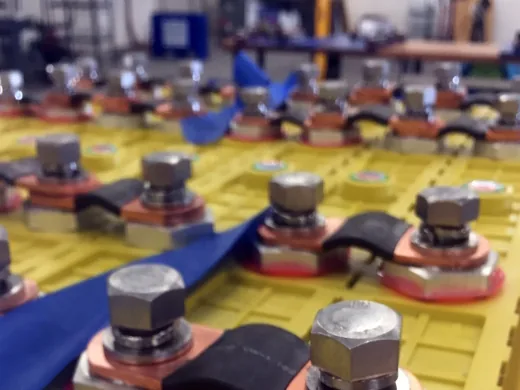
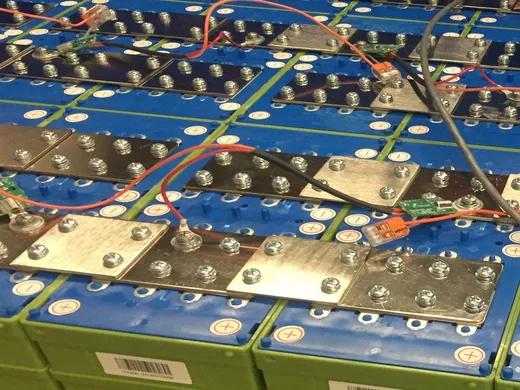
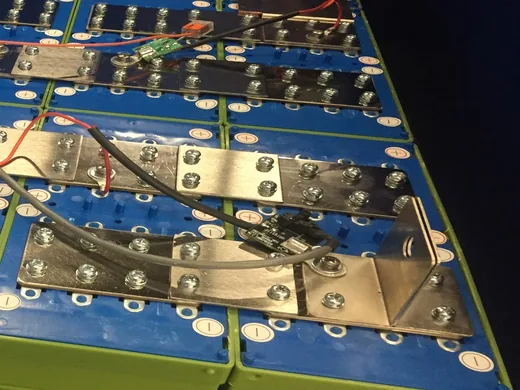
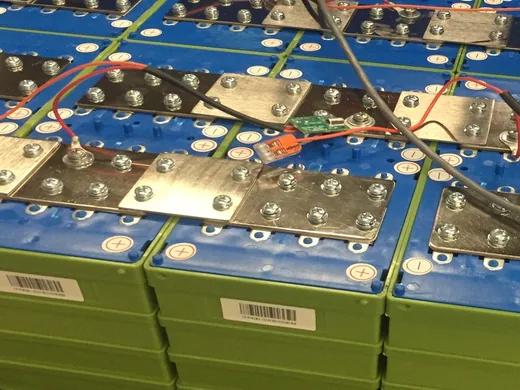
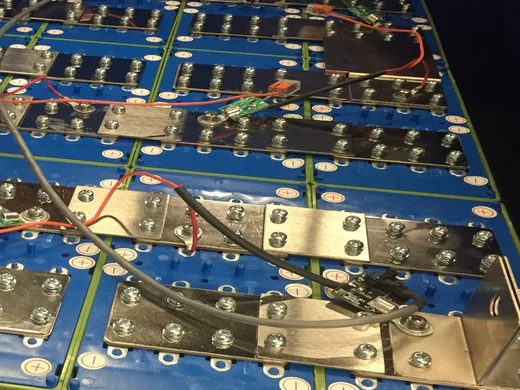
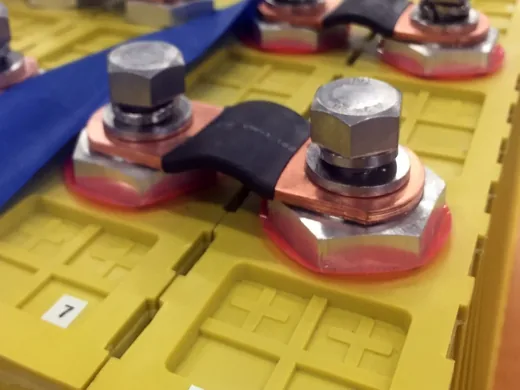
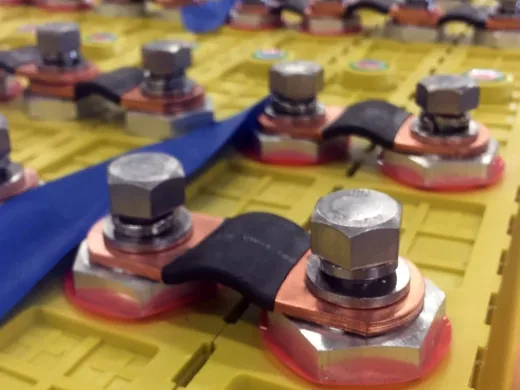
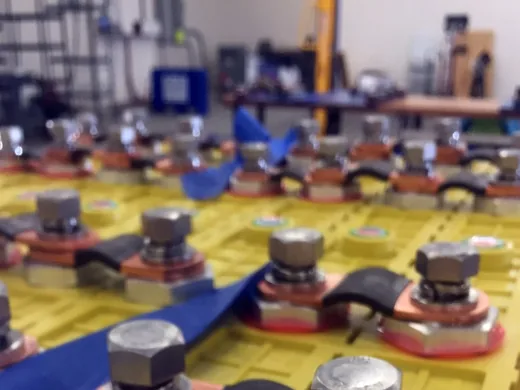
Terminals change character as well. A prismatic cell presents threaded posts or laser-weldable tabs sized for the current a large cell delivers. A bolted busbar can be checked with a torque wrench.
None of this makes the format automatic. The rectangular shell trades away the one property the steel can had for free.
A flat wall has no hoop stress to carry pressure with. It bends.
Published cell figures for the two containers. Capacities are the ranges commonly offered in iron phosphate chemistry.
Property
Cylindrical
Prismatic
Typical sizes
18650, 21700, 32700
50 Ah to over 300 Ah
Capacity per cell
1.0 to 8.0 Ah
50 to 304 Ah
Packing limit
90.7 percent of the box
close to the whole box
Cells in a 5 kWh bank
over 300
6 to 16
External constraint
none needed
plates over 8 mm, 400 to 800 psi
Shell material
drawn steel
aluminium
Swelling, and what holds it
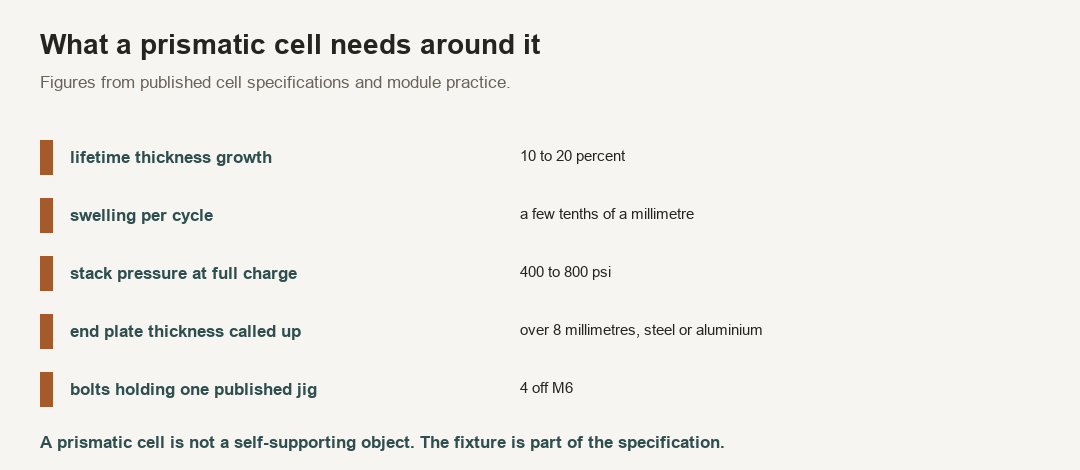
Figures from published cell specifications and module practice. The fixture is part of what a prismatic cell needs to work.
Iron phosphate cells grow. Thickness increases by 10 to 20 percent across a working life. Each charge adds a few tenths of a millimetre that largely comes back on discharge. A cell left to expand freely delaminates its own layers in the end.
Supply follows format. Cylindrical cells live in a consumer ecosystem. A hobbyist can buy 30 matched 21700 cells, a spot welder and a set of nickel strip on one website.
Large prismatic cells don’t. They live in an industrial channel. Minimum orders, freight class and grading between A-grade and B-grade stock all apply. One 280 amp-hour part number varies in real capacity between suppliers.
That difference reaches the owner through repairability. A machine built on standard cylindrical cells can in principle be rebuilt from parts anybody can buy. A machine built on large prismatic cells depends on that part number staying available.
The number that settles it
One number decides more than either format does. Cells arrive graded. Grade describes how closely a batch matches itself on capacity and internal resistance. A series string runs at the level of its weakest member. A bank assembled from cells within one percent of each other behaves as a unit for years. Mixed stock starts drifting on the first deep cycle and doesn’t stop. Grading is invisible in a finished machine, absent from every specification sheet, and responsible for a large share of the difference between two products that look identical on paper. It’s also why one format gives completely different results in different hands. Ask a maker how the cells were matched before asking what shape they are.
What portable machines carry
Portable machines below about a kilowatt-hour mostly use cylindrical cells. The pack is small enough that the packing penalty costs little in absolute terms. Cells are cheap and everywhere.
Above two kilowatt-hours the industry has moved to large prismatic cells. The volume argument grows with the size of the box. A 5 kilowatt-hour machine built from cylinders would carry hundreds of extra welds inside a case that ends up larger.
Stackable systems sit firmly in prismatic territory. The reason isn’t capacity. A module designed to bolt to another module wants flat faces, rigid end plates and a fixed height, all of which the rectangular format already provides.
Neither format tells you what the machine’s going to do. Cycle life, usable capacity and the quality of the management board decide that. All three are set by choices the format leaves open.
When a cell has to come out
Replacement is where the shapes diverge in practice. A cylindrical bank with a failed group needs the pack opened, welds cut and new cells welded in, which is bench work with equipment.
A prismatic bank needs the busbars unbolted and one cell swapped, then the stack re-clamped to its original pressure. The obstacle is finding a cell that’ll match the rest of the string after two years of use.
Buy from a maker who sells cells and modules as spare parts, since a pack nobody can supply parts for is a disposable product that happens to carry a long warranty.
Common questions
Which cell format is better for a portable power station?
Neither one’s better in the abstract. Cylindrical cells bring standard sizes, off-the-shelf supply and easy heat paths at a cost in volume through the gaps between round cans. Prismatic cells fill a rectangular box almost completely and cut the connection count to a handful, at the cost of a clamping fixture. Machine size decides which set of properties matters more.
Can I tell which cell format a machine uses?
From the outside, no. Both formats are sealed inside the case and neither appears on a specification sheet. What you can ask is the cell count, whether individual cells are monitored, and whether replacement cells are sold as spares. Those three answers tell you more about the machine than the shape does.
Do prismatic cells really need clamping?
Yes, and rigidly. A cell allowed to expand freely delaminates its own layers, so module practice runs the stack between end plates at pressure. Published figures put that pressure between 400 and 800 psi at full charge, with one published jig calling for plates over 8 millimetres thick held by four M6 bolts.
Why do cylindrical packs end up bigger?
Because 90.7 percent is the geometric limit for packing circles. A tenth of the internal volume goes to air between the cans. That energy in prismatic cells fills a smaller box. On a machine carried by hand that difference shows up as size and weight.