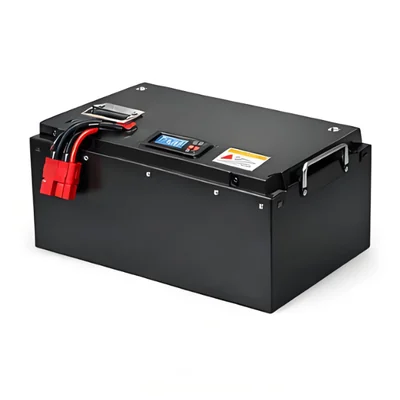
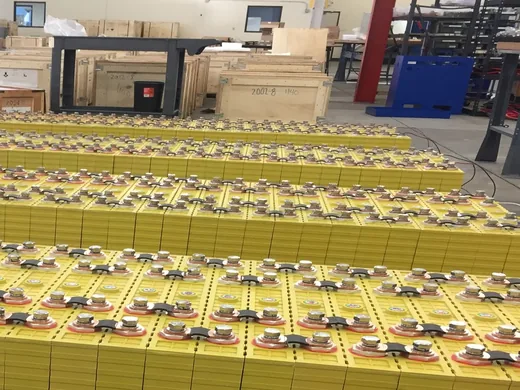
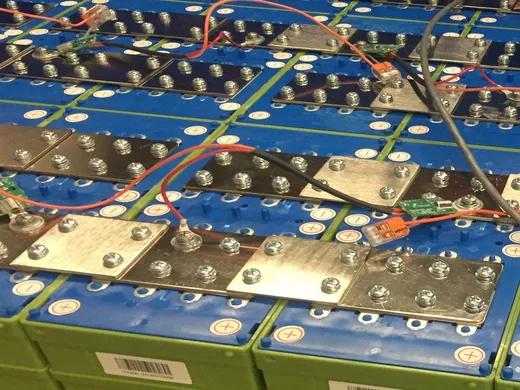
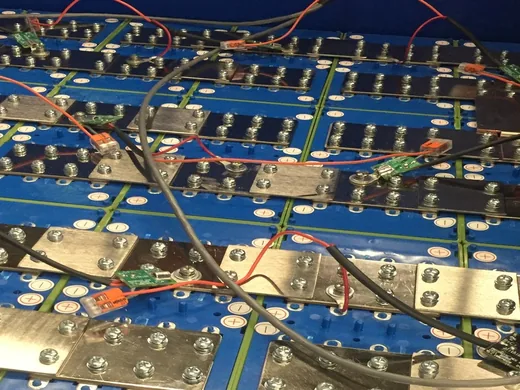
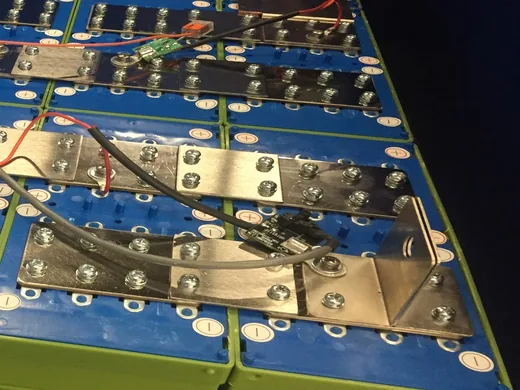
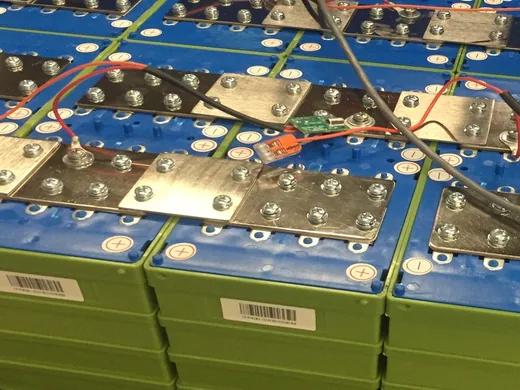
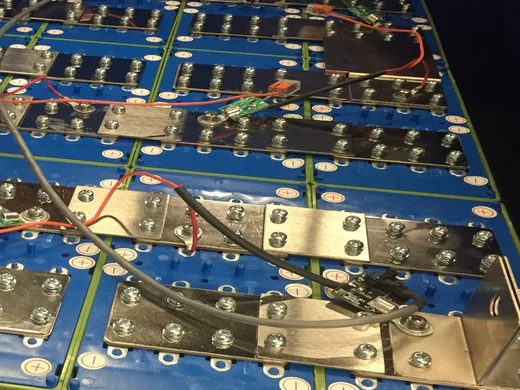
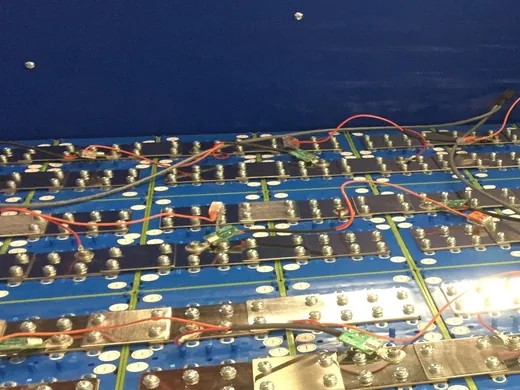
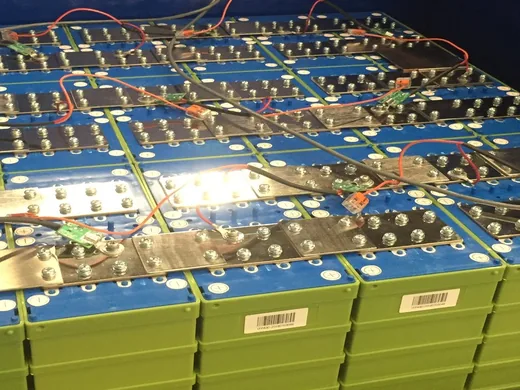
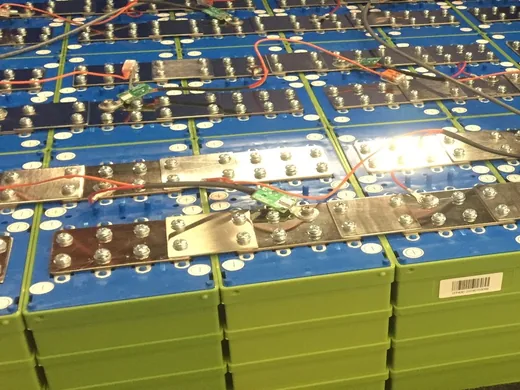
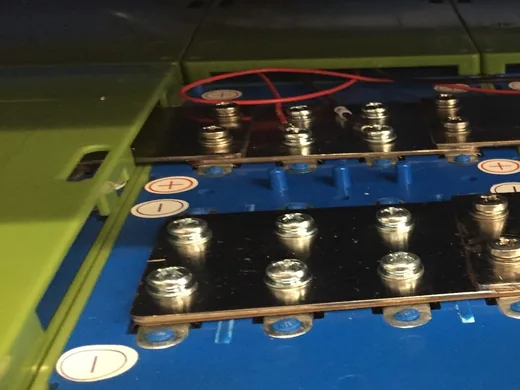
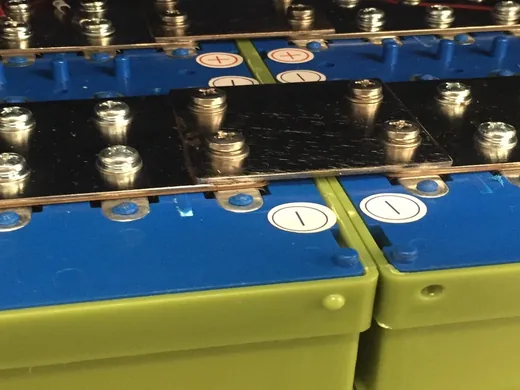
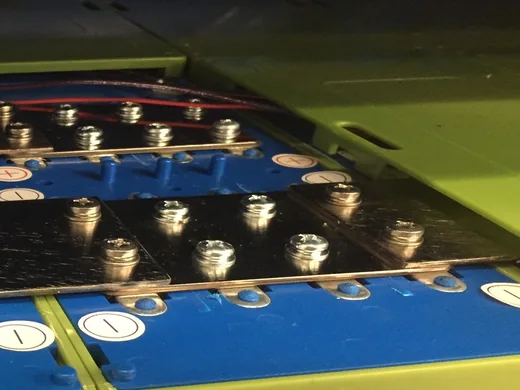
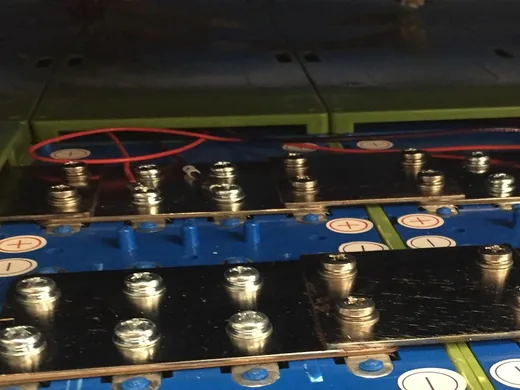
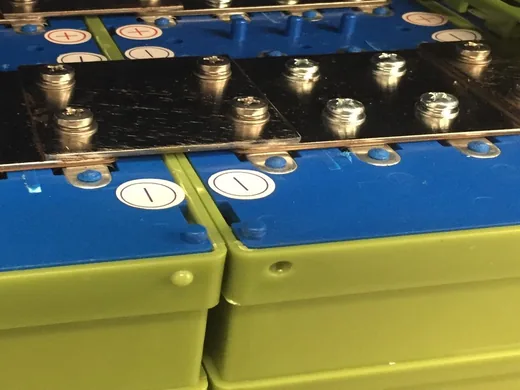
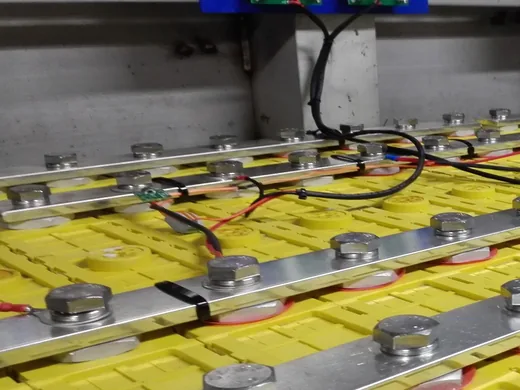
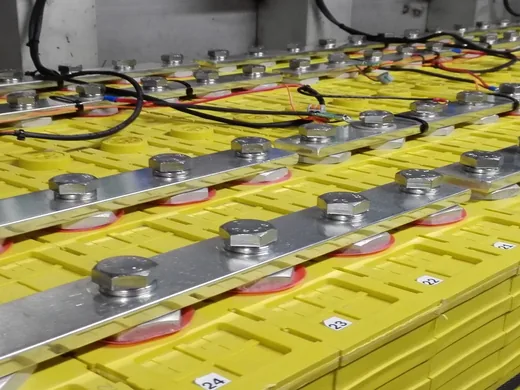
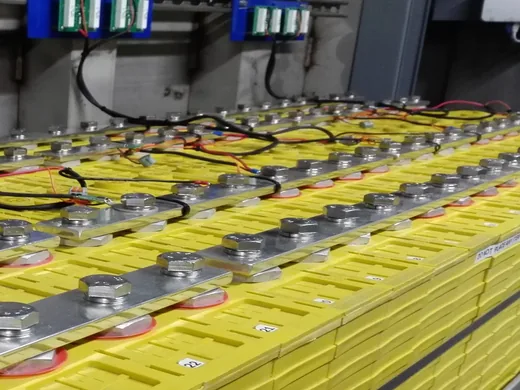
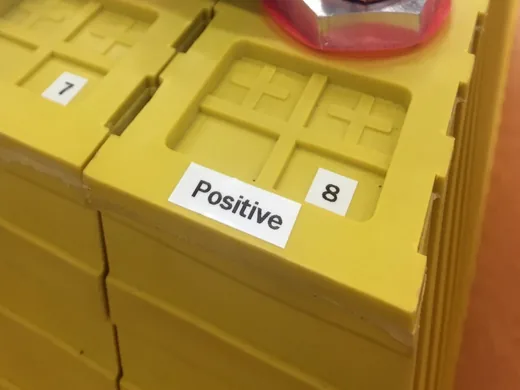
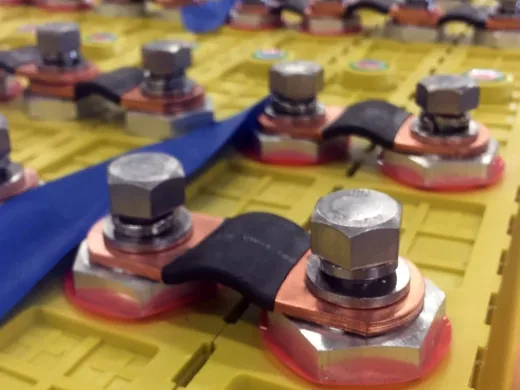
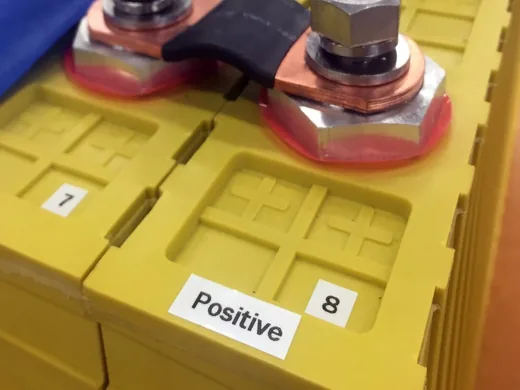
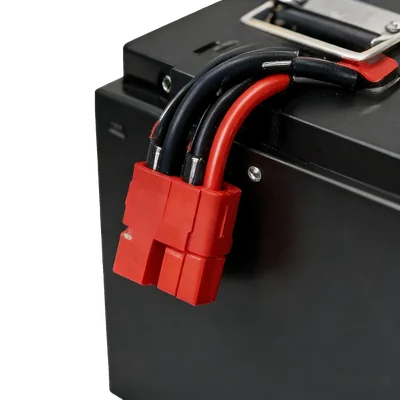
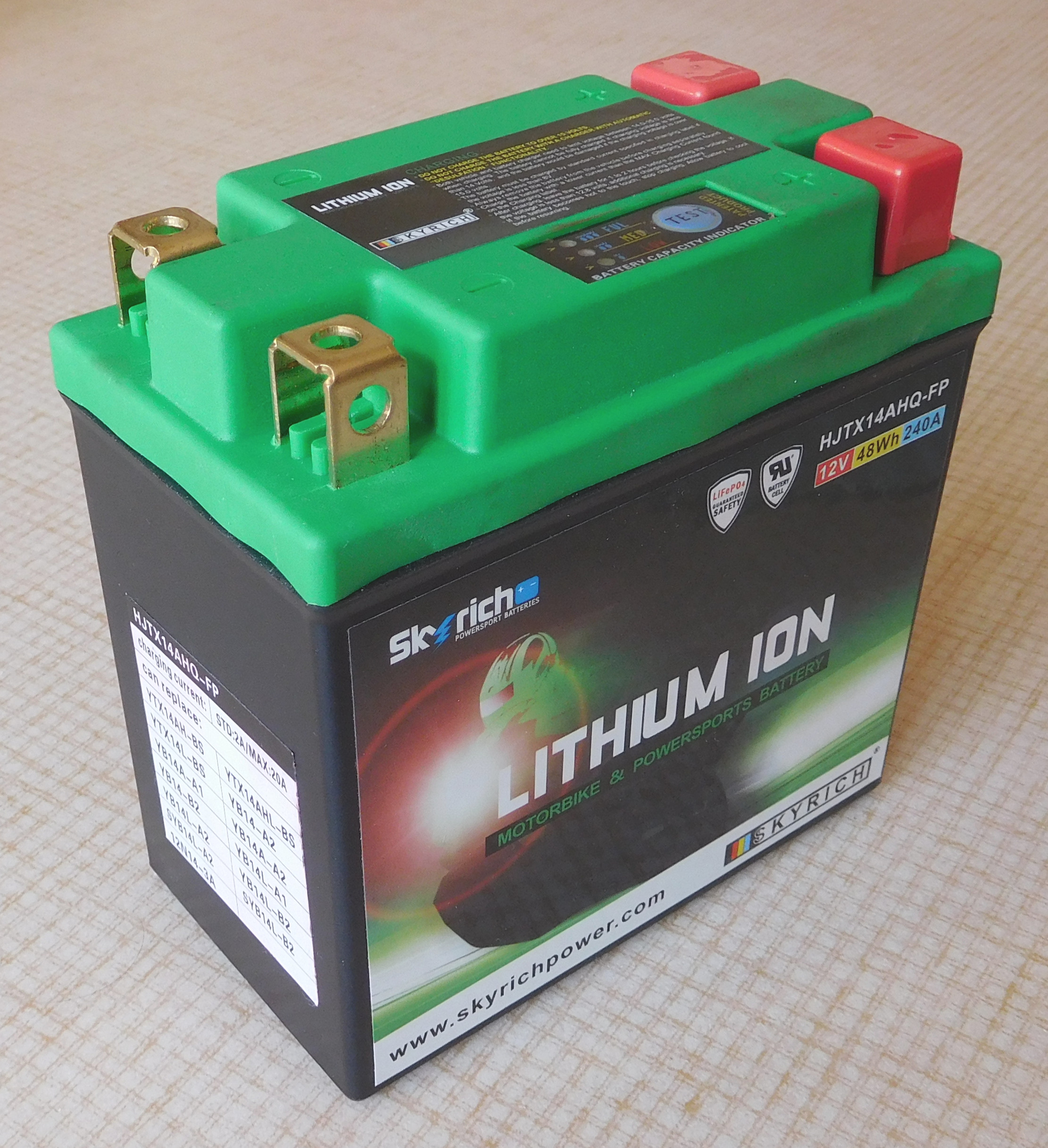
A 12-volt lithium iron phosphate battery, the same chemistry a power station uses, packed into a small case. The window on top is a charge gauge, and the side label cross-references the lead-acid sizes the battery replaces. A pack like this fades along the same gentle slope as the cells in a station.
A 3,500-cycle rating on a LiFePO4 power station is a promise about how many full charges and discharges the pack survives before its capacity drops to a set share of what it held when new, usually eighty percent. The number stands for the working life of the cells, and it ranks among the loosest-defined figures on the whole spec sheet. The headline comes from the cell maker’s own test routine, picked and printed by the brand on the case for how well it reads, so two stations sharing one number can rest on promises far from alike.
What the number alone never says is how much charge the pack still holds at that mark. A cell at eighty percent of its first capacity runs four-fifths as long on a charge as it did new, the runtime shrinking a little each year until a box that once lasted ten hours settles near eight. The real question behind the rating is the capacity that survives to three and a half thousand cycles, the figure that decides how long an aging pack keeps working.
The rating hides the one answer a buyer is after, a range set by how the pack is treated, wide enough that the same number can mean nine easy years of light use or four hard ones of daily cycling. Pinning that range down means reading the cell behind the headline, the slope it fades along, and the conditions that bend the slope one way or the other.
What the pack holds at 3,500
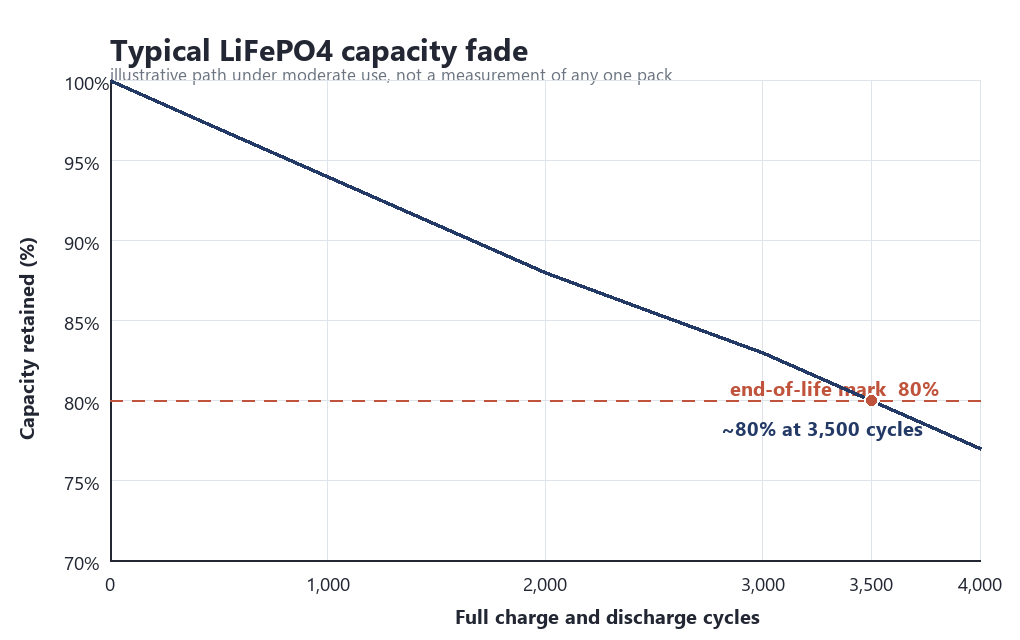
A typical fade: a LiFePO4 cell loses capacity on a long, nearly straight slope, reaching the eighty percent end-of-life mark near 3,500 full cycles under moderate use. The exact path turns on depth, heat, and charge rate, a gently treated pack holding above this line for years longer than a hard-worked one. The curve is illustrative, not a measurement of one pack.
Capacity fades along a gentle slope, never dropping off a cliff. A healthy LiFePO4 cell loses a sliver of its store with each full cycle, on the order of a few thousandths of a percent, so the curve runs almost straight for thousands of cycles before it begins to bend down. Read off that slope, a cell cycled with reasonable care sits near eighty percent of its first capacity somewhere between three thousand and four thousand full cycles, the reason so many makers print a figure in that band. The exact slope is a little different in every cell. Its straightness is the signature of the chemistry, the trait that lets a maker quote a number thousands of cycles out and a buyer half-trust it.
The slow loss has a cause behind it. Each charge grows the thin protective film on the graphite a hair thicker, locking a few lithium ions away for good, and across thousands of cycles that steady toll is much of what shrinks the cell. A little active material cracks and slips out of contact, a little electrolyte is spent, and the pool of lithium that can still shuttle drops by a fraction on every pass. None of it runs fast in lithium iron phosphate, whose rigid crystal barely moves as the lithium comes and goes, far slower than the livelier cobalt cells that wear out in a few hundred cycles. The fade is the sum of many tiny permanent losses, each cycle taking a little for keeps, the total tracing the long straight slope a buyer reads as cycle life. Because the losses pile up so evenly, the curve stays predictable, a pack giving fair warning of its age in a runtime that creeps down month by month, slow enough that an owner always sees it coming. The same evenness is what lets a maker promise a number thousands of cycles away and stand a fair chance of meeting it, the chemistry doing the same small thing on cycle three thousand that it did on cycle ten. A cell built to a higher grade, from cleaner materials and tighter manufacturing, holds that even pace longer and lands nearer the top of the range at any given cycle, the quality of the cell deciding where on the spread a particular pack falls. Where the cell grade shows clearest is in the matching between cells. A pack ages only as evenly as its cells are sorted. A few tired members of a loosely matched batch set the slow pace for the whole, long before the rest are spent.
The fade is slow enough to hide.
The shape of the curve matters as much as the endpoint. For the first few hundred cycles a cell drops a percent or two quickly as it settles, then it eases into a long decline, the slope nearly flat, carrying it much of the way to the eighty percent mark. Below eighty percent the slope steepens again, the cell shedding capacity faster once its internals begin to wear, part of why the industry draws the end-of-life line where it does. A pack at 3,500 cycles is usually still in the steady middle stretch of that curve, holding around four-fifths of its first charge and falling slowly.
What survives to that mark is the usable energy of the box. A station that left the factory holding a thousand watt-hours holds near eight hundred at 3,500 cycles, enough to run the same fridge for a shorter night or the same lights for fewer hours. The cell has not failed; it has only grown smaller. It goes on shrinking by the same gentle slope long after the rating is spent. Read in plain terms, three and a half thousand cycles of fair use leave a box doing what it always did, for a little less time each season, a change an owner meets first as a charger reaching for the wall a touch sooner. None of this is a fault to be repaired. It is the pack keeping the chemistry’s promise, holding a little less each passing year.
Rated cycles against real cycles
The gap between the label and the field comes down to test conditions. A rated cycle count is measured in a lab on a fixed routine, a set depth of discharge, a steady moderate temperature, a gentle charge and discharge rate, and a clear capacity threshold the test runs down to. Change any one of those out in the world and the count moves with it. A buyer closes that gap by hunting down the test method, a line of small text usually sitting right beside the bold cycle figure.
The threshold alone can nearly double the number. A maker who counts cycles down to seventy percent of first capacity prints a larger figure than one who stops at eighty, the same cell crossing the lower line much later. A rating with no stated threshold says almost nothing, since the cycle count and the capacity it ends at are two halves of one fact, so a count without its percent reads as half a sentence.
Temperature, depth, and rate fill in the rest of the gap. The lab number assumes a cell living near room temperature, cycled to a set depth, and charged at a relaxed pace, far from the heat of a vehicle or the chill of a winter garage. The field count lands below the label for a pack worked hard in real heat and cold, the lab’s gentle routine flattering what daily use delivers, the rating standing as the maker’s fair estimate of a life it cannot fully control. The rating itself sits where the cells are expected to land under fair use, a midpoint a careful owner can beat.
Finding those conditions takes reading past the headline into the small print. A serious datasheet states the test depth, the temperature, the charge and discharge rate, and the end threshold in a line or two near the cycle figure, the numbers that make the count mean something. Their absence is the tell: a bold cycle number standing alone, with no depth, no temperature, no threshold, is quoting the kindest test a maker could find. That gap in the small print is often the gap between a cell that lasts and one that reads well on paper.
Independent testing confirms the gentleness of the chemistry across a wide scatter. Hard lab cycling reaches the eighty percent line soonest. Published cycle numbers for lithium iron phosphate sit in the low thousands at full depth and rise steeply once the depth is eased. The lesson under the scatter holds steady. The chemistry lasts. A cycle count, in the end, is a fact about the test that produced it.
A cycle count read with no conditions beside it is a price quoted in no currency, a figure that could mean almost anything. The careful makers print the routine in full, a line of small text beside the bold number holding the real promise. The same caution fits a number pulled from a review or a forum, where the test behind it is rarely stated. A figure with no method behind it is a rumour in the dress of a measurement.
LiFePO4 capacity along a typical fade (moderate use; real figures turn on depth, heat, and rate)
Full cycles
Capacity retained
A 1,000 Wh pack holds
0
100%
1,000 Wh
1,000
about 94%
about 940 Wh
2,000
about 88%
about 880 Wh
3,000
about 83%
about 830 Wh
3,500
about 80% (common end of life)
about 800 Wh
Depth of discharge sets the count
Of everything that moves the number, how deeply each cycle runs moves it the hardest. A cell that swings only through the middle of its range stresses far less of itself each pass than one taken from full to empty and back, ageing slower for the same count of cycles. The reason is mechanical. A deep swing flexes more of the cell’s structure and shifts more lithium each pass. More movement means more of the slow permanent loss that ages the cell.
The effect is large enough to rewrite the whole calculation. A pack cycled to half its depth and back can run through several times as many cycles as the same pack drained flat each time, both measured to the same end-of-life line. The relationship is steep and well documented, with Battery University putting a shallow cycle at several times the count of a full one. A rough example shows the size of the lever: a pack rated three thousand five hundred full cycles to eighty percent, run only through the middle half of its range, sees a fraction of the strain on each pass and reaches that same eighty percent mark many thousands of partial cycles later. The energy moved per cycle is smaller, so more cycles are needed to do the same work, often more than the box will see in its whole calendar life. The owner who keeps the full capacity in reserve and cycles only the middle rarely meets the rated count at all.
This is the reason a cycle count and a depth of discharge belong printed together. The depth decides whether the number is a harsh floor or a kind best case, leaving a count quoted alone open to either reading. A maker confident in the cells prints both numbers and lets them be checked, the depth set right beside the count where a reader can weigh the two together.
Counting partial cycles muddies the figure further. A pack that gives up a quarter of its charge and takes it back has turned a quarter of a cycle, counted as a quarter, so a meter that adds up the energy moved reaches 3,500 full cycles only after far more than 3,500 separate uses. A box used in small daily sips ages on the total energy it has moved. Its cycle counter climbs slowly even on a unit plugged and unplugged many times a day, which is why a careful owner of a large pack may never reach the rated count in the life of the box.
What pushes the number down
Heat and haste are what turn a fair rating into a short one. A cell cycled in a hot cabinet or a sun-baked vehicle fades faster than the same cell kept cool, heat hurrying the slow chemistry of wear. A fast, hard charge does the same from the inside, warming the cell and ageing it quicker than a gentle one. The harm compounds, since a hot pack charged fast both wears quicker and warms more, the two faults feeding each other. Run flat to empty every time, charged at full speed, and left to sit in the heat, a pack reaches eighty percent in a fraction of its rated cycles. The cure is three gentle habits, a cool spot, an unhurried charge, and a daily top-up that never lets the box run flat, the trio adding years the rating never assumed.
How to measure a pack’s real capacity
The honest measure of a pack is a full discharge under a known load. Charge the box to full, run it down to empty through a steady draw whose power is known, and the watt-hours it delivers are its real capacity on the day, a figure that sits beside the rating to read the wear directly. The number on the screen is not that figure; the gauge reads voltage and current and estimates the rest. That estimate slides from the truth over the years, unless the pack is run all the way down now and then to reset it. A station with a clean discharge test in its menu makes this easy, draining the pack under a known load and reporting the watt-hours, a number that settles the question in one run. Two or three such tests across a pack’s life draw its own fade curve, far surer than the rating for telling how many good years are left.
State of health is the name for the result, the present capacity written as a share of the first. A pack at eighty-five percent state of health has lost fifteen percent of its store, wherever its cycle counter happens to stand, that single figure telling more about the box than the count of cycles behind it. A drop to seventy percent marks a pack well into old age. A reading still near ninety after heavy use marks a cell of real quality holding its own. A buyer weighing a used station, or an owner judging an aging one, learns more from one careful discharge test than from any number printed on the case. The same test on a new pack catches a weak unit early, before months of use are sunk into a box that never held its rated capacity to begin with.
Reading a cycle-life claim
A cycle-life number is only as honest as the conditions printed beside it. The first thing to find is the capacity threshold, the percent the count runs down to, since eighty percent and seventy percent describe widely different ends of life. The second is the depth of discharge the test used, the lever that swings the count several times over. The third is the temperature and the rate, the quiet pair that separate a lab figure from a field one.
The wording carries clues. A claim that reads three thousand five hundred cycles to eighty percent at full depth is a real, testable promise, the kind a serious maker stands behind. Without those conditions, the same number is only a marketing line, true under some test the maker has chosen not to name. The fuller lines name a temperature and a charge rate too, the sort of detail that survives only when an engineer has a hand in the page.
A cell rating and a pack rating are not the same thing. A pack built from dozens of cells fades at the pace of its weakest member, reaching fewer full-capacity cycles than the clean number a single cell hits on a bench, the matched quality of the cells deciding how close the pack comes to that promise. A 3,500-cycle cell in a poorly matched pack delivers fewer full-capacity cycles than its datasheet suggests, the spread between the cells dragging the whole down early. A pack is only as strong as its weakest cell on every pass, so the sorting done at the factory bench quietly sets the real cycle life of the whole box.
The safest reading treats the headline as a ceiling, a best fair case the cells reach under kind conditions. A pack that meets its rating in gentle use is doing well. Beating it only means the cells have had an easy life. What to plan around is the capacity the pack will hold at the cycle count a given owner expects to reach, read off the slope down to that point with the round figure left as a label. Plan for the ceiling and the pack rarely disappoints. Beating a rating costs nothing but the patience to keep a pack cool and its charges shallow.
Set against the marketing, the chemistry is the reassuring part. A LiFePO4 cell asks little to reach the high end of its range, just shallow cycles, a cool spot, and an unhurried charge, free habits that add years to the pack. The figure on the box is a starting point for that bargain, never the last word on it.
Past the 3,500 mark
Reaching eighty percent ends the rating. The pack lives on. A cell at the end-of-life line still holds four-fifths of its first charge and keeps cycling, the fade rolling on at a slope that steepens slowly as the years pass. In practice a station rarely retires at the 3,500 mark at all; its case, its ports, or its screen often give out first, the cells running on at a shrinking capacity until the runtime no longer suits the job. The eighty percent line is a convention borrowed from the car world, where a battery is called spent once it can no longer give a full range, the bulk of its charge still in it, and a power station inherits the same generous reading of the end.
A pack past its rating still has a long second life in gentler work. A cell down to seventy or sixty percent of its first capacity has years of easy backup work left in it, well past its days of hard daily cycling, sitting charged and called on rarely, the shrinking capacity counting for little against a load it meets a few times a year. Many a station retired from heavy duty ends its days as a quiet reserve in a closet, the cells still holding much of what is asked of them. The end of the rating marks a change of job for the pack, with plenty of life left in it.
The number to hold onto is the one that fits the use. How long 3,500 cycles takes depends on the use, roughly a decade at one cycle a day and far longer for a box cycled only now and then, whose capacity by then is set by the passing years with the count barely climbing. What a LiFePO4 pack holds at 3,500 cycles spreads across a band, set by how hard the box has lived, and read honestly only against the conditions that earned it. The honest answer to how much a pack holds after 3,500 cycles is always another question first: under what use.
Common questions
How much capacity does a LiFePO4 battery keep after 3,500 cycles?
A LiFePO4 pack cycled with reasonable care holds around eighty percent of its first capacity at 3,500 full cycles, the mark many makers use to define end of life. A gently used pack can hold more and keep going for thousands of cycles. Hard, hot use brings a pack below eighty percent sooner. The cell keeps working past that point at a slowly shrinking capacity.
Why is the real cycle life lower than the rated number?
A rated count is measured in a lab at a set depth of discharge, a steady temperature, and a gentle charge rate, down to a stated capacity threshold. A power station in daily use rarely meets those conditions exactly, so its field count lands near or below the label. A pack treated gently can match or beat its rating.
Does depth of discharge change how many cycles a pack lasts?
Depth of discharge is the biggest lever on cycle life. A pack cycled only through the middle of its range and topped up often runs through several times as many cycles as the same pack drained flat each time before reaching eighty percent. A cycle figure means little without the depth of discharge it was measured at.
Is a LiFePO4 battery dead at 3,500 cycles?
No. At 3,500 cycles a LiFePO4 cell typically still holds about eighty percent of its first capacity and keeps cycling. The capacity goes on fading slowly, so the pack runs for a shorter time on each charge. The box is usually retired once that shrinking runtime no longer suits the job, years before the cells themselves give out.