

When to still choose NXP LPC and Kinetis
The NXP LPC and Kinetis lines are two families of Arm Cortex-M microcontrollers that predate much of the current market and still hold a place in it. LPC is NXP’s home-grown Cortex-M line, running from tiny Cortex-M0+ parts up to a secure dual-core Cortex-M33. Kinetis came to NXP with the Freescale acquisition, a broad set of Cortex-M4 and Cortex-M0+ parts with deep analog roots. A designer reaching for a 32-bit part today meets the STM32 first by habit. This page is about the cases where an NXP part is the better answer, with the signs that point to one.
Two NXP lines, still on the table
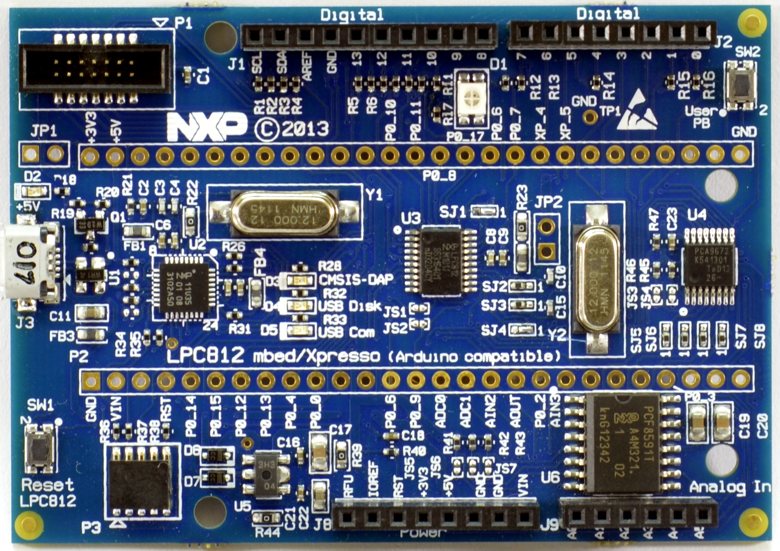
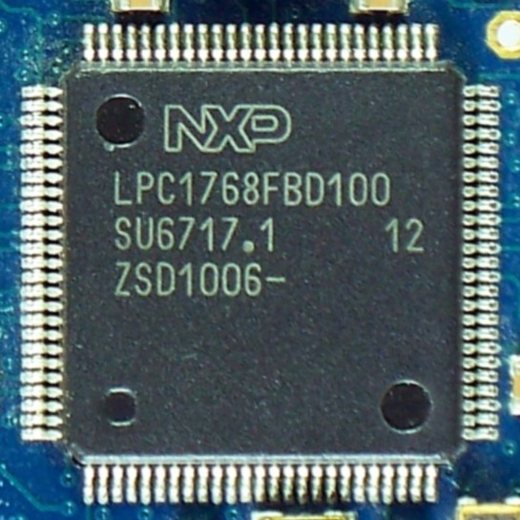
The LPC line is NXP’s own Cortex-M family, built in-house and shipped since the early days of the architecture. It spans a wide range, from the tiny Cortex-M0+ LPC800 parts in low pin counts, through the older Cortex-M3 LPC1700 mainstream line, up to the secure dual-core Cortex-M33 LPC5500 at the top. One design philosophy and one toolchain run across all of it. The line goes back to the LPC2000 parts on the older Arm7 core, so the LPC name carries weight with engineers who have shipped on it for two decades. The Cortex-M parts kept the family habits: a clean peripheral set, strong USB and CAN support, and packages that suit both a hand-soldered prototype and a dense production board. The part numbers stayed readable, with an LPC1768 naming its core generation and its memory in the digits the way an STM32 order code does. A team moving from one LPC to a larger one reuses the bulk of its board and its firmware. Years of LPCOpen software and application notes mean a problem on an LPC part usually has a documented answer already.
Kinetis arrived from a different place. NXP bought Freescale in 2015 and took the Kinetis portfolio with it, a broad set of Cortex-M4 and Cortex-M0+ parts with the analog and sensor strength Freescale was known for. The portfolio splits two ways, the Cortex-M4 K series for performance and the Cortex-M0+ KL series for ultra-low power. Both reach back into a long industrial and automotive history. Freescale brought decades of motor-control and automotive silicon to the merger. That pedigree lives on in the Kinetis analog and timer blocks. Between them the two series went into motor drives, metering, medical instruments, wearables, and battery sensors. NXP kept the whole portfolio in production after the deal closed. The Freescale name still carries trust in automotive and industrial circles, where a part qualified to AEC-Q100 or run for a decade is a routine requirement. Kinetis inherited that customer base and that reputation along with the silicon.
In recent years NXP has pushed new designs toward the LPC5500 and the crossover line, leaving Kinetis in steady maintenance. The STM32 takes the default slot for new 32-bit work. So the question narrows to one thing: when does an LPC or a Kinetis part still earn a design that an STM32 would otherwise take?
The answer is never a blanket. It is a short list of specific cases, each tied to a peripheral, a piece of legacy, a supply need, or a security feature that the NXP part does better. The rest of this page walks that list. Each case below is a real reason a team picks an NXP part on purpose. None of them is about the Cortex-M core itself, which NXP licenses from Arm the same way ST does. The differences live in the peripherals, the security, the supply terms, and the tools around the core. That is the right frame for any vendor comparison at this level. The core is a commodity. The value sits in what surrounds it.
| Line | Arm core | Position | Note |
|---|---|---|---|
| LPC800 | Cortex-M0+ | tiny, low pin count | switch matrix, SCTimer |
| LPC1700 | Cortex-M3 | legacy mainstream | long field history |
| LPC5500 | Cortex-M33 (dual on upper parts) | secure, edge | PUF, TrustZone, coprocessors |
| Kinetis K | Cortex-M4 | performance, analog | 15-year longevity |
| Kinetis KL | Cortex-M0+ | ultra-low power | 8-bit migration bridge |
What the LPC line offers
The LPC800 packs real flexibility into a small part. A switch matrix lets a designer route almost any peripheral function to almost any pin, which frees a tight board layout. The State Configurable Timer, the SCTimer, runs complex timing and PWM patterns in hardware with little CPU help. The parts come in low pin counts at low cost. A few add I3C and capacitive touch. The older LPC1700 line carries a Cortex-M3 mainstream part with years of field history behind it. The switch matrix deserves a second mention, the LPC feature an outsider tends to miss. It separates the pin from the function entirely, so a serial port, a timer output, or an SPI bus lands on whatever pin the layout finds convenient. A crowded board routes cleanly that would otherwise force a larger package. The SCTimer pairs with it for hardware-timed output on those flexible pins. The wider LPC catalogue holds more than the headline parts. The LPC4300 puts a Cortex-M4 and a Cortex-M0 on one die for split real-time and application work. The LPC1100 and LPC1300 fill the range below the M3. USB host and device support runs across much of the line, a draw for a product that talks to a PC or a phone.
The LPC5500 is where the line earns a new design. It runs a Cortex-M33, with a second M33 on the upper parts for true isolation. Its security is the headline: an SRAM PUF for a keyless hardware root of trust, Arm TrustZone to wall off the secure code, and on-the-fly decryption of images from flash. Two coprocessors sit beside the core, a CASPER engine for public-key crypto and a PowerQuad block for DSP and filtering. The SCTimer carries over, with eight inputs and ten outputs for motor and power work. The LPC5500 also widens the memory and the connectivity over the older LPC parts, with more SRAM, high-speed USB, and CAN-FD on the fuller devices. The LPC55S69-EVK board puts the whole package on an engineer’s bench for a low price. NXP positions this part at secure IoT endpoints, smart-home hubs, and industrial gateways, the work where the security blocks pay their way. The dual-core option suits a product that runs a control loop alongside a connectivity stack: one M33 holds the hard real-time work, the other the network and the housekeeping. The two cores share the SRAM through a mailbox. A single part covers a job that would otherwise take two chips. NXP backs the line with reference designs for the common edge and motor jobs, which shortens the path from board to product. The part ships in packages from a compact QFN up to a larger LQFP, so a tiny sensor node and a denser gateway both find a fit in the one family.
What Kinetis brings
Kinetis leans on two strengths the Freescale years built. The first is analog: the K and KL parts carry precise ADCs, DACs, and analog comparators that suit measurement and sensor work, a heritage from Freescale’s analog business. The second is longevity: NXP places the Kinetis K series in its product longevity program with a fifteen-year minimum supply, a commitment a long industrial or automotive design leans on. The portfolio splits two ways, the Cortex-M4 K series for performance and the Cortex-M0+ KL series for ultra-low power, with a bridge for teams migrating off 8-bit parts. A design already built on Kinetis keeps a stable, long-supported home. The Kinetis tooling carries its own weight too. The Kinetis SDK and the Processor Expert configuration tool shaped a generation of NXP designs. The FRDM evaluation boards put the parts in front of students and engineers cheaply. A team with that background on the bench reaches a working Kinetis prototype quickly. The analog strength shows clearest in the K series, where a sigma-delta or a high-resolution ADC reads a sensor a general part would need help to match. The K series also carries the connectivity a richer product needs, with USB on the K2x parts, Ethernet on the K6x, and a segment-LCD driver on others. The low-power modes run deep, down to a state that keeps the RAM and the clock alive on a trickle of current. Kinetis carried an on-chip crypto accelerator long before security became a headline feature, which served payment and metering designs well. The FRDM and Tower boards gave the line a cheap on-ramp that many engineers met first in a lab, which seeded a base of designers who reach for it by habit.
When they still win
The first case is legacy. A product line already shipping on an LPC or a Kinetis part carries firmware, board designs, and a qualified supply chain built around it. Moving that to an STM32 buys a port, a re-layout, and a re-test for no gain the product needs. The NXP part keeps the design where it already works. Legacy weighs more than it looks. A shipping product carries test fixtures, production scripts, certifications, and a trained support team built around its part. A part swap reopens every one of those. A switch would mean a full requalification, all for a gain the product never asked for. The math rarely favours the move. A working design on a supported part beats a marginally cheaper one that costs a requalification to reach. The strongest reason to leave is the absence of any reason to stay. A working NXP design rarely hands a team that.
The second case is a peripheral the NXP part does better. The LPC switch matrix routes any function to any pin, which untangles a dense board that a fixed pinout would fight. The SCTimer runs a multi-phase motor or a power-conversion waveform in hardware, freeing the core for the control loop. The Kinetis analog front end measures a sensor more precisely than a general-purpose part manages, which matters in instrumentation and medical work. A design built around one of these features finds the NXP part fits it natively, saving the external chip or the software workaround a substitute would need. The peripheral is what drives the choice here, ahead of the core. These peripherals are not exotic add-ons. The switch matrix and the SCTimer are everyday parts of the LPC design flow. A team that has used them reaches for them by reflex. A motor-control board built around the SCTimer runs its commutation in hardware, holding precise timing while the core handles the application. Recreating that on a part without it costs external logic and software cycles. The same logic covers the Kinetis analog. A design that reads a strain gauge, a thermocouple, or a current shunt to high precision leans on the on-chip front end, sparing the external amplifier and ADC a lesser part would force onto the board. Power conversion is a third native fit, where a digital supply or an LED driver on the SCTimer shapes its switching waveforms in hardware to the nanosecond.
The third case is security at the edge. The LPC5500’s hardware root of trust, its TrustZone separation, and its on-the-fly flash decryption give a connected product a security base in silicon. A design that has to resist tampering or protect firmware finds those features built in, in place of the external secure element a general part would need. NXP has pushed this line hard for IoT and industrial edge work. The security story is the reason. A locked-down product carries real consequences for a breach, in a smart lock, a payment terminal, or a connected medical device. The LPC5500 answers those with silicon a security audit can point to: a root of trust the device builds itself, code the part keeps encrypted at rest, and an isolation boundary the processor enforces. That base shortens the security work a certification demands.
The fourth case is supply. The Kinetis K series carries a fifteen-year availability guarantee, which a product with a decade of field life ahead of it values directly. An NXP part also adds a second supply base away from ST, on a different fab and a different sales channel, the kind a single shortage rarely takes down alongside ST. For a team building supply resilience, NXP is a natural second name on the approved-vendor list. The longevity guarantee carries real money for a long-life design. A medical or industrial product certified once and shipped for fifteen years cannot afford a part that disappears in five. The Kinetis K commitment puts a date on the table that a procurement team can plan against. A part outside any longevity program leaves that risk uncovered. Defence, rail, and grid equipment run longer still, sometimes past twenty years. A documented supply horizon is part of the bill of materials for that work.
The fifth case is the ecosystem a team already knows. NXP runs the MCUXpresso tools across both lines, one IDE, one SDK, and one config tool from the LPC800 up to the LPC5500. A shop with NXP experience and NXP debug probes on the bench moves faster on an NXP part than on a fresh vendor. Familiarity is a real cost saving, paid back on every engineer who already knows the parts. MCUXpresso also imports an SDK example for the exact part with a few clicks, so a project starts from working code. The Config Tools set the pins, the clocks, and the peripherals in a graphical view much as ST’s tool does. A team fluent in this flow treats a new NXP part as familiar ground from the first day. The debug side stays the same too, with the MCU-Link and LinkServer tools driving any NXP part the team already owns. One bench setup covers the whole range.
Choosing NXP here
The thread through all five cases is specificity. NXP LPC and Kinetis win a design on a concrete reason: a peripheral, a piece of legacy, a security need, a supply guarantee, or a known toolchain. Where one of those reasons is present and weighs heavily, the NXP part is the stronger pick over an STM32. The reason has to be real, not sentimental. NXP loyalty alone does not justify the narrower ecosystem and the smaller second-source pool. A concrete technical or commercial driver is what earns the part its slot. A team writes that driver into the part-selection notes next to the clock and the memory, so the reason survives the review and the next engineer can see it.
Where no such reason is present, the default still favours the broader ecosystem. A new general-purpose design with no NXP tie usually finds more parts, more community, and more domestic second sources around the STM32. A brand-new NXP design leans toward the LPC5500, the line NXP is steering its new work onto. Kinetis stays the choice for a design already on it. The honest default for a clean-sheet design with no NXP pull is the STM32, for the depth of parts, tools, and community around it. The NXP case has to overcome that default with a specific advantage. A design that might grow into heavier compute later looks to the i.MX RT crossover line, NXP’s answer above the general-purpose parts.
So the choice rests on a single test. A design points to NXP when a specific LPC or Kinetis strength carries real weight for the product. With no such weight, the STM32 or a newer part takes the slot. Reading which case applies, early, settles the question for the board and saves a switch later. The NXP lines reward the design that has a reason to be there. For the rest, the STM32 default holds. That is the honest answer. Either way, the part choice is settled on evidence a team can defend, the standard any second-source decision meets.
What are the NXP LPC and Kinetis lines?
LPC is NXP’s home-grown Arm Cortex-M family, running from the tiny Cortex-M0+ LPC800 up to the secure dual-core Cortex-M33 LPC5500. Kinetis came to NXP with the 2015 Freescale acquisition, a broad set of Cortex-M4 K-series and Cortex-M0+ KL-series parts known for strong analog. Both are mature general-purpose lines that compete with the STM32. Both license the Arm Cortex-M core, so the difference from the STM32 lives in the peripherals, the tools, and the supply terms.
Is Kinetis end-of-life?
No. NXP steers new designs toward the LPC5500 and the i.MX RT crossover line, so Kinetis sits in steady maintenance. The Kinetis K series carries a fifteen-year minimum availability guarantee under NXP’s product longevity program, so a design already on it keeps a long-supported home. Existing products have no urgent reason to move. The i.MX RT crossover line is where NXP points a design that has outgrown a general-purpose part, a topic of its own.
When should a design choose NXP LPC or Kinetis over the STM32?
On a concrete reason. A legacy NXP or Freescale codebase, a peripheral the NXP part does better such as the LPC switch matrix or the SCTimer, the Kinetis analog front end, the LPC5500’s hardware security, the Kinetis fifteen-year supply guarantee, or an in-house NXP toolchain each tip a design toward NXP. With no such reason, the broader STM32 ecosystem takes the default slot. The test is whether the NXP advantage is concrete enough to write into the selection notes.
What makes the LPC5500 notable?
It runs a Cortex-M33, with a second M33 on the upper parts for isolation. Its security is built into the silicon: an SRAM PUF for a keyless root of trust, Arm TrustZone separation, and decryption of flash images on the fly. A CASPER coprocessor handles public-key crypto and a PowerQuad block handles DSP. The SCTimer adds flexible motor and power-conversion control.
Do LPC and Kinetis share development tools?
Yes. NXP runs the MCUXpresso tools across both lines: one Eclipse-based IDE, one SDK, and one configuration tool from the LPC800 up to the LPC5500. A team with NXP experience and NXP debug probes already on the bench carries that familiarity across the whole NXP range, which is itself a reason to stay with the vendor.