

Veterinary Ultrasound Certification Training Program Handheld
Veterinary ultrasound is learned through training that builds up over time. A vet starts with a short course. Certificate programs and mentored cases come next. Board-certified specialists sit at the top, trained for years and tested by a hard exam. The training is what turns a machine into a clear picture in a vet’s hands.
The ladder of learning the scan
Learning the scan is a climb taken one rung at a time. A vet begins with a short course. Then come deeper courses and mentored cases. A few vets go all the way to a board certification. Each rung takes more time. Each rung gives more skill. A vet climbs to the rung their work calls for. The climb has no fixed end. A vet goes as far up as the work asks. The ladder holds a rung at every height of need.
Many vets climb only part of the way. A general-practice vet scans for the everyday work. They need a working skill. A few courses and a run of cases give it. Such a vet stops at the rung their work asks for. A vet who scans a litter or a bladder a few times a week has no need of a residency. A course or two teaches that everyday work. The cases that follow build it up. The training a vet takes matches the scanning they do. A clinic sizes its training to its caseload. The everyday case sets the level for many vets. That level is reached in a course or two. A general clinic scans common things. It scans pregnancies, bladders, and bellies. A vet learns these in the first courses. The work rarely calls for more.
The specialist stands at the top of the ladder. A vet who scans as their whole work trains to a board certification. Years of residency and a hard exam lie behind the title. The specialist reads the scans a general vet sends on. A clinic leans on the rung its own vets have reached. It does the everyday scan in-house. It sends the hard case up to the specialist. No single vet needs to climb the whole ladder. Vets at every rung carry the field between them. The daily flow of patients is handled close to home. The puzzling case travels up to the specialist. The field works because every rung is staffed.
The first course
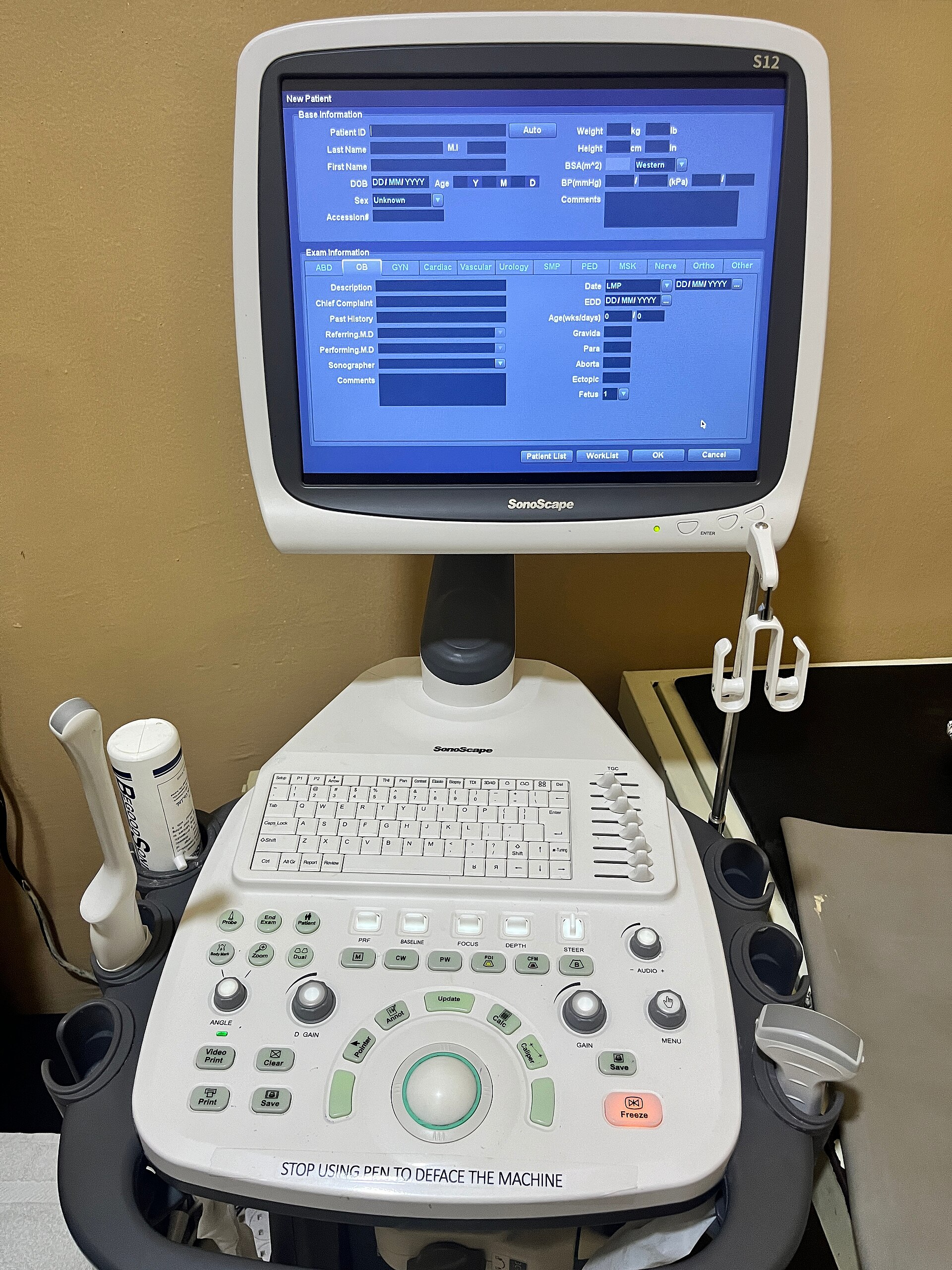
Many vets begin with a first course. It runs a few days. It teaches the machine, the anatomy, and the first scans. A vet goes home able to read the common patient. The course is the door into the scan. A week of teaching builds a working skill. The first course is short by design. It aims only to get a vet started. A vet leaves it able to scan the plainest cases.
The course mixes the lecture and the hand. A teacher explains the physics and the anatomy in the room. Then the teacher puts a probe in the vet’s hand. The vet scans a live patient or a model. The teacher steers the hand and names what shows on the screen. A day of scanning under a teacher teaches more than a month of reading alone.
After the first course a vet can start. A good course covers the common scans. A vet can read a pregnancy, a full bladder, an obvious effusion. These are the everyday patients of a general clinic. The harder reads come later. They come over the cases a vet works in the months that follow. A vet sees more kinds of patient over the years. Each new case adds to the eye. The reading grows case by case.
A course alone does not make a scanner. A week’s course is only a beginning. A new scanner still struggles on the uncommon cases. The real skill grows in the daily casework. A vet reads each case against what the course taught. A vet’s reading deepens over the months. The first course is a foundation. A vet builds on it for years. The early cases take real effort. The skill is laid down case by case.
The hands-on hours
The skill of the scan lives in the hand and the eye. A vet learns it only by scanning. A vet can read about a scan all they like. The picture stays a grey blur until they have held the probe on patient after patient. The organs come clear only with the doing. The hands-on hours are the heart of any real training. A good course is measured by the time it puts a probe in the vet’s hand. The wet-lab is where the learning happens. A vet scans a live patient or a model. A teacher steers the hand. The teacher names what the screen shows. At first the vet finds the windows clumsily. The probe wanders. The picture slides. Over the hours the hand settles. The organs come up where the vet means them to. The eye learns alongside the hand. The grey shapes turn into a liver, a kidney, a bladder. The teacher names them again and again. A hundred scans under a teacher teach what no book can. The skill is grown in the doing. Reading a scan is a craft learned at the bench.
The mentored case carries the learning on. A vet back at the clinic saves the hard scans. They send the clips to a mentor. The mentor reads the picture with them. The mentor points out what they missed. A run of cases with a mentor trains the eye on the vet’s own patients. A mentor is a teacher a vet keeps after the course. The mentor sees the cases a vet meets in real work. This is the closest help a working vet can get. A mentor can sit far away. A vet sends the clips online. The mentor writes back with the read. Distance is no barrier to the help.
The hours add up to a trained eye. A vet who has scanned a thousand patients reads the next at a glance. The picture is plain to them now. A vet keeps a log of the scans they have done. The count of cases shows the eye behind it. A clinic reads that log to see how much a vet has scanned. The log adds a line for every case. A vet can show it to a clinic or a course. The number of scans speaks for the eye behind them. A logbook is a simple record. A vet notes each scan as they do it. A long list marks an experienced hand.
The hands-on time is what a vet pays for. A course of all lectures teaches only the theory. A vet learns the doing only with a probe in hand. So a vet picks the course that puts the probe in their hand the longest. The hours of scanning are what the fee buys.
The learning is slow because the eye trains slowly. A vet cannot rush the hundreds of scans it takes to read at a glance. The skill is built over the patients and the months. The training is a long apprenticeship. There is no shortcut to the eye. A vet builds the skill one scan at a time. The eye cannot be hurried. Every scan adds a little. The years of cases are the real training.
The grades of training
The training comes in grades. A weekend course teaches the start. A months-long certificate builds working competence. A years-long residency gives the specialist’s depth. Each grade is a deeper training. Each grade marks a higher skill. A vet climbs to the grade their work asks for. The further a vet means to go, the longer the training. A vet need not aim for the top. A vet matches the grade to the work they do. The work sets the level. A vet trains to it and no further.
The grades run from the first course to the diplomate. The table below lays out the main rungs. It gives what each rung is, who climbs it, and what it gives. A vet finds the rung their work calls for. A vet need not climb past the scan they will do. The table is a map of the training. A vet places themselves on it by their work. The rung they need is the rung they climb to.
| Level | What it is | For whom | What it gives |
|---|---|---|---|
| Short CE course | A few days of lectures and a wet-lab | A vet adding the everyday scan | A working start; a certificate of attendance |
| Certificate program | A structured course over months, with mentored cases | A vet going deeper than the basics | A defined competence; a credential |
| Board certification | A three-to-four-year residency under diplomates, then a two-part exam | The vet who scans as their whole work | Diplomate status (ACVR, ECVDI); the highest standard |
A day to buy, a year to read
A handheld is bought in a day, then learned at the probe over a year and more.
The board certification
The specialist sits at the top of the ladder. A vet who makes imaging their whole work trains to a board certification. The board-certified radiologist reads the scans a general vet refers up. This is the highest standard in the field. The diplomate is the vet other vets turn to. A general vet sends a scan past their reading up to the diplomate. The diplomate has seen far more cases. The years of training stand behind that eye. A hard read is the diplomate’s daily work.
The path to the board is long. The American College of Veterinary Radiology certifies the field’s imaging specialists. The training takes a veterinary degree. It takes a year of internship or practice. It takes a residency of three to four years under the college’s diplomates. A two-part board examination comes at the end. Ultrasound is one of the five core imaging areas a radiologist trains in. It is learned alongside x-ray, CT, MRI, and nuclear medicine. The diplomate at the end of that road reads ultrasound to the deepest standard the field holds.
The residency is years of imaging and nothing else. A resident scans, reads, and reports under the college’s diplomates. This goes on day after day for the years the training runs. The resident reads thousands of cases across x-ray, ultrasound, CT, and MRI. The board exam at the end tests the whole of it. Only the vet who passes earns the title. The exam is known to be hard. Many sit it more than once. The title means the whole training is done. A residency runs three to four years. The resident works under the college’s diplomates the whole time. The cases pile up by the thousand. The eye sharpens over those years. The training is long for a reason.
The specialist anchors the field’s standard. The diplomate reads the hard cases. The diplomate teaches the courses the rest of the field takes. The diplomate writes the guidance the bodies set. The lower rungs all draw on the standard the specialist keeps. A weekend course teaches one piece of what the diplomate holds whole.
Few vets climb all the way to the board. Few need to. A general vet scans the everyday patient well with a fraction of that training. The deeper rungs are there for the few who make imaging their life. Every vet stops at the rung their work calls for. A vet spends no time on training their work does not need. The board suits a life spent in imaging. Many vets train to the everyday level. Each vet trains to what their work calls for. The board is a long road few walk. A general vet has no need to walk it. A vet reaches a fine standard well short of the board. The top rung is for the specialist alone.
The certificate that travels
The certificate is a vet’s proof of training. A course gives a certificate at the end. It marks that the vet sat the teaching and met its bar. A clinic reads it as a sign of trained hands. A vet can hang it on a wall or list it in a record. A client who sees it knows the vet has trained for the scan. The certificate puts the training on record. A clinic can check it before it hires. The paper stands for the hours behind it. A certificate has a name and a date. It names the course and the body behind it. A clinic can look the course up. The paper is a check a client can make.
Each credential shows the training behind it. A weekend certificate and a diplomate’s board sit two rungs apart. A vet’s credentials show a clinic how far they have climbed. A new hire shows their certificates and their case log. The employer reads how far the vet has trained. The credentials answer one question for a clinic. They show how far the scanning can be trusted. A clinic weighs a hire on the credentials shown. A fuller record means a surer pair of hands. The marks tell a clinic what to expect at the probe.
The certificate travels with the vet. A vet moves clinics or countries. Their training stays with them in their credentials. The mark reads the same wherever they go. A vet’s certificates and case log make a record. Any new clinic can read it. The record stays with the vet for a career. More training adds to it. A vet carries a whole training history in it.
Learning never stops
The training does not end with the certificate. The field keeps moving. New protocols, new probes, and new uses of the scan keep coming. A vet meets them with a new course or the latest guidance. A vet’s training runs the length of a career. The certificate is one milestone on a long road. The field gains new probes and new uses each year. A vet reads up to keep pace. The work rewards the vet who keeps learning. A vet renews their learning through a career. New courses come out each year. A vet picks the ones their work needs. The training has no last day.
Continuing education keeps the eye current. A vet adds to their skill year on year. The courses and cases of a career carry a vet past the first training. The best scanner is the one still learning. A vet ten years in still takes courses and reads the new guidance. The first course is only the start. A good vet never stops adding to the eye.
Training for the handheld
The handheld is taught the same as any machine. A vet learns the scan as a method. The windows and the findings run the same on a handheld. A vet trained on the scan reads it on whatever machine is in hand. A vet who learned on a big machine reads the same on a handheld. The box does not change the picture. The method is what a vet learns. A vet reads the same liver on any screen, large or small. The skill stays with the vet.
The handheld lowered the bar to starting. A handheld is cheap enough for a small clinic to buy. It puts the scan within reach of a vet who could not afford it before. The next thing that vet needs is the training. A vet buys a handheld and takes a course. The machine and the learning are the two halves of starting. A handheld costs far less than a cart machine. A small clinic can afford one now. The price is no longer the barrier it was. The training is the next step after the purchase.
A machine without training reads nothing. A handheld with no one trained to use it sits in a drawer. No one can read the scans it could do. The training is what turns the machine into a working tool. A course and the cases cost as much as the probe. A clinic that skips the training has bought a tool no one can use.
What the training leaves elsewhere
The training teaches the scan itself. The reading of each organ sits in its own place. How a liver, a kidney, or a tendon is read belongs to the clinical work. Each is covered where that scan is set out. The training is the path to the skill. A vet learns each organ’s scan from the clinical pages. A vet learns the way to learn it from the courses.
The named protocols and the standards sit in their own places too. The set routes for the probe and the bodies that set the standards each have their own pages. The training puts these into a vet’s hands. A vet learns the protocols and the standards through the training. The detail of each is covered on its own page.
What the training gives the scan
The training turns a machine into a diagnosis. The picture is only as good as the eye that reads it. The training is what builds that eye. The eye is built over the patients and the courses. A clinic needs the training as much as the machine. The eye reads what the probe shows. The probe shows what the hand finds. The training builds the hand and the eye alike. Neither one comes from the box on its own.
The ladder gives every vet a rung to reach. The everyday scan is a few courses away. The certificate is some months on. The board is years up. Each level matches the depth a vet’s work asks for. The training meets a vet where they are. Every vet has a next rung to reach for. The ladder always offers a step up. A vet climbs it at their own pace.
The certificate marks the climb for others to read. A vet’s training shows in their credentials. A clinic can read how far the vet has come. A vet earns the training and shows it. The hours behind the scan are written in a mark. A clinic reads the mark when it hires. The mark sums up a long climb in a line. It tells a clinic what to expect. The training behind it is the real thing the mark stands for. A credential is a short line on a record. It carries a lot of meaning. The years of training stand behind that one line.
The training lets a vet trust their own reading. A vet trained to a rung reads that rung’s scans with surety. The picture becomes a diagnosis the vet can stand behind. That trust is what the training buys, over the months and the cases it takes.
Common questions about veterinary ultrasound training
How does a vet learn to use ultrasound?
By training that builds up over time. A vet starts with a short continuing-education course. It teaches the machine, the anatomy, and the first scans. Then the vet builds the skill on mentored cases and deeper courses. The hands-on hours under a teacher are the heart of it. A vet trains the eye on patient after patient. The reading is learned over a year and more of scanning.
What is a board-certified veterinary radiologist?
The field’s imaging specialist, trained to the highest standard. The American College of Veterinary Radiology certifies a radiologist. The training takes a veterinary degree, a year of internship or practice, and a residency of three to four years under its diplomates. A two-part board exam comes at the end. Ultrasound is one of the five core imaging areas a radiologist trains in, alongside x-ray, CT, MRI, and nuclear medicine. The diplomate reads the scans a general vet refers up.
Does a general-practice vet need to be a specialist to scan?
No. A general vet scans the everyday patient well with a few courses and a run of cases. That is a fraction of a specialist’s training. The board certification is the top of the ladder. Only the vet who scans as their whole work needs to reach it. The everyday scan is read by general vets trained to the rung their work asks for.
What does a certificate or credential show?
The training behind a vet. A course certificate shows the vet sat the teaching and met its bar. A board shows years of training behind the vet. A clinic reads the credential to know how far a vet has climbed. The mark travels with the vet wherever they work.
Does the training differ for a handheld?
No. The scan is taught the same on any machine. A vet learns the same windows and findings on a handheld as on a cart-bound machine. The training is in the method. The handheld lowered the cost of starting. After the probe, the next thing a vet needs is the course. A machine no one is trained to use reads nothing.
About the Author
Julien Mercier
Senior R&D Engineer · Medical Ultrasound Transducer Development
Senior R&D Engineer with an M.S. in Applied Physics and over 15 years of experience in medical ultrasound transducer development, specializing in the design verification and performance testing of high-frequency imaging transducers. Currently leading the development and verification of the company’s next-generation high-frequency linear-array transducer, responsible for imaging performance evaluation and reliability analysis in preclinical testing. Brings extensive hands-on experience in piezoelectric element tuning, beamforming parameter optimization, and system-level performance testing.