Mobile Ultrasound Machine Clinical Use Cases for Hospital and Clinic
A mobile ultrasound machine earns its value by going where the patient is. A cart stays in a room. A mobile device rides in a pocket, a coat, a bag. The question for a buyer is not whether the picture is perfect. It is where, in a real hospital or clinic, the device changes what care can happen. The use cases below map that ground.
Reach is the whole point.
Each setting below shares one trait. The patient cannot easily come to a scanner, or the answer cannot wait for a booking. A mobile device meets both needs. It brings the picture to the bedside, the ward, the clinic an hour from any hospital, in the minutes a decision allows.
The emergency department
A mobile scanner earns its keep by reaching the patient who cannot easily reach the imaging room.
The emergency room is where mobile ultrasound proved itself. A patient arrives unstable. The cause is unclear. A clinician needs an answer in minutes, at the trolley, as a team works around them. A mobile device gives that answer without a trip to radiology.
Speed at the trolley saves lives.
A focused scan finds blood in the abdomen after a crash. It checks whether a failing heart is filling. It reads a lung for the fluid of heart failure. It spots the collapsed lung that needs a needle now. None of these wait for a porter or a booking. The mobile device sits on the resuscitation trolley, ready in the seconds a crisis allows. The emergency department is the home ground of the pocket scanner. It is the use case that built the field. A device that lives on the resuscitation trolley turns minutes into the currency of care. The scan happens as the team works, inside the crisis itself. That single shift, the answer arriving inside the crisis instead of after it, is the whole reason emergency medicine took the pocket scanner to heart.
The hospital ward
The ward is a quieter setting with a steady need. A patient on a ward cannot always travel to imaging. They may be frail, attached to lines, or simply too unwell to move. A mobile device walks the round with the team and answers the day’s questions at the bedside.
The round becomes the scan.
A doctor checks whether a breathless patient is overloaded with fluid. A nurse confirms a bladder is full before a catheter. A team judges whether a drip is keeping up with a dehydrated patient. Each of these once meant a referral, a wait, a transfer down a corridor. With a mobile device, the answer arrives during the round itself. The ward use case is less dramatic than the emergency one. It is more frequent, and across a year it changes more care. A bedside answer spares a frail patient a trip to imaging. It spares the ward the hours of arranging that trip. It catches a worsening lung or a failing kidney in the round, days before a scheduled scan would have. The drama is low. The cumulative good is high.
Vascular access at the bedside
Putting a line into a vein is harder than it looks. A deep or rolling vein hides from the eye and the finger. A blind attempt fails, bruises, and sometimes harms. A mobile device shows the vein, the needle, and the path between them, in real time.
Ultrasound turns a guess into a guided act.
A clinician holds the probe in one hand and the needle in the other. The screen shows the needle tip slide into the vessel. The first attempt succeeds where several blind ones would have failed. This use case suits a mobile device perfectly, since the work happens at the bedside, in a single pair of hands, with no room for a cart. Vascular access is among the commonest reasons a ward reaches for a pocket scanner, and one where the picture clearly changes the outcome.
The outpatient clinic
The clinic runs on time. A mobile device fits the rhythm. A consultation that once paused for a referral now folds a quick scan into the visit. A thyroid lump gets a look. A swollen knee gets checked for fluid. An early pregnancy gets dated. The patient leaves with an answer. A second appointment is spared.
The scan happens inside the visit itself, while the patient is still in the chair.
This use case rests on the device’s small footprint. A clinic room rarely has space for a cart, and a busy schedule rarely has time for a walk to an imaging suite. A pocket scanner sits in the drawer, ready for the moment a question arises. It turns a clinic visit into a one-stop event for many common questions, the answer found before the patient has buttoned a coat to leave. The convenience compounds across a full clinic day, and a patient spared a return trip is a patient served well.
Primary care and the remote setting
A bedside look at the heart can answer in seconds a question that a transfer would answer in an hour.
The widest use case sits farthest from the hospital, and it deserves a full look, since here a mobile device does not merely speed care. It makes care possible at all. A rural clinic, a home visit, a field camp an hour from any imaging suite: these settings never housed a cart, and never will. A patient in them faced a long journey for a scan. Many went without one. A mobile device changes the arithmetic completely. A scanner that fits in a coat pocket, runs on a battery, pairs with a phone, needs no room, no mains power, no dedicated suite. A primary-care doctor on a home visit can check a swollen leg for a clot. A midwife in a village can confirm the position of a baby before a long transfer. A clinician at a remote camp can rule a serious finding in or out, and decide whether a patient must travel or can safely stay. The picture a pocket device makes is a step below a hospital console. At this distance the comparison is beside the point. The real comparison is not pocket against cart. It is a scan against no scan at all. A finding caught early in a village. A needless transfer spared. A serious case sent on with the right urgency. Each flows from a device small enough to reach a place a cart could never go. For the remote setting, mobile ultrasound is less a convenience than a bridge across the distance that once kept imaging out of reach. That bridge is the use case that weighs heaviest, for the patients who had the least before it existed.
Distance was the old barrier. The pocket scanner crosses it.
Teaching and training
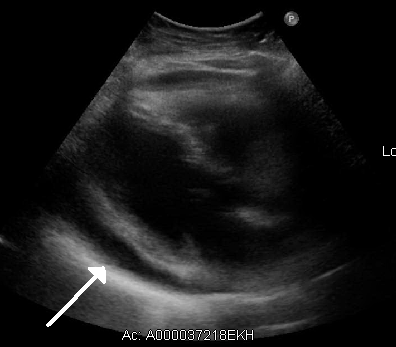
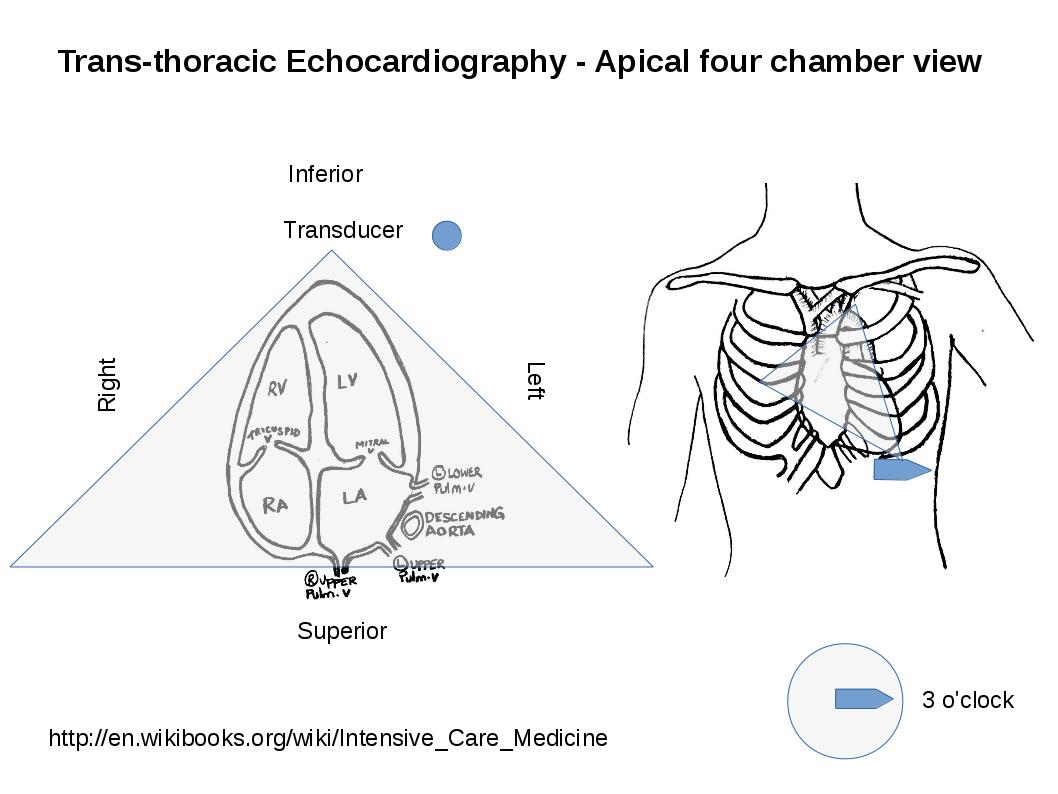
A focused cardiac look at the bedside has become routine wherever a mobile scanner can reach.
A mobile device teaches as well as scans. A trainee learns ultrasound by holding a probe, not by watching one. A pocket device puts a scanner in every learner’s hand at a cost a teaching program can bear. A class can each hold a device. They scan a willing volunteer. They learn the views together.
Cheap enough to learn on changes who can learn.
A single cart serves one learner at a time, under supervision, on a schedule. A set of pocket devices serves a whole class at once. The guidance software many carry coaches a beginner toward a standard view. A learner builds skill faster. The teaching use case is quiet. It shapes the field’s future. A generation trained on mobile devices treats bedside ultrasound as a basic skill, the way an earlier one treated the stethoscope.
Specialty corners
Mobile ultrasound reaches into many specialties, each with its own use. A musculoskeletal clinic checks a tendon, or guides a joint injection. A pain service places a nerve block under live guidance. A veterinary practice scans an animal in a barn, where no cart could follow. A sports physician assesses a muscle on the field, minutes after an injury.
Each corner shares the same logic.
The work happens away from a fixed room. The question is focused. A single pair of hands does the scan. Wherever those three conditions meet, a mobile device fits the use better than a cart ever could. The specialties differ in detail. They agree on the shape of the need, and the pocket scanner answers that shape across all of them.
When a mobile device is the wrong tool
An honest map marks the places a mobile device does not belong. Reach is its strength. Reach is also the edge of its use. A comprehensive study, the kind that sweeps an organ system and feeds a specialist’s report, asks for the depth and the steady image a cart provides. A pocket scanner answers a focused question. It was never built for the thorough one.
Know the jobs to hand to the cart.
A detailed obstetric anatomy scan belongs on a full system. A subtle vascular study deep in a large body belongs there too. So does any exam where a fine measurement decides the care, since the steadiest possible image matters there. A clinic that reaches for a pocket device on these jobs scans into a window too small for the task. The skill of using mobile ultrasound well includes knowing its limits. A clinician who sends the thorough work to the cart, then keeps the focused work at the bedside, gets the best of both. One who asks the pocket device to be a cart meets the gap on a scan that mattered.
Building it into the workflow
A mobile device delivers its value only when it fits the day. A scanner left in a drawer, uncharged, behind a forgotten password, helps the clinic not at all. The use cases above assume a device that is ready the moment a question arises. Readiness is a habit the clinic builds.
Keep it charged. Keep it near. Keep it clean.
A clinic that builds simple routines around the device reaps the use cases in full. A charging dock by the trolley keeps the emergency scanner ready. A cleaning protocol between patients keeps it safe. A clear rule on who scans, and where the study goes, keeps the record whole. The hospital that treats the mobile device as part of the furniture of care, charged and to hand like a thermometer, finds the use cases fold into the day without friction. The one that treats it as a special gadget, fetched and set up for each use, loses the speed that made it quick to reach for. The device is only as mobile as the workflow around it allows.
Matching the device to the use
The use cases share a pattern, and the pattern guides the purchase. A clinic that buys a mobile device should name its real uses first. An emergency team wants a probe that reads heart, lung, and abdomen in one tool. A vascular service wants a sharp linear probe for shallow veins. A remote clinic wants endurance and a wide probe range, since it carries one device for everything.
The use names the probe. The probe names the purchase.
A device chosen against the clinic’s true use cases earns its place at once. One bought on a brochure, with no clear use in mind, often disappoints. The finest pocket scanner is useless for a job it was never suited to. Map the uses first. Then pick the device that serves the widest set of them, in the settings the clinic truly works. A mobile ultrasound bought this way does what no cart can. It follows the patient. It moves into every corner of the hospital. It travels out the door to the clinic beyond, into the home, into the village, into the field. The use cases are many. The thread that joins them is one. The picture goes to the patient, in the minutes the patient needs it, wherever the patient happens to be. A clinic that grasps that thread buys a mobile device for the reach it grants, then watches the reach pay back across a hundred small moments a cart would have missed.
About the Author
Julien Mercier
Senior R&D Engineer · Medical Ultrasound Transducer Development
Senior R&D Engineer with an M.S. in Applied Physics and over 15 years of experience in medical ultrasound transducer development, specializing in the design verification and performance testing of high-frequency imaging transducers. Currently leading the development and verification of the company’s next-generation high-frequency linear-array transducer, responsible for imaging performance evaluation and reliability analysis in preclinical testing. Brings extensive hands-on experience in piezoelectric element tuning, beamforming parameter optimization, and system-level performance testing.