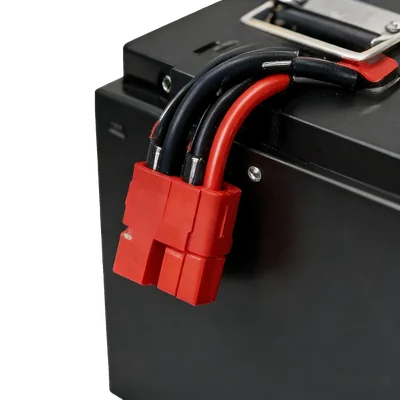
A long ultrasound study; a probe that images while charging never stops near a power outlet.
Working while charging is the modest-sounding feature that lets a wireless ultrasound probe keep imaging while it is plugged into power, and it quietly solves the one weakness the wireless form otherwise carries, the finite charge in its battery. A probe that cannot scan while charging has to stop when the battery runs low, recharge, and resume, so its working life is rationed by its cell; a probe that can image with the charger attached never runs out near a power source, since the incoming power feeds the device while the battery tops up behind it. The feature sounds trivial and is not, because making a sealed probe both charge and image at once means handling two heat sources together, the charging current and the imaging electronics, in a body that was already fighting to stay cool. Whether a maker allows it, and whether the probe throttles or overheats when it does, separates a device built for a real working day from one that merely lasts until its battery does.
It is the small feature that turns a battery’s limit into no limit at all, as long as power is near, and the engineering that makes it work cleanly is anything but small.
What the feature buys
The value of working while charging is easiest to see by picturing the day it changes, the long fixed session where a single battery would otherwise force a pause.
A wireless probe in a clinic room or at a fixed station is usually within reach of a power outlet, so the cable that would tether a wired probe becomes, here, merely an optional feed the operator can attach and ignore, and a device that images while charging can simply stay plugged in, drawing its power from the wall and treating its battery as a buffer rather than a fuel tank, so it works as long as the day lasts without ever stopping to recharge. This turns a single-battery probe into something close to a wired device for the purposes of endurance, since the cable that carries the charge also carries the device past the limit its cell would otherwise impose, and the clinic gets continuous use without buying a dual-battery model or a stack of spares. The feature matters above all exactly where a single battery is weakest, the long uninterrupted study and the busy fixed list, and it costs the clinic nothing but an outlet within reach. A probe that lacks the feature forces the old choice between stopping to recharge and carrying spares, while one that has it lets a clinician forget the battery entirely whenever power is at hand. The capability is quiet on a brochure and loud in a working day, since it removes the single interruption a wireless probe imposes more often than any other, the pause that breaks the flow of a busy list and leaves a patient waiting while a device recovers.
Near an outlet, the probe that images while charging simply never stops.
Why it is harder than it sounds
Allowing a probe to scan while charging is not as simple as leaving the charger plugged in, because charging and imaging each generate heat, and asking the sealed body to do both at once stacks the two against the surface the safety standard caps.
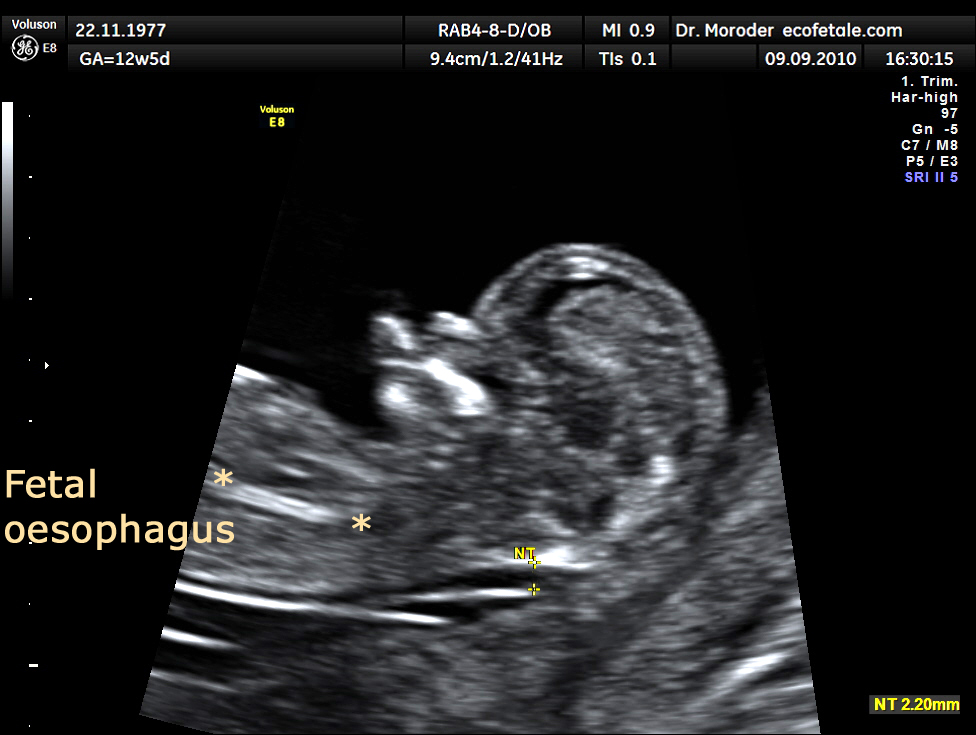
A fetal scan; charging during imaging adds heat to the lens that only a well-cooled probe can absorb.
Charging a battery is itself a warming process, since pushing current into a cell produces heat in proportion to how fast it charges, and the imaging electronics are already warming the same sealed head, so a probe that does both at once faces the sum of two heat sources where it usually manages one. The lens that touches the patient is the surface that must stay below the temperature limit, and the extra charging heat pushes the device closer to that cap, so a probe that images comfortably on battery can warm past the limit when charging is added unless the thermal design has room to spare. A maker that has built generous cooling can allow imaging while charging without the device overheating or throttling hard, while one whose thermal margin was already thin has to choose between disabling imaging during charging and letting the picture dim as the probe warms. This is why some probes simply forbid scanning while charging, treating the heat as a hazard they cannot manage, and why others allow it but throttle the output so far that the image suffers. The feature is, then, a quiet test of the thermal design, since only a probe with real cooling headroom can charge and image together without paying for it in a dimmed picture or a tripped temperature limit. Working while charging is easy to claim and hard to do without consequence.
Charging makes heat and imaging makes heat, and doing both at once is a test only a well-cooled probe passes.
The honest version and the hollow one
Because the feature is hard to deliver cleanly, a buyer has to distinguish a probe that truly images while charging from one that technically permits it but punishes the user for trying.
The honest version keeps the picture at full quality while the charger is attached, holding its output and frame rate steady because the thermal design can absorb the extra charging heat, so the clinician scans on power exactly as on battery with no penalty felt. The hollow version permits charging during imaging but throttles the output sharply to stay under the temperature limit, so the picture dims the moment the charger is plugged in, and the feature exists on the spec sheet while being unusable in practice. A third, more defensible design simply blocks imaging while charging, which at least tells the user plainly that the two cannot be combined rather than offering a degraded picture dressed as a feature. A buyer reading a working-while-charging claim should ask not whether it is allowed but whether the image holds when it is used, since the claim alone says nothing about the throttling behind it. A maker confident in its cooling will invite the buyer to scan with the charger attached and see the picture stay steady, while one hiding a thin thermal margin will quote the feature and hope the test never comes under load. The claim is only as good as the image it leaves intact.
The cost to the battery, and the design that manages it
Charging a cell while drawing power from it is harder on the battery than either alone, and a maker that allows working while charging has to manage that stress or trade away the cell’s life for the convenience.
A battery charged and discharged at the same time runs warmer and cycles harder than one left simply to charge, and heat and deep cycling are the two things that age a lithium cell fastest, so a probe that images while charging without care can wear its battery faster than one that charges at rest. A maker that has thought this through manages the charge rate and the cell temperature so the battery is not punished for the feature, charging gently while imaging and faster when idle, and treats the cell as a replaceable part so a worn one can be swapped rather than ending the device. A design that ignores the stress lets the battery degrade quietly, so a probe that imaged all day on power in its first months delivers less and less as the abused cell loses capacity, and the feature that seemed free turns out to have been borrowed against the battery’s life. The buyer who values working while charging should also ask whether the battery is replaceable and how the charging is managed during use, since the feature is only a true gain if it does not quietly consume the cell that makes the probe wireless in the first place. Convenience paid for in battery life is a loan, not a gift.
The fixed station and the field, two different needs
Whether the feature earns its keep depends on where the probe spends its day, since working while charging answers the needs of a fixed station far more than those of true field work, and a buyer should know which case is theirs.
In a clinic room, an emergency bay, or any setting with power within reach, the feature is close to transformative, because the probe can live plugged in and behave like a wired device with none of the wireless form’s battery anxiety, scanning a full list without a thought for charge. In genuine field work, away from outlets, the feature does little, since there is nothing to charge from, and the probe falls back on its battery and whatever spares the operator carries, so a clinician whose work is mostly in the field should weigh battery capacity and swap design above the charging feature. The buyers with the widest needs want both, a probe that runs long on its cell for the field and images endlessly on power at the station, and the device that delivers both has solved the harder problem of carrying a strong battery and managing the heat of charging under load. A buyer who pictures the actual settings the probe will work in can tell whether working while charging is the feature that matters or a convenience that rarely applies, and a maker that asks where the device will be used is more useful than one that lists the feature without context. The same capability is a daily blessing in one setting and an idle line in another, so the buyer should match it to the rooms the probe will live in. The outlet that makes the feature priceless at the station is simply not there in the field.
By a wall it is everything; in a field with no power it is nothing, and only the buyer knows which day they are buying for.
What the buyer should weigh
Working while charging is a real gain and easy to overstate, so the buyer should confirm both that the probe allows it and that using it costs nothing in picture or battery.
The first question is simply whether the probe can image while charging at all, since some forbid it, and for a fixed-station clinic that capability turns a single-battery probe into an all-day device. The second is whether the image holds at full quality with the charger attached or dims as the probe warms, because a feature that throttles the picture is a feature in name only, and only a hands-on test under load reveals which. The third is how the design protects the battery during combined charge and discharge, since a probe that wears its cell to deliver the feature has traded a long-term loss for a short-term convenience. The fourth is whether the battery is replaceable, which turns any battery wear into a cheap swap rather than the end of the device. A buyer who plugs in, scans for a while, watches the picture, and asks about battery management has tested the feature rather than trusting the claim, and a maker whose cooling and power design are sound will welcome that test. The feature is a real gift when the engineering behind it is real, and a marketing line when it is not.
Plug it in, scan, and watch the picture: the probe that holds steady on power has the feature, and the one that dims only has the words. The difference takes a minute to find and saves a buyer from discovering, after the purchase, that the feature they counted on quietly degrades the very picture they bought the probe to make.
About the Author
Julien Mercier
Senior R&D Engineer · Medical Ultrasound Transducer Development
Senior R&D Engineer with an M.S. in Applied Physics and over 15 years of experience in medical ultrasound transducer development, specializing in the design verification and performance testing of high-frequency imaging transducers. Currently leading the development and verification of the company’s next-generation high-frequency linear-array transducer, responsible for imaging performance evaluation and reliability analysis in preclinical testing. Brings extensive hands-on experience in piezoelectric element tuning, beamforming parameter optimization, and system-level performance testing.