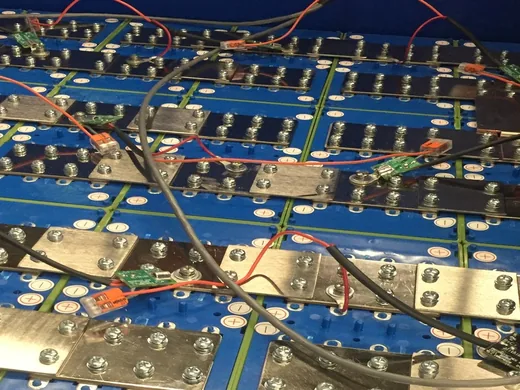
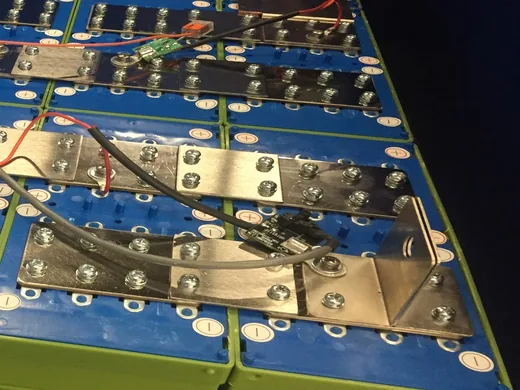
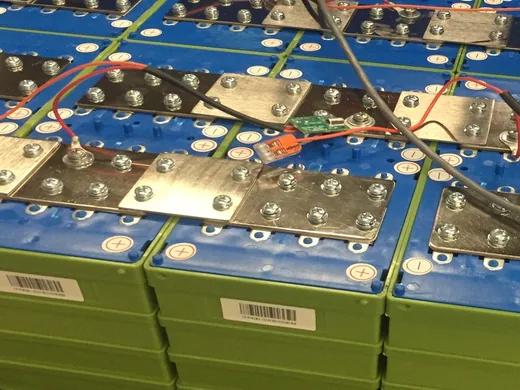
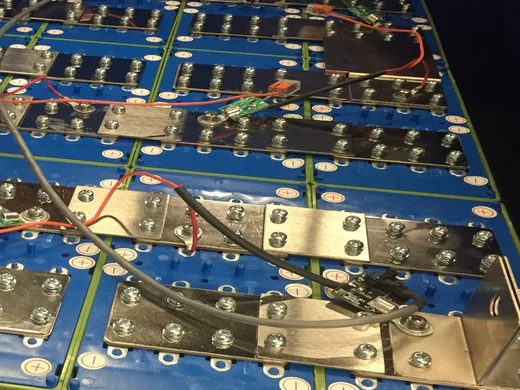
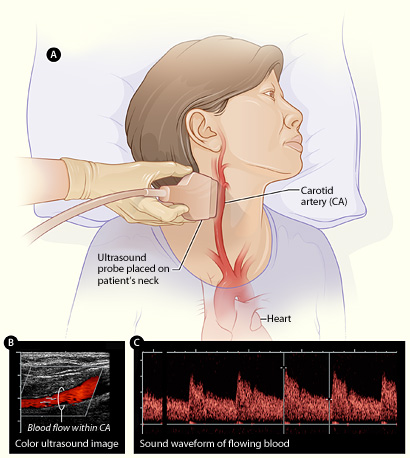
An array transducer; the row of piezoelectric elements is timed to form and steer the beam.
The number of piezoelectric elements in an ultrasound probe is one of the figures a buyer sees first and understands least. An element is a single tiny slice of the piezoelectric material that turns electricity into sound and sound back into electricity, and a probe lines up many of them in a row to form and steer the beam. A common handheld carries a hundred and twenty-eight of these, while a premium one carries a hundred and ninety-two, and the brochure presents the larger number as plainly better. It can be better, and it can also mean almost nothing, depending on three things the element count alone never tells you: how wide the array is, how closely the elements are spaced, and how many of them the electronics behind can in fact drive at once. The element count is the start of the question rather than the answer to it.
More elements can mean a sharper image, or a bigger number on a box that changes nothing.
What an element does
To see why the count matters, it helps to picture what the row of elements is for. The probe does not fire one element to make a beam; it fires many together, timed so their wavelets add up into a single focused front that can be steered and swept across the body.
Each element is a small source of sound, and the machine controls the exact instant each one fires, so that the combined wave reinforces in the direction the operator wants and cancels elsewhere, building a narrow beam out of many small contributions. The more elements take part across a given width, the more finely the machine can shape and steer that beam, and the finer the beam, the better the probe can separate two structures that lie close together side by side, which is what lateral resolution means. A row sampled too coarsely also lets the beam leak energy into unwanted directions, the grating lobes that paint faint copies of real structures in the wrong place, and packing the elements more densely suppresses those false images. The count, then, is in truth a proxy for how finely the aperture is sampled, and a finely sampled aperture makes a cleaner, sharper, more steerable beam. This is the honest case for more elements, and where it holds, the larger number earns its place on the box. The gain is real but it has a ceiling, since past a certain density the beam is already as fine as the wavelength allows and further elements add cost without adding sharpness, so the benefit of more elements rises and then flattens rather than climbing forever.
Elements are not pixels; they are the instruments in an orchestra the machine conducts into a beam.
Count is meaningless without width and pitch
The trap in the element count is that the same number can describe very different probes, because what matters is not how many elements there are but how they are arranged across the face of the probe.
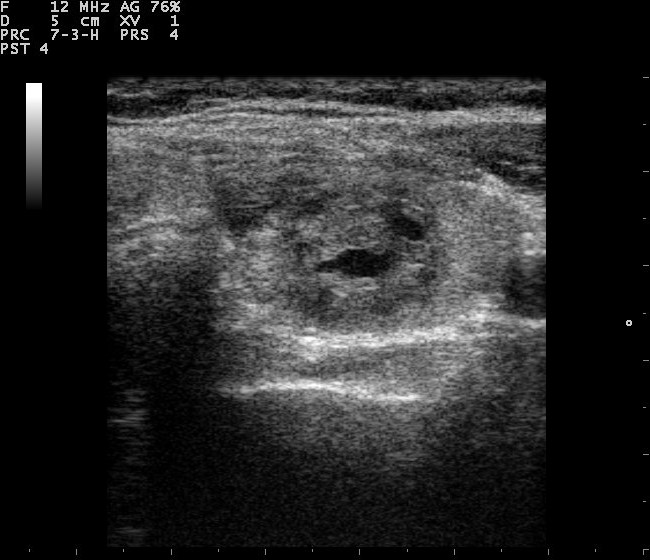
A thyroid scan; a finely sampled aperture separates structures that lie close together near the surface.
Two figures decide what the count means: the aperture, the total width of the active array, and the pitch, the distance from one element to the next. Take a hundred and ninety-two elements and spread them across a wider aperture at the same pitch as a hundred and twenty-eight, and you have bought a larger field of view and deeper reach, a different benefit than sharpness. Take the same hundred and ninety-two and pack them into the same aperture as the hundred and twenty-eight, and you have bought finer sampling and a sharper beam instead. The two probes share an element count and deliver different things, so the count without the aperture and the pitch beside it is a number floating free of meaning. A maker that states all three is describing the probe honestly, while one that quotes only the element count is inviting the buyer to imagine whichever benefit flatters the device. The pitch also has to suit the frequency, since the spacing that suppresses grating lobes depends on the wavelength, and an element count chosen without regard to the frequency the probe runs at can be too coarse to help or too fine to matter. The figure means something only in the company of the two numbers that give it context.
The same count can buy a wider view or a sharper one, and the count alone never says which.
The channels behind the elements
There is a deeper catch, and it is the one that separates a genuine high-element probe from a marketing one. Having many elements is of no use unless the electronics can drive and listen to them, and the count of independent electronic paths is the channel count, a separate number that the element count quietly depends on.
If a probe has a hundred and ninety-two elements but only sixty-four channels of beamforming electronics, it cannot use all the elements at once, and it switches the channels among groups of elements through a multiplexer, working with a moving sub-aperture rather than the whole array together. That can be a sound design, since a sliding aperture is a normal technique, but it is not the same as a probe that drives all its elements with their own channels, and a maker that advertises the element count while staying silent about the channel count has shown the buyer the larger of two numbers and hidden the one that limits it. The channels are where the cost and the heat and the silicon live, so a high element count paired with a low channel count is often a way to print an impressive figure cheaply. The element count sets how finely the aperture could be sampled; the channel count sets how much of that sampling the probe can use at any instant, and the smaller of the two is the real constraint. A buyer who learns to ask for the channel count beside the element count has learned the single question that deflates the bulk of the inflated claims in this corner of the market. The same question protects against the reverse trick, a probe that quietly drives a modest array with a full channel set and images beautifully while losing the specification war to a rival that printed a bigger element number it cannot fully use.
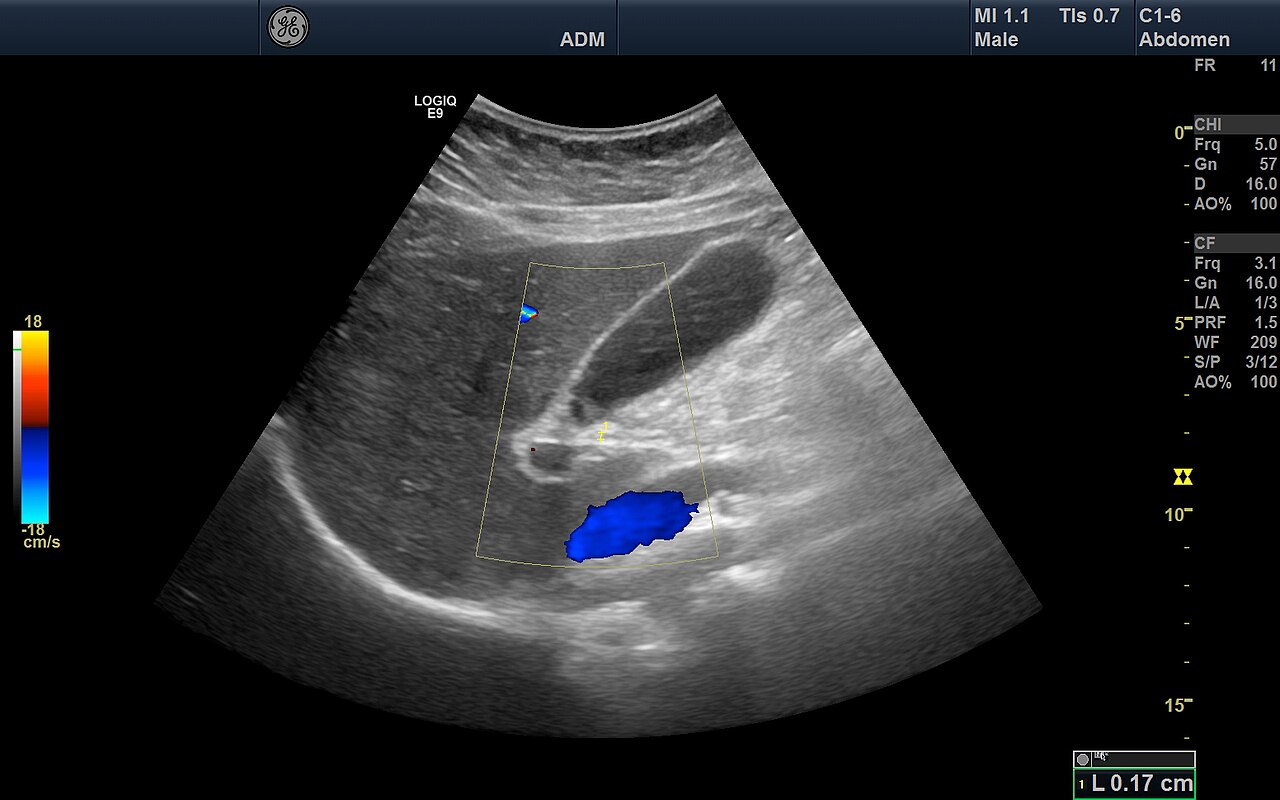
A color-flow abdominal scan; element count means little without the aperture, pitch, and channels behind it.
Why a handheld makes the trade-off sharp
In a cart-based system there was room and power to throw channels and elements at the problem, but a wireless handheld has to fit the whole beamformer, the battery, and the radio into a sealed body that sits in one hand, and every element and channel costs space, power, and heat.
Each channel is a small amount of silicon that draws power and gives off heat, and in a handheld that heat has nowhere to go but the surface the patient touches, so a maker cannot simply add channels without paying for them in battery life and lens temperature. This is the real reason a handheld with a genuinely high channel count is harder to build and more telling than one with a high element count alone, since the channels are the expensive, hot, space-hungry part the small body resists. A maker that has fitted a real beamformer with many channels into a handheld has solved a hard engineering problem, while one that has wired a high-element array to a modest channel count has chosen the cheaper path and described it with the flattering number. The handheld form turns the element-versus-channel question from an academic point into the difference between a probe that images deeply and cleanly on battery and one that prints a specification it cannot fully use. The buyer comparing two handhelds on element count alone is comparing the parts of the spec the makers chose to show rather than the parts that decide the picture.
In a probe that lives in one hand, the channels are the thing that is genuinely hard to give, and the element count is the thing that is cheap to claim.
Where the extra elements pay off, and where they do not
It helps to be concrete about when a higher element count changes the picture a clinician sees and when it changes only the figure on the box, since the answer depends entirely on what the probe is being asked to do.
For shallow, detailed work, where two small structures lie close together near the surface, a finely sampled aperture genuinely separates them where a coarse one blurs them into one, and here the denser array earns its keep in resolution a clinician can see. For a wide survey of a large region, spreading more elements across a broader aperture widens the field and lets the operator take in more at a glance, a different payoff that also justifies the count. For deep work through dense tissue, the limit is more often the frequency and the available power than the number of elements, so a probe can pile on elements and still struggle at depth if the rest of the design does not support it, and the extra count buys little. The point is that the same upgrade helps one task and barely touches another, so the right question is never whether more elements are better in the abstract but whether they are better for the exams the buyer truly performs. A clinic doing shallow musculoskeletal and vascular work may feel the benefit of a denser array every day, while one doing mostly deep abdominal scans may find the channel count and the frequency matter far more than the headline element figure. Matching the array to the work is the judgement the element count alone cannot make, and a maker that asks what a buyer scans is more useful than one that simply quotes the larger number.
The extra elements help the exam that lives near the surface and barely reach the one that lives deep.
What the buyer should compare
The element count belongs in the comparison, but only as one figure among several, and a buyer who weighs the right set sees past the headline.
The figures that decide the image are the element count, the aperture, the pitch, the channel count, and the frequency range, and they only mean something together, since a high element count on a narrow aperture with few channels is a different probe from the same count on a wide aperture with a full channel set. The frequency range matters because it sets what the probe can see, high frequencies for shallow detail and low frequencies for deep reach, and the element arrangement has to suit the range the probe is sold for. Beyond the numbers sit the things no specification captures, the quality of the piezoelectric material, the precision of the manufacturing, and the processing that turns the raw echoes into a picture, and that is why two probes with identical specifications can still image differently. A buyer who asks for the whole set and reads it together is doing what the maker hoped the headline number would let them skip, and a maker confident in its engineering provides the whole set rather than the single flattering figure. The element count is a fine place to begin a comparison and a poor place to end one, since the figure that opens the conversation is rarely the one that decides which probe makes the better picture in the hand.
Read the count with the aperture, the pitch, and the channels beside it, or do not read it at all.
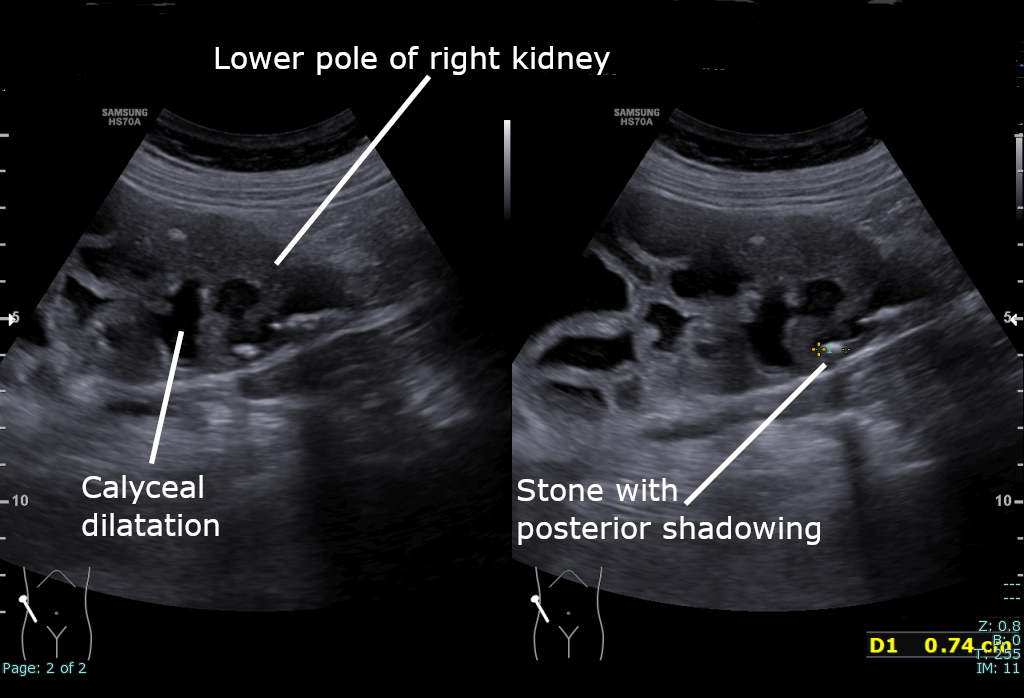
A renal scan; for deep work the frequency and power often matter more than the element count.
About the Author
Julien Mercier
Senior R&D Engineer · Medical Ultrasound Transducer Development
Senior R&D Engineer with an M.S. in Applied Physics and over 15 years of experience in medical ultrasound transducer development, specializing in the design verification and performance testing of high-frequency imaging transducers. Currently leading the development and verification of the company’s next-generation high-frequency linear-array transducer, responsible for imaging performance evaluation and reliability analysis in preclinical testing. Brings extensive hands-on experience in piezoelectric element tuning, beamforming parameter optimization, and system-level performance testing.