Why Screw Compressors Became the Mainstream Choice in Industry
Compressed Air Market Report
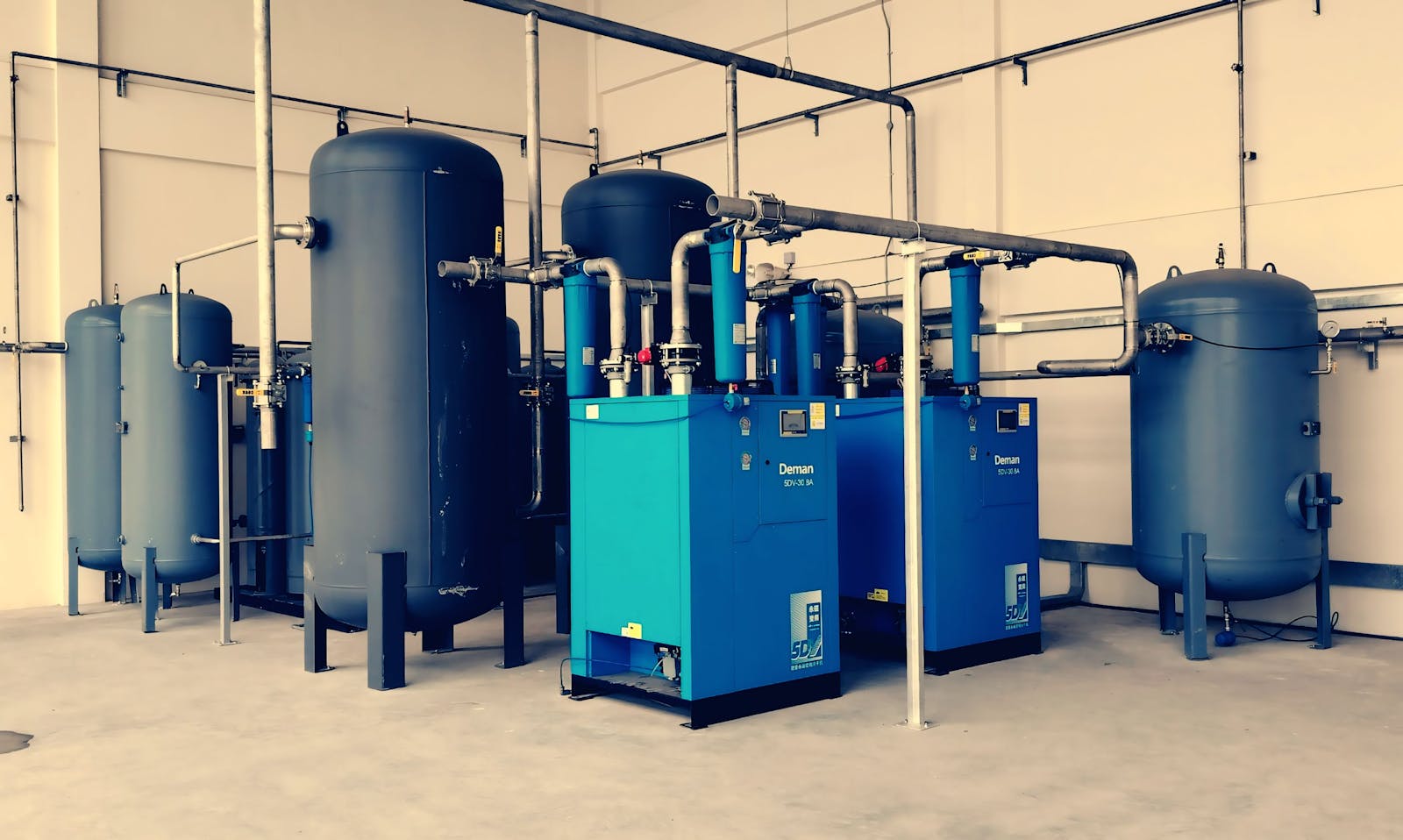
Compressed air has a low profile in factories. It’s not like a machine tool standing right there on the production line for everyone to see. It hides in the compressor room tucked in some corner, hides behind every air line and every pneumatic cylinder. In the power range from 7.5 kW to 500 kW, screw compressors have held over 80% market share for a long time. To explain why, the most effective way is to follow the money.
From the day you buy an air compressor to the day you scrap it, the purchase price accounts for roughly 10% of total spending. Electricity accounts for over 70%. So choosing a compressor is choosing an electricity bill. The specific power on the nameplate is the number at rated full-load conditions. If a factory’s air consumption stayed constant 24 hours a day, comparing nameplates would be enough. But go to any factory’s compressor room and look at the flow record chart and you’ll know right away, that line is never straight. Day shift uses more air, night shift might only be at sixty or seventy percent. Fluctuations of 30% to 60% are common.
A 75 kW fixed-speed reciprocating compressor consumes about 75 kWh per hour at full load. When unloaded and idling, the motor hasn’t stopped. It draws 25% to 40% of rated power. Take the middle at 30%, about 22.5 kWh per hour. If this machine runs 16 hours a day and 6 of those hours are unloaded, the electricity wasted from unloading is 135 kWh per day. Over 300 working days a year, 40,500 kWh. At an industrial electricity rate of $0.10/kWh, that’s $4,050 — and that’s just one machine.
40,500 kWh
Wasted per machine per year on unloaded idling.
$12,000+
Annual waste at a small station with three reciprocating compressors.
45%
VFD power draw at 40% load — screws modulate down to 20 percent rated speed.
An honest distinction needs to be made here. Fixed-speed screw compressors don’t have VFDs, and they face the same unloading problem under fluctuating demand. Their unloaded idling power consumption is about 20% to 30% of rated power, somewhat better than reciprocating machines, but waste is still there. So strictly speaking, what opens the decisive efficiency gap is the combination of variable-frequency technology with the screw compression principle, not just the three words “screw compressor.”
Why does VFD technology land so successfully on screw compressors but not on reciprocating machines? Because reciprocating inertia and valve response characteristics limit the speed range. The intake and discharge valves on reciprocating compressors are spring-loaded valve plates driven by pressure differential. Drop the speed too much, the valves can’t keep up, volumetric efficiency plummets. So even with a VFD bolted on, the effective speed range of a reciprocating compressor is very narrow, usually only 70% to 100% of rated speed. Screw compressors don’t have valve components at all. Speed can drop to 20% of rated or even lower and the machine still works fine.
The trouble with centrifugal compressors shows up when they move away from the design point. Centrifugal compressors have surge, an inherent physical limitation. When flow drops below a critical value, air reverses through the impeller, the compressor vibrates violently. To prevent surge, a blow-off valve must be opened at low loads, dumping air already compressed to 116 psi straight into the atmosphere. The surge line’s minimum stable flow is typically around 65% to 75% of design flow. A two-centrifugal-compressor station where daily load hovers between 50% and 60%, blow-off losses can account for 15% to 20% of total electricity consumption.
This is also why hybrid setups pairing centrifugal compressors with VFD screw compressors have appeared in recent years. The centrifugal handles base load, the VFD screw compressor tracks the fluctuating part. The very fact that this hybrid approach has appeared says something: even on the centrifugal compressor’s traditional territory, screw compressors are infiltrating.
After two-stage compression technology came out, efficiency went up another notch. Two pairs of rotors compressing in stages with intercooling in between, the process gets closer to isothermal compression. Two-stage VFD screw compressors have brought specific power below 5.5 kW/(m³/min) at 116 psi. Ten years ago this wasn’t possible. After permanent magnet synchronous motors replaced asynchronous motors, efficiency in the low-speed range improved further.
<5.5 kW
Specific power per m³/min on two-stage VFD machines at 116 psi.
80%+
Heat from input energy — recoverable for hot water, electroplating, heating.
70%+
Overall energy utilization with heat recovery, vs <20% pure air supply.
Heat recovery should be mentioned too. The heat generated during screw compression theoretically accounts for over 80% of input electrical energy. Add a heat recovery unit and you can heat water, supply warm water to electroplating lines or washing processes, provide heating in winter. Without it, the overall energy utilization rate of pure air supply is below 20%. With heat recovery, it jumps above 70%.
VFD, two-stage compression, permanent magnet motors, heat recovery: these technologies matured first on the screw compressor platform, and that’s related to installed base. Bigger share, R&D investment spreads thinner, more validation projects, faster iteration. R&D resources concentrate on the platform with the largest installed base. This dynamic itself keeps widening the gap with other technology paths.
Air Quality Beats Electricity for Some Industries
On an automotive welding line, hundreds of pneumatic clamps fire at the same time. Air pressure dips for a moment, clamping force falls short, and weld spots go bad. The scrap loss from one pressure fluctuation can exceed a whole year’s electricity savings. In air-jet looms during weft insertion, pressure trembles, yarn breakage rates go up, and entire bolts of fabric get downgraded or even scrapped. For these industries, the number one reason for choosing screw compressors is air quality.
The male and female rotors of a screw compressor mesh and rotate continuously. Discharge is continuous. Pressure fluctuation is extremely small. The four-stroke cycle of reciprocating compressors is inherently intermittent. Discharge has pulses. You can’t get rid of them. The sealing of reciprocating compressor intake and discharge valves inevitably degrades over operating time. After three to five years, air quality deterioration becomes more and more obvious. Screw compressor rotor precision, under normal use, holds for many years.
The food and beverage, pharmaceutical, and electronics industries also care about oil content. They need oil-free compressed air. The screw compressor product lineup includes oil-free dry screw and water-lubricated screw machines, with quite high technical maturity. If screw compressors were missing this category, these industries would have to go looking at other technology paths.
Startup response speed: screw compressors typically go from power-on to full pressure output in seconds to a dozen seconds. With a VFD they can start directly under load. Centrifugal compressors need warm-up, gradual staged loading, a complicated process. When air demand suddenly surges, whether pipeline pressure can stabilize quickly is directly tied to response speed.
A hardware factory making standard parts doesn’t care about any of this. Its compressor station just needs cheap electricity. An automotive welding operation cares most about pressure stability. A food company cares most about oil content. A textile mill cares about both electricity cost and pressure. The purchasing motivations across industries are completely different. In the end they all picked screw compressors. Add them all up and that’s where the 80%+ share comes from.
The Maintenance Factor
In procurement decisions at small and mid-size factories, there is one factor whose weight is often overlooked in technical articles: how hard is it to maintain. The backbone of industrial users is a vast number of small and mid-size factories. These factories don’t have dedicated compressor engineers. The air compressor falls under the maintenance department’s responsibility, and those people are also managing dozens, sometimes over a hundred different pieces of equipment at the same time.
100,000h
Main unit design life on oil-injected screw compressors. Rotors don’t contact each other.
65–78 dB
Noise with a sound enclosure — placeable next to the workshop.
2–3K h
Reciprocating valve inspection interval. High frequency, ties up labor.
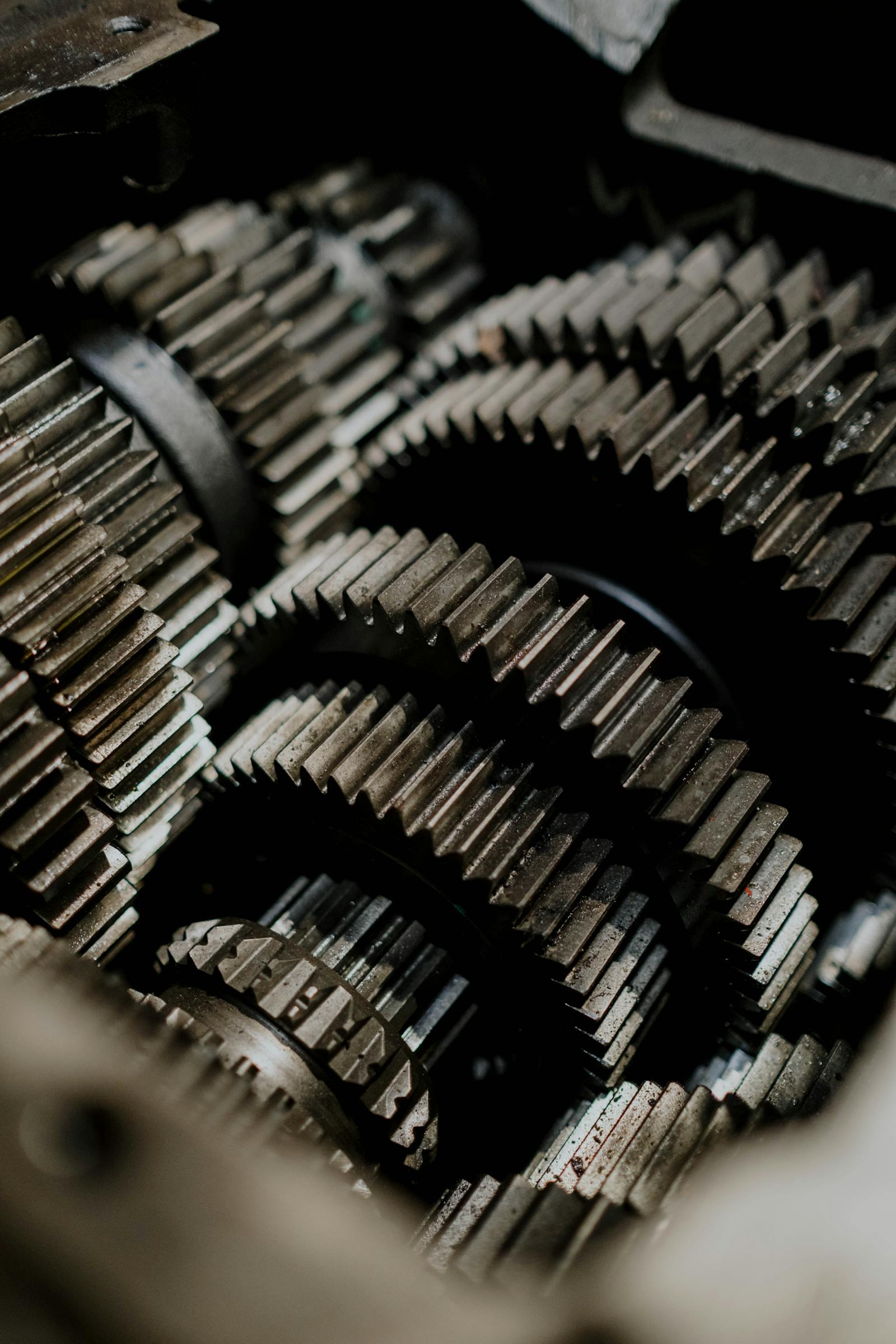
The core component of a screw compressor is a pair of rotors. In oil-injected models, lubricating oil keeps them separated. No direct metal-to-metal contact. Wear is minimal. Designed main unit life exceeds 100,000 hours. Routine maintenance is changing air filters, oil filters, oil separator elements, and compressor oil. An ordinary mechanic can handle it. Reciprocating compressor valves need inspection every two to three thousand hours. High frequency, tying up people and time. Centrifugal compressors have long intervals between major overhauls, but once you have to do one it involves impellers, step-up gearboxes, shaft seals, you need to call in the manufacturer’s engineers.
A lot of the time, the maintenance department head who makes the final call isn’t thinking about specific power or thermodynamic efficiency. He’s thinking, “Is this machine going to give me headaches every other day.”
Screw compressors have low vibration and can run on ordinary flooring. The compressor station can be placed close to the point of use. Short piping. Low pressure drop. Add a sound enclosure and noise is between 65 and 78 decibels, not a disturbance when placed next to the workshop. The dealer networks, after-sales service, and parts supply chains built around screw compressors have been running for years. User selection experience, spare parts inventory, maintenance skills, all accumulated around screw compressors. Once this system is in place it becomes a barrier in itself.
Innovation Keeps Concentrating
Reciprocating compressors still survive in labs and small repair shops where air is used on and off. Scroll compressors have carved out a small corner below 15 kW in medical and dental. Centrifugal compressors hold the market for high-displacement steady-load applications. Rotor profiles are still being optimized. Permanent magnet motor direct-drive configurations are replacing belt and gear setups. IoT has made remote monitoring and predictive maintenance standard. The specific power of two-stage permanent magnet VFD models is still pushing toward theoretical limits.
Virtually all technological progress in the air compressor industry in recent years has happened on the screw compressor platform. VFD, two-stage compression, permanent magnet motors, intelligent controls, heat recovery, every new technology first went to volume production maturity on the screw compressor, then other platforms followed (if they could keep up). It has been a long time since any exciting technological breakthrough appeared on the reciprocating platform.
When one technology platform keeps absorbing all new technologies while other platforms stagnate or only innovate at the edges, the gap can only get wider. This is probably the most solid layer of protection for the screw compressor’s mainstream position: it’s not how big the current advantage is, it’s that the advantage is still growing, with no sign of it converging.