












Feline Pregnancy Ultrasound Handheld Veterinary Probe
A feline pregnancy scan reads a pregnant queen for the kittens she carries, confirming the litter and reading each kitten’s life from its heartbeat. The cat brings two things a dog does not: a body that times its own pregnancy from the day of mating, and a temper that resents being held still for the probe. A handheld scanner works around both, reading a litter in a few quiet minutes on the consulting table.
The mating sets the clock
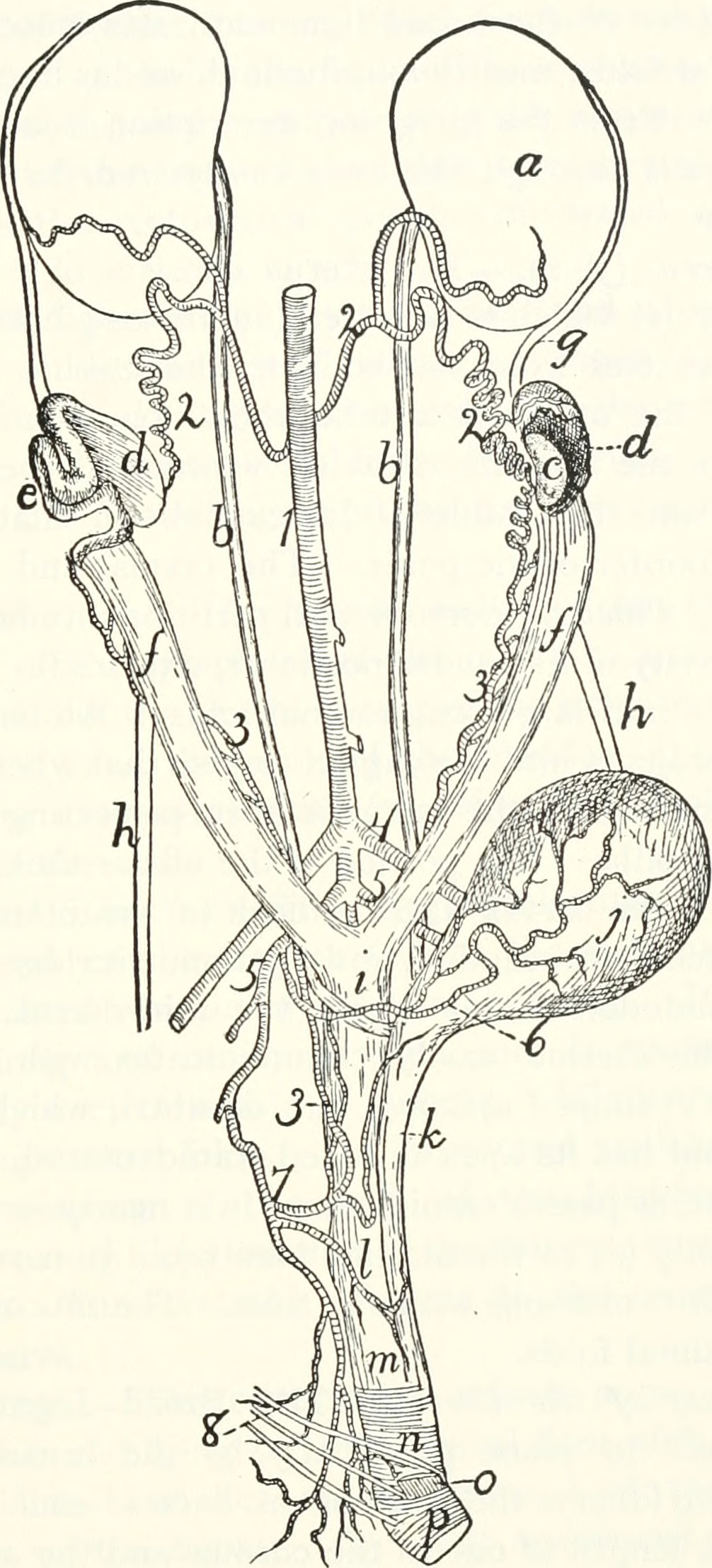
A cat does not ovulate on a calendar. She ovulates because she has mated, the act of covering triggering the release of her eggs a day or two later. A queen kept away from a tom holds her eggs back, her season passing without a litter until a mating calls them down. The covering itself, repeated over a day or two, is what tips her into ovulation, which is why queens are often left with the tom across several days. Cats are induced ovulators. That single fact shapes how a pregnancy is dated.
This quirk hands the scan a gift. The day a queen was covered dates her litter tightly, far more so than the same date would in a dog, since the mating and the ovulation sit close together in a cat. A breeder who saw the mating gives the vet a clock the scan can read against from the first week.
The free-roaming queen is the harder case. A cat who comes and goes covers herself on a night no one watched, so many pregnancies reach the clinic with no date at all. For these the scan does the dating on its own, off the size of the sacs early on and the length of the kittens later. A stray queen brought in heavy with kittens is dated entirely by the probe, the only record her body keeps.
A queen comes into season again and again through the breeding months, every couple of weeks while she goes unmated, each season a fresh chance to catch. This is why an unspayed cat with a tom in reach turns up pregnant so readily. The scan is often the first hard proof a busy household has that a season ended in a litter.
A patient who will not hold still
A queen is a harder patient than a bitch. A frightened cat tenses her belly, breathes in quick shallow pants, and squirms against the hands holding her, every movement smearing the picture the probe needs. The first work of a feline scan is settling the cat.
The room is kept quiet and the handling light. A nurse cradles the queen on her side or her back, a towel often doing more to calm her than a firm grip. A cat allowed to keep her feet under her, scanned in the position she will tolerate, gives up a cleaner picture than one pinned flat and fighting. A queen scanned in a warm room, off a cold steel table, holds still longer, the comfort of the surface doing as much for the picture as the hands.
The clip is kept small. A queen resents a wide shave, so the belly is clipped only where the probe must sit, and warm gel is worked well into the fur. A patient kept calm through all this reads in a couple of minutes. A cat worked into a temper can defeat the scan altogether and is better brought back another day.
A few queens will not settle at all. A cat who fights every hold can often be read through a loose wrap in a towel, only her belly left free, the rest of her held snug enough to still the worst of the struggle. Sedation is saved for the rare cat who leaves no other way, since a pregnant queen is left undrugged wherever she can be. A scan put off a day for a calmer cat beats one forced on a frightened one.
The first weeks on the screen
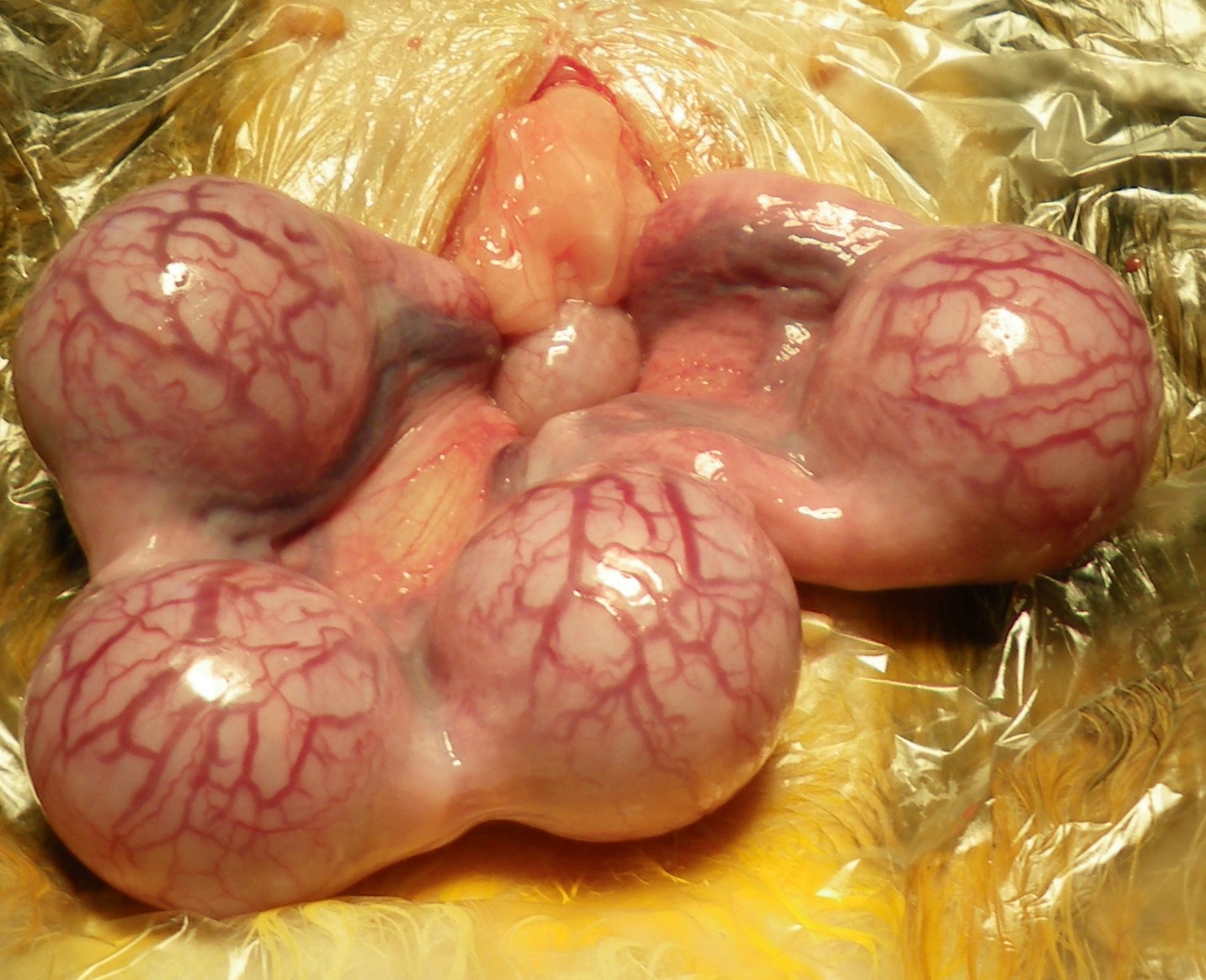
A cat carries her litter for around sixty-three to sixty-seven days from mating. The kittens are small. The high-frequency probe reads them well, since a queen’s belly is shallow and close under the skin. Even the earliest of them sits within easy reach of the sound.
The sacs show early. From about day fifteen to seventeen after mating, small dark pockets of fluid appear along the uterine horns, sooner than the same sign in a dog. A string of these dark beads is the first proof of a pregnancy. The number of sacs can be counted with some hope this early, before the kittens grow and crowd. The whole pregnancy passes in nine to ten weeks, short enough that two scans a week apart show real change in the kittens between them.
The heartbeat follows by around day twenty-five. A flicker inside each sac turns it from a pocket of fluid into a living kitten, the single finding that confirms the litter is alive. The flicker is faint at first, a tremor in the grey, before it firms into a steady beat over the days that follow. A scan run between about day twenty-five and day thirty-five catches the litter at its clearest, the kittens large enough to read, the litter not yet crowded into a blur.
Through the weeks that follow, each kitten takes shape on the screen. The head and the body separate out, the limbs bud into view. A faint ring of denser tissue marks the band of placenta feeding each one. The fluid around a healthy kitten stays a clean black. By the last fortnight the kittens fill the belly, their small skeletons showing as bright lines, packed so tight now the probe can no longer tell them apart.
A scan run before about day twenty-one risks a false empty reading. The sacs are not yet there to find. A queen who has caught reads as though she has not. A breeder anxious for an early answer is steered toward the end of the fourth week, when the heartbeats settle the question for good.
The kitten’s heartbeat
The fetal heart is the heart of a feline scan. It is the one finding that says a kitten is alive. Its rate reads how well that kitten is doing. The probe holds on a single kitten’s chest and counts the flicker, or reads it on a tracing the machine draws from the moving wall.
A kitten’s heart runs fast. A healthy rate sits well above two hundred beats a minute, often up around two hundred and twenty or more, roughly twice the queen’s own pulse. A rate up in that range is the mark of a kitten in good shape.
A rate that falls is the warning the scan exists to catch. A kitten under stress slows its heart. A rate that has dropped toward one hundred and fifty, or down near one hundred and twenty, is a kitten in danger. The number is read off each kitten the probe can settle on, since one in trouble among a healthy litter shows only when each is read on its own. A rate that reads low once is checked again before it is trusted, since a kitten lying at an awkward angle can throw a slow count for a moment.
This is why the heart is checked late in the pregnancy and through a long queening. A queen straining for hours has her litter read kitten by kitten, the slowing hearts the reason a vet moves toward a caesarean. The scan turns a tense wait into numbers a decision can rest on.
Finding one kitten’s heart in a crowded litter takes a steady hand. The probe settles on a single small chest, holds it against the queen’s own breathing, and waits out a count. In a restless cat this is the hardest moment of the scan, the reason a calm queen matters for the heart as much as for anything else.
A heartbeat is the proof
A pocket of fluid is a maybe. A flicker inside it is a kitten. The scan tells the two apart in a glance.
How many kittens
Counting kittens is the part of the scan a breeder asks for first. It is also the part the probe does worst. A breeder hoping for a headcount learns to take the early tally as a rough guide and to wait on the X-ray for a real number. A queen carries her litter in a folded womb, the kittens curled and overlapping. A kitten counted in one sweep is easily counted again in the next, or lost behind another.
A feline litter runs small, often somewhere between two and seven kittens. The sacs can be tallied early, while they sit apart along the horns. The count grows unreliable through the middle weeks once the kittens crowd. By late pregnancy the litter is a jumble the probe cannot pull into a firm number. A breeder told to expect a small litter watches each kitten the closer, since a queen with two has little margin if one is lost.
For a count a breeder can plan around, an X-ray near term does what ultrasound cannot. A kitten’s skeleton hardens enough to show on a film in the last three to four weeks before birth. The little spines and skulls are counted across one clear picture. The honest word to a breeder is that the scan confirms the litter and reads its health, leaving the headcount to the X-ray.
A single-kitten litter is the one to flag early. A lone kitten can grow large in a roomy womb. A queen carrying one often builds a weaker labour around it. Both raise the odds of a birth that needs help. A scan that turns up a singleton sets the vet watching for a queening that may not finish on its own.
Palpation and the older ways
The scan did not invent pregnancy diagnosis in the cat. A skilled hand can feel the kittens through the belly wall from around day seventeen to twenty-five, the young sacs rolling under the fingers like a string of small firm beads. An experienced breeder or vet reads a litter this way before any machine is switched on. A vet who has felt a thousand bellies still reaches for the probe to be sure of what the fingers only suggest.
The hand has its limits. The window for feeling the sacs is short, since later in pregnancy the kittens grow large and run together under the fingers. A nervous, tense queen guards her belly against the touch. A reading by hand confirms a pregnancy at best. It never counts a litter or reads a heart.
This is where the scan took over. It works across the whole pregnancy, from the first week to the last. It reads what no hand can feel: the heartbeat, the health of each kitten, the fluid around it. The hand still serves as a quick first check. The scan settles what the hand can only guess at.
When the swelling is not a litter
A swollen belly on a queen is not always a pregnancy. The scan reads what is there. Now and then that is something else entirely.
A uterus packed with fluid and no sacs, no heartbeats, on a queen off her food a few weeks after a season, is the picture of pyometra, a womb filling with pus. The scan settles that question fast, since a pyometra is an infection to treat without delay, nothing like a litter to nurse along. A queen taken for pregnant when her womb is full of pus loses time she does not have. A pyometra in a breeding queen ends her season. The surgery that treats it often ends her breeding life, so the scan that names it early carries weight beyond the one illness.
A queen can also seem in kitten when she carries nothing. The signs of pregnancy show on a cat who never caught. An owner counts weeks for a litter that was never there. The scan reads the empty uterus and ends the guessing, sparing the household a confinement built around no kittens at all. An owner sure of a mating is the hardest to convince, the empty screen the one answer that settles it.
Not every fluid-filled womb is an infection. A uterus can fill with a clear, sterile fluid as well, the lining swollen and weeping. This fluid carries none of the pus of a pyometra. The two read differently in the look of the fluid and the wall. The scan reads them alongside how ill the queen is. The reading steers whether a womb is watched or taken out.
When a pregnancy goes wrong
A pregnancy lost early leaves its mark on the screen. A sac without a kitten, or a kitten without a heartbeat, is a litter member that has stopped. The body often draws an early loss back in over days, the sac shrinking and fading from one scan to the next. A queen can carry healthy kittens alongside one that has resorbed, so a single still sac is read against the rest of the litter. An early loss of one or two is common and rarely threatens the rest, the body quietly clearing what has stopped.
A kitten dead later in the pregnancy is a graver find. A still chest, sometimes with gas tracking through a body breaking down, calls for a quick decision before the queen turns ill. The scan tells the dead kitten from the living ones around it, the picture that sets the next move. A single dead kitten among living ones is often left to come with the rest at the birth, watched in case it blocks the way out.
Timing carries the day in these cases. A scan that catches the trouble early buys the vet room to act before a queen with a dead kitten inside her turns septic. The same picture read a week later is read on a much sicker cat. A queen off colour in late pregnancy earns a scan for this reason alone.
Now and then a dead kitten is neither resorbed nor passed. It dries down in the womb instead, the fluid around it gone and the small body pressed firm, a mummified kitten the scan reads as a dense, still shape among its living litter-mates. A queen can carry one to term beside healthy kittens, the still shape sorted from the live ones only on the screen.
After the scan confirms
A confirmed litter changes how a queen is kept. From the second half of the pregnancy her food is built up steadily, since a queen carrying a litter needs more through those weeks than her usual ration gives. The scan that confirms and dates the litter is what tells a breeder when that build-up should begin and how many mouths it will feed. A queen underfed through the second half can run short of milk once the kittens arrive. The early build-up heads that off.
The dated scan also marks the run-up to the birth. A breeder sets up a quiet kittening box in the last week or two, a warm corner away from the household bustle that the queen will take to. A queen who knows her box and has settled in it kittens more calmly than one with nowhere of her own to go.
The queen through to term
A pregnancy is read more than once across its weeks. A first scan around the fourth week confirms the litter and dates it, the kittens clear and the heartbeats easy to count by then. A second scan late on checks growth and reads the hearts again, the point a slowing kitten first shows.
Between those scans the litter is watched as it grows. A kitten measured at one scan and again at the next shows whether it is keeping pace. A litter that grows evenly is a litter doing well. A kitten that has fallen behind, or a sac that has stopped enlarging, is the one read with extra care.
The scan also shapes how a household readies itself. A confirmed litter, dated and counted near term, tells a breeder when to set up the kittening box and when to expect the first kitten. A queen due any day is watched the closer for the early signs of labour, the scan having marked the window she is due in.
The queening itself brings the probe back out. A queen labouring hard, a long gap between kittens, a litter that seems to have stalled: each is read kitten by kitten for the hearts that are holding and the ones that are not. The scan stands beside the queen through her hardest hour, naming the kitten in trouble in time to reach it. A queen who has had a hard birth before is read early in the labour, before trouble has the chance to set in.
What the scan reads, and what it cannot
A feline scan answers its own questions well. It cannot promise a healthy kitten, only a beating heart on the day of the scan. A kitten alive at four weeks can still be lost before term, so a single good scan is a reading of one day, no promise of the next. The scan reads the kittens it can see well and stays honest about the rest, a snapshot of a moment in a changing pregnancy.
The scan reads the queen only so far. The room a kitten will have to pass, the strength of a labour still to come: these sit beyond what the probe can call. A queen of a flat-faced breed, or one carrying a single large kitten, is watched with the scan and planned for with the vet, the picture one part of a wider plan.
The scan is honest about its own reach. A queen carrying kittens deep against her spine, or one restless enough to spoil the picture, leaves corners the probe cannot reach in a single sitting. The report says which kittens were read clearly and which need another look, so nothing is taken for settled that was only half seen.
The litter on the screen
A feline pregnancy scan turns a guess into a row of beating hearts. It confirms the litter, dates it off a clock the mating set, reads each kitten’s life, and flags the one in trouble in time to act.
Common questions about the feline pregnancy scan
How early can ultrasound confirm a cat is pregnant?
The sacs can show from about day fifteen to seventeen after mating, earlier than in a dog. The kitten heartbeats that confirm a live litter follow by around day twenty-five, so the end of the fourth week is the usual time for a clear scan.
Why does the mating date matter so much in a cat?
A cat ovulates only after she has mated, a day or two later. The covering itself triggers the release of her eggs. The mating and the release of the eggs sit close together, so the day of mating dates the litter tightly. A breeder who saw the mating gives the vet a reliable clock to read the pregnancy against.
Can the scan count the kittens?
Only roughly. The kittens overlap in a folded womb. A bigger, more crowded litter is the hardest of all to count. A feline litter often runs between two and seven kittens. For a firm count near term, an X-ray that shows each kitten’s skeleton does the job far better than ultrasound.
What is a normal kitten heart rate before birth?
A healthy kitten’s heart runs fast, well above two hundred beats a minute, often around two hundred and twenty or higher. A rate that falls toward one hundred and fifty, or down near one hundred and twenty, marks a kitten in danger and may send the queen to a caesarean.
Is the scan safe and comfortable for a pregnant cat?
Yes. Ultrasound uses no radiation and causes the queen no pain. The main task is keeping a nervous cat calm enough to lie still, helped by a quiet room, gentle handling, and a small clipped patch with warm gel.

About the Author
Julien Mercier
Senior R&D Engineer · Medical Ultrasound Transducer Development
Senior R&D Engineer with an M.S. in Applied Physics and over 15 years of experience in medical ultrasound transducer development, specializing in the design verification and performance testing of high-frequency imaging transducers. Currently leading the development and verification of the company’s next-generation high-frequency linear-array transducer, responsible for imaging performance evaluation and reliability analysis in preclinical testing. Brings extensive hands-on experience in piezoelectric element tuning, beamforming parameter optimization, and system-level performance testing.