
CATL.
The Ningde-based company has held the top spot for eight straight years. According to SNE Research, CATL shipped 339.3 GWh worth of batteries in 2024, capturing 37.9% of the global EV battery market. BYD came second at 153.7 GWh. LG Energy Solution took third with 96.3 GWh. Add the second and third place finishes together, and CATL still comes out ahead.
One company outproducing its two closest rivals combined. That tells you where this industry stands.
The Fracture Point
Something broke in the global battery industry around 2022.
Before that year, Korean manufacturers could still claim technological parity. Samsung SDI and LG Chem had spent decades building expertise in lithium-ion chemistry. Their engineers had trained at the same universities, read the same papers, attended the same conferences as their Chinese counterparts. The assumption in Seoul and in Western boardrooms was that Chinese cost advantages would eventually hit quality ceilings. Scale could not substitute for know-how forever.
That assumption collapsed when raw material prices spiked. Cobalt tripled. Nickel tripled. The ternary cathode chemistries that Korean manufacturers had bet their futures on suddenly looked like liabilities. CATL had spent years pushing lithium iron phosphate technology that the rest of the industry had dismissed as low-end. LFP cells topped out around 160 Wh/kg while ternary pushed past 250 Wh/kg. Who would want the inferior product?
Turns out, a lot of automakers would. LFP costs less. LFP uses no cobalt. LFP does not catch fire as easily. When battery pack prices matter more than range bragging rights, LFP wins.
Today LFP accounts for over 70% of Chinese EV battery installations and roughly 40% globally, according to data from GGII. LG Energy Solution just signed a $4.3 billion contract with Tesla for American-made LFP cells starting in 2027. After years of insisting ternary would dominate, the Korean pivot to LFP amounts to an admission that the strategic bet went wrong.
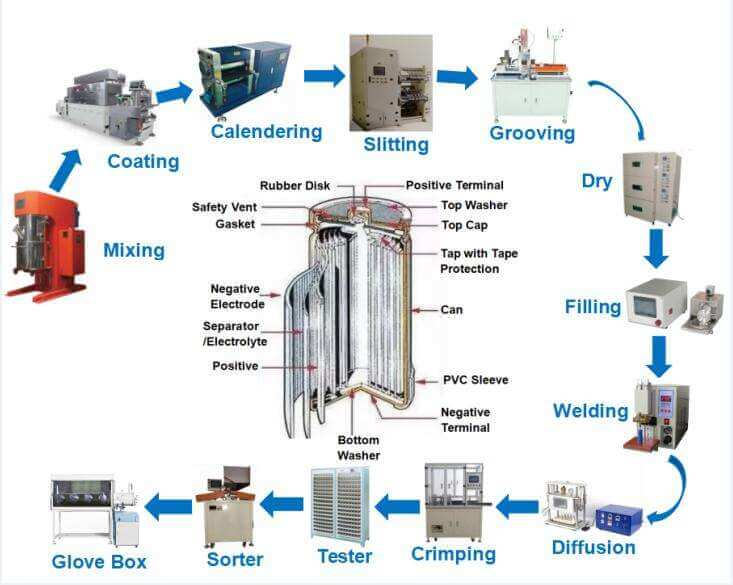
Battery cell production line
Six of Ten
The top ten list tells a story that five years of earnings calls and strategy presentations tried to obscure.
| Rank | Company | 2024 Volume | Share | Growth |
|---|---|---|---|---|
| 1 | CATL | 339.3 GWh | 37.9% | +16.2% |
| 2 | BYD | 153.7 GWh | 17.2% | +21.1% |
| 3 | LG Energy Solution | 96.3 GWh | 10.8% | +1.3% |
| 4 | CALB | 39.5 GWh | 4.4% | +16.6% |
| 5 | SK On | 39.0 GWh | 4.4% | +6.9% |
| 6 | Gotion High-tech | 27.3 GWh | 3.1% | +73.8% |
| 7 | Samsung SDI | 26.8 GWh | 3.0% | +0.8% |
| 8 | Sunwoda | 22.5 GWh | 2.5% | +74.1% |
| 9 | EVE Energy | 21.9 GWh | 2.5% | +26.9% |
| 10 | Panasonic | 20.7 GWh | 2.3% | -18.0% |
Six Chinese companies. Combined share: 67.1%, up four points from the year before. The Korean trio together holds 18.2%. Panasonic, once the undisputed leader when Tesla was still a niche California startup, has fallen to tenth with the only negative growth number on the list.
The financial results back him up.
The Money Problem
Samsung SDI posted its first quarterly operating loss since going public. Full-year profit collapsed 76%. SK On has been underwater for nine consecutive quarters, bleeding over 1.1 trillion won in 2024 alone. LG Energy Solution managed 1.3% volume growth while revenue dropped 24%.
These are not cyclical downturns that will reverse when EV demand picks up. The Korean manufacturers have structural cost problems that persist regardless of volume.
LG has factories in Poland, Michigan, Ohio, and Arizona. Samsung SDI operates in Hungary and is building in Indiana. SK On runs plants in Georgia, Kentucky, and Tennessee. Each of these facilities pays Western wages, Western energy prices, Western regulatory compliance costs. CATL's main production base remains in Fujian province, where none of those cost burdens apply.
The bet was that Western EV demand would grow fast enough to absorb the disadvantage. Western EV demand did not cooperate. European sales stalled. American adoption slowed outside California. The factories sit at utilization rates below 50% while Chinese facilities run at capacity.
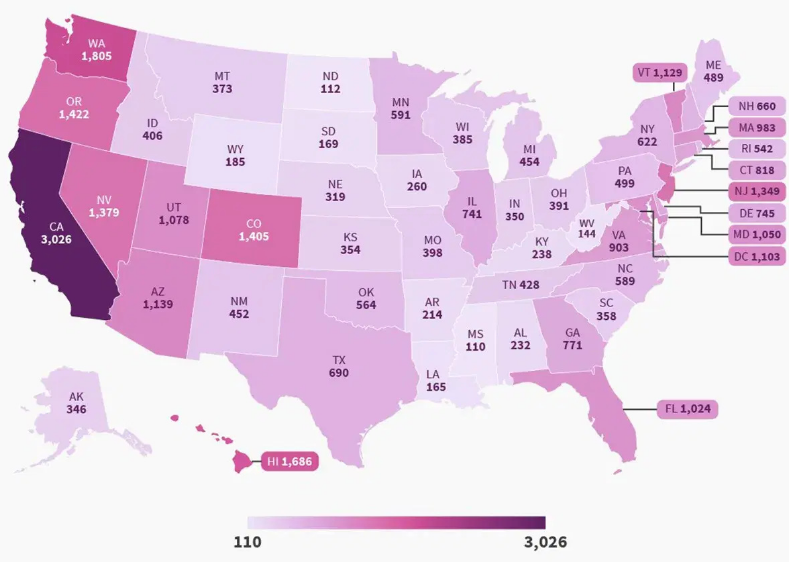
EV adoption rates vary significantly by region
The contrast with CATL could not be starker. The Chinese company printed 507 billion yuan in net profit last year. Cash reserves exceed 300 billion yuan. When an industry analyst on a recent earnings call asked CATL's CFO about competitive pressure, the response was almost dismissive: the company plans to return 20 billion yuan to shareholders through dividends while continuing to invest in capacity expansion.
CATL can profit at price points that push competitors into losses. Battery pack prices have collapsed from over $150/kWh to below $100/kWh in three years. CATL still runs a 24% gross margin. Most competitors cannot cover their fixed costs at these prices, let alone generate returns.
BYD's Ceiling
BYD deserves separate consideration because the company operates under different constraints than pure-play battery manufacturers.
The Shenzhen-based conglomerate sold 4.27 million vehicles last year, more than any other EV maker globally. Its Blade Battery technology set safety standards that forced competitors to recall products. The needle penetration test footage circulated widely on Chinese social media: BYD cells accepting a steel spike without thermal runaway while competitors burst into flames. Industry insiders estimate those videos cost competing battery makers several major contracts as automakers rushed to audit their own supply chains.
None of that translates into battery market leadership because BYD also competes with its potential customers. When BYD approaches Volkswagen or Toyota as a battery supplier, the pitch gets complicated. Why would VW help fund the expansion of a competitor that already undercuts its pricing in China and increasingly in Europe?
Jianghuai Automobile walked away from battery supply talks with BYD in May 2024. External battery sales stay stuck around 35% of BYD's total cell production. The company could push that higher with aggressive pricing. Doing so would mean prioritizing cell revenue over vehicle margins, a trade-off that makes no sense when the car business grows faster.
BYD the automaker limits what BYD the battery supplier can become. That ceiling is permanent.
What CATL Does Differently
Industry observers tend to fixate on CATL's patent portfolio (43,000 and counting) or its R&D headcount (over 20,000 engineers). Those numbers matter less than execution speed.
Consider the Shenxing battery line. CATL announced an LFP cell capable of 800km range and 12C fast charging in late 2023. By mid-2024, the cells were shipping in volume. Korean competitors were still running pilot lines for comparable products, still debugging manufacturing processes, still working through yield problems. James Frith, head of energy storage research at BloombergNEF, noted in a recent report that CATL's time from announcement to mass production consistently runs 12-18 months faster than Korean rivals.
The Qilin battery's 72% volumetric utilization came from years of cell-to-pack integration work that competitors had dismissed as too difficult to manufacture at scale. CATL engineers figured out how to do it anyway.
The customer list reinforces the technology advantage. CATL supplies Tesla, BMW, Mercedes, Volkswagen, Stellantis, Toyota, Honda, and nearly every significant Chinese EV brand. When that many automakers optimize their platforms around one supplier's specifications, switching costs accumulate in ways that go far beyond contract terms. Engineering teams get trained on CATL's technical requirements. Testing protocols get built around CATL's cell formats. New vehicle programs assume CATL lead times and pricing.
Getting off CATL becomes harder each year even for customers who want alternatives.
Panasonic's Bind
Panasonic built its battery business around Tesla. When Tesla sold every car it could make, that concentration worked beautifully. The Nevada gigafactory hummed along. Margins held.
Then Tesla's growth rate slowed. The Cybertruck launch stumbled. Model 3 and Model Y sales plateaued in major markets. Panasonic's 2024 battery volumes dropped 18%, the only major manufacturer to see absolute decline.
The company has technical credibility. Nineteen billion cells shipped over the years. 3.7 million EVs powered without a major safety incident. Cylindrical cell energy density at 800 Wh/L. A new Kansas factory adding 32 GWh of American capacity.
None of that solves the concentration risk. Panasonic needs customers beyond Tesla, and acquiring them has proven difficult. Other automakers have existing supplier relationships. They have already optimized their platforms for different cell formats. Breaking into those accounts requires either better technology or better pricing. Panasonic offers neither.
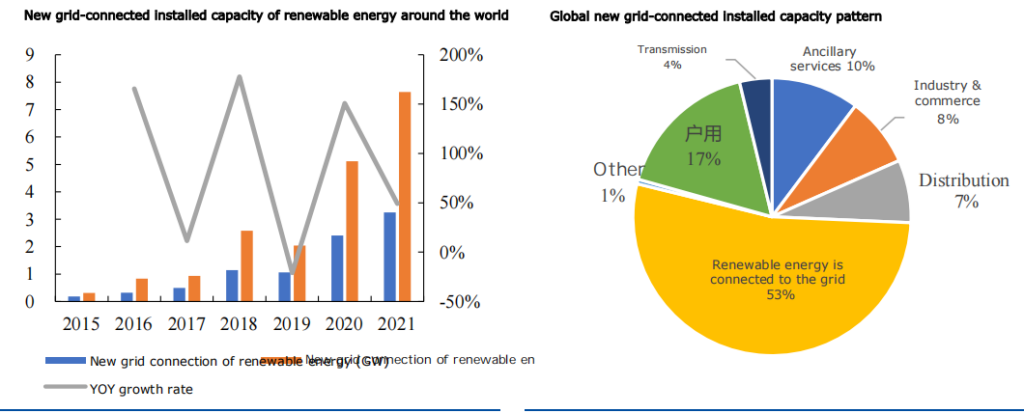
Grid-scale energy storage installations are growing rapidly
The Storage Escape Hatch
Energy storage may matter more than most coverage of the battery industry acknowledges.
Storage shipments hit 370 GWh last year, up 65% from 2023. Wood Mackenzie projects 30-44% compound annual growth through 2030. Chinese manufacturers control 93.5% of global supply. The top eight storage battery companies are all Chinese.
CATL leads with roughly 30% share. The Tianhen storage system offers five-year zero degradation guarantees that competitors cannot match. EVE Energy has emerged as a credible second-place player, shipping 50 GWh and growing 92% year-over-year.
Storage matters strategically because it diversifies revenue away from automotive cycles. When EV sales slow in a particular region, storage demand often continues growing. Grid-scale installations follow renewable energy deployment timelines, not car buying patterns. Manufacturers with strong positions in both segments can smooth capacity utilization in ways that automotive-only suppliers cannot.
For Korean manufacturers stuck with underutilized EV battery factories, the storage market offers no relief. Chinese competitors already dominate it even more thoroughly than they dominate power batteries.
Overcapacity Reckoning
Chinese battery capacity now exceeds 2 TWh annually. Planned additions push toward 6 TWh. Demand sits below 700 GWh. The math does not work.
Beijing summoned twelve major battery manufacturers in November 2025 and told them to stop the price war. Industry publication Gaogong Lithium reported that government officials explicitly warned executives that continued price cutting would trigger regulatory intervention. Whether jawboning can override market forces remains doubtful. Weaker players will exit through bankruptcy, acquisition, or quiet wind-down regardless of what officials prefer.
CATL enters this shakeout with 300 billion yuan in cash and consistent profitability. The company can outlast rivals running operating losses. It can acquire distressed competitors at favorable prices. It can continue investing while others cut R&D budgets to conserve cash.
SK On, burning through capital reserves while searching for a viable path forward, illustrates the other end of the spectrum. The BlueOval SK joint venture with Ford will split in 2026, with SK taking the Tennessee factory and Ford keeping Kentucky. SK needed that partnership for volume. Losing it forces a strategic reset that the company's balance sheet may not support.
The Solid-State Wildcard
Samsung SDI has bet its recovery on solid-state batteries. The company has sent samples to five automakers with mass production targeted for 2027. If solid-state delivers on its promises, energy density could jump 50% or more while safety improves and charging speeds accelerate.
Betting company futures on unproven manufacturing at commercial scale carries considerable risk. Solid-state batteries have been five years away for the past fifteen years. Manufacturing yields remain low. Costs remain high. Cycle life at high temperatures still needs work.
CATL has hedged with its condensed-state platform, achieving 500 Wh/kg on existing production equipment. The approach sacrifices some theoretical performance ceiling for manufacturing certainty. If solid-state breakthroughs arrive, CATL may need to pivot quickly. If they do not arrive, CATL's bridge technology looks like the right call.
Toyota, Nissan, and numerous startups have also announced solid-state ambitions for 2027-2030. Whether any of them can beat CATL to commercial scale remains the industry's biggest uncertainty.
Trade Policy Limits
The Inflation Reduction Act requires increasing North American content in EV batteries. The EU Battery Regulation mandates carbon footprint reporting and eventually limits. Both policies aim explicitly at reducing Chinese dominance.
The practical effect has been to accelerate Chinese manufacturers' overseas expansion. CATL now has factories in Germany, Hungary, Spain, and Indonesia. BYD builds in Thailand and Hungary. Gotion operates in Germany and Morocco. Compliance requires local presence, not local ownership.
Korean and Japanese manufacturers lack the scale and cost structure to fill the gap left by Chinese restrictions. European battery startups have struggled with execution. Northvolt's production ramp has repeatedly disappointed. ACC and other joint ventures remain far from their announced capacity targets.
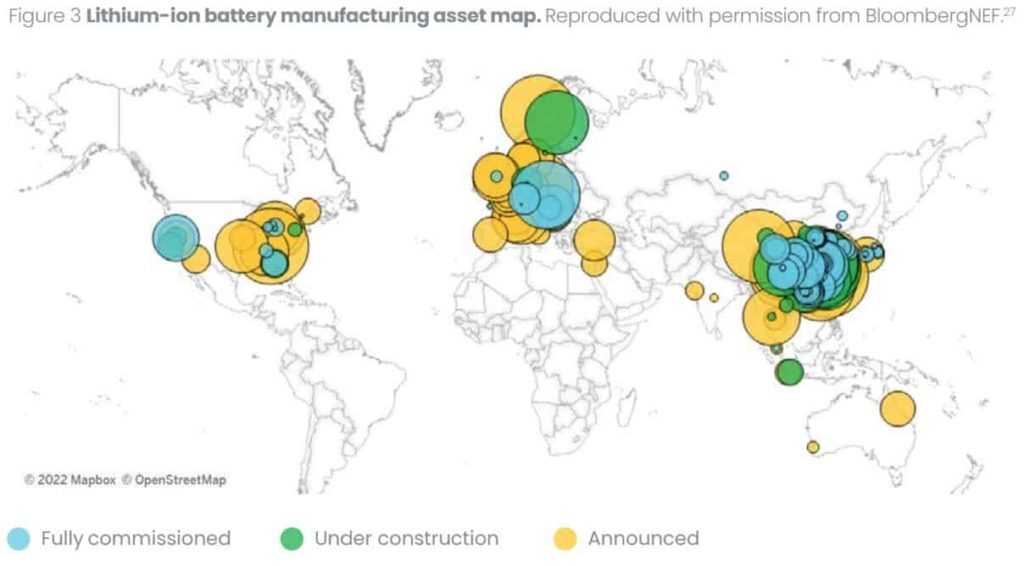
The battery industry remains globally interconnected
Where This Leaves Everyone
CATL will remain the world's largest battery producer. The combination of scale advantages, technology depth, customer entrenchment, and financial strength creates a position that competitors cannot quickly challenge.
The Korean manufacturers face a grimmer calculus. Samsung SDI needs solid-state technology to work on schedule. SK On needs to stop bleeding cash before the balance sheet forces asset sales. LG Energy Solution needs Western EV demand to accelerate faster than Chinese competition in those markets. All three outcomes require factors outside management control.
Panasonic needs Tesla's volumes to recover or new OEM relationships to materialize at scale. BYD will grow its battery business within the ceiling that automotive competition imposes.
Catching CATL would require solving multiple hard problems simultaneously: achieving Chinese cost structures outside China, mastering LFP chemistry after a decade of ternary focus, building customer relationships against entrenched competition, surviving a prolonged margin squeeze while funding the attempt. Companies have tried. The results are in the numbers.
The battery industry spent years telling a story about diversification and regional supply chains. Automakers talked about reducing dependence on any single supplier. Governments passed legislation aimed at reshoring production. Billions flowed into new factory construction across three continents.
The market share numbers moved in the opposite direction. Chinese companies gained four points of global share in 2024 alone. The concentration increased despite every effort to reverse it.
The industry has reached a point where the question of who leads has a settled answer. The questions that remain open involve how long the lead lasts and what might disrupt it. Technology transitions, geopolitical shocks, or demand shifts could change the picture. On current trajectory, nothing will.