

Why LFP Achieves 92%
Procuring buses for public transit is entirely different from buying a private car.
Private car owners care about range. If you want to go camping in the suburbs on the weekend, 200 kilometers one way, 400 kilometers round trip, is the battery enough? Will there be lines at highway service area charging stations? These are questions private car owners think about. Electric buses don't have this problem. Routes are fixed, daily mileage is crystal clear, they charge at the depot at night and leave with a full battery the next morning. A 12-meter bus travels 200 to 300 kilometers per day, and a 350 to 450 kilowatt-hour battery is more than sufficient.
Private car owners care about acceleration. Being half a car length ahead of the car next to you when the light turns green, some people think that matters. Bus drivers don't care about this. Buses need smooth starts; standing passengers cannot fall over.
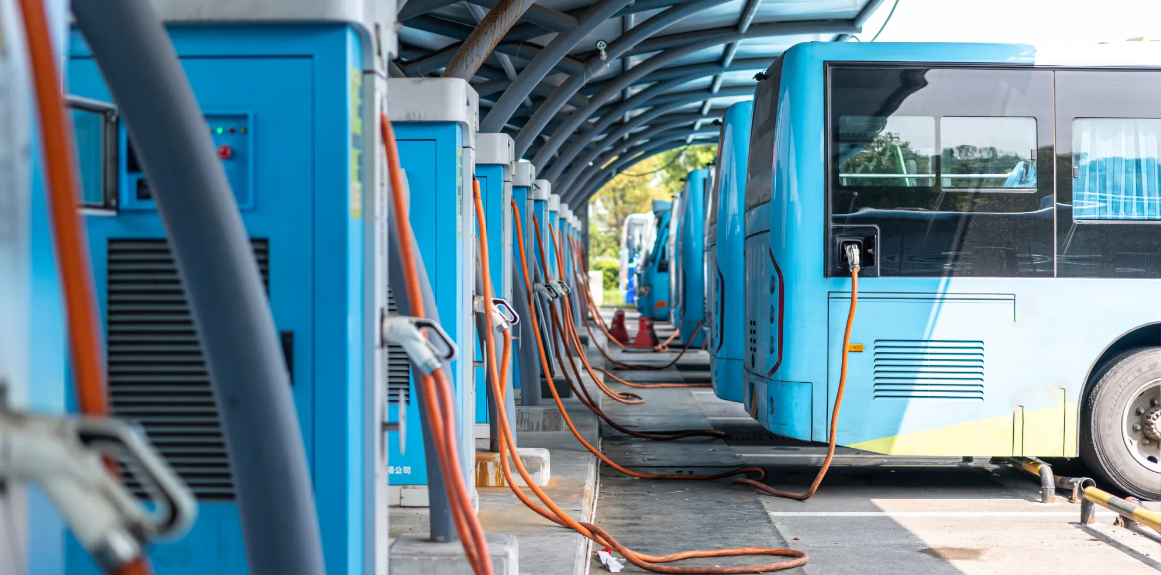
Electric buses charging at a transit depot
What bus procurement departments prioritize is ordered differently: safety, lifespan, cost. Energy density? That comes later.
LFP battery thermal decomposition temperature exceeds 400 degrees Celsius; NMC is around 200 degrees. That 200-degree difference, stated as technical specifications it doesn't mean much. When an LFP battery has a problem, you have time to run. When an NMC battery has a problem, you might not have time to run.
In April 2022, two electric buses burned in Paris. Those two used Blue Solutions solid-state batteries, neither LFP nor NMC, a different technology pathway. The fire was caused by a design flaw in the battery preheating system. The fire happened at dawn, with the vehicles in the parking lot, no one aboard. Paris transit company RATP subsequently suspended 149 vehicles of the same model for inspection.
A single bus carries hundreds to over a thousand passengers per day. During morning rush hour, carriages are packed chest-to-back: elderly, pregnant women, people holding children. If something happens at that moment, the consequences cannot be resolved with money.
I mention this incident not to say solid-state batteries are unsafe. What I want to say is: how sensitive bus companies are to battery fires. 149 vehicles, suspended for inspection. A single bus carries hundreds to over a thousand passengers per day. During morning rush hour, carriages are packed chest-to-back: elderly, pregnant women, people holding children. If something happens at that moment, the consequences cannot be resolved with money.
A bus fire and a private car fire are not of the same magnitude. When a private car catches fire, the owner might escape, might not, typically single-digit casualties. A bus at full capacity holds sixty to seventy people; during rush hour it can squeeze in over a hundred. There are only two or three doors. If during a fire the doors won't open, or there are too many people to squeeze out, the consequences are unthinkable.
I once saw a statistic about how many electric buses China has per year, transporting how many billion passenger trips. I don't remember the exact figures, roughly tens of thousands of buses, tens of billions of trips. At this scale, any slight problem with battery safety has enormous impact.
In nail penetration tests, when LFP is pierced by a steel nail, temperature rises to thirty to fifty degrees, no smoke. NMC in the same test experiences thermal runaway within seconds, exceeding 500 degrees, open flame. Nail penetration tests are extreme situations that wouldn't occur in normal use. The question is, where is the boundary of "normal"? Batteries can be hit, can get water in them, can be exposed to fire, can have manufacturing defects causing internal short circuits. Every type of accident has a probability. Buses have high passenger density, and accidents have severe consequences, so procurement must set safety standards to the extreme. The margin provided by a 400-degree thermal decomposition temperature cannot be provided by 200 degrees.
This is the first reason LFP captures 92%.
The second reason is lifespan. LFP cycle life is 2,000 to 6,000 cycles; good ones can reach the upper limit. NMC is roughly 800 to 2,000 cycles. Buses charge once a day, 365 times a year, over 5,000 cycles in 15 years. LFP can handle it; NMC might need replacement by year five or six. Replacing a battery pack costs over $100,000 USD, plus downtime losses and the time cost of going through procurement procedures. The procurement procedure issue is particularly troublesome in government-affiliated organizations. From project initiation to bidding to contract signing to payment, fast takes several months, slow takes one to two years.
Previously, the financial models for electric buses always reserved funds for battery replacement. Year seven or year eight, replace the battery once. With this money factored in, the total cost of ownership advantage of electric buses wasn't so obvious. Diesel buses don't need engine replacement; they run for over a decade until retirement.
CATL released the Tianxing battery in September 2024, with a warranty of 15 years or 1.5 million kilometers. Buses typically retire after 12 to 15 years of use, traveling around 60,000 to 70,000 kilometers per year, just over 1 million kilometers for the entire lifecycle. The Tianxing battery warranty covers the entire period.
After this warranty came out, Yutong, King Long, BYD, Dongfeng, Zhongtong, Ankai and over a dozen companies signed contracts very quickly. The logic is simple: previously, vehicle manufacturers had to explain to customers when selling vehicles that the battery might need replacement, roughly how much it would cost when replaced, when to replace it. Now the battery manufacturer has taken on the risk, vehicle manufacturers are relieved, and customers are relieved too.
Mercedes eCitaro uses NMC, with the 4th generation NMC battery planned for 2026, with warranty extended to 8 to 15 years. The difference between 8 years and 15 years is one battery replacement cycle. For Mercedes to catch up, they need to bring NMC cycle life to LFP levels. Can it be done? I haven't seen a credible technical pathway.
The third reason is cost. In 2024, battery pack average price was $115 per kilowatt-hour; China's LFP bulk purchase price dropped to $75. A 12-meter bus has around 400 kilowatt-hours of battery capacity. $75 times 400 equals $30,000 battery cost. NMC is considerably more expensive.
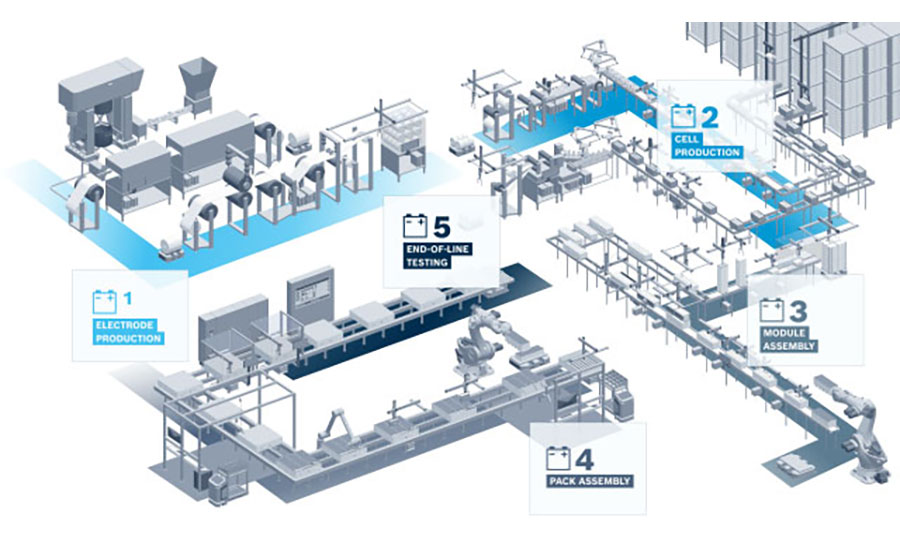
battery manufacturing facility
LFP contains no cobalt; NMC contains cobalt. Over 60% of cobalt comes from the Democratic Republic of Congo. The mining conditions for Congolese cobalt involve child labor, mining disasters, and armed conflict financing, among other problems. EU battery regulations passed in 2023 require supply chain due diligence; cobalt traceability auditing processes are lengthy and costly. Using LFP directly bypasses this trouble.
Some might ask: can't NMC also reduce cobalt content? Indeed it can. NMC has different formulations: 111, 622, 811. The numbers represent the ratio of nickel, manganese, and cobalt. 811 has the lowest cobalt content and highest energy density. The problem is that with lower cobalt content, thermal stability worsens and cycle life shortens. NMC 811 is a compromise between energy density and safety; it's used more in passenger vehicles, less in buses. Bus procurement would rather sacrifice energy density than compromise on safety.
Add these three reasons together, and that's how you get 92%.
What's the Story with That 8%
It's not that NMC technology is inadequate. It's that in the bus scenario, its advantages can't be utilized.
What use is high energy density? Bus chassis have plenty of space; add a few more battery packs to make up the range. Passenger car chassis have limited space, making energy density a hard requirement. Buses are different. Under a 12-meter bus chassis you can fit 400 kilowatt-hours or even more batteries; an 18-meter articulated bus can fit 600 to 800 kilowatt-hours. Space isn't a bottleneck.
NMC energy density is 200 to 260 watt-hours per kilogram; LFP is only 90 to 160. The numbers differ by roughly double, but in bus procurement evaluations, this factor carries very low weight. I've seen some bus company procurement scoring sheets where energy density typically accounts for no more than 10% of the score; some don't even list this item.
NMC's advantageous scenario is low temperature.
LFP doesn't handle cold well. At zero degrees, capacity drops 10% to 20%; at minus 20 degrees, it might only have 60% left. NMC's degradation in cold conditions is roughly half that of LFP. This difference isn't obvious in temperate cities. Beijing and Shanghai winters only get to about minus ten degrees, LFP suffices. But in Stockholm, Helsinki, Montreal, where winters commonly reach minus twenty to thirty degrees, LFP struggles.
For LFP to operate in Northern Europe, you either add extra batteries as buffer or spend a long time preheating before departure. Preheating itself consumes power. At minus 20 degrees, the preheating system might draw 6 to 14 kilowatts; an hour of preheating consumes enough electricity to travel ten to twenty kilometers. NMC has an advantage in these regions.
Some bus companies in Sweden and Finland therefore choose NMC models. Mercedes eCitaro sells better in Northern Europe than Southern Europe. Canadian procurement also considers this.
The question is, what percentage of the global bus market do these regions represent? The five Nordic countries combined have a population of 27 million, and the bus market is comparable to a Chinese second-tier city. Canada has 40 million people. Adding it up, markets that need to worry about operating at minus 20 degrees account for less than 10%.
NMC's 8% share matches this figure.
Mercedes eCitaro is the representative of the NMC camp. It has cumulatively sold over 2,500 units, mainly in German-speaking regions and Northern Europe. Mercedes insists on using NMC for brand considerations and supply chain considerations. eCitaro's battery supplier is BMZ Poland, a European local enterprise. Using CATL or BYD LFP might raise other concerns for Mercedes.
GILLIG is a U.S. domestic bus manufacturer that also uses NMC. Batteries come from BorgWarner. GILLIG's selling point isn't technological leadership. It's 100% American-made. U.S. federal subsidies have domestic content requirements; using Chinese batteries disqualifies you from subsidies. GILLIG's choice of NMC has policy factors.
Cold climate, brand strategy, policy constraints: these three factors support NMC's 8%.
About That BYD Nail Penetration Video
When the Blade Battery was released in 2020, BYD made a video. Steel nail piercing a battery: NMC catches fire, Blade Battery is fine. The video spread widely online.
This marketing was clever. Whether nail penetration tests can represent real-world conditions is debated among engineers. Critics say batteries don't get pierced by steel nails in normal use, so the test has limited meaning. Supporters say nail penetration simulates the extreme case of internal short circuit; being able to withstand it demonstrates high safety redundancy.
Debate aside, the video was already out there, and the impression that "Blade Battery is safe" had already formed. The NMC camp couldn't produce counter-material with equal viral potential.
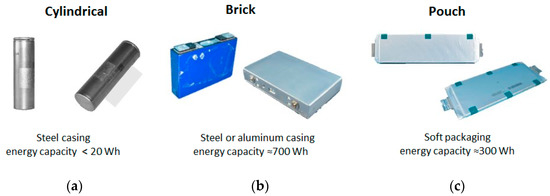
EV battery pack design
From an engineering standpoint, the Blade Battery does have substance. Cells are made into flat strips 96 centimeters long and 9 centimeters wide, directly arranged into a battery pack, eliminating modules. Cell-to-Pack design improves volume utilization by over 50%. LFP energy density was already low; CTP narrowed part of the gap at the pack level.
BYD has deployed over 7,000 electric buses in Europe; the Blade Battery's reputation helps sales. Quantifying how much it helps is difficult to say.
Blade 2.0 comes out in 2025, targeting energy density of 190 watt-hours per kilogram, 40% higher than the first generation. If mass production meets targets, the energy density gap between LFP and NMC will narrow further. Energy density wasn't a primary consideration for bus procurement anyway. With the gap narrowing further, NMC will have even fewer footholds.
The Supply Chain Situation is Rather Chaotic
Northvolt went bankrupt.
This Swedish company was founded in 2016. Its founders were two former Tesla executives, Peter Carlsson and Paolo Cerruti. Carlsson was previously Tesla's supply chain head and knew the battery industry well. When he started his business, Europe was worried: the electric vehicle era was coming, batteries were all made in Asia, what would happen to Europe's automotive industry?
Northvolt's story was easy to tell. Europe's own battery champion, breaking Asian monopoly, preserving the lifeblood of Europe's automotive industry. Investors bought in, with financing exceeding $10 billion. Investors included Volkswagen, BMW, Goldman Sachs, and the European Investment Bank. Sweden and Germany planned several tens of GWh of capacity, enough to equip hundreds of thousands of electric vehicles.
Battery manufacturing is a process-intensive endeavor. You can't do it well just by having money and equipment. CATL and BYD have been grinding away in this industry for over a decade, stepping into countless pitfalls, accumulating vast know-how.
In November 2024, they filed for bankruptcy protection. In early 2025, they entered liquidation procedures, with assets acquired by American company Lyten. Lyten makes lithium-sulfur batteries, a different technology pathway from Northvolt. They mainly bought factory buildings, equipment, and some patents.
The reason for bankruptcy is simple to state: capacity ramp-up was too slow, yield rates couldn't rise, costs couldn't come down. Battery manufacturing is a process-intensive endeavor. You can't do it well just by having money and equipment. CATL and BYD have been grinding away in this industry for over a decade, stepping into countless pitfalls, accumulating vast know-how. Northvolt thought they could catch up in a few years. Too optimistic.
BMW cancelled a $2 billion order once, citing inability to deliver qualified products. When this news came out, Northvolt's stock price started falling. Management was pushing several projects simultaneously. The Swedish factory wasn't done yet, but they'd already broken ground in Germany and were planning in Canada. They spread too thin, and cash flow broke.
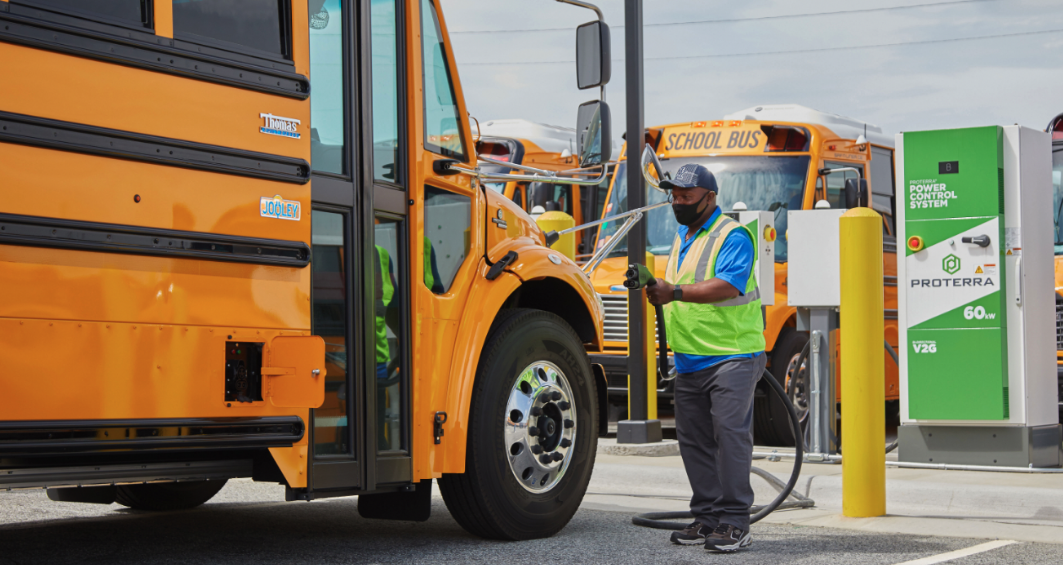
Electric bus charging station infrastructure
After Northvolt's bankruptcy, when European bus operators buy electric buses, battery sources are most likely CATL, BYD, Samsung SDI, or LG Energy Solution. The first two are Chinese companies, the latter two are Korean. Europe's own battery supply, at least for buses, has no prospects in the short term.
Scania is a Northvolt shareholder and customer; now they need to find new suppliers. Volvo acquired Proterra's battery business, but capacity is limited. How much they can fill in is hard to say.
Speaking of Proterra, the American side is also chaotic.
Proterra was once America's electric bus star company; they went bankrupt in 2023. The battery business was sold to Volvo, the bus business to Phoenix Motor, recovering just over $200 million combined, a fraction compared to their funding.
Data from Miami and Broward County operating Proterra buses: average of 600 miles between failures. Diesel buses average 4,500 miles. Parts supply issues continue to this day. Some operators who bought Proterra vehicles are considering early retirement and replacement.
The U.S. has federal domestic content requirements. The Inflation Reduction Act provides up to $40,000 tax credit for clean commercial vehicles, conditional on meeting North American battery content requirements. The 2023 requirement was 50%, rising to 100% by 2029. "Foreign Entity of Concern" provisions exclude Chinese-sourced batteries from subsidy eligibility.
If you want subsidies, don't use CATL or BYD.
New Flyer is North America's largest bus manufacturer, under NFI Group. To address domestic content requirements, they signed a supply agreement with American Battery Solutions (ABS) to procure LFP battery packs produced in Michigan and Ohio. ABS invested over $200 million in production lines. In February 2025, New York MTA ordered 265 New Flyer electric buses using ABS batteries.
BYD has a factory in Lancaster, California, with domestic content exceeding 70%. Los Angeles Metro ordered 130 K7M units. Whether they can continue to meet domestic content requirements is a question mark. Blade Battery cells come from China; if FEOC provisions are strictly enforced, subsidy eligibility could be affected.
Policy can distort markets. The cost of distortion is efficiency loss and price increases, borne by bus operators and taxpayers.
A Brief Word on Charging
Battery selection and charging infrastructure planning are linked together.
Depot charging: buses return to the depot at night and charge for 6 to 8 hours, leaving with full batteries the next day. Power is 50 to 150 kilowatts. This model requires high capacity batteries that can handle daily deep charge-discharge cycles. LFP is suitable. 90% of electric bus charging happens at depots.
Opportunity charging: buses stop at terminal stations for a few minutes and use pantographs for rapid charging. Power is 350 to 600 kilowatts. This model allows for smaller battery capacity but requires batteries that can handle high-rate charging. NMC has better high-rate performance than LFP; in opportunity charging scenarios, NMC has an advantage. Kassel, Germany plans to have all 80 buses on opportunity charging by 2030. This is a case the NMC camp likes to cite.
For most cities and most routes, depot charging is more economical. Opportunity charging requires installing charging stations along routes, with large infrastructure investment.
Wireless charging is a new direction. Buses stop at positions with embedded charging coils and automatically charge through induction, no plugging needed. Seattle Sound Transit plans to deploy a 48-vehicle wireless charging system by 2026. It saves labor and reduces mechanical wear. Technology supplier InductEV holds 123 patents in this field.
Most operators choose depot charging, so most operators choose LFP.
Sodium-Ion Batteries May Have an Impact
Solid-state batteries and silicon-based anodes are still years away from commercial vehicle mass production. Sodium-ion batteries have already begun mass production.
CATL released its first-generation sodium-ion cells in 2023, with energy density of 160 watt-hours per kilogram, lower than LFP. Mass production and shipment began in 2024. The selling point isn't performance. It's cost. Sodium reserves are hundreds of times greater than lithium, and the price is much cheaper.
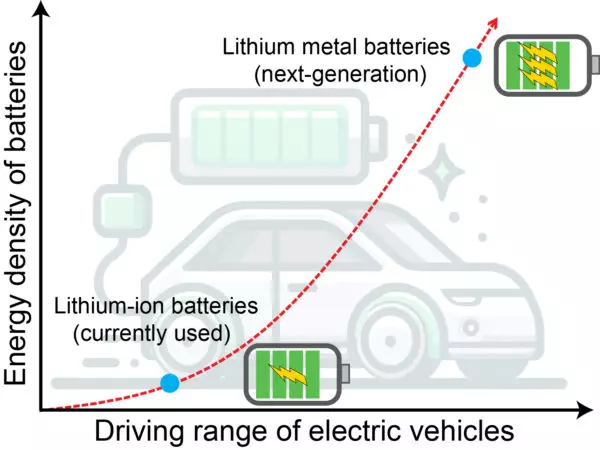
Next-generation battery technology development
Sodium-ion has better low-temperature performance than LFP. At minus 20 degrees, capacity retention exceeds 90%. This figure provides a new solution for LFP's disadvantage in Northern Europe.
Current issues with sodium-ion are insufficient energy density and cycle life not as good as LFP. In the bus scenario, both issues are acceptable. Buses run fixed routes daily with predictable mileage; leave buffer in capacity planning and it's covered. If cycle life reaches 3,000 times or more, it's enough.
BYD, CALB, and Farasis Energy are all setting up sodium-ion mass production lines. Within two to three years, sodium-ion may penetrate the low to mid-end electric bus market. The high-end market will remain stable with LFP; the low-end market may see sodium-ion take away a portion.
NMC's position will become even more marginal. Originally, NMC's only remaining advantage in the bus market was low-temperature performance; sodium-ion also has good low-temperature performance, and it's cheaper. In the Northern European market, NMC may have to compete with sodium-ion.
A Few Final Words
The 92% to 8% ratio won't change much in the next three to five years.
LFP wins on safety, lifespan, cost, and supply chain. NMC can't catch up in these dimensions in the short term. After the Tianxing battery's 15-year warranty came out, LFP's advantage expanded further.
NMC can hold onto the niche markets of Northern Europe and Canada. Procurement preferences in cold regions won't change easily. Globally, this share is around 8%.
After sodium-ion rises, NMC's situation will become more difficult. Sodium-ion has good low-temperature performance and costs even less than LFP. NMC's foothold in the bus market was originally just low temperature. If sodium-ion takes away part of that too, NMC's share may drop below 8%.
Solid-state battery commercial vehicle applications will have to wait until after 2028. If LFP solid-state batteries come out first, LFP's dominant position will continue.
LFP has already won. The question is how much, and for how long. From existing data, LFP's dominant position in the electric bus market will last at least another ten years.