

Where to Buy 36 Volt Lithium Battery?
Amazon for budget options with easy returns. Manufacturer websites for full warranty coverage. West Marine for hands-on testing before you commit.
Brand recommendations: Dakota Lithium if the budget allows. LiTime for everyone else. ABYSS for saltwater. That's the short version. Most buyers can stop here and make a purchase without regret.
The longer version involves warranty nightmares, frozen batteries, disappearing companies, and the endless forum arguments that accomplish nothing. Read on for the full picture or just buy one of those three brands and move on with life.
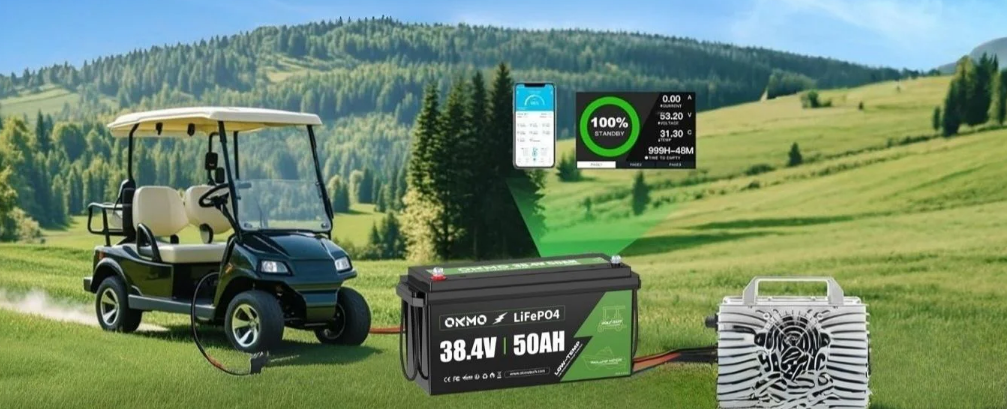
Modern lithium batteries have revolutionized power systems for marine, golf cart, and solar applications
The Warranty Situation
Nobody wants to think about warranties when buying batteries. The battery either works or it doesn't, right? Just buy the cheapest option and replace it when it dies.
This logic falls apart with lithium batteries. The price difference between cheap and expensive options runs $600-900 per battery. The "just replace it" approach gets expensive fast when replacements cost that much.
Here's the problem with cheap batteries: the companies selling them might not exist when problems arise. Amazon lists dozens of 36V lithium batteries from brands that appeared in the last two years. Some will still be selling batteries in five years. Others will vanish. The five-year warranty they advertise becomes worthless when nobody answers the phone.
This happened to a guy on one of the fishing forums. Bought a battery from some brand nobody had heard of. Great price. Good reviews. Battery developed problems eighteen months later. He tried contacting the company through Amazon, through their website, through email. Nothing. The company had closed. The five-year warranty documentation sat in his desk drawer completely useless.
Dakota Lithium has been around since 2015. They're headquartered in North Dakota. They have employees who answer phones. The 11-year warranty they offer comes from a company with actual infrastructure behind it.
LiTime operates under Ampere Time which has been selling batteries for years. They process warranty claims through Amazon's system, which at least guarantees a functioning support channel.
ABYSS focuses on marine applications and has established distribution through West Marine. Not a fly-by-night operation.
The random brand offering 36V batteries at $389 with impressive specifications? Maybe legitimate. Maybe a company that formed last year and will fold next year. The savings evaporate when the warranty can't be honored.
This matters more than BMS specifications. More than capacity numbers. More than any feature list. A mediocre battery from a stable company beats an impressive battery from a company that might disappear.

Understanding where to buy can save hundreds of dollars and prevent warranty headaches
Where to Buy
Amazon dominates the market for budget batteries. The platform hosts hundreds of 36V lithium options. Sorting through them wastes time. Filter for products with 500+ reviews and average ratings above 4.3 stars. Check that the seller is the brand's official storefront rather than a third-party reseller. Third-party sellers introduce risk of old inventory, refurbished units, and counterfeits.
Amazon's return policy handles most problems. Batteries that arrive damaged or fail early get replaced without arguing with manufacturers. That protection has value when dealing with brands lacking solid support infrastructure.
One detail catches buyers off guard: warranty terms sometimes differ between Amazon purchases and manufacturer direct purchases. Dakota Lithium provides the clearest example. Purchase through their website and receive 11-year warranty coverage. Purchase through Amazon and receive significantly less. The Amazon listing doesn't highlight this discrepancy. Buyers discover it years later when warranty claims get denied.
For budget brands like LiTime, Amazon makes sense. The return policy provides protection. Warranty claims route through Amazon's systems. Prime shipping delivers batteries in two days.
For premium brands like Dakota Lithium, buy direct from the manufacturer. The longer warranty justifies the slightly slower shipping.
Manufacturer websites make sense when full warranty protection matters. Dakota Lithium, ABYSS, and RELiON all operate their own e-commerce platforms. Technical support teams answer pre-purchase questions about compatibility and specifications. Try getting that level of support from Amazon customer service.
Shipping from manufacturer websites takes longer. Expect three to five business days compared to Amazon's two-day Prime delivery. For batteries costing $1,400+ that wait makes sense.
Watch for manufacturer promotions. Black Friday. Fishing trade shows. Brand anniversaries. Discounts hit 15% during these periods. Email newsletter signups cost nothing and occasionally save real money.
West Marine operates 240+ retail locations along coastal regions. They stock ABYSS and RELiON batteries in popular capacities. Prices run 10-15% above online alternatives. The premium buys trained staff who answer installation questions and a 90-day return policy that accepts batteries back for any reason.
That return flexibility matters for first-time lithium buyers. Purchase a battery. Install it. Fish with it for a month. If capacity falls short or the battery doesn't fit the application, return it. Online channels rarely permit that kind of real-world testing.
Bass Pro Shops and Cabela's stock varies by location. Stores serving heavy fishing markets carry 36V options. Other locations skip the category entirely and focus on 12V products. Call ahead before making a trip.
Regional battery distributors serve commercial clients like golf courses and warehouse operators. Some accommodate individual buyers at wholesale pricing. Finding these distributors takes effort since they don't advertise to consumers. Manufacturer authorized dealer lists provide starting points. The research effort pays off for buyers needing multiple batteries. Wholesale pricing runs 15-25% below retail.
eBay attracts problematic inventory. Clearance stock with unknown storage history. Refurbished batteries sold as new. Products from manufacturers who disappeared months ago. The occasional legitimate deal exists but finding it requires expertise most buyers lack. The savings rarely justify the risk.
Used lithium batteries from any marketplace carry unacceptable risk. External inspection reveals nothing about charge history, storage conditions, abuse, or accumulated degradation. The seller might not even know the battery has problems. Lithium degradation often shows up as reduced capacity rather than complete failure. A battery might appear functional while delivering 60% of its rated capacity. The discount on used batteries buys unknown reliability problems.
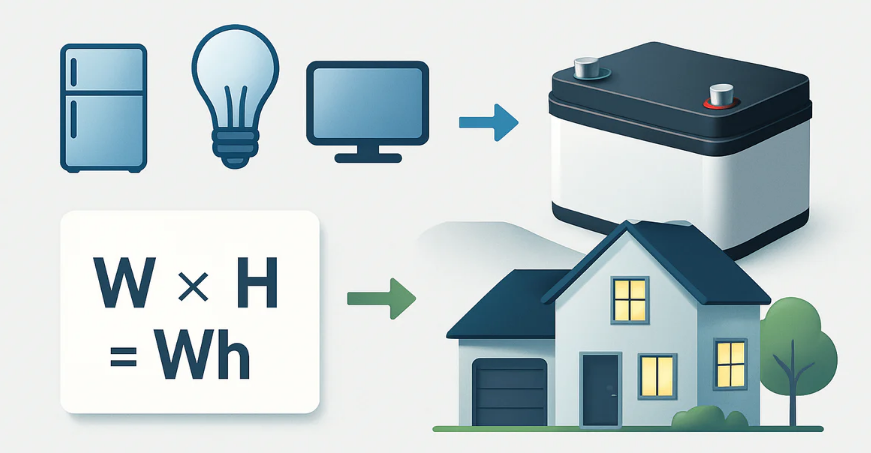
Matching battery capacity to actual usage patterns prevents overspending
Capacity
The battery industry pushes high capacity because profit margins increase with price. Sales staff earn more commission on expensive batteries. Forum contributors who bought high-capacity batteries justify their purchases by recommending them to everyone. The message from every direction: buy more capacity than you think you need.
This made sense for lead-acid batteries. Lead-acid chemistry loses capacity over time. A battery rated 100Ah when new might deliver 70Ah after three years. Lead-acid performs worse in cold weather. Buying extra capacity compensated for these weaknesses.
Lithium chemistry doesn't degrade the same way. A quality lithium battery rated 60Ah delivers close to 60Ah for years. The safety margin that made sense for lead-acid translates to wasted money on lithium.
A 60Ah lithium battery powers most trolling motors for four to six hours at normal fishing speeds. Full-throttle operation drains faster, but sustained full-throttle fishing happens mainly in tournament conditions. Weekend anglers who fish for half a day at normal speeds rarely need more than 60Ah. The 100Ah battery they bought sits 40% unused trip after trip.
The math works simply enough. An 80-pound thrust trolling motor draws around 40 amps at maximum power. Divide battery capacity by amp draw: 60Ah divided by 40 amps equals 1.5 hours at full throttle. Nobody actually fishes at full throttle continuously though. Drop to 60-70% power for realistic fishing speeds and runtime extends dramatically.
Forum discussions about capacity often miss this point. Contributors assume everyone fishes the way they do. Someone running tournaments in heavy current has different requirements than someone making occasional position adjustments on a calm lake. Generic advice to "buy 100Ah to be safe" costs money when 60Ah would suffice.
Half-day fishing trips rarely require more than 60Ah. Dawn-to-dusk trips justify 100Ah. Tournament conditions with constant repositioning in challenging water justify more. Match the battery to actual use patterns rather than theoretical worst cases.
Golf carts present different requirements. Carts draw power continuously rather than intermittently. Average power consumption while moving runs around 500 watts. A 36V 100Ah battery stores 3,600 watt-hours total. Dividing yields about 7 hours of theoretical runtime.
Reality reduces that number. Hills increase power draw significantly. Multiple passengers add weight. Cold weather reduces battery effectiveness. A realistic estimate for golf cart applications: 100Ah completes 18 holes with buffer remaining on relatively flat terrain. Hilly courses or heavy usage patterns may require 120Ah or more.
Solar storage applications prioritize different specifications entirely. Depth of discharge matters more than raw capacity. LiFePO4 lithium chemistry tolerates discharging to 80% without accelerating degradation. Lead-acid chemistry degrades faster when discharged past 50%. A 60Ah lithium battery provides 48Ah of usable capacity. A 60Ah lead-acid battery provides only 30Ah of usable capacity before crossing the threshold that shortens service life. This efficiency difference explains why lithium makes economic sense for solar applications despite higher upfront cost.
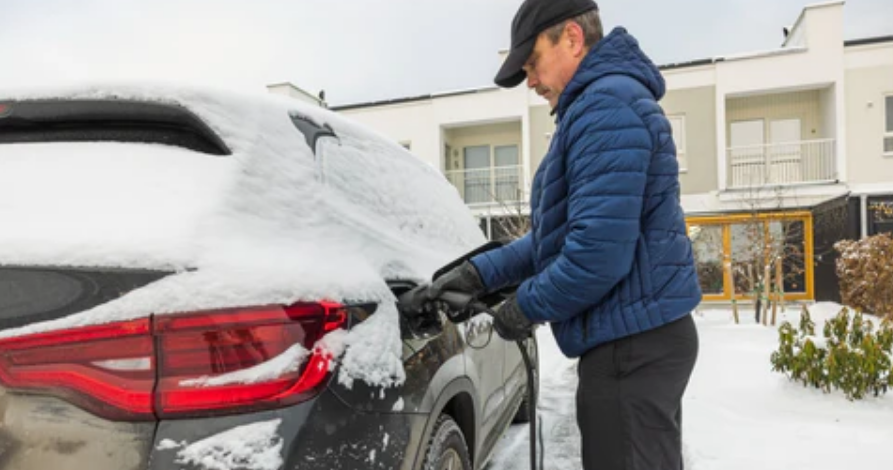
Cold weather charging poses unique risks for lithium batteries
Cold Weather Charging
Lithium batteries suffer permanent damage when charged below freezing. Not discharged. Charged. Using a battery in cold conditions works fine. The problem occurs when plugging in a charger after the battery has been sitting in freezing temperatures.
The chemistry doesn't tolerate cold charging. Ice crystals form on electrode surfaces during the charging process and damage internal cell structures. Capacity drops permanently. Owners have no idea anything went wrong. The charger shows green. Runtime decreases and never recovers.
One winter charging session in an unheated garage can permanently reduce capacity by 10-20% or more. Severe cases destroy batteries entirely. The frustrating part: nothing external indicates the damage occurred. Owners attribute reduced runtime to normal aging or defective batteries when cold charging caused the problem.
Premium batteries from Dakota Lithium and ABYSS include BMS protection against cold charging. The battery management system monitors cell temperature and refuses to accept charge current until temperatures rise above safe thresholds. Leave a battery in a cold boat overnight. Try charging it the next morning. The BMS rejects the current until conditions improve. That automatic protection prevents accidental damage.
Budget batteries often skip temperature monitoring to achieve lower prices. Nothing prevents charging in dangerous conditions. The battery accepts whatever current the charger sends regardless of temperature. Owners in cold climates discover the limitation after damage has already occurred.
LiTime's temperature protection varies by model and manufacturing batch. Some units include cold charging cutoff. Others don't. The product specifications rarely clarify which version ships. Buyers in northern states should contact LiTime support before ordering to confirm temperature protection status for specific product numbers.
Northern buyers generally face three options. Purchase premium batteries with guaranteed temperature protection. Store batteries in climate-controlled spaces and only charge after they've warmed up. Or risk cold charging damage with budget batteries that lack protection.
The temperature protection feature alone may justify premium battery pricing for buyers in cold climates. A single cold charging incident can reduce battery capacity more than the price difference between budget and premium options.
Dakota Lithium
Around $1,399 for 60AhAround $1,399 for the 60Ah model. More than double what budget competitors charge.
That price differential demands justification. The cells don't justify it. Dakota sources cells from China like every other brand. The BMS components don't justify it. Those come from the same suppliers budget brands use.
What justifies the price: warranty execution and support infrastructure.
Dakota's 11-year warranty actually gets honored. This sounds obvious but it isn't. Warranty documentation means nothing if the company drags out claims indefinitely or finds reasons to deny coverage.
Forum discussions about Dakota warranty experiences follow a consistent pattern. Battery develops problems. Owner contacts Dakota. Company ships a replacement. No return of the defective unit required. Resolution happens in days.
Contrast this with warranty claims against budget manufacturers. Photo documentation requests. Detailed usage history questions. Return shipping at the owner's expense. Weeks of back-and-forth communication. Claims that simply go unanswered and eventually expire.
The warranty experience difference represents real value even though it doesn't show up in product specifications.
Dakota employs people who answer phones and respond to emails. The company maintains U.S.-based operations for assembly and customer support. When warranty situations arise, callers reach someone in their timezone speaking fluent English. That accessibility matters when resolving problems.
Whether this support infrastructure justifies paying $800+ more than LiTime depends on individual circumstances. Buyers who view battery failure as minor inconvenience can save money with budget options. Buyers who depend on reliability for professional fishing or charter operations may find the premium justified by reduced hassle when problems occur.
Dakota sponsors fishing media personalities. YouTube fishing channels. Podcasting hosts. Tournament competitors. Those endorsements appear constantly across fishing content. Not evidence of product problems, but worth remembering when evaluating testimonials. Sponsored recommendations carry inherent bias regardless of actual product quality. The enthusiastic Dakota recommendation from a fishing YouTuber might reflect genuine experience or might reflect the sponsorship relationship. No way to know from outside.
Dakota's social media team responds defensively when commenters question the pricing. Make of that whatever you want.
The company ships from facilities in the northern Great Plains region. Transit times to coastal destinations run longer than competitors shipping from coastal distribution centers. Not a dealbreaker but relevant for buyers needing batteries by specific dates.
LiTime
Around $549 for 60AhAround $549 for 60Ah. Thousands of Amazon reviews averaging above 4.4 stars.
The company operated as Ampere Time before rebranding to LiTime around 2022-2023. Same products, different name. Listings under both brand names still appear on Amazon. No functional difference between them.
Manufacturing occurs in China. So does manufacturing for every other lithium battery brand including the expensive ones. Factory location reveals nothing about quality. The relevant question involves quality control processes, not geographic coordinates.
Warranty coverage extends five years. Less than Dakota's eleven but more than generic brands usually offer. Claims process through Amazon's systems, which provides reliable if impersonal resolution. Response times beat dealing with overseas manufacturers directly.
Customer service handles basic inquiries adequately. Technical questions about BMS specifications, compatibility edge cases, or unusual applications may not receive satisfactory answers. The documentation reads like it went through machine translation with minimal editing. Neither limitation affects whether the battery actually functions.
Fishing forums host endless debates about whether LiTime batteries are "really" good enough. Someone posts asking about LiTime. Within hours, commenters divide into camps. Defenders cite thousands of positive reviews and personal experience. Critics cite concerns about Chinese manufacturing and shorter warranties. The debates generate substantial heat while illuminating nothing.
Here's what matters: thousands of verified purchasers used these batteries without problems. That track record exists regardless of forum arguments. Opinions from people who never purchased the product carry less weight than aggregate purchase outcomes.
The cold weather charging protection issue deserves attention. Some LiTime models include temperature-based charge cutoff. Others don't. The product specifications don't reliably indicate which version ships. Buyers in cold climates should contact support before ordering to confirm protection status for specific model numbers.
LiTime sells through their own website in addition to Amazon. Promotions sometimes appear on the direct site that Amazon doesn't match. Checking both before ordering occasionally saves money.
Build quality holds up to inspection. Cases feel solid. Terminals connect securely. Nothing obviously cheap compared to batteries costing twice as much. The price savings appear to come from supply chain efficiency and lower marketing spend rather than compromised components.
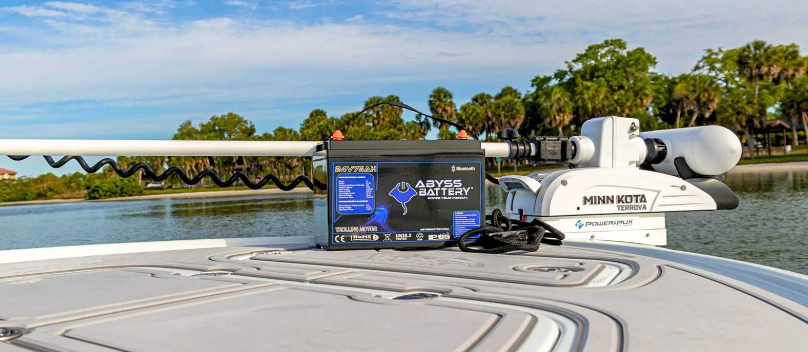
Saltwater environments demand marine-grade battery protection
ABYSS
Around $1,589 for 60AhAround $1,589 for 60Ah. Marine-specific engineering throughout.
Standard lithium batteries placed on saltwater boats face corrosion conditions they weren't designed for. Salt spray attacks terminal connections. Green oxidation develops and spreads. Internal wiring degrades. BMS components fail. The timeline varies but standard batteries rarely survive more than two or three years in saltwater environments.
ABYSS construction addresses this specific failure path. IP67 waterproof rating. Nickel-plated copper terminals that resist corrosion. Enclosure materials engineered for salt spray exposure. The specifications exist because saltwater destroys batteries without them.
Freshwater users gain nothing from these features. Inland lake fishing, river fishing, freshwater bass tournaments: none of these applications expose batteries to conditions requiring marine-grade protection. Paying the ABYSS premium for freshwater use wastes money on engineering that solves nonexistent problems.
Saltwater anglers face different economics. Inshore and offshore fishing exposes equipment to corrosive conditions that will eventually destroy standard batteries. The question becomes whether paying premium prices for marine engineering costs less than replacing standard batteries every two or three years. For serious saltwater fishers, the math usually favors ABYSS or equivalent marine-grade options.
West Marine pushes ABYSS products aggressively in their stores. Sales staff earn commission on battery sales. The enthusiasm for ABYSS deserves appropriate skepticism when it comes from commissioned salespeople. The underlying product recommendation isn't wrong for saltwater applications though. The sales motivation doesn't invalidate the technical rationale.
ABYSS maintains lower marketing profile than competitors like Dakota Lithium. Fewer sponsored fishing personalities. Less social media presence. Less content marketing. Possibly less marketing expense baked into product pricing as a result.
The Bluetooth monitoring system includes GPS location tracking alongside standard charge level reporting. Boats stored at marinas face theft risk. Equipment disappears. Having GPS tracking on expensive batteries provides some recovery capability when theft occurs. At prices above $1,500, knowing where stolen gear went has practical value.
Terminal design uses threaded stainless steel posts with wing nuts rather than the bolt-on terminals common on budget batteries. The design simplifies installation and resists vibration-induced loosening better than alternatives. Minor detail but relevant for boats running rough water regularly.
One practical concern: ABYSS batteries run physically larger than competitors at equivalent capacity ratings. The extra enclosure material that enables waterproofing adds to external dimensions. Battery compartments with tight tolerances may not accommodate ABYSS batteries that would fit from other brands. Checking dimensions against available space before ordering prevents compatibility surprises.
RELiON
Costs more than Dakota while offering shorter warranty coverage. A 2024 industry award from a trade publication doesn't change that calculation.
The batteries work fine. Build quality meets professional standards. Nothing wrong with the product itself.
The value proposition makes no sense though. Paying more for less warranty coverage requires some justification beyond brand reputation and magazine awards. Nothing in RELiON's specifications or construction quality provides that justification.
Industrial buyers with existing RELiON vendor relationships might find continuity convenient. New buyers evaluating options on merit should look elsewhere.
Epoch
Built-in heating elements for cold weather charging. The concept directly addresses the temperature damage problem that affects lithium batteries.
Instead of external heating blankets or storing batteries in climate-controlled spaces, Epoch batteries warm themselves before accepting charge. Temperature sensors detect cold conditions. Heating elements activate. Cells warm to safe charging temperatures. Charging proceeds normally.
In theory this solves a real problem elegantly. In practice, current products have issues.
Users in cold climates report problems. Electrical interference during heating cycles affects other equipment. Battery drain increases as heating elements consume stored power. Activation temperatures behave inconsistently between units and across temperature ranges.
The technology might mature into something valuable. Current products feel like beta testing at full retail prices. Buyers serve as unpaid quality assurance for product development.
External heating blankets paired with standard batteries cost less and work reliably. The low-tech solution accomplishes the same goal without integration problems.
Check back on Epoch in two or three years. Current offerings don't warrant confident recommendation.

Generic batteries often cut corners on safety certification and quality control
Generic Batteries
Amazon and other marketplaces list dozens of 36V lithium batteries from manufacturers nobody recognizes. Prices run 30-40% below established brands. Specifications look impressive on paper. Reviews seem positive.
The savings come from cutting expensive corners.
Safety certification costs money. UL, CE, and FCC testing requires sending products to independent laboratories, paying substantial fees, and meeting standards that sometimes require design changes. This process costs thousands of dollars per product. Manufacturers achieving rock-bottom prices skip certification entirely. No independent verification exists for their safety claims. The products might be perfectly safe. They might not. Nobody outside the manufacturer knows.
Capacity fraud runs rampant in the generic battery segment. The physics of LiFePO4 chemistry dictate specific energy density. Cells weigh a certain amount per amp-hour of capacity. A genuine 100Ah battery including BMS and enclosure weighs 80-90 pounds. Products advertising 100Ah capacity while weighing 55-60 pounds contain significantly less capacity than claimed. The weight reveals the fraud even when specifications lie.
Amazon reviews for generic batteries often display suspicious patterns. Sudden clusters of five-star reviews appearing within days of each other. Generic praise that could describe any product. Reviewer histories revealing participation in free product programs. Not definitive evidence of manipulation but reasonable grounds for skepticism.
The warranty documentation from unknown manufacturers may prove worthless. These companies appear, sell product for a year or two, then close operations. The impressive five-year warranty coverage becomes unenforceable when the warranting company no longer exists.
Some buyers approach generic batteries as disposable purchases. Use the battery until it fails. Discard. Buy another. The math can work for light-duty applications where reliability doesn't matter. The approach fails badly when batteries die during use, stranding boats mid-trip, or when unknown failure modes create safety hazards. A lithium battery fire on a boat or golf cart creates consequences far exceeding the purchase price savings.
Pricing Tiers
Entry tier for 60Ah capacity: $519-649. LiTime and NewtiPower occupy this segment.
Mid tier: $999-1,350. Various brands of inconsistent quality.
Premium tier: $1,389-2,199. Dakota Lithium and ABYSS.
Capacity upgrades to 100Ah add 30-50% to prices at each tier.
The jump from entry tier to mid tier rarely makes sense for recreational users. Batteries at each price point function adequately. The additional $400-600 buys marginally better documentation, marginally better customer service, slightly longer warranties. Nothing transformative.
The jump from mid tier to premium makes sense for specific buyer profiles. Heavy users who depend on reliability and cannot afford mid-trip failures. Professional operators whose livelihood depends on equipment functioning. Saltwater anglers who need marine-grade corrosion resistance. For these buyers, premium pricing buys real value.
Recreational users fishing occasionally on weekends don't need premium batteries. LiTime works fine for this application at substantial savings.
Bulk purchases of three or more batteries unlock 5-10% discounts from most manufacturers. Multi-battery installations for golf carts or large marine setups benefit from asking about volume pricing.
LiTime offers additional discounts during promotional periods. Black Friday and Prime Day pricing has saved buyers $150-250 on multi-battery orders.
Local battery distributors selling to commercial clients sometimes accommodate individual buyers at wholesale pricing. Finding these distributors requires research since they don't market to consumers. The 15-25% savings below retail justify the effort for buyers needing multiple batteries.
Charger Compatibility
Lithium batteries require chargers designed for lithium chemistry. Lead-acid chargers use different voltage profiles that leave lithium batteries perpetually undercharged.
A lead-acid 36V charger terminates at around 40.8V. Full lithium charging requires 42V. The 1.2V shortfall leaves lithium batteries at reduced capacity indefinitely.
This mistake appears constantly in negative battery reviews. Someone buys a new lithium battery. Runtime disappoints. They leave a one-star review complaining about capacity. Further discussion reveals they charged with their old lead-acid charger. The battery works fine. The charger doesn't deliver appropriate voltage.
Upgrading from lead-acid to lithium requires budgeting $149-259 for a compatible charger. NOCO and Victron manufacture reliable smart chargers that detect battery chemistry automatically and adjust charging profiles accordingly.
Physical Fit
Battery dimensions vary across brands even at identical capacity ratings. A 60Ah battery from Dakota Lithium has different physical dimensions than a 60Ah battery from LiTime. Battery compartments have fixed sizes.
Checking manufacturer dimension specifications against available space before ordering prevents discovering incompatibility after the battery arrives.
Making the Decision
Most buyers overthink battery selection. The amount of research time spent often exceeds any benefit from optimizing the purchase.
Everything else falls into uncertain territory. Mid-tier brands might offer decent value. Generic batteries might work reliably. RELiON might justify its pricing for specific use cases. The uncertainty makes confident recommendations difficult.
The market will continue evolving. Brands will appear and disappear. Prices will probably fall as technology matures and competition increases. The fundamental purchase criteria remain stable though. Buy from companies that will exist when warranty claims arise. Match capacity to actual usage patterns. Verify cold weather protection for northern applications. Check physical dimensions against available space.
Apply those basics to whatever options the market offers today, next year, or five years from now.