
Robin Zeng went home. That fact, unremarkable in itself, redirected the global battery industry. When Zeng left ATL to start CATL in 2011, he chose Ningde, the Fujian coastal town where he grew up. Shenzhen had more capital. Shanghai had more automakers. Ningde had tea farms and fishing boats and local officials willing to offer whatever it took to bring a native son's company back.
The choice looked parochial at the time. Ten years later, Ningde produces more battery cells than any city on Earth.

Coastal City
Suppliers followed CATL as the company grew. Then more suppliers followed the first suppliers. Cathode producers opened branches. Separator makers set up plants. Equipment vendors relocated. The cluster thickened until over 200 battery supply chain companies crowded within 50 kilometers of CATL headquarters. A quality problem identified Monday morning gets supplier engineers on site before lunch. Try replicating that response time when your separator comes from Korea and your cathode from Finland.
The Fuding base under construction will produce 120GWh annually. That single facility will outproduce France, Germany, Italy, and Spain combined. ATL, CATL's corporate cousin in consumer electronics, stayed in Ningde too. Between the two companies, the town makes cells for Tesla sedans and iPhone screens, grid storage and AirPods.
Fujian Province announced targets of 500GWh capacity and 600 billion yuan industry value by 2025. Those numbers appeared in planning documents before the overcapacity crisis hit. Whether officials quietly revise them or let them stand as monuments to 2022 optimism remains unclear.
Changzhou: The Engineered Cluster
Changzhou took the opposite path. Where Ningde emerged from one founder's hometown loyalty, Changzhou was engineered.

Industrial Zone
Jiangsu provincial planners spent fifteen years tracking supply chain completeness, a metric measuring what percentage of battery components can be sourced within city limits. Changzhou reached 97%. Nowhere else comes close. A battery factory there sources cathode from Jintan district, anode from Liyang, separators from another Liyang supplier, electrolyte from Xinbei. Morning deliveries. Lunch meetings to resolve defects. Thursday prototypes for Tuesday design changes.
CATL's Liyang facility functions as the company's manufacturing laboratory. New techniques get debugged there before deployment elsewhere. When the German Arnstadt plant needed training, Liyang veterans flew over.
Land prices have climbed sharply as battery companies competed for remaining parcels. Entrants keep choosing Changzhou anyway.
Four of the global top ten battery producers operate there. The city's new energy sector generated 768 billion yuan in 2023.
Yibin: The Carbon Advantage
Sichuan ProvinceYibin is a bet on carbon costs reshaping geography.

Mountain Rivers
Rivers from the Tibetan Plateau feed hydroelectric dams across Sichuan. Industrial electricity runs 0.30 yuan per kilowatt-hour after subsidies. Coastal factories pay triple. CATL has put over 640 billion yuan into Yibin since 2019.
The European Union's Carbon Border Adjustment Mechanism takes full effect in 2026. Batteries made with coal power face tariffs at EU borders. Batteries made with Sichuan hydro do not. BMW and Mercedes can point to Yibin-sourced cells when Brussels regulators ask about embedded emissions. The Sichuan Times facility earned certification as the world's first carbon-neutral battery factory.
Whether this advantage holds depends on whether Tokyo and Washington follow Brussels on carbon pricing. If they do, Yibin's hydropower becomes durable. If carbon tariffs stay a European peculiarity, Yibin's remoteness from ports weighs heavier. The city sits far from export terminals. Rail connections to Europe through the China-Europe freight network help for that market. Shipments to Japan or Korea travel longer routes.
Sichuan Province projected 3,000 billion yuan in battery industry value by 2025. The projection came from the boom years. Material suppliers have clustered around CATL there: Kedali for structural parts, Sinoma for separators, BTR for anodes, De Fang Nano for cathodes.
Yichun: The Lithium Reserve
Jiangxi ProvinceYichun exists because of what lies underground.
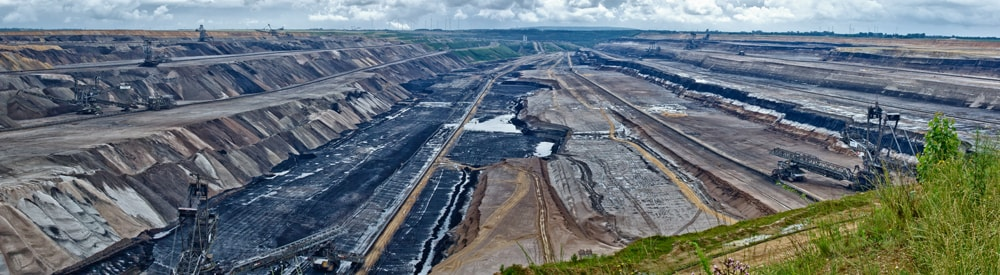
Mining Landscape
The world's largest known deposit of lithium-bearing lepidolite ore sits beneath the city and its surroundings in Jiangxi Province. Proven reserves reach 5.17 million tons of lithium oxide equivalent. Every major battery company planted a flag: CATL with 13.5 billion yuan, BYD with 28.5 billion for cells plus lithium refining, Gotion with 11.5 billion, Sunwoda with 16.5 billion.
Companies with Yichun operations control lithium from extraction through finished cells. When lithium carbonate spiked above 500,000 yuan per ton in late 2022, that vertical integration translated to billions in savings compared to spot purchasing.
Then prices collapsed.
Lithium that sold for half a million yuan now trades below 80,000. Expansion projects designed around peak prices stopped making sense. Several announced investments have slowed or paused. The city set a target of 500,000 tons of lithium output by 2025. Actual 2024 production: 85,000 tons.
Lepidolite processing generates acidic waste containing fluorine. Jiangxi environmental authorities have cited facilities repeatedly. Plants have faced temporary shutdowns. The 800 billion yuan revenue target depends on resolving discharge problems that have proven stubborn.
Pearl River Delta: The Command Center
Guangdong ProvinceShenzhen and the Pearl River Delta stopped dominating production volumes years ago. Capacity moved inland chasing lower costs. What stayed behind matters more.

Modern Skyline
BYD runs global operations from Pingshan. Sunwoda coordinates 13 production bases from Bao'an. Eve Energy directs its 212GWh Jingmen complex from Huizhou headquarters. The factories stand in Hubei and Sichuan. The decisions get made in Guangdong.
Talent explains the split. Recruiting battery R&D engineers in Shenzhen draws from local universities and migrants attracted by compensation and lifestyle. Recruiting in Jingmen means relocation packages.
Huizhou kept a different role. Desay Battery produces nearly 300 million cells there annually, about one-third of global premium smartphone supply. Eve Energy's Huizhou operations span consumer electronics, automotive, and storage. Less visible than EV batteries. More pervasive, sitting in phones and laptops and earbuds worldwide.
Guangdong hosts more battery supply chain companies than any other province. The concentration accumulated during the 2000s mobile phone boom and adapted when applications shifted.
The Material Geography
The material supply chain has its own geography, only partially overlapping cell production.

Industrial Facility
Lithium iron phosphate cathodes come from a belt stretching Hunan through Guangxi to Yunnan and Guizhou, tracing phosphate deposits and hydro dams. Hunan Yuneng leads with around 30% share. Ternary cathodes concentrate in Hubei and Guizhou near nickel and cobalt precursors.
Anode production follows electricity prices. Graphitization furnaces run above 2,800 degrees Celsius. Inner Mongolia's Baotou exploits coal power below 0.30 yuan. Sichuan and Yunnan offer similar rates from hydro. The Baotou concentration creates carbon problems the industry has not addressed. Moving production means writing off existing assets.
Electrolyte clusters in Guangzhou, Jiujiang, and Ningde. Tinci Materials holds 36% share. Separator production concentrates further: Senior Technology commands 35% of global wet-process supply. Building competitive separator capacity costs over a billion yuan. Top five producers hold 80%.
The Production Networks
CATL runs 13 domestic bases exceeding 676GWh. The network radiates from Ningde: Shanghai Lingang sits near Tesla's Gigafactory, Yibin supplies low-carbon cells for Europe, Liyang serves Yangtze Delta automakers, Xining emphasizes storage.

Production Line
BYD's FinDreams subsidiary operates differently. Over 24 bases exceeding 600GWh planned capacity, building batteries adjacent to vehicle plants. Chongqing Bishan sits next to vehicle assembly. Xi'an puts batteries and cars on one campus. Integration improves logistics and tightens quality loops. It also creates risk. CATL sells to dozens of automakers and shifts production when any customer's demand drops. BYD sells mostly to itself. Vehicle sales plateau, battery assets idle.
CALB keeps Changzhou headquarters with facilities across seven other cities. Gotion concentrates in Hefei near strategic investor Volkswagen. Eve Energy's Jingmen facility exceeds 212GWh, positioned for central China logistics.
Energy storage overlaps power battery geography at major producers. Dedicated storage operations emerged at Hithium in Xiamen, REPT Battero across five cities. Light electric vehicles form a separate industry: Changxing County's Tianneng and Chilwee, former lead-acid producers that transitioned to lithium, supply over 70% of Chinese electric two-wheeler batteries.
Global Expansion
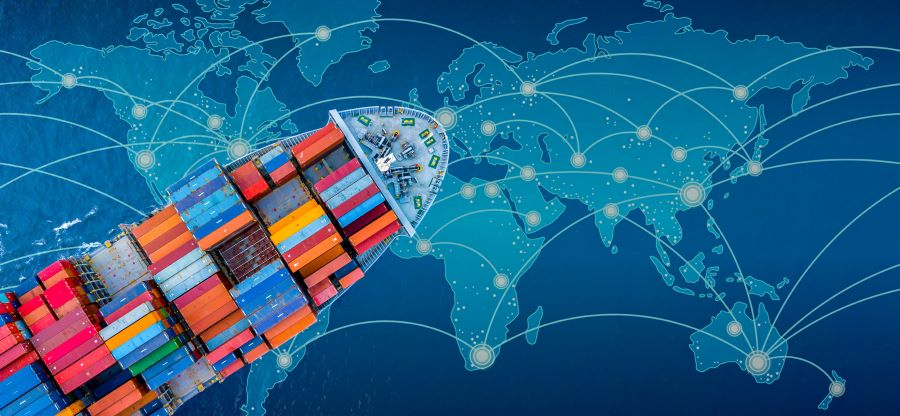
Overseas expansion accelerated as trade barriers rose. Over 564 billion yuan committed to foreign manufacturing. Europe takes 37%: CATL's German plant operates at 14GWh, Hungarian construction will reach 100GWh, a Stellantis joint venture plans 50GWh in Spain. Southeast Asia takes 19% across Thailand, Indonesia, Vietnam, Malaysia.
Global Trade
American tariffs reach 57.4% on consumer and storage cells, rising to 82.4% by 2026. Power batteries face 82.4% now. Gotion planned a 40GWh US facility. Hithium announced Texas. Both stalled amid political headwinds.
Overcapacity and Consolidation
Goldman Sachs projects 2025 Chinese capacity at 2,167GWh against demand around 700GWh. Utilization fell from 87% in 2022 to roughly 60%. Cells that sold for 1.0 yuan per watt-hour in early 2023 trade at 0.3 to 0.4 now. High-cost facilities face pressure: Inner Mongolia anode plants with carbon exposure, smaller operations lacking supply chain density, remote sites bearing transport costs.
Consolidation will concentrate production further. Ningde, Changzhou, Yibin, the Pearl River Delta will hold and expand share. Secondary locations face closures and distressed acquisitions.
Looking Forward
The 2035 map will differ. Solid-state commercialization may favor R&D centers over cost-optimized sites. Sodium-ion may shift importance away from lithium deposits. Carbon tariff proliferation would strengthen hydropower locations.
These five clusters hold trillions in capital, millions of workers, decades of process knowledge. Replicating comparable density elsewhere would take similar time and money.