

Walk into any scooter shop, scroll through any e-commerce listing, and "lithium-ion battery" appears on everything. A $300 Xiaomi and a $4,000 Dualtron Thunder both run on "lithium-ion batteries." So does the fire-prone junk flooding Amazon from factories with no quality control. The chemistry label obscures more than it reveals.
The specific lithium-ion variant inside, who manufactured the cells, how many cells got wired together, and whether anyone bothered to install decent protection circuitry. Get those details wrong, and the scooter becomes a 25-kilogram paperweight within eighteen months. Get them wrong in certain ways, and the thing ignites in a hallway at 3 AM.
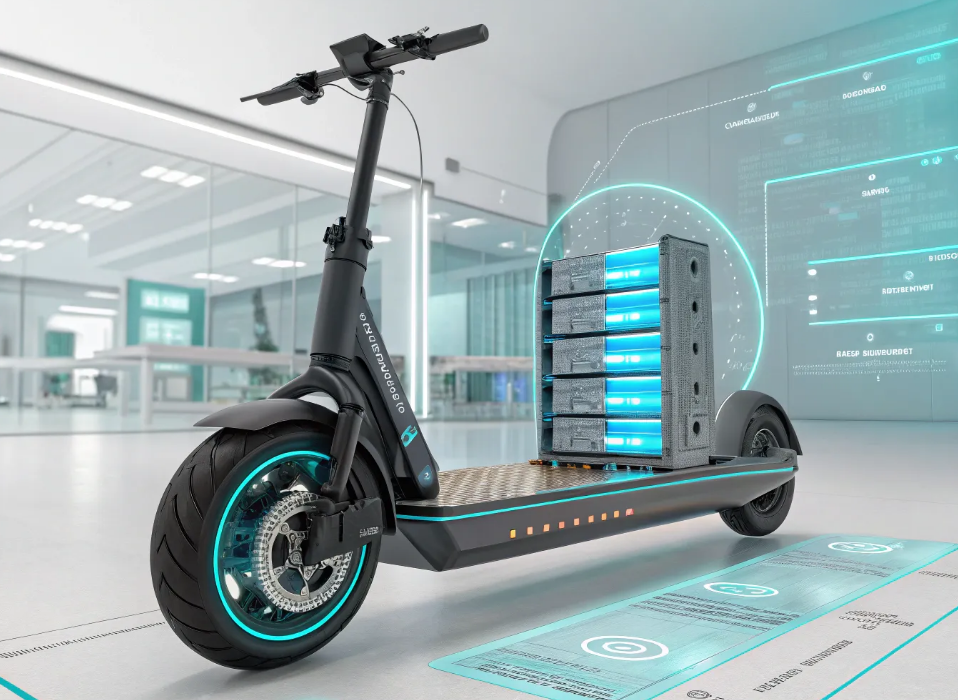
electric scooters rely on sophisticated battery technology
Two Chemistries Dominate, and They Serve Different Purposes
The scooter industry has settled on two lithium-ion variants: NMC and LFP. Manufacturers pick one or the other based on what they actually care about, which tells buyers more than any spec sheet.
NMC (Nickel Manganese Cobalt) packs more energy into less weight. The chemistry squeezes somewhere around 180 to 240 Wh/kg in real production cells, though marketing departments cite laboratory maximums that shipping products never reach. Samsung's 50E cells, the ones inside most premium kick scooters, deliver about 263 Wh/kg under ideal discharge conditions that real riding never provides.
The weight advantage explains why every serious kick scooter manufacturer defaults to NMC. Apollo, Dualtron, VSETT, Kaabo, Segway's premium line, all use NMC. A rider hauling a scooter up four flights of stairs cares about every gram. NMC delivers on that front.
NMC cells die faster, though. Expect 500 to 1,200 actual cycles before capacity drops enough to notice, depending on charging habits and temperature exposure. The 2,000-cycle figures floating around marketing materials assume laboratory conditions and gentle 0.5C discharge rates that hard acceleration destroys. Real scooters see aggressive current spikes hitting 2C or 3C every time someone guns the throttle from a stoplight. Cells age faster under that treatment.
NMC also burns more readily when things go wrong. Thermal runaway kicks in around 210°C, and once one cell in a pack loses control, neighbors follow within seconds. The 2023 Harlem fire that killed journalist Fazil Khan started with a cheap NMC pack from eBay. By the time residents smelled smoke, temperatures had already exceeded what any portable extinguisher could handle.
LFP (Lithium Iron Phosphate) trades energy density for nearly everything else. The cells weigh more, figure 120 to 145 Wh/kg in production reality, roughly 35% heavier than NMC for equivalent storage. LFP cells last a long time, though. CATL's current LFP formulation survives 4,000 cycles to 80% capacity in controlled testing, with some samples pushing past 6,000. Real-world scooter use with imperfect charging might see 2,500 to 3,500 cycles before noticeable degradation.
The safety margin runs wider too. Thermal runaway requires 270°C, and even then, LFP typically vents hot gas rather than erupting in flames the way NMC does. Chinese fleet operators running thousands of shared scooters have switched to LFP specifically to stop dealing with nighttime warehouse fires.
LFP costs less as well. Cell-level pricing dropped below $55/kWh in late 2024 for volume purchases, while comparable NMC cells still run $72 to $85/kWh. The gap has narrowed from what it was in 2020, and LFP maintains consistent cost advantage.
So why doesn't everyone use LFP? Weight. A 1,000 Wh pack in LFP weighs 8 or 9 kilograms. NMC hits the same capacity at 5 or 6. For a seated moped that stays on the ground, the difference barely matters. For a kick scooter someone needs to carry, fold, store in overhead bins, and wrestle through subway turnstiles, those extra kilograms add daily friction.
The correct choice depends on use case. Portable kick scooter ridden hard and replaced every three years? NMC makes sense. Seated commuter moped kept for a decade? LFP works better. Anyone telling you one chemistry suits all situations either doesn't understand batteries or has inventory to move.
Cell Quality Matters More Than Chemistry
Samsung, LG, Panasonic, and CATL manufacture cells with rejection rates around 2 to 4 percent. Every cell gets tested. Capacity gets measured. Internal resistance gets logged. Cells outside tolerance go to recycling, not production.
Anonymous factories in Shenzhen manufacturing cells for $8 apiece skip most of that. Visual inspection catches obvious defects. Electrical testing, if it happens at all, checks whether the cell holds voltage briefly. Nobody measures cycle degradation curves. Nobody verifies that cells from the same batch actually match.
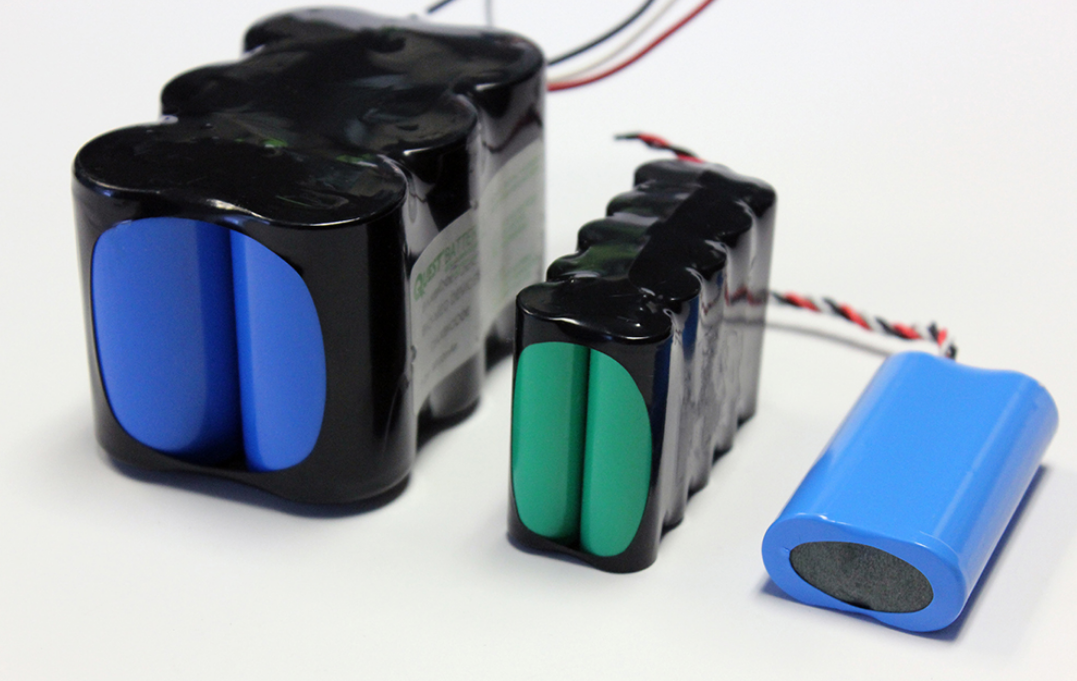
Quality battery cells from reputable manufacturers
Mismatched cells in a pack create compounding problems. Series-wired packs amplify the weakness of their worst cell. If one cell holds 2,850 mAh while its neighbors hold 3,100, the pack effectively becomes a 2,850 mAh pack with dead weight. Worse, the weak cell hits discharge cutoff first, triggering protection shutdown while energy remains stranded in other cells. Over time, the imbalance compounds. The weak cell ages faster from deeper cycling. Capacity divergence accelerates. Eventually the pack feels dead at 40% displayed charge.
Premium pack builders test every incoming cell, bin by measured capacity and internal resistance, and assemble packs only from cells matched within 2% tolerance. This takes labor, rejects inventory, and raises costs. Budget builders grab cells from bins, wire them in order received, and ship. The price difference reflects actual quality difference, not brand premium extraction.
Anyone shopping for scooter batteries should demand cell manufacturer names. "High-quality lithium cells" means nothing. "Samsung 50E 21700 cells" means something verifiable. No name given? No purchase made. The $200 saved on a mystery-cell pack gets burned through faster replacement cycles, reduced range, or in certain cases, actual burning.
The Pack Architecture
Cell format determines more than most buyers realize. The scooter industry has moved from 18650 cells (18mm diameter, 65mm length) to 21700 cells (21mm by 70mm). The naming convention encodes dimensions.
21700 cells carry about 35 to 45% more capacity per cell than 18650s. A 1,000 Wh pack needs roughly 90 18650 cells or 60 21700 cells. Fewer cells means fewer spot welds, fewer potential failure points, fewer thermal interfaces to manage. Premium scooter manufacturers finished transitioning to 21700 around 2022. Budget manufacturers still ship 18650 packs because they have old assembly tooling and cheaper cell inventory to work through.
The wiring topology matters too. A "13S4P" configuration uses 13 series groups of 4 parallel cells each. This produces nominal 48V (13 × 3.7V) from 52 total cells. Voltage comes from series count; capacity comes from parallel count and cell capacity. Higher voltage enables higher power at lower current, reducing resistive losses and heat generation. Most mid-range scooters run 48V. Performance models push 52V, 60V, or 72V.
The Battery Management System (BMS) governs everything. Good BMS tracks individual cell voltages, pack current, temperatures at multiple locations. It enforces charge cutoffs at 4.20V per cell with millivolt precision, preventing the overcharge that accelerates aging and risks thermal events. It limits discharge to protect against over-depletion that damages cell chemistry. It balances cells during charging, bleeding energy from high cells to lift low ones.
Cheap BMS, common in budget scooters, monitors pack voltage only, not individual cells. Balancing happens passively if at all. Temperature protection uses a single thermistor that might not sit near the hottest cells. Overcurrent limits get set permissively to avoid nuisance shutdowns that would generate customer complaints.
The BMS represents where budget manufacturers cut hardest because customers never see it. A $4 BMS and a $40 BMS look identical from outside the pack. The difference shows up two years later when cells have drifted far enough out of balance that the pack no longer holds meaningful charge.
How Pack Construction Affects Daily Use
The physical arrangement of cells inside a scooter affects ride quality in ways spec sheets never mention. Deck-mounted packs lower center of gravity and improve handling stability. Stem-mounted packs on cheaper scooters raise the center of gravity and make the front end feel twitchy at speed. Segway's Ninebot Max G30 established deck integration as the standard for serious commuter scooters around 2019, and most competitors followed within two years.
Heat dissipation depends on pack enclosure design. Aluminum cases conduct heat away from cells. Plastic cases trap heat inside. Some premium packs include thermal pads between cells and case walls; budget packs leave air gaps that insulate rather than conduct. Summer charging in a hot garage pushes cell temperatures into ranges that accelerate degradation when heat has nowhere to go.
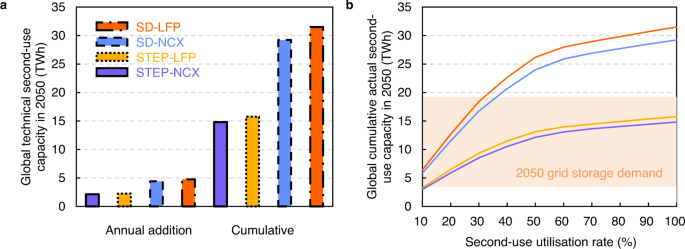
Daily commuting puts significant demands on battery performance
Pack shape affects water resistance too. Scooters with IP ratings (IP54, IP65, IP67) have sealed pack enclosures with gaskets and potted connections. Scooters without ratings often have packs that water can reach through deck seams or cable entry points. A single rainy commute can introduce moisture that corrodes connections over months.
Vibration resistance varies with mounting design. Road impacts transfer through the deck into the pack. Cheap mounting allows cells to shift; premium mounting secures cells in foam cradles that absorb shock. After a few thousand miles on rough pavement, poorly mounted cells develop intermittent connections at weld points. The scooter starts cutting out randomly, and diagnosing the fault requires disassembly most owners can't perform.
Capacity by Scooter Category
Entry-level kick scooters like Xiaomi's various models run 36V with 275 to 480 Wh. Expect 15 to 25 real-world kilometers, not the 40+ manufacturers claim. The claimed figures assume 70kg rider weight, flat ground, 15 km/h constant speed, and 20°C temperature. Nobody rides like that.
Mid-tier commuters like the Ninebot Max G30 use 48V and 550 Wh or so. Real range lands around 30 to 45 kilometers depending on rider weight and terrain. An 85kg rider attacking San Francisco hills will see half the range a 65kg rider gets on Amsterdam flats. The difference between claimed and actual range narrows in this tier because manufacturers face more scrutiny from reviewers who actually test products.
Performance scooters from Dualtron, VSETT, and Kaabo run 60V to 72V with 1,400 to 2,800 Wh. Range extends past 80 kilometers for riders with restraint. The big batteries exist primarily for power delivery rather than range. Dual motors pulling 5,000+ combined watts drain capacity fast when ridden aggressively. A Dualtron Thunder 2 ridden at full throttle continuously empties its 2,880 Wh pack in under 40 minutes. The same pack delivers 120+ kilometers at modest cruising speeds.
Seated mopeds from NIU, Yadea, and Gogoro carry 1,200 to 2,500 Wh in removable packs designed for apartment charging. NIU's standard battery weighs about 10 kilograms, sized for elevator portability. The carrying handle and case dimensions specifically accommodate typical Chinese apartment building elevators. Gogoro takes a different approach: standardized swappable batteries from 12,500 stations across Taiwan, eliminating home charging entirely. Each swap takes six seconds. Battery ownership separates from scooter ownership.
European brands like Vespa Elettrica use fixed packs. The 4.2 kWh battery sits sealed into the chassis, not removable for apartment charging. The design assumes European housing patterns with more garage access than Asian urban apartments. European regulatory requirements (EN 50604-1) also push toward fixed installations with tamper-proof enclosures.
Temperature Effects on Real-World Performance
Cold weather reduces available capacity. Lithium-ion internal resistance rises as temperature drops. At 0°C, a pack might deliver only 70% of its rated capacity. At -10°C, 50-60%. At -20°C, the pack may refuse to discharge at all as the BMS protects cells from damage. Winter commuters in cold climates need to plan routes assuming 30-50% range reduction.
Cold charging causes permanent damage. Lithium ions plating onto the anode during sub-freezing charging don't reintegrate into the electrode structure. Capacity loss from cold charging is irreversible. The pack never recovers. Scooters left outside overnight in winter should warm up indoors before charging.
Heat accelerates calendar aging. A pack stored at 40°C loses capacity roughly twice as fast as one stored at 25°C, even without cycling. Summer storage in hot garages or car trunks shortens lifespan. The chemistry degrades whether the pack gets used or not.
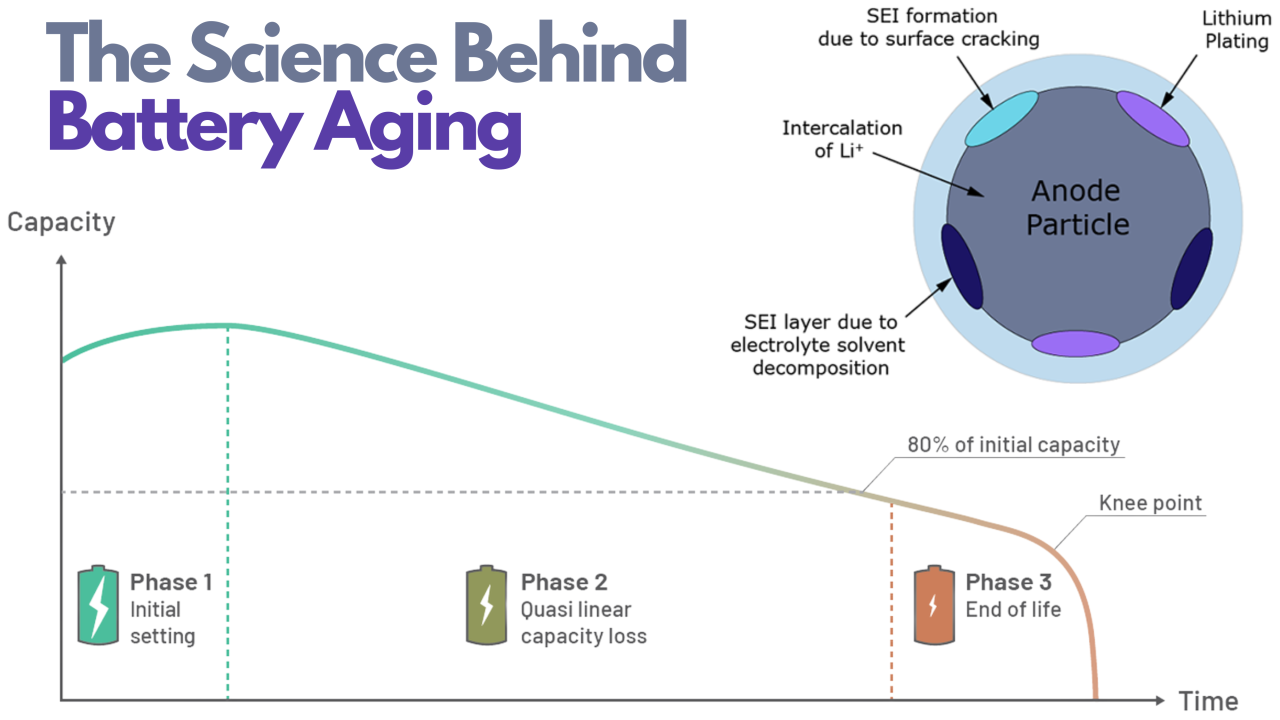
Proper charging practices extend battery lifespan significantly
Charging generates heat internally. Fast chargers (5A+) generate more heat than standard chargers (2A). Charging immediately after riding, when cells already carry residual heat from discharge, pushes temperatures higher. Waiting 20-30 minutes after riding before plugging in lets cells cool and extends their service life.
The relationship between temperature and degradation isn't linear. A few hot charges won't destroy a pack. Consistent high-temperature operation over months and years accumulates damage. Fleet operators in hot climates (Arizona, Dubai, Singapore) replace batteries more frequently than operators in temperate regions, even with identical usage patterns.
Charging Habits Determine Actual Lifespan
The single highest-impact behavior: avoid charging to 100% regularly. Lithium-ion cell degradation accelerates above 4.10V per cell. Charging to 80% (roughly 4.05V per cell) extends cycle life by 2 to 3 times versus consistent full charges. Most riders don't need full range daily. Partial charging costs nothing and pays back in years of additional service.
The chemistry behind this matters for understanding why the rule exists. Above 4.10V, the cathode structure experiences stress that breaks down crystal lattice over time. Oxygen atoms start releasing from the cathode material. The electrolyte oxidizes faster. These degradation mechanisms slow down at lower voltage states. Charging to 80% does more than delay degradation. It changes which degradation mechanisms dominate.
Depth of discharge matters too. Repeatedly draining to 10% or 5% before charging stresses the anode. Lithium concentration gradients form that don't fully equalize during resting. The sweet spot for cycle longevity: charge to 80%, discharge to 20%, charge again. Riders who follow this pattern see 2-3x the cycle count of riders who charge to 100% and drain to 5%.
Fast charging generates heat. Standard 2A chargers taking 6 to 8 hours stress cells less than 5A chargers finishing in 2 hours. Reserve fast charging for when it's actually needed. Daily commuting rarely requires it.
Long-term storage should happen at 50% charge in a cool location. Batteries stored at 100% degrade faster than batteries stored at 50%. Batteries stored at 0% can drop below safe voltage minimums and refuse to charge at all. Top up every month or two during off-season storage.
Safety Certification Actually Means Something
UL 2272 certification, required for sale in New York City since September 2023, tests overcharge protection, short circuit response, thermal cycling, impact resistance, and water exposure. The testing costs $15,000 to $25,000 and requires shipping samples to certified laboratories. Budget manufacturers skip it entirely. Products without UL 2272 certification should be assumed uncertified regardless of how professional the listing looks.
UN 38.3 governs lithium battery transport. Without it, shipping batteries legally becomes impossible. The certification tests altitude, thermal extremes, vibration, shock, short circuit, crush, and overcharge. Any product that actually ships through legitimate logistics channels has UN 38.3 certification somewhere in its documentation. Missing UN 38.3 paperwork indicates either counterfeit products or illegal shipping.
EU markets increasingly require EN 50604-1 compliance for light electric vehicle batteries. Full enforcement begins August 2025. Products designed for European sale will have documentation. Products intended for grey-market import often lack it.
IEC 62133-2 applies internationally to portable batteries and became mandatory in the European Union in 2021. Coverage includes overcharge and overdischarge protection, thermal abuse resistance, mechanical shock tolerance, and low-pressure simulation for air transport.
The presence of certifications doesn't guarantee quality. The absence of certifications does indicate corners were cut. Legitimate manufacturers spend the money on testing because they intend to sell in regulated markets. Manufacturers avoiding certification costs intend to sell in unregulated channels where accountability doesn't exist.
How to Verify Battery Claims
Cell manufacturer names should be specific and verifiable. "Samsung INR21700-50E" is specific. "High-density lithium cells" is not. Ask sellers for cell specifications. Legitimate sellers provide them. Sellers who deflect or provide vague answers have something to hide.
Certification documents should be available on request. UL maintains a public database where certification numbers can be verified. UN 38.3 test reports follow standardized formats. Sellers of certified products can provide documentation. Sellers who can't are selling uncertified products.
Pack specifications should match scooter power requirements. A scooter advertised with 1,000W motor and 500Wh battery will provide roughly 30 minutes of full-power operation. Marketing that claims 60km range from such a combination is lying about range, motor power, or both. The math constrains what's possible.
Weight provides a crude quality check. A 48V/15Ah pack (720Wh) using quality NMC cells weighs around 4.5-5.5 kg depending on case material. The same capacity in LFP weighs 6-7 kg. Significantly lighter packs either use lower-capacity cells than claimed or have substandard casing. Significantly heavier packs might be fine (thicker casing, more robust BMS) or might be LFP marketed as NMC.
Replacement Economics Shape Total Cost
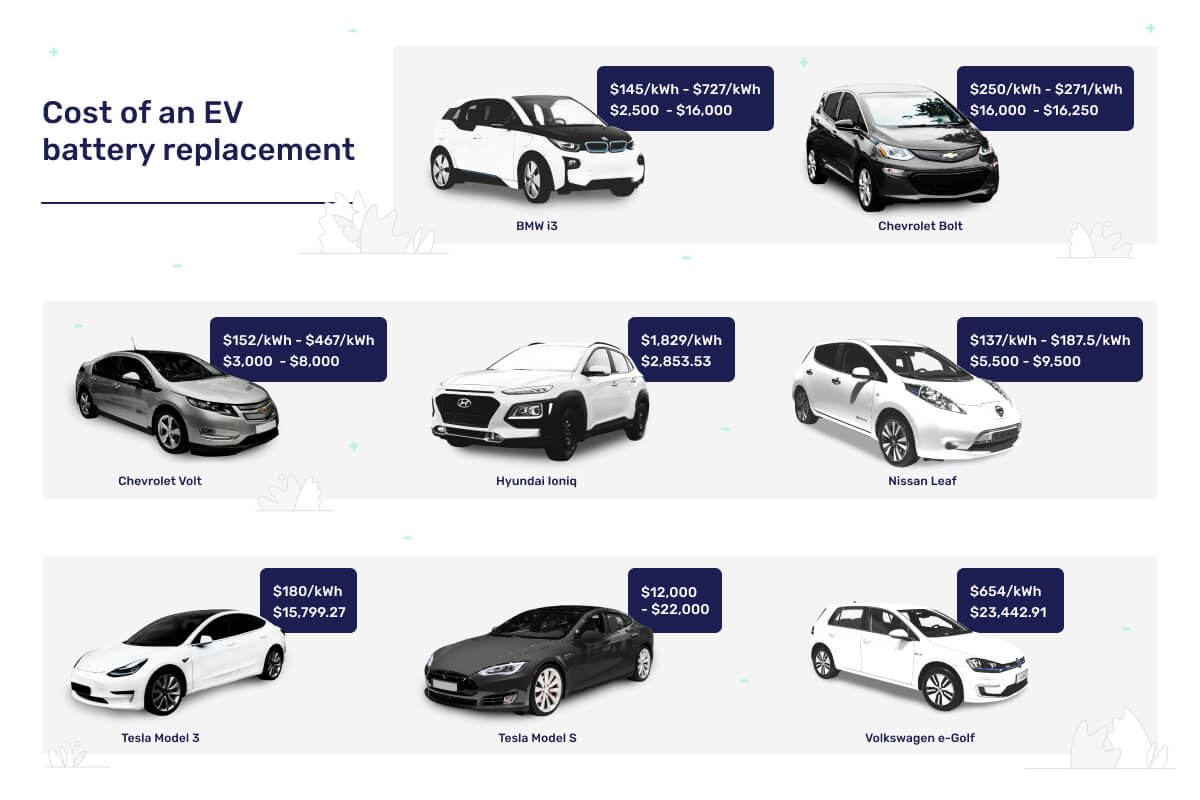
Expect battery replacement every 3 to 5 years under regular use, depending on chemistry, charging habits, and riding intensity. Replacement costs run 25 to 40 percent of original scooter price: $150 to $250 for budget scooters, $300 to $600 for mid-tier, $500 to $1,200 for performance models.
Aftermarket batteries cost 30 to 50 percent less than OEM replacements. Quality aftermarket suppliers specify cell manufacturers, provide relevant certifications, and warranty against defects. Sketchy suppliers use vague language about "premium cells," lack paperwork, and disappear after sale. The savings evaporate when the replacement pack dies in eighteen months.
Battery replacement cost
Total ownership math should include expected battery replacement. A $900 scooter needing $300 batteries every three years costs $400/year over nine years. A $1,500 scooter with $450 batteries lasting five years costs $360/year. The premium hardware often proves cheaper over time, particularly with LFP chemistry that outlasts NMC by wide margins.
Repair economics matter too. Some packs use spot-welded cells that require specialized equipment to service. Others use bolted connections that allow individual cell replacement. Packs designed for serviceability cost more upfront and less over time. Packs designed for disposability cost less upfront and get thrown away when any component fails.
What the Industry Doesn't Advertise
Range claims assume conditions that don't exist in real riding. The testing protocols specify flat terrain, constant moderate speed, lightweight rider, and new batteries. Real range runs 40-60% of claimed figures for most riders most of the time. A scooter rated for 50km range delivers 20-30km for a typical rider on typical terrain.
Cycle life claims assume charge/discharge patterns that damage batteries. Manufacturers cite cycle counts at 100% depth of discharge. This testing pattern maximizes measurable cycles while minimizing actual lifespan. Riders who follow the 20-80% discipline see more years of use from fewer cycles.
Warranty terms exclude the most common failure modes. Water damage voids most warranties, even on scooters marketed with IP ratings. Battery degradation below warranty-specified minimums (usually 60-70% capacity) takes years to reach, and proving degradation requires testing equipment most riders don't have.
Cell sourcing changes without notification. A scooter model might ship with Samsung cells in initial production and switch to cheaper alternatives once reviews establish reputation. The spec sheet doesn't change; the actual product does. Buying from current production offers no guarantee of matching reviewer experiences.
Summary of What to Look For
Electric scooters run on lithium-ion batteries. Two chemistries matter: NMC for lightweight portability, LFP for durability and safety. Cell quality from known manufacturers beats anonymous alternatives. Pack architecture and BMS sophistication determine whether quality cells achieve their potential lifespan.
Specific cell manufacturer names should be demanded. Safety certifications should be verified. Charging discipline that maximizes longevity should be followed. Total ownership cost including expected replacement cycles should be calculated.
The battery represents the most expensive, most failure-prone, and most important component in any electric scooter. Treating it as an afterthought leads to problems. Treating it as the central specification it is enables transportation that lasts.