

Let me give you the most direct numbers for a 48V home battery system: a decent 10kWh system, if you install it yourself, can land at $5,500 to $7,000. If you hire someone to install it, $9,000 to $13,000. Tesla and similar, $16,000 and up, and you might not even get a spot in the queue.
This price has dropped roughly 40% over the past three years. Back in late 2021 and early 2022 when lithium carbonate prices went crazy, the same thing cost double. Now lithium carbonate has fallen nearly 80% from its peak, cell prices collapsed along with it, but end-product prices haven't dropped as much. The margin in between has been absorbed by channels and brands.
With batteries, the gap between material cost and retail price is absurdly large.
Let's start with the cells. Lithium iron phosphate, called LFP in the industry, is now basically universal for residential storage. Ternary lithium has higher energy density but can catch fire. Nobody feels comfortable with that sitting at home, so it's already phased out.
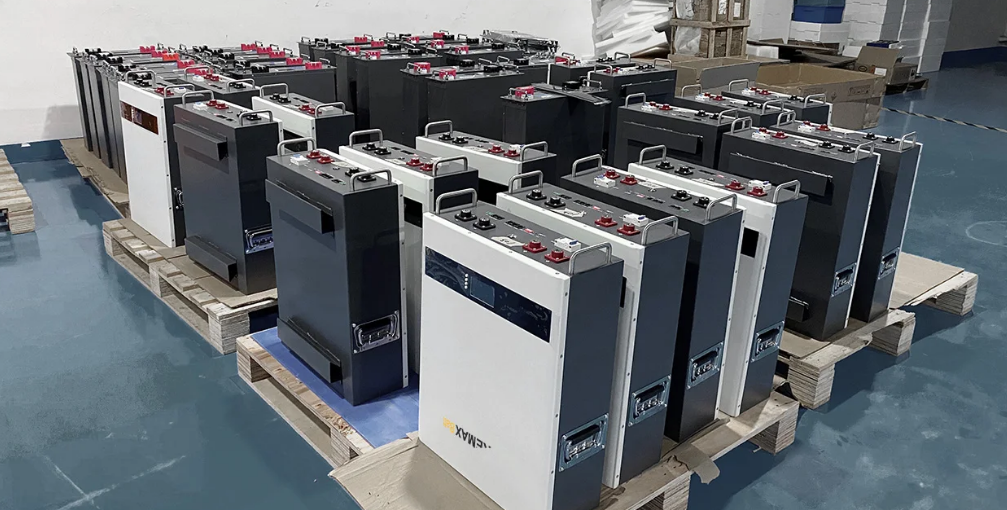
The 280Ah prismatic cell is the current mainstream spec. CATL's factory price is roughly $22 to $28 per cell, depending on batch and payment terms. Second-tier manufacturers like EVE, Rept, and Gotion run $18 to $24. Go further down to third-tier factories and you can get them for $15, but quality control becomes a gamble.
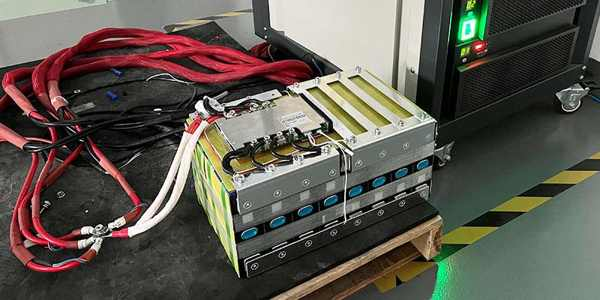
String 16 cells in series and you get 48V nominal (actually 51.2V), with 280Ah capacity. That works out to 14.3kWh. Cell cost: $240 to $450. That's it.
Now look at what 48V 280Ah battery packs sell for on the market. Cheap ones at $1,200, expensive ones at $3,500, with most falling in the $1,800 to $2,200 range. Cell cost as a percentage of retail price runs from under 15% on the low end to about 25% on the high end.
What's that remaining 75% to 85%?
BMS boards, assembly, and processing: $60 to $150. Enclosure and structural components: $40 to $80. Shipping and logistics to the US West Coast runs over $2,000 per container, which allocates to $30 to $50 per battery. Tariffs used to be 7.5%, now in the Trump era it's up to 25% and could rise further, that's $100 to $300 per unit. Distributor margin: 30% to 50%. Brand margin: another 20% to 40%.
You buy a $2,000 battery, and roughly $300 is hardware, $500 is logistics and tariffs, and $1,200 is profit across various channel levels.
This isn't some dark secret. It's just how business works. Most consumers simply don't understand this structure and assume expensive batteries must have much better components than cheap ones. They don't. An expensive battery might just have a more recognizable brand name, or more distribution layers, or higher target margins.
The genuine differentiation at the cell level comes down to consistency.
Within the same batch of cells, capacities won't be identical, and neither will internal resistances. Factories do sorting: cells with small variations are graded A, larger variations B, and worse ones C or recycled. A-grade cells have capacity deviation controlled within 2% and internal resistance deviation within 5%. B-grade might show 5% to 8% deviation, and C-grade is anyone's guess.
Why does consistency matter? Because battery packs use series connections. In series, the weakest cell determines the entire pack's performance. If 15 cells are just over 100Ah but one is 92Ah, the whole pack's usable capacity gets dragged down to 92Ah. Moreover, that weak cell experiences greater stress, ages faster, and further degrades pack performance. A vicious cycle.
CATL cells cost more mainly because of strict sorting and good consistency. Third-tier factories are cheaper because sorting standards are loose. A and B grades might be mixed together, or sorting might barely happen at all.
However, the price difference between CATL A-grade and third-tier A-grade at the factory level is only $5 to $8 per cell. That's $80 to $130 for 16 cells. When that difference balloons to $500 or even $1,000 at retail, that's brands and channels collecting their tax.
Some manufacturers advertise using "CATL cells" or "EVE cells." This claim has low credibility. Cell logos are easily printed, and CATL also has B-grade cells that leak into the market. Having the logo doesn't mean they're A-grade. True verification requires opening the pack, checking cell serial numbers, and cross-referencing batch information through channels. Regular consumers can't do this.
When buying batteries, instead of obsessing over cell brands, look at the overall pack's warranty and after-sales service. A legitimate manufacturer willing to offer 10-year warranties and 6,000-cycle commitments probably isn't using garbage components. Otherwise they'd go bankrupt on warranty claims. Warranties of only two to three years, or terms full of exceptions, should raise red flags.
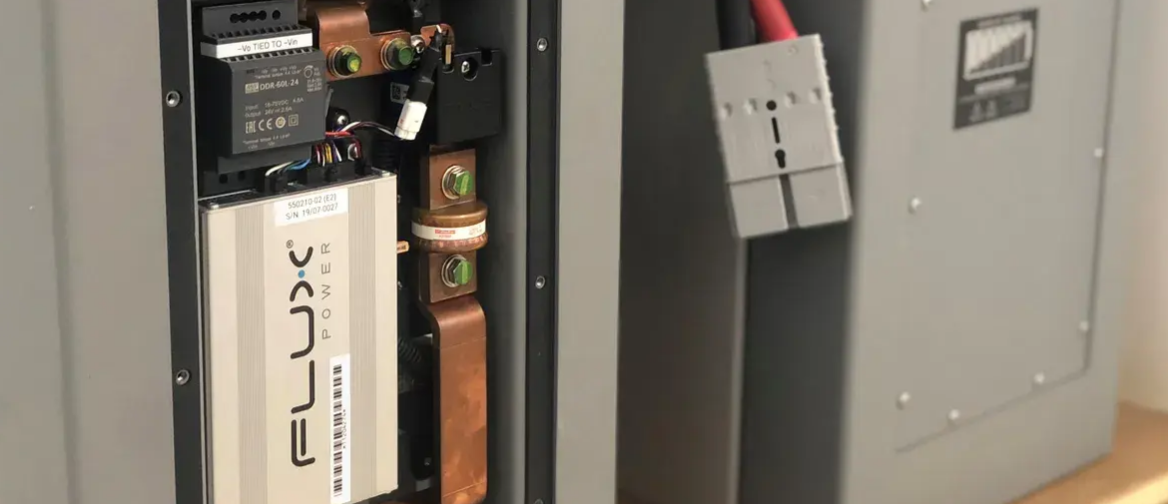
The BMS is something manufacturers gloss over in their marketing materials with phrases like "intelligent battery management system" and "multiple safety protections." All meaningless fluff. Consumers don't pay attention either, figuring as long as the battery works, it's fine.
But the BMS is what actually determines how many years a battery lasts and whether it'll cause problems.
What the BMS needs to do: monitor voltage and temperature of every cell; prevent overcharging and over-discharging; perform cell balancing; communicate with the inverter; cut the circuit when faults occur.
Two things here are particularly critical.
First is balancing. As cells age, their capacities become uneven. Some degrade faster than others. Without balancing, the fastest-degrading cell hits discharge cutoff first, forcing the whole pack to stop discharging even though other cells still have charge. Balancing transfers charge from high cells to low cells to maintain uniformity.
Balancing comes in passive and active types. Passive balancing uses resistors to burn off excess charge. Simple and cheap, but wastes energy and generates heat. Active balancing uses DC-DC circuits to transfer charge. More efficient but more expensive. Cheap batteries basically all use passive balancing; better ones use active balancing.
How to tell the difference? Look at "balancing current" in the specs. Passive balancing current is typically very small, 30mA, 50mA, because higher current means too much resistor heat. Active balancing can reach 100mA, 200mA, or even higher. If the spec sheet doesn't mention balancing current at all, or just says "has balancing function," it's almost certainly passive.
The significance of balancing current: whatever capacity difference exists between cells, you need that much balancing current to level the gap in reasonable time. 100mA balancing current needs 10 hours to level a 1Ah difference. If cells differ by 5Ah, 50mA passive balancing needs 100 hours to balance out. Nowhere near fast enough. Active balancing at 200mA can handle it in 25 hours, without the heat.
Second is communication protocols. Batteries need to coordinate with inverters to function. The two sides need to talk. Current mainstream protocols are CAN and RS485, with higher-end systems using Modbus TCP. The battery uses these protocols to tell the inverter its SOC (state of charge), temperature, voltage, and any faults, and the inverter decides how to charge and discharge based on this information.
Here's the problem: standards are standards, but implementation varies. Every manufacturer has their own "dialect." Pylontech's CAN protocol and EG4's CAN protocol aren't formatted identically. Inverter side is the same. Victron's supported battery list, SMA's supported battery list, Sol-Ark's supported battery list, all different.
Before buying batteries, you must confirm compatibility with your inverter. Being on the official list is safest; not on the official list but with online reports of people successfully using the combination is second-best; no information at all means you're gambling. Consequences of communication incompatibility range from the inverter getting inaccurate SOC data causing erratic charge/discharge behavior, to the inverter not recognizing the battery at all and refusing to start.
This is why "brand ecosystems" exist. EG4 batteries with EG4 inverters, Pylontech with Victron. These are combinations verified for compatibility, giving you peace of mind. Mixing isn't impossible, but you need to do your homework confirming compatibility, and if problems arise, manufacturers might point fingers at each other.
Inverters are even deeper waters.
Inverters are different from batteries. The multiplier between material cost and retail price isn't as extreme because inverter hardware is genuinely more expensive and complex. Power electronics, transformers, DSP control boards, thermal management structures. These all cost money. A 5kW inverter has material costs of $400 to $600, with retail prices of $1,000 to $3,000. Margins are somewhat lower than batteries.
But within inverter price differences, there's definitely a portion worth paying for.
Efficiency differences. Cheap inverters have 92% peak efficiency and 89% average efficiency; good inverters have 97% peak efficiency and 94% average efficiency. That 5-point gap, cycling 10kWh daily, means 180kWh difference per year. At $0.15 per kWh, that's $27 per year. Doesn't sound like much, right? But inverters last 15 to 20 years. Cumulative difference is $400 to $500 in electricity costs. Add in the extra heat from low efficiency accelerating component aging, and cheap inverters' actual lifespan might be three to five years shorter than high-efficiency ones. Total accounting shows buying a good inverter is worthwhile.
Waveform quality. Inverters convert DC to AC, and output waveform should be a clean sine wave. Cheap units cut costs by outputting modified sine waves or even square waves, or sine waves with high harmonic content. Running household appliances on this power, some don't care, some will have problems: motors might buzz, variable-frequency air conditioners might throw errors, sensitive electronics might experience interference.
Then there's overload capacity, short-circuit protection, anti-islanding protection. Cheap inverters either have poor specs or lack them entirely. Anti-islanding protection means when the grid goes down, the inverter must stop feeding power to the grid, otherwise line workers doing repairs could be electrocuted. Legitimate inverters all have this function; knockoffs are anyone's guess.
Specific recommendations?
Victron MultiPlus II
Dutch brand, very popular in Europe, gaining traction in North America in recent years. The 3kVA version runs around $1,800, 5kVA around $2,600. High efficiency, good waveform, compatibility with Pylontech batteries verified countless times. Rock-solid stable. Downside is the software interface isn't idiot-proof. Adjusting parameters requires learning, which can be frustrating for complete beginners. But once you're familiar with it, there's a lot you can adjust, offering great flexibility.
Sol-Ark
American brand, very popular in Texas. Probably because Texas has frequent outages. Sol-Ark 12K or 15K runs $3,500 to $4,500, includes two MPPT inputs for direct solar panel connection, and grid/off-grid switching is reportedly very smooth. The supported battery brand list is fairly long, so compatibility is decent. Downsides are it's expensive, and there have been some quality issue reports online. Not sure if it's batch-specific problems.
Chinese Brands (Growatt, SRNE, MPP Solar)
$800 to $1,500 gets you a 5kW unit. The price is genuinely attractive. But quality is inconsistent. Some people use them for years without issues, some break within a year. After-sales service is hit-or-miss too. Some distributors are very responsive, some sell and disappear. Suitable for tight budgets, people with hands-on skills, and those who can swap things out themselves when they break. Not suitable for people who just want peace of mind without hassle.
One thing to mention separately: inverter standby power consumption. These run 24/7, and even without charging or discharging, they're drawing power. Cheap inverters have standby consumption of 50W or even higher. That's 438kWh per year, or $66 at $0.15/kWh. Good inverters have standby consumption under 20W. Under $30 per year. The difference isn't huge, but it's still money.
Installation is where cost flexibility is greatest.
In places with expensive labor like California and New York, getting a legitimate company to install a 10kWh system with quotes of $4,000 to $6,000 is normal. In Houston or Phoenix, $2,000 to $3,000. A 100% difference.
The bulk of quotes is labor; materials are the smaller part. Materials mainly include cables, breakers, distribution panels, grounding rods. Totaling $300 to $600. Labor depends on local market. An electrician runs $300 to $800 per day. A system takes one to two days to install, so $600 to $1,600 in labor. Then the company adds management fees, design fees, permit running fees, profit. Doubling to tripling the total.
How much can DIY save? Theoretically $2,000 to $4,000. You only pay for materials and permit fees. But there are several thresholds:
First, you need basic electrical knowledge. Ability to read wiring diagrams, knowing what cable gauge matches what amp breaker, knowing how to do grounding. Not particularly difficult; YouTube has many tutorials, and watching a few times you can learn. But starting from complete zero carries risk.
Second, you need to be willing to spend time pulling permits and scheduling inspections. US regulations vary by location. Some places have loose permits, online application for $50 and done. Others have strict requirements. Drawings needed, calculations required, multiple rounds of on-site inspection. Running this process yourself might take weeks to months.
Third, you need to accept a degree of risk. DIY means no one compensates you if something goes wrong. Battery warranties generally don't cover installation issues, neither do inverter warranties. If improper installation causes fire or electrocution, insurance companies might also deny claims.
My recommendation: if you're an electrician or have relevant background, DIY is completely fine. The savings are substantial. If you're an ordinary person willing to learn and not afraid to tinker, you can also try it. Get a knowledgeable friend to supervise. If you just want to pay for peace of mind, hiring a legitimate company is the right call. The extra money buys security and liability transfer.
What I don't recommend: hiring unlicensed "handyman electricians" for cheap installation, or doing DIY without inspection. The money saved isn't worth the risks taken.
There are several traps you don't know about beforehand. You only learn after falling in.
Grid interconnection queue times. If your system will be grid-tied to sell power, you need to apply for an interconnection agreement with the utility. This application is fast in some places. Approved in two weeks. Slow in others. Six months or longer. And it's not like you can install once you've submitted. You have to wait for approval before starting work, otherwise you finish installation and interconnection gets rejected, leaving your system as a decoration. Best to submit this application before buying equipment. Get in the queue, and by the time equipment arrives, approval should be coming through.
Insurance issues. Some homeowner's insurance has additional requirements for battery storage. Either requiring declaration with premium increases, requiring UL-certified equipment, or simply not covering battery-related losses. Best to confirm with your insurance company before installation. Don't find out they won't pay only after something happens.
Capacity word games. Manufacturer-listed "10kWh" might be total capacity, with usable capacity only 8kWh or even less, because the BMS reserves margin to prevent overcharging and over-discharging. Some also mix "Wh" and "kWh" in labeling. Easy to confuse if you're not careful. When comparing different products, look at "usable capacity." Don't just look at the big headline number.
Winter problems. LFP batteries suffer permanent cell damage when charged at low temperatures, so the BMS locks out charging below 0°C. But discharging isn't affected. You can keep using it. This means in cold areas, if the battery drains overnight, and morning solar wants to charge but battery temperature hasn't risen above 0°C, it can't charge. Either buy batteries with self-heating function, or keep the battery in a space that won't freeze. Self-heating batteries cost $300 to $500 more, but in northern regions they're essential.
Expansion traps. Many people think they'll start small and add more later if needed. Makes sense in theory, but there are practical pitfalls. After a battery has been used for a year or two, capacity will have degraded, even if only by 5%. Adding a new battery at that point. New battery at full capacity, old battery at 95%. Connecting them in parallel or series, the BMS will try to balance them. The result is overall usable capacity gets dragged down, and the old battery gets overused, accelerating degradation. So if you're definitely going to expand, best to do it within the first year. The longer you wait, the less worthwhile it becomes. Better strategy is to buy enough from the start, or buy modular systems (like Pylontech's stackable design) where expansion is relatively easier.
About so-called "server rack batteries." Server rack form factor is very trendy now. Looks professional, 19-inch width fits perfectly in standard racks. EG4, SOK, Epoch all have products like this, and prices are competitive. No problem with that. But note: some models achieve 48V by stringing together several 12V or 24V modules, rather than native 48V design. The problem with series configuration is if one module's BMS fails or disconnects, the entire battery pack fails. Native 48V designs have internal parallel structure. One cell having issues doesn't affect the others, making them more reliable. How to tell? Look at internal structure descriptions in the spec sheet, or ask the seller directly.
Let's talk brands.
Tesla Powerwall
It's less an energy storage device and more a consumer electronics product. The latest Powerwall 3, 13.5kWh capacity with built-in 5kW inverter, official price $12,500 to $14,000, add installation at $2,000 to $4,000, landing at $15,000 to $18,000. What you're buying at this price: stability validation from massive install base, smooth software ecosystem experience, integration with Tesla solar roof and EVs, and brand cachet that might add value when selling your house. The trade-offs are also clear: can't connect a generator, so during extended outages you can only watch the battery drain; must go through Tesla-certified installers; parts aren't universal so problems mean calling Tesla only; three to five months minimum from order to installation. Buyers who aren't price-sensitive and just want plug-and-play, Powerwall genuinely delivers peace of mind. Value-oriented buyers need to look elsewhere.
Pylontech
Has established its reputation in DIY circles. Shenzhen company, reportedly millions of installations in Europe, the US3000C model has been validated countless times. 3.5kWh per module, stack three to five together, cells are self-manufactured with stable quality control, BMS is passive balancing but the 6,000-cycle lifespan rating is conservative. The perfect pairing with Victron inverters. Just browse forum posts to see how many people run this combination. The math: US3000C single module $850 to $1,000, three modules for 10.5kWh system $2,550 to $3,000, add Victron MultiPlus II 3kVA at $1,800, materials at $400, labor at $2,000, total $6,750 to $7,200. More than half cheaper than Powerwall. Industrial appearance doesn't look like home appliance, no official app so you need third-party solutions, US channels not as mature as European so harder to buy in some places, mixing new and old modules for expansion has the matching issues mentioned earlier. But for value and maturity, nothing else currently competes at this level.
EG4
Has captured significant market share in recent years with low-price strategy. LifePower4 is a server rack battery with native 48V design (not series-connected), BMS supports active balancing and CAN communication, spec sheet parameters rival Pylontech, prices are 20% to 30% cheaper. LifePower4 15.4kWh version runs $1,700 to $2,000, pair with EG4 18kPV inverter at $2,500, total is about $1,000 less than Pylontech. The issues: company history is short. Earliest products only launched in 2021. So long-term reliability lacks time-based validation; online reports of BMS instability; after-sales process reportedly frustrating; inverters are OEM'd with opaque sourcing. Those willing to trade risks of "company might go under, products might have design flaws, after-sales might involve finger-pointing" for savings, EG4 is worth considering. Those prioritizing stability should stick with Pylontech.
SOK, Ampere Time, LiTime, Redodo
These brands follow similar models: Chinese OEM white-label products sold on Amazon, fierce price competition. The products themselves aren't bad. Many cells and BMS share origins with major manufacturers, and they work. But quality control is inconsistent. Same model, different batches might differ; after-sales is basically hopeless, problems at best get you a refund; long-term reliability is pure gambling with no supporting data. Buyers with very tight budgets, who can accept breaking-means-replacing, don't care about after-sales, and treat batteries as consumables can consider these. Not suitable as long-term investments.
BYD
Battery industry giant, possibly the largest global installation base. Battery-Box series modular design scales from 5kWh to tens of kWh, cells are self-manufactured with solid quality control. But US market distribution isn't as aggressive as Europe or Australia, channels are somewhat messy, prices aren't competitive. Worth considering if you happen to get channel pricing; not worth specifically hunting for.
LG and Panasonic used to do residential storage but have been scaling back in recent years, shifting focus to EV batteries. If you can still find their products, quality is fine, but product updates are slow and prices aren't competitive. Not a first choice.
Back to the Original Question
What does a 48V home battery system cost?
A decent 10kWh system: DIY installation $5,500 to $7,000, professional installation $9,000 to $13,000, Tesla-type $16,000 and up.
Decision framework: money no object and want peace of mind, choose Tesla; pursuing value, choose Pylontech with Victron; willing to take risks for lower prices, choose EG4; tight budget and can tinker, choose Amazon misc brands; other brands not worth specifically seeking out.
DIY vs. professional: know electrical work, DIY; don't know it, hire someone. Both the money saved and risks taken are real. Weigh them yourself.
Buy now or wait: if you have the need, buy now; if you don't, you can wait for sodium-ion to mature. Don't recommend indefinitely postponing just to wait for price drops. You won't save that much.