

Sustainable energy storage holds electricity for later use. The "sustainable" part means the system itself should last long, use recyclable materials, and not create more emissions than it saves. Definition done.
The interesting question is why this sector went from afterthought to obsession in under a decade. And the answer has less to do with technology breakthroughs than with a math problem that wealthy countries are only now realizing they cannot avoid.
The Timing Problem
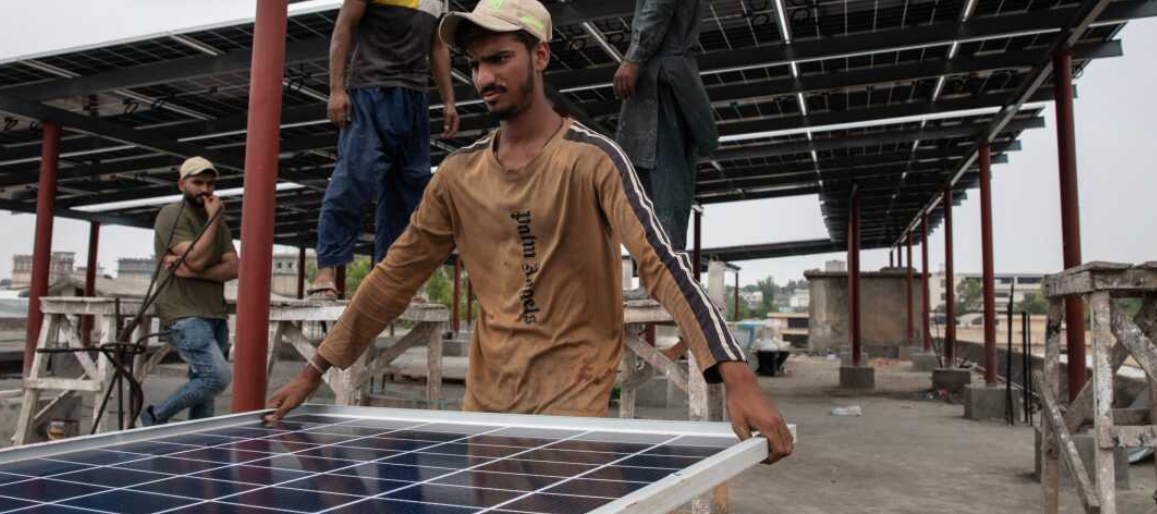
Solar peaks at noon. Demand peaks at 7 PM. Wind peaks at 3 AM. Without storage, renewable power either gets used the moment it's generated or it's wasted.
Germany has hit negative wholesale electricity prices hundreds of times since 2020. The number 300 gets cited, might be higher now. Negative. Generators paying customers to take power because there's nowhere to put it. California throws away solar generation worth, tens of millions monthly, maybe more? The exact figure varies by season and who's counting. Texas nearly collapsed in 2021 partly because it had generation but couldn't shift it to when people needed heat.
These aren't bugs in the system. They're features of physics that policymakers ignored for years because renewable penetration was low enough to manage.
Denmark has been exporting surplus wind to Norway for two decades, where it gets stored in hydroelectric reservoirs and sold back at premium rates. This worked fine when Denmark was the only country doing it. It breaks down when everyone needs the same buffer simultaneously.
The numbers tell the story. At 10-20% renewable share, existing gas plants can absorb the variability. Their operators grumble about reduced run-hours but adapt. At 30-40%, the swings start straining the system. Thermal plants weren't designed to cycle up and down daily, and doing so accelerates wear. Coal plants in particular suffer; their economics depend on running steadily.
Above 40%, the buffer cracks. Daily swings exceed what thermal plants can follow. Cycling coal plants up and down destroys them mechanically and economically.
Above 60%, you get hours every week when renewable output exceeds total demand. Without storage, that electricity vanishes. It's not just money lost; it's carbon-free generation that could have displaced fossil fuels, wasted because nobody planned for success.
Above 80%, you hit multi-day gaps. A week of low wind and overcast skies in January. No amount of grid interconnection fixes this unless you're connected to a different climate zone. Northern Europe can't borrow sunshine from Southern Europe if clouds cover the whole continent.
Most wealthy countries have committed to renewable shares that guarantee they'll hit these walls within ten years. Germany is at 50%+ and climbing. The UK passed 40%. California and Texas are approaching 35%. China, despite its coal addiction, is adding renewables faster than anyone and will cross 40% before 2030.
Storage exists because of these commitments. Not because the technology suddenly got interesting, but because the alternative is blackouts, curtailment, or retreat from climate goals.
Lithium-Ion Is a Trap
Ninety percent of new storage is lithium-ion. This is a problem.
Not because lithium-ion is bad. For what it does well, it works very well. Two decades of smartphone and EV development created manufacturing scale that drove costs down 90% since 2010. The supply chain is mature. The performance is predictable. Financiers understand the risk profile. When a utility needs 4-hour storage to capture the spread between midday solar surplus and evening peak prices, lithium-ion is the obvious choice.
The problem is what lithium-ion cannot do.
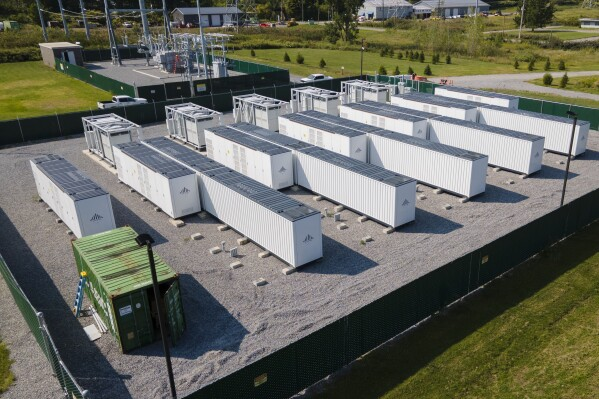
Consider duration. A grid needs 100+ hours of backup for a windless, overcast winter week. This isn't hypothetical; Germany experiences "Dunkelflaute" (dark doldrums) multiple times per winter. The UK's wind fleet sometimes drops to 2-3% of capacity for days at a stretch. California's solar generation can fall 70% during smoky wildfire seasons.
Lithium-ion can't touch these durations. The cost scales linearly with storage time because the same expensive electrodes provide both power output and energy capacity. This is unlike, say, a fuel tank, where you can add capacity cheaply by making the tank bigger while keeping the engine the same size. In lithium-ion, the "tank" and "engine" are the same component. Want 100 hours instead of 4? Multiply the entire battery cost by 25. Nobody is financing that.
The Degradation Problem
Every lithium-ion battery loses capacity over time. Industry models typically budget 2-3% annual decline under gentle cycling, but real-world conditions vary wildly, some operators report worse. Temperature swings accelerate decay. Deep discharges hurt. Aggressive cycling for grid services wears cells faster than the steady discharge of an EV commute.
A 100MWh system commissioned today might deliver 75-80MWh by year ten. Project finance has to model this shrinking asset. Warranty disputes multiply because "normal degradation" is subjective. Operators face weird incentives: sometimes it's better to leave money on the table than to cycle the battery hard and trigger warranty exclusions.
Then there's fire.
Moss Landing in California caught fire twice in three years. This was the world's largest battery installation. The Victorian Big Battery in Australia burned during commissioning. A Beijing LFP facility killed two firefighters in 2021. Each incident triggers regulatory reviews, insurance premium spikes, and permitting delays that ripple across the industry.
LFP (lithium iron phosphate) chemistry is safer than the nickel-based cells in phones and early EVs. Thermal runaway is less likely, propagation between cells is slower, and fires are less intense. But "safer" is not "safe." LFP installations have burned. The firefighting protocols are still being developed. Insurance underwriters are still figuring out how to price the risk.
Here's what traps the industry: lithium-ion dominates because alternatives aren't proven at scale. Every other technology is either geographically limited (pumped hydro, compressed air), still in pilot stage (iron-air, various flow chemistries), or has been "three years away" for fifteen years (solid-state).
Financiers won't fund unproven tech. Utilities won't bet their reliability on pilot projects. Manufacturers won't build factories for products without guaranteed demand. So lithium-ion wins by default, and its limitations get baked into grid planning.
The supply chain concentration makes this worse. Over 60% of lithium refining happens in China regardless of where the ore is mined. Australia digs up 47% of the world's lithium; it ships almost all of it to China for processing. When lithium carbonate prices spiked 500% in 2021-2022, everyone rediscovered this dependency. The US Inflation Reduction Act and European battery regulations now push for domestic supply chains, but building refineries takes years and the economics only work with sustained subsidies.
This is how technological lock-in works. VHS beat Betamax not because it was better but because it reached scale first.
QWERTY keyboards persist despite ergonomic alternatives because everyone already learned to type on them. Internal combustion dominated for a century after electric cars existed because the gasoline supply chain was built and the charging infrastructure wasn't.
Lithium-ion will dominate the 2020s for the same reasons. Not because it's optimal, but because switching costs are high, alternatives are risky, and incumbency compounds.
What Might Break the Lock-In
The most credible challenger is sodium-ion, and the investment community is underestimating it.
Sodium is something like 400 times more abundant than lithium in Earth's crust, different sources give different numbers. Beyond raw abundance, sodium deposits exist on every continent. The Democratic Republic of Congo controls 70% of cobalt mining. Chile, Australia, and China dominate lithium. These concentrations create supply chain vulnerabilities that became painfully visible in 2021-2022, when lithium carbonate prices spiked 500% in eighteen months.
Sodium-ion sidesteps this. The raw materials are cheap enough and geographically dispersed enough that any country could build a domestic supply chain without depending on Chinese refining (which processes over 60% of global lithium regardless of where it's mined).
Cold-weather performance is the other advantage nobody talks about enough. Lithium-ion batteries lose 30-40% of capacity below -10°C and stop working below -20°C. EV owners in Minnesota and Norway know this intimately. Grid storage in Canada, Russia, and northern China faces the same physics.
Sodium-ion works at -40°C. For a grid storage project in Scandinavia or Alberta, this isn't a marginal benefit. It's the difference between a system that works year-round and one that fails when it's needed most.
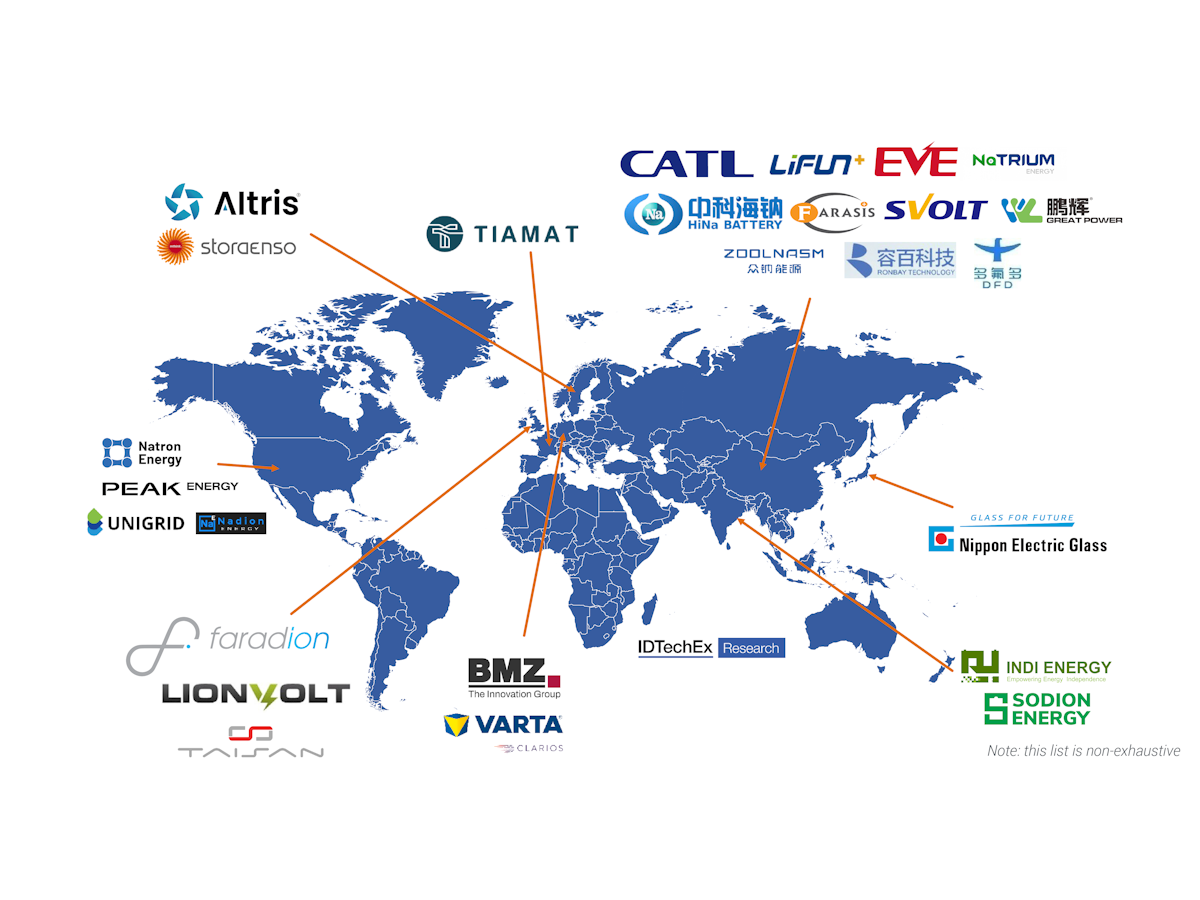
CATL, the world's largest battery manufacturer, started shipping commercial sodium-ion cells in 2025. The energy density trails lithium-ion by somewhere around 15-20%, depending on whose specs you believe. This gap matters for vehicles, where every kilogram affects range. For grid storage, where land is cheap and energy density is irrelevant, it makes no difference.
Most analysts forecast sodium-ion capturing 5-10% of the storage market by 2030. That estimate looks low. Cold climates alone (Canada, Scandinavia, northern China, Russia) could push adoption past 20%. Supply chain anxiety in Europe and the US will drive adoption even at modest cost premiums, and those premiums will erode as production scales.
The question is whether Western manufacturers will build sodium-ion capacity or cede yet another battery chemistry to Chinese dominance. CATL's head start is substantial. But sodium-ion's simpler supply chain (no lithium refining, no cobalt, no nickel) means the barriers to entry are lower than they were for lithium-ion. A European or American company could plausibly build a vertically integrated sodium-ion operation without depending on Chinese processing. Whether any will actually do so depends on sustained policy support and willingness to accept lower returns during the scale-up period.
The Wild Card: Form Energy
They claim iron-air batteries at $20/kWh for 100+ hour duration. Twenty dollars. The chemistry is simple: iron rusts when discharging (releasing electrons), un-rusts when charging (absorbing electrons). Iron costs almost nothing. Air is free. If the economics hold, a big if, everything restructures. Multi-day storage becomes routine instead of exotic. High-renewable grids stabilize without hydrogen. The cost calculus for electricity shifts worldwide.
Form Energy raised a lot of money in 2024, something over $400 million according to the press releases. Their Maine project would be huge, 8,500MWh, the largest storage installation globally by energy if it gets built. Safety testing supposedly showed no thermal runaway, no fire propagation. Good news if true.
The catch: Form Energy has not shipped product at scale. Laboratory results and venture funding do not equal factories producing megawatt-hours monthly. Flow batteries, zinc-air, countless lithium variants, dozens of promising startups have died at exactly this stage. The right approach is to assume iron-air doesn't work until proven otherwise. Plan storage portfolios around technologies with verified commercial data. But watch Form Energy closely. If they deliver, the market will reshape within five years.
The Technologies Not Worth Discussing in Detail
Some storage approaches get attention disproportionate to their prospects. This will be brief.
Pumped hydro is proven and mature. It also ran out of good sites decades ago. You need two reservoirs at different elevations, adequate water, and acceptable environmental impact. Most viable locations in developed countries were built out by the 1980s. China continues adding pumped hydro because it has mountains, water, and a government that overrides local opposition. Everyone else is fighting over second-tier sites with worse economics and harder permitting.
Solid-state batteries have been "three years away" since Toyota first announced them in 2008. QuantumScape went public in 2020 promising 2024 production; no commercial cells have shipped. The physics works in labs. Manufacturing at scale does not. Solid electrolytes crack. Interfaces degrade. Costs remain 4-8x liquid lithium-ion.
Gravity storage sounds clever. Energy Vault's videos of cranes stacking giant blocks make for good marketing. The company went public via SPAC at $1.1 billion in 2022. The stock has since dropped over 90%. They have one 25MW project in China. The claimed costs have never been independently verified against audited deployments.
Hydrogen for electricity storage is thermodynamic waste marketed by oil companies. Electrolysis loses 20-40% of input energy. Compression or liquefaction loses another 10-30%. Reconversion through fuel cells or turbines loses 40-60%. Round-trip efficiency of 25-45% means throwing away more than half the renewable electricity that enters the system.
The loudest hydrogen advocates are Shell, BP, and TotalEnergies. Their incentive is to slow direct electrification, which threatens their core business, while positioning natural gas as a "transition fuel" for producing "blue hydrogen" with carbon capture. Green hydrogen from renewable electrolysis remains 2-3x more expensive than grey hydrogen from unabated gas.
Hydrogen has a narrow legitimate use case: seasonal storage at continental scale, where summer solar surplus needs to reach winter heating demand. At that duration, efficiency matters less than the ability to store energy for months. But countries building hydrogen infrastructure for 2030 grid balancing are wasting money. Realistic timeline: meaningful deployment mid-2030s, scale by 2040, load-bearing role by 2045-2050.
Where the Money Actually Goes
The public narrative frames storage as a technology race. Lithium versus sodium versus hydrogen versus gravity. Press coverage focuses on which chemistry wins.
This misses the point.
The more consequential question is who captures value along the supply chain. And the answer isn't what most coverage assumes.
Cell manufacturing has become a commodity business. Chinese overcapacity forces prices below cost during demand troughs. CATL maintains margins through vertical integration and scale. BYD survives on EV sales that cross-subsidize storage. Everyone else consolidates or exits. Within five years, three or four Chinese manufacturers plus a handful of subsidized Western players will control global cell production. Margins will stay thin regardless of which chemistry dominates.
The spread between cell cost and installed system cost is where value concentrates. Cells have gotten cheap, maybe thirty-something dollars per kilowatt-hour for Chinese LFP. Installed systems still run $150-200/kWh. Someone captures that spread, and it's not the cell manufacturers.
It's currently fragmented: EPCs (engineering, procurement, construction firms), inverter manufacturers, balance-of-system suppliers, project developers, interconnection specialists. As the market matures, consolidation will concentrate this value. A few scaled players will dominate each layer, extracting margins that cell manufacturers cannot.
Software might matter more than any hardware layer.
A battery is an inert box until algorithms decide when to charge and discharge. Optimal dispatch depends on real-time electricity prices, weather forecasts, grid congestion, contractual obligations, degradation curves, and regulatory constraints. Getting this right can double revenue from the same physical asset compared to naive time-of-use scheduling.
Tesla's Autobidder platform controls dispatch for their storage installations and, increasingly, for third-party batteries willing to pay for optimization. Virtual power plant aggregators bundle distributed residential batteries into grid-scale resources. Utility optimization platforms manage fleet dispatch across hundreds of installations.
This software layer is nearly invisible in mainstream coverage. It may capture more value than cell manufacturing. The companies building these platforms, some battery manufacturers, some startups, some utilities, are positioning for a world where hardware is commoditized and intelligence is the differentiator.
Betting on battery manufacturers is probably wrong. The high-margin opportunities sit in integration and software, layers that most investors ignore because they're harder to understand than "who makes the best cell."
What Happens Next
COP29 set a target of 1,500GW storage capacity by 2030, roughly six times current levels. That's aggressive. Forty percent annual growth sustained for five years. Is it achievable? Maybe. China alone added something like 23GW in 2024, and its provincial mandates requiring storage alongside new renewable projects guarantee continued demand. The US is accelerating under IRA incentives, with Texas and California leading deployment. Europe is slower but moving, constrained more by grid interconnection queues than by technology or capital.
The regional patterns are diverging in ways that will shape the industry for decades.
China is building everything: lithium-ion for short duration, pumped hydro where geography allows, compressed air in salt-dome regions, and pilot projects for every emerging chemistry. By late 2024 they had something like 78GW cumulative, roughly half the global total, though the exact numbers depend on how you count and who's reporting. The integration with domestic manufacturing creates cost advantages that other regions cannot match. Chinese LFP cells are cheap; Western equivalents cost maybe 30-50% more, depending on the supplier and whether you believe the quotes.
The United States is betting on tax credits. The IRA's 30% investment tax credit for standalone storage has created a project finance market that was negligible five years ago. But the US grid is fragmented across dozens of utilities and regional transmission organizations, each with different interconnection rules, capacity markets, and regulatory frameworks. A project that makes sense in Texas (deregulated, price-volatile, transmission-constrained) might not pencil in California (regulated, utility-dominated, different price patterns). This fragmentation slows deployment even when capital is abundant.
Europe is writing rules. The EU Battery Regulation mandates carbon footprint disclosure, recycled content minimums, and "battery passports" tracking materials through the supply chain. These rules will reshape global manufacturing standards because European market access matters. But Europe has deployed less storage than China or the US despite higher electricity prices and greater climate ambition. The gap between regulatory sophistication and actual installed capacity is embarrassing.
The technology mix will shift as these regional dynamics play out. Lithium-ion keeps most of the short-duration market while losing share to sodium-ion in cold climates and among buyers worried about supply chain concentration. Compressed air will grow slowly where geology permits. The iron-air question resolves by 2028: either Form Energy proves commercial viability or the technology joins the long list of lab-to-market failures.
Geographic concentration will partially unwind under political pressure. The US and Europe will subsidize domestic manufacturing at levels that would have been unthinkable a decade ago. Complete supply chain independence is economically irrational, but the extreme dependence on Chinese processing will moderate.
Software platforms will gain importance as storage fleets grow large enough to require coordinated dispatch. Individual batteries optimizing their own revenue give way to aggregated fleets responding to system-wide signals. The companies that master this optimization, whether battery manufacturers, utilities, or independent providers, may extract more value than anyone making cells.
Storage went from exotic to routine in a single decade. The hardware problems are mostly solved. What remains is execution: permitting speed, policy consistency, grid interconnection queues, and whether capital keeps flowing at current rates.
The next decade determines whether deployment matches the scale that climate commitments require. The technology exists. The money exists. Institutions, from grid operators to permitting agencies to financial regulators, will probably move too slowly. They usually do. But history also didn't anticipate solar costs falling 99% in four decades or batteries following a similar curve. The storage transition will be messy, uneven, and probably slower than climate science demands. It will also be unstoppable.