

Off-grid solar means generating and storing all your electricity from sunlight, with zero connection to the utility grid. When the batteries empty and clouds persist, the lights go out. No utility crew comes to fix anything.
Batteries Run the Show
Solar panels get the attention because shiny rectangles on rooftops photograph well and marketing departments love featuring them. But panels are the easy part. Modern panels from any reputable manufacturer will produce rated power within a few percent of spec and keep doing so for 25 years with minimal degradation. The technology matured years ago, and buying panels today resembles buying commodity steel.
The battery bank makes or breaks an off-grid system.
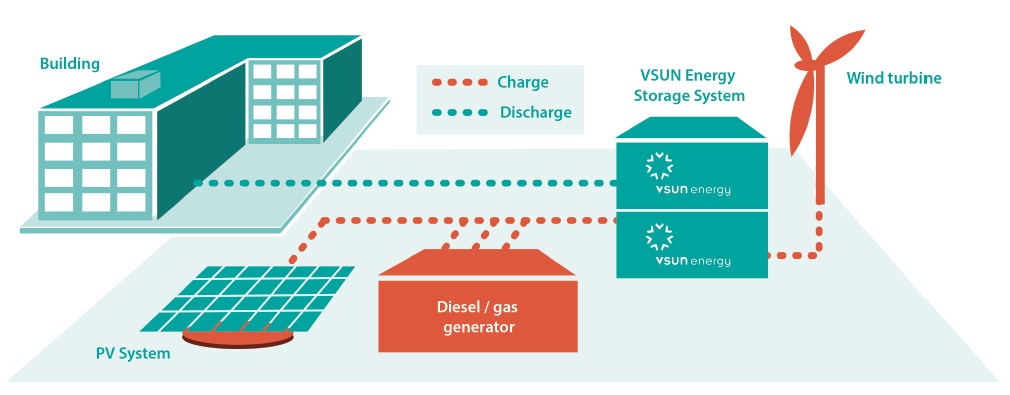
off-grid energy storage
Lead-acid chemistry dominated off-grid storage for decades because nothing else existed at reasonable cost. The limitation never changed: use more than half the rated capacity regularly and the battery dies fast. Sulfation builds up on the plates, capacity drops, and within three to five years of daily cycling the bank needs replacement. Factor in charging inefficiency around 80 percent and the true cost of lead-acid storage becomes painful when calculated honestly over a decade.
Lithium iron phosphate changed the equation starting around 2016 when prices dropped enough for residential viability. The chemistry tolerates 80 to 90 percent depth of discharge without accelerated wear, cycle life runs 3000 to 5000 cycles for decent cells, and round-trip efficiency exceeds 95 percent. The math works out to roughly half the cost per stored kilowatt-hour over system lifetime compared to lead-acid despite purchase prices running double or triple.
The catch with lithium sits in the battery management system. BMS quality varies wildly. The cells inside budget lithium packs often come from the same Chinese factories supplying premium brands, but what differs is the electronics monitoring those cells and the assembly quality connecting them. A cheap BMS might not catch a single cell drifting toward failure until the whole pack is compromised. Spending an extra few hundred dollars on a reputable BMS-equipped pack from Battle Born or SOK prevents the kind of failure that ruins a freezer full of food at 2am during a February cold snap.
Anyone building new off-grid systems with lead-acid batteries in 2024 is making a mistake unless budget constraints are truly desperate or the installation sits in extreme cold where lithium heating requirements become prohibitive. This opinion would have been controversial five years ago. It no longer is among people who actually install and maintain these systems.
Charge Controllers: Spend the Money on MPPT
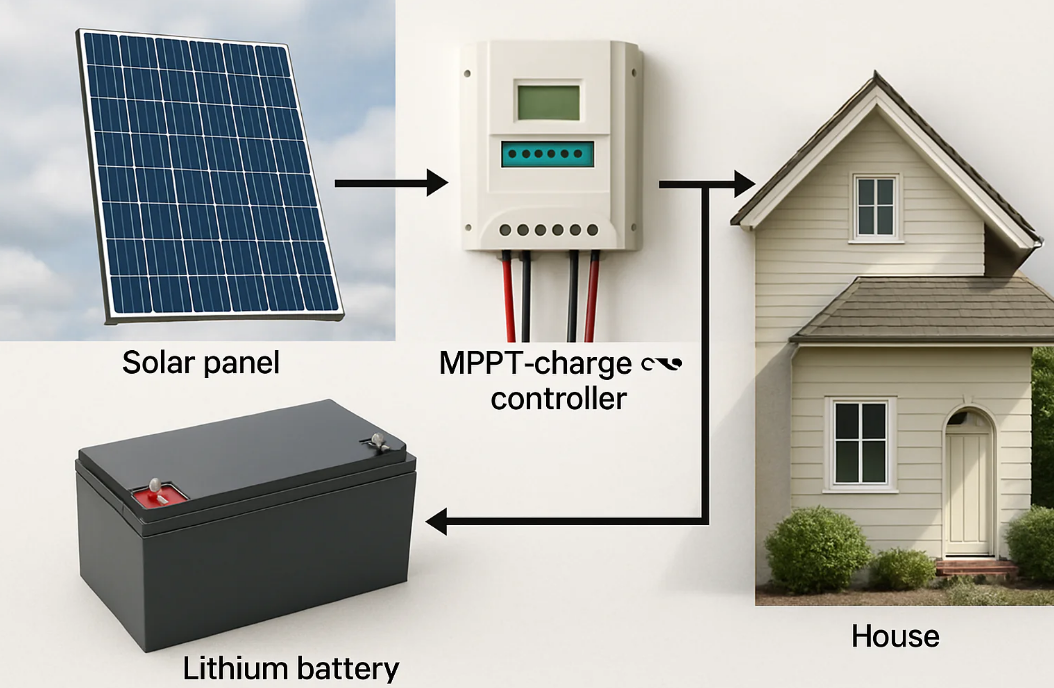
Quality MPPT charge controllers maximize energy harvest from solar panels.
PWM controllers still sell in high volumes because they cost less. The efficiency penalty runs 15 to 25 percent compared to MPPT under typical conditions. On a system expected to operate for fifteen years, that efficiency gap translates to thousands of dollars in lost energy harvest. The math never favors PWM except for tiny systems where the absolute dollar amounts stay trivial.
MPPT controllers from Victron have developed a reputation for reliability that justifies their premium pricing for installations where failure means real consequences. Morningstar and Outback occupy similar territory. Epever sells functional MPPT units at half the price with quality control that occasionally delivers duds. For a cabin visited occasionally, Epever works fine. For a primary residence, the savings evaporate the first time a controller fails and takes a week to replace.
Inverters: Pure Sine Wave, No Exceptions
Modified sine wave inverters still exist. Using one in a home makes no sense because motors run hot, electronics misbehave, and transformers emit an annoying hum that becomes maddening at 3am. The price difference between modified and pure sine wave has shrunk enough that the remaining savings cannot justify living with the problems.
Surge capacity matters more than continuous ratings for most residential loads. Refrigerator compressors pull five to seven times their running wattage at startup, well pumps behave similarly, and an inverter rated for 3000 watts continuous but only 4000 watts surge will struggle to start common appliances that a 2000 watt unit with 6000 watt surge handles easily.
The Physics, Briefly
Sunlight hits silicon, photons knock electrons loose, a built-in electric field sweeps those electrons in one direction to create current, and external wiring captures that current as usable electricity. Single-junction silicon cells max out around 33 percent theoretical efficiency and commercial panels achieve 20 to 23 percent, which is close enough to the limit that dramatic improvements should not be expected from the same basic technology.
Temperature hurts output. Hot panels produce less voltage. Ground mounts with airflow underneath perform better in extreme heat than panels bolted flat against dark roofs.
System Sizing
Undersizing guarantees frustration while oversizing wastes money, and finding the balance requires honest load assessment combined with realistic expectations about local solar resource.
Refrigerators trip people up because nameplate wattage bears little relationship to actual consumption. Compressors cycle on and off, manufacturers publish annual kilowatt-hour estimates that convert to perhaps 1 to 2 kWh daily for efficient modern units, and naive calculations multiplying nameplate by 24 hours produce numbers four times too high.
Phoenix gets double the winter sun that Seattle receives. Sizing a system for Seattle winters means substantial overcapacity during summer, so most installations accept some seasonal mismatch and keep a backup generator for extended cloudy stretches rather than paying for enough panels and batteries to handle absolute worst-case conditions.
Who Actually Goes Off-Grid
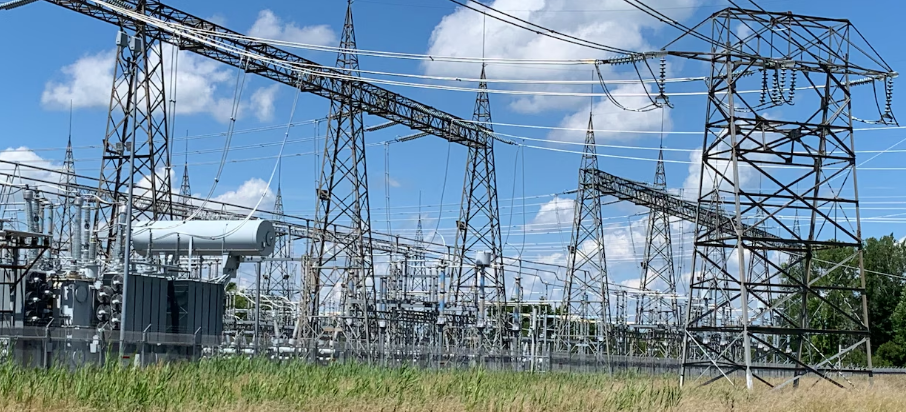
Geographic isolation drives most off-grid installations, where extending utility lines becomes prohibitively expensive.
Geographic isolation drives most installations. Running utility lines across rough terrain costs tens of thousands per mile, and past a certain distance off-grid solar becomes the economical choice regardless of philosophical preferences.
Grid unreliability motivates a second category. Parts of rural America lose power repeatedly every year from storms, and some developing regions have grid connections that deliver electricity only intermittently. Off-grid systems provide better reliability than the nominal grid connection they replace.
Deliberate independence attracts a smaller group who choose off-grid despite available utility service. The economics rarely favor this choice when grid power remains cheap and reliable, but economics alone do not drive all decisions.
Mobile applications like RVs, boats, and expedition vehicles require off-grid by definition. Weight matters here in ways it does not for stationary installations, which is why lithium dominates the RV market even among budget-conscious buyers who might consider lead-acid for a cabin.
Living With It
Electricity becomes visible in a way it never was before. State of charge matters, weather forecasts gain new relevance as production predictors, and running the clothes dryer during a cloudy week requires conscious decision-making about tradeoffs. Some people genuinely enjoy this kind of awareness. For others it becomes a persistent low-grade stress that never fully resolves.
Maintenance falls entirely on the owner. Panels need occasional cleaning, battery terminals will corrode if ignored, and inverter ventilation actually matters despite how boring it sounds. Neglected systems degrade gradually until something fails at an inconvenient moment.
Why Any of This Matters
The technology works. Millions of off-grid systems operate worldwide, the physics has been understood for over a century, and manufacturing has reached commodity scale. The question is not whether off-grid solar functions but whether it fits specific circumstances.
Load requirements, solar resource, budget, and tolerance for managing electricity as a finite resource rather than an unlimited tap all factor into that assessment. For people whose situation aligns with what off-grid can deliver, the system produces electricity year after year without utility bills or grid dependency.