

What is a Home Wall-Mounted Battery Energy Storage System?
Everything else is engineering detail, marketing spin, or both.
The Only Decision That Matters
Lithium iron phosphate or not. This choice determines safety, lifespan, and cost. Everything downstream follows from it.
LFP won the residential market because residential buyers cannot be trusted. Not an insult. A fact. Garages in Arizona exceed 50°C. Basements in Michigan drop below freezing. Systems get ignored for months. Firmware updates get skipped. Circuit breakers get undersized by electricians who never installed storage before. Dogs chew cables. Kids throw balls. Mice nest inside enclosures.
In laboratory conditions with climate control and trained technicians, ternary lithium chemistries perform beautifully. High energy density. Good cycle life. Predictable degradation curves. In residential conditions with amateur installation and zero maintenance, ternary chemistries catch fire.
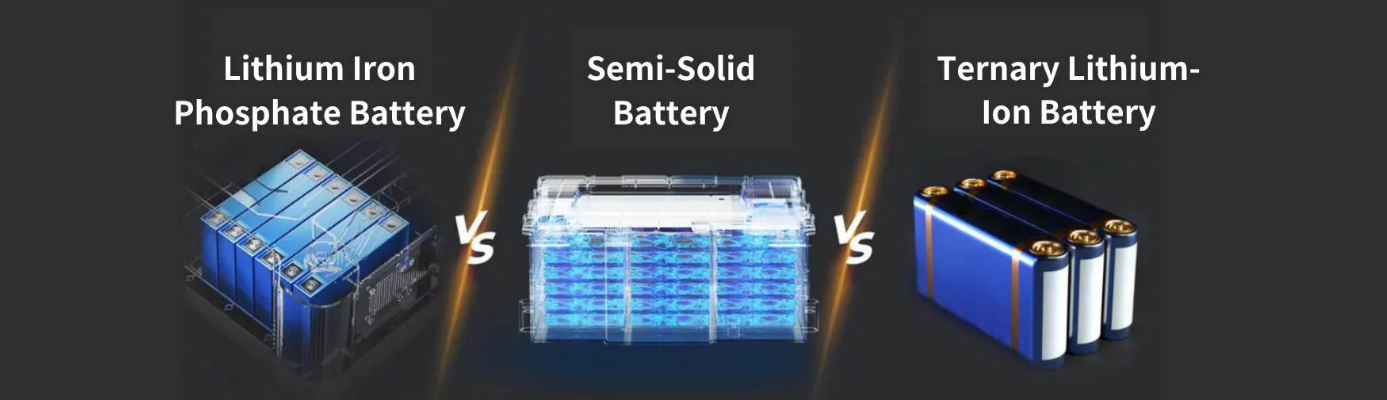
Lithium iron phosphate cells offer superior thermal stability compared to ternary alternatives
Thirty-four fires in Korean energy storage facilities between 2017 and 2021. The government investigation blamed everything: cell manufacturing defects, BMS firmware bugs, skipped insulation testing, nonexistent maintenance schedules. All true. All irrelevant. LFP installations had the same problems. LFP installations did not burn.
When something goes wrong inside a battery pack, and something always eventually goes wrong, that gap determines whether the thermal event self-extinguishes or cascades into adjacent cells.
The Korean investigation reports are public. Worth reading for anyone making purchase decisions. They describe specific failure sequences in painful detail.
A manufacturing defect creates a high-resistance spot in one cell. Happens during electrode coating when slurry viscosity varies or coating speed fluctuates. Quality control should catch it. Quality control at scale misses some percentage. The defective cell ships.
Over months, that high-resistance spot heats slightly more than surrounding material during each discharge cycle. Not much. A few degrees. Cumulative damage accumulates in the localized region. Internal structure degrades. Eventually the spot fails completely, creating an internal short circuit. Current flows through the short. Temperature spikes to several hundred degrees in seconds.
In an NCM cell, temperature reaches the oxygen release threshold before safety systems can respond. BMS reaction time is measured in milliseconds. Thermal runaway propagation is faster. Released oxygen feeds combustion. Heat transfers to adjacent cells. They reach their oxygen release thresholds. The pack burns. Building burns. Sometimes people die.
In an LFP cell with the same defect and the same failure sequence, temperature spikes to perhaps 180°C or 200°C before the short circuit resistance increases and current drops or the BMS disconnects the pack. Hot enough to damage that cell permanently. Not hot enough to release oxygen from the olivine cathode structure. No combustion. No propagation. One dead cell in a pack of hundreds. The system loses 1% capacity and keeps working for another decade.
The Korean incidents were not isolated manufacturing problems. They were systemic failures across an entire industry segment rushing to deploy storage at scale without adequate quality infrastructure. The same systemic problems exist elsewhere. Chinese manufacturing expanded faster than quality systems. European integrators source cells from whoever offers the best price this month. American installers learn on the job.
LFP tolerates this reality. NCM does not.
This is why informed buyers choose LFP despite the 40% energy density penalty. Energy density determines vehicle range. Energy density does not determine wall thickness. A 180mm enclosure works as well as a 130mm enclosure when bolted to a garage wall. Nobody cares.
Some manufacturers still sell ternary residential products. They position them as "premium" with "higher performance." The marketing works on buyers who read specification sheets without understanding them. Watt-hours per kilogram matters for vehicles. It does not matter for walls. These buyers deserve what they get.
The European premium storage market has several ternary-based products. They cost more than LFP alternatives. They occupy slightly smaller enclosures. They have shorter cycle life and tighter operating temperature requirements. Marketing materials emphasize energy density and "advanced chemistry." Marketing materials do not mention the Korean fires.
Cycle life differences compound the chemistry choice. LFP reaches 6000 cycles at 80% depth of discharge before capacity drops to 80% of original. NCM reaches 2000 to 3000 cycles under the same conditions. Home storage systems cycle daily. LFP lasts over 15 years. NCM lasts 6 to 8 years. Warranty periods typically run 10 years. Manufacturers using NCM either expect to replace units under warranty or write warranty terms carefully enough to exclude degradation claims. Neither approach inspires confidence.
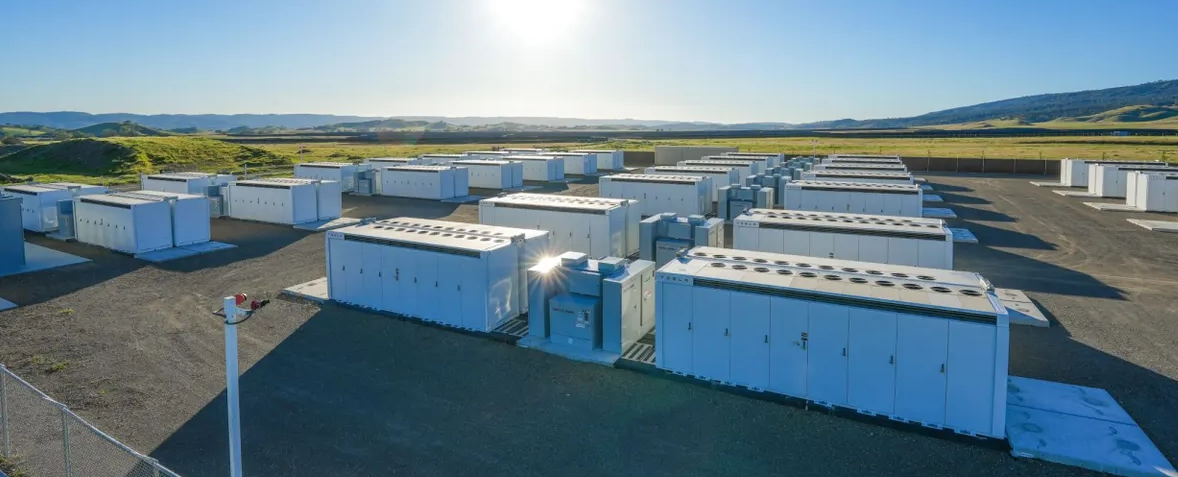
Large-scale energy storage deployments have accelerated LFP manufacturing capacity and driven costs down
Cost arithmetic favors LFP and has for years. LFP cells in 2023 traded at $70 to $90 per kilowatt-hour at pack level. NCM cells remained above $100. Raw material costs explain part of this: iron and phosphorus are cheap and abundant; cobalt and nickel are expensive and concentrated in geopolitically unstable regions. Manufacturing scale explains the rest. CATL and BYD invested billions in LFP production capacity. Volume drove costs down faster than any technical improvement. The gap widened rather than narrowed as the market matured.
BMS Quality Cannot Be Evaluated
Battery management systems separate products that last from products that fail early. BMS quality cannot be determined before purchase. This is the central problem of the entire market.
Two systems with identical cell chemistry, identical capacity, identical price. One delivers 12 years of service with graceful degradation. One shows 30% capacity loss by year 5. The difference is firmware quality, algorithm sophistication, and thermal management design. None of this appears in marketing materials. None of this appears in specification sheets. None of this can be tested by buyers or independent reviewers. The information asymmetry is total.
State of charge estimation illustrates the problem.
The simple approach counts electrons: integrate charging current over time, subtract discharging current over time, track the running total. Called coulomb counting. Works fine for hours. Drifts badly over days.
Current sensors have measurement errors. Hall effect sensors drift with temperature. Shunt resistors have tolerance bands. Even a 0.5% current measurement error accumulates. Temperature affects coulombic efficiency: how many electrons that flow into the battery during charging actually become retrievable during discharge. The number varies from 99% at 25°C to perhaps 95% at -10°C. Self-discharge slowly drains the pack, faster in warm conditions, not tracked by current sensors at all.
After a week without full charge-discharge recalibration, coulomb counting can be off by 10%. Maybe more. Depends on usage patterns, temperatures, cell chemistry, and pure luck.
Users experience this as unreliable charge displays. The screen says 25% remaining. The user starts a load expecting several hours of runtime. The system shuts down in minutes because actual charge was 6%. Annoying when the load is a television. Potentially dangerous when the load is medical equipment or heating in winter.
Better BMS implementations run Extended Kalman Filters. The algorithm maintains a mathematical model of battery behavior: an equivalent circuit with resistors and capacitors representing internal resistance, charge transfer dynamics, and diffusion effects. The model predicts what terminal voltage should appear given current state of charge and applied load current. The BMS measures actual terminal voltage. The difference between prediction and measurement feeds back through the Kalman gain matrix to correct the state estimate.
Done properly, EKF stays within 2% of true state of charge indefinitely regardless of usage patterns. Done poorly, EKF diverges when the battery model does not match actual battery behavior, which happens as cells age and parameters shift.
Advanced algorithms continuously adapt to battery aging, but this sophistication is invisible in product specifications
The best implementations add online parameter identification. Battery internal resistance increases as cells age. Available capacity decreases. The relationship between open circuit voltage and state of charge shifts. Static models built on new-cell data grow inaccurate over years of service. A model calibrated at the factory when cells were fresh may be 15% wrong by year 7 when cells have degraded.
Adaptive algorithms continuously update model parameters to match actual battery behavior. Resistance estimates track aging. Capacity estimates track degradation. The model stays accurate even as the pack ages. Some implementations use dual Kalman filters: one estimating state, one estimating parameters. Some use recursive least squares for parameter tracking. Some use machine learning approaches trained on fleet data.
No specification sheet lists "SOC estimation algorithm: Extended Kalman Filter with adaptive parameter identification via recursive least squares." No brochure explains the sigma point selection for Unscented Kalman Filter implementations or the forgetting factors for parameter tracking. The information does not exist in buyer-accessible form. It may not exist in any form. Some BMS vendors do not know what algorithms their own firmware runs because they bought it from another vendor who bought it from someone else.
Cell balancing provides another example of invisible quality differentiation.
Cells within a pack drift apart over time. Manufacturing tolerances mean some cells start with slightly lower capacity. Self-discharge rates vary. Some cells lose charge faster sitting idle. Temperature gradients within the pack mean some cells cycle at higher temperatures, degrading faster. After a year of operation, the weakest cell may have 95% the capacity of the strongest cell. After five years, maybe 85%.
Without balancing, the weakest cell limits pack performance. When the weakest cell reaches its discharge cutoff voltage, the BMS stops the entire pack even though stronger cells have usable capacity remaining. A pack with 8% cell-to-cell variation loses 8% usable capacity.
Passive balancing addresses this by burning off energy from strong cells through resistors until all cells match the weakest. Cheap to implement.
Typical passive balancing currents run 50mA to 100mA. A cell 100mAh out of balance with its neighbors needs an hour to equalize at 100mA balancing current. A cell 500mAh out of balance needs five hours. Packs with significant drift can need tens of hours of balancing time.
Passive balancing only activates during charging when some cells approach full voltage while others lag behind. The BMS bleeds current from full cells while waiting for laggard cells to catch up.
Home storage systems often operate between 20% and 80% state of charge. They may not reach 100% for weeks or months. During that time, passive balancing never activates. Cell drift accumulates. Usable capacity shrinks. Eventually someone charges to 100%, passive balancing runs for a few hours, and some of the drift gets corrected. Some. Not all. The cycle repeats.
Active balancing transfers energy from strong cells to weak cells through inductors, capacitors, or transformers. No energy wasted. Faster equalization because balancing current can run much higher. Balancing can run during discharge and rest states, not just charging, because energy transfers rather than dissipates.
Active balancing costs $50 to $100 per kilowatt-hour more than passive balancing in component and circuit board costs. The BMS needs additional power electronics per cell. Control algorithms get more complex. Testing gets harder. Warranty exposure increases if the active balancing circuit fails and damages cells.
Almost every residential product uses passive balancing. The specification sheet says "cell balancing: yes." It does not say which kind. Buyers assume all cell balancing is equal.
Thermal management quality matters over years in ways that do not appear in any test a buyer can run.
Battery degradation follows Arrhenius kinetics. The rate constant for SEI layer growth, lithium plating, cathode cracking, and electrolyte decomposition all increase exponentially with temperature. Rule of thumb: aging rate doubles for every 10°C increase in operating temperature. A pack running at 45°C ages four times faster than a pack running at 25°C.
Over a 15-year product life, thermal management quality is the difference between 70% remaining capacity and 40% remaining capacity. A well-designed system keeps cells within a few degrees of ambient temperature under normal loads. Airflow paths are optimized. Thermal interface materials conduct heat efficiently from cells to heat sinks. Fans activate before temperatures rise rather than after. Temperature gradients across the pack stay small so all cells age at similar rates.
A badly designed system allows 15°C or 20°C temperature rises during sustained discharge. Hot spots form near high-resistance connections or in regions with poor airflow. Some cells run hot while others run cool. Hot cells degrade faster. They become weaker. They limit pack performance. The gradient widens over time.
Both products have identical specifications on paper. Both products perform identically on day one and day one hundred. The difference emerges over years, well past any return window, often past warranty periods. By the time the problem becomes obvious, the original purchase decision is ancient history.
Fan noise provides a crude signal about thermal management philosophy. Quiet systems either have excellent passive thermal design with large heat sinks and generous airflow paths, or inadequate active cooling that runs fans only when temperatures are already too high. Loud systems have fans working hard to move heat before it accumulates. Working fans indicate someone thought about thermal management at the design stage. Silence indicates either exceptional engineering or corner cutting. There is no way to distinguish from outside the enclosure without thermal imaging equipment that no residential buyer owns.
Warranty Terms Tell The Truth
Lacking direct visibility into BMS quality, buyers should examine warranty terms. Warranty terms represent manufacturers' financial bets on their own engineering.
A 10-year warranty with guaranteed 70% end-of-life capacity requires confidence. The manufacturer expects most units to exceed that threshold comfortably. Warranty claims are expensive. Manufacturers who expect significant claim rates either refuse to offer such terms or price products high enough to cover expected costs.
A 5-year warranty without capacity guarantees signals lower confidence. The manufacturer may know that cell matching is loose. The manufacturer may know that thermal management is marginal. The manufacturer may know that BMS algorithms are simple. The warranty reflects this knowledge.
Extended warranties offered as paid add-ons are nearly worthless. They indicate the manufacturer believes base product quality is insufficient for the offered extension period. The buyer pays extra to cover expected repair costs that the manufacturer knows will occur.
Warranty exclusions matter. "Damage from improper installation" excludes failures caused by incompetent electricians, which describes a significant fraction of residential installations. "Damage from operation outside specified temperature range" excludes failures in the exact garage environments where most systems get installed. Read the exclusions before purchase.
Inverters and Transfer Times
Inverters convert DC battery power to AC household power. Efficiency ranges from 93% to 97% depending on load. Standby consumption ranges from 5W to 25W depending on design quality. Transfer time during grid outages ranges from 10ms to 100ms depending on hardware.
Transfer time matters for backup power applications. Systems transferring in under 20ms keep computers running without reboot. Systems transferring in 50ms or more crash sensitive electronics. Specification sheets sometimes list transfer time. Sometimes they say "backup capable" without specifying how capable.
Most of the market uses similar power electronics from the same handful of component suppliers. Inverter performance variation is smaller than BMS variation. The inverter is not where products differentiate.
Installation Matters More Than Equipment
The best equipment performs badly when installed poorly. The worst equipment performs adequately when installed well. Installer selection deserves more attention than brand selection.
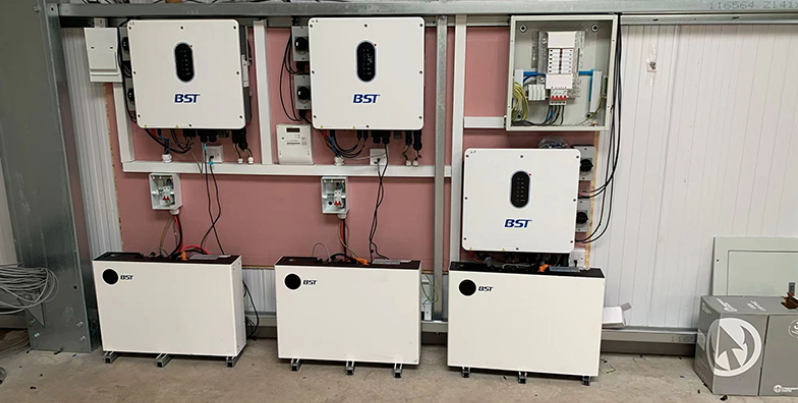
Home wall-mounted battery energy storage system installation
Good installers photograph everything. They document torque values. They test insulation resistance. They verify communications. They explain operation to homeowners. They return phone calls.
Bad installers finish fast. They skip tests. They lose documentation. They blame others when problems emerge.
The solar installation industry has 15 years of experience and still produces botched jobs regularly. Storage installation is newer and less mature. Expect problems. Select installers carefully. Check references. Verify insurance.
Economics Vary By Location
Payback periods range from 4 years to infinity depending on electricity rates, rate structures, solar generation, incentive programs, and installation costs.
California, Hawaii, Australia, and Germany have favorable conditions. High electricity prices. Large peak-to-off-peak spreads. Declining feed-in tariffs. Government incentives. Storage makes financial sense.
Most other markets have unfavorable conditions. Cheap electricity. Flat rate structures. Generous feed-in tariffs. No incentives. Storage makes financial sense only for backup power applications where outage frequency justifies the expense.
Buyers frequently overestimate returns by projecting current rates forward unchanged and ignoring degradation. Sophisticated buyers run sensitivity analyses with varying rate assumptions and degradation curves. Few buyers are sophisticated.
A wall-mounted home battery stores electricity in lithium iron phosphate cells managed by electronics and converted to household AC by an inverter. The technology works. Quality varies. BMS sophistication determines longevity. Warranty terms signal confidence. Installer competence matters more than brand selection. Economics depend on location.
The purchase decision is simple in favorable markets and questionable elsewhere.