What is a Home Battery Storage SystemEnergy Technology
What is a Home Battery Storage System
Marcus Chen
October 15, 2024
Store the electricity for later.
Strip away the jargon and that is the entire product category. A box of lithium cells sits in a garage, charges when electricity costs less or when solar panels produce more than needed, discharges when rates spike or the grid goes dark. The chemistry inside is the same lithium-ion technology powering smartphones, scaled up and wrapped in sheet metal.
The 2024 residential storage market sits at an inflection point that most buyers fail to recognize. Prices have crashed from $1,200/kWh installed in 2018 to under $600/kWh for mainstream products today. CATL and BYD have flooded the supply chain with lithium iron phosphate cells that wholesale for $53/kWh as of Q3 2024, according to BloombergNEF tracking. The Tesla Powerwall 3, launched in April 2024, packs 13.5 kWh into a single unit with an integrated inverter. Enphase has pivoted hard into storage after years of microinverter dominance. Chinese manufacturers like Pylontech and Growatt ship containers of product to European installers who undercut established brands by 40%.
The technology works. That was never really the question. The question is whether it makes financial sense for a specific house, in a specific utility territory, with a specific rate structure. And here the answer gets complicated in ways that salespeople prefer not to discuss.
The Installation Problem That Precedes Everything Else
Before diving into cell chemistry or inverter architectures, the installation question deserves attention. The same hardware produces wildly different outcomes depending on who installs it.
Improper wire sizing causes voltage drop under load, reducing delivered power and generating waste heat at connections. Inadequate conduit fill ratios trap heat in wiring runs, accelerating insulation degradation. Missing or improper torque on terminal connections creates resistance points that heat under current flow, potentially causing fires years later when the connection finally fails.
Installation quality varies more than product quality—a well-installed mid-range system outperforms a poorly-installed premium system.
A battery rated to 50°C maximum operating temperature, installed on a sun-facing wall in Phoenix with no shade structure, will experience frequent thermal derating in summer. The BMS throttles power to prevent overheating, exactly when peak demand makes storage most valuable.
Installation labor ranges from $1,500 to $6,000 for equivalent scope depending on market, installer, and complexity. The cheapest installer in the quote stack often represents the greatest long-term risk.
The commissioning process after physical installation determines initial calibration accuracy. A system commissioned with the battery at an unknown state of charge starts its life with an SOC estimation error that may never fully correct. A system where firmware updates weren't applied before handoff to the customer may lack bug fixes or feature improvements that the manufacturer released after the unit shipped from the factory.
Enphase has attempted to address installation variance through installer certification programs and commissioning verification through their monitoring platform. Tesla's installation network has faced criticism for inconsistent quality, with some markets served by well-trained crews and others by contractors who treat Powerwall installation as just another electrical job.
Why Everyone Switched to LFP
Every serious manufacturer has converged on lithium iron phosphate for residential storage. Tesla switched from NCA. Enphase uses LFP. BYD, Pylontech, Sonnen, EcoFlow, Bluetti: all LFP. The holdouts using nickel-based chemistries in 2024 are either liquidating old inventory or targeting buyers who fixate on energy density numbers without understanding what those numbers mean in a stationary application.
A home battery sits in a garage for fifteen years. Nobody cares if it weighs 120 kg instead of 90 kg. Nobody needs the power density that justifies NMC in a Porsche Taycan. What matters is whether the thing catches fire, and how many cycles it survives before capacity drops below usable thresholds.
The thermal runaway question first. When an NMC cell fails, internal short from manufacturing defect, dendrite penetration after abusive charging, external damage, the layered oxide cathode starts decomposing around 150°C. This decomposition releases oxygen. Oxygen plus flammable electrolyte plus heat equals fire that propagates to adjacent cells. The August 2023 fire at a Victorian home in Melbourne, traced to a Redback battery system using NMC cells, burned for three hours and required specialized suppression.
LFP cells use an olivine crystal structure where the iron-oxygen bonds hold together past 270°C. No oxygen release means no combustion cascade. When LFP cells fail, they vent hot gas and maybe damage adjacent cells thermally, and sustained fires that make news headlines and insurance claims remain rare.
Cycle life tells a similar story. Contemporary LFP cells from tier-one manufacturers, CATL, BYD, EVE Energy, CALB test at 6,000+ cycles to 80% capacity under standard conditions. Real-world performance tracks reasonably close. The early Powerwall 2 units installed in 2017 using NMC chemistry are now showing meaningful degradation after seven years of daily cycling. The LFP-based systems installed in 2020 are holding up better by measurable margins.
Low temperature performance remains genuinely poor for LFP. Below 0°C, charging an LFP cell risks lithium plating on the anode. Metallic lithium deposits reduce capacity permanently and create dendrite structures that can eventually short the cell internally. The battery management systems on quality products block charging below threshold temperatures, which means a backup power system might not charge during a winter storm when needed most.
Voltage curve flatness, usually cited as an advantage for consistent power delivery, makes state of charge estimation harder. The difference between 20% and 80% SOC might span only 0.15V per cell. BMS algorithms struggle with this, and the state of charge readouts on many systems drift 10-15% from reality over time. The app says 60% remaining; actual capacity might be 45% or 72%.
What Actually Sits in the Box
Open up a Tesla Powerwall 3 or a BYD Battery-Box and the same components appear, arranged with varying degrees of care.
The cells themselves come in two form factors for residential storage. Prismatic cells, rectangular aluminum or steel cans roughly the size of a small brick, dominate the serious products. A 10 kWh system might contain 16 prismatic cells in a 16S1P configuration. Fewer cells means fewer interconnections, fewer potential failure points, easier thermal management.
Some manufacturers, particularly those adapting electric vehicle supply chains, use cylindrical cells in the 21700 format common in EV packs. The Powerwall 2 used thousands of small cylindrical cells. This approach inherits EV manufacturing scale and creates headaches for stationary storage simultaneously. More cells means more welds, more BMS channels, more opportunities for a single weak cell to drag down the pack.
The current generation Powerwall 3 appears to use larger prismatic cells, though Tesla characteristically refuses to publish detailed specifications. Third-party teardowns suggest a simplified architecture compared to its predecessor.
Between the cells and the wall outlet sits power electronics that most buyers ignore entirely. The inverter converts DC storage to AC household power, handles grid synchronization, manages charging from solar or grid, and executes the protection logic that keeps the system from damaging itself or the grid during fault conditions.
The SolarEdge Energy Hub uses a DC-coupled architecture where solar and battery share a common DC bus before a single conversion to AC. Efficiency gains from avoiding double conversion can reach 5% for solar-to-battery flows. The design couples solar array sizing to inverter capacity in ways that constrain future expansion.
Enphase takes the opposite approach with AC coupling. The battery system has its own inverter, independent from the solar microinverters. Less efficient for direct solar charging, and adding storage to an existing system without touching the solar side becomes straightforward.
The Tesla Powerwall 3 integrates the inverter into the battery enclosure itself. Cleaner installation, single point of failure, unclear serviceability if the inverter section fails out of warranty while the cells remain healthy.
These architectural choices matter more than the cell chemistry debates that dominate consumer forums. A 3% efficiency difference compounds over thousands of cycles across a fifteen-year service life. An inverter failure in year eight might cost $3,000 to address or might render the entire system uneconomical to repair depending on manufacturer support and parts availability.
The BMS Question
Battery management systems determine whether a pack of cells becomes a functional storage system or an expensive brick with a warranty claim.
The hardware is straightforward: voltage sensors on every cell or cell group, current sensing on pack terminals, temperature probes distributed through the pack, a microcontroller running the monitoring and protection logic, and switching elements to disconnect the pack under fault conditions.
State of charge estimation sounds simple. Just track current in and current out. Coulomb counting accumulates errors from sensor drift, unmeasured parasitic loads, temperature-dependent capacity variations, and the nonlinear relationship between voltage and SOC in LFP chemistry. A naive version drifts 15% within weeks.
The difference shows up when an app says the battery is empty with 8% actually remaining, or when the system shuts down unexpectedly because the BMS lost track of actual capacity. Forum complaints about premature shutdowns and erratic state of charge readings usually trace to BMS software issues, not cell problems.
Cell balancing is the other hidden variable. Cells in a series string inevitably drift apart over time. Manufacturing variations, thermal gradients within the pack, and stochastic differences in aging rates all contribute. Without balancing, the weakest cell limits the pack. Charging stops when the first cell hits maximum voltage even if others have headroom. Discharging stops when the first cell hits minimum voltage even if others retain capacity.
Passive balancing bleeds excess charge from strong cells through resistors during the top portion of the charge cycle. Simple, reliable, universally present. Active balancing shuttles charge between cells through switched inductor or capacitor circuits, recovering energy that passive balancing wastes and enabling balancing across the full SOC range. More complex, more expensive, rare in residential products.
A Pylontech US3000C uses passive balancing with reasonably competent BMS software at a price point under $1,000 per unit for 3.5 kWh. A Sonnen ecoLinx uses active balancing with advanced energy management software at three times the price per kWh. Whether the Sonnen's BMS quality justifies the premium depends on usage patterns and tolerance for occasional quirky behavior from the cheaper option.
When Storage Makes Financial Sense
The economic case for residential storage is arithmetic. Many buyers refuse to perform this arithmetic honestly, and many salespeople prefer they don't.
California's NEM 3.0 tariff structure created immediate arbitrage opportunities for solar-plus-storage systems.
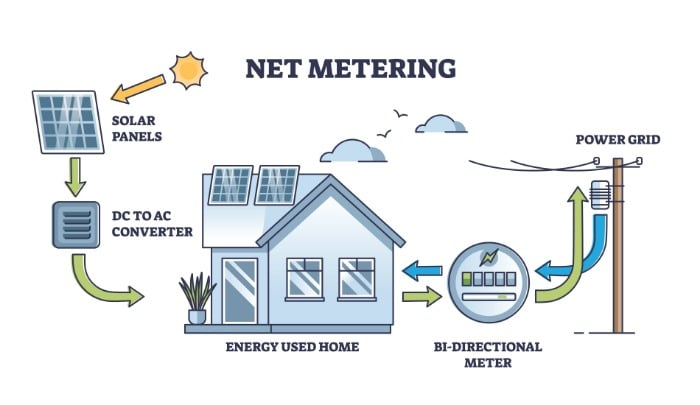
California's NEM 3.0 tariff structure, effective April 2023, demolished the economics of solar-only systems by slashing export compensation to near-wholesale rates while maintaining high retail import rates. A system that sends excess solar to the grid at $0.05/kWh and buys evening power back at $0.35/kWh creates an immediate arbitrage opportunity. Storage captures that spread.
Under NEM 3.0 conditions with a properly sized system, battery payback periods have compressed to 5-7 years for some California households. The math works.
California and Hawaii are exceptions.
Most US utility territories lack the rate structures that make storage arbitrage economically compelling. A household paying $0.12/kWh flat rate around the clock captures zero arbitrage value from storage. The $8,000 battery system produces no return beyond backup capability during grid outages.
Backup value resists quantification in ways that enable aggressive salespeople to assign whatever number closes the deal. The median US household experiences about 5 hours of outage per year, according to EIA data. Outage duration follows a heavy-tailed distribution: most outages are brief, and the rare extended outage drives the average up.
What is 5 hours of backup power worth annually? What about the 99th percentile outage lasting 72 hours? Is that risk worth $600/year over a 15-year system life? The answer depends on whether medical equipment requires power, whether work-from-home income is lost during outages, whether the area experiences frequent or rare grid events.
Insurance thinking applies: backup power costs more than its expected value and protects against high-impact low-probability events. Reasonable people can reach different conclusions about whether to buy that insurance.
Sales presentations that project payback periods without disclosing rate structure assumptions, that compare against retail rates for customers who would pay less without storage, or that assign high dollar values to backup capability without discussing outage statistics, should be treated as adversarial rather than informative.
The Virtual Power Plant Question
Aggregating thousands of residential batteries into a virtual power plant that provides grid services sounds elegant. A battery earns money while idle by responding to grid operator signals, providing frequency regulation or demand response services that historically required utility-scale assets.
Tesla's Autobidder software coordinates Powerwall fleets for utility programs. Swell Energy, Sunrun, and others run VPP programs that enroll residential batteries in exchange for shared revenue.
Communication latency between cloud platforms and distributed batteries limits response speed compared to utility-scale installations. Heterogeneous hardware across a residential fleet complicates coordinated dispatch. Individual battery capacity, 10-15 kWh typical, provides minimal grid impact; meaningful VPP scale requires thousands of enrolled units.
Economic barriers compound the technical ones: grid service markets were designed for large centralized resources. Residential aggregations face transaction costs that erode margins. Revenue sharing between aggregators and homeowners typically favors aggregators heavily. A homeowner might see $50-150 annually for VPP participation while the aggregator captures the bulk of grid service payments.
Regulatory barriers add another layer: the rules for distributed resource participation in wholesale markets remain incomplete in most jurisdictions. FERC Order 2222, requiring grid operators to enable distributed resource aggregation, has faced slow and uneven adoption. Many VPP programs operate in bilateral arrangements with utilities rather than through wholesale markets.
VPP participation might eventually become a meaningful income stream for residential storage. Betting on that income to justify a storage purchase today is speculative rather than bankable.
Product Recommendations in Context
Recommendations depend on context that no article can fully know. Patterns exist.
Tesla Powerwall 3 makes sense for households that want tight software integration, have relatively standard electrical configurations, and don't mind Tesla's opaque specifications and occasionally frustrating customer service. The hardware is competent. The app experience exceeds competitors. The integrated inverter simplifies installation and creates repair complexity if either the battery or inverter section fails independently.
Enphase IQ Battery suits existing Enphase solar installations where keeping all equipment from one manufacturer matters. AC-coupled architecture allows addition without touching existing solar equipment. The modular format, 3.36 kWh per unit, enables flexible sizing. Total system costs often exceed competitors when multiple units are required for useful capacity.
BYD Battery-Box and Pylontech modules serve the installer market more than consumer direct sales. These are the boxes that fill out mid-range quotes from local solar companies. Quality is generally adequate. Price points undercut premium brands. Support channels are thinner: warranty service might involve the installer rather than the manufacturer directly.
Sonnen positions as a premium offering with capable energy management, high-quality cells, and integration with their own smart energy services. Pricing reflects this positioning. Whether the premium buys meaningful capability improvement or primarily brand cachet depends on how deeply buyers utilize advanced features.
Off-grid and backup-focused applications might consider EcoFlow or Bluetti products designed for portable power applications and available in larger capacities suitable for limited home backup. These products lack grid-tie certification for whole-home solar integration and can serve backup loads through subpanel arrangements.
Chinese direct-to-consumer brands, names unfamiliar to American buyers, sold through Alibaba or specialized importers offer aggressive pricing with uncertain quality, nonexistent local support, and warranty enforcement that requires international dispute resolution. The risk discount explains the price discount.
Failure Modes Worth Understanding
Fires make headlines and remain rare. The more common failure modes receive less attention.
Inverter failures strand functional cell packs. The power electronics that interface storage with household loads experience thermal stress, component aging, and software bugs. An inverter failure in year eight of a product warranted for ten years might or might not be covered depending on warranty terms' component-specific language. Replacement inverters for discontinued products may be unavailable at any price.
BMS software bugs cause unexpected behavior. A widely-reported issue with early Powerwall 2 firmware caused systems to discharge to grid during outages rather than powering backed-up loads. Software updates eventually addressed the bug, and customers who experienced the failure during an outage when they needed backup power most did not find "it's fixed now" satisfying.
Cell degradation follows unpredictable trajectories. The 10-year warranty promising 70% capacity retention describes a statistical population, not individual unit performance. Some units will retain 85% at warranty end. Others will drop below threshold by year six. The warranty covers the latter case in theory; the hassle of warranty claims in practice discourages many buyers from pursuing coverage.
Communication failures between battery systems and monitoring platforms make systems harder to manage. Cloud service outages take down apps that provide the only visibility into system state. Discontinued cloud services can render previously-functional monitoring permanently unavailable, as happened when SunPower ended support for certain legacy products.
◆
Summary Assessment
The home battery storage category has matured from expensive curiosity to functional product class. The technology works. Prices have fallen to levels where economic payback is achievable under favorable rate structures. Installation channels exist in most markets.
Storage makes clear financial sense in California post-NEM 3.0, in Hawaii, in markets with high time-of-use rate differentials, and for households with specific backup requirements that justify insurance-like thinking. Storage makes less clear sense in flat-rate utility territories, for households without solar production to capture, and for buyers expecting VPP revenues to close the economic gap.
The products are more similar than marketing suggests. LFP cells from a handful of Chinese manufacturers fill most boxes regardless of brand name on the enclosure. Power electronics and software differentiate more meaningfully than cell chemistry at this point in the market's evolution.
The salesperson wants to sell a battery. The internet wants to generate content about batteries. Neither necessarily wants to communicate that maybe, for a specific situation, buying one makes no sense yet. That answer doesn't generate commissions or clicks.
Run the math for a specific rate structure. Understand what backup insurance actually protects against. Get multiple installation quotes and ask about the crew's specific experience with the product being installed. Read the warranty terms, including the arbitration clauses. Decide based on the specific situation rather than generalized enthusiasm for the technology category.