

The battery industry made a ten-year bet on nickel. Energy density was the metric that mattered. Longer range meant premium pricing. The entire Korean battery sector organized around NCM and NCA chemistries. European gigafactory business plans took nickel dominance as a given. Conference presentations showed roadmaps where nickel variants kept getting better while LFP stayed stuck in budget applications.
The logic seemed sound at the time. Consumers wanted range. Range required density. Density meant nickel.
Then lithium carbonate prices collapsed.
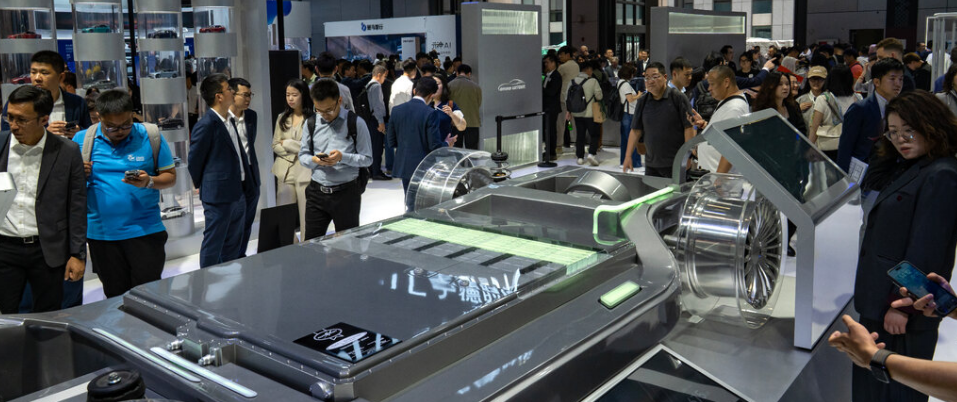
Electric vehicle battery manufacturing industry
The Shanghai Metals Market recorded 567,500 yuan per ton in November 2022. By late 2024, the number sat around 75,000 yuan. The cost premium that made nickel chemistry worthwhile evaporated. LFP went from budget chemistry to dominant chemistry. Sixty percent of global EV battery installations now use it.
Some companies saw this coming. Most did not. The ones who got it right now control the industry. The ones who got it wrong face years of painful adjustment.
CATL
Market Leader
Contemporary Amperex Technology Co., Limited — 37.9% global market share, over 330 GWh shipped in 2024.
SNE Research put CATL at 37.9% global market share for 2024. Over 330 GWh shipped.
Market share numbers get quoted constantly in battery industry coverage. A company can have large market share and still lose money. A company can have smaller share and print cash. The relevant question is whether a manufacturer can operate profitably at current prices.
CATL can. The annual report showed 50.7 billion yuan in net income. Gross margins held between 24 and 26 percent throughout 2024. At the same prices, second-tier Chinese manufacturers were bleeding money. CATL was profitable.
Where does that cost advantage come from?
Part of it is the Qilin cell-to-pack architecture. Modules eliminated. Volumetric efficiency up 15 to 20 percent. The same external pack dimensions hold more cells. More cells mean more capacity. More capacity from identical packaging means lower cost per kilowatt-hour.
Part of it is manufacturing yield. CATL's production lines reportedly run at higher first-pass yield rates than competitors. Every cell that fails quality control is a cell that cost money to make and generates no revenue. Higher yields mean lower effective costs.
Part of it is procurement scale. When you order more raw materials than anyone else, suppliers give you better terms. Volume discounts compound.
None of these advantages are secrets. Competitors know exactly what CATL does differently. Knowing and replicating are different things. The gap persists because catching up requires simultaneous improvements across multiple dimensions while CATL continues advancing.
The gap persists because catching up requires simultaneous improvements across multiple dimensions while CATL continues advancing.
The Shenxing battery line addressed the main knock against LFP: slow charging. First-generation Shenxing shipped in late 2023 with 4C capability. Ten minutes to add 400 kilometers. At the time, most competitors had 2C products. By early 2025, CATL announced second-generation Shenxing at 12C. Five minutes for 520 kilometers. Peak power at 1.3 megawatts.
The charging specs eliminate the main reason buyers historically chose nickel over LFP. Cold weather performance and charging speed used to lag. Shenxing closes those gaps. A battery that charges to 80% in under ten minutes handles road trip scenarios that previously required nickel chemistry.
Shenxing PLUS reached 205 Wh/kg at pack level. The April 2024 product announcement made a claim that would have seemed absurd five years earlier: 1,000-kilometer range from LFP chemistry.
Production capacity sits around 646 GWh. Utilization near 65%. Factories in Germany, Hungary, and Spain either operating or under construction. The Ford arrangement in Michigan uses technology licensing rather than direct ownership. Ford builds the batteries. CATL gets paid for the know-how. Both sides avoid the political complications of Chinese-owned manufacturing in America.
The licensing model shows how CATL approaches geopolitical constraints. Direct factory ownership in the United States triggers political opposition. Technology transfer generates revenue without ownership. The approach may become more common as tensions persist.
Customer list: Tesla, BMW, Mercedes-Benz, Volkswagen, Toyota, NIO, Li Auto, Xiaomi. Western automakers seeking best-available technology. Chinese automakers building for domestic and export markets. Both served from the same production base.
BYD
Vertical Integration Champion
Build Your Dreams — 4.27 million vehicles sold in 2024, world's largest EV manufacturer by volume.
BYD makes batteries to put in BYD vehicles.
That sentence is the key to understanding BYD. Analysts who evaluate BYD as a battery manufacturer get it wrong. BYD is a vehicle manufacturer that happens to make its own batteries. The batteries are not the product. The vehicles are the product. The batteries are a cost line item within an integrated system.
BYD's vertical integration extends from lithium mining to vehicle sales
Blade Battery energy density runs around 150 Wh/kg. Not competitive with CATL's best products. Not competitive with Gotion's LMFP cells. BYD sold 4.27 million vehicles in 2024 anyway, making it the largest EV manufacturer in the world by volume.
How can a company with lower battery specs outsell everyone else? Battery specs are one input among many. Vehicle design, manufacturing cost, sales channels, brand positioning, and after-sales service all factor in. BYD excels at system-level optimization even when individual components trail competitors.
Roughly 95% of BYD's battery production goes into BYD vehicles. The batteries never see the open market. They compete as a component within an integrated system, not as standalone products judged on spec sheets.
How integrated? BYD mines lithium. Produces cathode materials. Manufactures cells. Assembles packs. Builds vehicles. Sells through its own dealers in many markets. Every step that other automakers outsource, BYD handles internally. The cost visibility that comes from controlling every step allows pricing decisions that competitors relying on external suppliers cannot match.
R&D spending hit 54.2 billion yuan in 2024. Net profit was 40.25 billion yuan. A company spending more on research than it earns operates on different time horizons than analysts using quarterly models. The investments show up in future products, not current earnings.
The Blade design uses geometry for safety. Long, thin cells spread heat better than conventional prismatic formats. The nail penetration tests that BYD turned into marketing showed Blade cells staying stable under conditions that caused thermal runaway in other products. For consumers worried about battery fires, that message landed. Safety concerns about new technology are real. BYD addressed them directly.
Second-generation Blade reportedly targets 210 Wh/kg with 8C charging. If those specs hit production, the density gap with CATL narrows while the integrated cost position remains.
External customers face a problem. BYD prioritizes internal demand. When vehicle production needs batteries, outside buyers wait. The cost advantages come with allocation risk attached. For automakers unwilling to accept that risk, BYD batteries look good on paper and prove hard to secure in practice.
The Korean situation
LG Energy Solution, Samsung SDI, and SK On built their businesses around nickel. NCM811. High-nickel variants with complex thermal management requirements. The bet was that nickel's energy density advantage would justify premium pricing forever.
For a while, the bet looked smart. Tesla used Panasonic and LG cells. European automakers sourced from Samsung and SK. Korean manufacturers expanded capacity. Stock prices rose. Industry analysts wrote reports about Korean battery dominance.
Then the market shifted underneath them.
SNE Research data shows the three companies at roughly 16% combined global share in early 2025. Three years earlier, they held over 25%. The decline happened fast.
Factory utilization reportedly sits near 50%. Chinese competitors run closer to 65%. Empty production lines cost money whether they run or not. Fixed costs spread across fewer units mean higher cost per unit.
What happened was a mismatch. Korean manufacturers optimized for high-performance batteries serving premium vehicles. The market moved toward high-volume batteries serving mass-market vehicles. LFP fits mass markets better. Korean manufacturers had almost no LFP capability when the shift accelerated.
They had the technical talent. They had the manufacturing infrastructure. They had the customer relationships. What they lacked was fifteen years of LFP-specific learning that Chinese competitors had accumulated.
Chinese manufacturers spent fifteen years learning LFP. The equipment and expertise that Korean companies built for nickel do not transfer directly.
The catch-up effort started late. LG signed a 39 GWh LFP contract with Renault's Ampere brand in July 2024. Production at the Korean Ochang facility targets 2027. Samsung SDI announced a $1.36 billion LFP deal in December 2025, also targeting 2027 for joint venture production in Indiana. SK On developed something called Winter Pro, an LFP battery optimized for cold weather, with Georgia production planned for October 2026.
Korean LFP production volume as of late 2025: zero.
Chinese manufacturers spent fifteen years learning LFP. Different electrode coating techniques. Different formation protocols. Different quality control. The equipment and expertise that Korean companies built for nickel do not transfer directly. LFP requires relearning.
The financial math makes the technical challenge worse. Korean manufacturers report losses or thin profits while funding expensive expansions for technology they have not mastered. Chinese competitors operate profitably at prices Korean manufacturers cannot touch. The cost gap may widen rather than narrow. Chinese manufacturers keep improving. Korean manufacturers start fresh.
Joint ventures with GM, Ford, and Stellantis provide some insulation. American automakers need batteries. Political barriers limit Chinese participation in the American market. Korean manufacturers benefit from being acceptable in a market where preferred suppliers face restrictions. The protection is real and conditional. It depends on political winds that could shift.
Gotion, EVE, and the rest
Gotion High-Tech
Gotion High-Tech has something no other Chinese battery company has: a major Western automaker as part owner.
Volkswagen holds 24 to 26 percent. That ownership stake came with expectations. VW wanted a supplier it could rely on for European production. Gotion wanted capital and credibility with Western customers. Both got what they wanted.
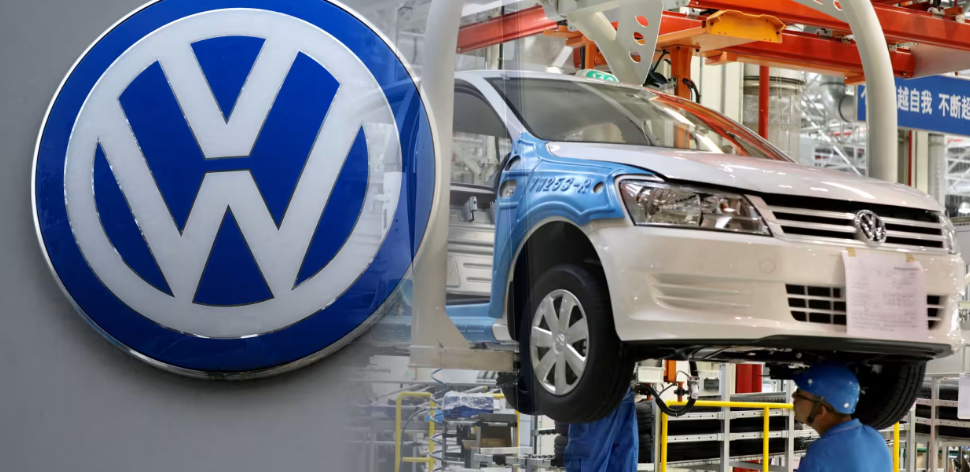
Gotion's Volkswagen partnership provides political cover in markets increasingly skeptical of Chinese suppliers.
German and Vietnamese factories operate. American and Moroccan plants sit in planning. Overseas revenue reached 11 billion yuan in 2024, about 31% of sales. The international footprint grew faster than at any Chinese competitor.
The L600 cell uses LMFP chemistry. Manganese added to the cathode boosts voltage and density without the thermal problems of high-nickel formulations. The spec sheet shows 240 Wh/kg. For an LFP variant, that number competes with entry-level nickel cells.
Gotion also has a solid-state program targeting 350 Wh/kg with trial production in 2027. Solid-state timelines have disappointed before. They may disappoint again. Every battery conference for the past decade has featured presentations claiming solid-state breakthroughs are imminent. The breakthroughs keep receding.
The Volkswagen ownership has political value. European automakers face pressure to reduce Chinese supply chain exposure. A supplier partly owned by VW occupies a different category than a purely Chinese company. The ownership provides cover for purchasing departments that need to justify sourcing decisions.
EVE Energy
EVE Energy went a different direction entirely.
Rather than fight CATL and BYD for passenger vehicle contracts, EVE concentrated on energy storage. The choice looked odd at first. Passenger vehicles got all the attention. Storage seemed like a sideshow. The math told a different story.
The 628 Ah cell, branded Mr. Big, is the largest production format available. Storage shipments hit 50 GWh in 2024, second only to CATL. EVE found a market where it could win.
Grid storage runs on different economics. Projects last twenty years or more. A battery with 12,000 cycles at 80% capacity beats a battery with higher density and only 4,000 cycles. LFP excels at cycle life. EVE positioned itself in the segment where LFP advantages show up strongest.
The ACT joint venture with Daimler, Paccar, and Cummins puts 21 GWh of American capacity behind heavy trucking. Trucks run million-mile lifetimes. Cycle life compounds over those distances in ways that passenger vehicle economics never see.
CALB and SVOLT
CALB comes from aerospace. The 314 Ah storage cell rates for 15,000 cycles. Quality control approaches exceed automotive standards. Cells traced individually rather than sampled statistically. The heritage shows in how the company thinks about reliability.
SVOLT chased off-road vehicles. Over 100,000 units to Great Wall's Tank series. SNE Research reported 86.6% year-over-year growth during 2025, highest among top-ten manufacturers. Off-road needs differ from sedans. Higher discharge rates. Different thermal requirements. Different packaging constraints. SVOLT built expertise in a segment that larger competitors ignored.
Storage
Hithium does one thing. Grid-scale storage batteries. No automotive business. No diversification. No distraction.
The focus creates advantages that diversified competitors cannot access. Companies serving multiple markets make compromises. Automotive wants density and fast charging. Storage wants cycle life and low cost per cycle. Optimizing for one means sacrificing the other. A company trying to serve both ends up serving neither particularly well.
Hithium sacrifices nothing on storage. Automotive performance is irrelevant because Hithium does not serve automotive customers. Every engineering decision optimizes for grid economics.
The ∞Cell reached 1175 Ah, the first production cell over 1000 Ah. The 300 Ah cell shows zero degradation through 1,000 cycles in Hithium test data, then keeps going to 12,000 total cycles. Storage developers running project models over two decades pay attention to specs like these.
Net income reached 288 million yuan in 2024. A 10 GWh Texas facility is planned. IRA provisions count Chinese-owned American manufacturing as domestic content. Hithium can serve American storage developers with American-made cells while Chinese competitors face tariff barriers on imported product.
The American market opportunity attracted Hithium because storage faces different politics than automotive. EV batteries get caught up in industrial policy debates. Storage batteries mostly avoid that attention. A Texas factory making cells for grid projects triggers less political opposition than a factory making cells for cars.
Rept Battero has Tsingshan Group behind it. Tsingshan dominates global stainless steel and nickel production. Raw material access and balance sheet support that standalone startups cannot match. The Wending battery hits 450 Wh/L volumetric density against an industry average around 400. The Tsingshan relationship provides resources that independent companies struggle to replicate.
Japan and Europe
Panasonic makes cylindrical cells for Tesla. No prismatic LFP. An anode-free battery announcement claims potential 25% density gains.
Toyota bet on solid-state. Over 1,000 patents. 2027 commercialization targeted for Lexus vehicles.
Neither company competes in LFP.
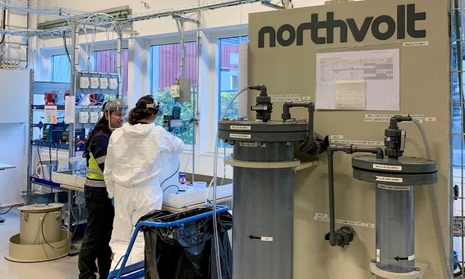
European battery manufacturing has largely failed. Northvolt's bankruptcy represents the most dramatic setback
Northvolt raised over $15 billion. Filed for bankruptcy in November 2024 with $5.8 billion in debt.
ACC, the Stellantis-Mercedes-TotalEnergies venture, paused German and Italian construction. The French facility reportedly runs at 15 to 20 percent yield. Management debates whether to abandon nickel entirely.
Tesla's Nevada factory uses wet-coating technology licensed from CATL. Initial capacity of 10 GWh feeds Powerwall and Megapack.
European battery manufacturing outside of Tesla has mostly failed.
What the numbers say
InfoLink Consulting shows top-ten manufacturers at 95.2% of global installations.
GGII estimates capacity utilization collapsed from 87% in 2022 to 35-45% now.
SMM pricing shows LFP cells at 0.32 to 0.40 yuan per watt-hour, down from 1 yuan. Some storage contracts reportedly close at 0.25 yuan.
Those prices approach cash costs for manufacturers outside the top five.
The overcapacity came from 2021-2022 investment decisions. Demand projections assumed 30-40% annual growth. Lithium prices stayed high. Manufacturers announced expansions. Demand growth came in lower. Lithium prices collapsed. Revenue per cell fell even as volumes missed targets.
Manufacturers with low costs survive. Manufacturers with high costs exit. The middle tier faces harder choices. Too small for scale economies against larger competitors. Too large to change direction quickly against focused specialists.
CATL runs near 65% utilization with 24-26% gross margins. BYD's vertical integration provides cost floors that others cannot reach.
Consolidation will continue through 2025 and 2026. Some manufacturers will shut down. Some will sell to larger competitors. The industry that emerges will have fewer players at higher utilization with healthier margins.
Choosing a supplier
CATL for technology leadership.
BYD for low cost, assuming allocation access.
Gotion for European presence and LMFP chemistry.
EVE for storage and commercial vehicles.
Japanese manufacturers focus elsewhere. European manufacturing has largely failed.
The sourcing decision depends on application. Chinese market passenger vehicles: CATL or BYD depending on priorities. European market: CATL, Gotion, or Korean suppliers depending on content requirements. American market: constrained by politics, with Korean suppliers and Tesla's domestic production filling gaps. Grid storage: CATL, EVE, or Hithium depending on scale and geography. Commercial vehicles: EVE for heavy trucking, CATL for everything else.
Suppliers that exist today may not exist in two years. Relationships built now provide options that latecomers cannot access. The survivors will negotiate from stronger positions with fewer competitors.